
Browse the complete collection of professions that have been rendered obsolete by technology, social change, and the relentless march of progress.
Tags
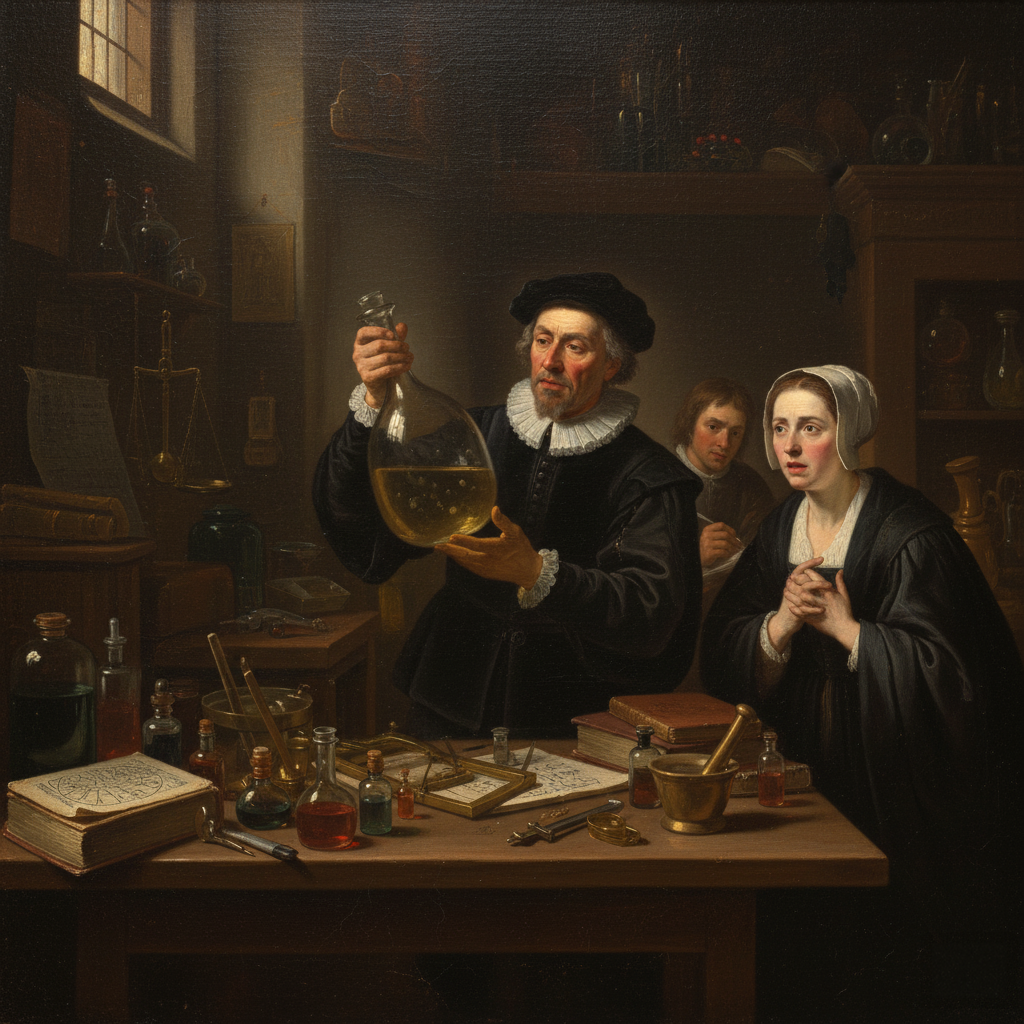
The Piss-Prophet was a unique and somewhat peculiar occupation that emerged during the Medieval Period, particularly in Europe. This role was primarily associated with the practice of diagnosing health conditions and predicting the future through the examination of urine. The Piss-Prophet, often a male figure, would analyze the color, consistency, and even the smell of urine to provide insights into a person's health and fortune. This practice was rooted in the ancient humoral theory, which posited that bodily fluids were indicative of one's health and temperament. In a time when medical knowledge was limited and superstition reigned, the Piss-Prophet held a significant place in society. They were often consulted by individuals seeking answers to ailments or guidance on personal matters. The Piss-Prophet would typically set up shop in a market square or a local tavern, where they would attract clients with their claims of divination and healing. The role required a keen eye for detail and a deep understanding of the various interpretations of urine, which were often documented in rudimentary medical texts of the time. Despite the oddity of the profession, Piss-Prophets were sometimes regarded with a mix of respect and skepticism. They often operated alongside other medical practitioners, such as barber-surgeons and herbalists, contributing to the eclectic tapestry of medieval healthcare.
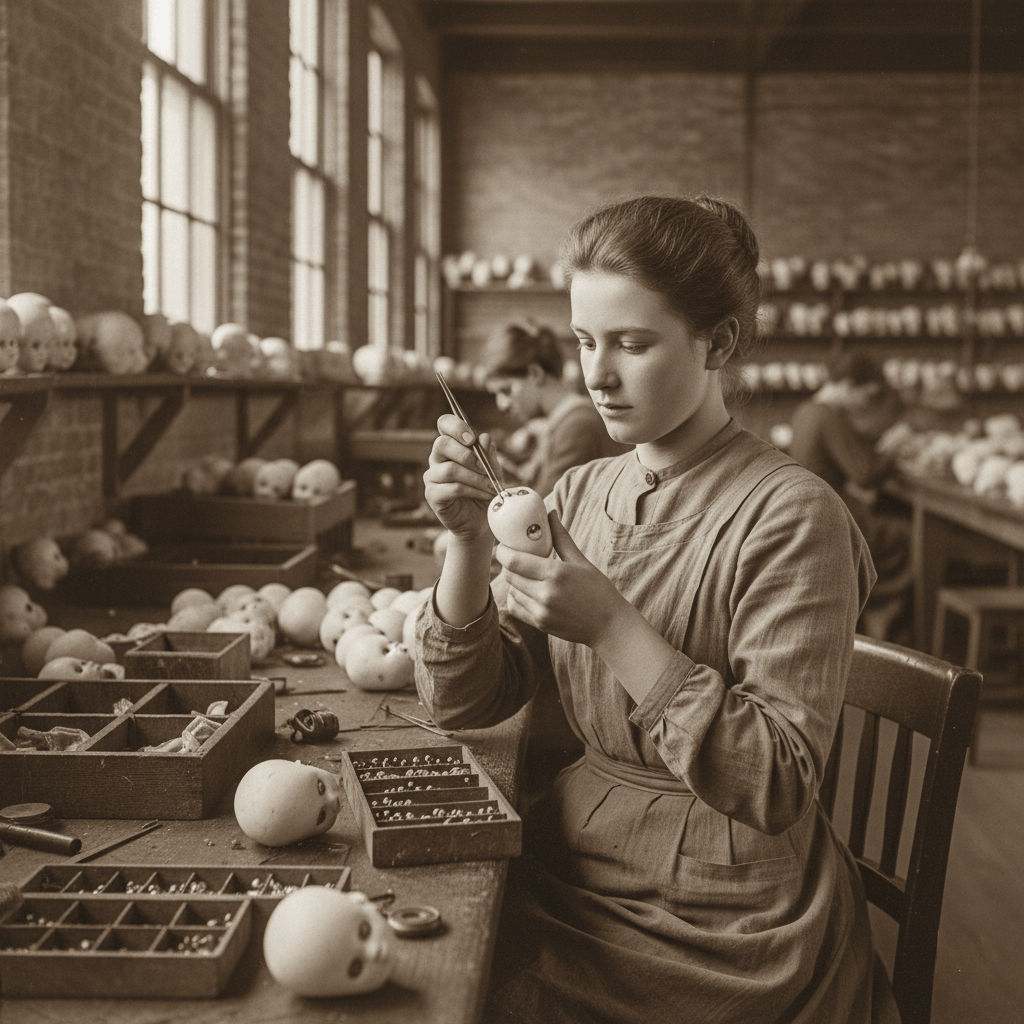
The role of a Doll Eye Setter was a specialized craft within the toy-making industry, particularly prominent during the Victorian Era (1837-1901). This occupation involved the meticulous task of inserting glass or plastic eyes into dolls, ensuring that each doll had a lifelike appearance. Doll Eye Setters worked primarily in factories or workshops, where they would receive unassembled dolls from doll makers. The eyes, often made of glass, were crafted in various sizes and colors to match the intended design of the doll. The setter would carefully position the eyes, often using a small tool to secure them in place, ensuring they were aligned perfectly to create an expressive gaze. This attention to detail was crucial, as the eyes were considered the windows to the doll's personality, enhancing its appeal to children and collectors alike. The job required not only dexterity and precision but also an artistic eye for detail, as the placement of the eyes could significantly affect the doll's overall aesthetic. Doll Eye Setters often worked long hours, sometimes in poorly lit conditions, which could strain their eyesight. The work was repetitive, yet it required a steady hand and a keen sense of proportion to ensure that each doll was visually appealing. As the demand for dolls surged during the Victorian Era, fueled by the rise of the middle class and the popularity of children's toys, the role of the Doll Eye Setter became increasingly important. However, as the 20th century approached, advancements in manufacturing processes, such as the introduction of mass production techniques and the use of plastic eyes that could be molded directly into the doll's head, rendered the specialized skills of the Doll Eye Setter obsolete. The shift towards automation and the decline of handcrafted toys led to the gradual disappearance of this once-essential occupation.
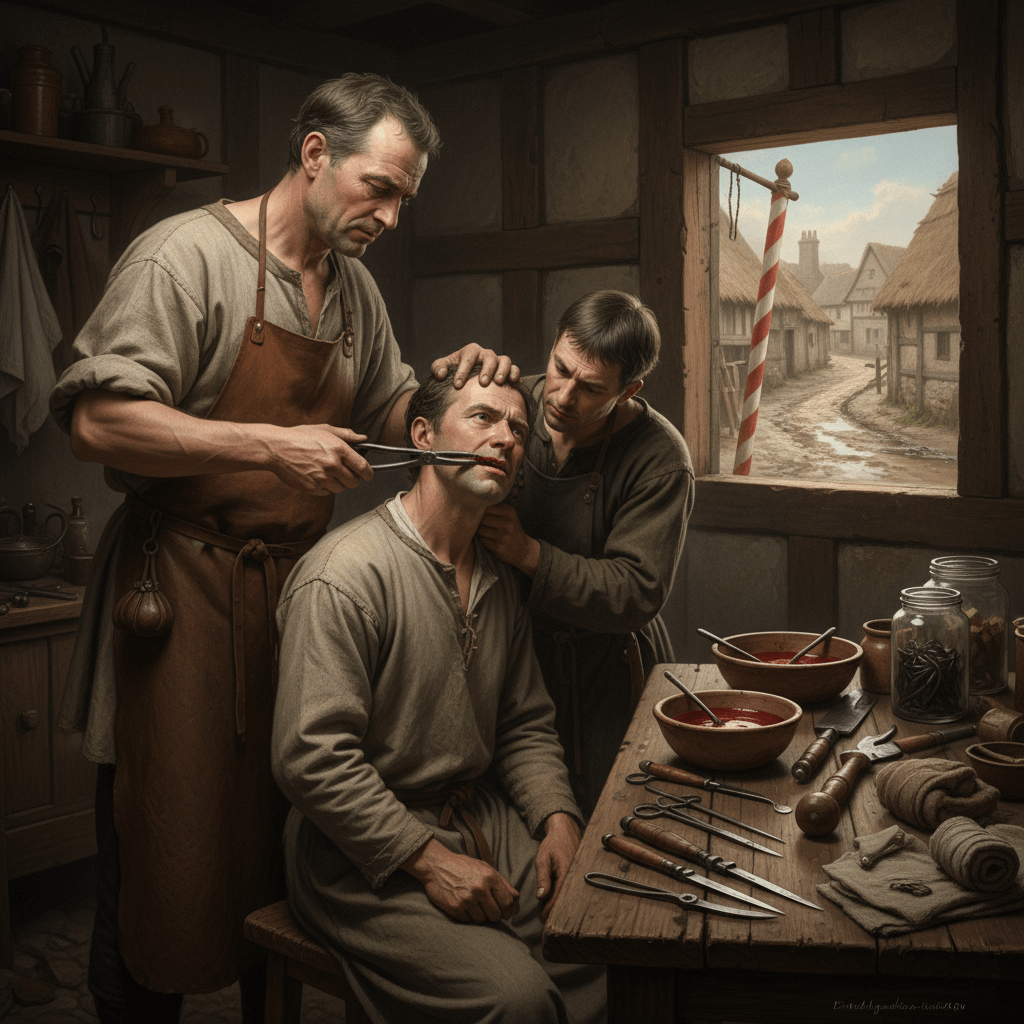
The barber surgeon was a unique figure in medieval society, serving as both a barber and a surgeon. This dual role emerged in the 12th century and persisted into the 17th century, reflecting the limited medical knowledge and the social structure of the time. Barber surgeons were responsible for a variety of tasks, including hair cutting, shaving, and performing surgical procedures such as bloodletting, tooth extraction, and even amputations. They were often the first point of contact for medical care in their communities, providing essential services in an era when formal medical training was scarce. The barber's pole, a symbol of their trade, features red and white stripes, representing blood and bandages, a nod to their surgical duties. Barber surgeons operated in a time when the boundaries between medicine and personal grooming were blurred. They were often found in small shops or stalls, where they would set up their equipment and await customers. The role required a blend of practical skills, a steady hand, and a certain level of anatomical knowledge, albeit rudimentary by modern standards. Despite their contributions, barber surgeons were often viewed with suspicion by the more educated physicians, who considered their practices to be unrefined and lacking in scientific rigor. As the Renaissance ushered in a new era of medical understanding and the establishment of formal medical schools, the role of the barber surgeon began to decline. The rise of trained physicians and surgeons, who had undergone extensive education and training, rendered the barber surgeon's services increasingly obsolete. By the 18th century, the profession had largely disappeared, replaced by specialized medical practitioners who could offer more effective and safer treatments.
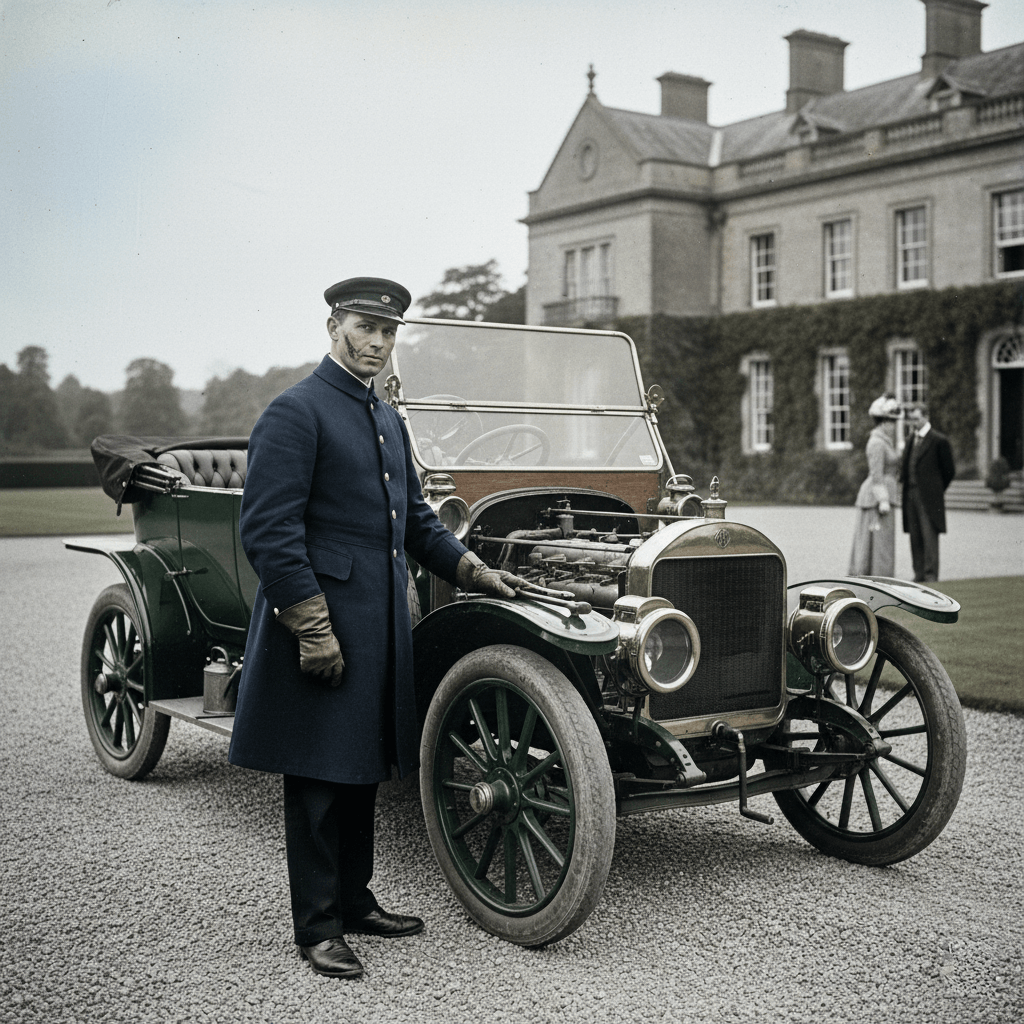
The role of a chauffeur was once a prestigious and essential occupation, particularly in the early to mid-20th century. Chauffeurs were professional drivers employed to transport individuals, often from the upper echelons of society, in luxury vehicles. This job was not merely about driving; it encompassed a range of responsibilities that required a unique blend of skills and etiquette. Chauffeurs were expected to maintain the vehicle in pristine condition, ensuring it was clean, fueled, and mechanically sound. They often had to navigate complex city streets, understand traffic laws, and possess a keen sense of timing to ensure their passengers arrived at their destinations punctually. Additionally, chauffeurs were trained in the art of customer service, often donning uniforms that reflected their employer's status and adhering to strict codes of conduct. The job was synonymous with luxury and exclusivity, often associated with the wealthy elite who relied on chauffeurs for both convenience and status.
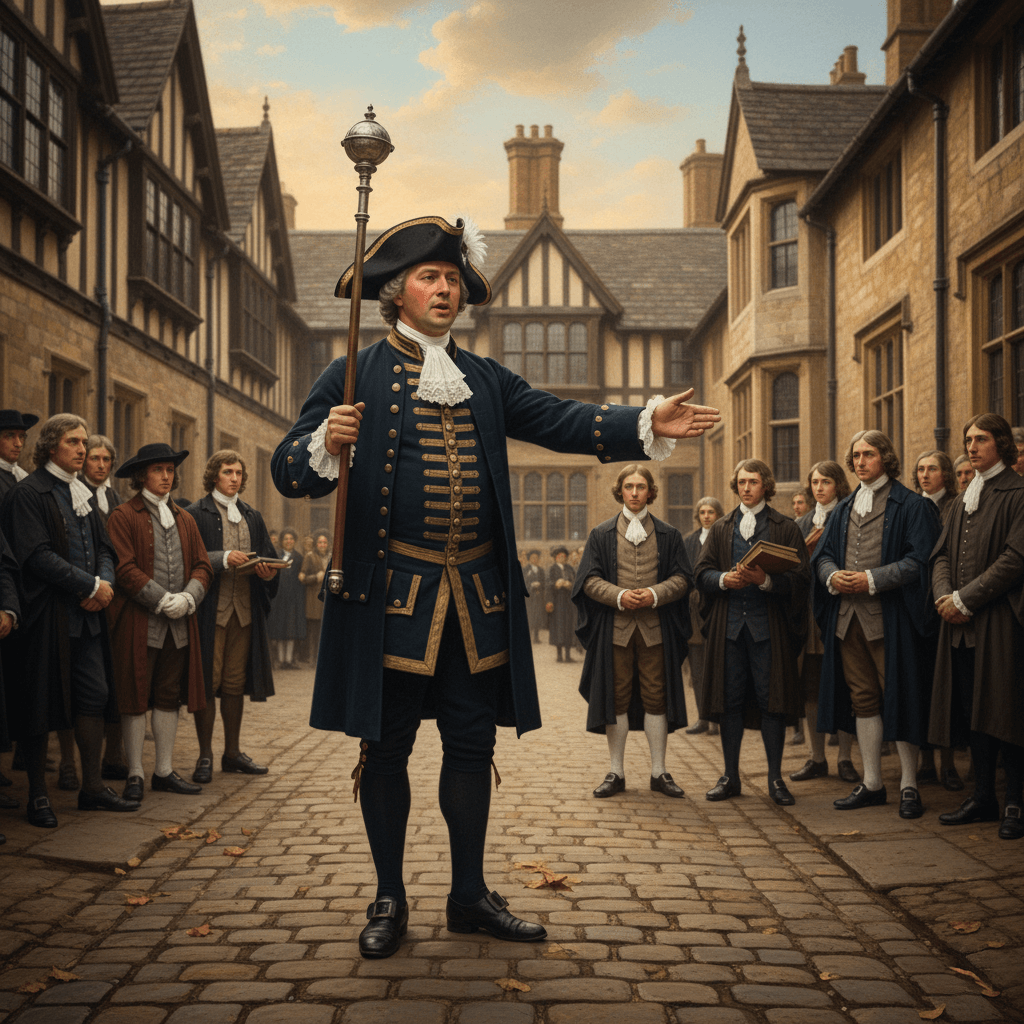
The beadle was a vital figure in medieval communities, serving as a parish officer responsible for maintaining order and overseeing various administrative tasks within the church and local governance. Often seen as the right hand of the clergy, beadles were tasked with a variety of duties that included calling parishioners to worship, managing church property, and ensuring that the rules of the church were upheld. They played a crucial role in the social fabric of their communities, acting as a liaison between the church and the public, and were often the first point of contact for those seeking assistance or guidance from the church. The beadle's presence was marked by their distinctive attire, often a black gown or robe, which signified their authority and role within the ecclesiastical hierarchy.
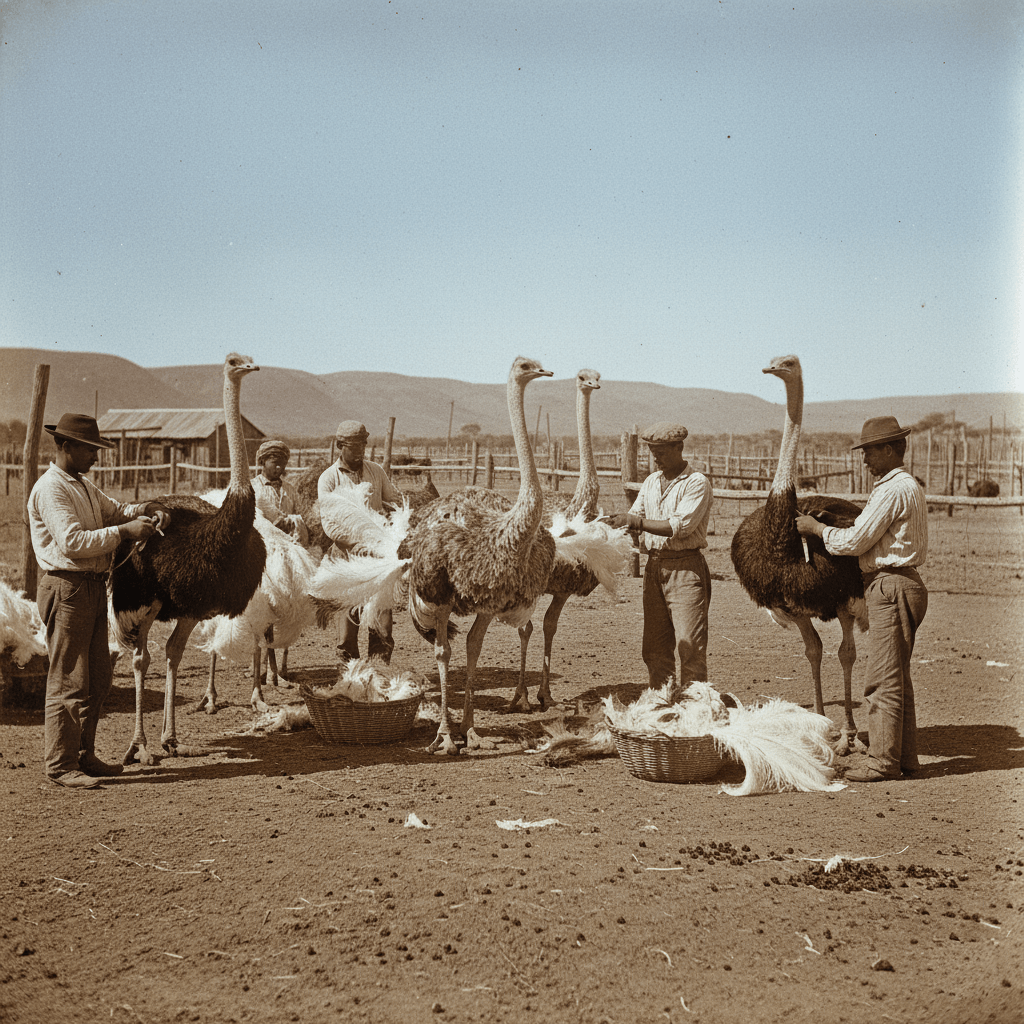
The role of the ostrich feather plucker emerged in the late 19th century, coinciding with the rise of the fashion industry and the extravagant tastes of the Victorian elite. Ostrich feathers, prized for their softness, length, and striking appearance, became a symbol of luxury and status. The feathers were used in a variety of fashionable items, including hats, boas, and elaborate costumes. Pluckers were responsible for harvesting these feathers, a delicate task that required both skill and care to ensure the birds remained healthy and the feathers were of the highest quality. Ostrich farms, primarily located in South Africa, became the epicenter of this industry. Workers would carefully pluck feathers from live ostriches, a process that was typically done once a year during the molting season when the birds naturally shed their feathers. The feathers were then sorted, cleaned, and prepared for shipment to fashion houses around the world. The demand for these luxurious feathers surged, leading to a booming industry that provided employment for many, particularly women, who often worked in harsh conditions for meager pay. As fashion trends evolved and the use of synthetic materials became more prevalent, the demand for natural ostrich feathers began to decline. Additionally, the ethical concerns surrounding the treatment of ostriches and the rise of animal rights movements contributed to the job's obsolescence. By the early 20th century, the ostrich feather plucker had largely disappeared from the workforce, replaced by more humane and sustainable alternatives in the fashion industry.
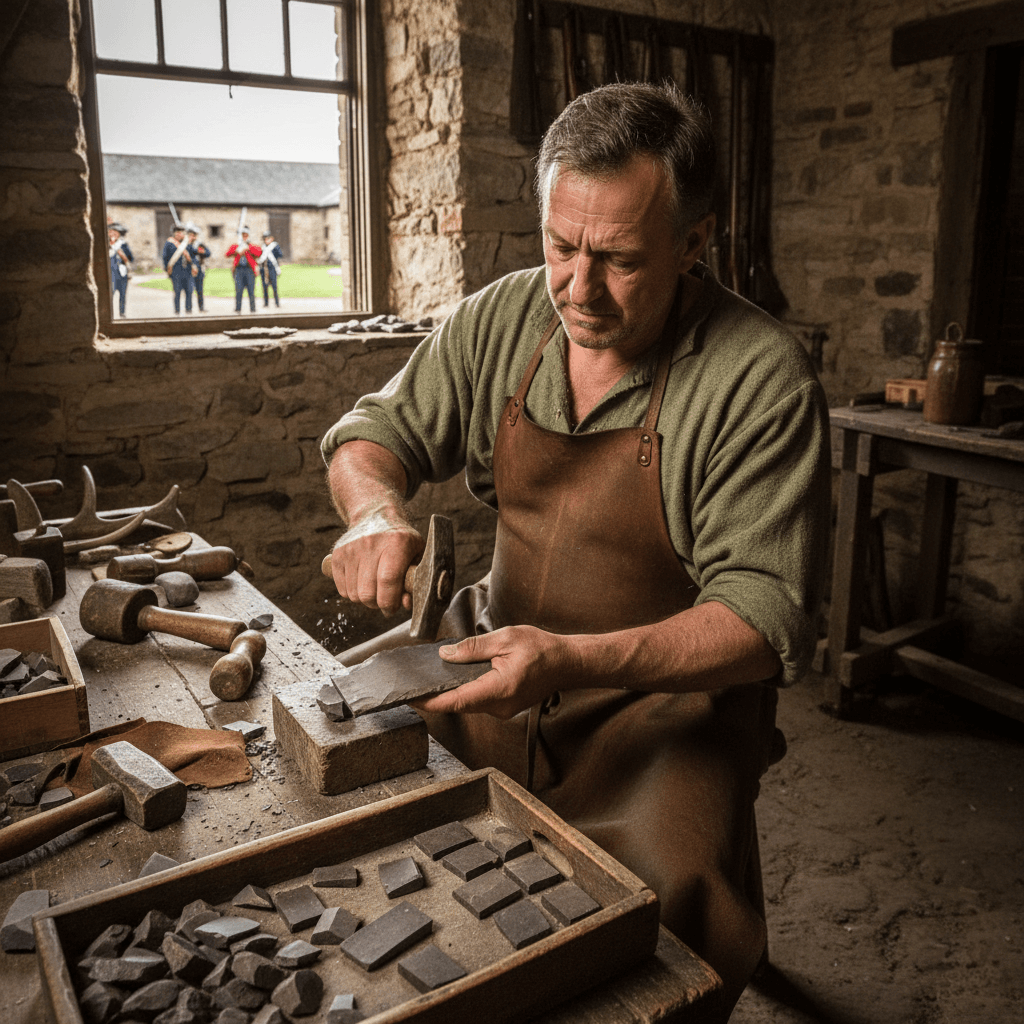
The flint knapper was a skilled artisan responsible for shaping flint and other stones into tools and weapons, a practice that dates back to the earliest human societies. This occupation was crucial for survival, as the tools created by flint knappers were essential for hunting, gathering, and daily tasks. Flint knapping involved a deep understanding of the material properties of stone, as well as the techniques required to create sharp edges and points. The flint knapper would carefully strike the stone with a hammerstone or another tool, removing flakes to create the desired shape. This process required not only physical skill but also an artistic eye, as the knapper had to envision the final product while working with the raw material. Flint knappers often worked in groups, sharing techniques and knowledge, which contributed to the development of regional styles and tool types. The tools produced ranged from simple hand axes to complex projectile points, each designed for specific tasks and environments. As societies evolved, so did their tool-making techniques, leading to the eventual decline of the flint knapper's role in favor of metalworking and other advanced technologies.
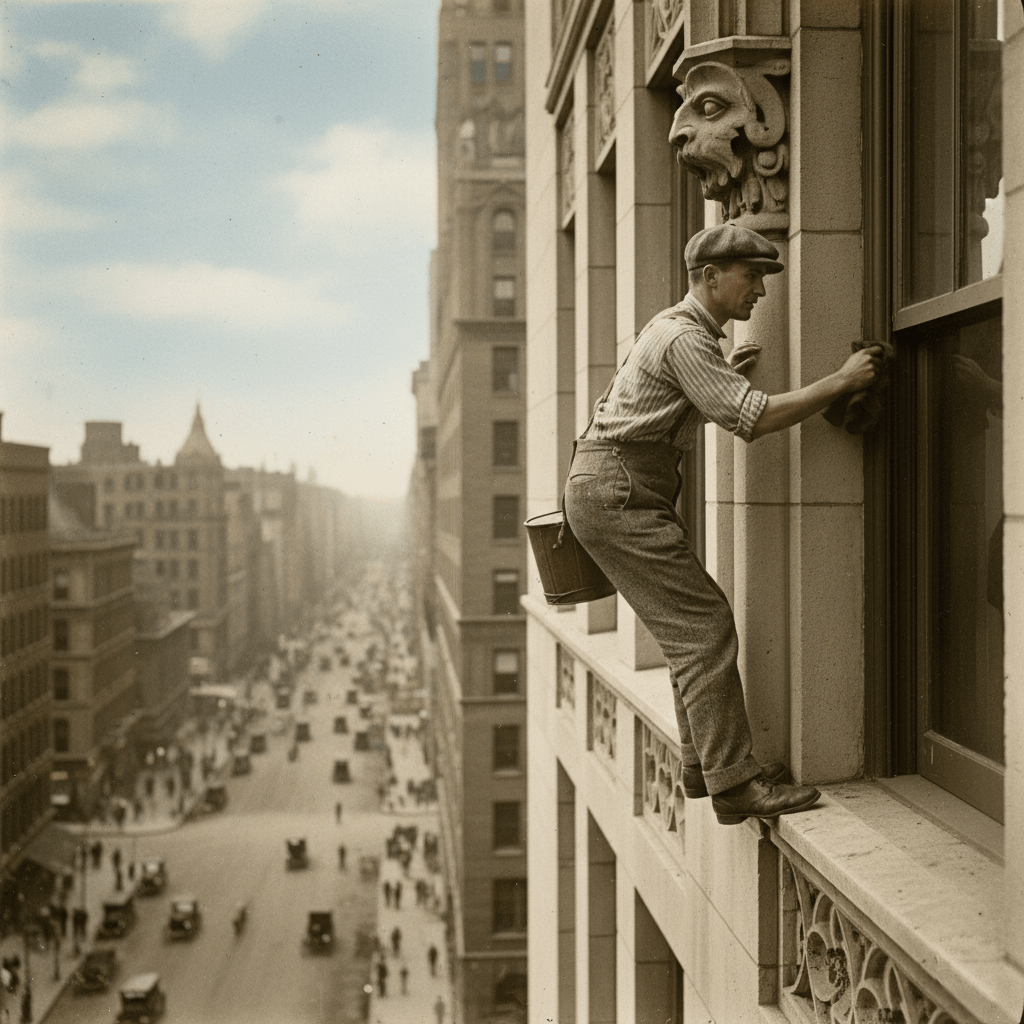
The Human Fly was a unique and daring performer who captivated audiences during the late 19th and early 20th centuries. These individuals, often acrobats or daredevils, specialized in climbing tall buildings and structures, showcasing their remarkable agility and fearlessness. The Human Fly would often scale skyscrapers, bridges, and other urban landmarks, performing stunts that left spectators in awe. Their performances were not merely about the climb; they often included intricate routines, such as hanging from ledges, performing flips, or even playing musical instruments while suspended high above the ground. This job was emblematic of the era's fascination with spectacle and the extraordinary, as cities began to rise higher and the public's appetite for thrilling entertainment grew.
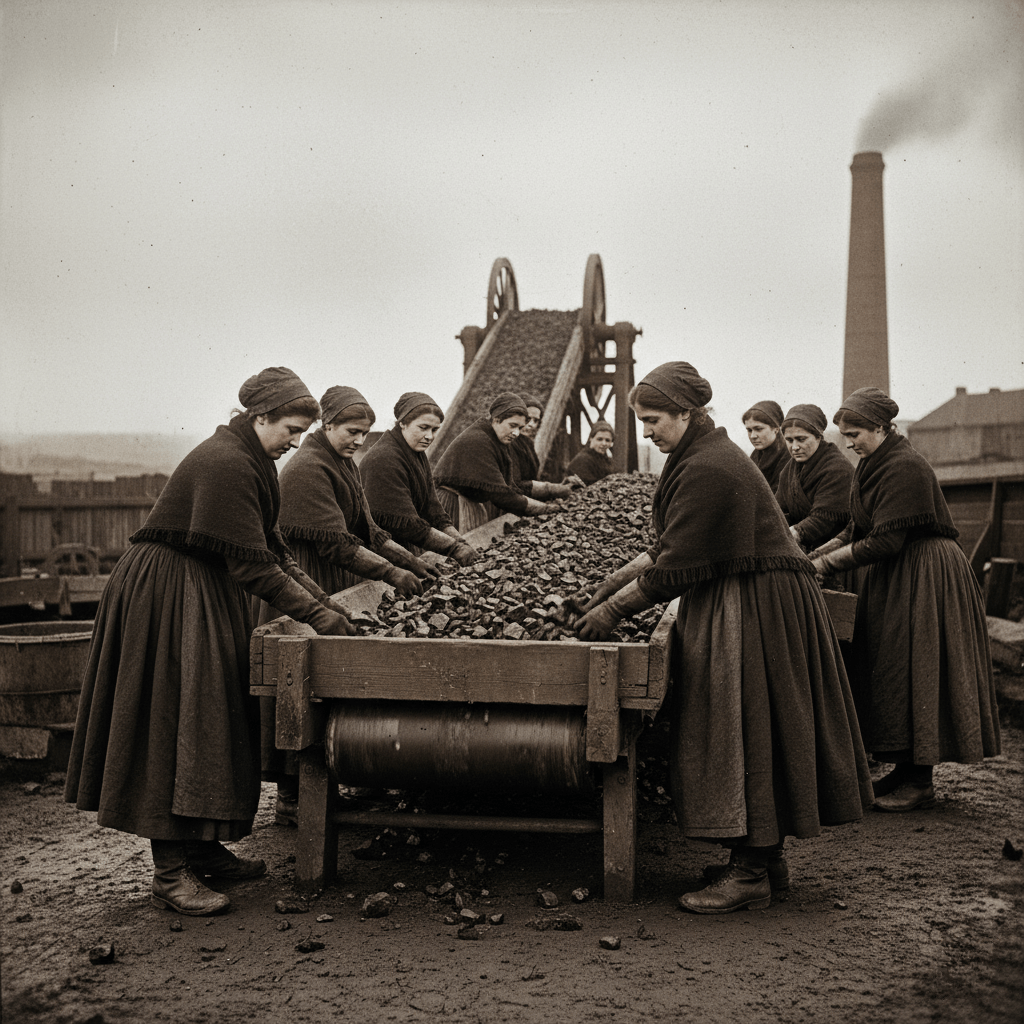
The Pit Brow Lass was a vital yet often overlooked figure in the coal mining industry during the Victorian Era, particularly in the northern regions of England. These women worked at the surface of coal mines, known as the 'pit brow,' where they played a crucial role in the extraction and processing of coal. Their responsibilities included sorting coal from the waste material, loading it onto carts, and ensuring that the coal was ready for transport to markets. The work was physically demanding and often conducted in harsh conditions, with women frequently exposed to the elements and the dangers of the mining environment. Despite the grueling nature of their labor, Pit Brow Lasses were known for their resilience and camaraderie, often forming close-knit communities among themselves as they navigated the challenges of their work.
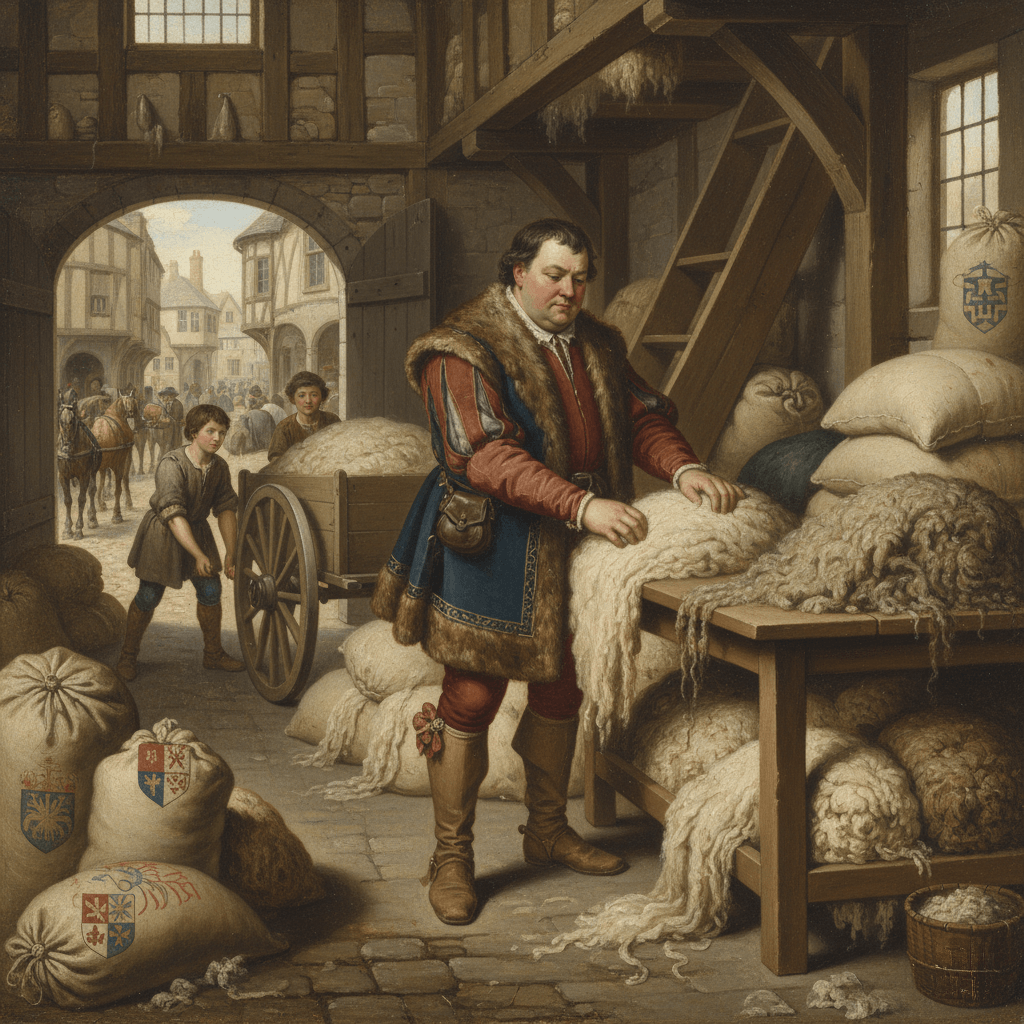
The wool-stapler was a vital figure in the textile industry during the Industrial Revolution, primarily active from the late 18th century to the mid-19th century. This occupation revolved around the preparation and sorting of wool before it was spun into yarn. Wool-staplers were responsible for assessing the quality of raw wool, which involved separating it into different grades based on factors such as fiber length, fineness, and cleanliness. They played a crucial role in ensuring that only the best quality wool was sent to the spinning mills, thus influencing the quality of the final textile products. Wool-staplers worked in warehouses or wool depots, often in close proximity to sheep farms and textile mills. Their work was labor-intensive and required a keen eye for detail, as they had to identify the subtle differences in wool quality. The wool was often delivered in large bales, and the wool-stapler would open these bales, inspect the contents, and then sort the wool into piles according to its grade. This sorting process was essential for the efficient operation of the textile industry, as different grades of wool were used for different types of fabrics. In addition to sorting, wool-staplers also had to keep meticulous records of the wool they processed, noting the quantities and grades for inventory and pricing purposes. They often worked long hours, especially during peak seasons when wool was harvested, and their expertise was highly valued in the supply chain of the textile industry.
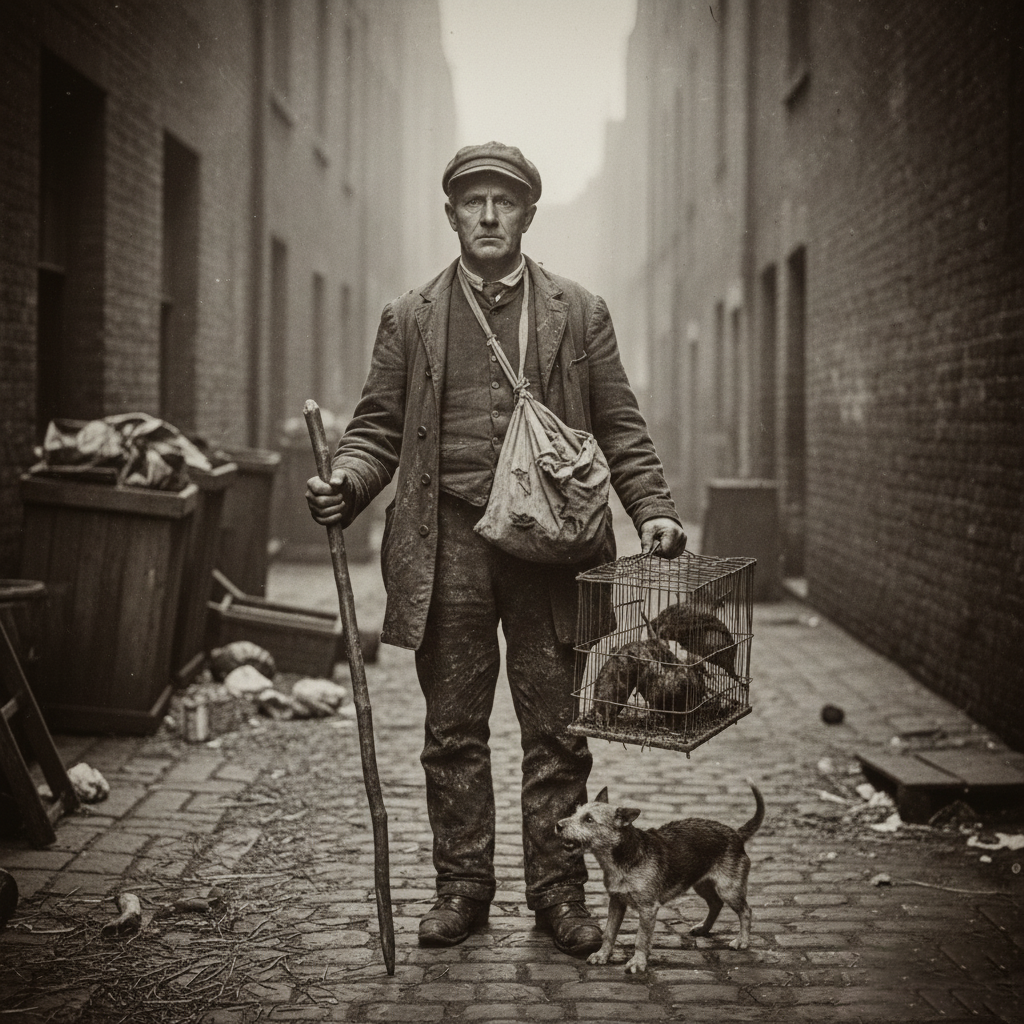
In the bustling streets of Victorian London, where the Industrial Revolution was in full swing, the role of the rat catcher emerged as a vital occupation. As cities expanded and populations swelled, so too did the number of vermin, particularly rats, which thrived in the filth and refuse of urban life. Rat catchers were tasked with the grim yet essential job of controlling these rodent populations, ensuring public health and safety in an era where diseases like the plague and typhus were rampant. Armed with traps, dogs, and sometimes even ferrets, these individuals roamed the alleys and backstreets, seeking out nests and burrows to eradicate the pests that threatened the well-being of the community. Their work was not only a matter of pest control but also a reflection of the social conditions of the time, where sanitation was often neglected, and the consequences of such neglect were dire.
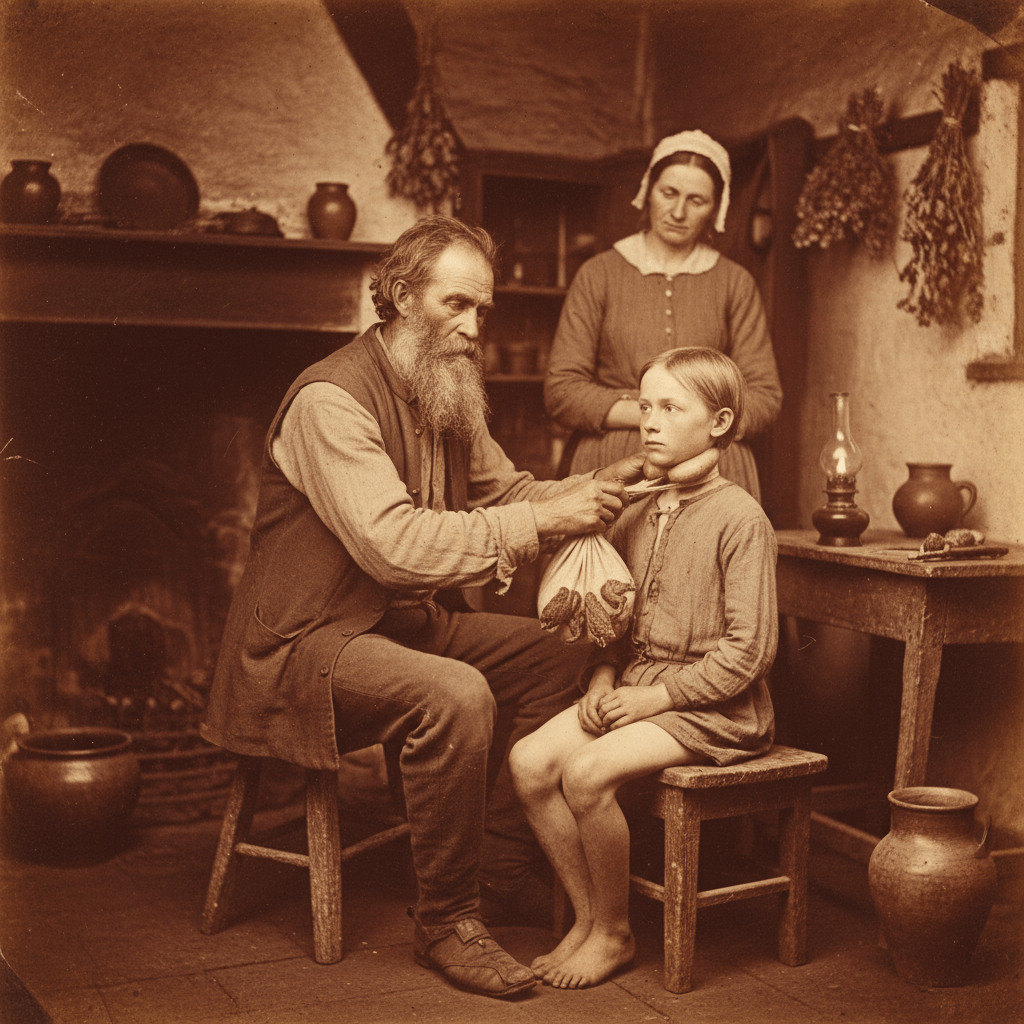
The Toad Doctor was a unique and somewhat peculiar figure in medieval society, often found in rural areas where folk medicine thrived. This practitioner was believed to possess the knowledge and skills necessary to treat ailments using toads and their byproducts. The Toad Doctor's practice was steeped in superstition and folklore, with many believing that toads had magical properties that could cure various diseases. Treatments often involved the use of toad fat, which was rendered down and applied to wounds or ingested to alleviate ailments such as warts, skin conditions, and even more serious illnesses. The Toad Doctor would also prescribe charms and incantations, blending herbal remedies with the mystical qualities attributed to the toad. In a time when formal medical training was scarce, the Toad Doctor filled a vital niche in the community, often serving as the primary healthcare provider for the rural populace. Their role was not only to heal but also to provide comfort and reassurance in an era rife with superstition and fear of the unknown. Despite their importance, the practice of the Toad Doctor began to wane with the rise of more formalized medical practices and the advent of the scientific method, which sought to replace superstition with empirical evidence. As the understanding of human anatomy and disease progressed, the reliance on folk remedies and magical beliefs diminished, leading to the eventual extinction of this once-revered occupation.
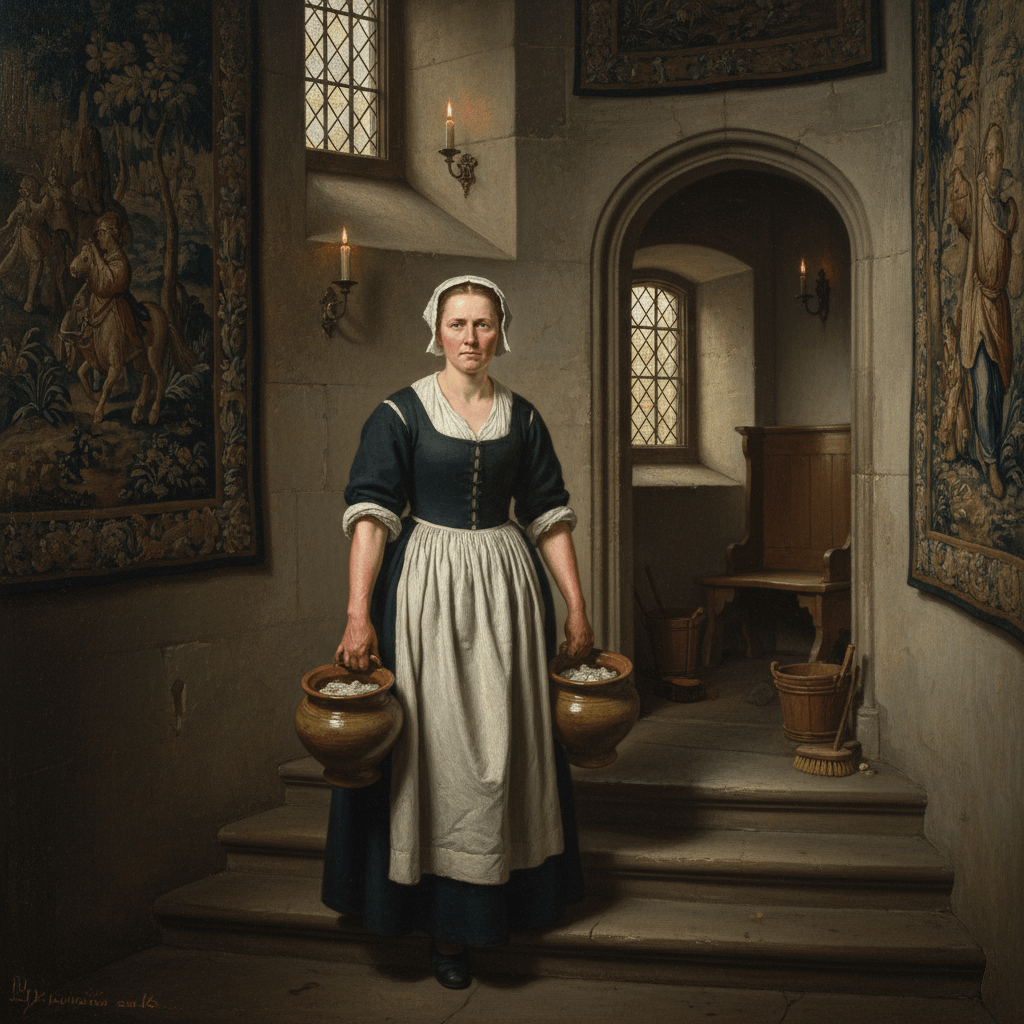
The role of the Necessary Woman emerged during the Victorian Era, a time characterized by strict social hierarchies and the delineation of gender roles. These women were employed primarily in affluent households, where they were responsible for the maintenance of the 'necessary room'—a euphemism for the toilet or privy. This job was not merely about cleaning; it involved a range of tasks that ensured the hygiene and comfort of the household. Necessary Women were tasked with the cleaning and upkeep of the facilities, which included emptying chamber pots, scrubbing floors, and ensuring that the necessary room was stocked with essential supplies such as toilet paper and soap. In an era when sanitation was becoming increasingly important, the work of the Necessary Woman was crucial. They were often the unsung heroes of the household, performing a job that was considered too unpleasant for the higher-status members of the family. Their work was essential in preventing the spread of disease, particularly in urban areas where sanitation was a growing concern. Despite the low social status of this occupation, Necessary Women played a vital role in the functioning of Victorian households, often working long hours for modest pay. Their contributions were largely overlooked, reflecting the broader societal attitudes towards women’s work during this period.
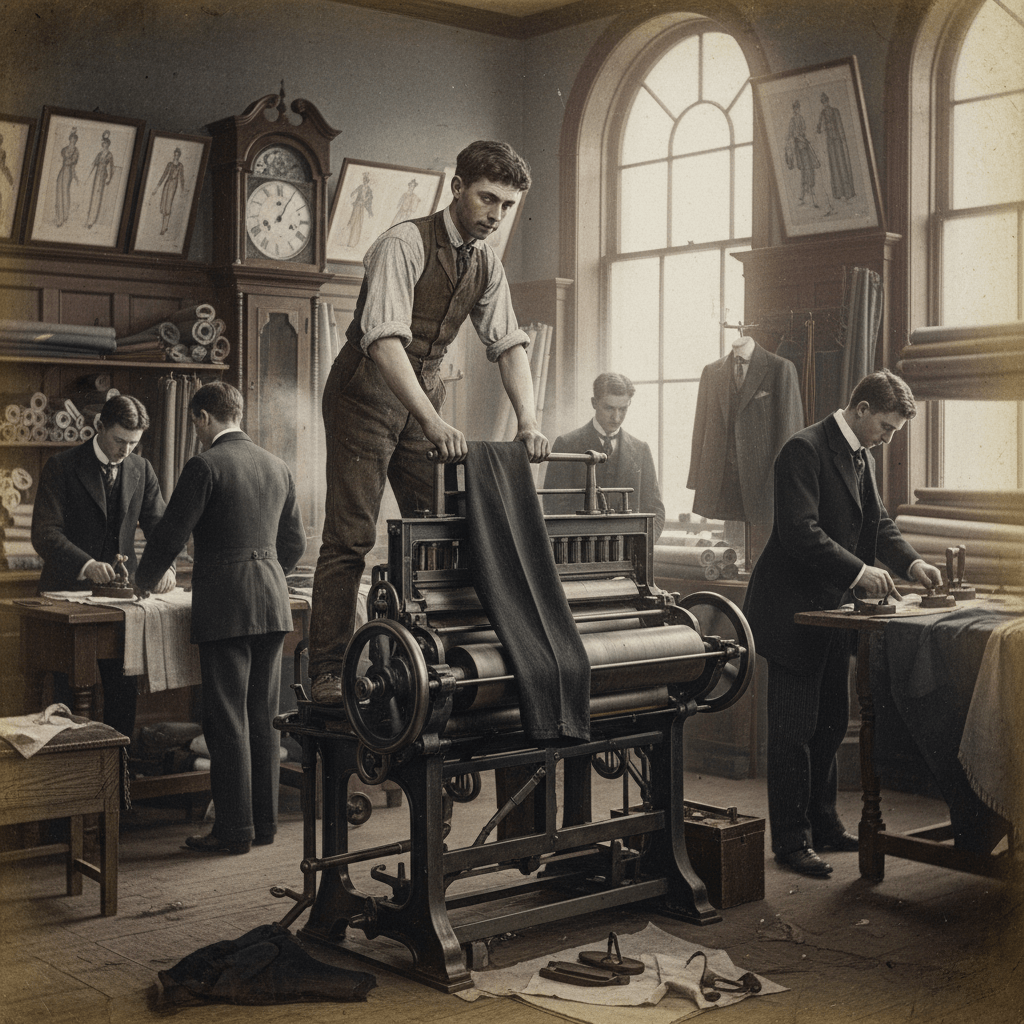
The role of a Pants Polisher emerged during the Victorian Era, a time characterized by strict social codes and a burgeoning middle class that placed great emphasis on personal appearance and propriety. As men donned trousers made from fine fabrics such as wool and cotton, the need for maintaining a polished and respectable appearance became paramount. Pants Polishers were skilled tradespeople who specialized in the care and maintenance of trousers, ensuring that they were not only clean but also had a lustrous finish that reflected the wearer's status. The job involved applying a special polish to trousers, which was often a blend of wax and oils, to enhance their sheen and protect the fabric. This process required a keen eye for detail and an understanding of different materials, as the wrong treatment could ruin a garment. Pants Polishers would often work in tailor shops or as independent contractors, catering to the needs of gentlemen who wished to present themselves impeccably in both social and professional settings. In addition to polishing, these artisans were also responsible for minor repairs, such as stitching up small tears or reinforcing seams, which further solidified their role as essential figures in the maintenance of men's fashion during this period.
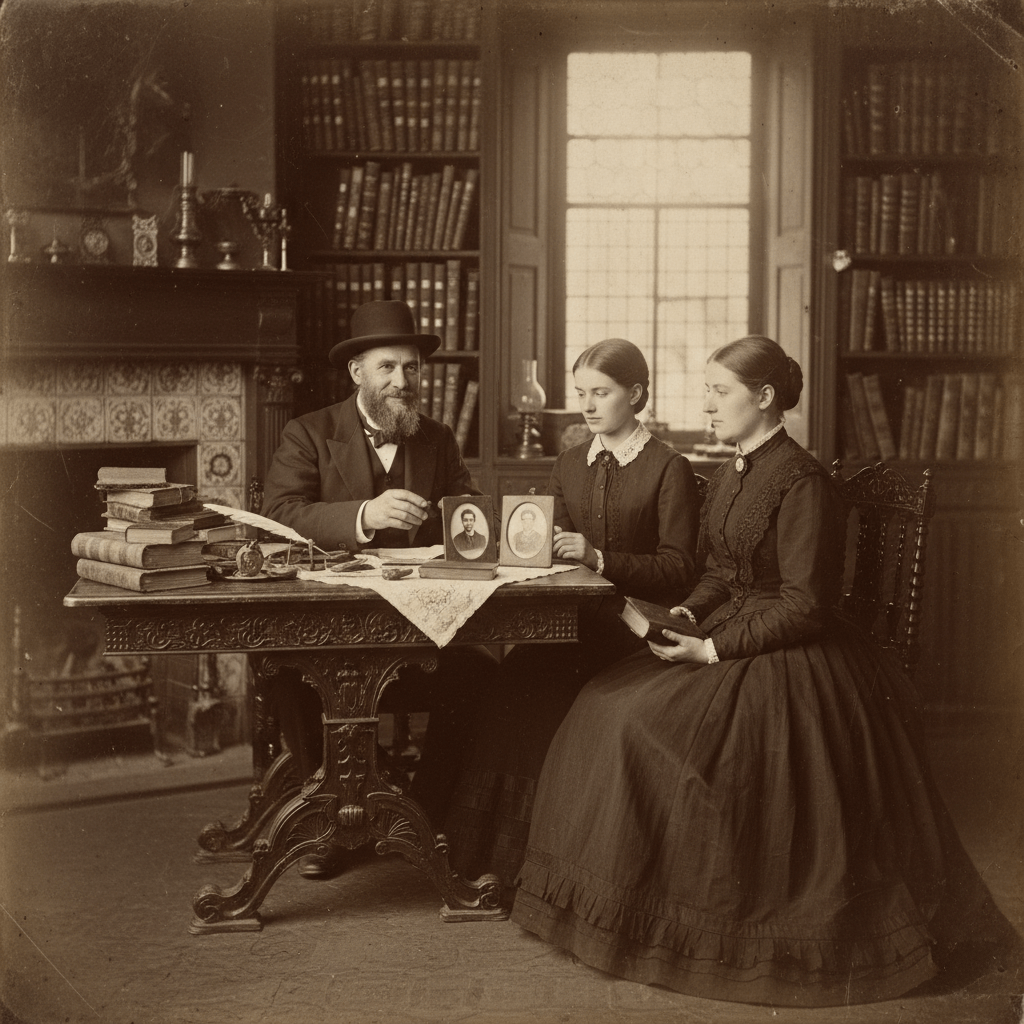
The role of a Shadchan, or matchmaker, was a vital part of Jewish communities during the Medieval Period, particularly in Eastern Europe. This profession was not merely about pairing individuals for marriage; it was deeply rooted in cultural, social, and religious practices. Shadchans were often respected members of the community, possessing a keen understanding of family dynamics, social status, and the personal attributes of potential partners. They acted as intermediaries, facilitating introductions and negotiations between families, ensuring that matches were not only compatible but also aligned with the community's values and traditions. The Shadchan's work involved a delicate balance of diplomacy, intuition, and knowledge of the community's expectations regarding marriage, which was often seen as a strategic alliance rather than just a romantic union.
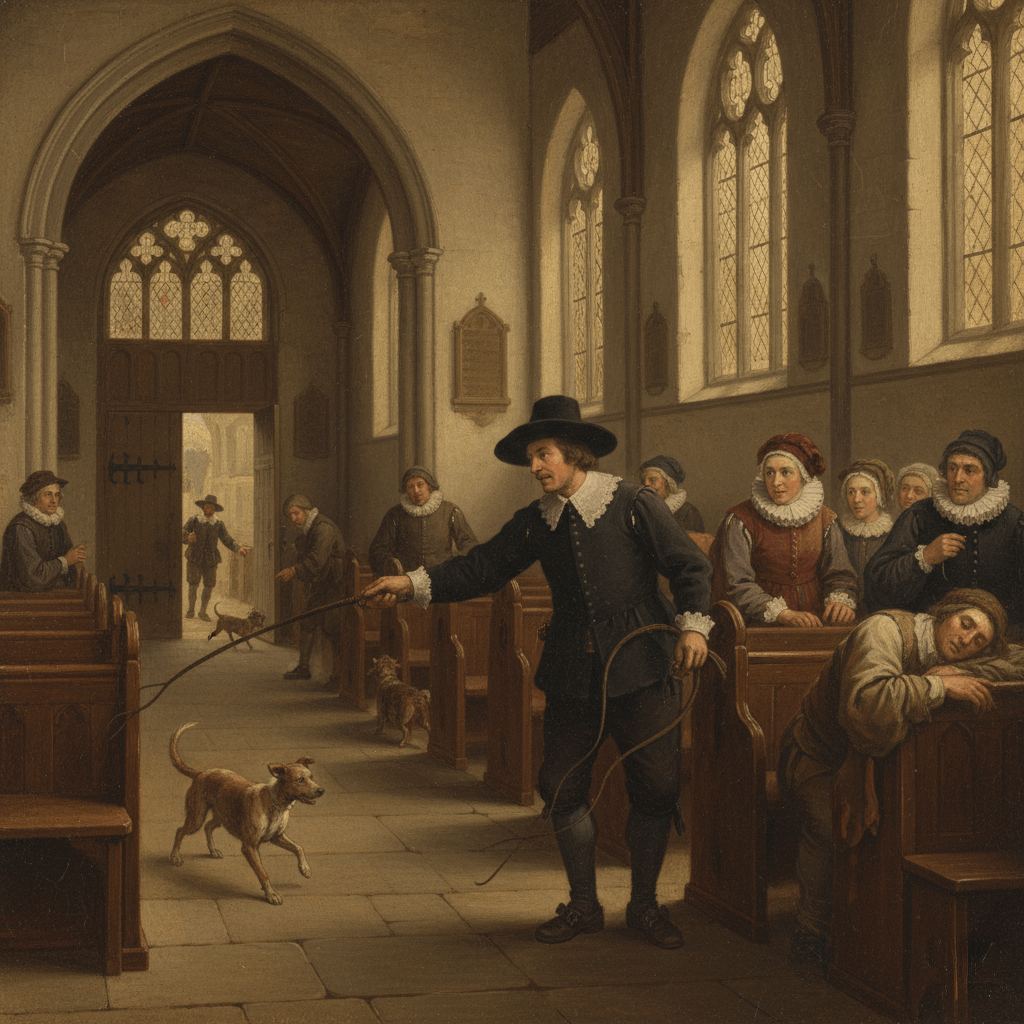
The role of a Dog Whipper was a unique and somewhat peculiar occupation that emerged in the Victorian Era, primarily in England. These individuals were employed by churches and public spaces to manage the presence of dogs, particularly during services or public gatherings. The Dog Whipper's primary responsibility was to ensure that dogs did not disrupt the sanctity of worship or the decorum of public events. Armed with a long whip or a stick, the Dog Whipper would patrol the vicinity, ready to shoo away any canine that dared to intrude upon the sacred space. This role was not merely about discipline; it was also about maintaining order and cleanliness in an era when urbanization was on the rise, and the presence of stray dogs was becoming increasingly common. The Dog Whipper was often seen as a necessary figure, especially in rural areas where dogs roamed freely. Their presence was a deterrent to mischief, and they played a part in the broader social fabric of the time, reflecting the Victorian values of propriety and decorum. The job was often a part-time position, sometimes held by a church sexton or a caretaker, and it required a certain level of authority and assertiveness to effectively manage both the dogs and their owners. As cities grew and societal norms evolved, the need for such a position diminished. The rise of animal welfare movements and changes in public attitudes towards pets led to a decline in the acceptance of such practices. By the early 20th century, the role of the Dog Whipper had largely faded into obscurity, replaced by more humane approaches to animal management.
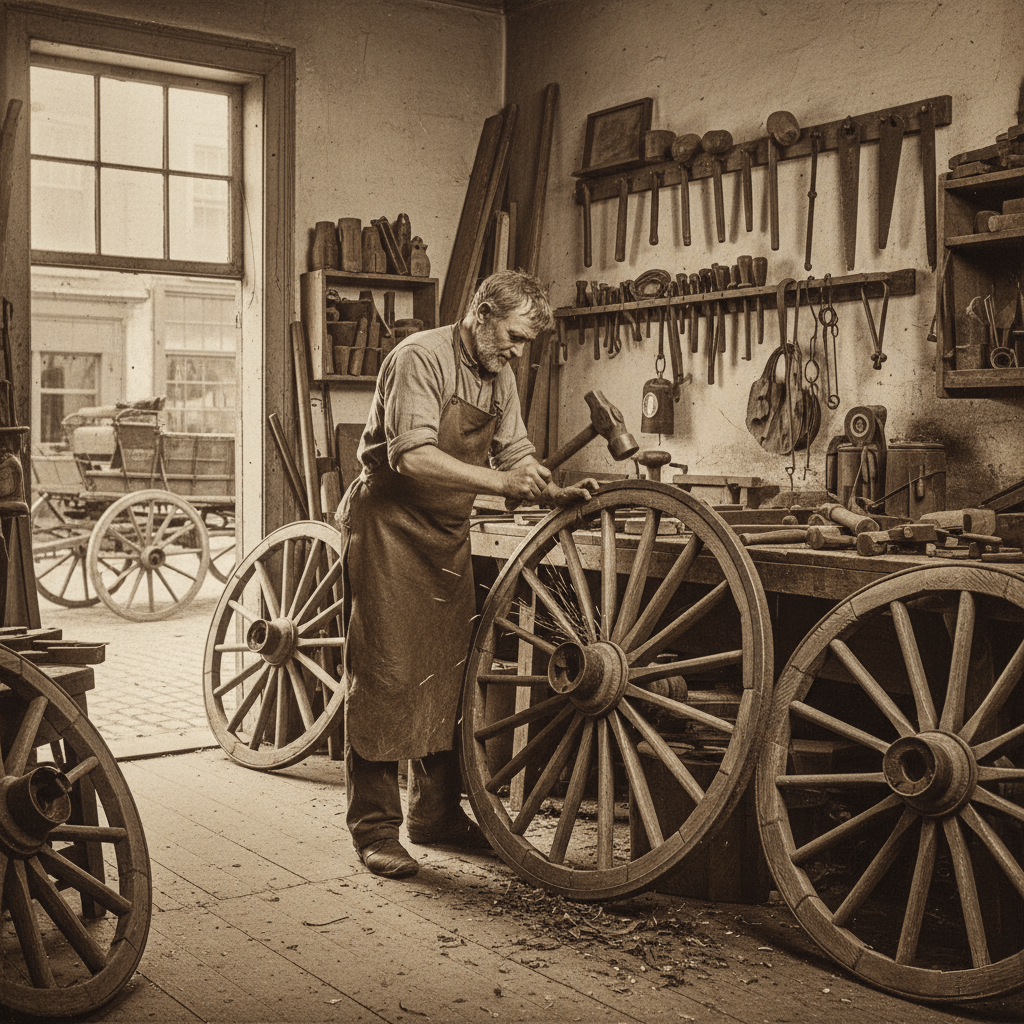
The wainwright was a skilled craftsman responsible for the construction and repair of wagons and carts, essential vehicles for transportation before the advent of motorized vehicles. This occupation flourished in rural and urban settings, where the demand for sturdy, reliable transport was paramount for trade, agriculture, and daily life. Wainwrights utilized a variety of materials, primarily wood and iron, to create vehicles that could withstand the rigors of travel across uneven terrain. Their work was not only functional but also reflected the artistry of craftsmanship, with many wainwrights taking pride in the aesthetic details of their creations, such as decorative carvings and paintwork. The role of the wainwright was crucial in supporting the economy, as they provided the means for farmers to transport goods to market and for merchants to deliver products to consumers.
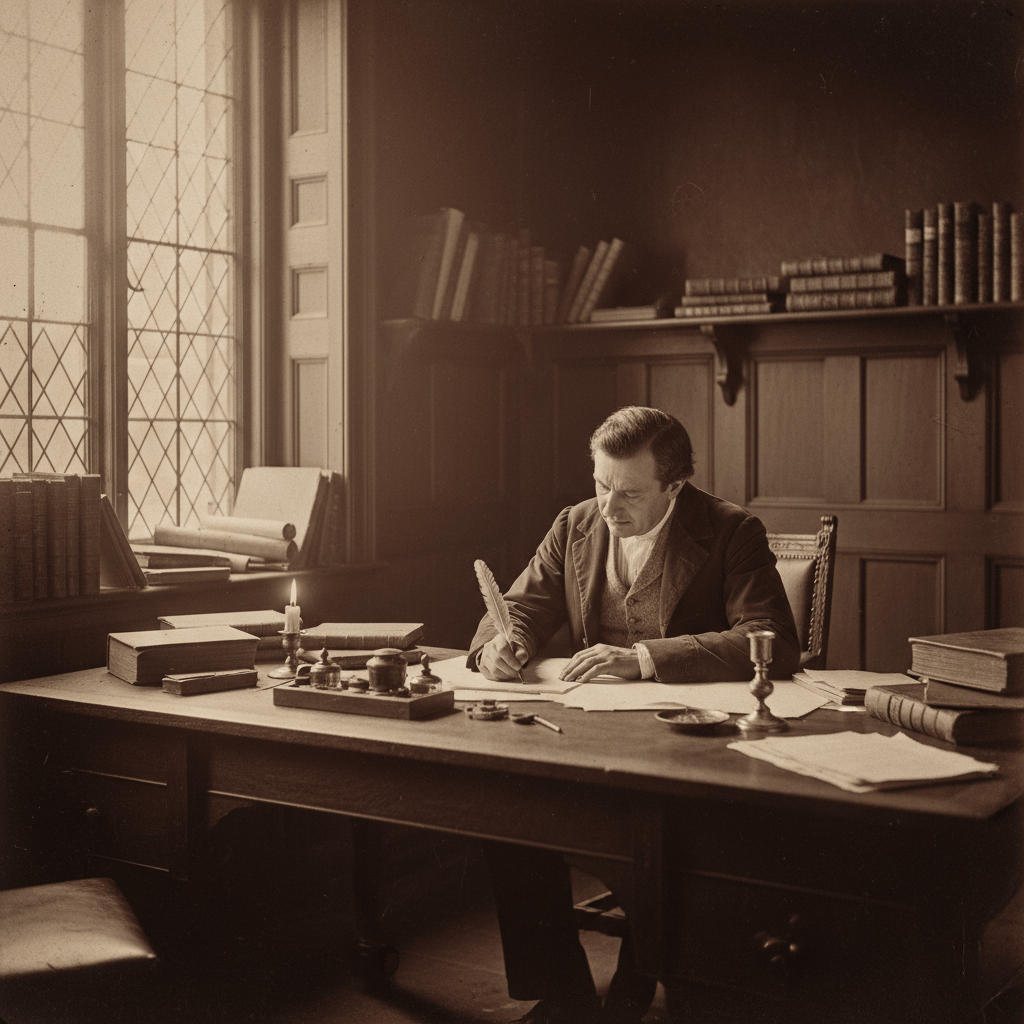
The scrivener was a vital figure in the medieval and early modern periods, serving as a professional scribe who specialized in writing documents by hand. Often employed by merchants, nobility, and the church, scriveners were responsible for drafting legal documents, contracts, letters, and other important texts. Their work was essential in an era when literacy was limited to a small segment of the population, and the written word held significant power. Scriveners were not only skilled in penmanship but also had a deep understanding of legal terminology and the nuances of language, making them indispensable in the administration of both public and private affairs. They often worked in scriptoriums or their own workshops, surrounded by parchment, ink, and quills, meticulously crafting each document with precision and care. The role of the scrivener was not merely to transcribe; they often provided advice on legal matters and helped clients navigate the complexities of written agreements, thus acting as both a writer and a consultant.
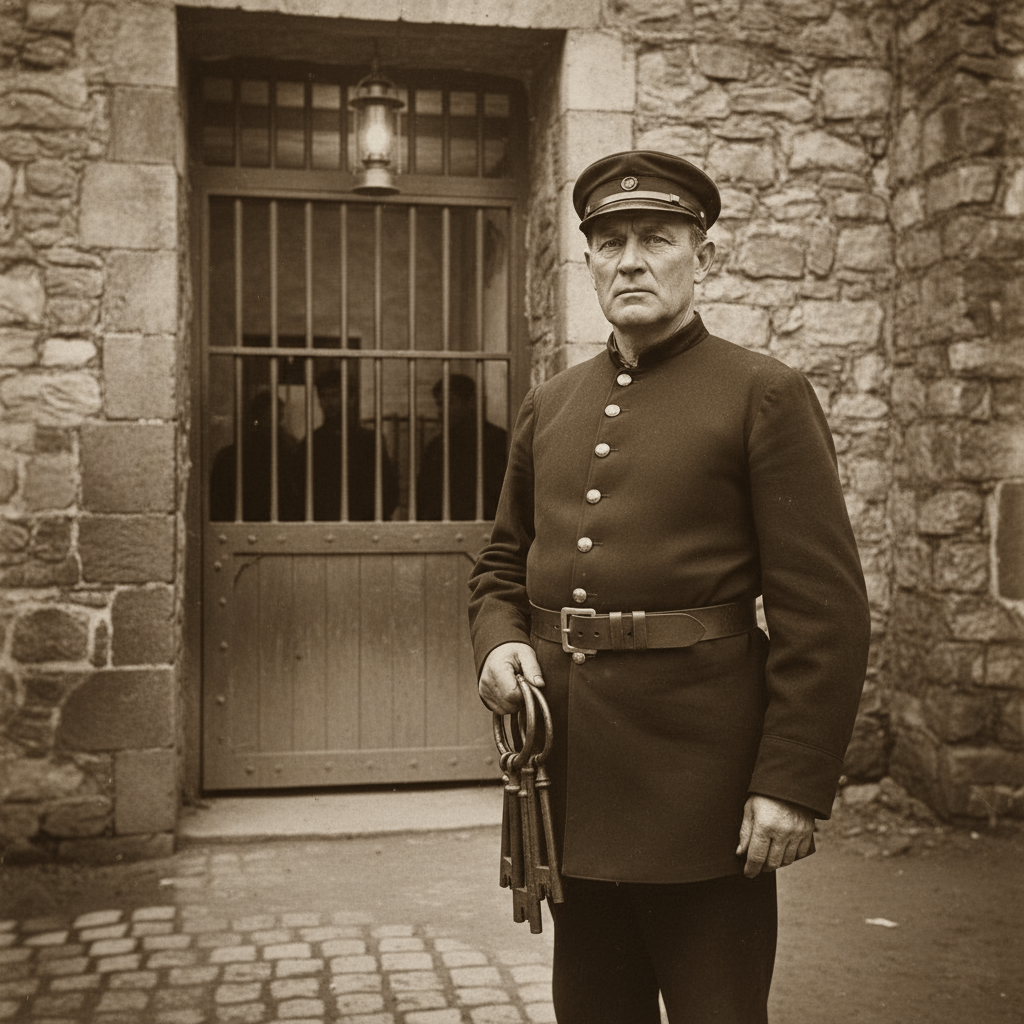
The role of a turnkey was pivotal in the management of prisons and correctional facilities during the Victorian Era, a time marked by significant social reform and a burgeoning interest in criminal justice. A turnkey was essentially a custodian of the prison, responsible for the daily oversight of inmates and the maintenance of order within the facility. This position required a unique blend of authority, vigilance, and interpersonal skills, as turnkeys were often the first line of contact between the inmates and the outside world. They were tasked with ensuring that the rules of the prison were followed, which included monitoring inmate behavior, conducting headcounts, and facilitating the daily routines of the prisoners, such as meals and exercise. Turnkeys also played a crucial role in the rehabilitation process, as they were often involved in the educational and vocational programs offered to inmates. Their interactions could significantly influence the inmates' experiences and outcomes, making their role both challenging and impactful. The job was not without its dangers; turnkeys had to navigate the complexities of inmate relationships and the potential for violence, requiring them to maintain a firm yet fair demeanor. As the Victorian Era progressed, the role of the turnkey began to evolve, reflecting broader changes in societal attitudes towards crime and punishment. The introduction of more structured prison systems and the rise of professional correctional officers began to overshadow the traditional turnkey role, leading to its gradual decline.
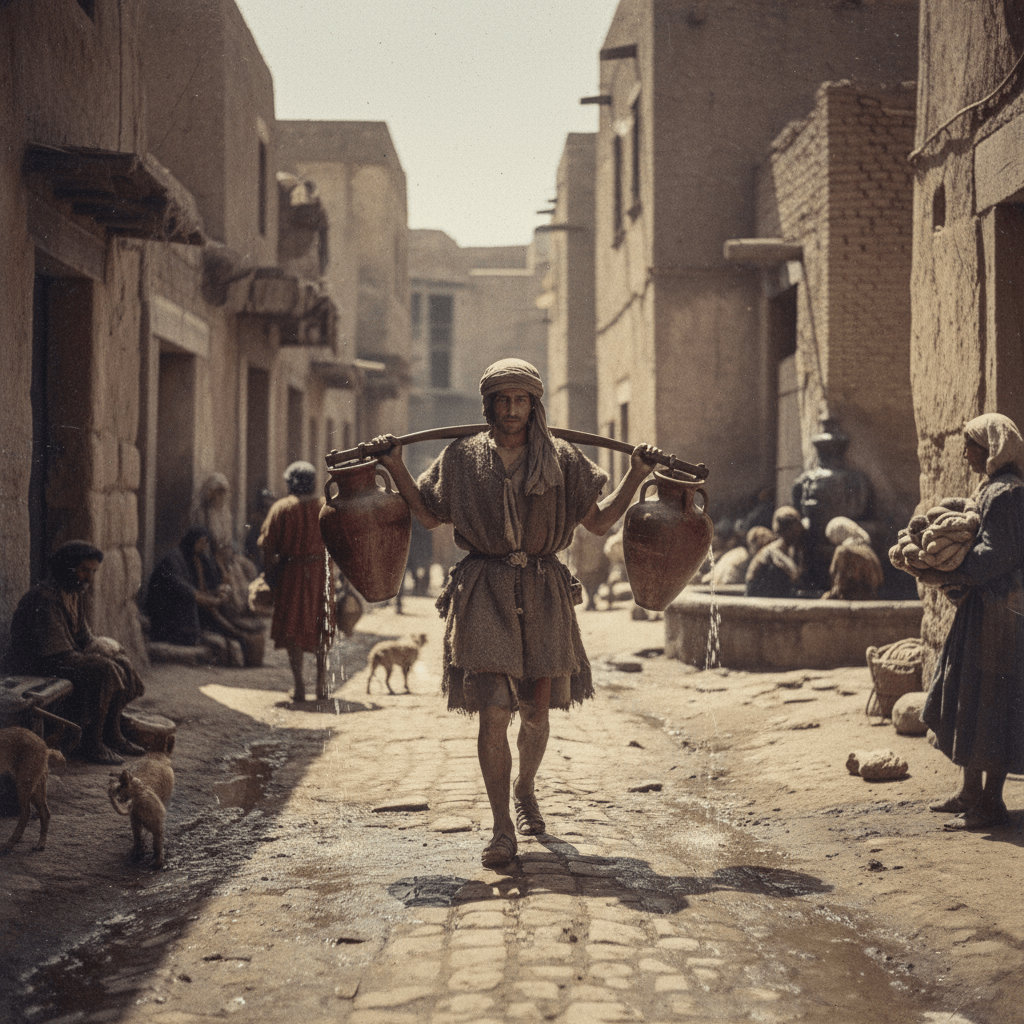
The role of a water carrier was vital in societies where access to clean water was limited. Water carriers were responsible for transporting water from sources such as rivers, wells, or springs to homes, businesses, and public places. This occupation was particularly prominent in urban areas where the infrastructure for plumbing was either rudimentary or nonexistent. Water carriers often worked long hours, navigating through streets with heavy containers, sometimes on foot or using animals like donkeys or camels to assist in their labor. The job required not only physical strength but also knowledge of the best water sources and the ability to manage the logistics of delivery, especially in times of drought or during the dry seasons when water was scarce. In many cultures, water carriers were respected members of the community, as they provided an essential service that supported daily life and public health.
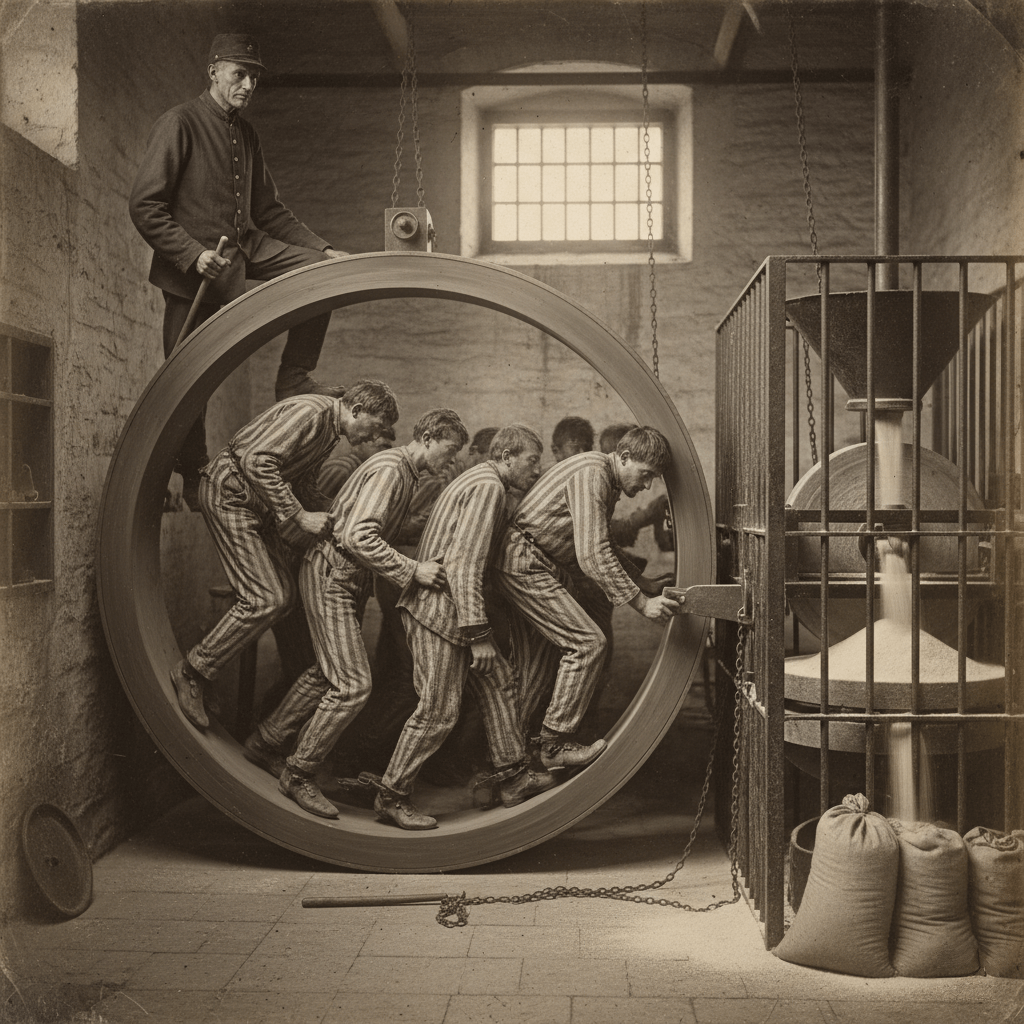
The role of a Prison Treadmill Operator emerged during the Victorian Era, a time marked by significant social reform and the evolution of penal systems. The treadmill, a large, rotating wheel powered by human effort, was introduced as a means of punishment and labor for inmates. Prison Treadmill Operators were responsible for overseeing the operation of these devices, which were often used to grind grain or pump water, effectively turning the physical exertion of prisoners into productive labor. This job was not only about managing the machinery but also about maintaining order among the inmates, ensuring that they adhered to the strict routines imposed by the prison system. The treadmill was a symbol of the harsh realities of Victorian penal reform, reflecting the era's belief in hard labor as a means of rehabilitation and punishment. Operators had to be vigilant, as the treadmill could be dangerous; prisoners could easily fall or injure themselves if not properly supervised. The role required a firm hand and an understanding of the psychological dynamics at play within the prison environment. The treadmill was often seen as a form of cruel and unusual punishment, leading to debates about the ethics of such labor practices. As the 19th century progressed, the treadmill fell out of favor, replaced by more humane forms of punishment and rehabilitation, leading to the eventual extinction of the role of the Prison Treadmill Operator.
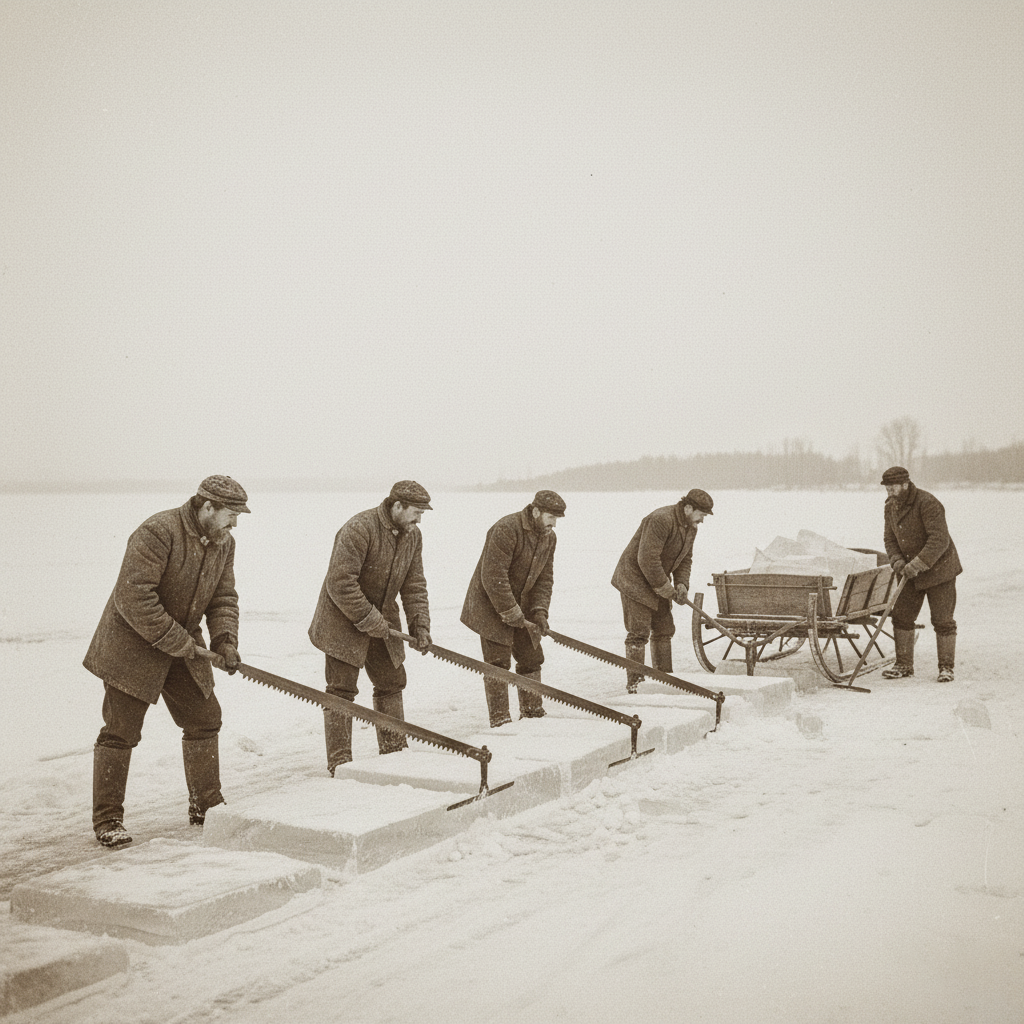
In the 19th century, before the advent of modern refrigeration, the Ice Cutter was a vital occupation, especially in regions where lakes and rivers froze during the winter months. These skilled laborers harvested ice from frozen bodies of water, which was then stored in icehouses and used to preserve food and cool drinks in the sweltering summer heat. The process was labor-intensive and required not only physical strength but also a keen understanding of the ice's thickness and quality. Ice was cut into large blocks, often weighing several hundred pounds, and transported to markets and homes, where it played a crucial role in daily life. The Ice Cutter's work was not just about brute force; it involved precision and technique to ensure that the ice remained intact during the cutting and hauling process. As the demand for ice grew, so did the complexity of the job, with cutters often working in teams to maximize efficiency and safety.
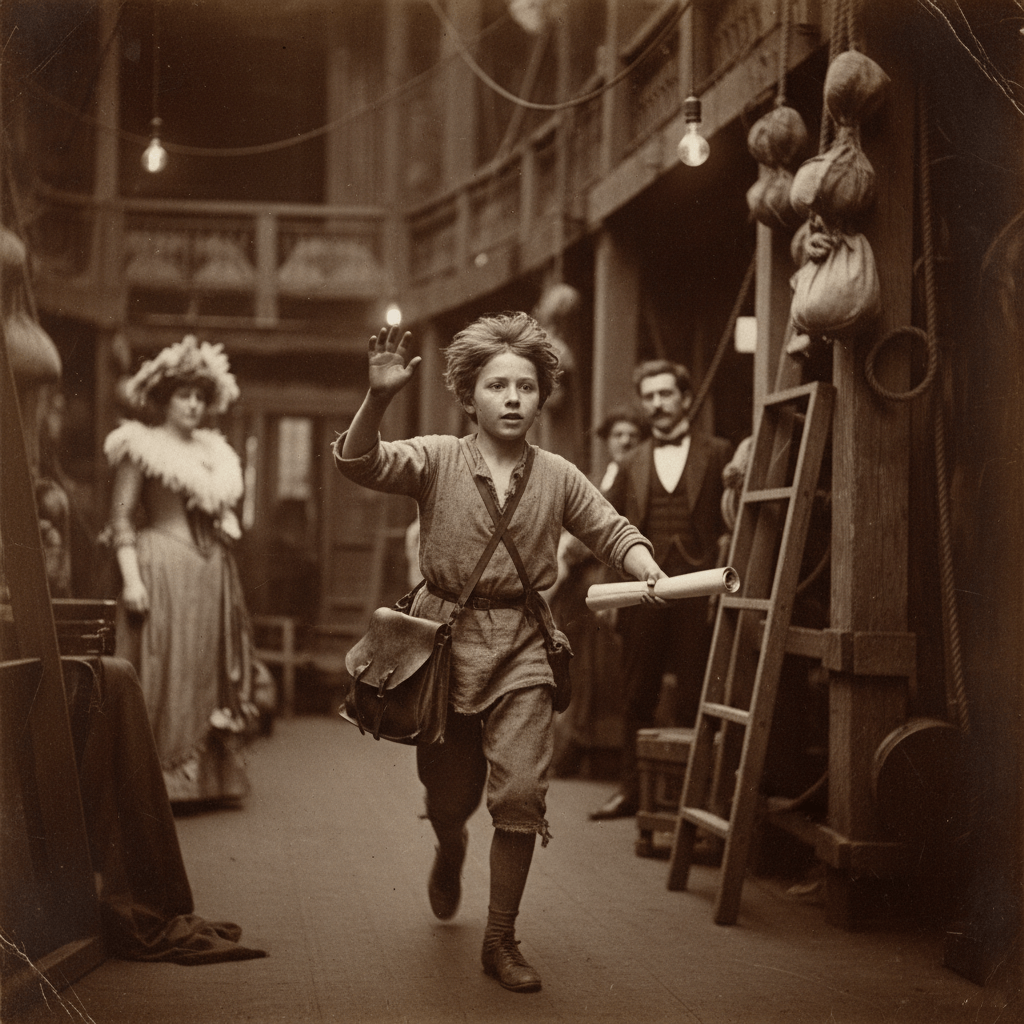
The Theatre Call Boy was an essential figure in the vibrant world of Victorian theatre, acting as the vital link between the stage and the backstage. This young boy, often between the ages of 10 and 15, was responsible for ensuring that the performance ran smoothly by delivering messages and calls to actors, stagehands, and other crew members. With a keen sense of timing and an ability to navigate the bustling theatre environment, the call boy would often be found darting through the dimly lit corridors, his footsteps echoing against the wooden floors, as he relayed cues for entrances, exits, and scene changes. The role required not only speed and agility but also a deep understanding of the production schedule and the ability to communicate effectively under pressure. The call boy would often carry a small bell or whistle to signal the start of a performance or a scene change, ensuring that everyone was in their proper place at the right time. In an era when performances were often elaborate and lengthy, the call boy's role was crucial in maintaining the rhythm and flow of the show, making him a beloved figure among the cast and crew alike.
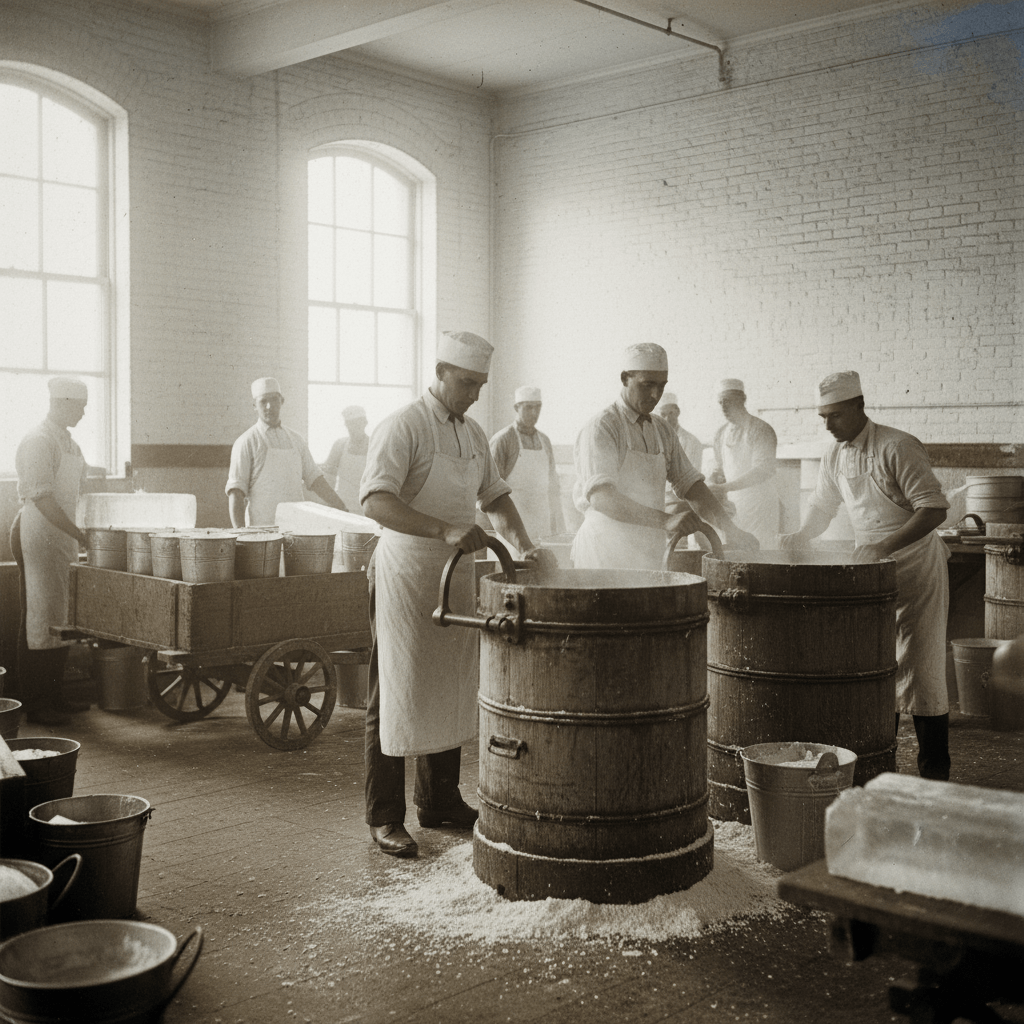
The Ice Cream Freezer was a vital role in the production of one of the most beloved treats in history. Emerging during the Industrial Revolution, this occupation involved the manual freezing of ice cream mixtures, a process that required both skill and precision. Ice cream freezers were responsible for ensuring that the mixture reached the perfect consistency and temperature, creating a smooth and creamy texture that delighted consumers. They worked in ice cream parlors, factories, and even at fairs, where they would often be seen churning large batches of ice cream in traditional ice cream makers, surrounded by blocks of ice and salt, which were essential for the freezing process. The job required not only a keen understanding of the freezing process but also an ability to adapt to varying temperatures and ingredient qualities, making it a unique blend of art and science.
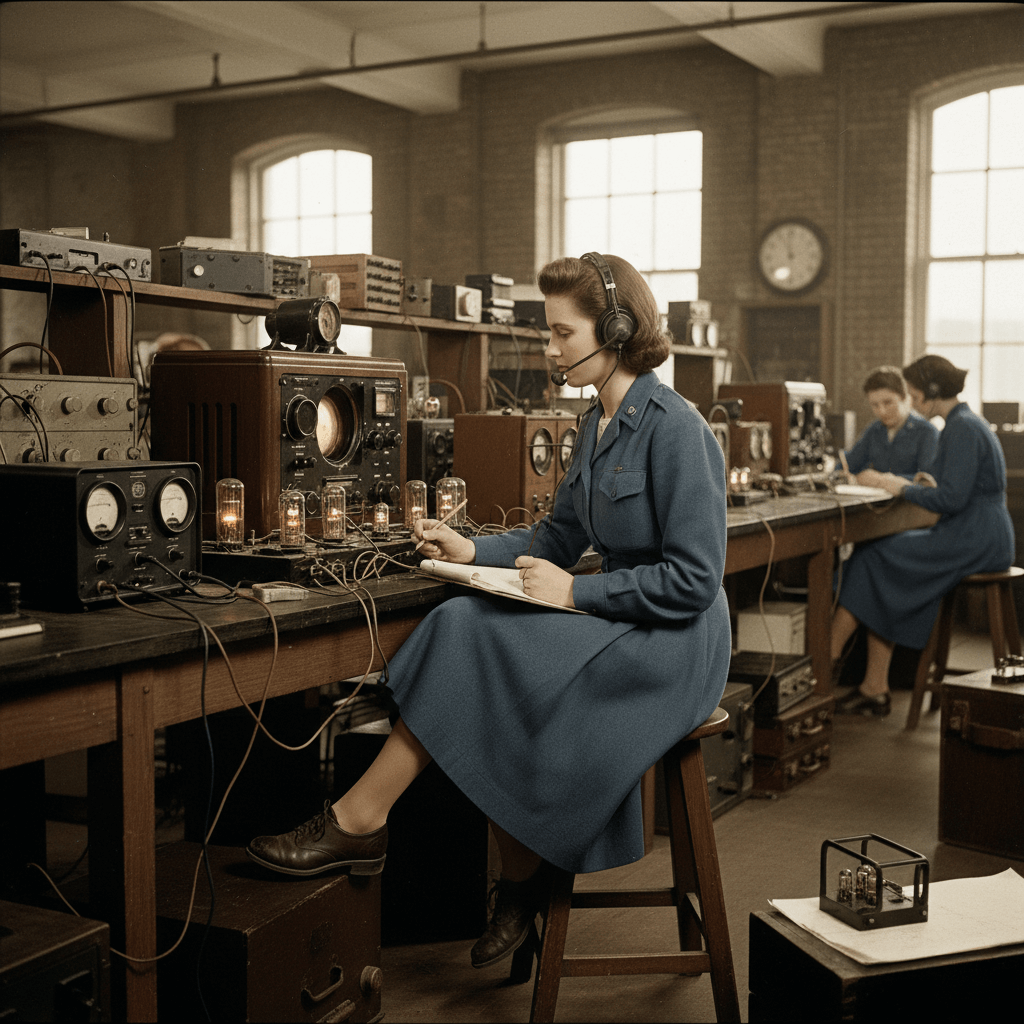
The role of a Radio Test Girl emerged in the early 20th century, during a time when radio technology was rapidly evolving and becoming a staple of American life. These women were integral to the development and testing of radio equipment, ensuring that devices functioned correctly before they reached consumers. Their work involved a combination of technical skill and keen auditory perception, as they would test the clarity and quality of sound produced by various radio sets. Often employed by radio manufacturers, they would sit in soundproof booths, adjusting dials and listening intently to broadcasts, making notes on sound quality, static interference, and overall performance. The job required not only a good ear for sound but also an understanding of the technical aspects of radio equipment, making them vital contributors to the burgeoning field of telecommunications.
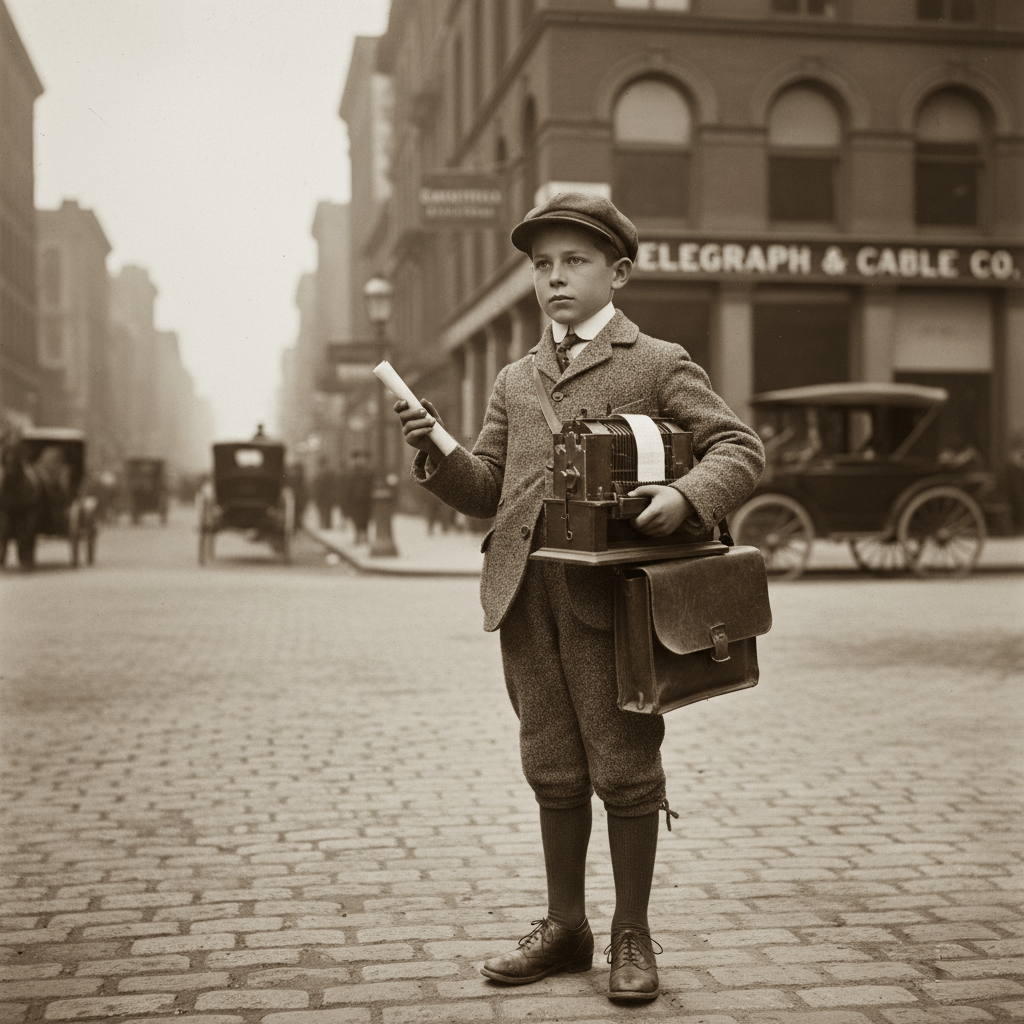
The role of the Telemark Boy emerged during the Victorian Era, a time marked by rapid industrialization and the expansion of the British Empire. These young boys, typically between the ages of 10 and 15, were employed in the bustling telegraph offices that dotted cities and towns across the United Kingdom. Their primary responsibility was to assist telegraph operators by delivering messages and relaying information between offices and clients. The telegraph was a revolutionary technology of the time, allowing for near-instantaneous communication over long distances, and the Telemark Boys were essential to its operation. Dressed in simple, often worn clothing, these boys navigated the busy streets, carrying messages in leather satchels. They were known for their speed and agility, darting through crowds and dodging horse-drawn carriages to ensure that messages reached their destinations promptly. The job required not only physical stamina but also a keen sense of direction and the ability to read and write, as they often had to transcribe messages before delivering them. The social context of the era saw many children entering the workforce at a young age, often out of necessity due to family financial pressures. The work of a Telemark Boy was seen as a stepping stone for many, providing them with a glimpse into the burgeoning world of communication and technology, while also exposing them to the harsh realities of child labor during this period.
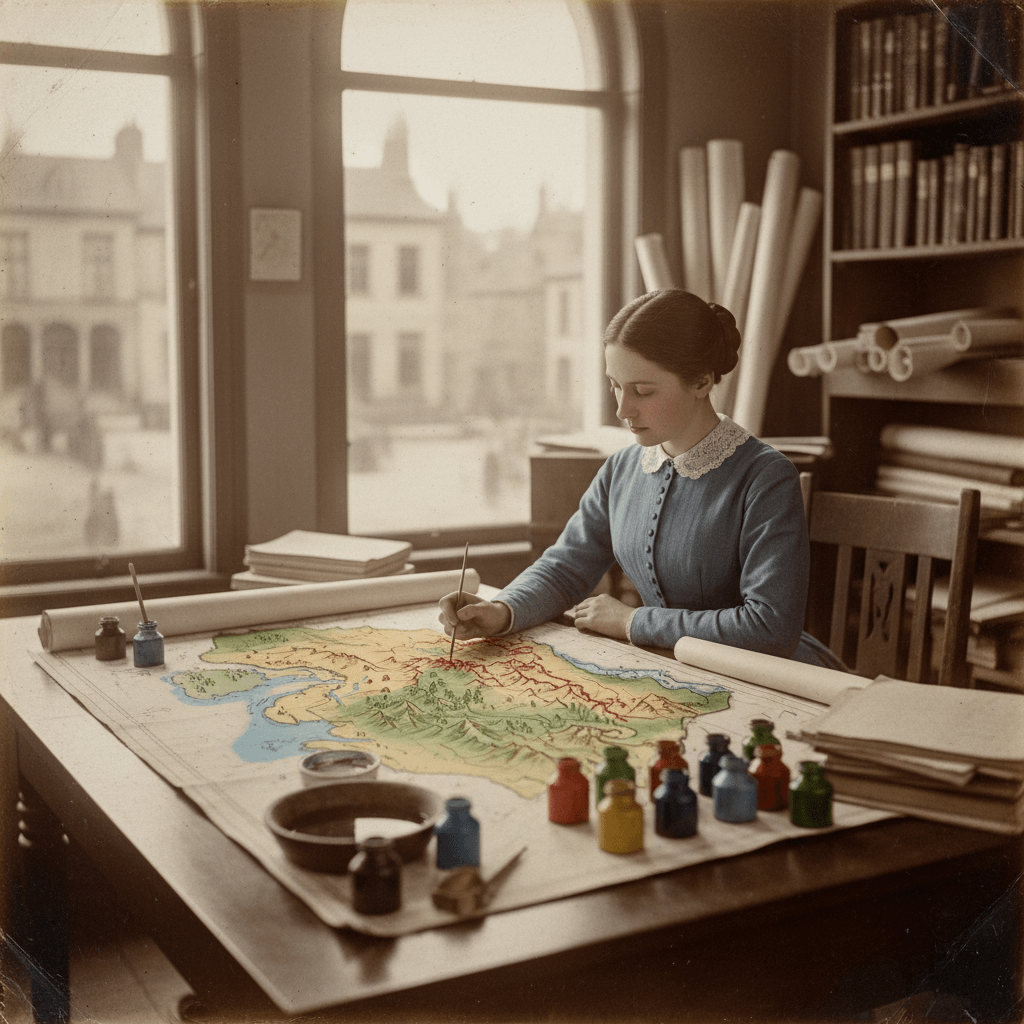
The role of a Map Colourist was integral to the production of maps during the Victorian Era, a time when cartography was both an art and a science. Map Colourists were responsible for the meticulous task of hand-painting maps, adding vibrant colors to delineate various geographical features, political boundaries, and land use. Each color had a specific meaning; for instance, blue often represented water bodies, green indicated forests, and brown was used for mountains. The work required not only artistic skill but also a deep understanding of geography and the significance of different regions. Map Colourists worked in printing houses or cartographic firms, often alongside surveyors and engravers. They would receive printed maps, typically in black and white, and then apply their artistic talents to bring these maps to life. The process was labor-intensive, requiring precision and patience, as even the slightest mistake could lead to misinterpretation of the map's information. The final product was a beautifully colored map that was both functional and aesthetically pleasing, often used for educational purposes, navigation, and decoration. As the demand for maps grew with the expansion of the British Empire and the rise of global exploration, the role of the Map Colourist became increasingly important. However, this job was not without its challenges, as the work environment could be cramped and poorly lit, leading to eye strain and fatigue. Despite these conditions, the Map Colourist took pride in their craft, knowing that their work contributed to the understanding of the world around them.
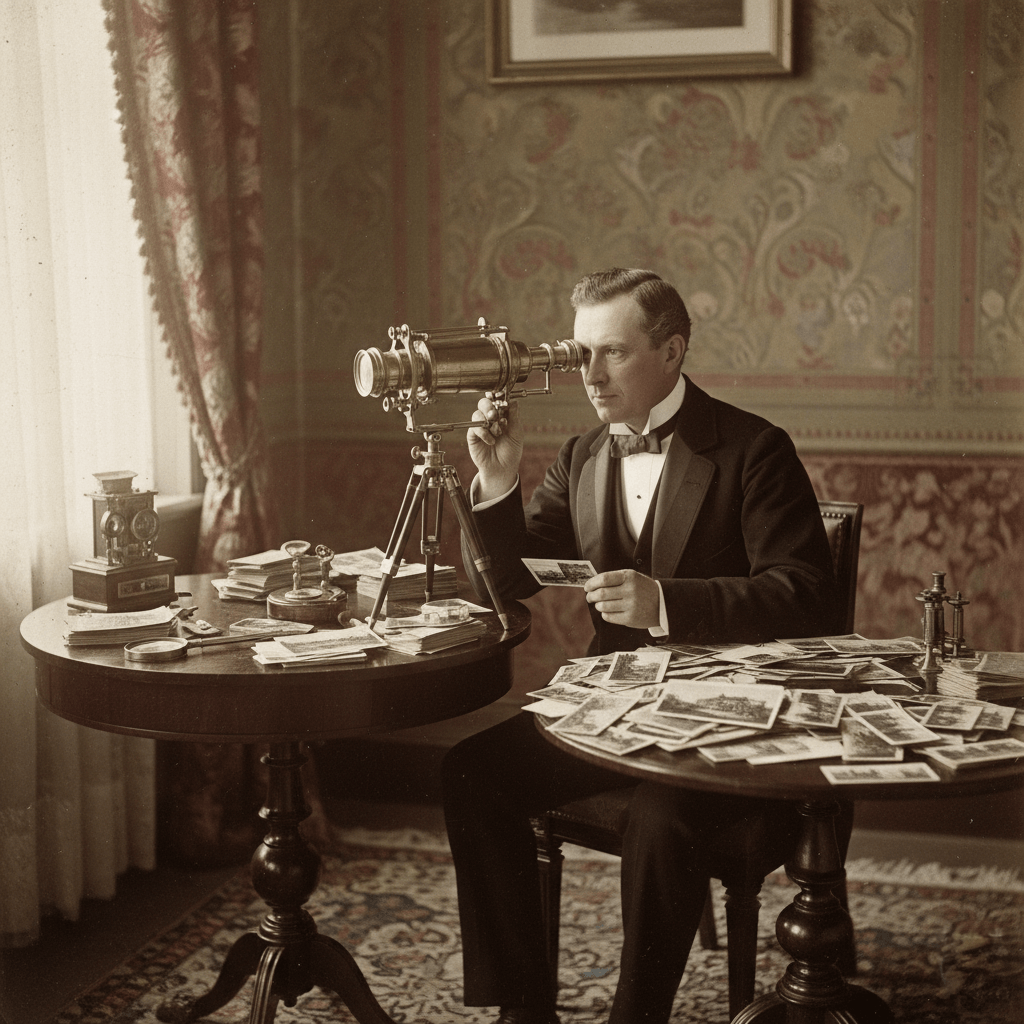
The role of a stereoscopist emerged in the mid-19th century, coinciding with the rise of the stereoscope, a device that allowed viewers to experience three-dimensional images. Stereoscopists were skilled artisans and technicians who specialized in creating stereoscopic images, which were pairs of photographs taken from slightly different angles to simulate depth perception when viewed through a stereoscope. This job was not only a technical craft but also an artistic endeavor, as stereoscopists had to carefully compose scenes, select appropriate lighting, and ensure that the images conveyed a sense of realism and depth. Stereoscopists often worked in studios or as part of larger photographic firms, where they would collaborate with photographers and artists. They were responsible for processing the images, mounting them on cards, and sometimes even hand-coloring them to enhance their visual appeal. The popularity of stereoscopic images surged during the Victorian Era, as they provided a novel form of entertainment and education, allowing people to experience distant landscapes, historical events, and even exotic cultures from the comfort of their homes. As the demand for stereoscopic images grew, so did the need for skilled stereoscopists who could produce high-quality work. They played a crucial role in the dissemination of visual culture, contributing to the development of photography as an art form and a means of communication.
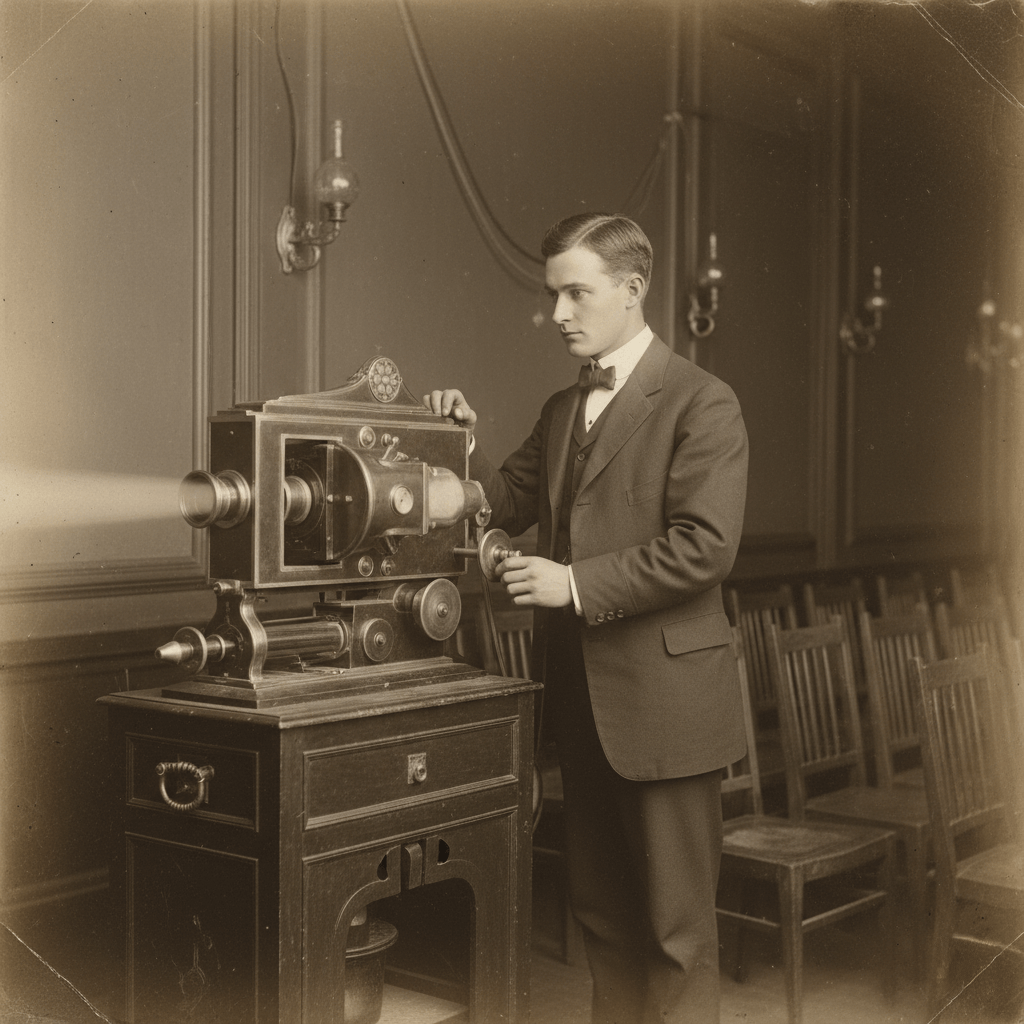
The Vitascope Operator was a pioneering figure in the early days of cinema, responsible for operating the Vitascope, one of the first commercially successful motion picture projectors. This role emerged in the late 19th century, during a time when the world was captivated by the novelty of moving images. The Vitascope, developed by Thomas Edison and his team, allowed for the projection of short films to audiences in theaters, marking a significant leap in entertainment technology. Operators were tasked with not only running the machine but also ensuring that the film was threaded correctly, maintaining the right speed, and managing the light source to create a clear image on the screen. The job required a blend of technical skill and showmanship, as operators often had to engage with the audience, enhancing the viewing experience with commentary or sound effects. The excitement of the flickering images and the communal experience of watching films in a darkened theater made the role of the Vitascope Operator a vital part of the early film industry.
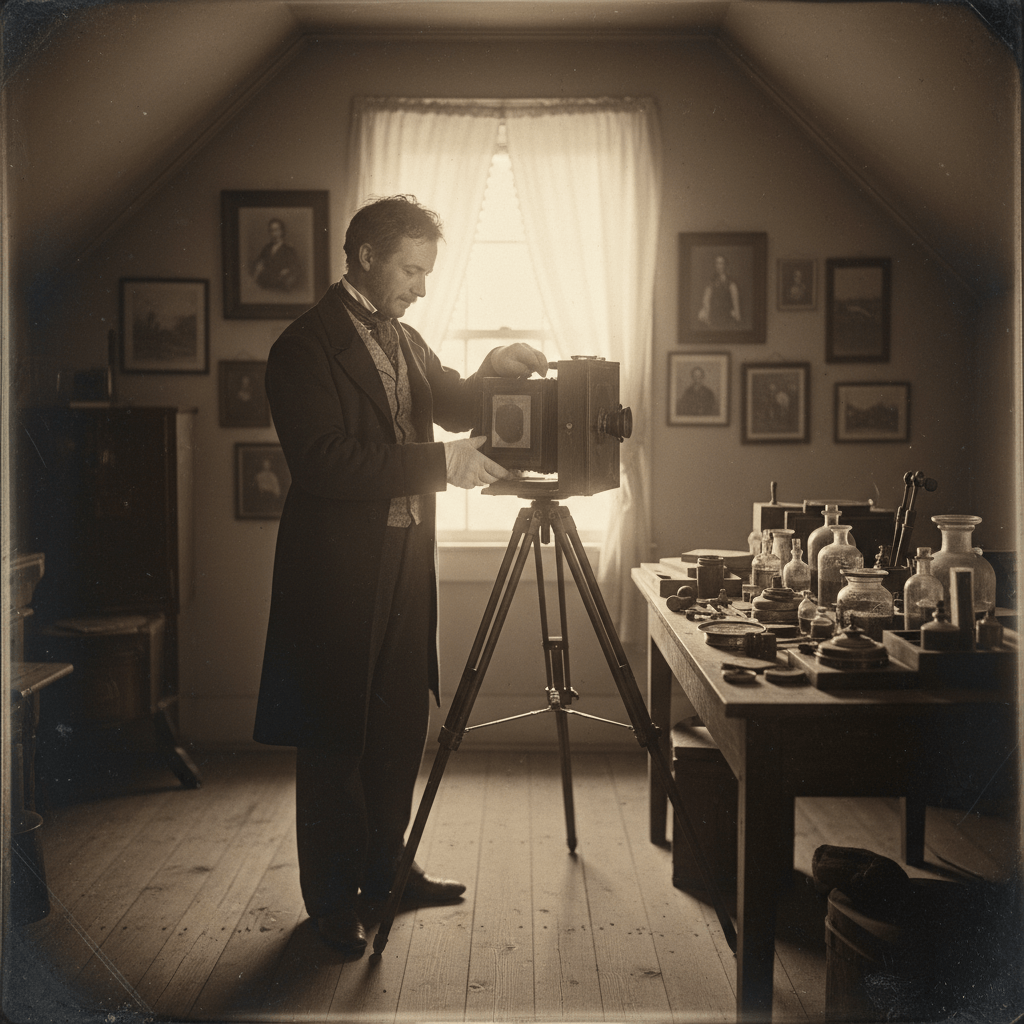
The daguerreotypist was a pioneering figure in the world of photography, specializing in the creation of daguerreotypes, the first commercially successful form of photography. This intricate process, developed by Louis Daguerre in 1839, involved capturing images on a polished sheet of silver-plated copper. The daguerreotypist's work was not merely technical; it was an art form that required a keen eye for detail and a deep understanding of light and composition. Each daguerreotype was a unique image, characterized by its remarkable clarity and depth, making it a sought-after medium for portraiture and landscapes alike. The daguerreotypist operated in a small studio, often adorned with velvet drapes and props to enhance the aesthetic of the portraits. The process began with the careful preparation of the metal plate, which was coated with a light-sensitive layer of silver iodide. After exposure in the camera, the plate was developed using mercury vapor, a hazardous but essential step that brought the latent image to life. The final product was then fixed with a salt solution, resulting in a stunning, mirror-like image that could be viewed directly or framed for display. Daguerreotypists were often entrepreneurs, establishing their own studios and marketing their services to the public. They played a crucial role in documenting society, capturing everything from family portraits to significant historical events, and their work laid the foundation for modern photography.
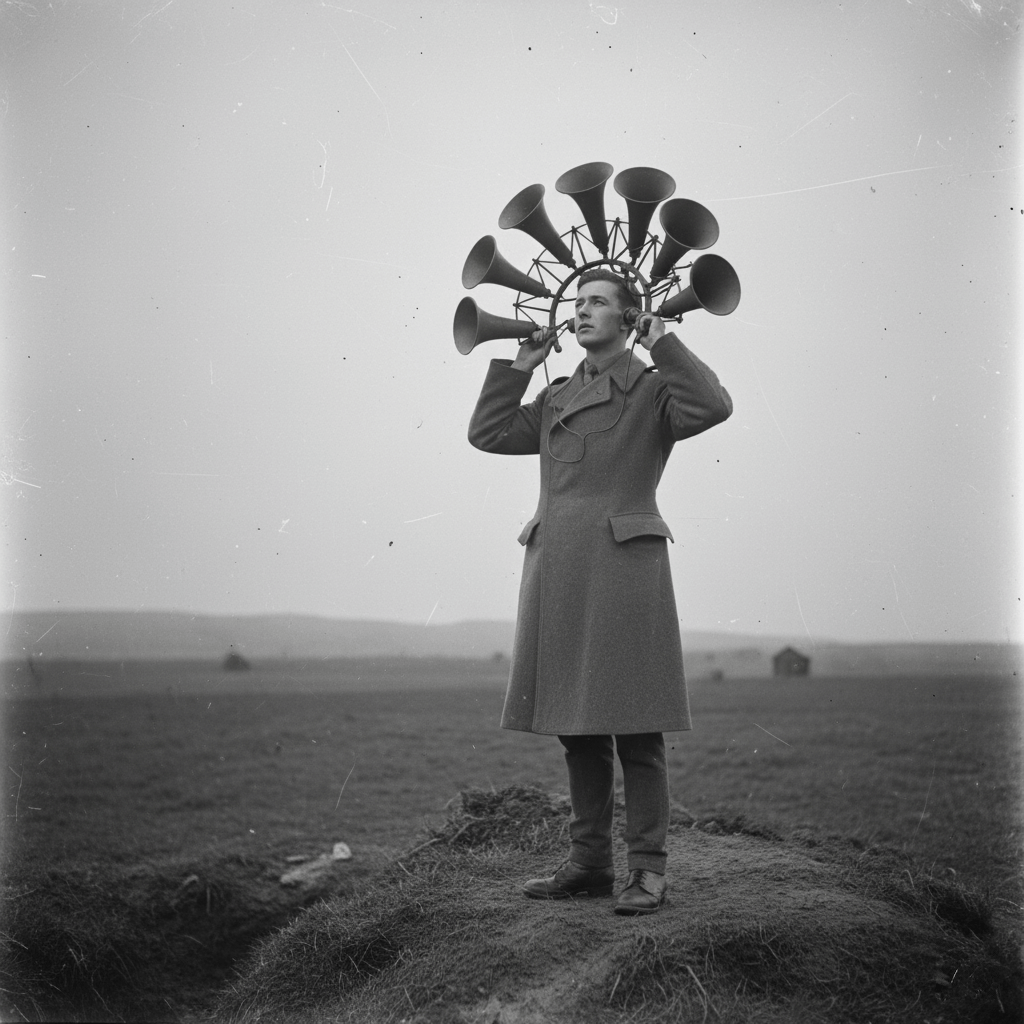
The role of an Aircraft Listener emerged in the mid-20th century, primarily during the Post-War Era, when aviation technology was rapidly advancing and air traffic was increasing significantly. Aircraft Listeners were tasked with monitoring and interpreting the sounds of aircraft engines, particularly in military contexts, where understanding the nuances of engine noise could indicate the type of aircraft, its operational status, and even potential mechanical issues. This job was crucial for military intelligence and air traffic control, as it provided valuable information about aircraft movements and capabilities without the need for visual confirmation. Listeners would often work in pairs or small teams, stationed at strategic locations such as airbases or observation posts. They utilized their acute hearing to distinguish between different aircraft types, noting variations in sound that could indicate changes in speed, altitude, or engine performance. This auditory skill was honed through extensive training and experience, as the ability to identify aircraft by sound alone was a rare and valuable talent. The job required not only a keen ear but also a deep understanding of aviation technology and the specific characteristics of various aircraft engines. Listeners would often keep detailed logs of their observations, contributing to intelligence reports and operational assessments. The role was a blend of art and science, requiring both technical knowledge and an intuitive grasp of sound dynamics.
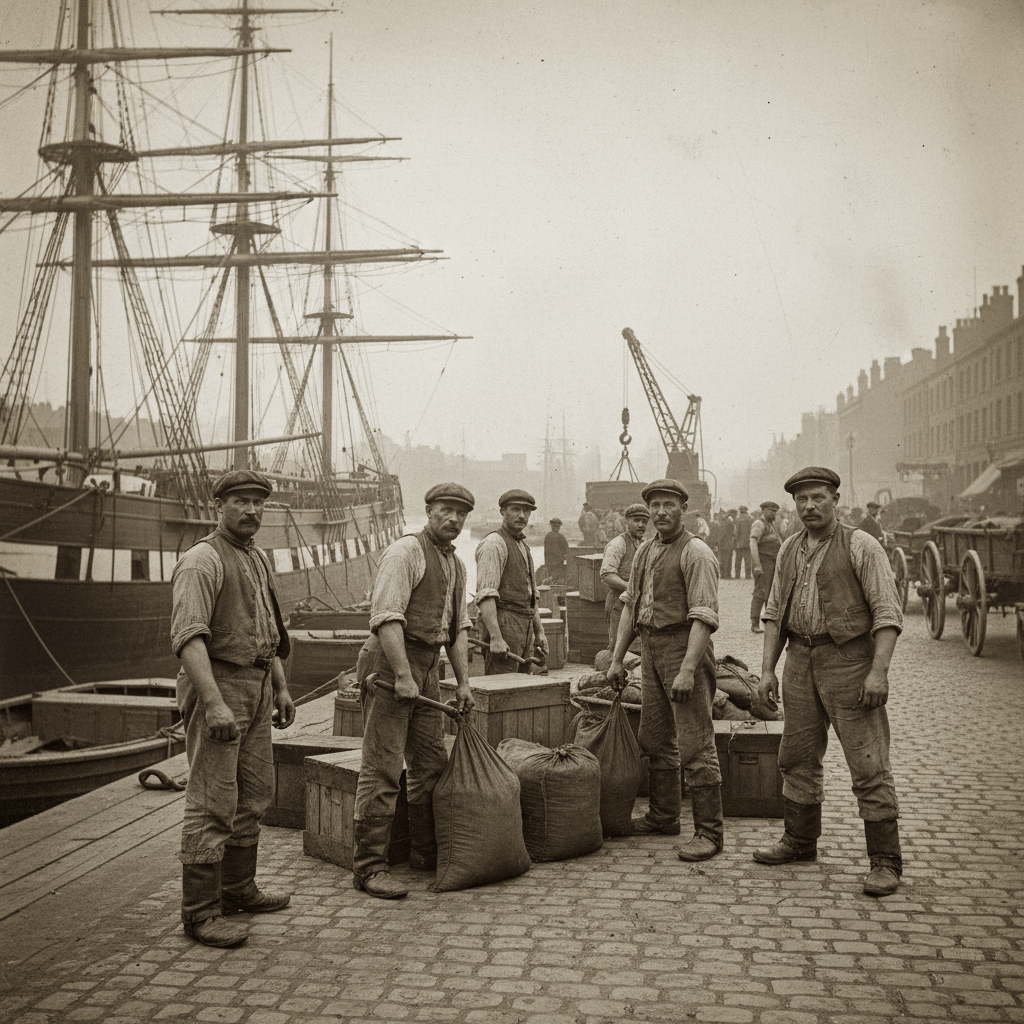
The stevedore, often referred to as a longshoreman, was a vital figure in the shipping industry during the Industrial Revolution and beyond. These laborers were responsible for the loading and unloading of cargo from ships, a task that required not only physical strength but also a keen understanding of maritime operations. Stevedores worked in bustling ports, where the clamor of ships, the shouts of dockworkers, and the creaking of cargo nets created a symphony of industry. They were the backbone of trade, ensuring that goods moved efficiently from sea to shore and vice versa. The work of a stevedore was physically demanding and often dangerous. They operated in all weather conditions, lifting heavy crates and barrels, often using tools such as hooks, slings, and winches. The stevedore's role was not merely about brute strength; it also required coordination and teamwork, as they worked alongside ship captains, dock managers, and other laborers to ensure that cargo was handled safely and efficiently. The stevedore's expertise in stowing cargo was crucial, as improper loading could lead to accidents at sea or damage to goods. As the shipping industry evolved, so too did the role of the stevedore. The introduction of containerization in the mid-20th century revolutionized cargo handling, leading to a decline in the traditional stevedore's role. Containers allowed for faster loading and unloading, reducing the need for manual labor and specialized skills that stevedores had honed over decades. This shift marked the beginning of the end for the stevedore as a distinct occupation, as automation and mechanization took over the docks.
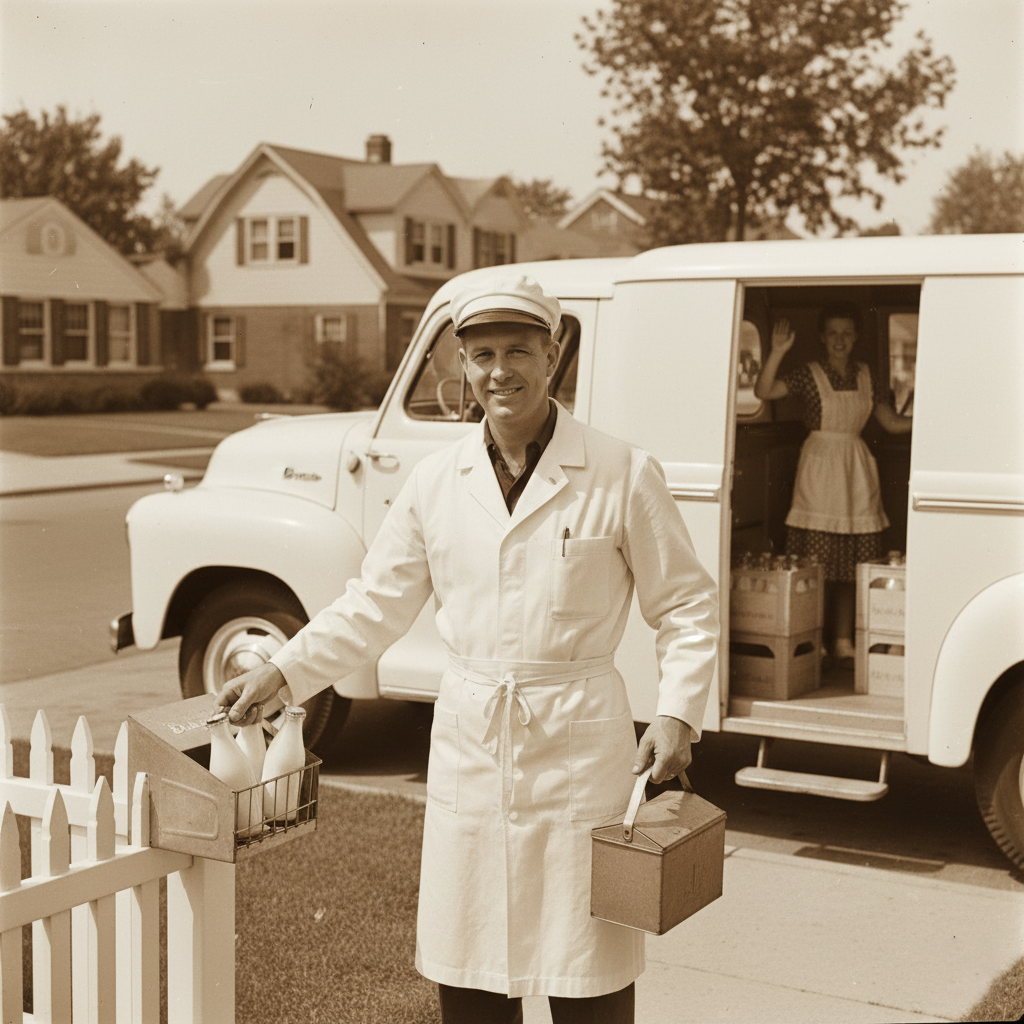
The milkman was a familiar figure in the neighborhoods of the 20th century, a symbol of a time when fresh dairy products were delivered directly to homes. Clad in a crisp uniform, often with a cap, the milkman would rise before dawn, preparing for a day of delivering fresh milk, cream, and other dairy products to families. The job was not merely about transportation; it was a vital service that ensured households received their daily supply of milk, often still warm from the farm. The milkman would navigate his route, typically using a horse-drawn cart or later, a motor vehicle, stopping at each home to leave bottles of milk on doorsteps, often exchanging empty bottles from the previous delivery. This daily ritual fostered a sense of community, as the milkman became a trusted figure, known by name to the families he served. The job required not only physical stamina but also a keen sense of time management and customer service, as the milkman had to maintain a strict schedule to ensure freshness and reliability.
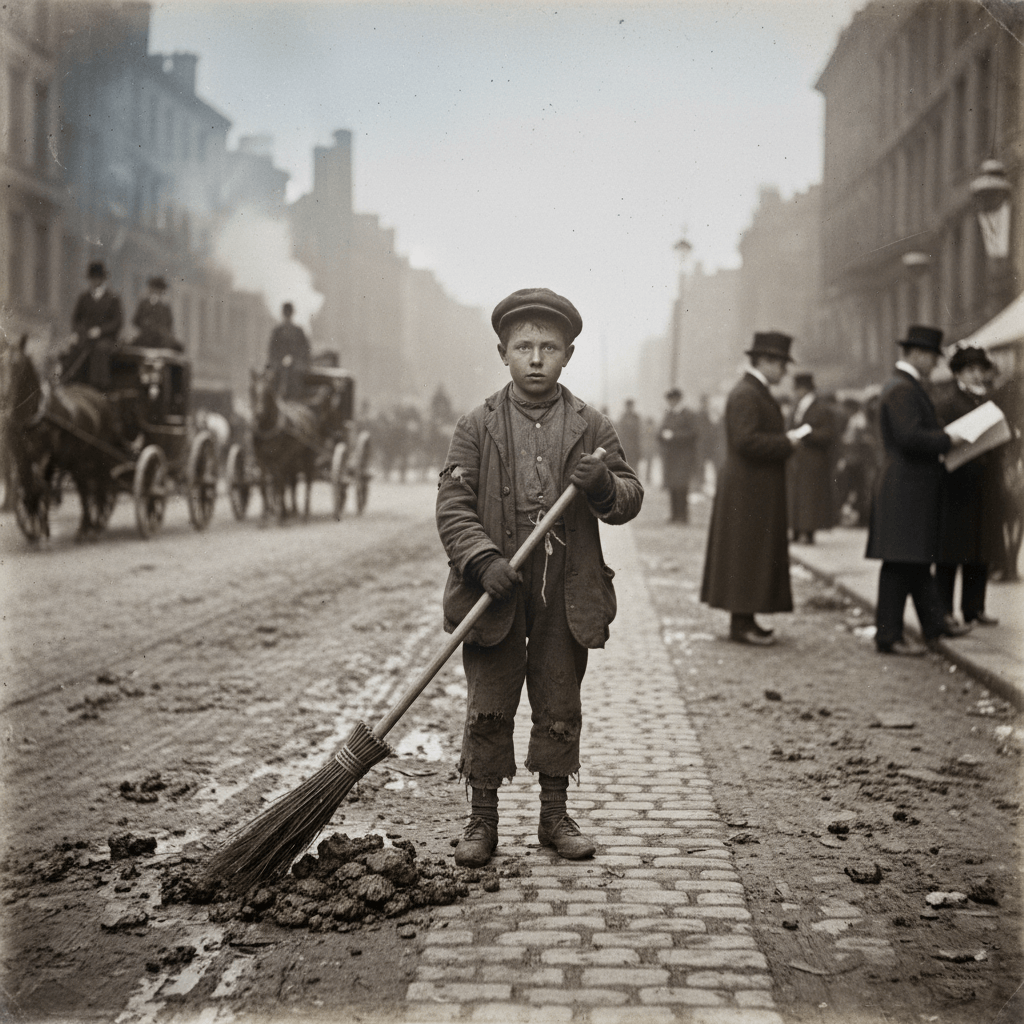
The role of a Crossing Sweeper emerged in the bustling streets of Victorian England, where the rapid growth of urban centers and the advent of horse-drawn carriages created a unique set of challenges for pedestrians. Crossing Sweepers were tasked with keeping the roadways clean, particularly at busy intersections, where mud, horse manure, and debris accumulated. These workers, often children or the impoverished, would stand at street corners with brooms, ready to sweep away the filth to create a cleaner path for passersby. Their work was not only about cleanliness but also about ensuring the safety and comfort of those navigating the often chaotic urban landscape. Crossing Sweepers were a common sight in cities like London, where the streets were teeming with traffic and the air was thick with the sounds of hooves and wheels. They would often wear tattered clothing, reflecting their low social status, and their earnings were meager, relying on the generosity of pedestrians who would toss coins in gratitude for a clean crossing. This job was emblematic of the social issues of the time, highlighting the stark divide between the wealthy and the working poor, as well as the challenges faced by children in the labor force.
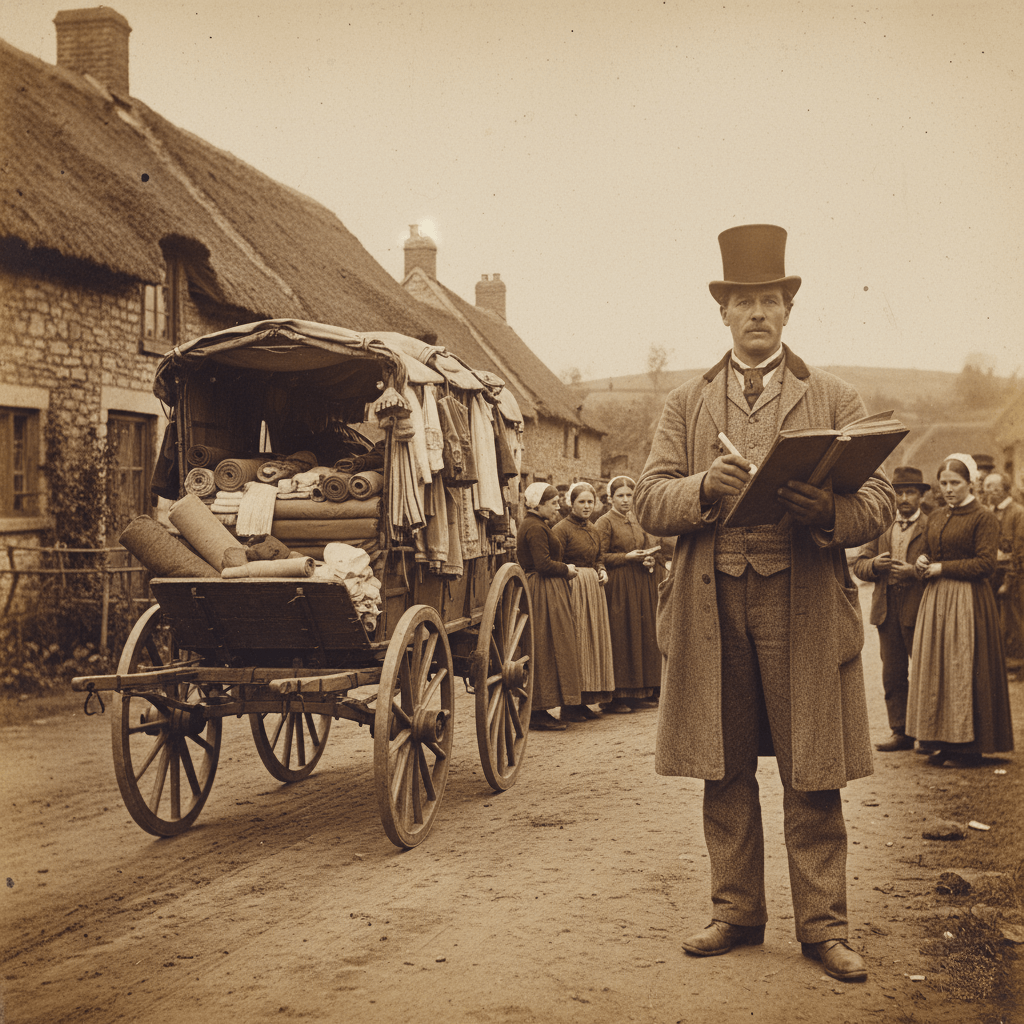
The Tallyman was a crucial figure in the Victorian Era, primarily serving as a collector of debts and a record keeper for local businesses and tradesmen. Often seen as a bridge between the merchant and the consumer, the Tallyman would visit homes and businesses to collect payments for goods purchased on credit. This role was particularly significant in an era when many families relied on credit to manage their household expenses, especially in the burgeoning urban centers of England. The Tallyman would carry a tally stick, a wooden stick marked with notches to record transactions, and a ledger to keep detailed accounts of debts owed and payments made. The Tallyman’s work was not merely transactional; it involved building relationships with customers, understanding their financial situations, and sometimes negotiating payment plans. This role required a keen sense of empathy and social awareness, as many customers were struggling to make ends meet. The Tallyman was often seen as a community figure, known by name and trusted to handle sensitive financial matters with discretion. As the Victorian Era progressed, the role of the Tallyman began to change. The introduction of more formal banking systems and the rise of credit institutions started to diminish the need for personal debt collectors. The advent of modern accounting practices and the use of printed invoices further contributed to the decline of this occupation, as transactions became more standardized and less reliant on personal relationships. By the early 20th century, the Tallyman had largely disappeared from the economic landscape, replaced by more formalized financial systems.
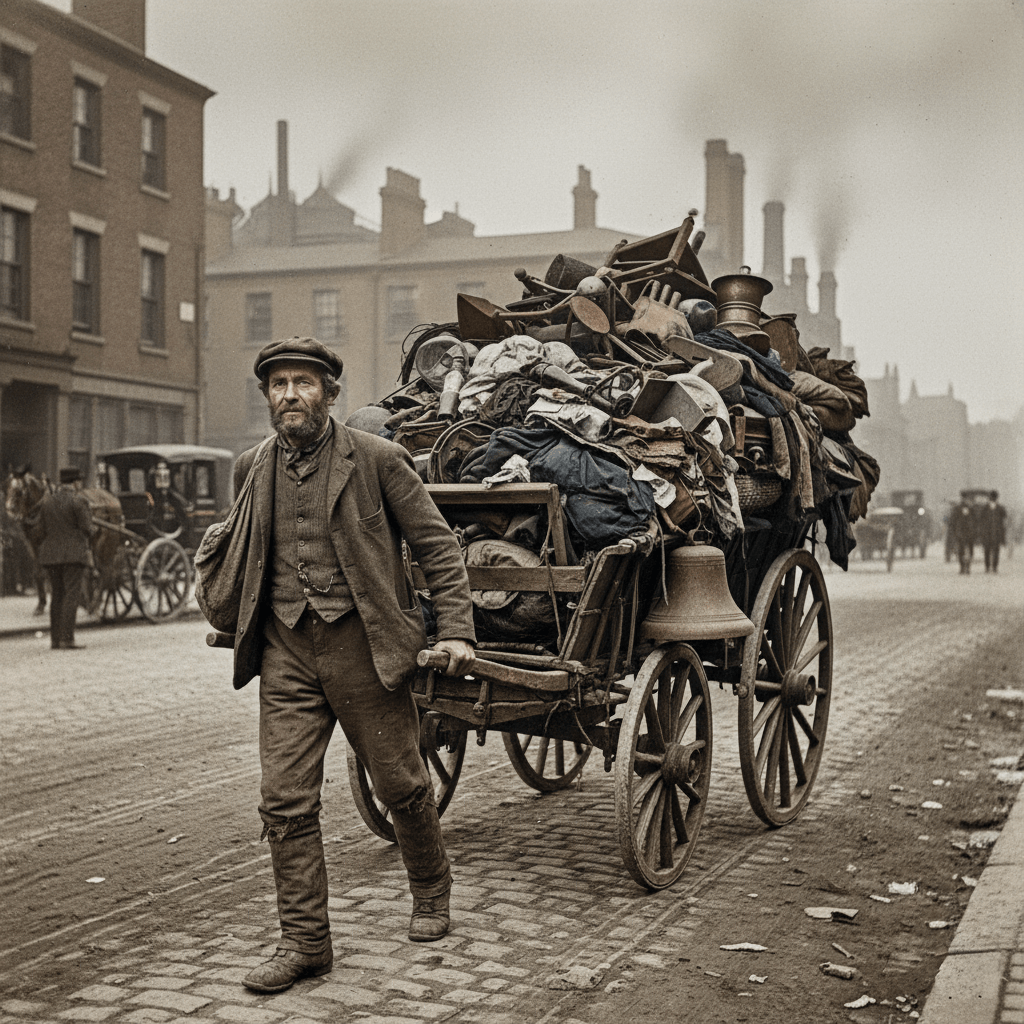
The Rag-and-Bone Man was a familiar figure in the streets of Victorian and Edwardian England, embodying the spirit of recycling long before it became a modern environmental concern. These itinerant traders collected unwanted items from households, ranging from old clothes and rags to bones and scrap metal. The rag-and-bone men played a crucial role in the economy of the time, as they provided a means for families to dispose of their waste while also offering a small income for themselves. They would often call out their trade with a distinctive cry, 'Rags, bones, and bottles!' as they pushed their carts through the neighborhoods, creating a sense of community and nostalgia for many.
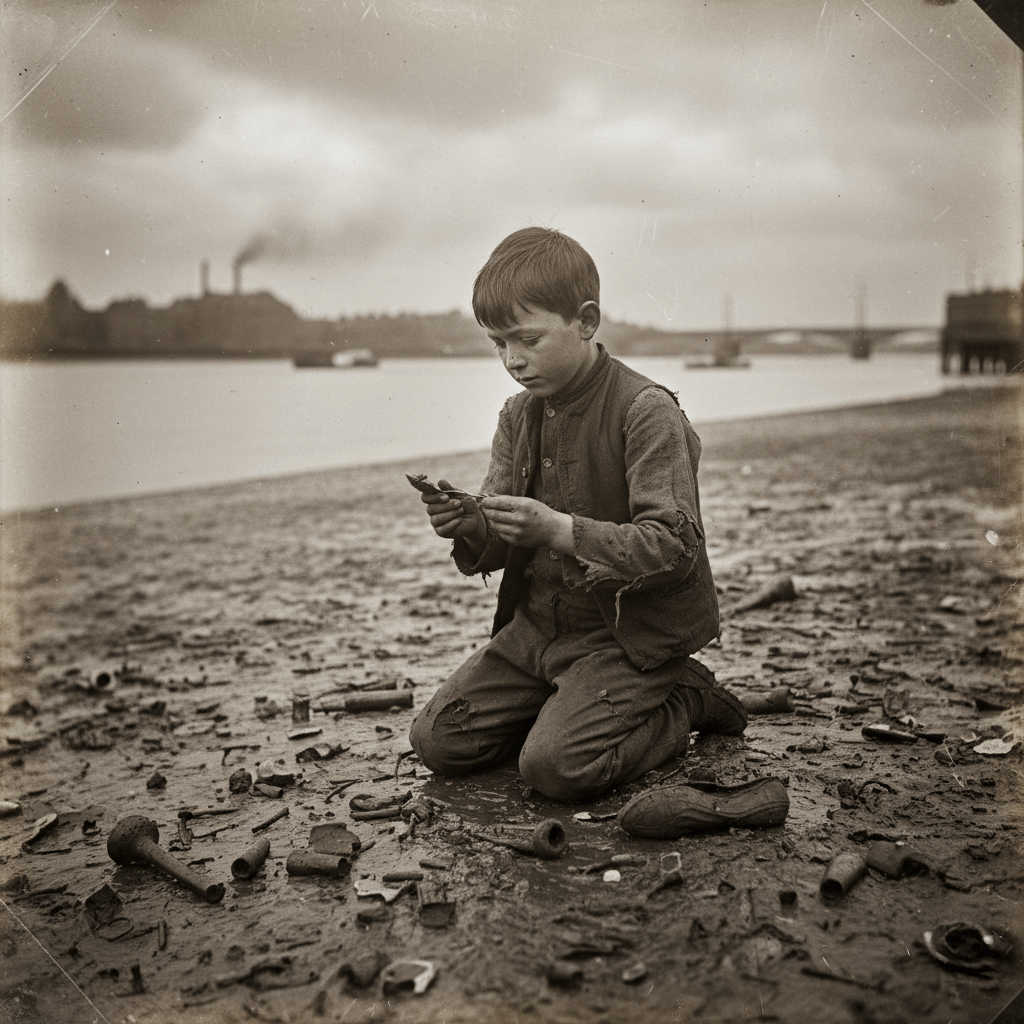
The term 'mudlark' refers to individuals, often children or the impoverished, who scavenged the banks of rivers, particularly the River Thames in London, during the Victorian Era. These individuals would sift through the mud and debris left behind by the receding tide, searching for anything of value that could be sold or repurposed. The job was born out of necessity, as many families faced extreme poverty and relied on the meager earnings from scavenging to survive. Mudlarks would find items such as old coins, jewelry, pottery, and even discarded household goods, which they could sell to local traders or at markets. The work was physically demanding and often dangerous, as the muddy banks could be treacherous, and the waters of the Thames were known for their strong currents and pollution. Despite the harsh conditions, mudlarks played a crucial role in the urban economy, contributing to the recycling of materials long before the concept became mainstream.
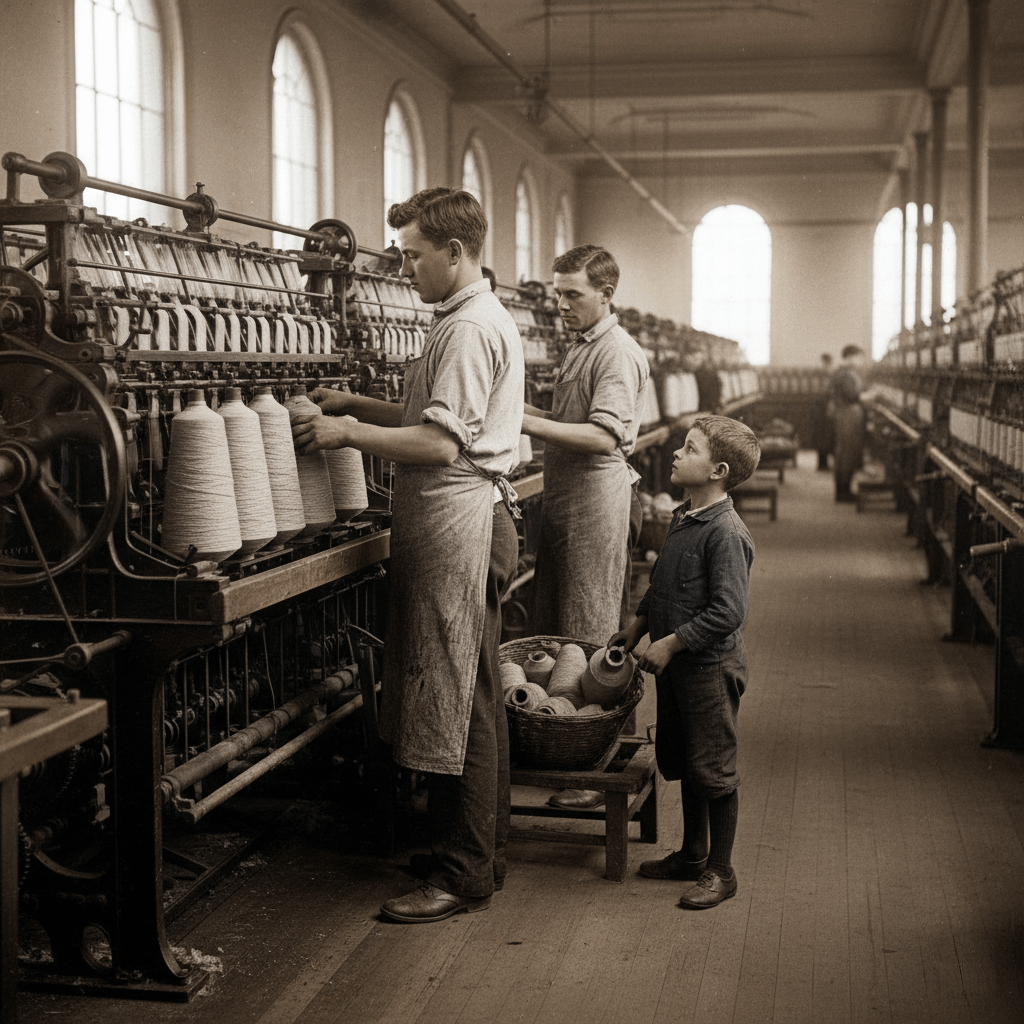
The slubber doffer was a crucial figure in the textile industry during the Industrial Revolution, primarily responsible for the maintenance and operation of spinning machines. These workers played a vital role in ensuring that the production of yarn and thread ran smoothly in the bustling textile mills of the 18th and 19th centuries. The term 'slubber doffer' specifically referred to those who removed the full bobbins of spun yarn from the spinning frames and replaced them with empty ones, a task that required both physical dexterity and a keen understanding of the machinery involved. The slubber doffer's work was often performed in a noisy, fast-paced environment, where the clatter of machines filled the air, and the smell of raw cotton and wool was ever-present. The job was typically held by young boys and girls, often as young as eight or nine, who were employed in the mills due to their small stature, which allowed them to navigate the cramped spaces between the machines. The slubber doffer's day was filled with the repetitive yet essential task of ensuring that the spinning process continued without interruption, a job that was physically demanding and required a high level of attention to detail. Despite the harsh working conditions, slubber doffers were an integral part of the textile production process, contributing to the rapid growth of the textile industry, which was a cornerstone of the Industrial Revolution. Their labor was essential in meeting the increasing demand for textiles, which fueled both domestic and international markets.

The role of a Breaker Boy emerged during the Industrial Revolution, particularly in the coal mining regions of the United States, where the demand for coal surged to fuel the burgeoning industries. Breaker Boys were young boys, often between the ages of 8 and 12, who worked in coal breaker facilities. Their primary responsibility was to separate impurities from coal, a crucial step in preparing the coal for market. This labor-intensive job involved sitting on a high platform above a conveyor belt, where they would pick out rocks, slate, and other debris from the coal as it passed by. The work was not only monotonous but also hazardous, as the boys were exposed to coal dust and the risk of injury from the machinery. Breaker Boys typically worked long hours, often from dawn until dusk, in poorly ventilated and unsafe conditions, earning a meager wage that reflected the exploitative labor practices of the time. The job was emblematic of the harsh realities faced by child laborers during the Industrial Revolution, highlighting the intersection of economic necessity and social injustice.
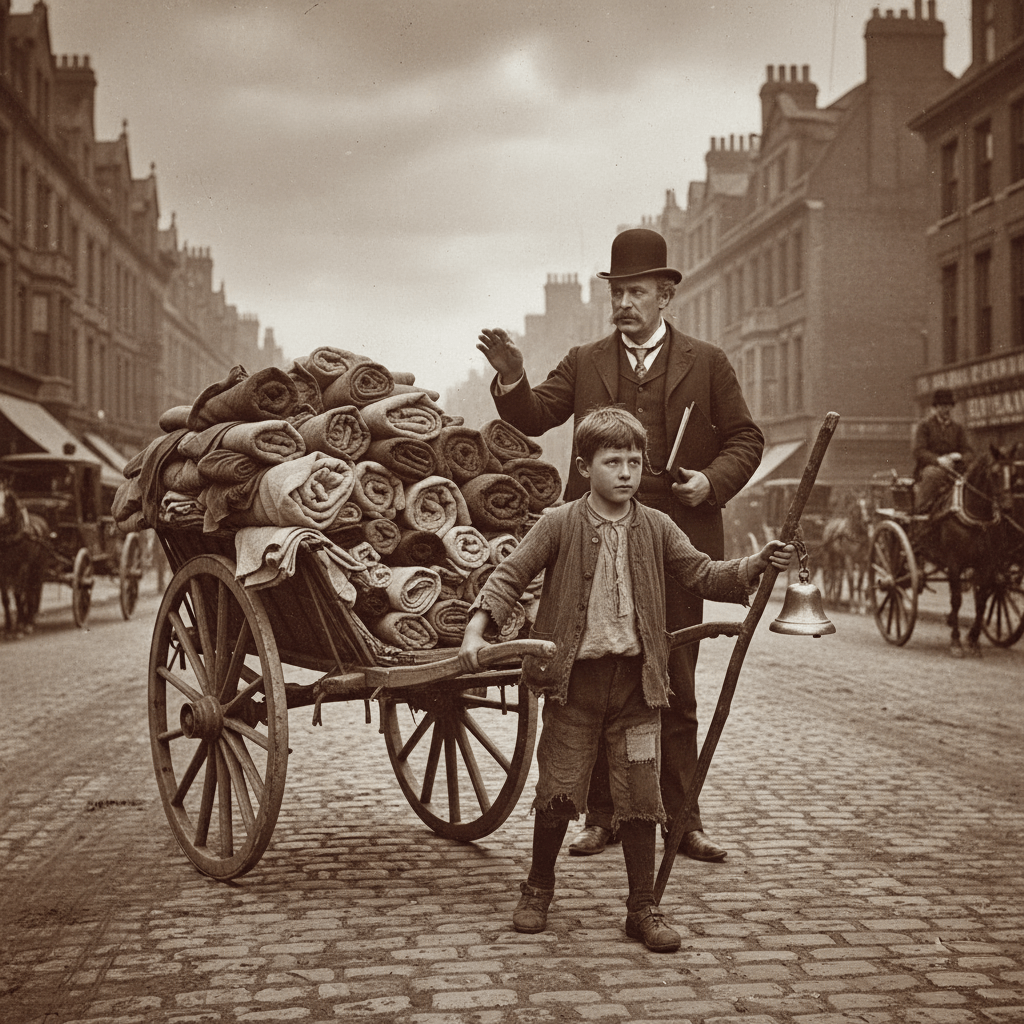
The towel horse was a common fixture in Victorian households, serving as a practical solution for drying and airing out freshly laundered towels. This job involved the creation and maintenance of these wooden frames, which were designed to hold towels in a way that maximized air circulation and minimized mildew. Craftsmen known as towel horse makers would construct these items from sturdy wood, often incorporating decorative elements to enhance their aesthetic appeal. The towel horse was not merely a functional item; it was a symbol of domesticity and cleanliness in an era that placed great emphasis on hygiene and the proper management of household chores. In the bustling homes of the Victorian middle class, the towel horse was an essential accessory, often placed in bathrooms or near wash basins. It allowed families to dry their towels efficiently, reflecting the era's values of order and propriety. The towel horse was typically designed with multiple rungs or bars, allowing several towels to be hung at once, and was often collapsible for easy storage. As the Victorian Era progressed, the towel horse became a staple in many households, with variations in design reflecting the tastes and preferences of the time. Craftsmen took pride in their work, often handcrafting each piece with attention to detail, ensuring that the towel horse was both functional and visually appealing. However, as the 20th century approached, the advent of modern plumbing and the introduction of electric dryers began to change domestic practices. The need for towel horses diminished as households adopted new technologies that made drying towels faster and more efficient. The towel horse, once a common sight in homes, gradually faded into obscurity, becoming a relic of a bygone era.
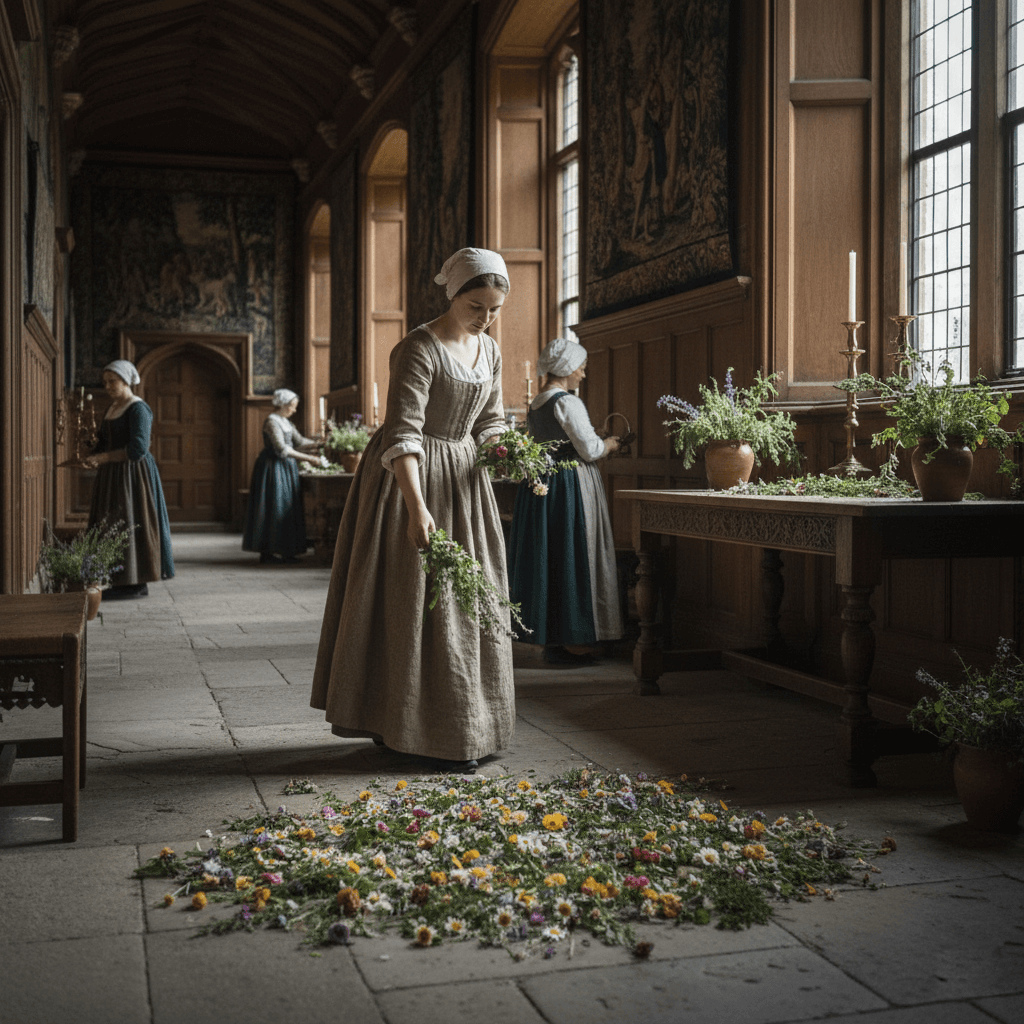
The role of the Herb Strewer was a vital one in medieval society, particularly during the 12th to 15th centuries. These individuals were responsible for the cultivation, harvesting, and distribution of herbs, which were essential for culinary, medicinal, and ceremonial purposes. Herb Strewers played a crucial role in the daily lives of people, as herbs were used not only to flavor food but also to treat ailments and ward off diseases. They often worked closely with apothecaries and healers, providing them with the necessary ingredients for remedies and potions. Herb Strewers were typically found in rural areas, where they cultivated their herbs in small gardens or plots. They had extensive knowledge of various plant species, understanding their properties and uses. This knowledge was often passed down through generations, making them respected figures in their communities. The herbs they grew included common varieties such as thyme, rosemary, sage, and mint, as well as more exotic plants that were traded or brought back from the Crusades. In addition to cultivation, Herb Strewers were also responsible for preparing herbs for sale or use. This included drying, grinding, and packaging herbs, which required careful attention to detail to preserve their potency. They often sold their wares at local markets or to apothecaries, contributing to the local economy and ensuring that their communities had access to essential herbal products.
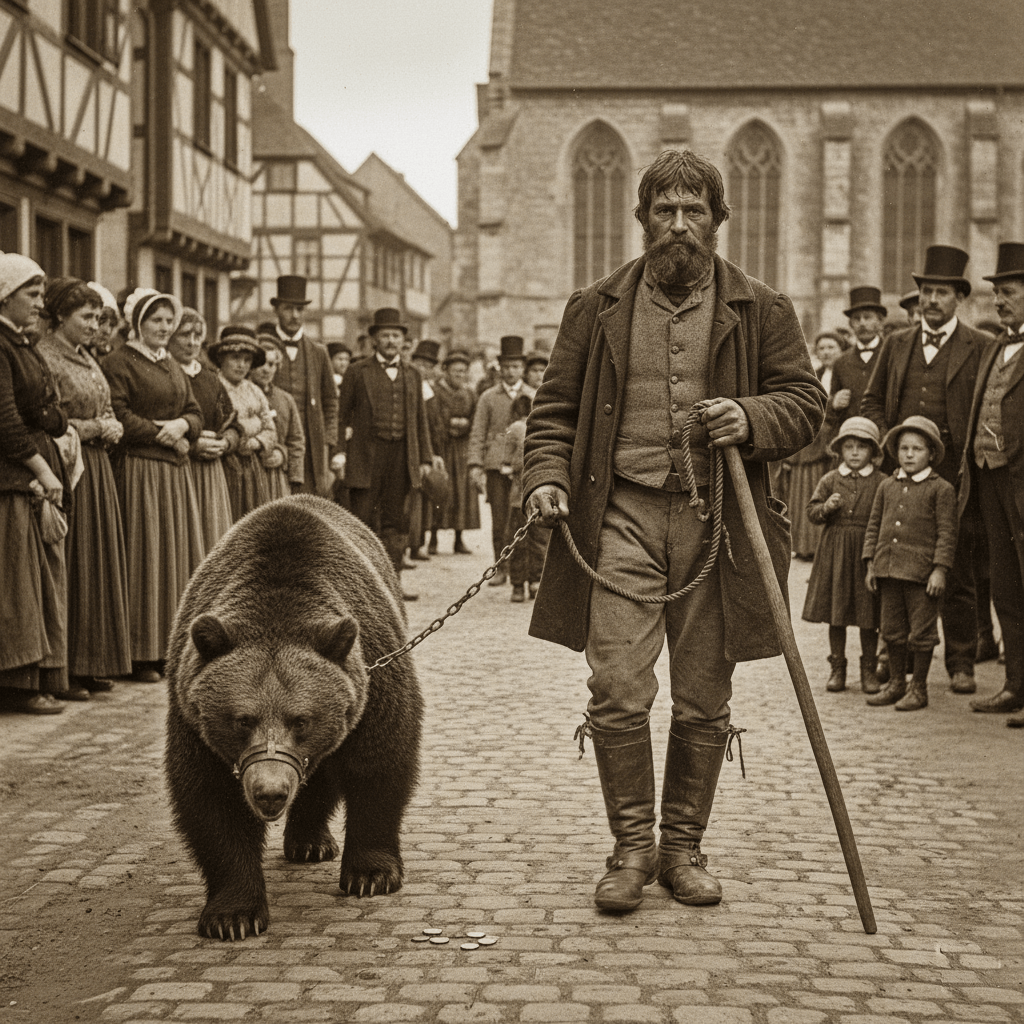
The role of a Bear-Leader was a unique and fascinating occupation that emerged during the Victorian Era, particularly in the 19th century. These individuals were responsible for the care and management of trained bears, often leading them through towns and cities as a form of entertainment. The bear, typically a young and trained specimen, would perform tricks and engage with the public, drawing crowds and generating income for the Bear-Leader. This profession was not merely about leading a bear; it involved a deep understanding of animal behavior, training techniques, and the ability to engage with audiences. Bear-Leaders were often seen as both entertainers and animal handlers, navigating the delicate balance between showmanship and animal welfare. The spectacle of a bear performing tricks, such as dancing or balancing on a ball, was a popular attraction in fairs and public gatherings, making the Bear-Leader a notable figure in the entertainment landscape of the time.
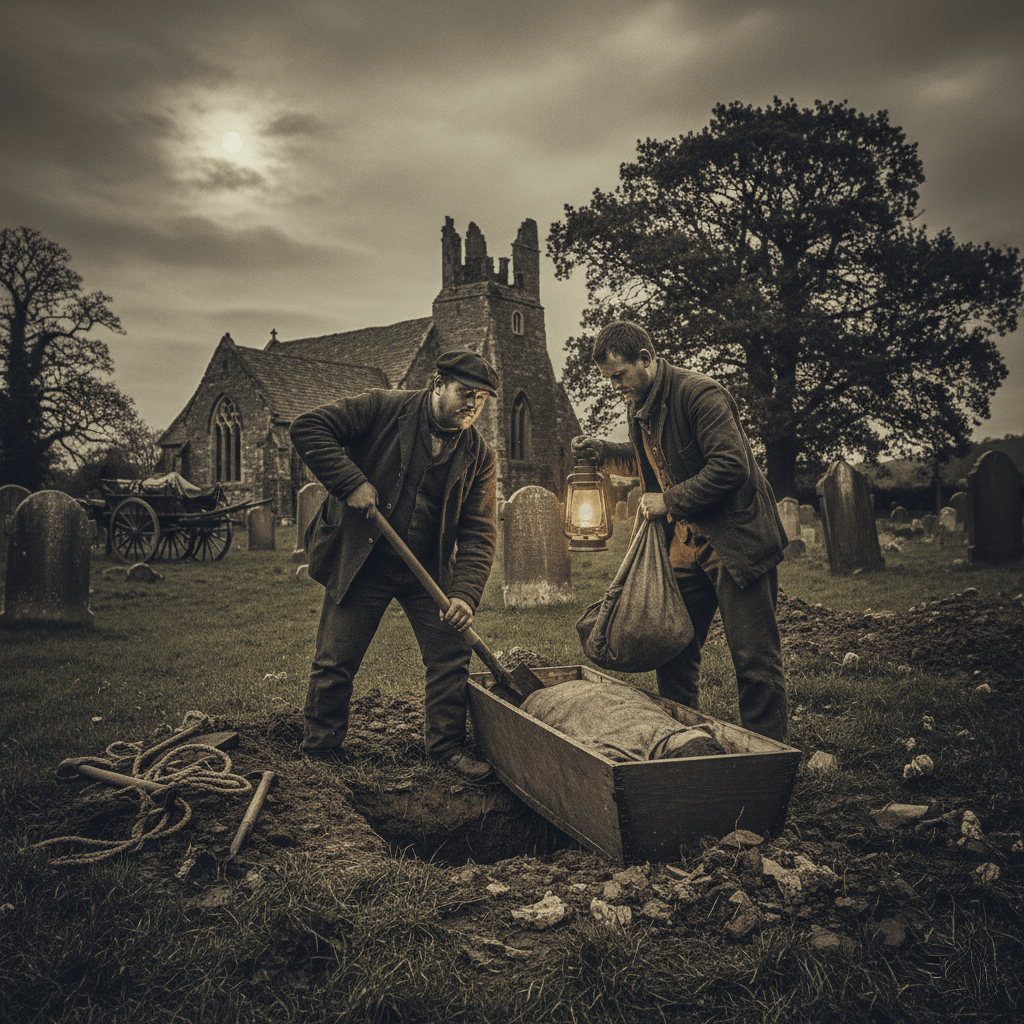
The role of a resurrectionist, often referred to as a body snatcher, emerged in the early 19th century during a time when the demand for cadavers for medical research and education far exceeded the supply. In an era where the study of human anatomy was gaining prominence, medical schools required fresh specimens for dissection, but legal restrictions limited the availability of bodies. Resurrectionists operated in the shadows, exhuming recently buried corpses from graveyards and selling them to medical institutions. This clandestine occupation was fraught with moral and legal dilemmas, as it often involved the desecration of graves and the exploitation of the deceased's families. Despite the grim nature of their work, resurrectionists played a crucial role in advancing medical knowledge, albeit through highly controversial means. Their activities sparked public outrage and led to significant legal reforms regarding the procurement of cadavers, ultimately transforming the landscape of medical education.
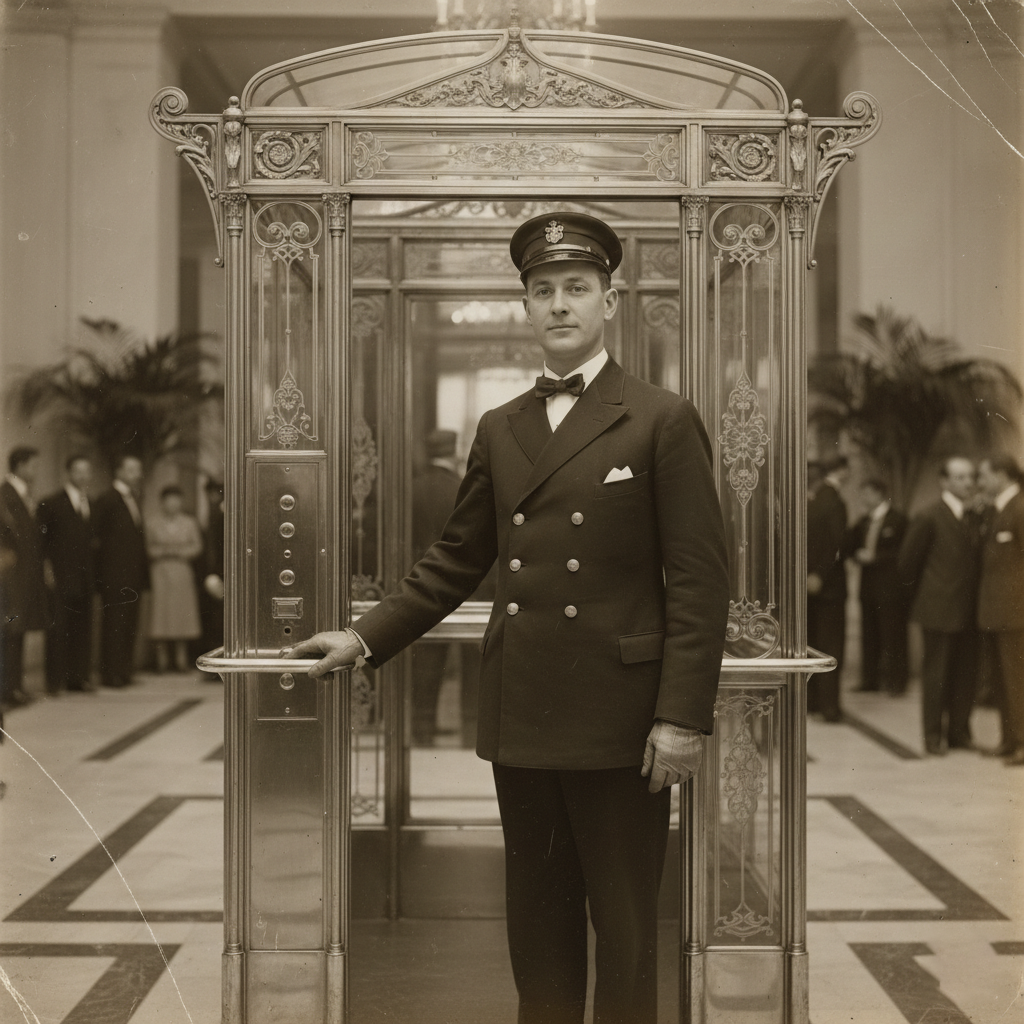
In the bustling urban landscapes of the late 19th and early 20th centuries, the elevator operator emerged as a vital figure in the daily operations of skyscrapers and multi-story buildings. These skilled individuals were responsible for the safe and efficient transport of passengers between floors, often in ornate, manually operated elevators that were a marvel of engineering at the time. With a keen understanding of the building's layout and a friendly demeanor, elevator operators greeted patrons, assisted them in entering and exiting the elevator, and ensured that the doors closed securely before ascending or descending. Their role was not merely mechanical; it was a blend of customer service and technical skill, as they had to manage the intricate workings of the elevator machinery, often using a lever or a set of controls to navigate the complex system of pulleys and cables. The elevator operator was a familiar face in the urban environment, often dressed in a crisp uniform, complete with a cap, and sometimes even a badge indicating their position. They were the gatekeepers of vertical transportation, providing a personal touch in an increasingly mechanized world.
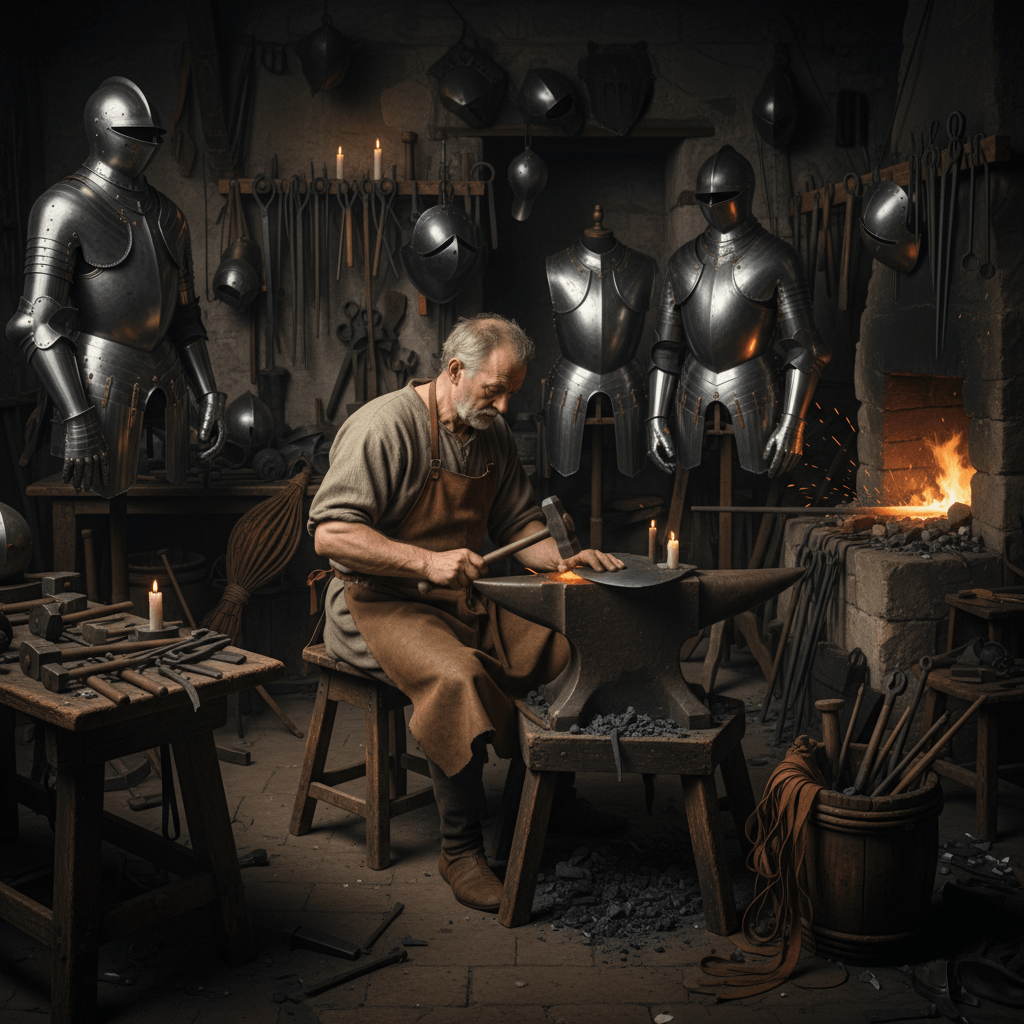
The role of the armourer was pivotal in the medieval period, a time when warfare and personal protection were paramount. Armourers were skilled craftsmen responsible for creating, repairing, and maintaining the protective gear worn by soldiers and knights. Their work encompassed a variety of tasks, including forging metal plates, shaping chainmail, and crafting helmets, shields, and other defensive equipment. The craftsmanship of an armourer was not only functional but also often artistic, with intricate designs and embellishments that reflected the status and wealth of the wearer. The armourer’s workshop was a hub of activity, filled with the sounds of hammering metal, the glow of the forge, and the smell of heated iron. Each piece of armour was custom-fitted to the individual, ensuring both protection and mobility in battle. As warfare evolved, so too did the demands on armourers, who had to adapt their techniques and designs to meet the changing needs of their clients.
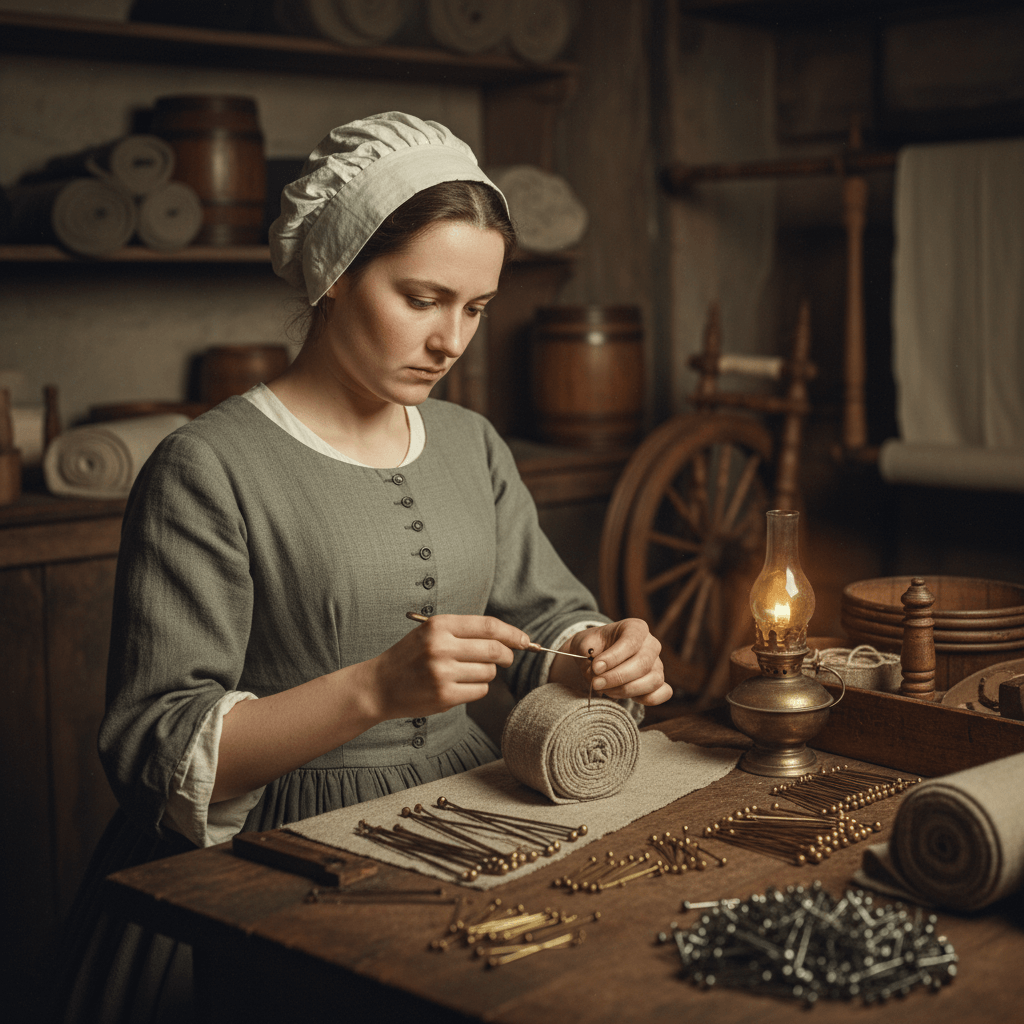
The role of a pinner was crucial in the textile industry, particularly before the advent of mechanized production. Pinners were skilled artisans responsible for the intricate task of pinning fabric pieces together before they were sewn into garments. This job required a keen eye for detail and a steady hand, as the precision of the pinning process directly influenced the quality of the final product. Pinners worked primarily in workshops or at home, often in close-knit communities where they would collaborate with seamstresses and tailors. The work was labor-intensive and required a deep understanding of fabric types, patterns, and garment construction. Pinners used a variety of pins, including straight pins and safety pins, to hold fabric in place, ensuring that seams aligned perfectly and that the finished garments fit well. The role was often filled by women, who contributed significantly to the family income through this work, especially in urban areas where the textile industry thrived. As the demand for clothing increased, so did the need for skilled pinners, making this occupation a vital part of the pre-industrial economy.
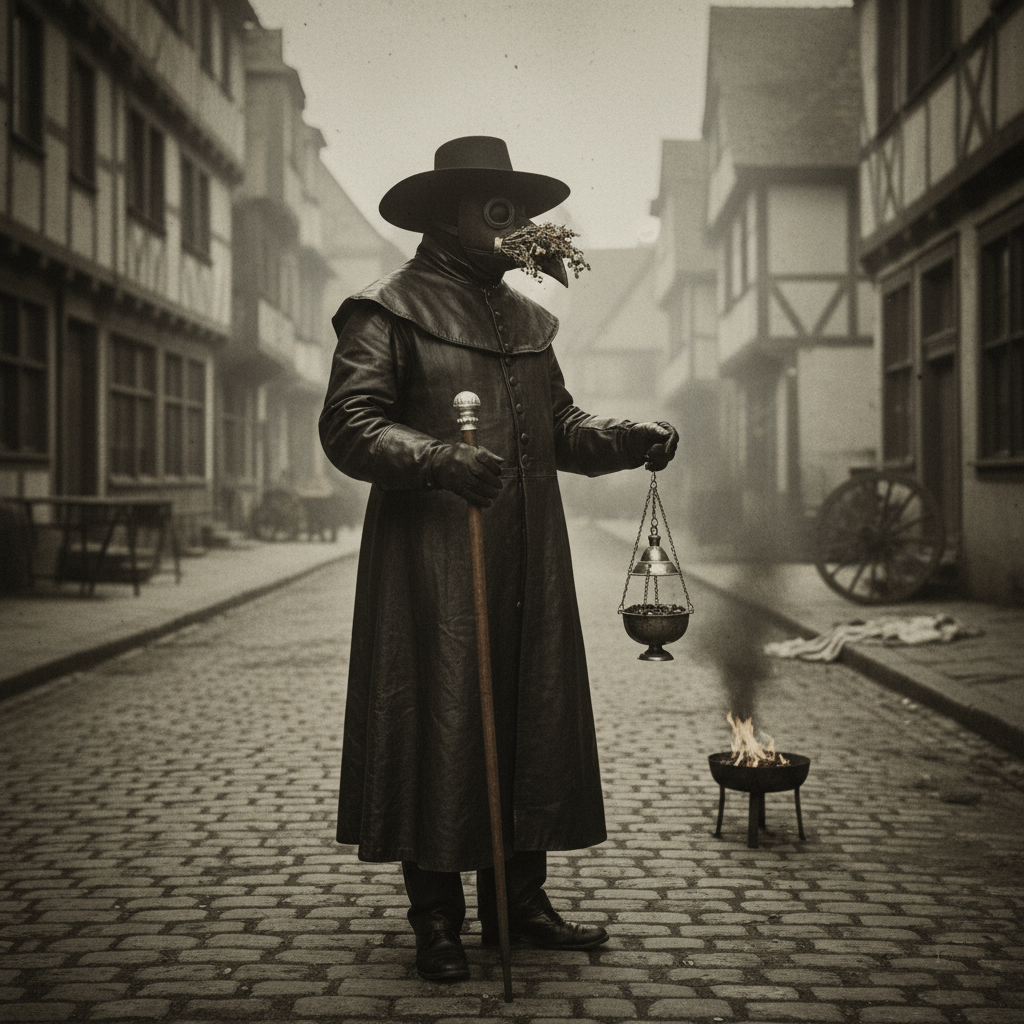
The role of the Plague Doctor emerged during the devastating outbreaks of the bubonic plague in the 14th to 17th centuries, particularly during the Black Death. These physicians were tasked with treating the afflicted and managing the spread of the disease, which claimed millions of lives across Europe. Plague Doctors were often hired by towns and cities to care for the sick, and their distinctive attire became a symbol of the era's struggle against disease. They wore long cloaks, gloves, boots, and a beaked mask filled with aromatic substances, believed to purify the air and protect them from miasma, or 'bad air,' thought to be the cause of the plague. Their work was fraught with danger, as they often encountered patients who were gravely ill or already deceased, and they had limited medical knowledge and tools at their disposal. Despite their efforts, many Plague Doctors themselves succumbed to the very diseases they sought to combat, highlighting the perilous nature of their profession.
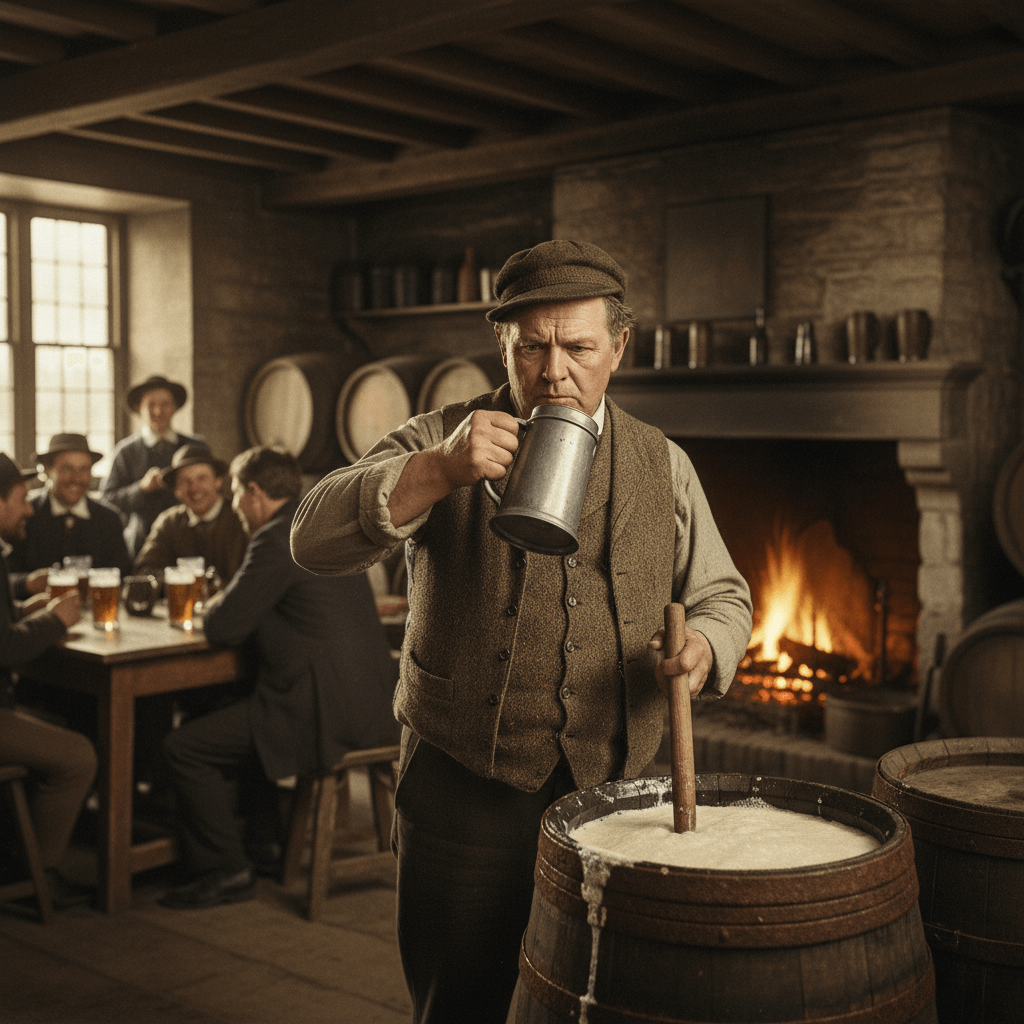
The role of the Ale Conner was a vital one in medieval society, particularly in England, where ale was a staple beverage. Tasked with ensuring the quality of ale produced by local brewers, the Ale Conner acted as a guardian of public health and consumer rights. This position was often held by a local official or a member of the community who had the authority to inspect and taste ale before it was sold to the public. The Ale Conner would assess the ale for its strength, flavor, and overall quality, ensuring that it met the standards set by local regulations. If the ale was found to be subpar, the Ale Conner had the power to condemn it, preventing it from being sold and protecting the community from potential harm. In addition to quality control, the Ale Conner also played a role in the regulation of prices, ensuring that brewers did not exploit consumers by charging exorbitant rates for inferior products. This position was essential in maintaining the integrity of the ale market, which was a significant part of daily life in medieval towns and villages. The Ale Conner's work was not only about quality but also about fairness in trade, reflecting the communal values of the time.
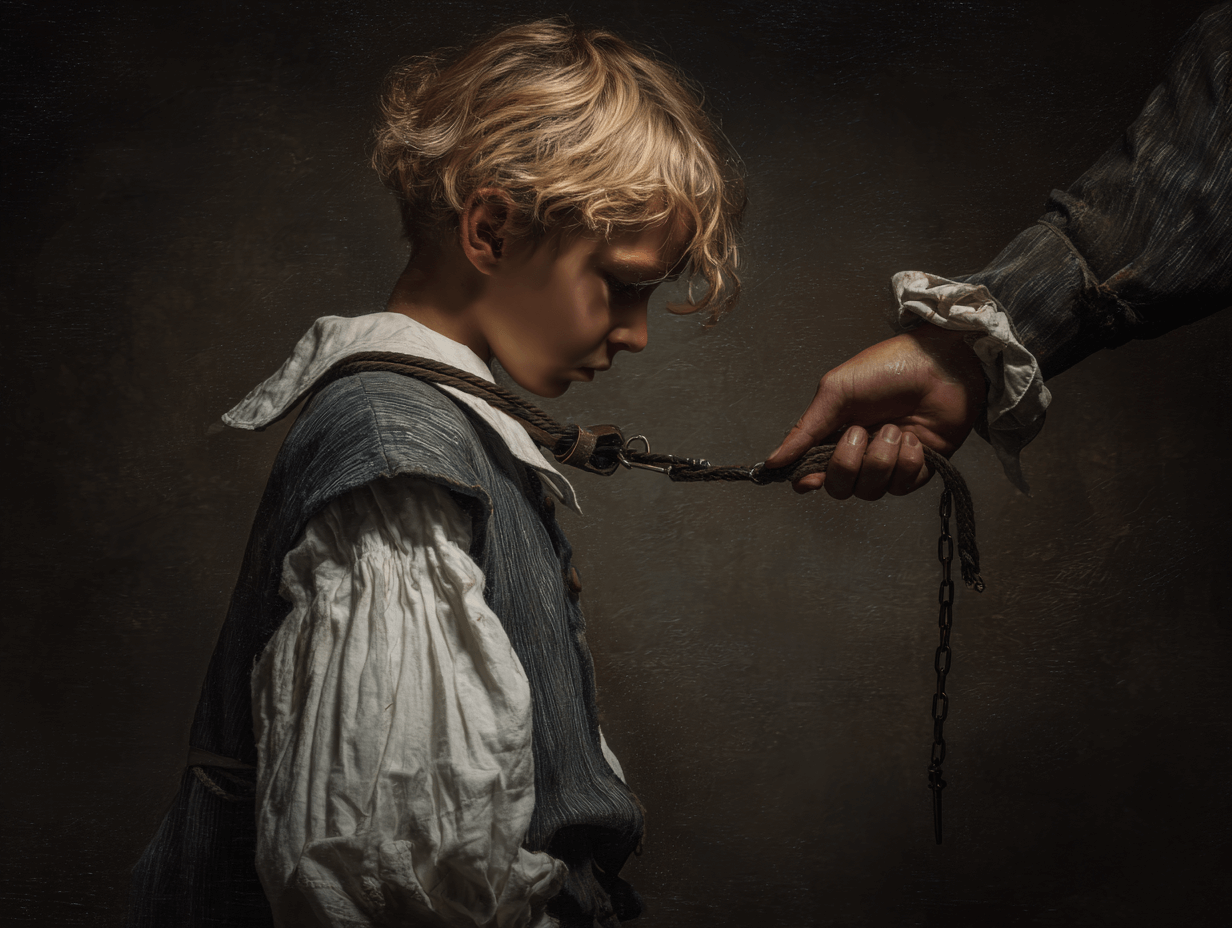
The role of a whipping boy was a peculiar and often misunderstood position in the royal courts of Europe, particularly during the 15th to 17th centuries. A whipping boy was a young boy, often of noble birth, who was assigned to a prince or young nobleman. The unique aspect of this role was that the whipping boy would receive punishment on behalf of the prince when the latter misbehaved or failed to meet educational expectations. This practice stemmed from the belief that it was inappropriate to physically punish a royal child, so the whipping boy served as a surrogate for discipline. The relationship between the prince and his whipping boy was complex; while the whipping boy was subjected to physical punishment, he often enjoyed privileges and a close bond with the prince, sharing in the education and courtly life. This role was not merely one of suffering; it involved companionship, loyalty, and sometimes even friendship, as the boys grew up together in the opulent yet demanding environment of the court. The whipping boy's existence highlights the social hierarchies and educational practices of the time, where the nobility sought to instill discipline and responsibility in their heirs without tarnishing their royal status. The role was a reflection of the era's values, where physical punishment was a common method of discipline, yet the nobility sought to protect their own from such indignities.
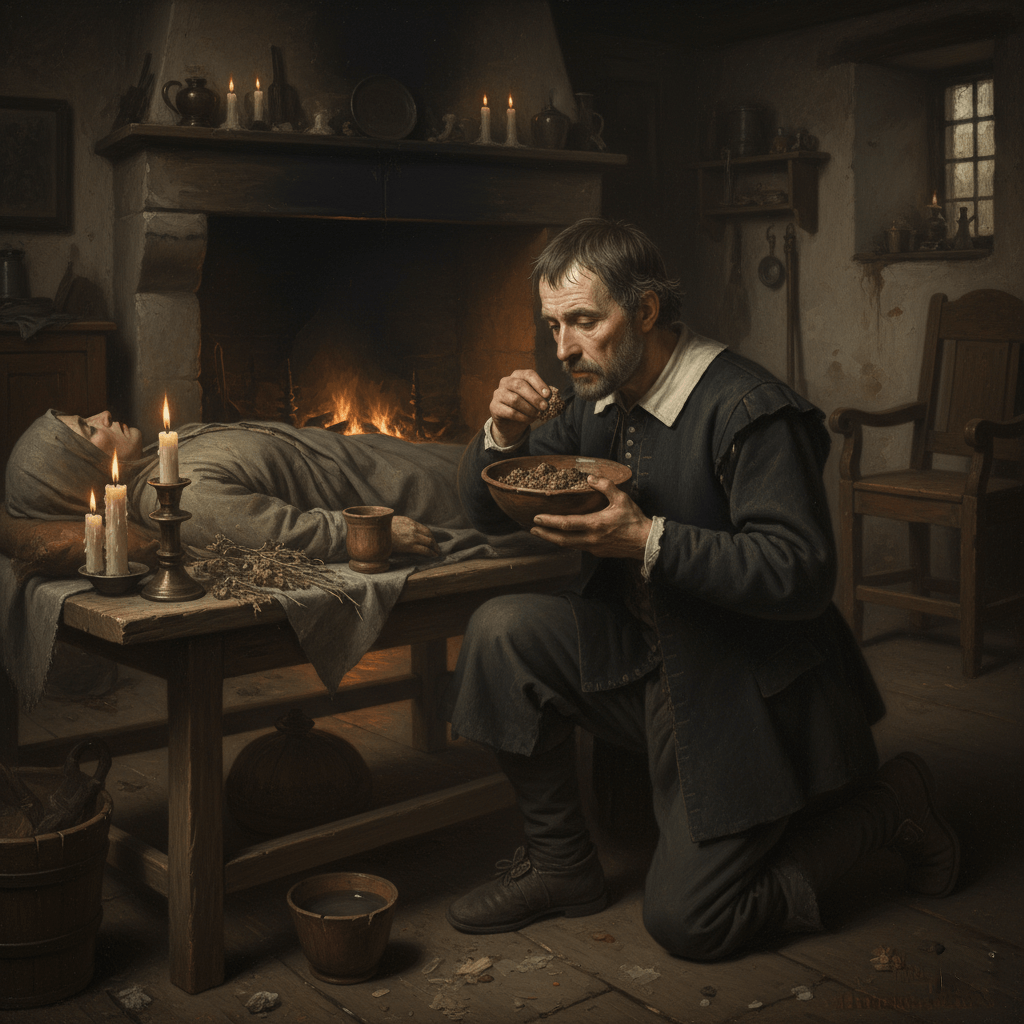
The role of the Sin Eater was a unique and somber occupation that emerged in medieval Europe, particularly in England and Wales, during the 11th to 19th centuries. Sin Eaters were individuals who performed a ritualistic act of consuming food, often bread and ale, placed on the body of a deceased person. This act was believed to absolve the deceased of their sins, allowing their soul to ascend to heaven. The Sin Eater was often a marginalized figure, sometimes a beggar or outcast, who took on this role for a small fee or in exchange for food. The practice was steeped in superstition and reflected the deep-seated beliefs about sin, guilt, and the afterlife prevalent in medieval society. The Sin Eater's work was not merely a job; it was a profound engagement with the community's spiritual beliefs. Families would hire a Sin Eater to ensure that their loved ones could pass into the afterlife unburdened by sin. This role was particularly significant in times of plague or death, when the community was desperate for solace and closure. The Sin Eater's presence at funerals was often met with a mix of reverence and fear, as they were seen as both a necessary part of the grieving process and a reminder of the community's own mortality.
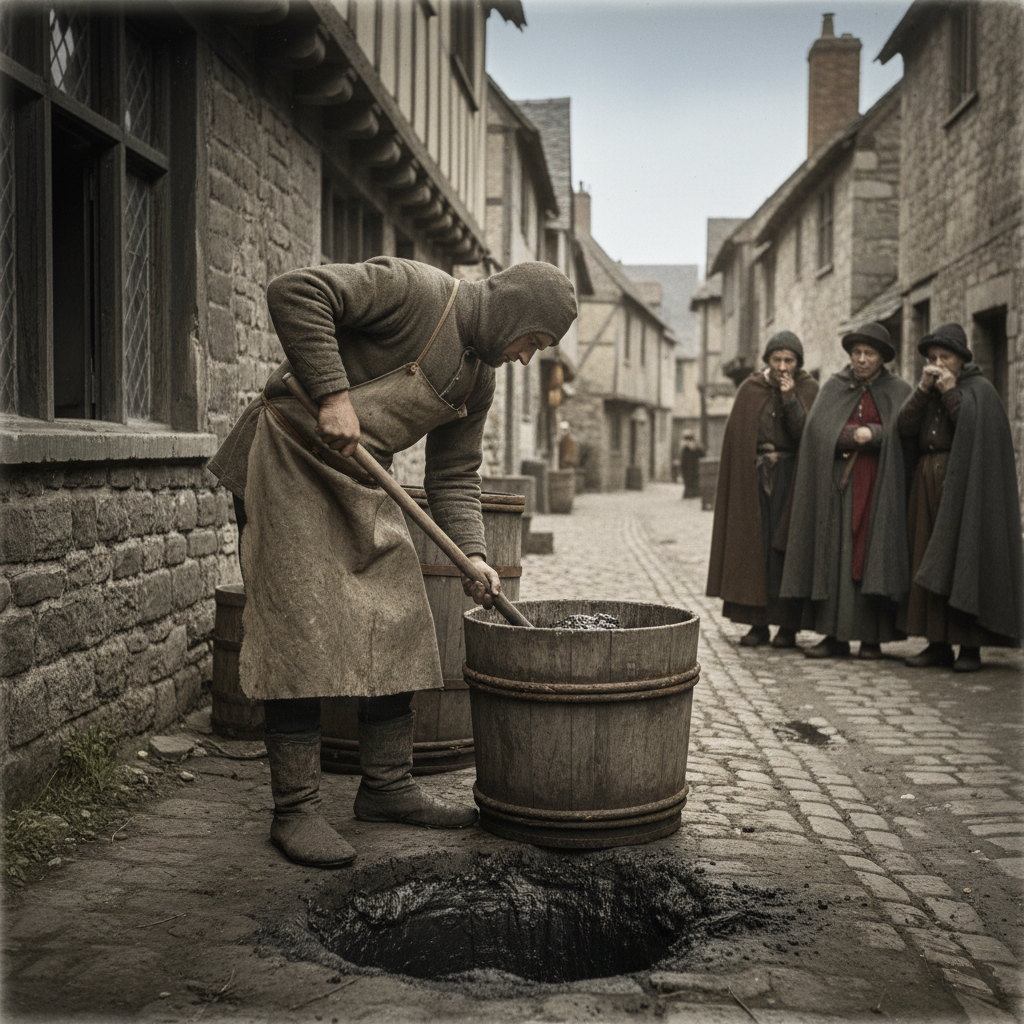
The gong farmer was a crucial yet often overlooked figure in medieval society, responsible for the removal of human waste from cesspits and privies. Operating primarily in urban areas, these workers played an essential role in maintaining public health and sanitation during a time when hygiene practices were rudimentary at best. The term 'gong' is derived from the Old English word for excrement, and the job itself was often considered one of the lowest on the social ladder, leading to a significant stigma attached to it. Despite the unpleasant nature of their work, gong farmers were vital in preventing the spread of disease in densely populated towns and cities, where waste management was a pressing concern. Gong farmers typically worked at night, using the cover of darkness to carry out their tasks with minimal public exposure. They would dig out the contents of cesspits, often using rudimentary tools, and transport the waste to designated dumping grounds outside the city. This labor was not only physically demanding but also fraught with health risks, as workers were frequently exposed to harmful pathogens. The job required a strong constitution and a willingness to endure unpleasant odors and unsanitary conditions. Despite the challenges, gong farmers were compensated for their work, albeit at a lower wage than many other laborers, reflecting their marginalized status in society.
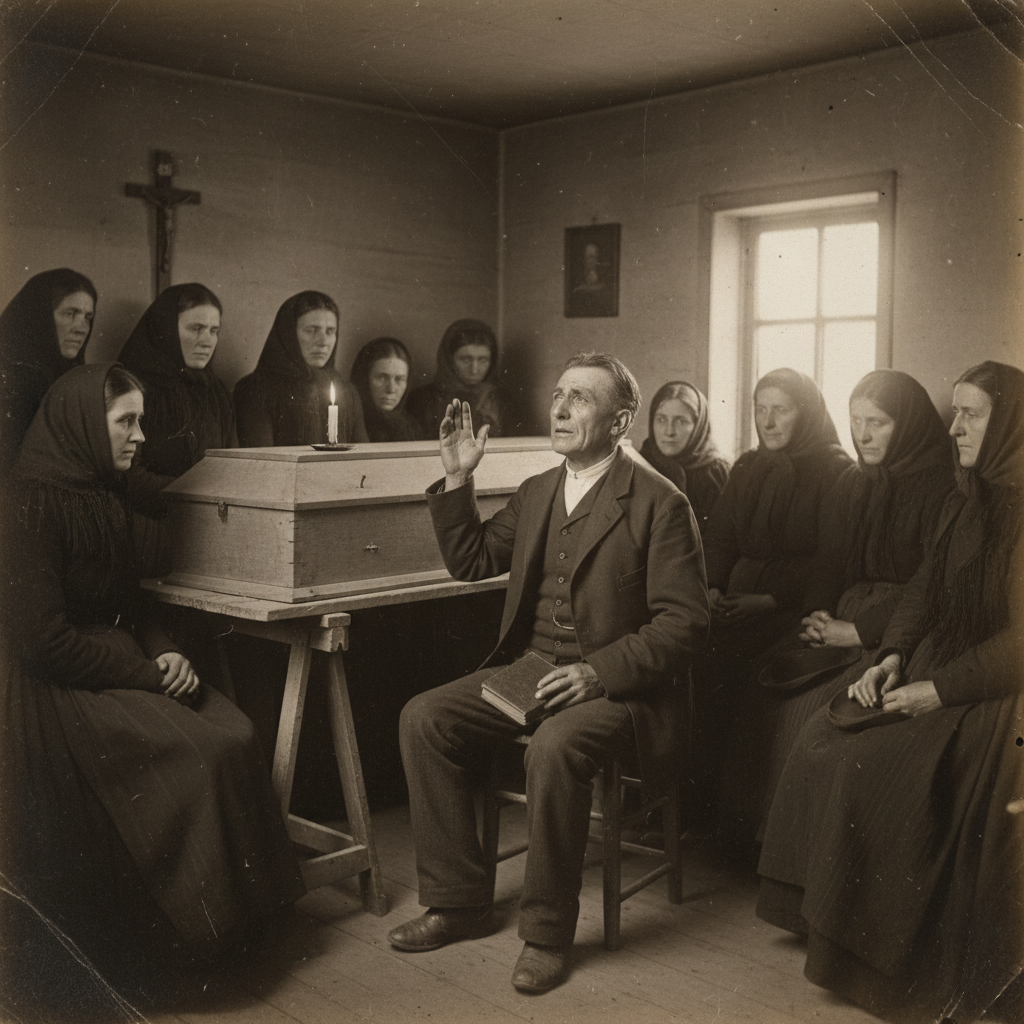
The moirologist, a term derived from the Greek word 'moirologia' meaning 'to lament,' was a specialized profession that emerged during the Victorian Era, particularly in the 19th century. These individuals were skilled mourners, often hired to express grief at funerals and memorial services. Their role was to provide a public display of sorrow, which was considered an essential part of the mourning process in a society that placed great emphasis on the rituals surrounding death. Moirologists were often women, who would don black attire and engage in elaborate displays of mourning, including weeping, wailing, and reciting elegies or poems that honored the deceased. Their presence was thought to enhance the emotional atmosphere of the funeral, allowing the bereaved family to feel supported in their grief. In addition to their emotional labor, moirologists were also expected to have a deep understanding of the customs and traditions surrounding death, including the appropriate attire, behavior, and rituals that were expected in various social contexts. They often worked alongside funeral directors and were an integral part of the mourning culture of the time, which was characterized by elaborate funerals and a public display of grief.
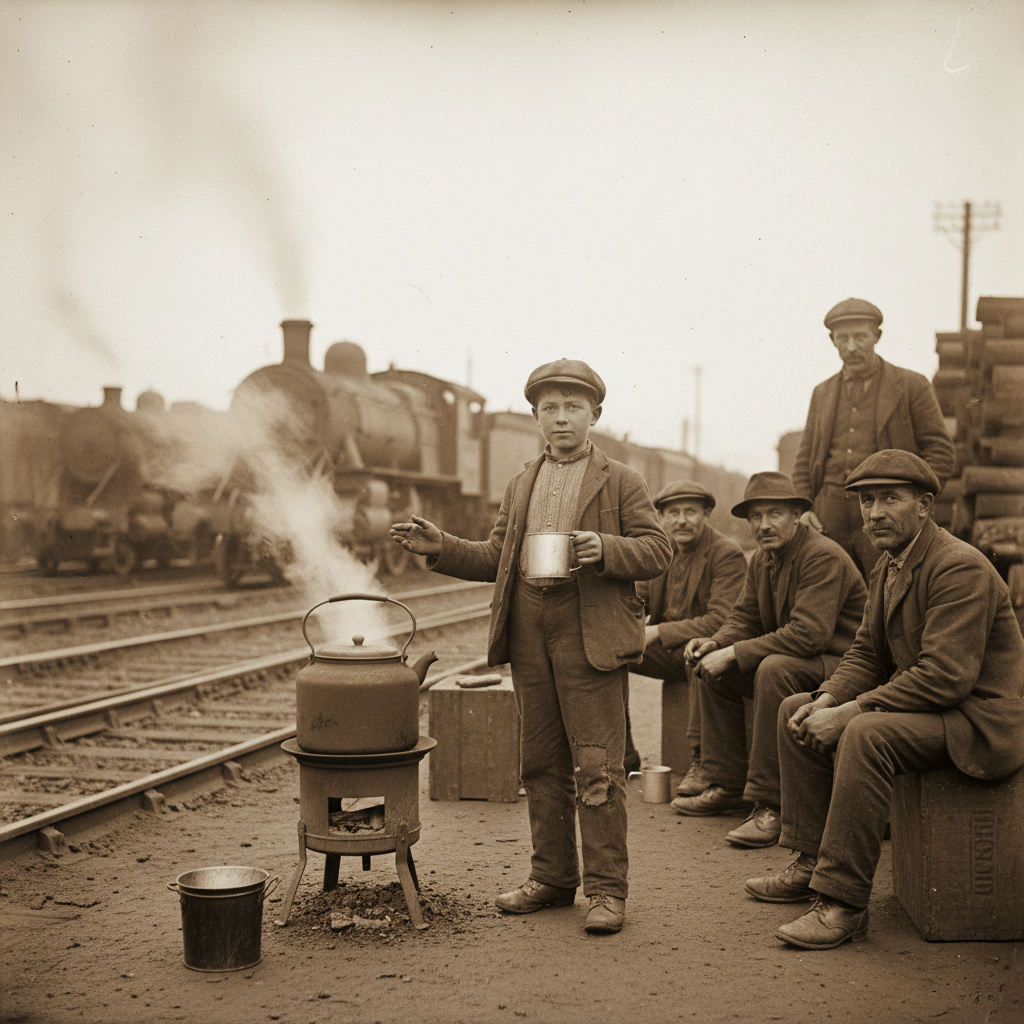
The term 'Billy Boy' refers to a young boy employed in the Victorian era, primarily in the coal mining industry, to assist with various tasks that were essential for the operation of the mines. These boys, often starting work as young as six or seven, played a crucial role in the mining process, particularly in the transportation of coal and the management of ventilation within the mines. Their small stature allowed them to navigate the narrow tunnels and shafts where adults could not fit, making them invaluable to the mining operations of the time. Billy Boys were responsible for a variety of tasks, including pushing carts filled with coal, opening and closing ventilation doors, and sometimes even acting as lookouts for supervisors. Their work was physically demanding and often dangerous, exposing them to the perils of mining, such as cave-ins and poor air quality. Despite the harsh conditions, these boys contributed significantly to the coal industry, which was a cornerstone of the Victorian economy, fueling the Industrial Revolution and the rapid urbanization of Britain. The life of a Billy Boy was marked by long hours, typically starting before dawn and ending after sunset, with little regard for their well-being. They were often paid meager wages, reflecting the exploitative labor practices of the time, and many faced health issues due to the hazardous environment in which they worked.
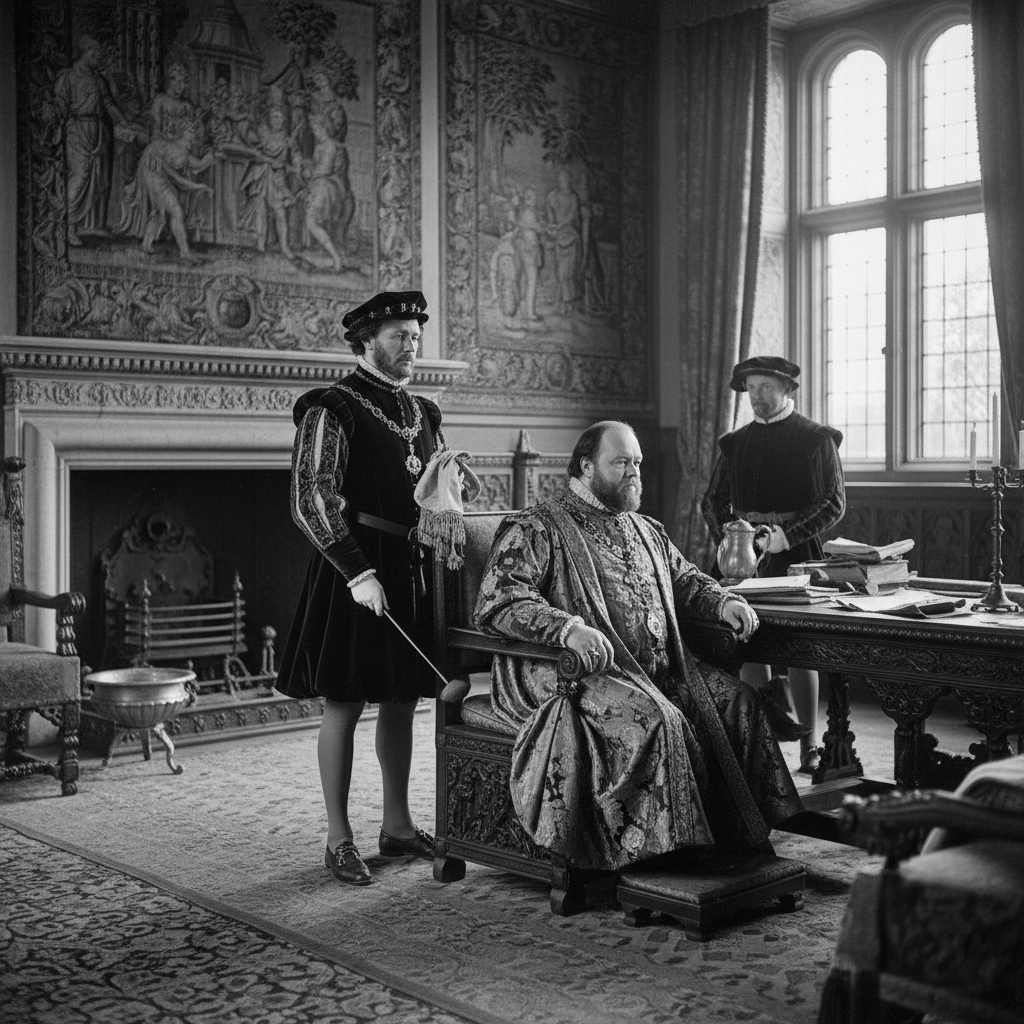
The Groom of the Stool was a highly esteemed position in the royal court of England, particularly during the Tudor period, which spanned from the late 15th century to the early 17th century. This role was not merely one of menial service; it was a position of significant trust and intimacy, as the Groom was responsible for the personal hygiene and comfort of the monarch, specifically in relation to the royal toilet. The Groom's duties included the preparation of the necessary tools for the king's ablutions, ensuring the cleanliness of the royal chamber, and even assisting the monarch during the act itself. This role was often filled by individuals of noble birth, as it required a level of discretion and loyalty that was paramount in the court. The Groom of the Stool was also privy to the king's most private moments, which often led to considerable influence over royal decisions and policies, making this position one of both service and power.
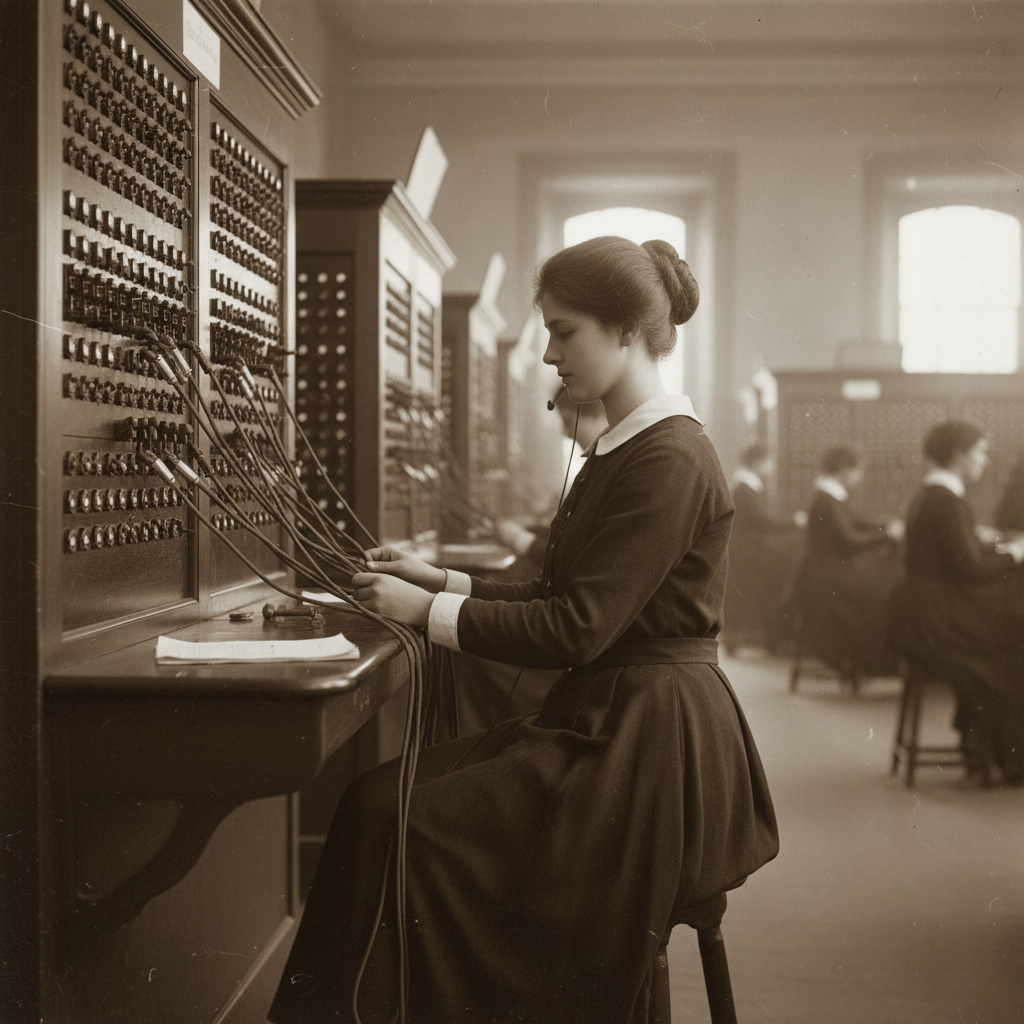
In the bustling world of the late 19th and early 20th centuries, the role of the switchboard operator emerged as a vital cog in the machinery of communication. These skilled individuals were the unsung heroes of the telephone network, connecting calls and facilitating conversations that bridged distances and brought people together. With the advent of the telephone, the need for a human intermediary became apparent, and thus, the switchboard operator took center stage in the realm of telecommunications. Switchboard operators worked in large, often crowded rooms filled with rows of switchboards, each adorned with a myriad of plugs and wires. Their primary responsibility was to connect callers by manually plugging and unplugging telephone lines into the appropriate jacks on the switchboard. This intricate dance of wires required not only dexterity but also a keen ear for voices and an ability to quickly assess and respond to the needs of callers. Operators were often the first point of contact for individuals seeking to connect with friends, family, or businesses, making their role both crucial and highly regarded. The job was not without its challenges. Operators had to manage multiple calls simultaneously, often dealing with a cacophony of voices and requests. They were trained to handle emergencies, providing vital assistance during crises, such as connecting calls to hospitals or fire departments. The work environment was typically fast-paced and required a high level of concentration, as even a small mistake could lead to misdirected calls or delays in communication. As technology advanced, the role of the switchboard operator began to wane. The introduction of automated switching systems in the mid-20th century marked the beginning of the end for this once-essential occupation. These systems could connect calls without human intervention, leading to a decline in demand for operators. By the 1980s, the role had largely disappeared, replaced by automated systems that could handle the volume of calls with greater efficiency and reliability.
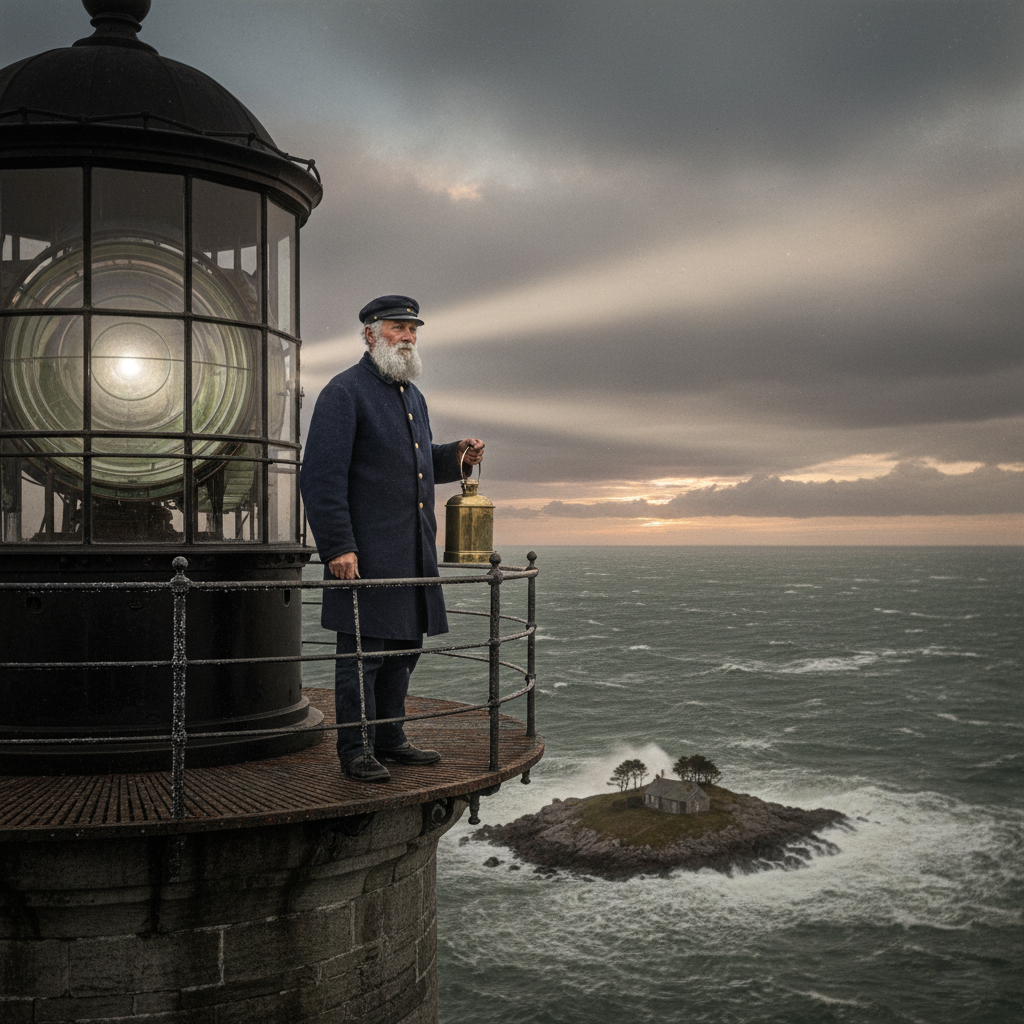
The role of a lighthouse keeper was vital to maritime safety, particularly during the 19th century when shipping traffic surged due to industrialization and global trade. Lighthouse keepers were responsible for maintaining the light and ensuring that it was visible to passing ships, guiding them safely through treacherous waters. This job required a deep understanding of navigation, meteorology, and mechanical systems, as keepers often had to troubleshoot and repair the light mechanisms, which could include oil lamps or later, electric lights. The keeper's duties extended beyond just the light; they also maintained the lighthouse itself, kept records of weather conditions, and sometimes assisted in rescue operations for distressed vessels. The isolation of many lighthouses meant that keepers often lived in remote locations, sometimes with their families, fostering a unique community around these beacons of safety.
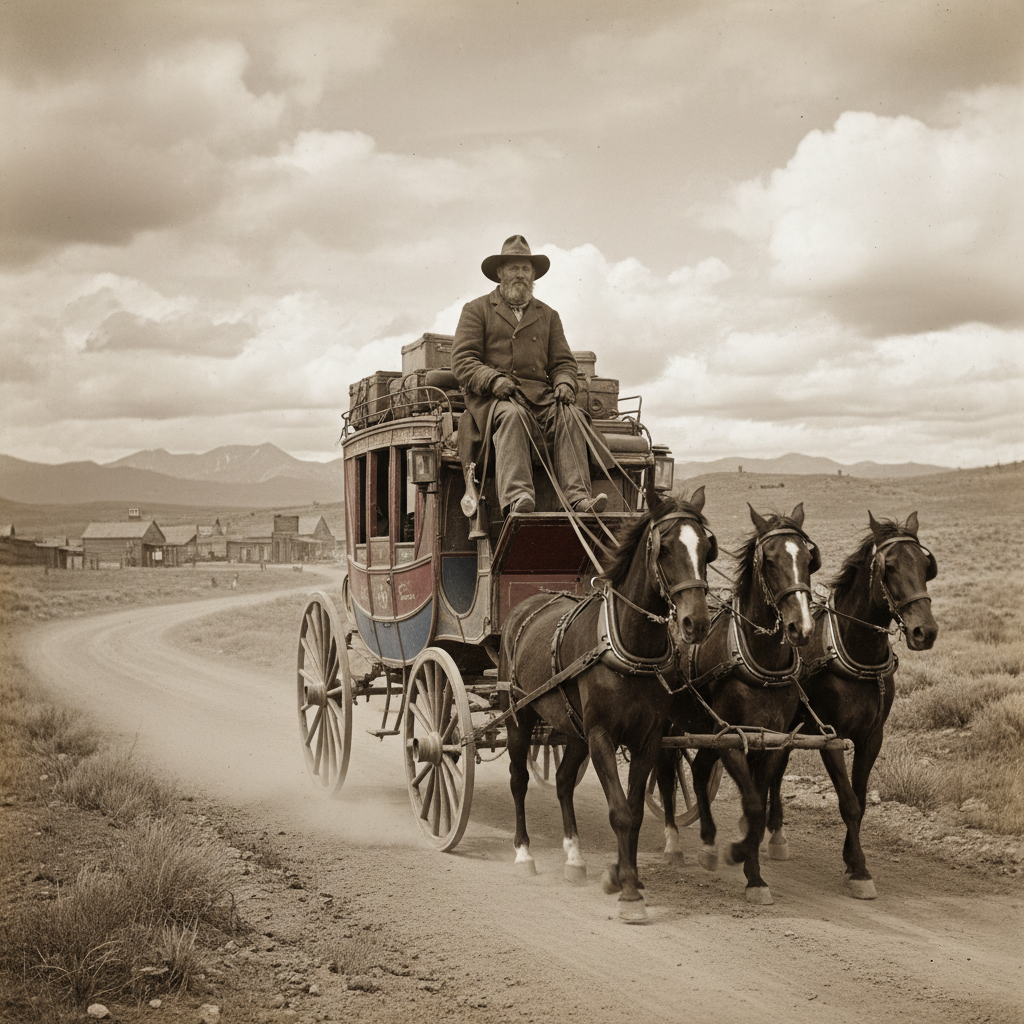
The stagecoach driver, a vital figure in the 19th century, was responsible for transporting passengers and goods across vast distances in horse-drawn coaches. These drivers navigated rugged terrains, often through treacherous weather conditions, ensuring the safety and comfort of their passengers. The stagecoach itself was a marvel of engineering, designed to carry multiple passengers and their luggage, while the driver skillfully managed a team of horses, often up to six, to pull the heavy vehicle. The role required not only a deep understanding of the horses and the coach but also an intimate knowledge of the routes, including potential hazards such as rough roads, rivers, and bandit-infested areas. Stagecoach drivers were often seen as the lifeline of communication and commerce in the expanding American West, connecting remote settlements with urban centers and facilitating the movement of mail and goods.
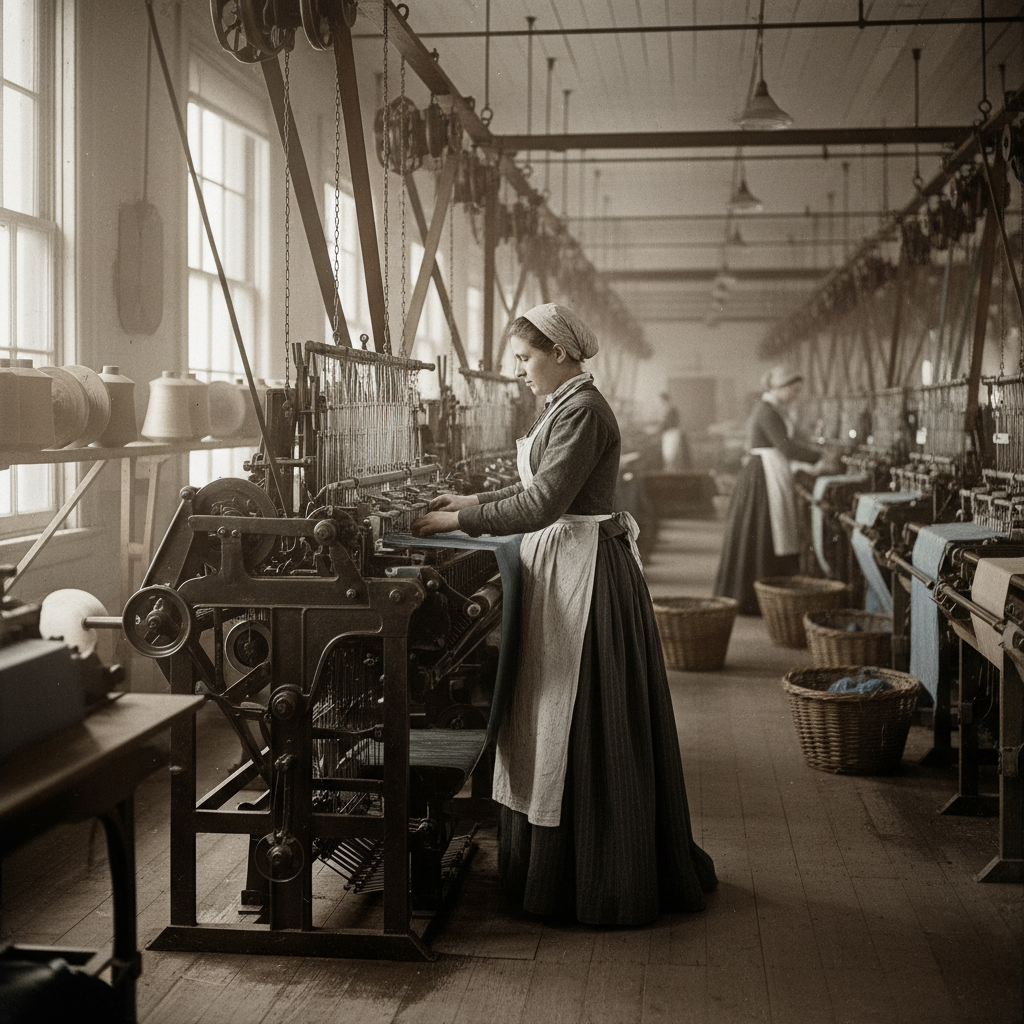
The knitting mill worker played a crucial role in the textile industry during the Industrial Revolution, a period marked by rapid industrial growth and technological innovation. These workers were primarily responsible for operating knitting machines that produced a variety of knitted goods, including socks, sweaters, and other garments. The work was often performed in large factories, known as knitting mills, where rows of machines hummed with activity, creating a rhythmic backdrop to the labor-intensive environment. Workers were typically assigned to specific machines, where they would monitor the knitting process, troubleshoot any issues, and ensure that the quality of the output met the factory's standards. The job required a keen eye for detail, as even a small mistake could result in significant waste of materials and time. Knitting mill workers were often women and children, who were drawn to the mills by the promise of steady wages. The work was physically demanding, requiring long hours of standing and repetitive motion, which could lead to fatigue and injury. Despite the harsh conditions, knitting mills provided a vital source of income for many families during a time when economic opportunities were limited, particularly for women. The rise of the knitting mill worker was emblematic of the broader changes occurring in society, as traditional hand-knitting practices were replaced by mechanized production, leading to increased efficiency and lower costs for consumers.
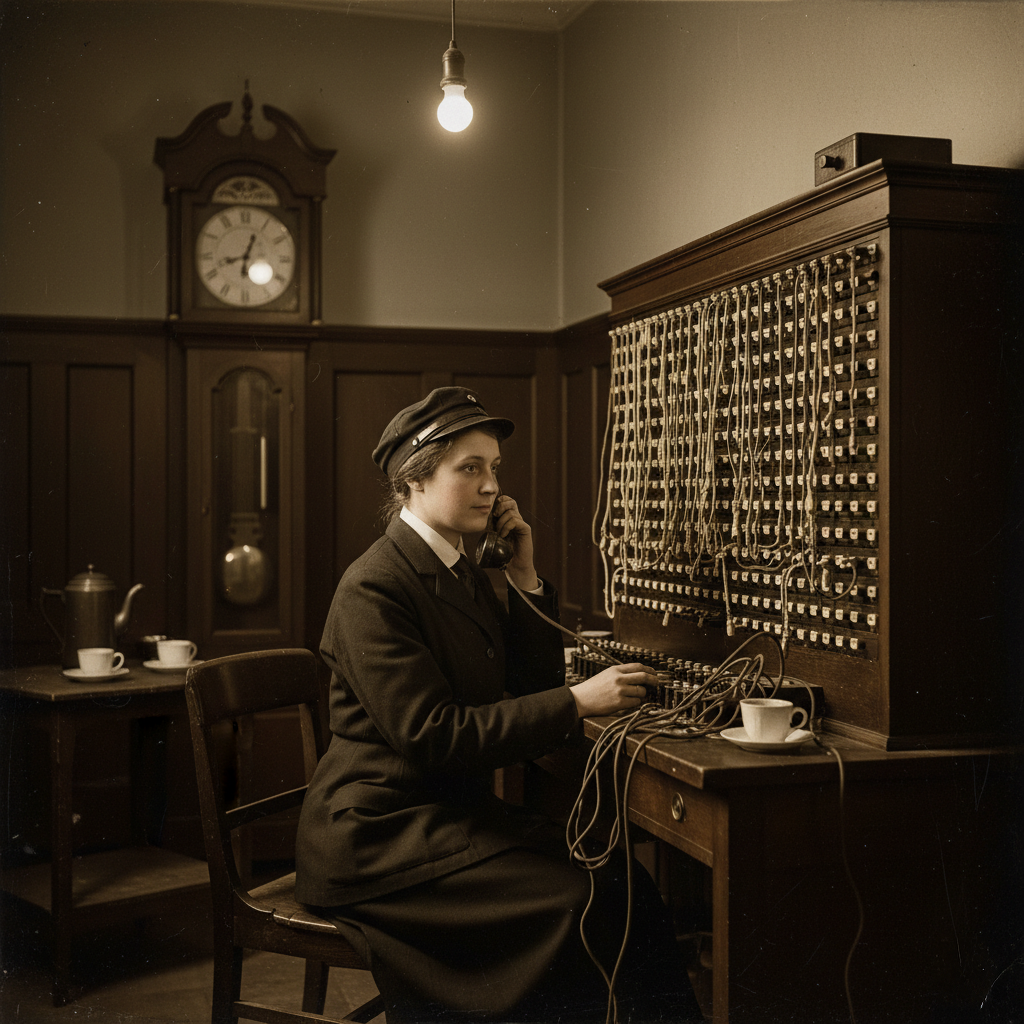
The Switchboard Night Watch was a crucial role in the early 20th century, particularly during the rise of telephone communication. As cities expanded and the demand for instant communication grew, telephone switchboards became the backbone of urban connectivity. The Switchboard Night Watch was responsible for overseeing the operation of these switchboards during the night hours, ensuring that calls were connected efficiently and that any issues were promptly addressed. This role required a keen sense of responsibility and a deep understanding of the switchboard's mechanics, as well as the ability to handle emergencies and troubleshoot problems in the dark hours of the night. Night watch operators worked in dimly lit rooms filled with the hum of electrical equipment and the soft clicks of switches being flipped. They were often the only person on duty, tasked with maintaining the flow of communication for hospitals, police stations, and other essential services that operated around the clock. The job was not only about connecting calls but also about providing a sense of security and reliability to the community, as the night watch was often the first point of contact in emergencies. As technology advanced, the need for manual switchboard operators diminished. The introduction of automated switching systems in the mid-20th century rendered the role of the Switchboard Night Watch obsolete, as machines could perform the tasks more efficiently and without the need for human oversight.
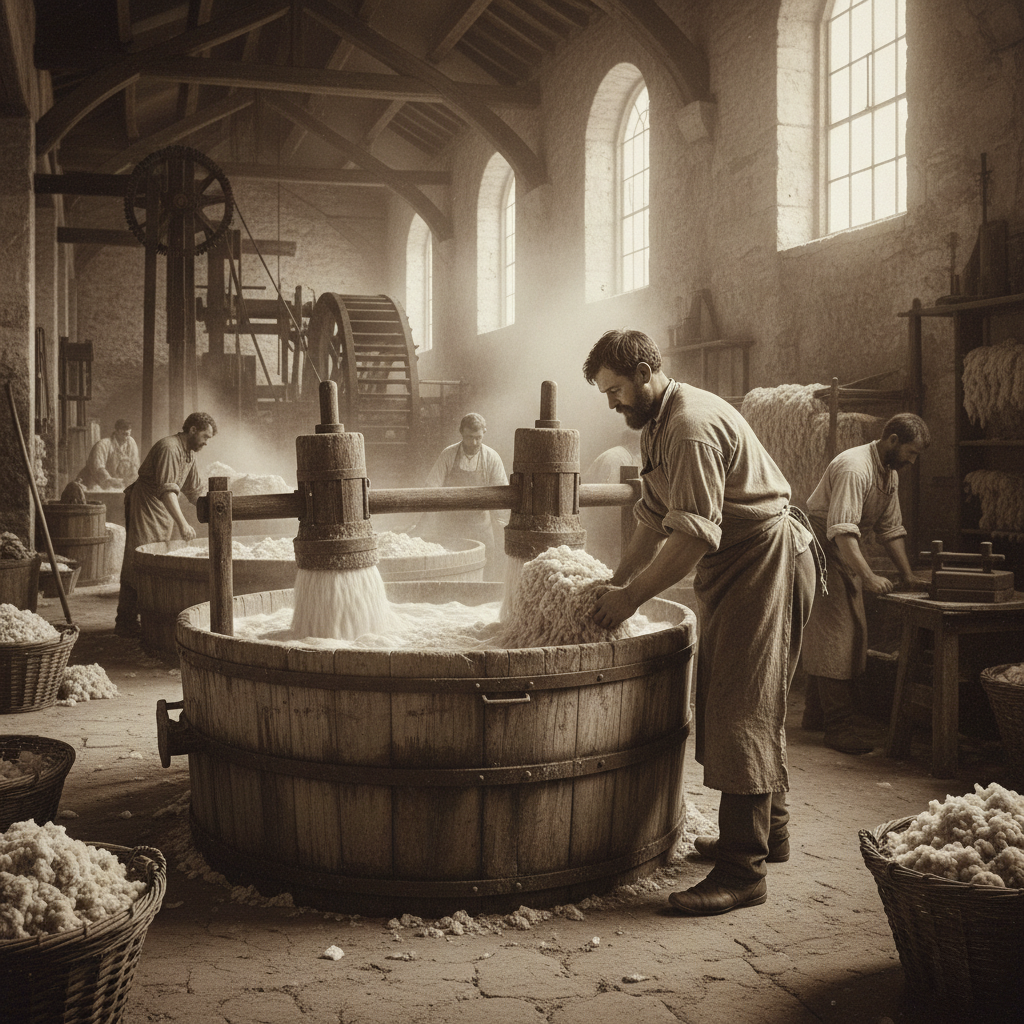
The role of a fuller was integral to the textile industry, particularly in the processing of woolen fabrics. Fullers were responsible for a crucial step in the cloth-making process known as 'fulling,' which involved cleaning and thickening the fabric. This was achieved through a combination of water, heat, and mechanical action, often using a foot-powered or water-powered mill. The fulling process not only removed impurities such as grease and dirt but also helped to mat the fibers together, resulting in a denser and more durable fabric. Fullers worked closely with weavers and dyers, ensuring that the cloth was ready for the final stages of production. The fulling process was labor-intensive and required a keen understanding of the materials and techniques involved, making the fuller a respected figure in the textile trade.
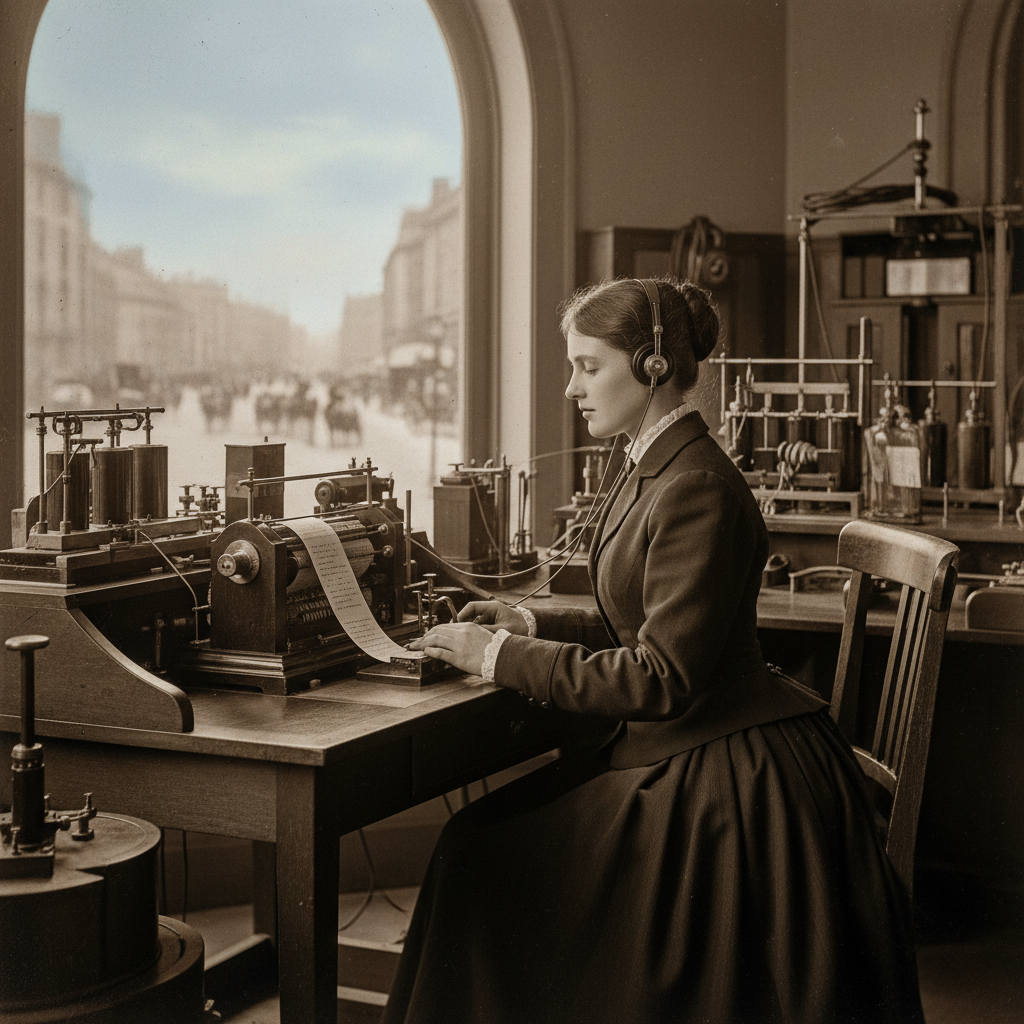
The role of a Morse Code Decoder emerged in the mid-19th century, coinciding with the advent of the telegraph. This job was pivotal in the communication revolution, allowing messages to be transmitted over long distances using a series of dots and dashes representing letters and numbers. Morse Code Decoders were responsible for interpreting these signals, translating them into readable text, and ensuring that vital information was accurately conveyed. They played a crucial role in various sectors, including military operations, maritime communication, and commercial enterprises, where timely information was essential for decision-making and coordination. The work environment for a Morse Code Decoder was often dynamic and fast-paced. Decoders typically operated in telegraph offices, military command centers, or aboard ships, where they would listen intently to the rhythmic sounds of the telegraph machine. The ability to quickly and accurately decode messages was paramount, as delays could lead to misunderstandings or missed opportunities. The job required not only technical skill but also a keen sense of urgency and attention to detail, as decoders often worked under pressure, especially during critical communications.
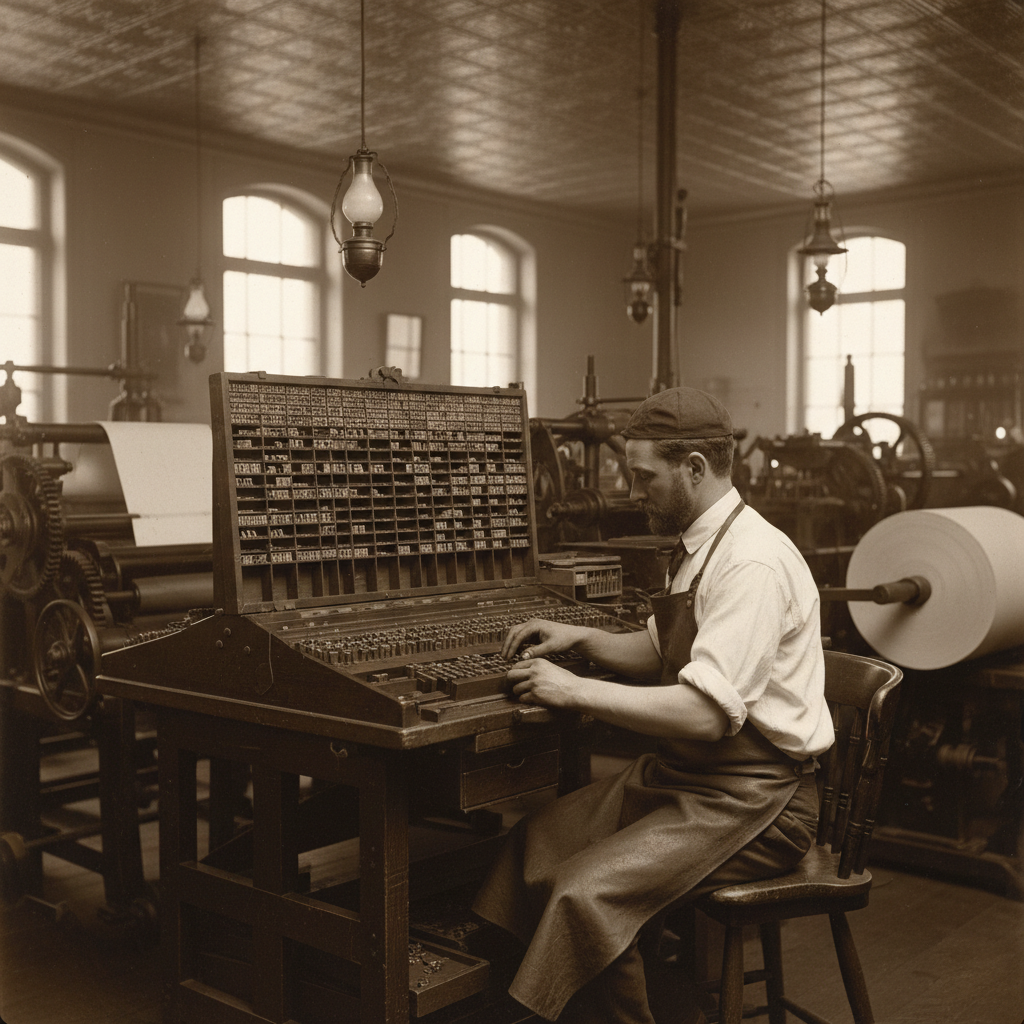
The role of a newspaper typesetter was pivotal in the production of printed media during the Industrial Revolution and well into the 20th century. Typesetters were responsible for arranging the text and images that would be printed in newspapers, ensuring that each page was visually appealing and legible. This intricate process involved selecting individual metal type pieces, known as 'sorts', and arranging them into words and sentences on a composing stick. Once the text was set, it was locked into place in a chase, ready for the printing press. Typesetters worked in a noisy, bustling environment, often alongside other skilled tradespeople, such as printers and proofreaders, in a print shop. The job required not only technical skill but also a keen eye for detail and a strong understanding of typography and layout.
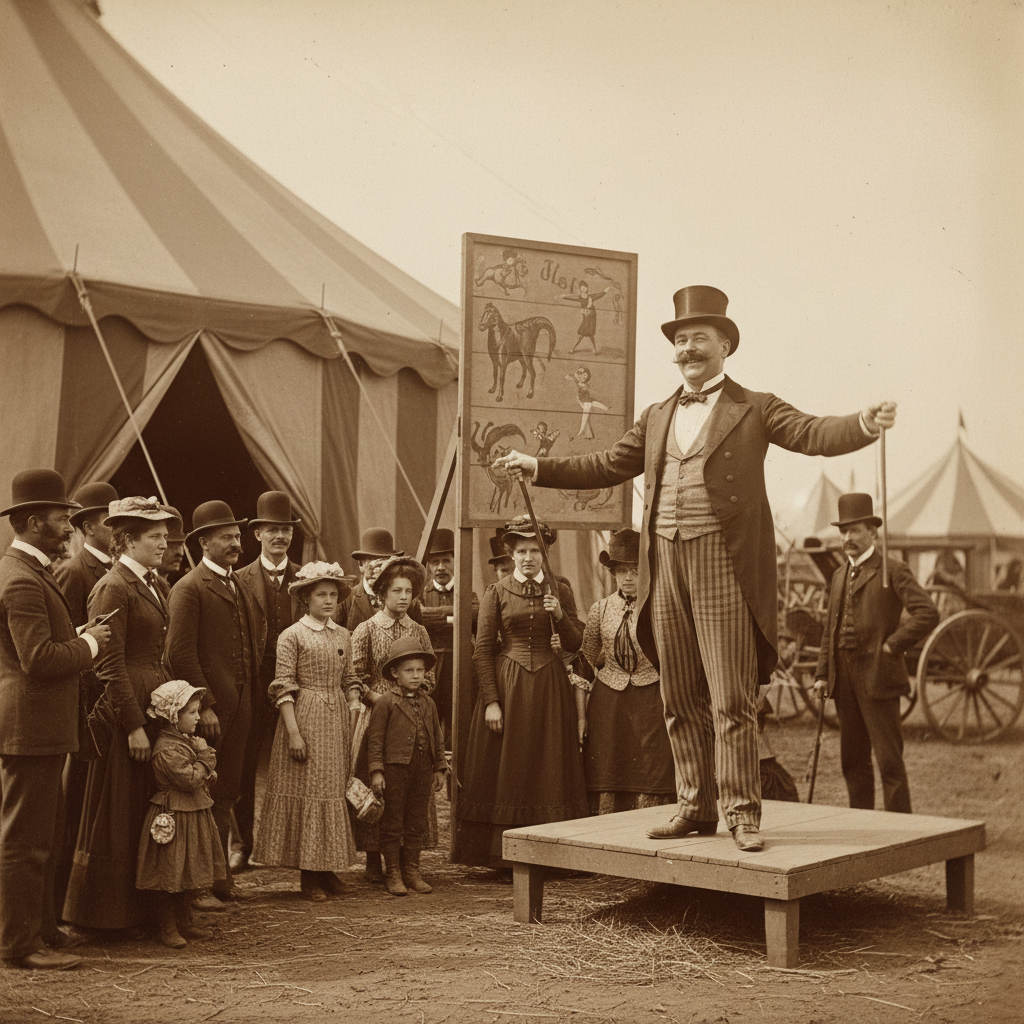
The role of a circus barker was a vibrant and essential part of the traveling circus experience during the Victorian Era, a time when entertainment was a cherished escape from the rigors of daily life. Circus barkers were the charismatic individuals who stood at the entrance of the circus tent, beckoning passersby to come in and witness the wonders within. With their loud, boisterous voices and engaging personalities, they would entice audiences with promises of thrilling acts, exotic animals, and astonishing feats of human skill. Dressed in flamboyant attire, often adorned with bright colors and eye-catching accessories, barkers were not just salespeople; they were performers in their own right. Their job required a unique blend of showmanship and persuasion, as they crafted elaborate pitches that highlighted the most sensational aspects of the circus. They would often use humor, exaggeration, and even a bit of theatrics to draw in crowds, creating an atmosphere of excitement and anticipation. The circus barker's role was not limited to mere advertising; they were also responsible for managing the flow of patrons into the tent, ensuring that the audience was engaged and ready for the show. Their lively banter and ability to connect with the crowd were crucial in setting the tone for the performances that followed, making them a beloved figure in the circus community.
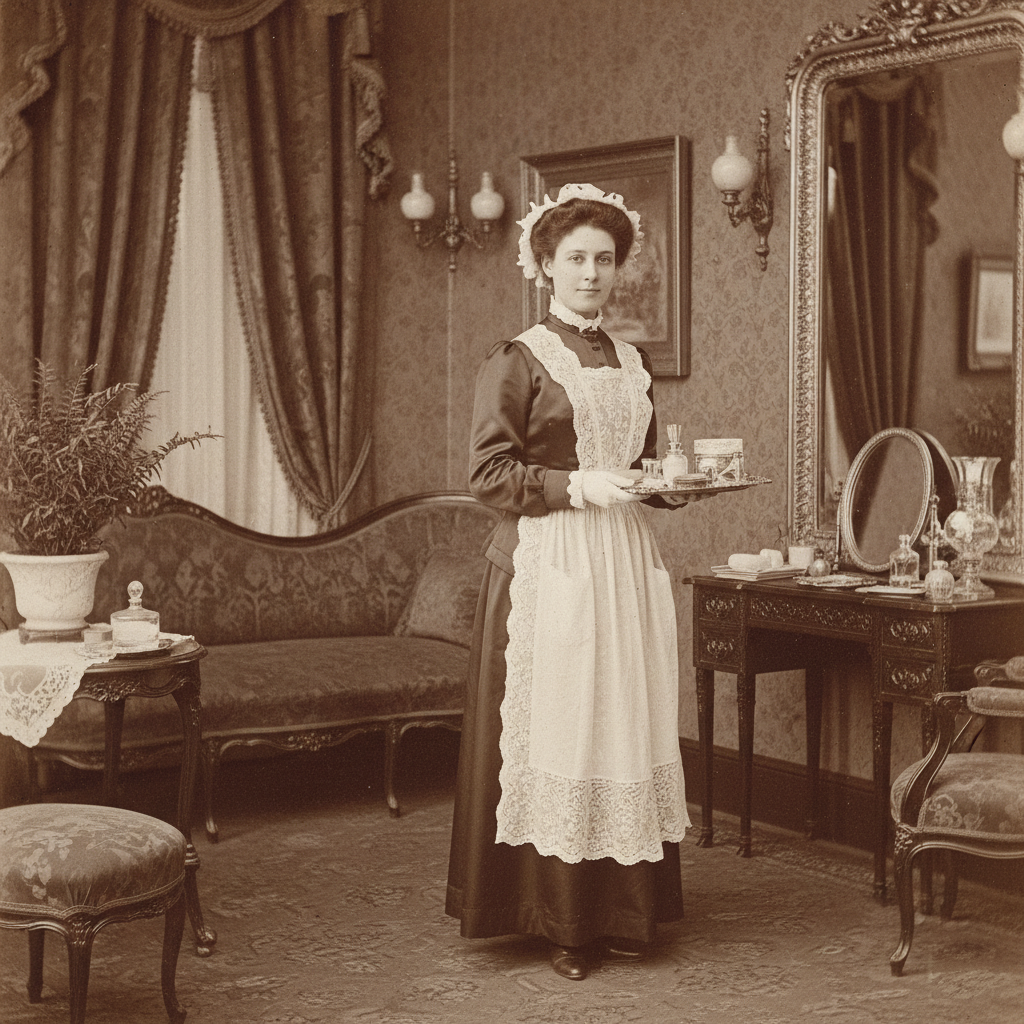
The role of a Powder Room Attendant was a vital yet often overlooked position in the social fabric of the Victorian Era, particularly in the late 19th century. These attendants were responsible for maintaining the elegance and functionality of the powder rooms in theaters, opera houses, and high-end social venues. Their duties included ensuring that the facilities were clean, stocked with necessary items, and that patrons had a pleasant experience while attending to their personal grooming needs. The powder room was a sanctuary for women, a place where they could refresh their appearance, apply makeup, and socialize in a more private setting. Attendants would often assist patrons with their needs, offering services such as providing powder, perfume, and other beauty essentials, as well as helping with clothing adjustments and offering a listening ear to the social exchanges that took place within these intimate spaces.
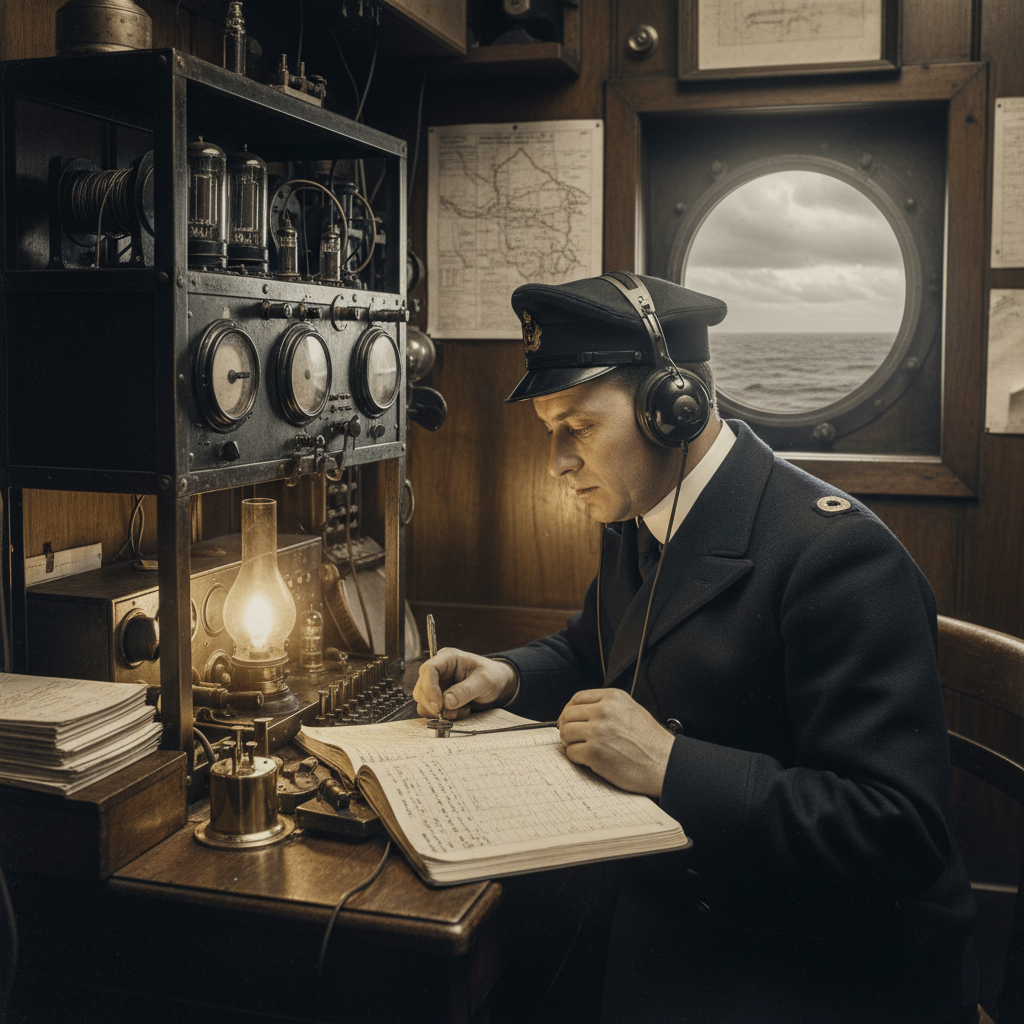
The role of a Log Telegraphist emerged during the Industrial Revolution, a period marked by rapid technological advancement and the expansion of communication networks. These skilled workers were responsible for operating telegraph systems, which were crucial for transmitting messages over long distances using electrical signals. The Log Telegraphist specifically focused on the logging and recording of messages sent and received via telegraph, ensuring that communications were accurately documented and relayed. This job was vital for businesses, government agencies, and the military, as it facilitated timely decision-making and coordination across vast distances. Log Telegraphists were often found in telegraph offices, railway stations, and military outposts, where they worked in close proximity to the telegraph equipment. Their work environment was typically bustling, filled with the sounds of clicking keys and the hum of electrical machinery. The Log Telegraphist's role required not only technical proficiency in operating the telegraph but also a keen attention to detail, as they meticulously recorded each message, noting the time of receipt and dispatch, and ensuring that no errors occurred in the transmission process. As the world became increasingly interconnected, the demand for efficient communication grew, and the Log Telegraphist played a pivotal role in this transformation. However, as technology advanced, the telegraph system began to be replaced by more sophisticated communication methods, such as the telephone and eventually the internet, leading to the decline of this occupation.
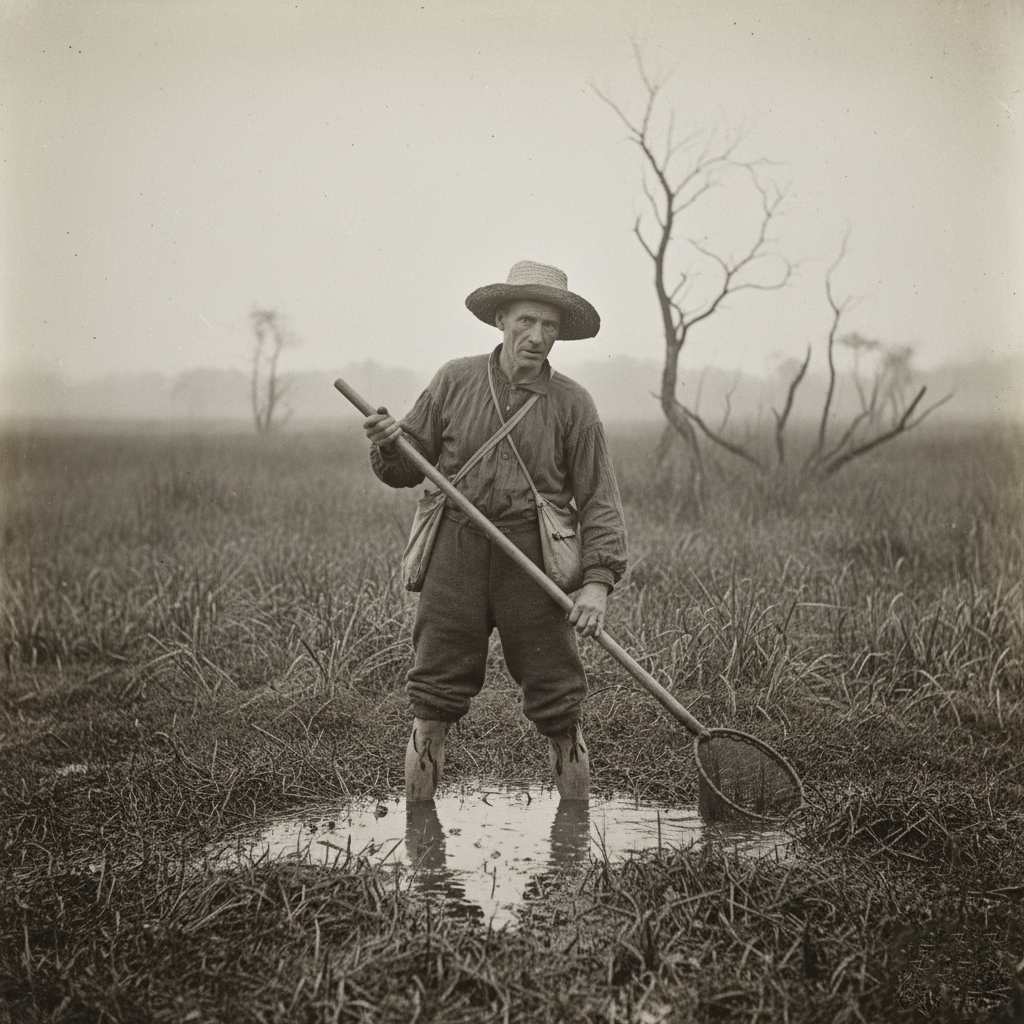
In the Victorian Era, the leech collector played a crucial role in the burgeoning field of medicine. These individuals were tasked with harvesting leeches from freshwater bodies, primarily for use in bloodletting—a common medical practice of the time. Leeches were believed to cure a variety of ailments by drawing out 'bad blood,' and their demand surged as the medical community embraced this practice. Leech collectors would often wade into muddy waters, using nets and their bare hands to gather these slimy creatures, which were then sold to physicians and apothecaries. The job required not only physical endurance but also a keen understanding of the leeches' habitats and behaviors, as well as the ability to handle them without causing harm to themselves or the creatures. The leech collector's work was often conducted in remote, marshy areas, where they would spend hours in the water, sometimes in harsh weather conditions. The collectors would return home with buckets filled with leeches, which they would keep alive in water-filled containers until sold. The job was labor-intensive and often poorly paid, but it was essential in an era when medical practices relied heavily on the use of leeches for therapeutic purposes. As the medical field evolved and the understanding of human anatomy and disease progressed, the practice of bloodletting fell out of favor. By the late 19th century, with the advent of modern medicine and more effective treatments, the demand for leeches diminished significantly, leading to the decline of this once vital occupation.
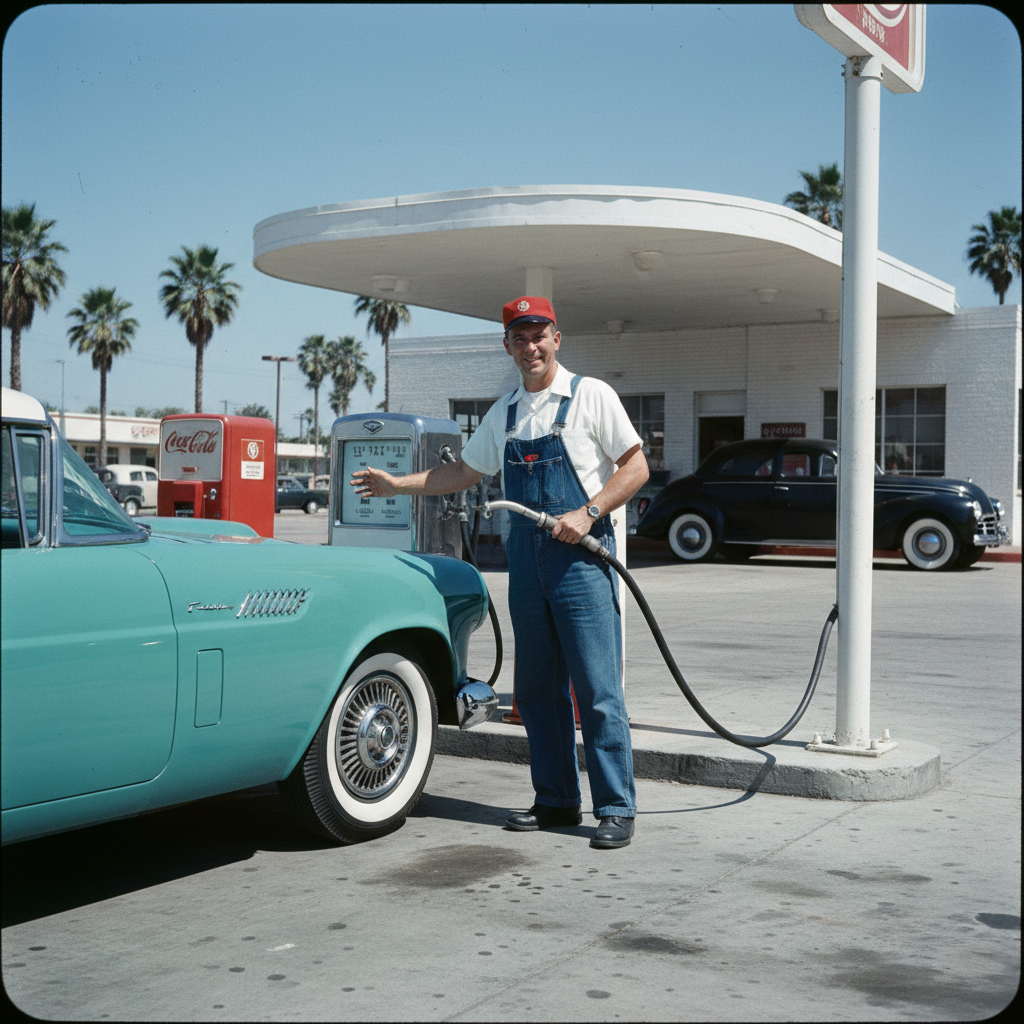
The role of a gas station attendant was a vital part of the American landscape from the mid-20th century until the late 1990s. These attendants were responsible for providing fuel to vehicles, but their duties extended far beyond simply pumping gas. They were the friendly faces that greeted customers, often engaging in conversation while they filled tanks, checked oil levels, and cleaned windshields. The gas station was not just a place to refuel; it was a community hub where people gathered to share news and stories. Attendants were also tasked with monitoring fuel levels in the tanks, ensuring that the station was stocked, and sometimes even performing minor vehicle maintenance, such as checking tire pressure or replacing wiper blades. The job required a blend of customer service skills and mechanical knowledge, as attendants needed to be able to answer questions about fuel types and vehicle care. In the post-war economic boom, the rise of the automobile culture in the United States led to an explosion of gas stations, and with it, the demand for attendants. These workers played a crucial role in the burgeoning car culture, providing not just fuel, but also a sense of community and service. However, as self-service gas stations began to emerge in the 1970s, the role of the gas station attendant started to decline. By the 1990s, many gas stations had transitioned to fully automated systems, where customers could pump their own gas without the need for an attendant, leading to the eventual extinction of this once-common occupation.
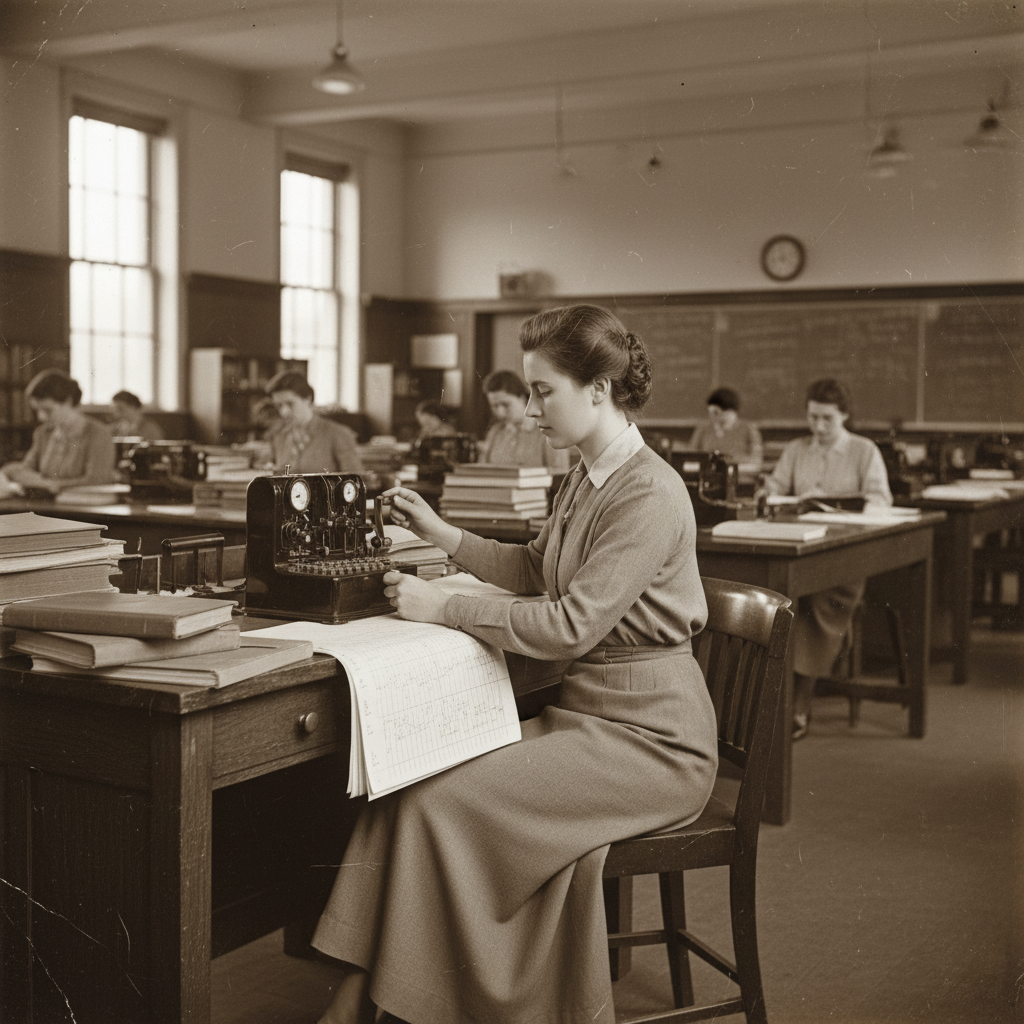
The role of a Human Computer emerged in the early 20th century, primarily during the 1930s to the 1950s, as a response to the growing need for complex calculations in fields such as astronomy, engineering, and military applications. Human Computers were predominantly women who performed mathematical calculations by hand, often using pencil and paper, and later, mechanical calculators. They worked in teams, meticulously calculating trajectories for rockets, analyzing astronomical data, and solving intricate mathematical problems that were essential for scientific advancements. Their work was critical in the development of early computers, as they laid the groundwork for the algorithms and processes that would later be automated. These women, often referred to as "computers," were not only skilled mathematicians but also adept at problem-solving and critical thinking. They operated in environments that ranged from university laboratories to government research facilities, where they collaborated closely with scientists and engineers. The atmosphere was often intense, with deadlines looming and the pressure to produce accurate results being paramount. The Human Computer's role was not just about numbers; it was about precision, attention to detail, and the ability to work under pressure. They were the unsung heroes behind many scientific breakthroughs, including the early space missions and the development of radar technology during World War II. Their contributions were vital, yet often overlooked in the historical narrative of computing and mathematics.
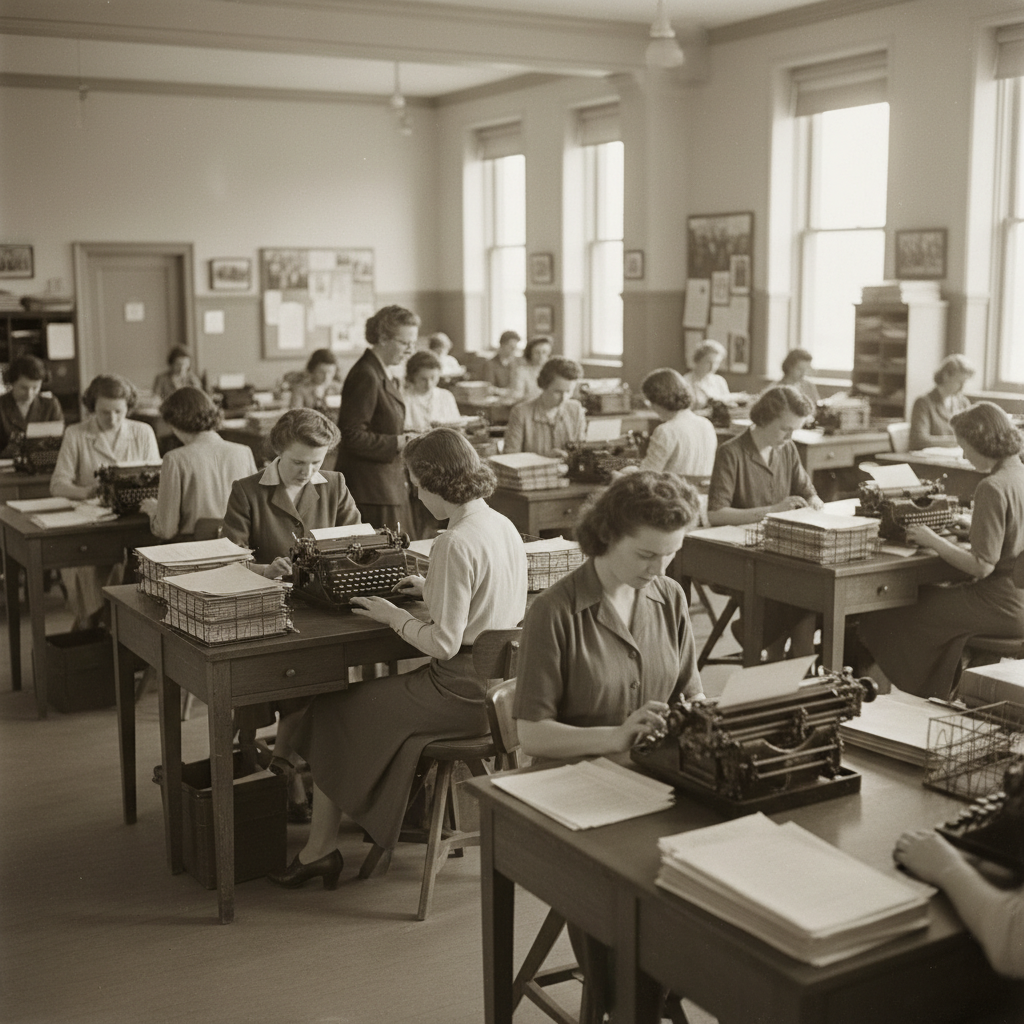
The Typist Pool Worker was a vital cog in the machinery of mid-20th century office life, particularly in the bustling corporate environments of the Post-War Era, from the late 1940s to the early 1980s. These skilled individuals were responsible for producing typed documents, correspondence, and reports, often under tight deadlines. They worked in a shared office space known as a 'typist pool,' where multiple typists would be stationed at rows of typewriters, each contributing to the efficiency of the office. The typist pool was a reflection of the era's burgeoning corporate culture, where the demand for clerical work surged as businesses expanded in the post-war economic boom. The role required not only speed and accuracy in typing but also a keen understanding of office protocols and etiquette. Typist Pool Workers were often the first point of contact for incoming correspondence, and their ability to produce clear, professional documents was crucial for maintaining the image of the organization. They utilized carbon paper for duplicating documents and were adept at using various typewriter models, each with its own quirks and features. The job was often seen as a stepping stone for women entering the workforce, providing them with financial independence and a foothold in the corporate world.
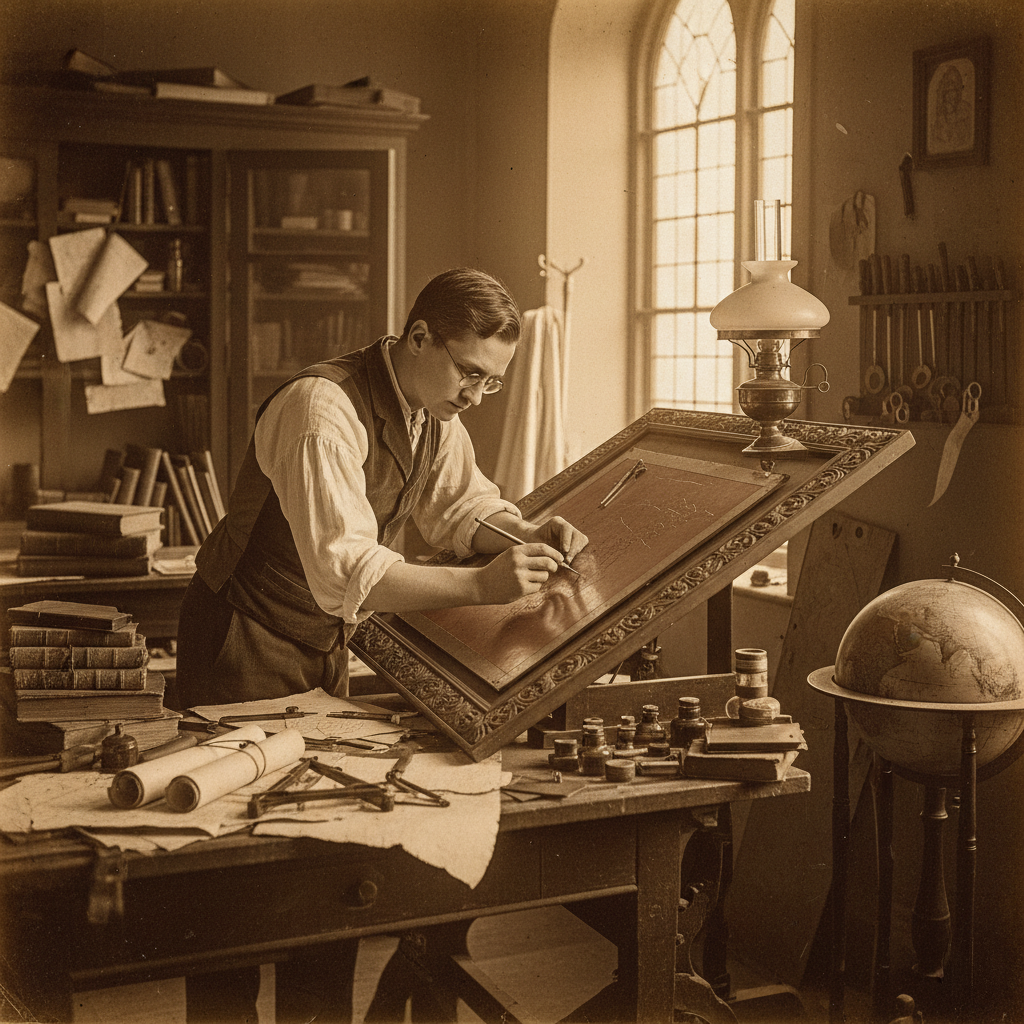
Map engravers were skilled artisans responsible for the intricate task of transferring cartographic designs onto metal plates, which were then used for printing maps. This occupation flourished during the Industrial Revolution, a period marked by rapid advancements in technology and a growing demand for accurate geographical representations. The engraver's work was crucial for the production of maps that guided explorers, navigators, and the general public, reflecting the expanding knowledge of the world and the increasing importance of navigation in trade and exploration. The process of map engraving was meticulous and required a deep understanding of both art and science. Engravers would begin with a detailed drawing of the map, often created by cartographers who specialized in the art of map-making. Using tools such as burins and gravers, the engraver would carve the design into a copper or zinc plate, creating a reverse image of the map. This required not only precision but also an artistic eye to ensure that the final product was both accurate and aesthetically pleasing. Once the engraving was complete, the plate would be inked and pressed onto paper, producing the final map that would be distributed for use. Map engravers played a vital role in the dissemination of knowledge during a time when maps were essential for navigation, land ownership, and military strategy. Their work contributed to the Age of Exploration, as accurate maps were crucial for explorers venturing into uncharted territories. As such, map engravers were respected members of the printing and publishing industries, often working closely with publishers and cartographers to produce high-quality maps for various purposes, including atlases, travel guides, and educational materials.
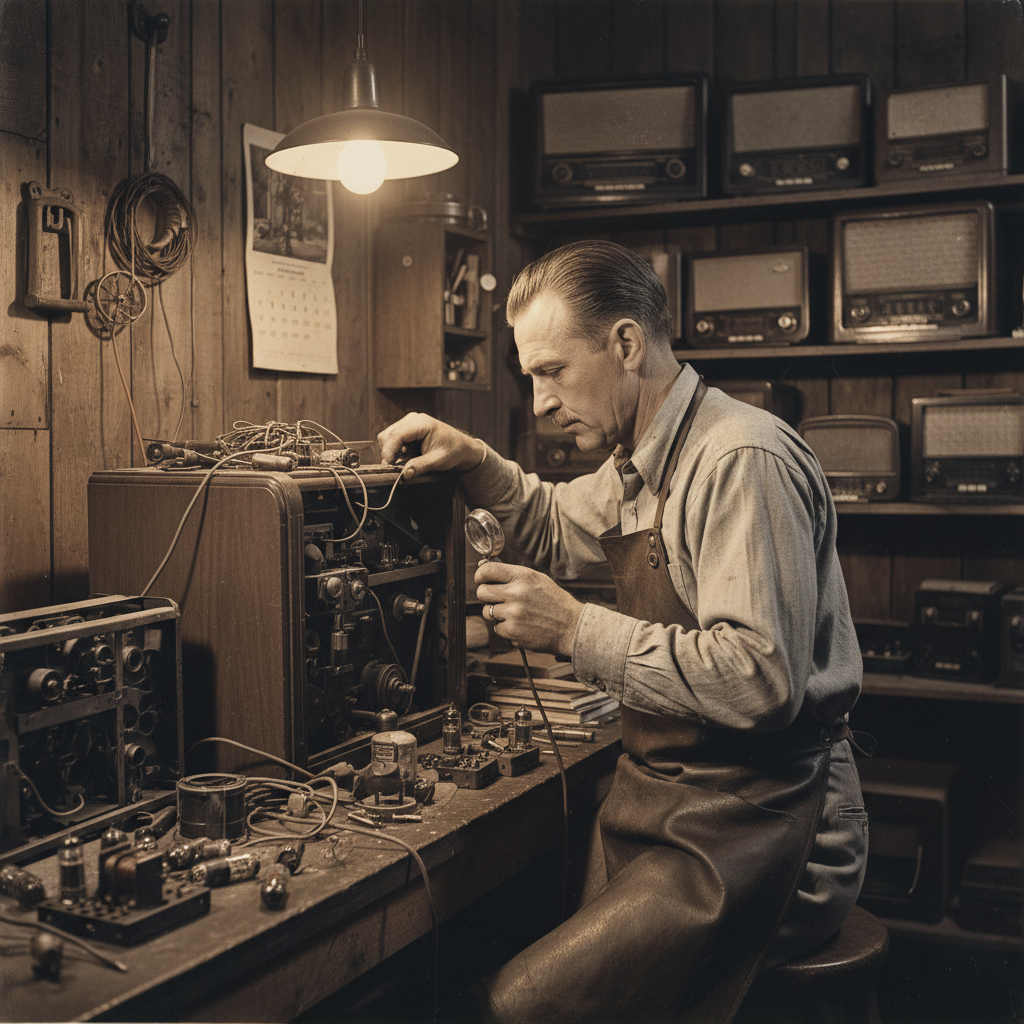
The Radio Repairman was a vital figure in the mid-20th century, particularly in the post-World War II era when radio became a staple of American households. As the popularity of radio surged, so did the need for skilled technicians who could diagnose and fix the myriad of issues that could arise in these complex devices. Radio Repairmen were often found in small shops, bustling with the sounds of static and the hum of electronic equipment, as they worked diligently to restore the voices of news anchors, music, and entertainment to life. Their expertise was not only technical but also deeply rooted in an understanding of the evolving technology of the time, as they navigated the transition from vacuum tubes to transistors, and later to integrated circuits. In their workshops, Radio Repairmen would often encounter a variety of problems, from broken speakers to faulty wiring. They were adept at using a range of diagnostic tools, including multimeters and oscilloscopes, to troubleshoot issues. The job required a keen eye for detail and a methodical approach to problem-solving, as well as a solid understanding of electrical engineering principles. The Radio Repairman was not just a technician; he was a community figure, often providing advice on the best radio models and helping customers understand the technology that was rapidly changing their lives. As the 1960s progressed, the landscape of audio technology began to shift dramatically. The advent of television, along with the rise of portable music devices, led to a decline in radio's dominance. Additionally, the increasing complexity of radio technology, coupled with the introduction of disposable consumer electronics, made repairs less common. By the late 1970s, the role of the Radio Repairman began to fade, as many consumers opted to replace rather than repair their devices, marking the end of an era for this once-essential profession.
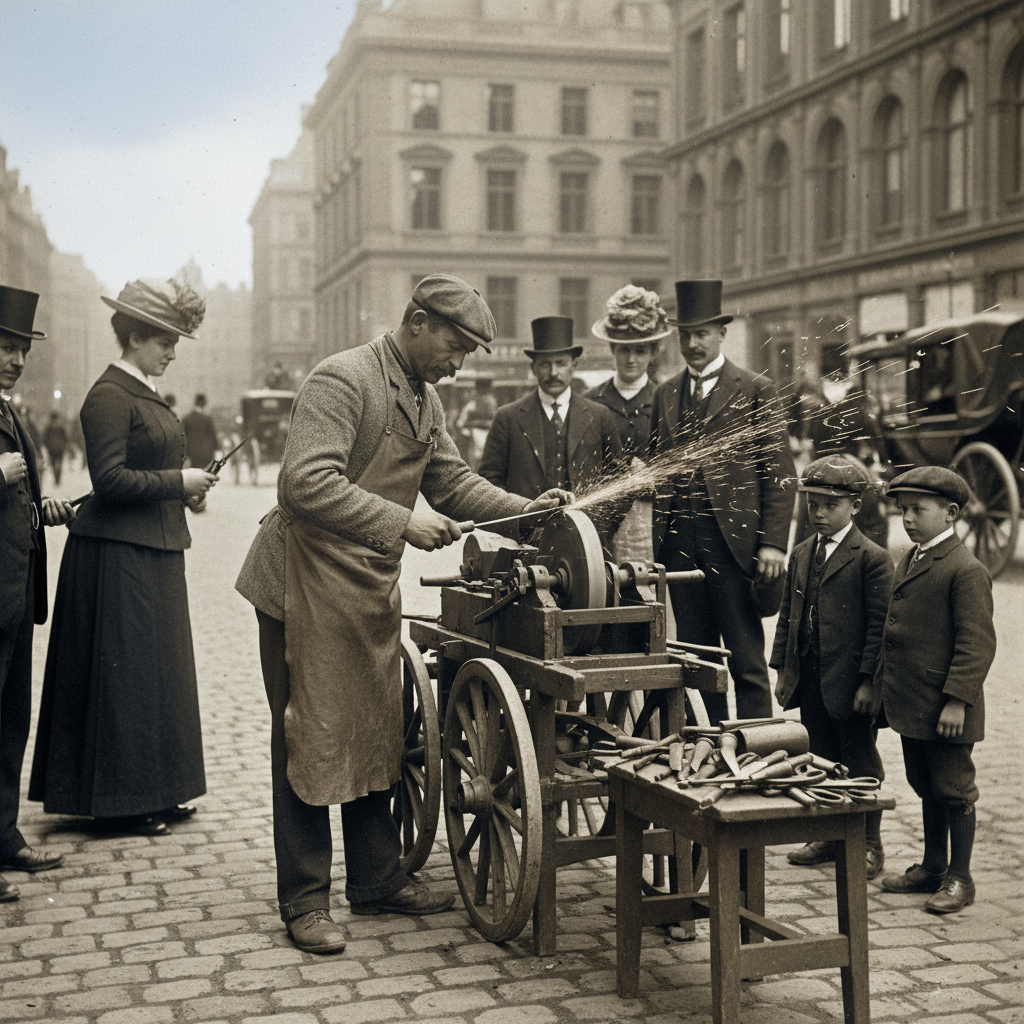
The knife grinder was a skilled tradesperson responsible for sharpening and honing blades, from kitchen knives to industrial cutting tools. This occupation flourished during the Industrial Revolution, a period marked by rapid technological advancement and a growing demand for precision tools in both domestic and industrial settings. Knife grinders often worked in small workshops or as itinerant tradespeople, traveling from town to town with their grinding wheels and tools, providing essential services to local communities. The sound of the grinding wheel, a rhythmic and reassuring noise, was a familiar part of daily life, as these craftsmen ensured that the tools of the trade remained sharp and effective. The process of knife grinding involved several steps. First, the grinder would assess the blade's condition, determining the level of wear and the type of sharpening needed. Using a foot-powered grinding wheel, the grinder would carefully sharpen the blade, maintaining the correct angle to ensure optimal cutting performance. After sharpening, the blade would often be polished to a fine finish, sometimes using a leather strop to achieve a razor-sharp edge. Knife grinders were not only skilled in their craft but also had a deep understanding of the various types of steel and the specific needs of different tools, making them invaluable to both domestic households and industrial operations.
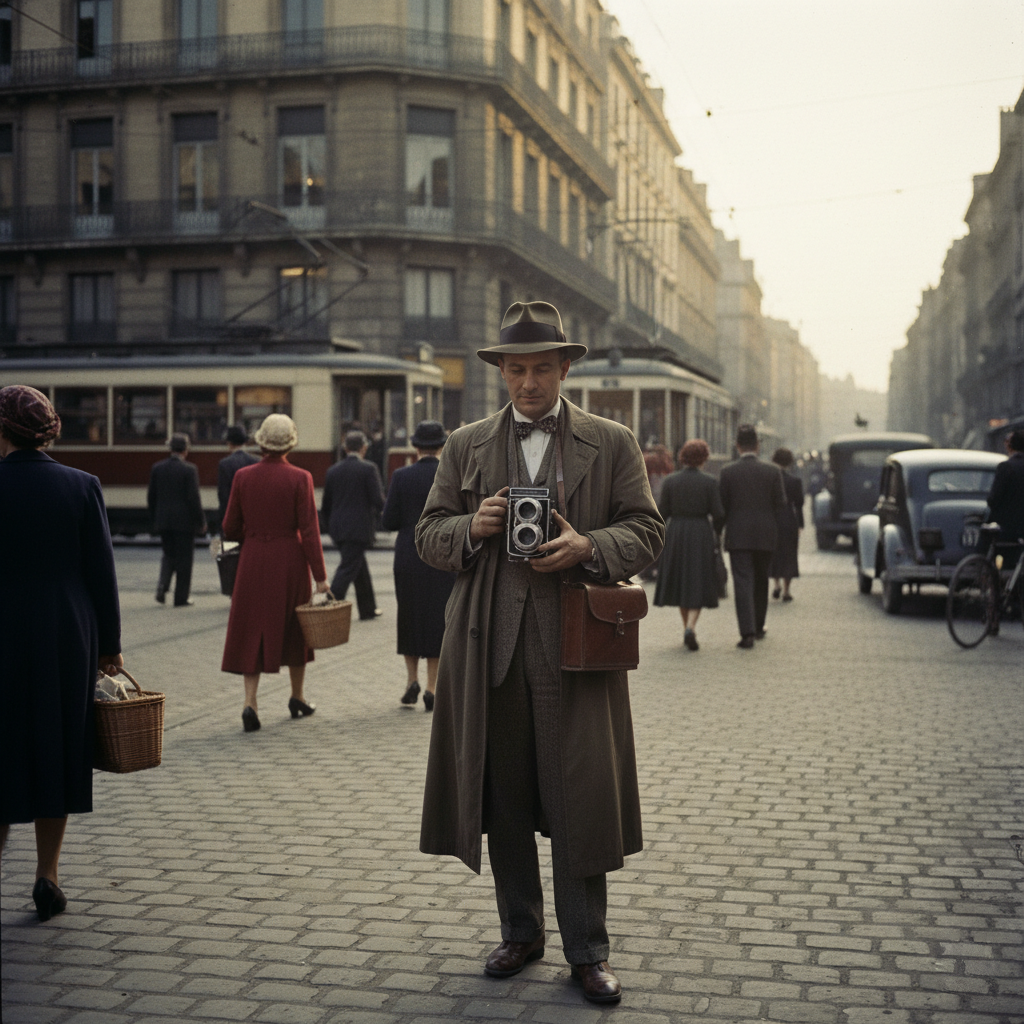
Street photographers were the visual storytellers of urban life, capturing candid moments and the essence of everyday existence in bustling city streets. Active primarily from the early 1900s to the late 20th century, these artists wielded their cameras to document the vibrancy of public spaces, from crowded markets to serene parks, and everything in between. Their work often reflected the social dynamics, cultural shifts, and historical events of their time, providing a unique lens through which to view the world. Street photography was not merely about taking pictures; it was about seizing fleeting moments that conveyed emotion, narrative, and the human experience. The street photographer's role was multifaceted, requiring not only technical skill in photography but also an acute awareness of the environment and the ability to connect with strangers. They often worked independently, roaming the streets with their cameras, ready to capture spontaneous interactions and scenes that told a story. Their photographs were frequently published in newspapers, magazines, and art galleries, contributing to the visual culture of the era and influencing future generations of photographers.
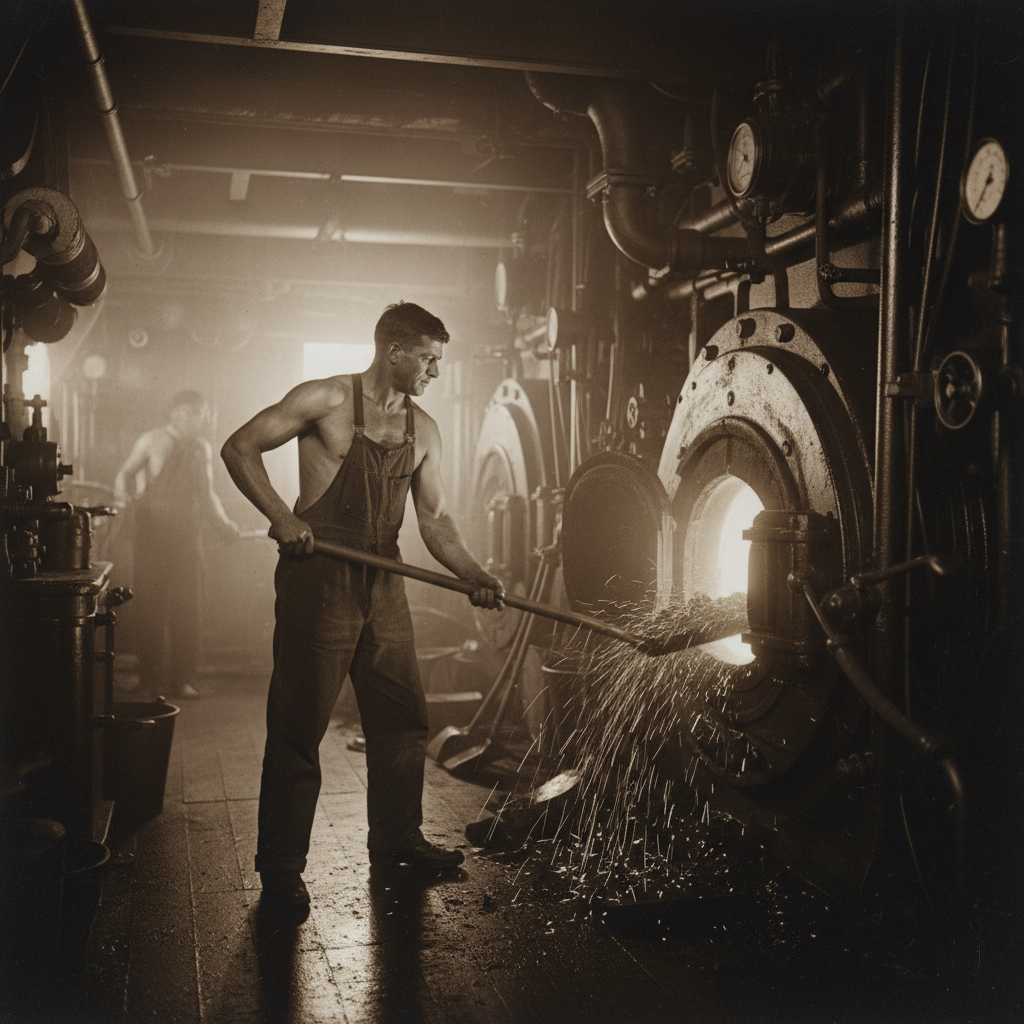
The coal stoker was a vital role during the Industrial Revolution, responsible for feeding coal into steam boilers that powered locomotives, ships, and factories. These workers were the unsung heroes of the industrial age, ensuring that the engines of progress ran smoothly. The job required physical strength and endurance, as stokers often worked in hot, cramped, and dark conditions, shoveling coal into the fireboxes of boilers to maintain the necessary temperature for steam production. The stoker's work was crucial for the operation of steam engines, which were the backbone of industrial transportation and manufacturing during this period. The job was labor-intensive and often dangerous, with workers exposed to high temperatures, coal dust, and the risk of burns or injuries from heavy equipment. Stokers were typically employed in coal-fired power plants, on ships, and in factories, where they played a key role in the efficiency of steam-powered machinery. As the Industrial Revolution progressed, the demand for coal stokers grew, but so did the mechanization of the industry, leading to significant changes in the workforce.
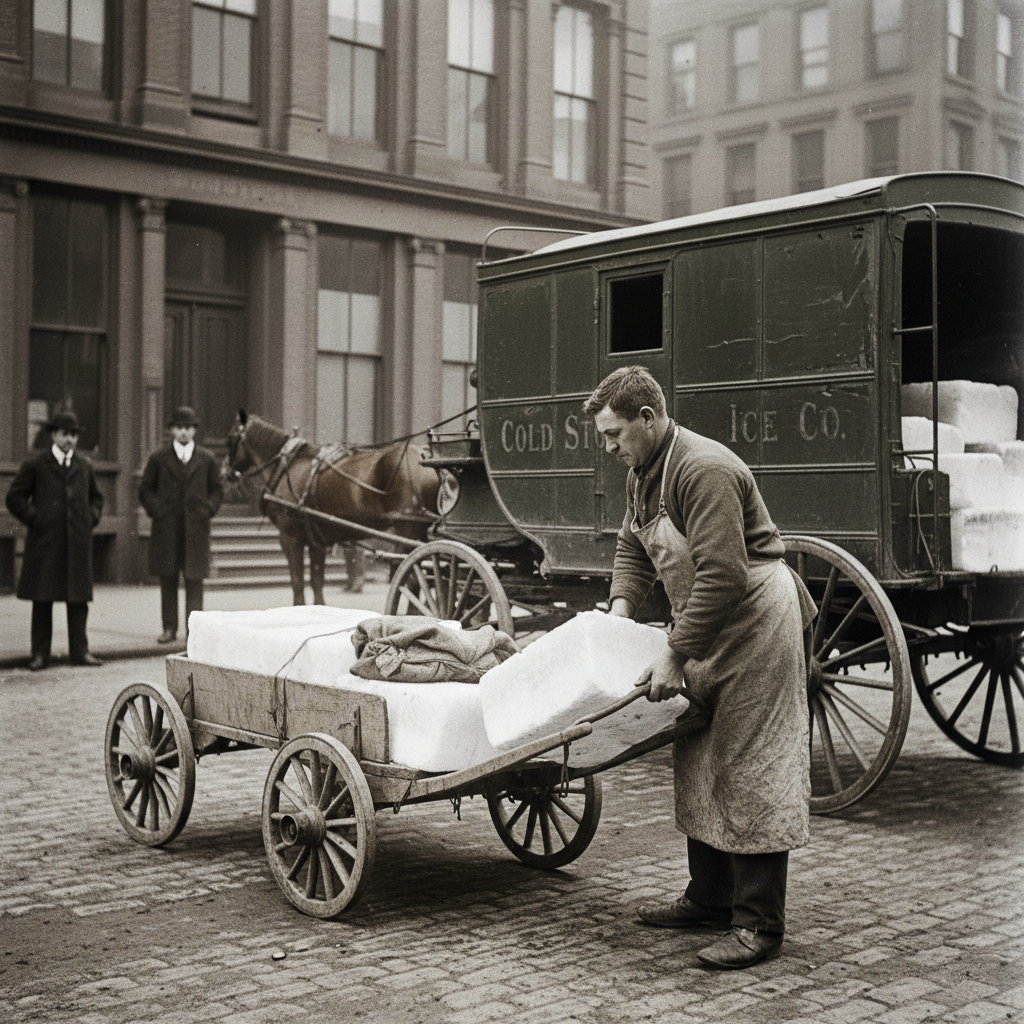
The Ice Delivery Man was a vital figure in the late 19th and early 20th centuries, responsible for transporting large blocks of ice from ice houses to homes and businesses. Before the advent of modern refrigeration, ice was essential for preserving food, cooling drinks, and providing comfort during the sweltering summer months. Ice delivery men would often rise before dawn, preparing for a long day of labor that involved hauling heavy blocks of ice, sometimes weighing up to 300 pounds, using specialized tools and horse-drawn wagons. They navigated through city streets, delivering ice to households, restaurants, and markets, often shouting 'Ice!' to announce their arrival. The job required not only physical strength but also knowledge of customer preferences, as many clients had specific requests for the size and quantity of ice needed. The ice delivery man was a familiar sight in urban areas, contributing to the daily rhythm of life and commerce.
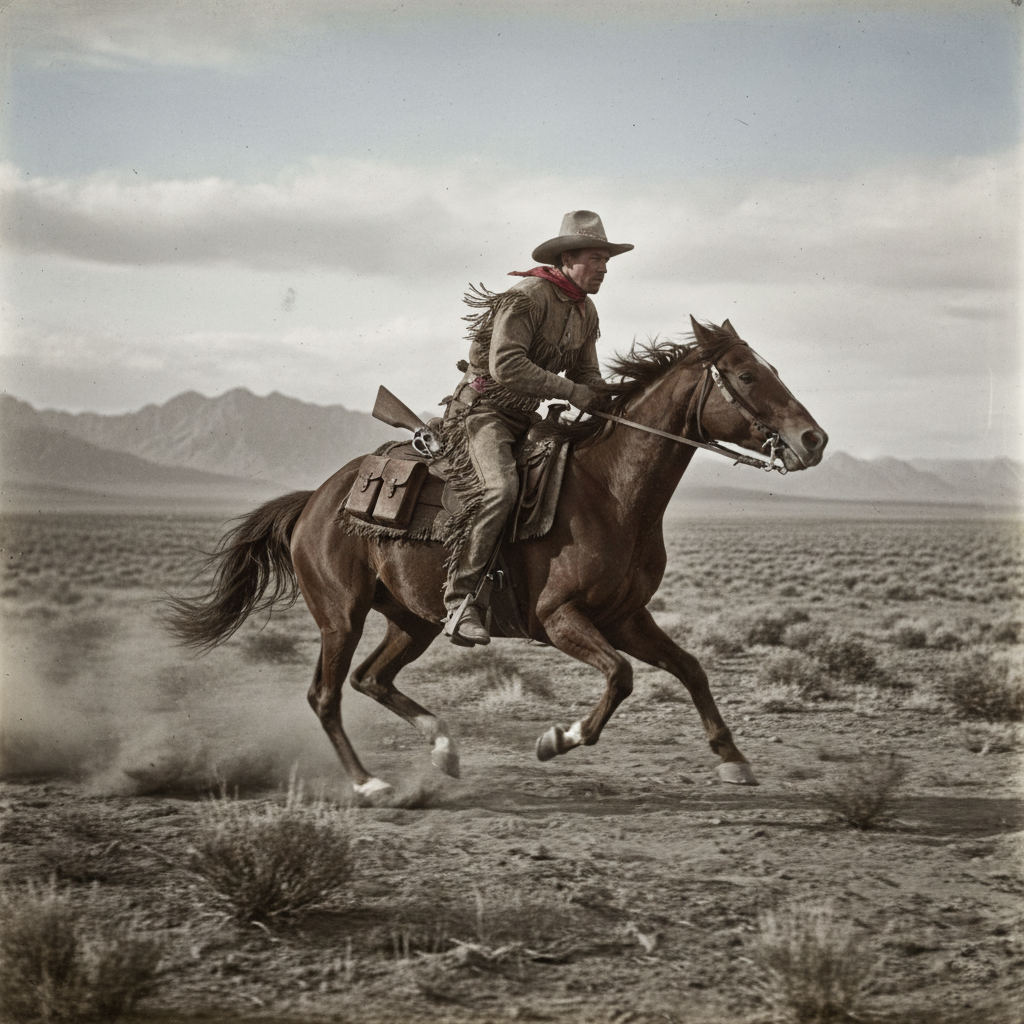
The Pony Express was a mail service that operated in the United States from April 1860 to October 1861, providing a vital link between the East and West coasts during a time of rapid expansion and communication needs. Riders, known as Pony Express Riders, were young, brave men who undertook the perilous task of delivering mail across the vast and often treacherous terrain of the American frontier. Each rider was responsible for a segment of the route, which spanned approximately 1,900 miles from St. Joseph, Missouri, to Sacramento, California. The service was renowned for its speed, with letters often delivered in just ten days, a remarkable feat for the time. Riders faced numerous challenges, including harsh weather conditions, rugged landscapes, and the threat of hostile encounters with Native American tribes or outlaws. They rode at a breakneck pace, often changing horses every 10 to 15 miles at designated relay stations, which were strategically placed along the route. The Pony Express was not just a job; it was a test of endurance, courage, and commitment to the mission of connecting a growing nation. Riders were often seen as heroes, embodying the spirit of adventure and the pioneering ethos of the American West.
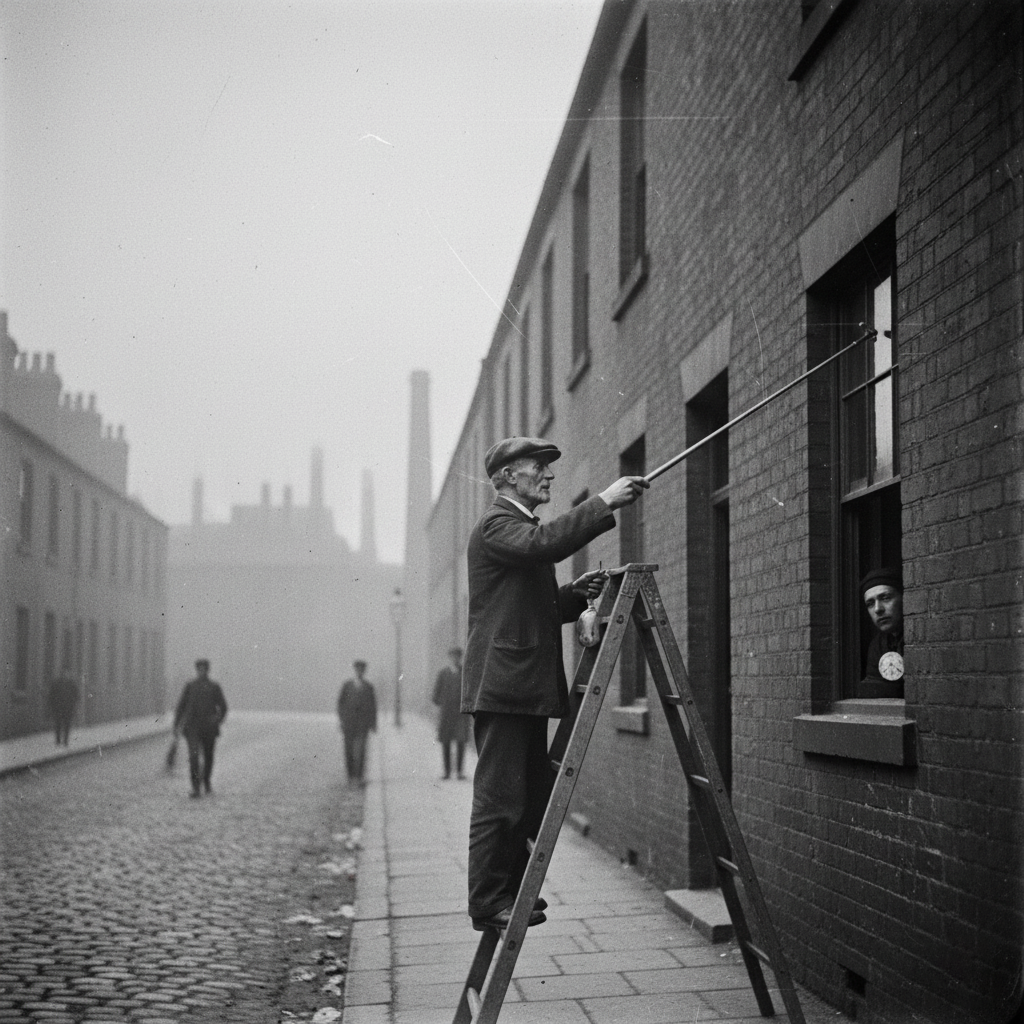
In the bustling streets of Victorian England, where the clamor of industry met the rhythm of daily life, a unique occupation emerged: the Knocker-Upper. This job was essential for those who needed to rise early for work but lacked the luxury of alarm clocks. Knocker-Uppers were the human alarm clocks of their time, ensuring that the working class could meet the demands of their laborious schedules. Armed with a long stick or a peashooter, they would rouse sleeping patrons by tapping on their windows or, in some cases, shooting small pellets to get their attention. The Knocker-Upper was often a familiar figure in the neighborhood, known for their punctuality and reliability. They would typically start their rounds before dawn, navigating the dimly lit streets, often in inclement weather, to ensure that their clients were awake and ready for the day ahead. This job was not just about waking people; it was a vital service that supported the industrial economy, where time was money and every minute counted. As the sun rose, the Knocker-Upper would call out names or tap on windows, sometimes even engaging in light banter with the residents. Their presence was a comforting routine in the lives of many, a reminder that the day was beginning and that it was time to rise and shine. However, as the 20th century approached, the Knocker-Upper began to fade into obscurity. The advent of the mechanical alarm clock, which became increasingly affordable and reliable, rendered this occupation obsolete. The rise of technology and changing social norms shifted the way people managed their time, leading to the decline of this once-essential role.

The Encyclopedia Salesperson was a vital figure in the dissemination of knowledge during the mid-20th century, particularly in the Post-War Era, when families sought to educate their children in an increasingly complex world. These salespeople were often employed by publishing companies that produced encyclopedias, which were considered essential household items. The role involved not only selling books but also acting as a trusted advisor to families, guiding them through the vast array of information available. Encyclopedia Salespersons would typically visit homes, demonstrating the value of their products through engaging presentations. They would highlight the importance of having a comprehensive reference library, especially in an age where education was becoming more accessible and valued. The sales pitch often included a demonstration of how to find information quickly and effectively, showcasing the encyclopedias as indispensable tools for learning and research. In addition to selling, these individuals were responsible for maintaining relationships with customers, providing follow-up support, and sometimes even offering additional educational materials. Their work was characterized by a strong emphasis on personal interaction, as they built rapport with families and understood their specific educational needs.
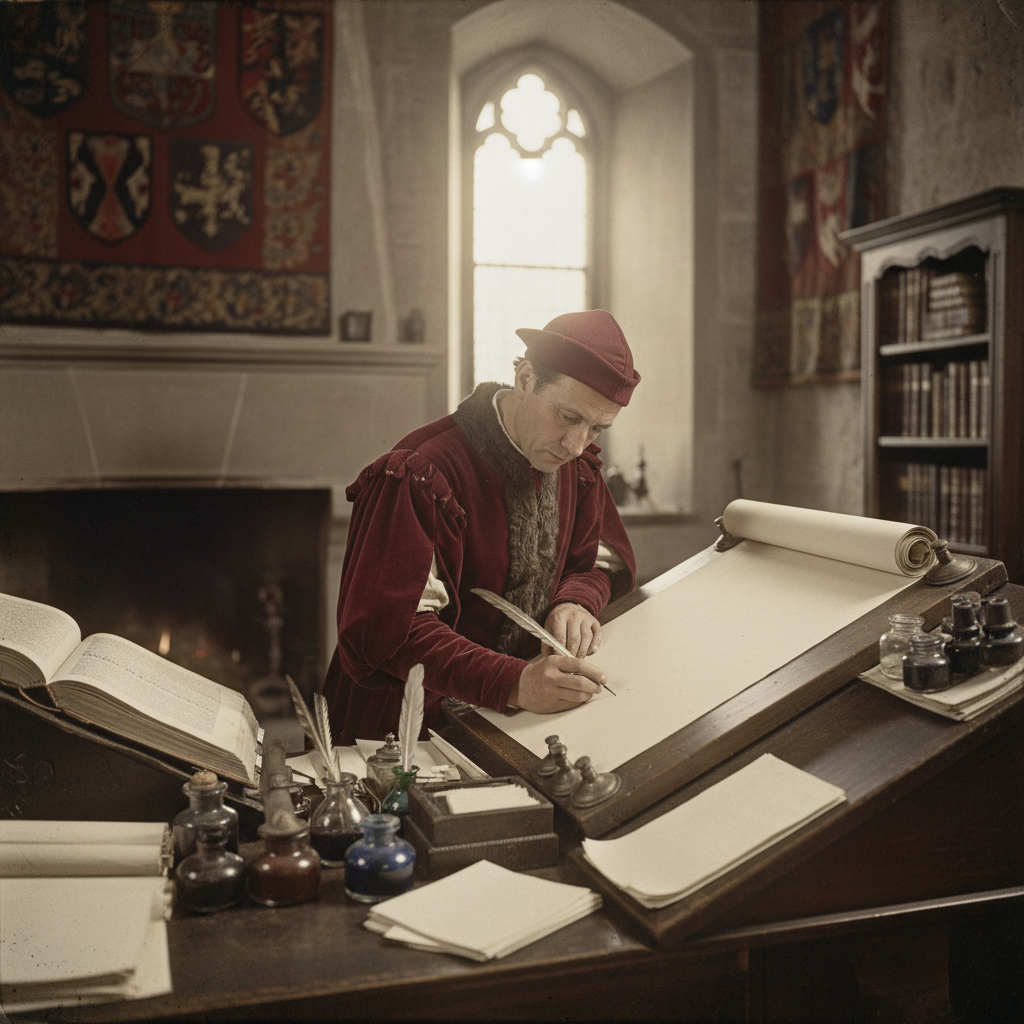
The art of calligraphy, often referred to as 'beautiful writing,' flourished during the Medieval Period, where skilled calligraphers played a crucial role in the preservation and dissemination of knowledge. These artisans were not merely writers; they were artists who transformed the written word into a visual spectacle. Calligraphers were responsible for creating manuscripts, religious texts, and important documents, often using intricate scripts that varied by region and purpose. Their work was characterized by the use of quills, ink, and parchment, and they often employed elaborate techniques such as gilding and illumination to enhance their creations. The calligrapher's role was not only to write but to imbue each piece with a sense of beauty and reverence, making their work essential in an era where printed materials were scarce and literacy was a privilege of the few.
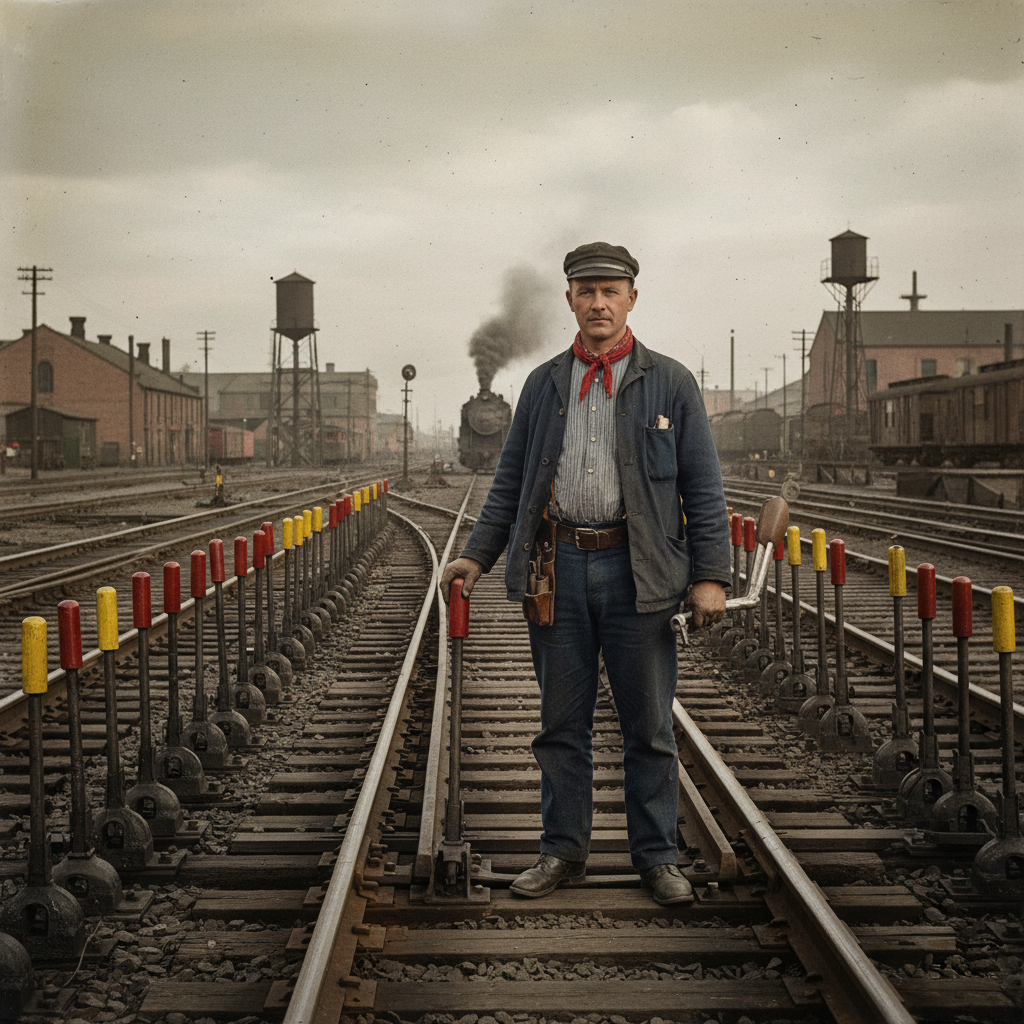
The role of a switchman was pivotal in the operation of railroads during the Industrial Revolution, a period marked by rapid industrial growth and the expansion of rail networks. Switchmen were responsible for directing the movement of trains by operating track switches, which allowed trains to change tracks and navigate complex rail systems. This job required a keen understanding of the rail network, as well as the ability to communicate effectively with engineers and conductors. Switchmen often worked in pairs or teams, coordinating their actions to ensure the safe and efficient movement of trains. They were also tasked with monitoring signals and ensuring that tracks were clear of obstructions, making their role critical to the safety of rail operations. The job was often performed in all weather conditions, requiring physical stamina and alertness, as switchmen had to be ready to respond quickly to changing circumstances on the tracks.
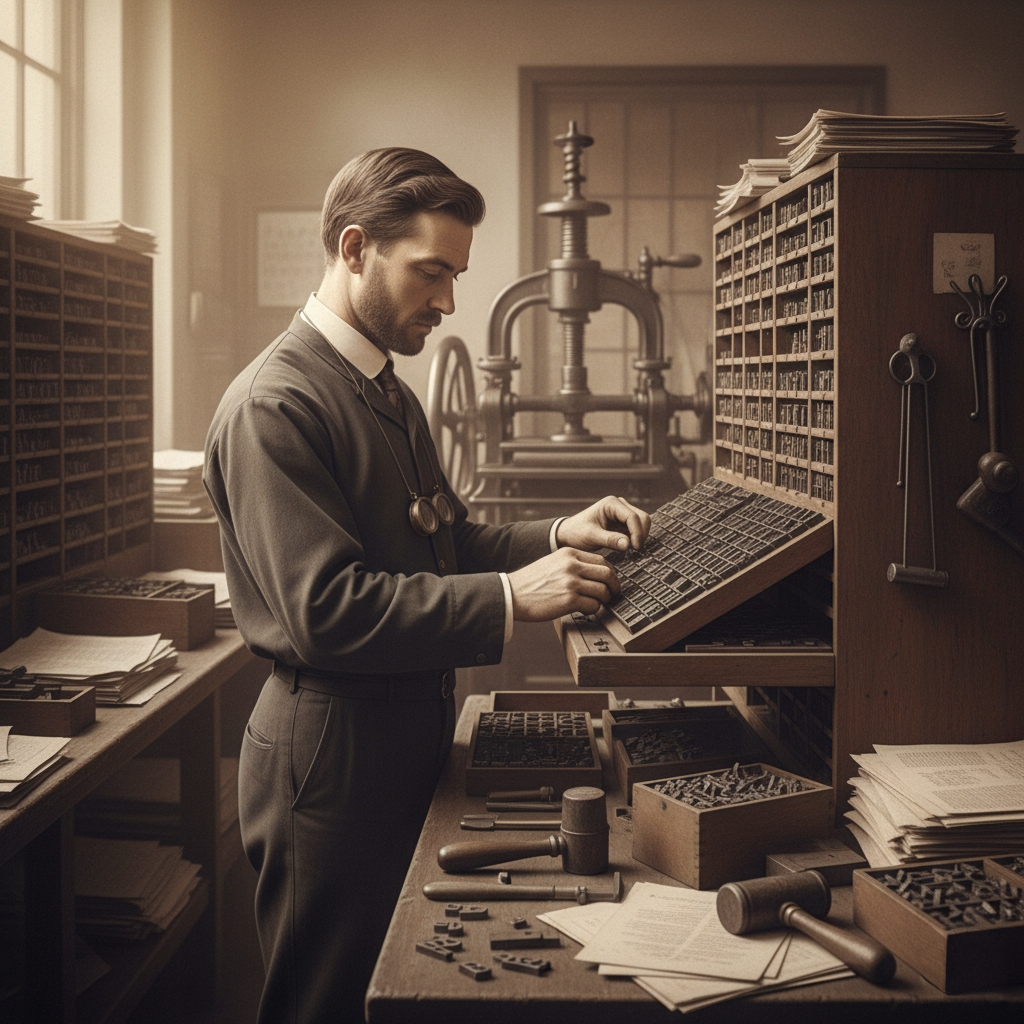
The role of a typesetter was pivotal in the evolution of printed communication, particularly during the Industrial Revolution. Typesetters were responsible for arranging the individual letters and characters of type to create pages of text for printing. This meticulous work required not only a keen eye for detail but also a deep understanding of typography and layout. Typesetters worked primarily in printing houses, where they would set type for newspapers, books, and other printed materials. The job involved selecting the appropriate typefaces, adjusting spacing, and ensuring that the text was aligned correctly. Each letter was cast in metal or made from wood, and typesetters would often work with a variety of fonts to achieve the desired aesthetic for each publication. The process was labor-intensive and required a high level of craftsmanship, as any errors in the typesetting could lead to costly mistakes in the final print.

The phonograph operator was a pivotal figure in the early days of recorded sound, a profession that emerged in the late 19th century with the invention of Thomas Edison’s phonograph in 1877. This role involved the operation of phonographs, which were early devices used to record and reproduce sound. Phonograph operators were responsible for managing the recording process, ensuring that sound was captured accurately onto wax cylinders or discs. They worked in recording studios, often collaborating with musicians, voice actors, and other performers to create audio recordings for entertainment, education, and commercial purposes. The job required a keen ear for sound quality and an understanding of the mechanical workings of the phonograph, as operators had to adjust the device to optimize recording conditions. As the industry evolved, phonograph operators also played a role in the distribution of recorded music, helping to create and manage catalogs of recordings for public consumption.
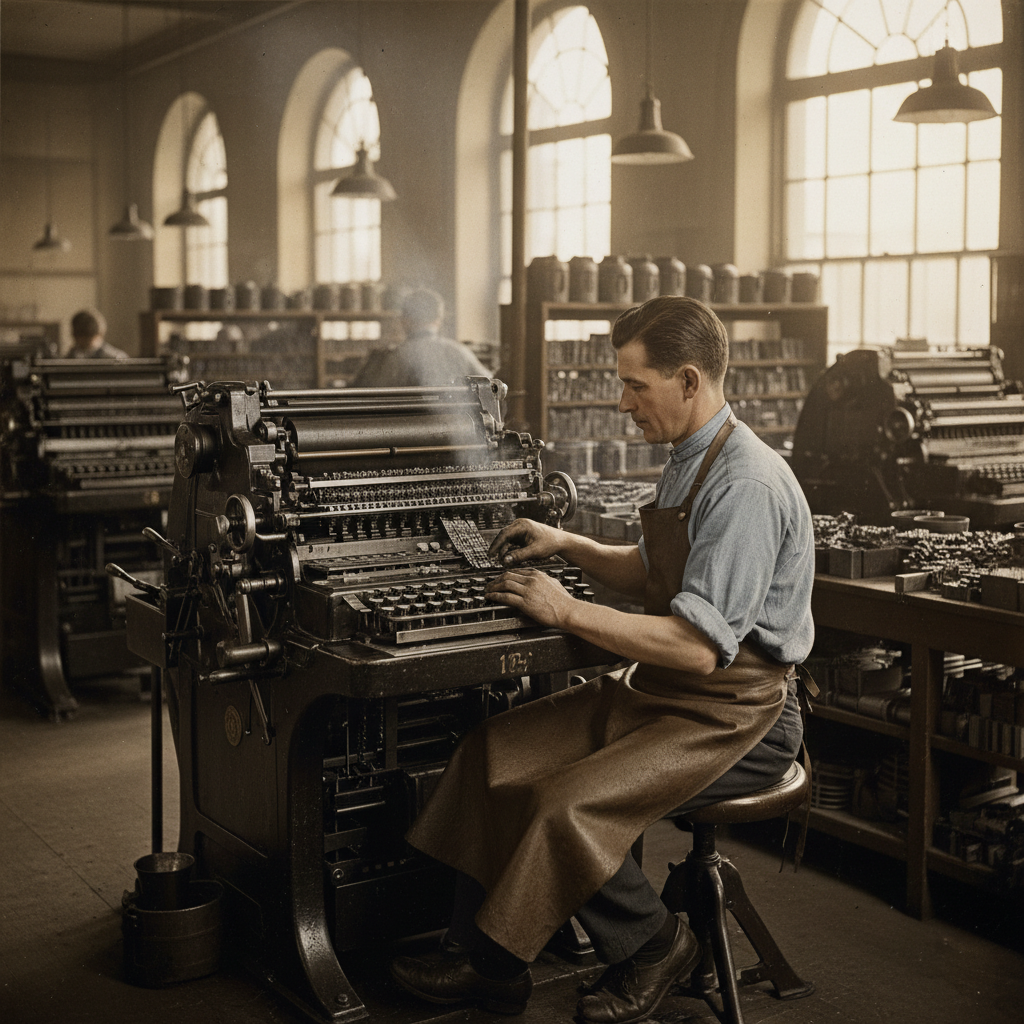
The Linotype Operator was a crucial figure in the world of printing from the late 19th century until the mid-20th century. This skilled artisan operated the Linotype machine, a revolutionary device that allowed for the efficient typesetting of text for newspapers, books, and other printed materials. The Linotype machine, invented by Ottmar Mergenthaler in 1884, enabled operators to cast entire lines of type in metal, significantly speeding up the printing process compared to the labor-intensive method of setting type by hand. Linotype Operators were responsible for not only operating the machine but also for maintaining it, ensuring that it was in good working order to produce high-quality print. They worked in bustling print shops, often surrounded by the sounds of machinery and the smell of ink and paper. The job required a keen eye for detail, as operators had to ensure that the type was set correctly and that the text was free of errors before it was sent to the press. The role of the Linotype Operator was not just technical; it was also creative. Operators often collaborated with typesetters and editors to achieve the desired layout and design of printed materials, making their work an integral part of the publishing process. As the demand for printed materials surged during the Industrial Revolution, so too did the need for skilled Linotype Operators, who played a vital role in the dissemination of information and culture during this transformative period.
Phrenology, a now-discredited field of study, emerged in the early 19th century as a popular method for assessing personality traits and intellectual capabilities based on the shape and contours of the skull. Phrenologists believed that the brain was the organ of the mind, and that specific areas of the brain corresponded to different character traits. By examining the bumps and indentations on a person's skull, phrenologists claimed they could determine an individual's character, tendencies, and even potential for success in various fields. Phrenologists often set up practices in urban centers, where they would offer consultations to clients seeking insights into their personalities or those of their children. They would use a combination of observation, intuition, and rudimentary anatomical knowledge to assess the skull's shape, often employing plaster casts or models to illustrate their findings. The practice was not only popular among the general public but also found its way into educational and occupational settings, influencing hiring practices and social interactions. Despite its initial popularity, phrenology faced increasing skepticism from the scientific community as the 19th century progressed. Critics pointed out the lack of empirical evidence supporting its claims and the ethical implications of using skull shape to judge character. By the late 19th century, advances in psychology and neuroscience began to overshadow phrenology, leading to its decline and eventual obsolescence.
The thimblerigger was a street performer and con artist who specialized in a game of chance known as the 'thimblerig' or 'three shells and a pea.' This game involved three thimbles (or cups) and a small object, typically a pea or a ball, which was hidden under one of the thimbles. The thimblerigger would skillfully shuffle the thimbles around, challenging onlookers to guess which thimble concealed the object. The allure of easy winnings drew crowds, and the thimblerigger would often employ sleight of hand to ensure that the game was rigged in their favor. This occupation thrived in the bustling streets and fairs of the Victorian era, where entertainment and gambling were popular pastimes. However, the thimblerigger was not merely a performer; they were also a master of deception, using charisma and cunning to manipulate the audience and create an illusion of fairness.
The term 'powder monkey' refers to young boys, typically between the ages of 10 and 18, who were employed on naval ships during the Age of Exploration and beyond, particularly in the 17th to 19th centuries. Their primary responsibility was to transport gunpowder from the ship's magazine to the cannons during naval battles. This role was crucial, as the effectiveness of a ship's artillery depended on the swift and safe delivery of gunpowder, which was highly volatile and dangerous. Powder monkeys were often orphans or boys from impoverished backgrounds, seeking work on ships as a means of survival. They were known for their agility and speed, which were essential for navigating the often cramped and chaotic conditions aboard a ship during battle. The job was perilous; the boys had to be quick and careful, as a single spark could lead to catastrophic explosions. In addition to their role in battle, powder monkeys also assisted in the maintenance of the ship's armaments and were sometimes tasked with cleaning and loading cannons. Their work was physically demanding and required a level of bravery that belied their youth. Despite the dangers, many powder monkeys were proud of their roles, often dreaming of becoming full sailors or officers one day.
The lector was a unique and fascinating occupation that emerged during the Industrial Revolution, particularly in the late 19th and early 20th centuries. This role was primarily found in cigar factories, where workers would spend long hours engaged in repetitive tasks. To alleviate the monotony and foster a sense of community, a lector would read aloud to the workers, providing them with entertainment, education, and a connection to the outside world. The readings often included literature, newspapers, and political essays, allowing workers to stay informed and engaged with current events while they toiled away. The lector was not merely a reader; they were a storyteller, a commentator, and sometimes even a social activist, using their platform to inspire and provoke thought among the laborers. This role was vital in creating a shared cultural experience among workers, fostering camaraderie and solidarity in an otherwise isolating environment.
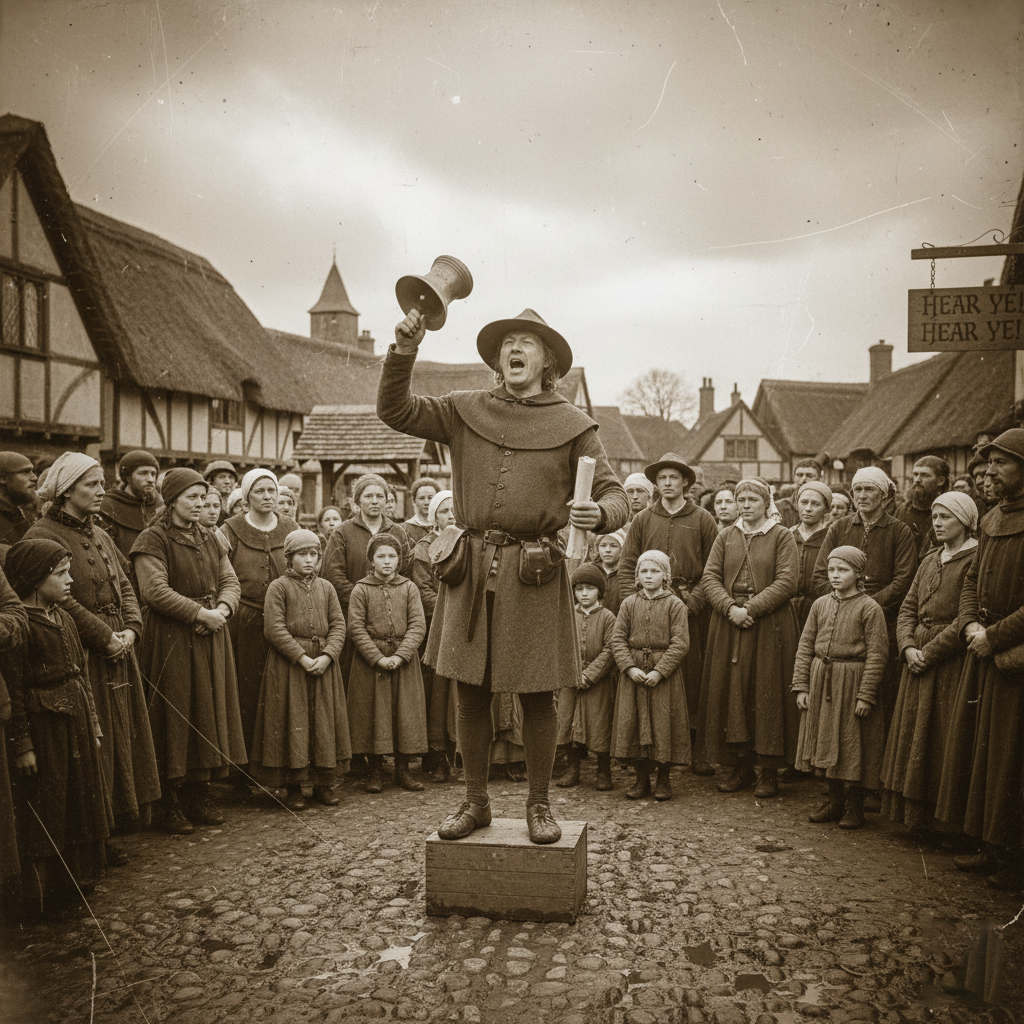
In the bustling streets of medieval towns, where the written word was a luxury few could afford, the Town Crier served as the vital link between the local government and the populace. Clad in a distinctive uniform, often adorned with a bell and a scroll, the Town Crier was a figure of authority and community spirit. His primary duty was to announce news, proclamations, and important events to the townsfolk, ensuring that even the illiterate could stay informed about matters that affected their daily lives. From royal decrees to local market days, the Town Crier's voice echoed through the streets, a herald of information in an age where communication was limited. The role was not merely about shouting news; it required a keen understanding of the community's needs and a flair for performance. Town Cryers were often chosen for their loud, clear voices and their ability to engage the public, making announcements memorable and entertaining. They would often embellish their proclamations with dramatic flair, using gestures and intonation to capture the attention of passersby. In addition to their announcements, Town Cryers played a crucial role in maintaining public order. They would often be called upon to quell disputes or remind citizens of local laws and regulations, acting as a mediator in the community. Their presence was a symbol of civic pride and a reminder of the social contract between the rulers and the ruled, making them an indispensable part of town life.
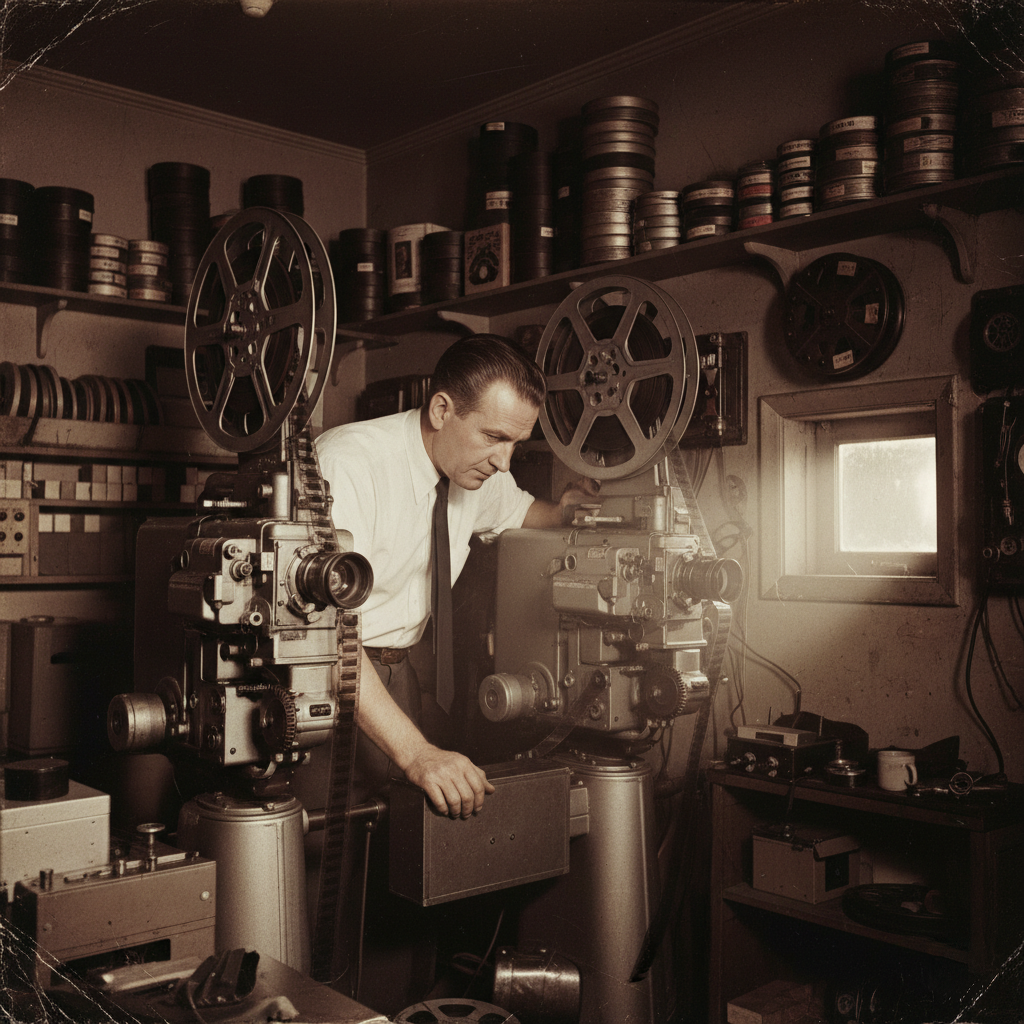
The film projectionist was a vital figure in the cinematic experience, responsible for bringing the magic of movies to life on the big screen. This role emerged in the early 20th century, coinciding with the rise of motion pictures as a popular form of entertainment. Projectionists operated complex machinery, ensuring that films were shown correctly and seamlessly to audiences. They were tasked with loading film reels onto projectors, adjusting focus and sound, and managing the intricate mechanics of film projection. The job required a keen eye for detail and a deep understanding of the technology involved, as even a minor error could disrupt the viewing experience. Projectionists often worked in dimly lit theaters, surrounded by the smell of popcorn and the excitement of eager moviegoers. They were the unsung heroes of the cinema, often working late hours and weekends, and were known for their dedication to the craft of film presentation.
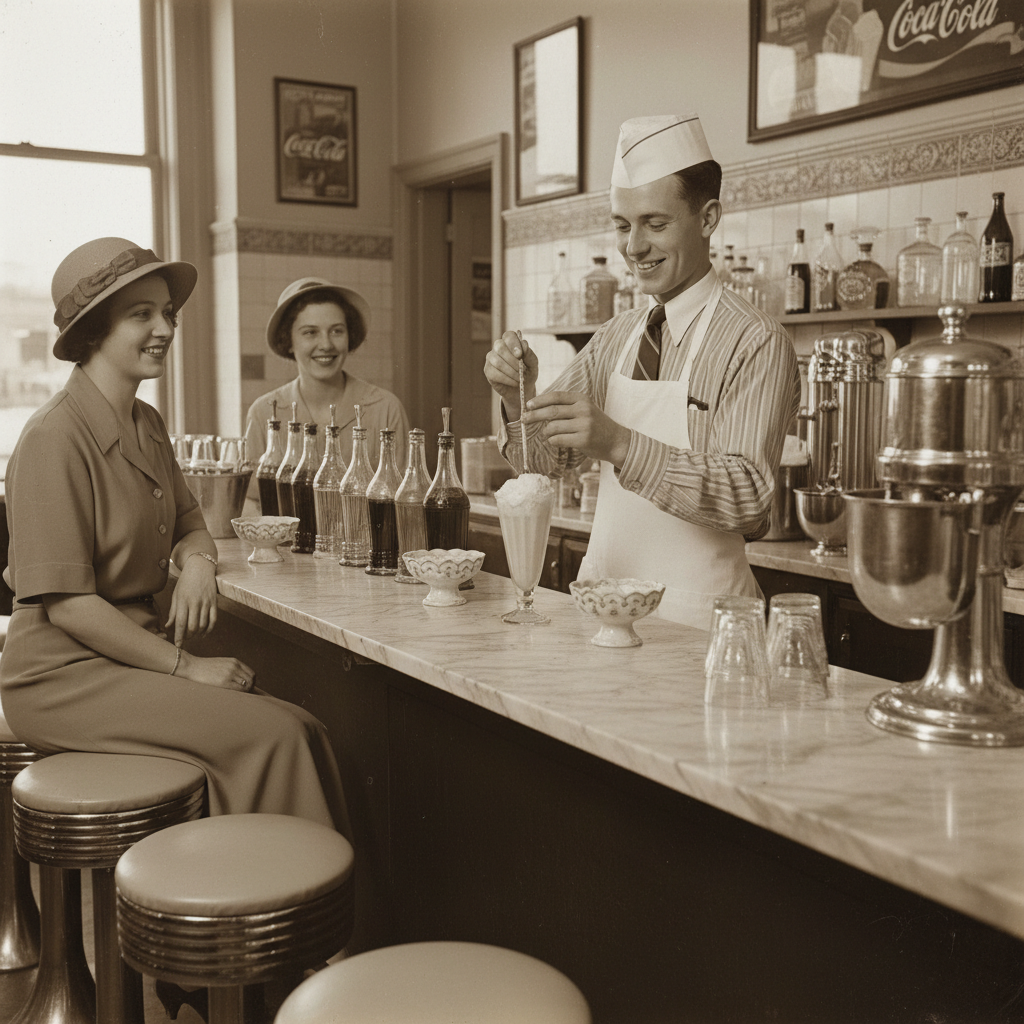
The soda jerk was a quintessential figure in American culture from the late 19th century through the mid-20th century, particularly in the United States. This role was primarily associated with soda fountains, which were popular gathering spots in drugstores and diners. The soda jerk was responsible for preparing and serving a variety of carbonated beverages, ice cream sodas, and other sweet treats, often with a flair that entertained patrons. The term 'jerk' refers to the quick motion of pulling the soda fountain lever to dispense the fizzy drink, a skill that required both speed and precision. Soda jerks were not just servers; they were also social facilitators, engaging with customers and creating a lively atmosphere. They often wore distinctive uniforms, which included a white apron and a paper hat, and were known for their friendly demeanor and knowledge of the menu. The soda jerk's role was integral to the experience of visiting a soda fountain, where patrons could enjoy a refreshing drink while socializing with friends or family. The soda jerk's repertoire included classic concoctions such as root beer floats, banana splits, and phosphates, which were flavored syrups mixed with carbonated water. The job required a good understanding of flavors and the ability to create visually appealing presentations. In addition to beverages, soda jerks often served light snacks, such as sandwiches and pastries, making them a vital part of the local dining scene.
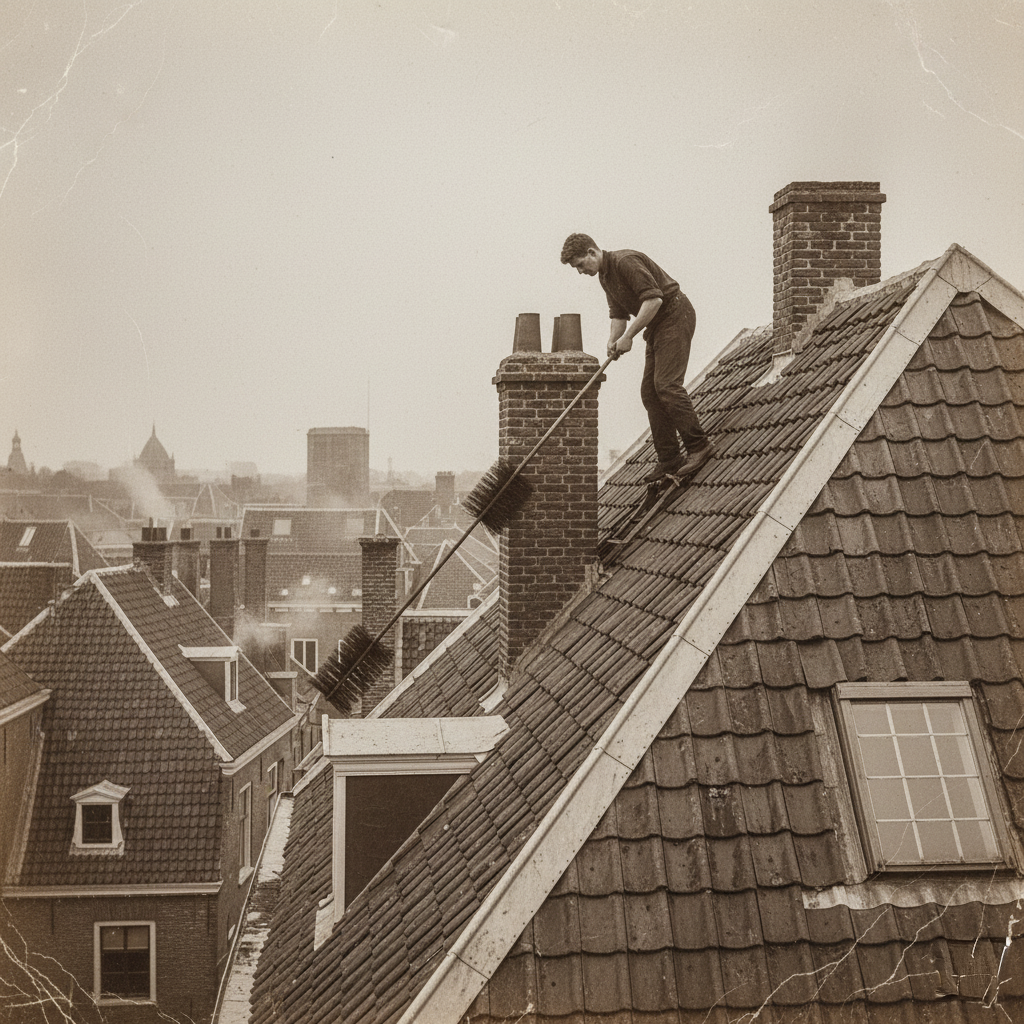
The role of a chimney sweep was crucial in the Victorian Era, particularly in urban areas where coal was the primary source of heating. As homes and factories proliferated, so did the need for clean chimneys to prevent dangerous chimney fires and ensure proper ventilation. Chimney sweeps were responsible for cleaning soot and creosote buildup from chimneys, which could lead to hazardous conditions if left unchecked. The job was often performed by young boys, some as young as six, who would climb into narrow flues to scrape away the soot. This labor-intensive work required not only physical agility but also a keen understanding of the structure of chimneys and the dangers associated with them. The job was often grueling, with sweeps working long hours in cramped, dark spaces, and it was not uncommon for them to suffer from respiratory issues due to the soot they inhaled. Despite the harsh conditions, chimney sweeps played a vital role in maintaining the safety of homes during a time when coal was the dominant fuel source.
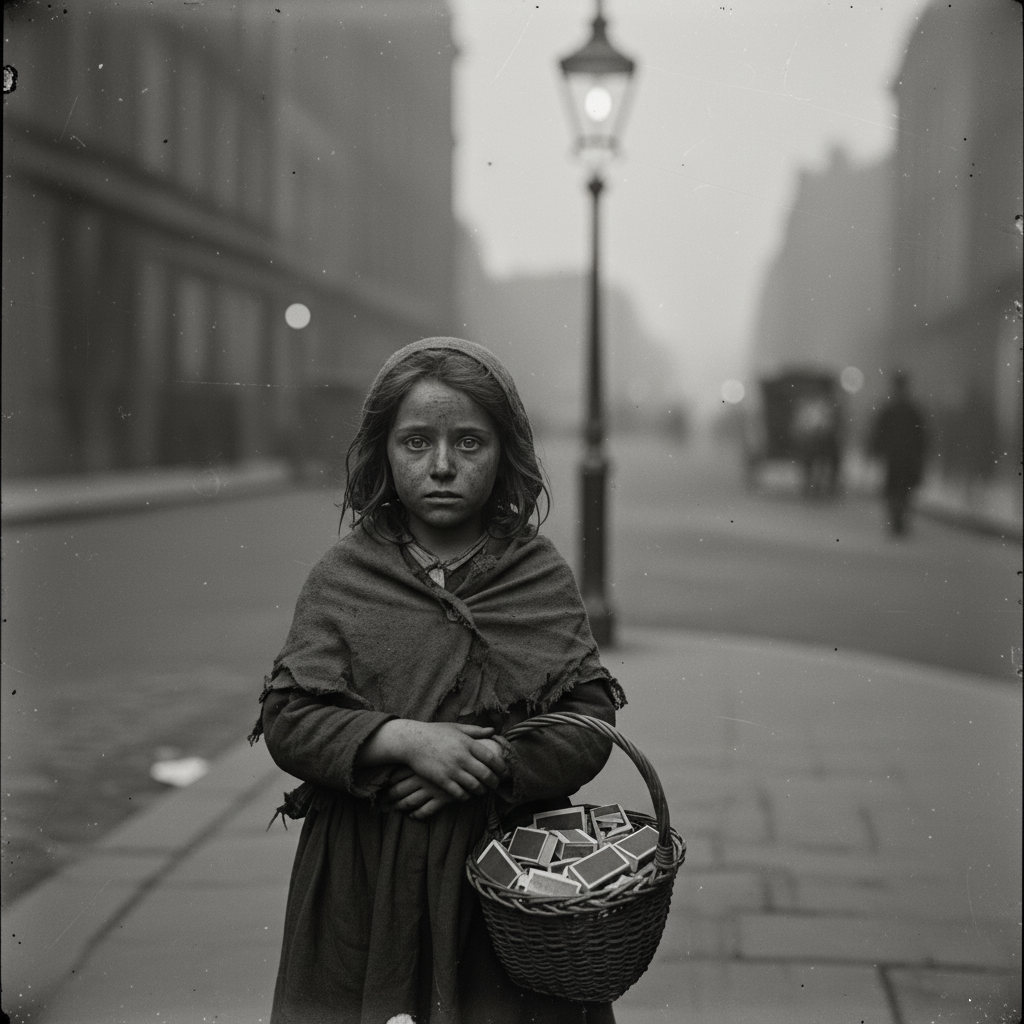
The role of a Matchstick Girl emerged during the Victorian Era, a time marked by rapid industrialization and urbanization in Britain. These young girls, often as young as six years old, were employed to sell matches on the streets of cities like London. The job was not only a means of survival for the girls and their families but also a reflection of the harsh realities of the working class during this period. The matchstick girls were typically from impoverished backgrounds, and their earnings were crucial for their families' subsistence. They would often work long hours, braving the elements, to sell boxes of matches to passersby, including shopkeepers and households. The matches were sold at a low price, and the girls would often carry their wares in small baskets or bags, calling out to potential customers in hopes of making a sale. The work was grueling and dangerous; the girls were exposed to the elements, and many suffered from health issues due to malnutrition and the harsh conditions of street life. The matches themselves were often made with hazardous materials, leading to serious health risks, including phosphorus poisoning, which was a common affliction among those who worked with match production. Despite these dangers, the job was a vital source of income for many families, and the plight of the matchstick girls eventually drew public attention, leading to social reform movements aimed at improving working conditions for children.
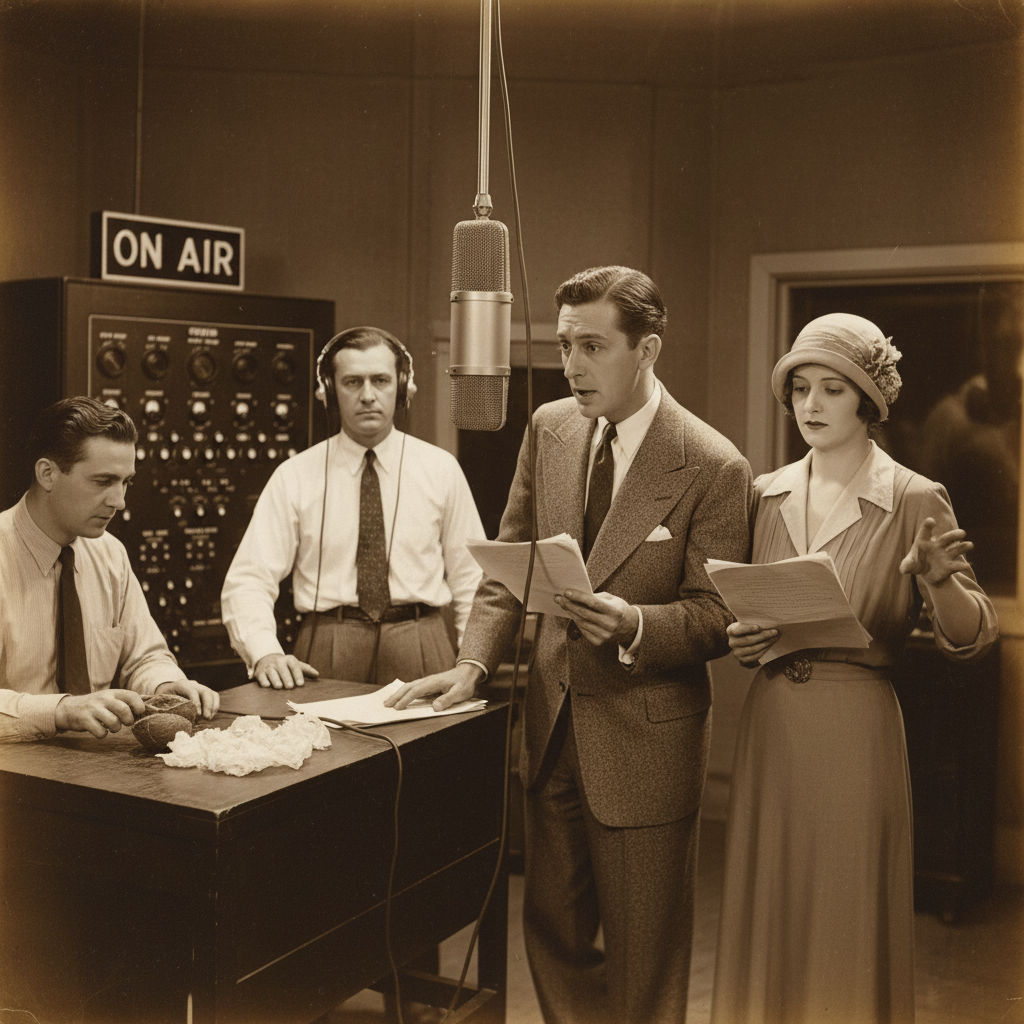
The role of a radio actor was pivotal during the Golden Age of Radio, a time when families gathered around their radios to listen to serialized dramas, comedies, and news broadcasts. Radio actors were the voices behind beloved characters, bringing stories to life through their vocal talents alone. Unlike film or television, where visual elements play a significant role, radio actors relied solely on their voices to convey emotion, character, and narrative. They performed live or recorded scripts, often in front of a studio audience, and were skilled in various genres, from soap operas to thrillers. The ability to modulate their voices, create distinct characterizations, and engage listeners through sound alone was essential to their craft. Radio actors often worked with sound effects artists and musicians to enhance the auditory experience, creating a rich tapestry of sound that captivated audiences.
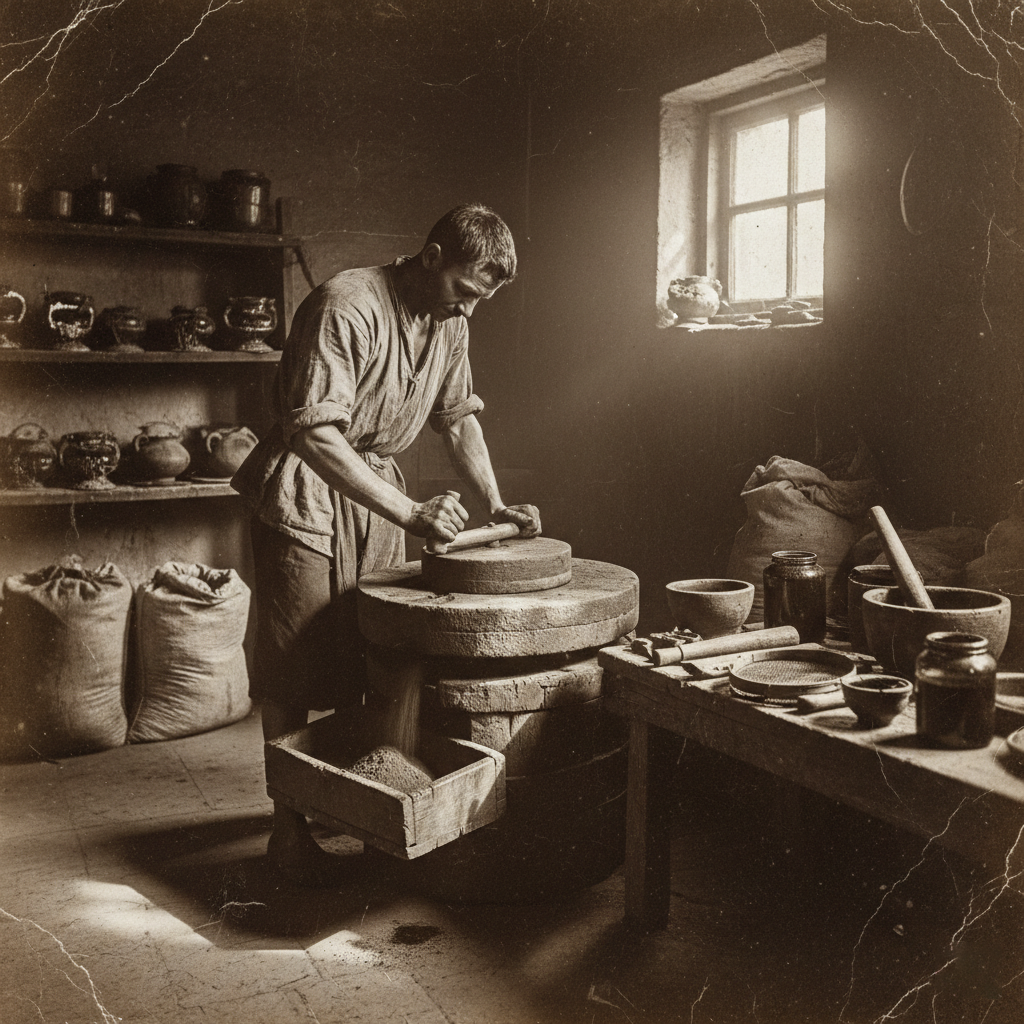
In the bustling factories of the Industrial Revolution, the role of the Lampblack Grinder was both vital and hazardous. These skilled laborers were responsible for producing lampblack, a fine black powder made from soot, which was used as a pigment in inks, paints, and varnishes. The process involved collecting soot from burning oils or resins, then grinding it into a fine powder. The lampblack produced was prized for its deep, rich color and was essential for the burgeoning art and manufacturing industries of the time. The work environment was often grimy and poorly ventilated, with workers exposed to clouds of fine black dust that filled the air. Lampblack Grinders typically worked long hours, often in shifts that extended from dawn until dusk, in factories that were often overcrowded and lacked proper safety measures. Despite the health risks, including respiratory issues and skin irritations, the demand for lampblack surged as the use of oil lamps and paints became widespread during this era. Lampblack Grinders were often men, but women and children also participated in this labor, particularly in smaller workshops. The job required not only physical strength to operate the grinding machinery but also a keen eye for quality, as the fineness of the powder directly affected its market value. As the Industrial Revolution progressed, the role of the Lampblack Grinder became increasingly important, yet perilous, as the soot they handled was not only a source of income but also a potential health hazard.
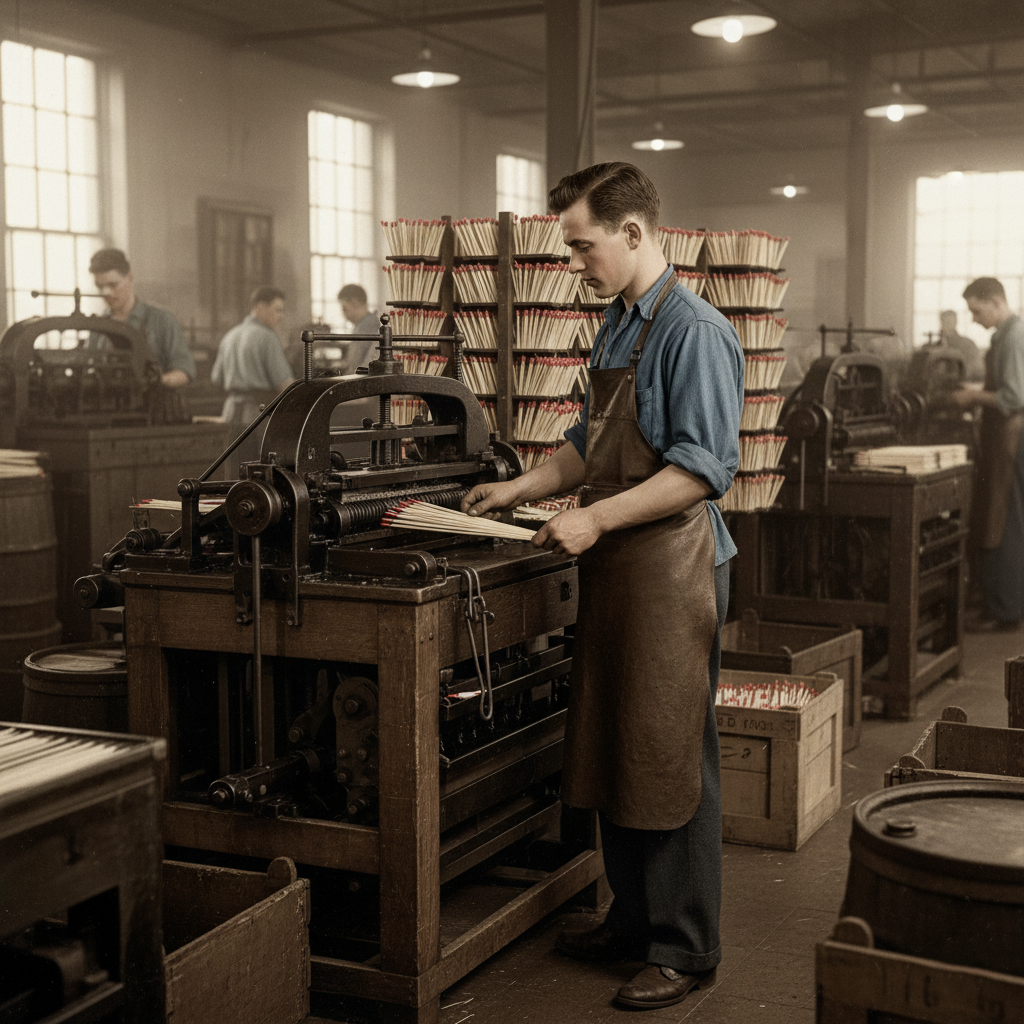
In the bustling factories of the Industrial Revolution, the matchstick maker played a crucial role in the production of one of the era's most essential commodities: matches. These small, slender sticks, tipped with a flammable substance, revolutionized the way people ignited fires, making them a staple in households and businesses alike. The matchstick maker was responsible for crafting these vital tools, often working in dimly lit workshops filled with the scent of sulfur and wood. The process of match production was labor-intensive and required a keen eye for detail. Workers would begin by cutting thin strips of wood, typically from readily available softwoods like aspen or pine. These strips were then meticulously dipped into a mixture of chemicals, including potassium chlorate, sulfur, and glass powder, to create the striking head of the match. The matchsticks were then dried, packaged, and prepared for distribution. The job was not without its hazards; the chemicals used in match production were often toxic, leading to health issues such as 'phossy jaw,' a painful condition caused by exposure to phosphorus. Despite these dangers, matchstick makers were essential to the growing demand for convenience in lighting fires, which was a significant aspect of daily life during the Industrial Revolution.
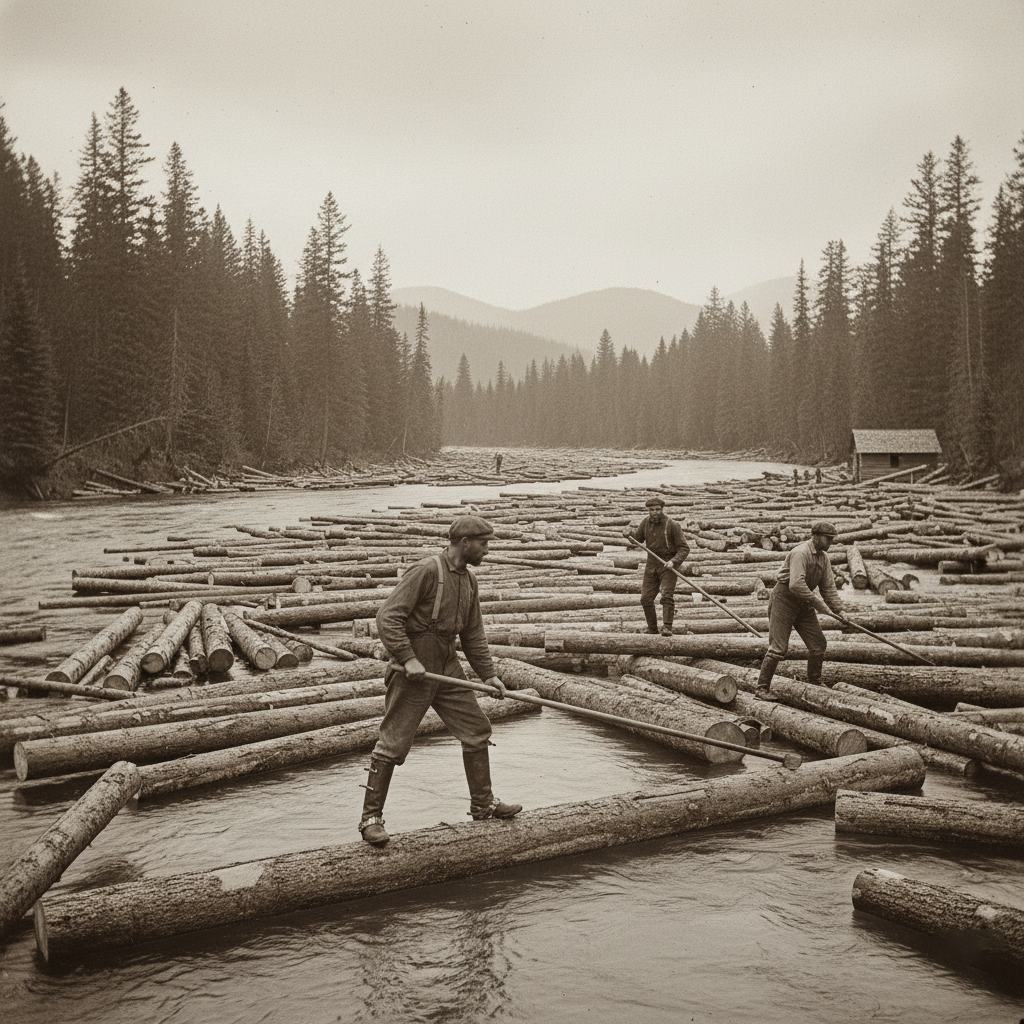
In the rugged landscapes of North America during the Industrial Revolution, the log driver emerged as a vital figure in the timber industry. These skilled laborers were responsible for guiding and maneuvering logs down rivers and streams to sawmills, where they would be processed into lumber for construction and other uses. The job required not only physical strength and endurance but also a deep understanding of the waterways and the behavior of timber. Log drivers often worked in teams, using their knowledge of currents and eddies to navigate the logs safely through treacherous waters, avoiding obstacles such as rocks and fallen trees. The sight of a log driver skillfully balancing on a floating log, using a long pole to steer, was a common and iconic image of the era. The work was grueling and dangerous, with log drivers facing the constant threat of injury from the logs themselves, as well as the unpredictable nature of the rivers. Despite the hazards, the job was a source of pride, as log drivers were seen as rugged individuals embodying the spirit of the frontier. Their contributions were crucial to the booming timber industry, which fueled the growth of towns and cities across the continent, providing the lumber necessary for homes, railroads, and infrastructure.
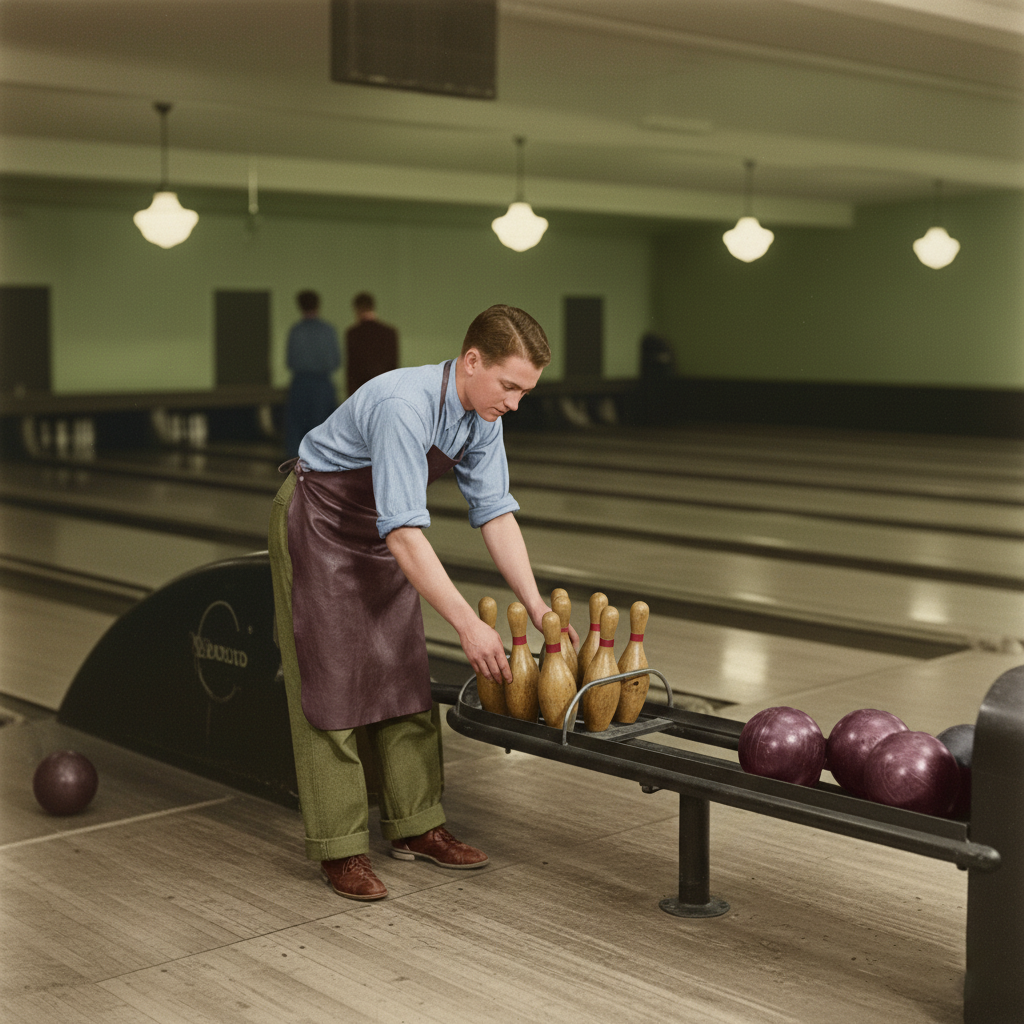
In the bustling alleys of mid-20th century bowling alleys, the role of the pinsetter was a vital yet often overlooked occupation. Pinsetters were responsible for resetting the bowling pins after each frame, ensuring that the game could continue smoothly. This job required a keen eye and quick reflexes, as the pinsetter had to swiftly and accurately place the pins back in their designated spots while dodging the heavy bowling balls that rolled down the lane. The pinsetter's work environment was often loud and filled with the sounds of laughter, clattering pins, and the thud of bowling balls. They worked in dimly lit back rooms, often hidden from the view of the bowlers, where they operated a series of levers and pulleys to reset the pins. The job was physically demanding, requiring the pinsetter to be agile and strong enough to handle the heavy equipment used to lift and position the pins. As bowling grew in popularity during the 1950s and 1960s, the demand for pinsetters increased, making it a common sight in bowling alleys across America. However, the advent of automatic pinsetting machines in the late 1960s marked the beginning of the end for this once-essential role. These machines could reset pins faster and more efficiently than any human, leading to the gradual decline of the pinsetter profession.
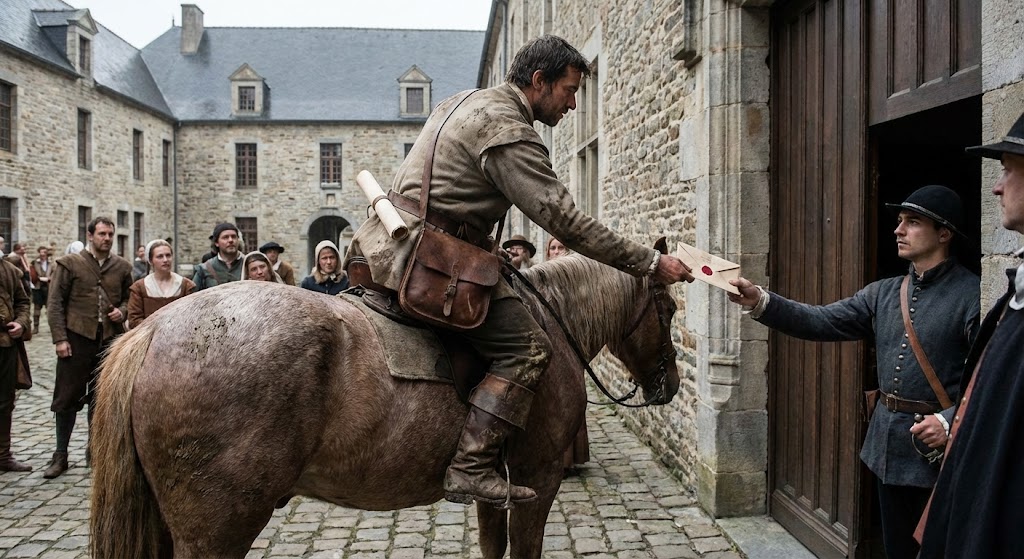
The role of a messenger was vital in the communication networks of ancient and medieval societies. These individuals were responsible for delivering messages, documents, and parcels across towns, cities, and even between countries. Often employed by merchants, government officials, or wealthy patrons, messengers played a crucial role in maintaining the flow of information. They navigated through various terrains, from bustling urban centers to remote rural areas, often relying on their knowledge of local geography and social networks to ensure timely delivery. The job required not only physical stamina but also a keen sense of direction and the ability to read and write, as many messengers were tasked with not just delivering but also composing messages on behalf of their employers. In times of war, messengers were particularly important, carrying orders and intelligence that could change the course of events. Their work was often perilous, as they faced the threat of bandits, harsh weather, and the challenges of navigating unfamiliar territories.
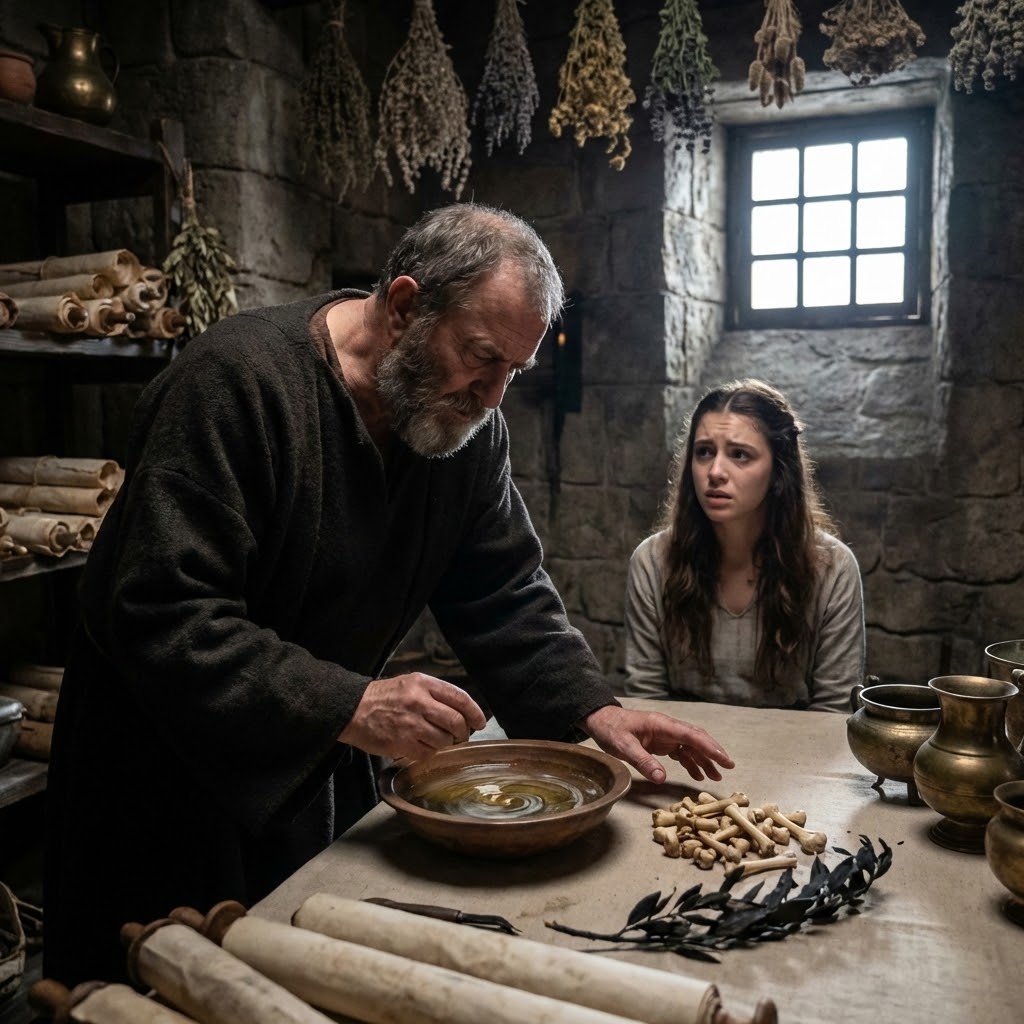
The Mantikos, a revered figure in ancient societies, was a professional diviner or seer, often consulted for their ability to interpret omens and communicate with the divine. This role was deeply embedded in the spiritual and social fabric of communities, where the Mantikos served as a bridge between the mortal realm and the gods. They were often called upon during significant events such as battles, harvests, and personal milestones, providing guidance through rituals, sacrifices, and the interpretation of signs from nature. The Mantikos utilized various methods, including the examination of animal entrails, the observation of celestial bodies, and the reading of dreams, to deliver prophecies and advice. Their insights were not only sought for personal matters but also for communal decisions, making them influential figures in governance and societal direction.
The Parakoimomenos, often translated as 'bedchamber attendant' or 'chamberlain,' was a significant role in the households of the elite during the Classical Antiquity period, particularly in the Byzantine Empire. This position was not merely one of servitude; it was a trusted role that involved close personal service to the emperor or high-ranking officials. The Parakoimomenos was responsible for the personal care and comfort of their charge, overseeing the sleeping quarters, and ensuring that the environment was conducive to rest and privacy. This included managing the temperature of the room, preparing bedding, and even attending to the personal needs of the individual they served. The role required a high level of discretion and loyalty, as the Parakoimomenos often had access to sensitive information and was privy to the intimate details of their employer's life. In addition to personal care, the Parakoimomenos also played a role in the ceremonial aspects of the household, assisting in the preparation for audiences and events. They were often involved in the selection of clothing and accessories, ensuring that their employer was always presented in the best light. This position was a blend of servant and confidant, requiring a deep understanding of the social dynamics of the court and the ability to navigate complex relationships with other members of the household and nobility.
The lanista was a pivotal figure in the world of ancient Roman gladiatorial games, serving as a trainer and manager of gladiators. These individuals were responsible for the selection, training, and overall management of gladiators, who were often slaves or prisoners of war forced to fight in brutal spectacles for public entertainment. The lanista operated a ludi, or gladiatorial school, where they would oversee the rigorous training of their fighters, teaching them combat techniques, discipline, and the art of survival in the arena. The lanista's role was not only to prepare gladiators physically but also to cultivate their mental fortitude, as the psychological demands of combat were immense. They were often seen as both a mentor and a taskmaster, instilling a sense of loyalty and camaraderie among their fighters while also ensuring they were ready to face the deadly challenges of the arena. The lanista's influence extended beyond training; they were also involved in the business side of gladiatorial combat, negotiating contracts, managing finances, and sometimes even betting on the outcomes of fights. This multifaceted role made the lanista a significant player in the social and economic fabric of Roman entertainment culture.
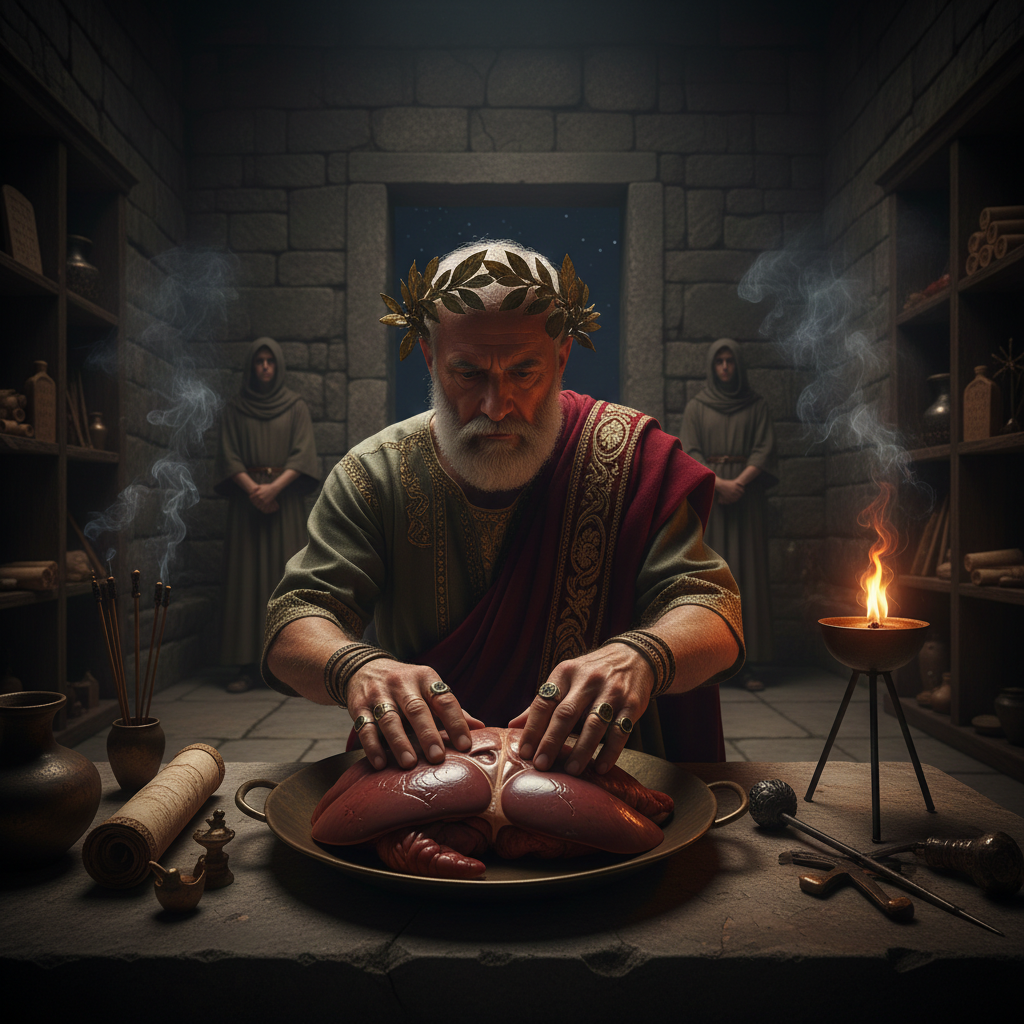
The Haruspex was a priestly figure in ancient Roman religion, renowned for their unique role in divination. This sacred profession involved interpreting the will of the gods through the examination of animal entrails, particularly the liver, a practice known as extispicy. The Haruspex would conduct rituals, often in the presence of public officials or military leaders, to seek divine guidance before significant events such as battles, elections, or the founding of cities. The entrails were believed to reveal omens, and the Haruspex would analyze their color, texture, and any anomalies to provide insights into the future. This role was steeped in tradition and required a deep understanding of religious texts, rituals, and the symbolic meanings attributed to various organs. The Haruspex was not merely a fortune-teller; they were a respected authority in matters of state and religion, often consulted in times of crisis.
The Agoranomos was a pivotal figure in the bustling marketplaces of ancient Greece, particularly in city-states like Athens. This role was akin to that of a modern-day market supervisor or inspector, responsible for overseeing the activities within the agora, the central public space where commerce, politics, and social interaction flourished. The Agoranomos ensured that trade was conducted fairly, that weights and measures were accurate, and that vendors adhered to the laws governing commerce. They played a crucial role in maintaining order and integrity in the marketplace, which was vital for the economic health of the city-state. In addition to regulatory duties, the Agoranomos also had the authority to impose fines on dishonest merchants and to confiscate goods that were sold under false pretenses. This position required a deep understanding of local laws and trade practices, as well as a keen sense of justice to protect both consumers and honest traders. The Agoranomos was often seen as a guardian of the public interest, ensuring that the agora remained a vibrant and trustworthy hub of activity.
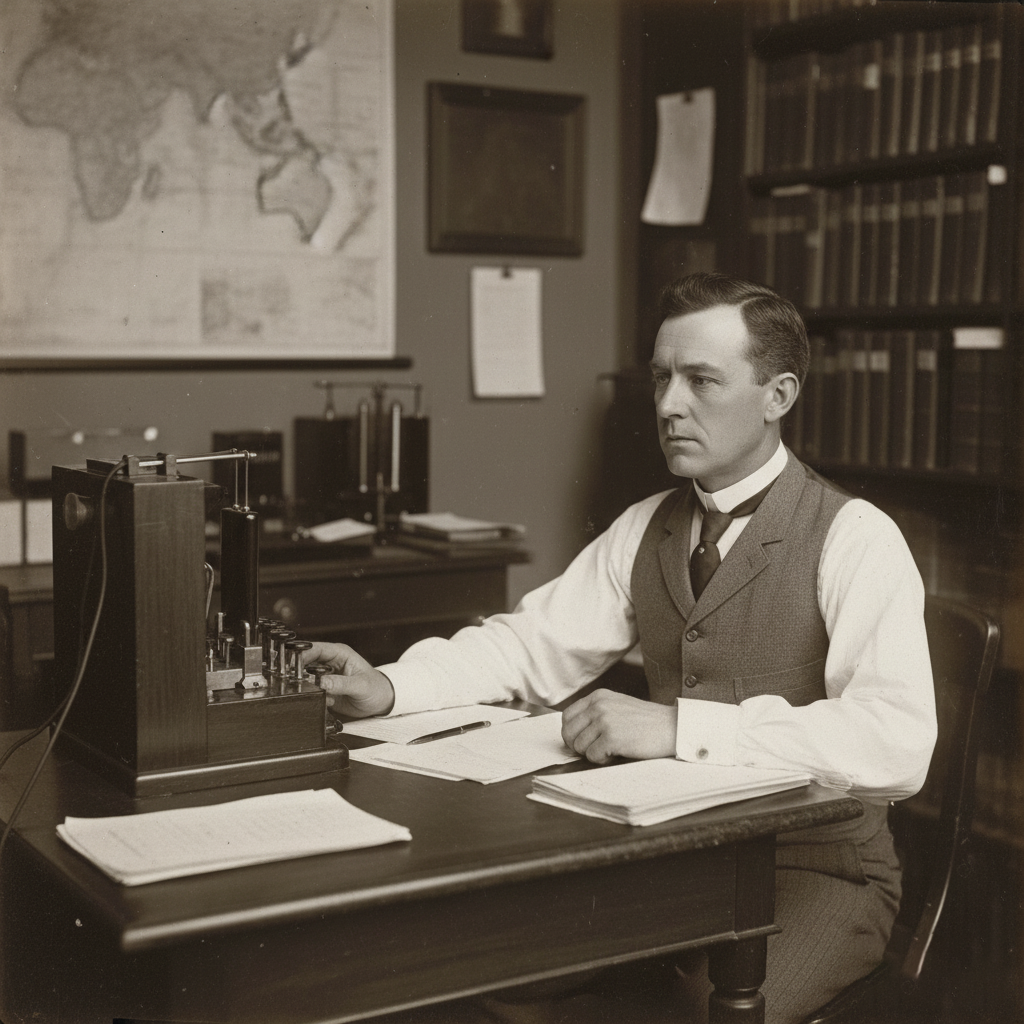
In the bustling world of the Victorian Era, the telegraph operator stood as a vital link in the chain of communication that transformed society. With the advent of the electric telegraph in the early 19th century, this occupation emerged as a cornerstone of modern communication, allowing messages to traverse vast distances in mere moments. The telegraph operator was responsible for sending and receiving messages encoded in Morse code, a system of dots and dashes that conveyed information across wires. Dressed in a crisp uniform, often adorned with a badge of the telegraph company, the operator would sit at a telegraph key, a device resembling a small lever, and tap out messages with precision and speed. The rhythmic clicking of the key became a familiar sound in telegraph offices, where operators worked in shifts, often in dimly lit rooms filled with the hum of machinery and the crackle of electrical currents. The role of the telegraph operator was not merely mechanical; it required acute listening skills and a deep understanding of Morse code. Operators often had to decipher messages quickly, sometimes under pressure, as they relayed urgent news, weather reports, and personal correspondence. They played a crucial role in connecting people, businesses, and governments, facilitating trade and diplomacy in an increasingly interconnected world. As the telegraph network expanded, so did the responsibilities of the operator, who often served as a point of contact for the public, answering inquiries and providing information. The job was both demanding and rewarding, offering a glimpse into the rapid technological advancements of the time and the profound impact of communication on society.
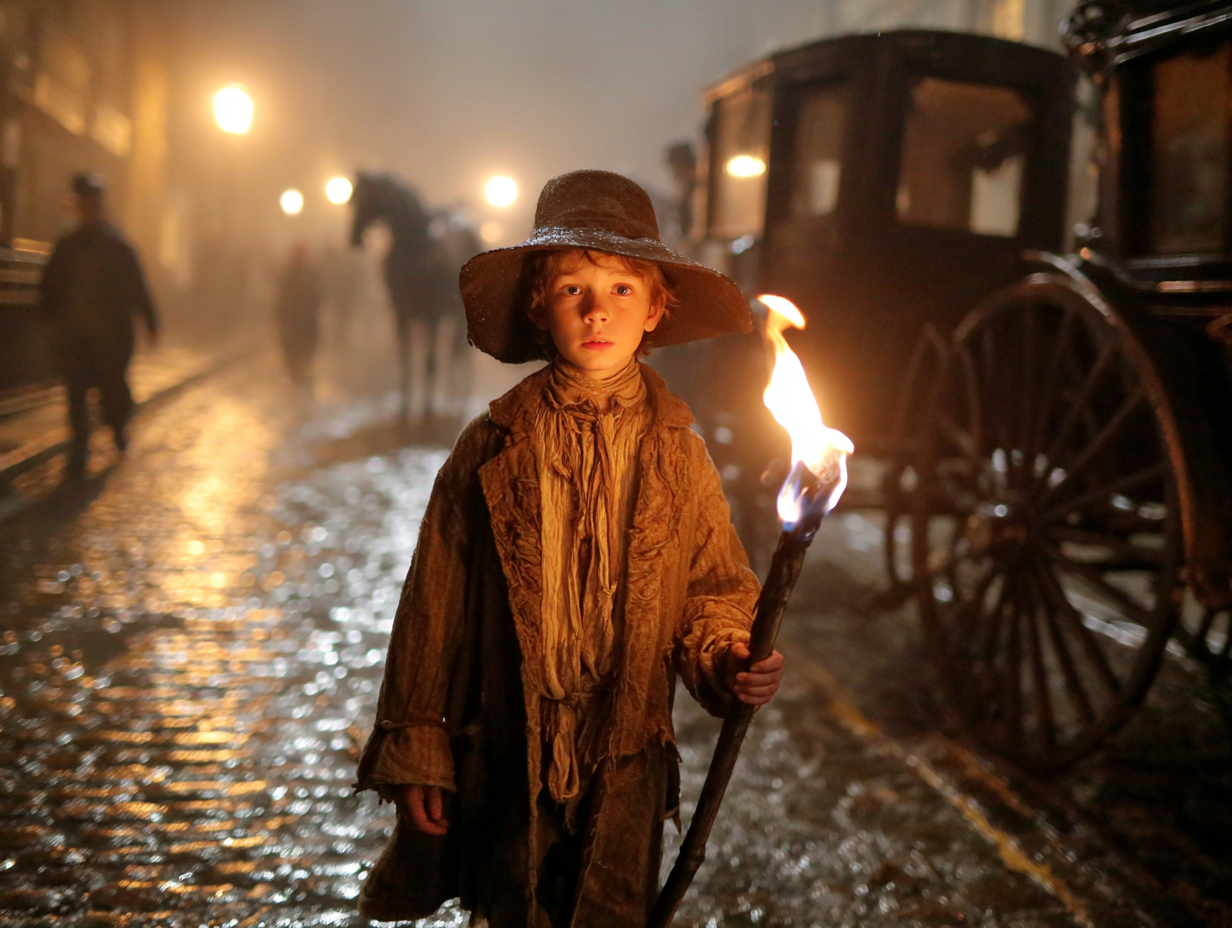
In the dimly lit streets of the Victorian Era, where gas lamps flickered to life at dusk, the lamplighter emerged as a vital figure in urban life. Tasked with the responsibility of illuminating the night, lamplighters were the unsung heroes of the city, ensuring that the streets were safe and navigable after sunset. With a long pole equipped with a flame, they would traverse their designated routes, igniting the gas lamps that lined the thoroughfares, alleyways, and public squares. Each lamp was a small beacon of light, a symbol of progress in an age that was rapidly industrializing and urbanizing. The lamplighter's work was not merely about lighting lamps; it was a ritual that involved careful attention to detail. They would check each lamp for proper function, ensuring that the gas supply was adequate and that the glass was clean and intact. In addition to lighting the lamps, they were also responsible for extinguishing them at dawn, marking the transition from night to day. This job required a keen sense of time, as the lamplighter had to complete their rounds before the city fully awoke. As cities grew and the demand for street lighting increased, lamplighters became a common sight, often working in pairs or teams to cover larger areas. Their presence was a reassurance to the public, a reminder that the city was alive even in the darkest hours. However, the lamplighter's role was not without its challenges; they braved the elements, working in rain, snow, and the chill of winter nights, often climbing ladders to reach the higher lamps. The lamplighter was a figure of community, often known by name and face, fostering a sense of familiarity and safety among the residents. They were also a part of the social fabric, as their rounds often coincided with the evening strolls of townsfolk, creating a shared experience of urban life.
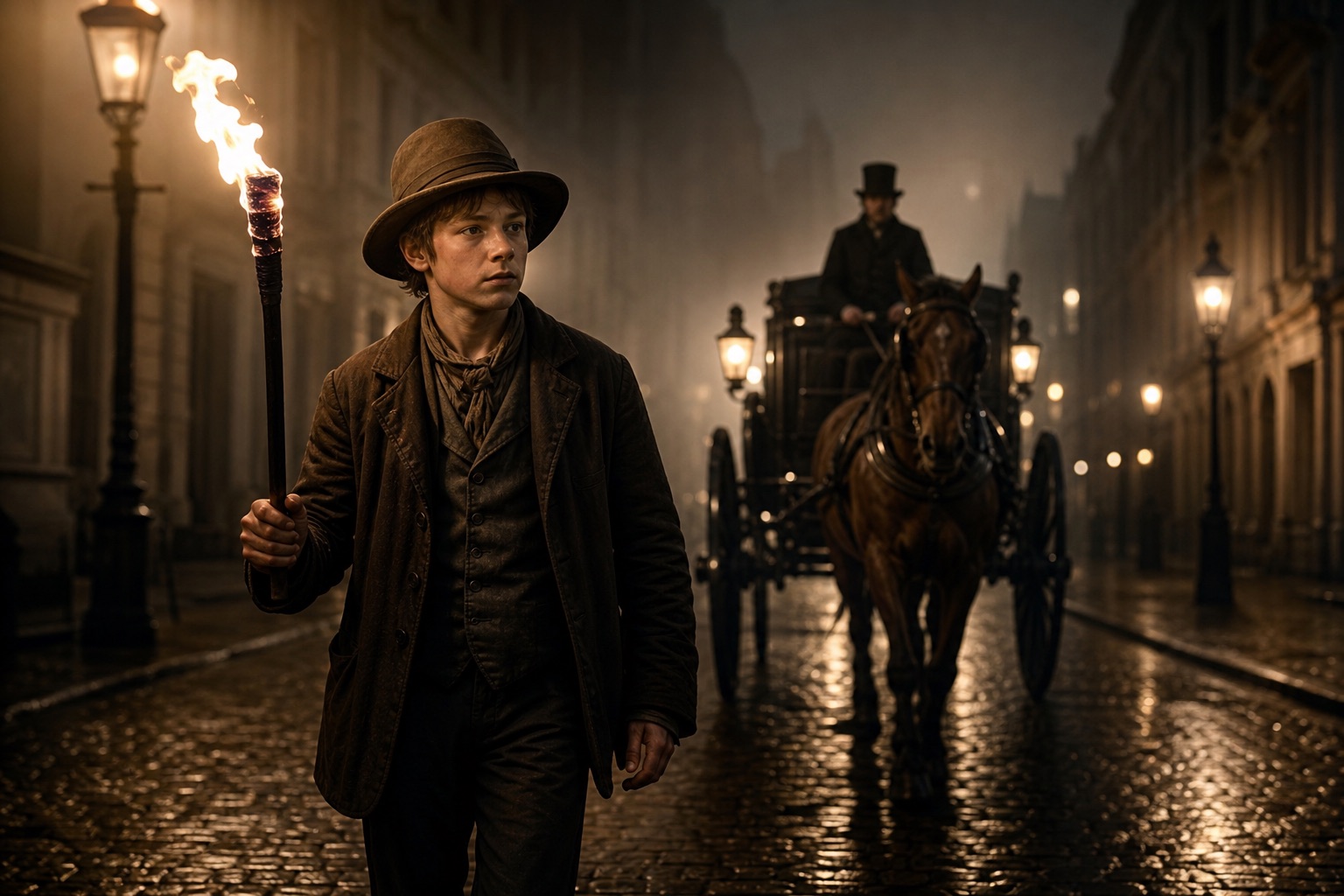
A linkboy carried fire through a city that had not yet been given street lamps. In London, from the later seventeenth century into the early nineteenth, anyone who left a playhouse, a tavern, or a private house after dark had to cross streets that were muddy, uneven, and often deliberately dark. The link was a torch of rope, pitch, or resin on a pole. The boy, or sometimes a grown man in the same trade, walked ahead of the fare and sold the light by the journey. The work sat in a bad reputation as well as a useful one. An honest linkboy was a piece of street infrastructure. A dishonest one could lead a drunk customer into a court where companions were waiting. Parish officers and satirists treated the whole trade as a nuisance, which did not stop theater crowds from shouting for a light when the doors opened. The job lasted as long as the darkness did.
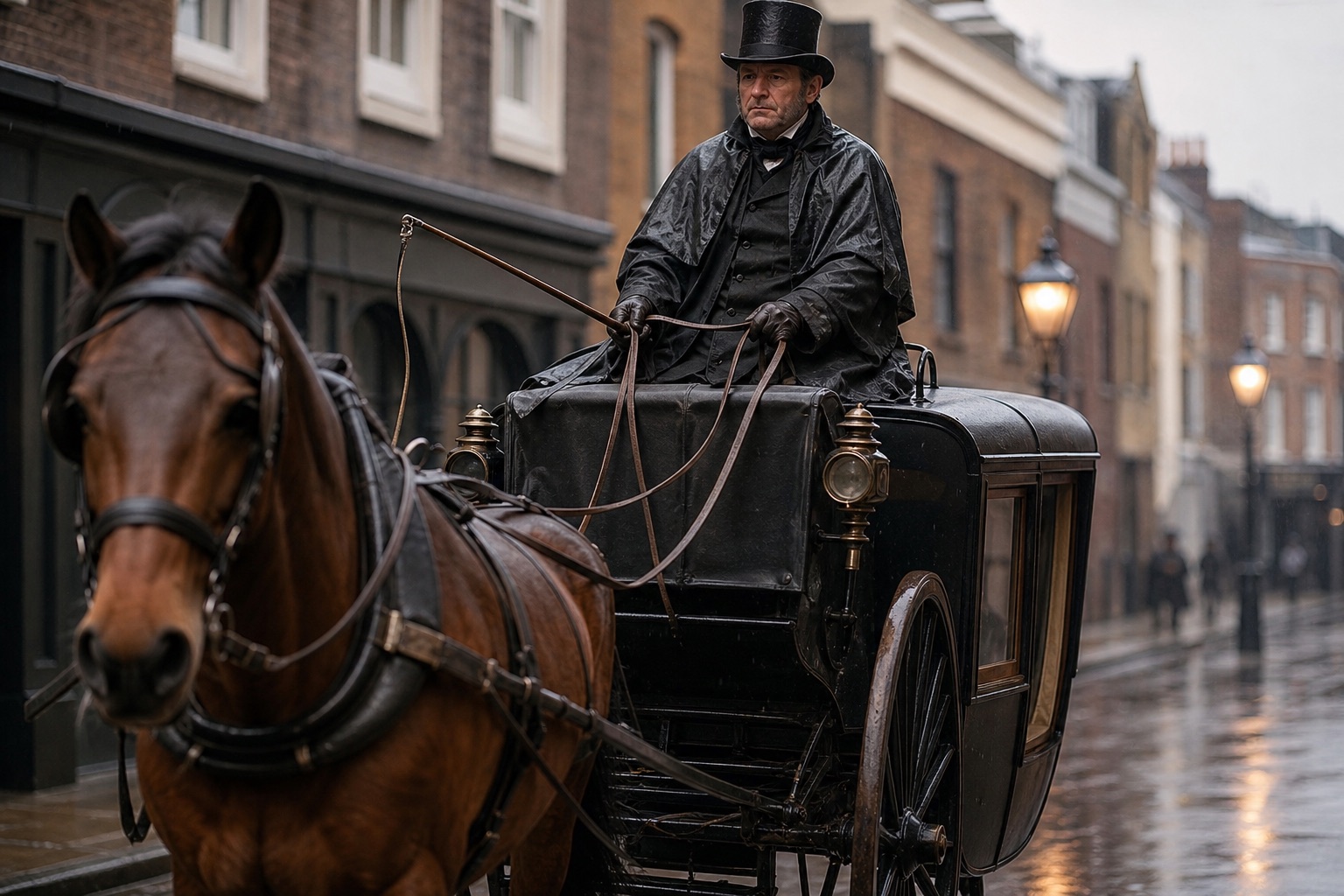
Joseph Hansom patented his low, two-wheeled cab in 1834, and the driver who sat it became one of the distinctive figures of Victorian streets. He did not sit in front, as a coachman did. He sat high at the back, above the roof, and drove with reins that ran over the top of the passenger compartment. The passengers sat low, between the large wheels, with a good view and almost no conversation with the man who was driving them. The cab was fast, tippy, and cheap enough to threaten the older hackney coach. Drivers hired the vehicle and often the horse from a proprietor and lived on the difference between the legal fare and the day's costs. The trade was loud, competitive, and thickly regulated. A driver who did not know the tariff, or who took the long way, was the villain of a thousand newspaper paragraphs.
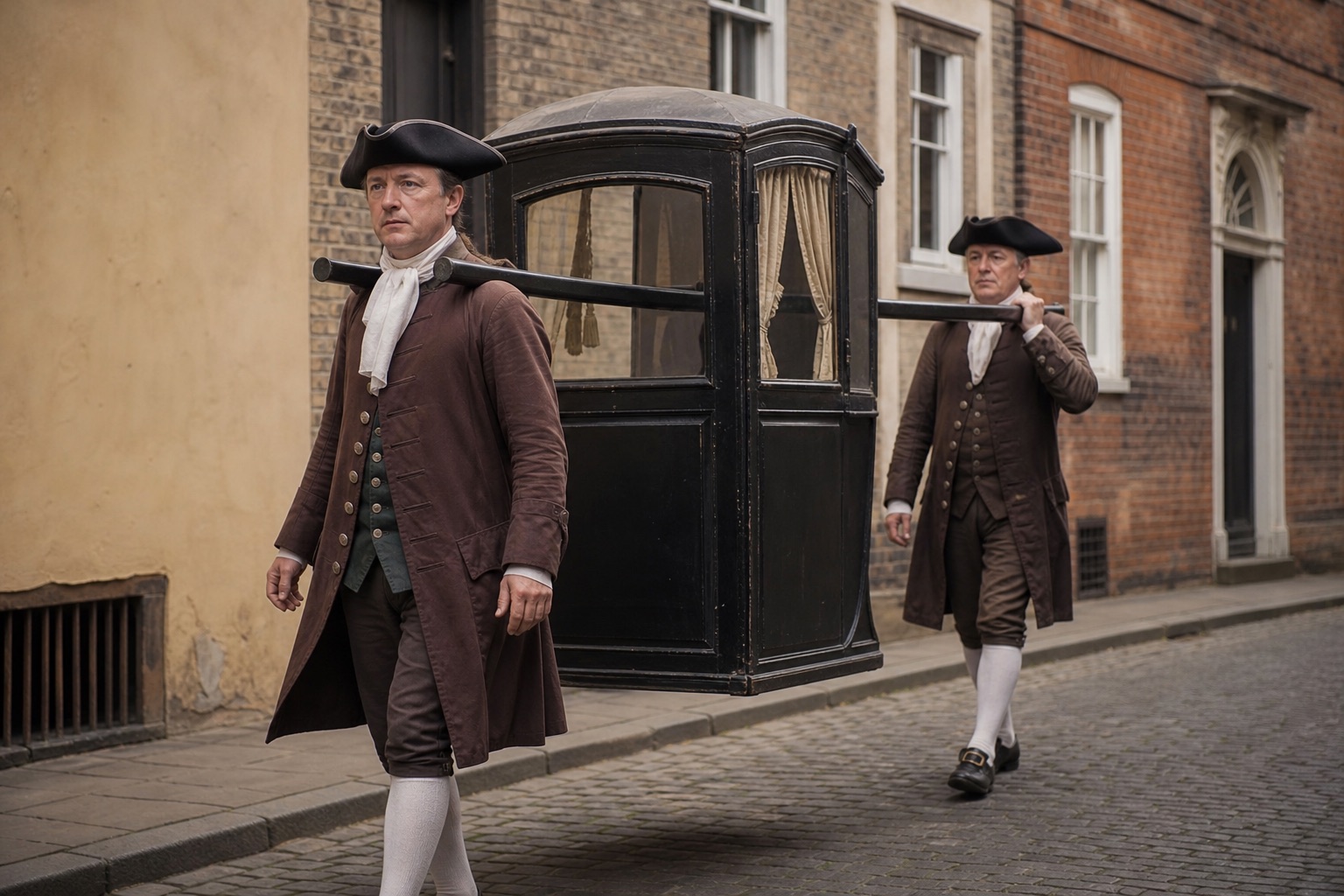
A sedan chair was a box with a seat, a roof, and a door, hung on two poles. It needed no horse and almost no street. Two chairmen carried it, one in front and one behind, through lanes where a coach could not turn and into halls where a coach could not be brought. In seventeenth- and eighteenth-century London, Bath, and Edinburgh, the chair was how people of means crossed a filthy street without putting a shoe in it. The men who carried it were called chairmen, and the front man was often the one who spoke for the pair. The work looked simple and was not. An unbalanced step on a stair, or a pole set down at different moments, threw the passenger forward. The trade belonged to the city before it was paved for wheels. When the streets were improved for carriages, the chair lost the only advantage it had.
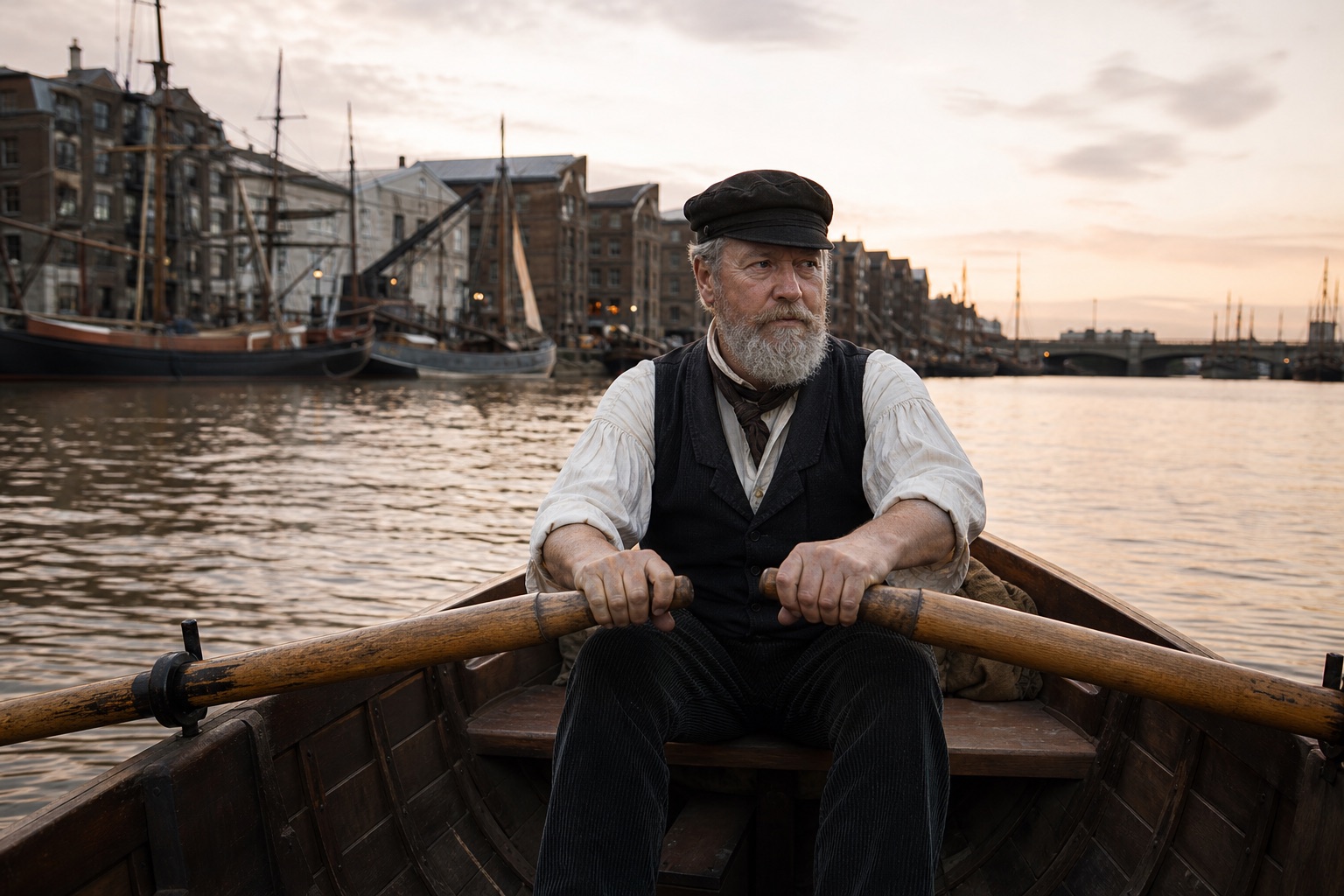
Before London built enough bridges, the Thames was the street. A wherry was a light rowing boat, sharp at both ends, and the wherryman who hired it out was how a person crossed from one stair to another. The Watermen's Company licensed him. He waited at the stairs, called for custom, and rowed the fare into whatever the tide was doing that hour. The work was older than the company and outlived the first bridges, because a bridge with a toll and a climb was not always better than a boat. Steamers and more bridges finished it. The men who remained became watermen in a thinner trade, ferrying where a tunnel or a pier had not yet made them unnecessary.
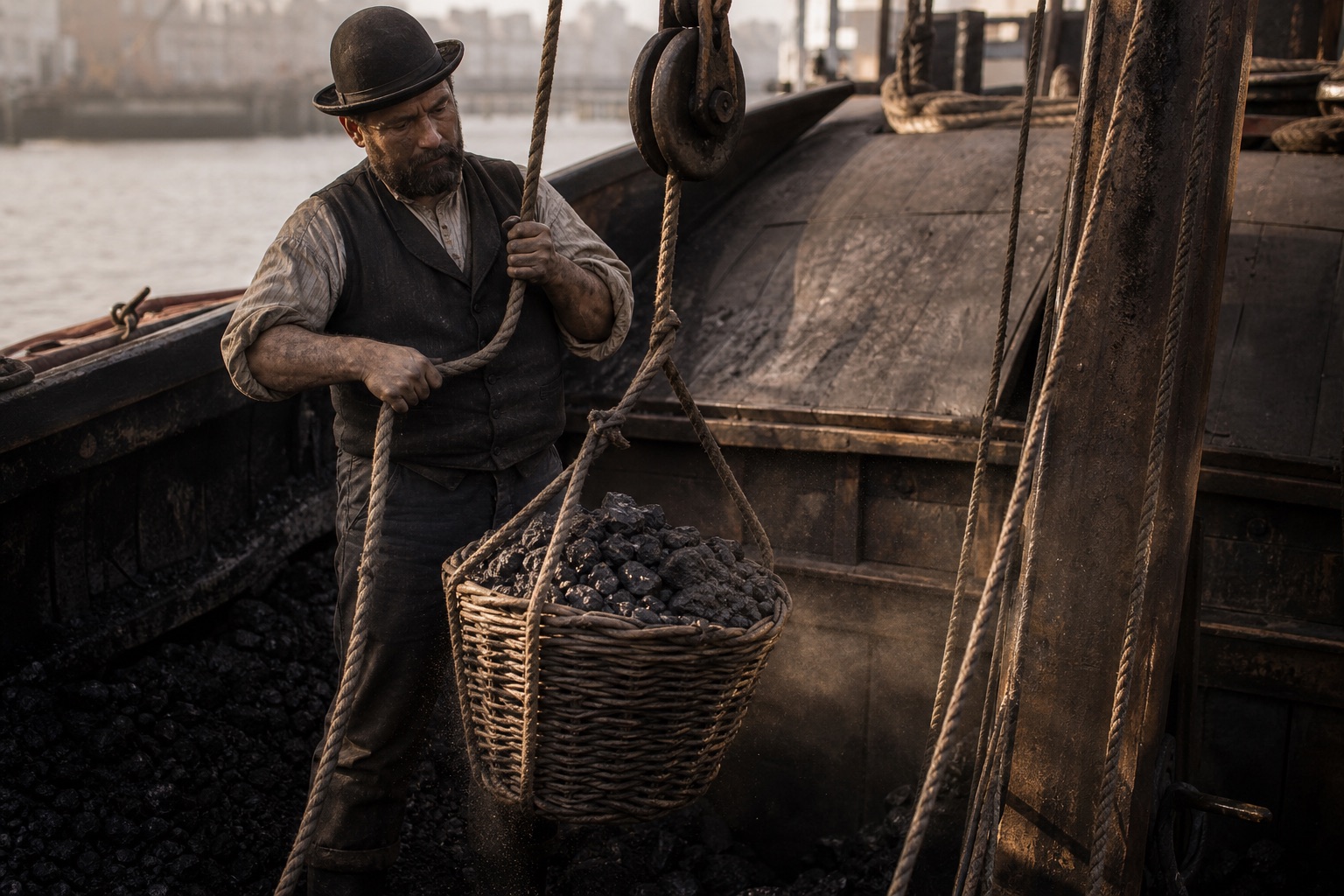
Coal reached London in colliers and left them in baskets. A coal whipper stood in a gang and hoisted those baskets out of the hold with a whip, a rope through a pulley, worked by the men's weight as they jumped down from a staging. It was the standard way of unloading a coal ship in the port before hydraulic cranes and tips. The gang was hired by the ship, paid by the ton, and often controlled by a publican who took his cut before the men saw theirs. Parliament noticed. The Coal Whippers Act of 1843 set up a register office so that gangs were called in turn and the publican's hold on the work was broken. The act did not save the trade. Steam cranes, and then the hydraulic coal tips that emptied a wagon straight into a barge, did the jumping for them.
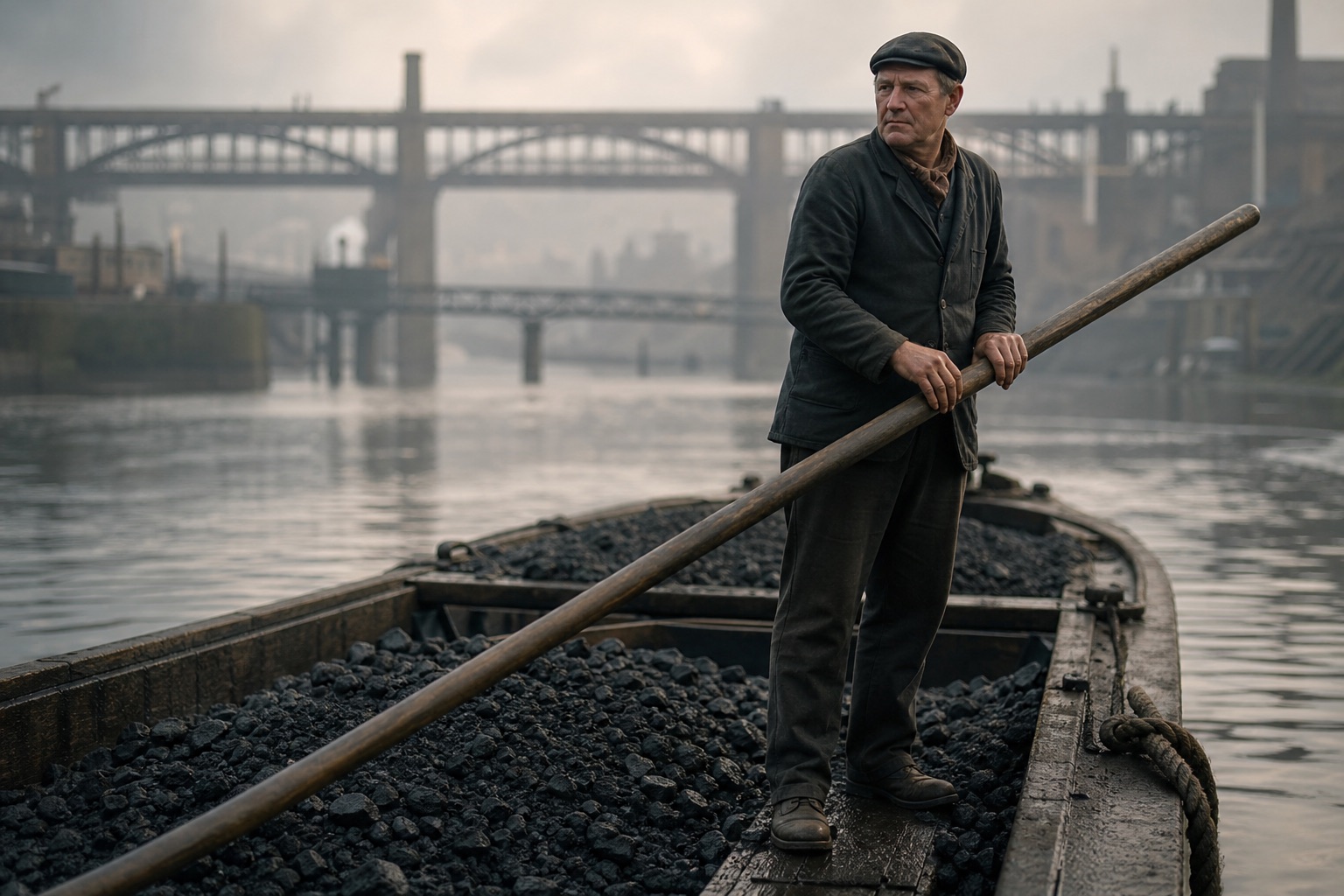
A keel was a blunt, heavy barge, and a keelman was one of the crew that took coal down the Tyne from the upriver staiths to the colliers waiting in deeper water. The boat was too clumsy for a sail in that crowded river. The men drove it with a long sweep, a great oar worked over the side, and they lived in the Sandgate when they were not on it. The keelmen were a closed community with their own society, their own hospital, and a habit of striking when the coal owners tried to cut the load or bypass them. The strike of 1819 is the famous one. It did not stop the staiths, the spouts, and the railways from eventually dropping coal straight into the ships. When the river no longer needed a barge in the middle, the keel went with it.
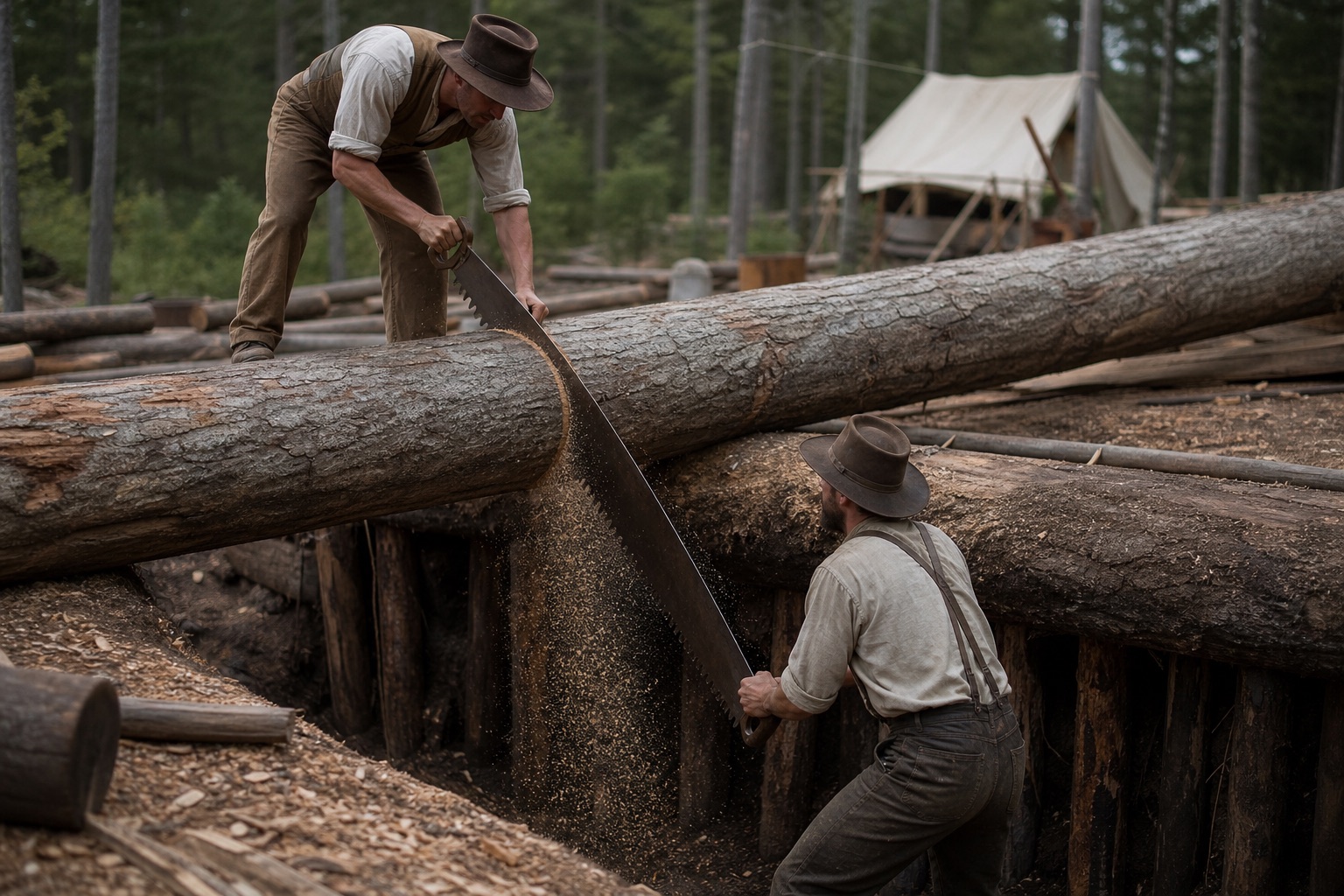
Two men and one long saw turned a balk of timber into boards. The top-sawyer stood on the log, chalk line between his boots, and guided the blade. The pitman stood in the pit beneath, hauling the saw down through oak, elm, or deal while the dust settled on him. Iron dogs held the balk. Wooden wedges kept the kerf from pinching the plate. In a royal dockyard the pit might be a dug hole or a raised cradle; in a country yard it was often opened where the trees had been felled. A straight deal could come off in a morning. Compass timber for a shipwright, curved and stubborn, took the rest of the day and a higher price on the tally. From the seventeenth century into the middle of the nineteenth this pair supplied house carpenters and shipyards in Britain, and the same pit was dug in colonial timber towns that had logs and no mill. Water-driven saws already existed in some districts, yet a pit could be set up wherever a merchant landed timber, and British yards were slow to give the work up. The top-sawyer's name even passed into ordinary speech for the person who stood first at a job. What ended the pit was the steam sawmill in the timber ports, which cut the same balk faster and sold the deals cheaper. The pits were not closed by proclamation. Builders bought mill-sawn stock, and the hundred-foot bargain stopped being offered.
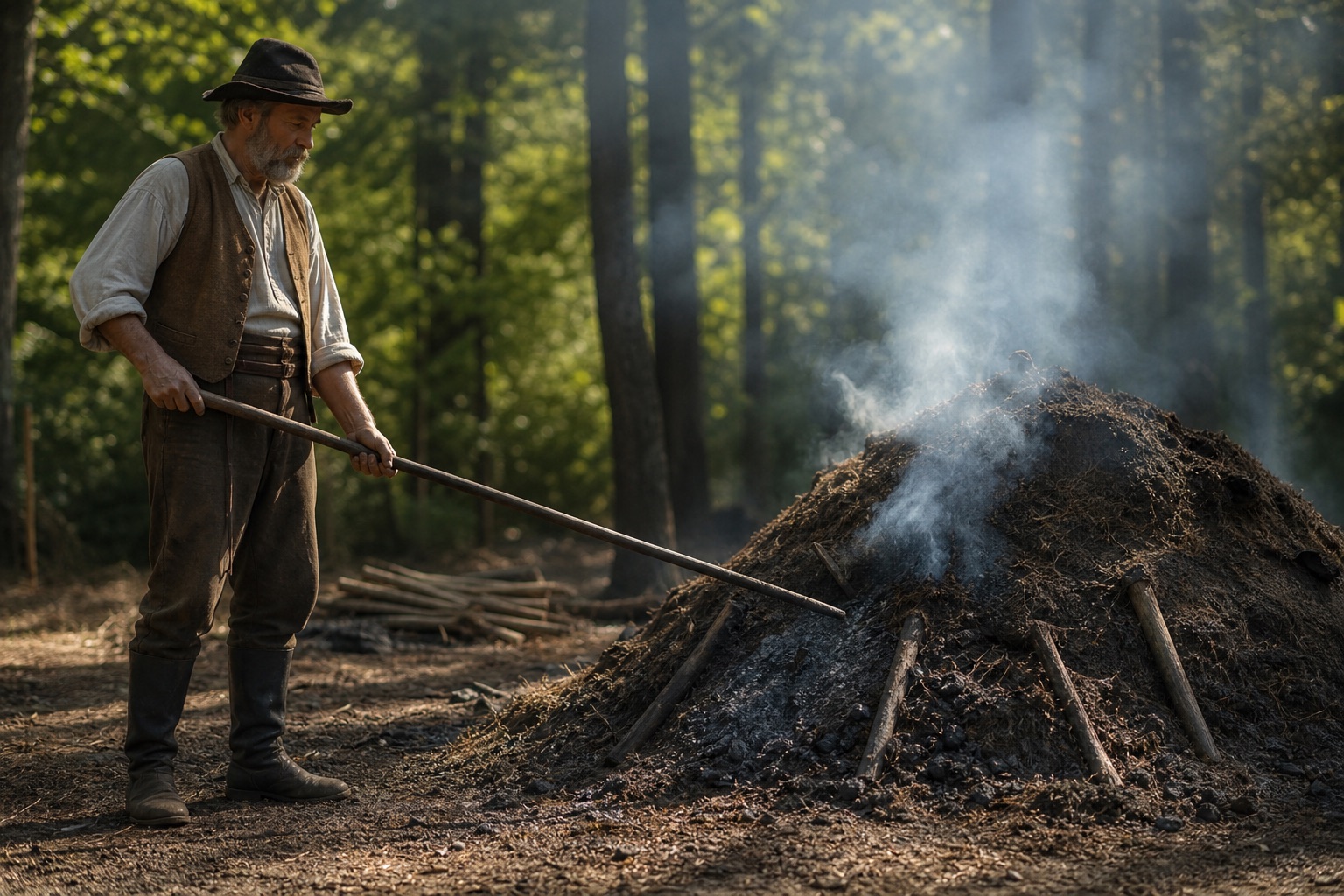
The charcoal-burner, the collier of the woods, was not a coal miner. He stacked cordwood from the coppice into a mound, covered it with straw, turf, and earth, and set it to smoulder rather than to flame. Too much air and the stack burnt to ash, which nobody would buy. Too little and the sticks stayed half raw. He slept in a hut beside the clamp, sometimes for several days, opening and closing vents as the smoke changed colour, and he stopped leaks in the mound with a fresh sod before a bright spot could run away. When the heap had cooled he raked out black coal and bagged it for the furnace, the powder mill, or the brazier. Coppice woods in the Weald, the Forest of Dean, the Wyre, and a hundred smaller falls were cut on a cycle of years so that underwood, not the great timber trees, supplied him. The craft runs from medieval woodland custom into the late nineteenth century, long after Abraham Darby's coke had begun to feed furnaces. Mineral coal took the domestic grate. Coke took the ordinary blast furnace. In the nineteenth century, enclosed retorts carbonised wood in iron vessels and collected tar and acid along with a cheaper charcoal. The clamp in the coppice could not match that price. The last burners were remnants, coaling for hop kilns, braziers, and a few special trades, not for the ironworks that had once kept the woods smoking.
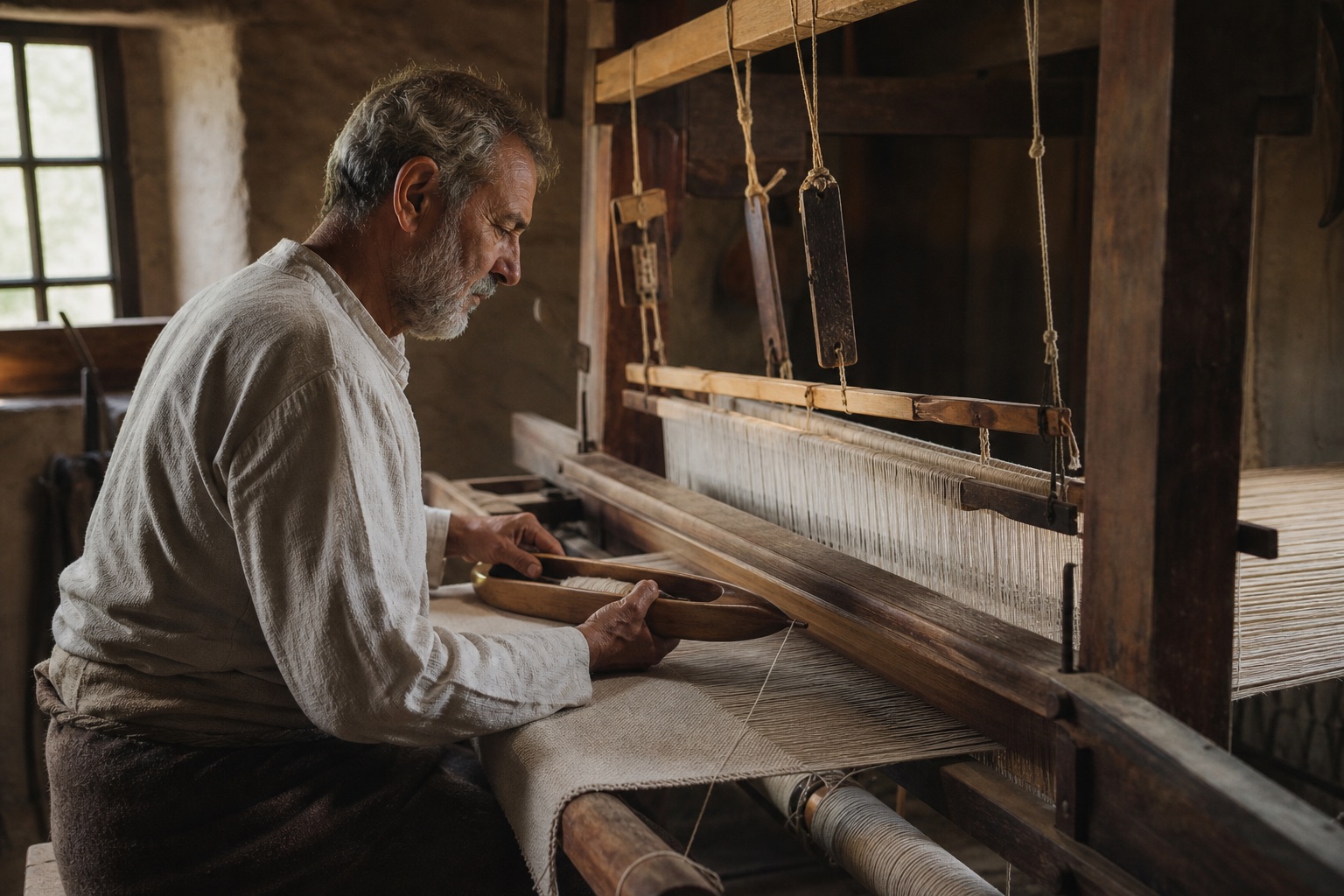
A handloom weaver worked at home. The loom stood in a cottage room, often kept damp so that cotton ends would not snap, and the weaver threw the shuttle and beat the weft a few inches an hour. Yarn came from a spinning mill or a woolstapler through a putter-out. The finished length went back to a warehouse to be measured, examined, and paid by the piece. Lancashire cotton villages were the centre of this work in the boom of the 1790s. Woollen weavers in the West Country, around Frome and Trowbridge, and in the West Riding lived by the same bargain: the loom and the room were the family's, and the cloth belonged to the merchant who had put out the yarn. The ruin was a collapse of the piece rate, not a cartoon of men who hated machines. A cotton weaver earning close to a pound a week in the late 1790s was, in the parliamentary returns of the 1830s, often down to a few shillings for a longer week at the same loom. Power looms, patented in crude form by Edmund Cartwright in the 1780s and practical in Lancashire from the 1810s, were widespread in ordinary cottons by the 1840s, and woollen mills followed. Some crowds broke looms. Most weavers did not. They worked longer hours, asked Parliament for a legal minimum, were refused, and lost the trade when the warehouse cut the price below a living.
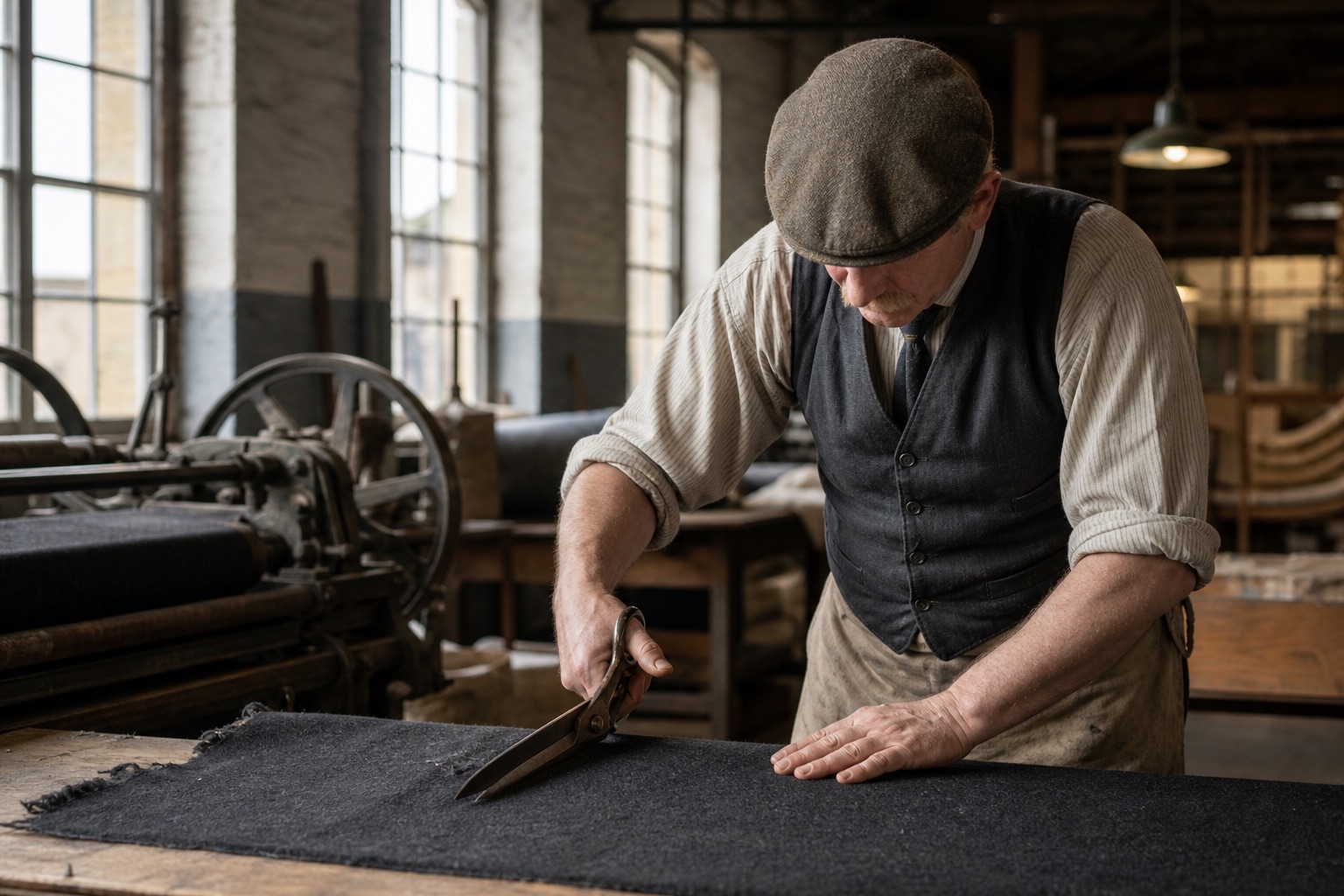
A cropper, also called a shearman, finished woollen cloth. After fulling, he raised the nap with teazle heads and then cut that nap level with shears unlike a tailor's: blades several feet long, heavy enough that the work took a man's whole strength, used flat across a shearboard. A good cropper left a face as even as a close pile, without a ridge or a hole, and West Riding clothiers paid him as one of the aristocrats of the woollen trades. Huddersfield, Leeds, and the cloth villages of the Spen Valley were his ground. The shears were the skill. The cloth remained the clothier's property, brought to the shop and taken away dressed. Gig mills, which raised the nap on teazles fixed round a cylinder, and shearing frames, which cropped with driven blades, took the skill off the board. In 1811 and 1812 Yorkshire croppers attacked those machines, including the assault on William Cartwright's mill at Rawfolds in the Spen Valley in April 1812. The attacks belong in the story of the trade. They are not what ended it. The frames dressed cloth faster and cheaper than a man with shears, the clothiers kept installing them, and the piece rate for hand cropping disappeared. Parliament answered the violence with the Frame Breaking Act of 1812. The finishing shops answered it by cropping on the machine.
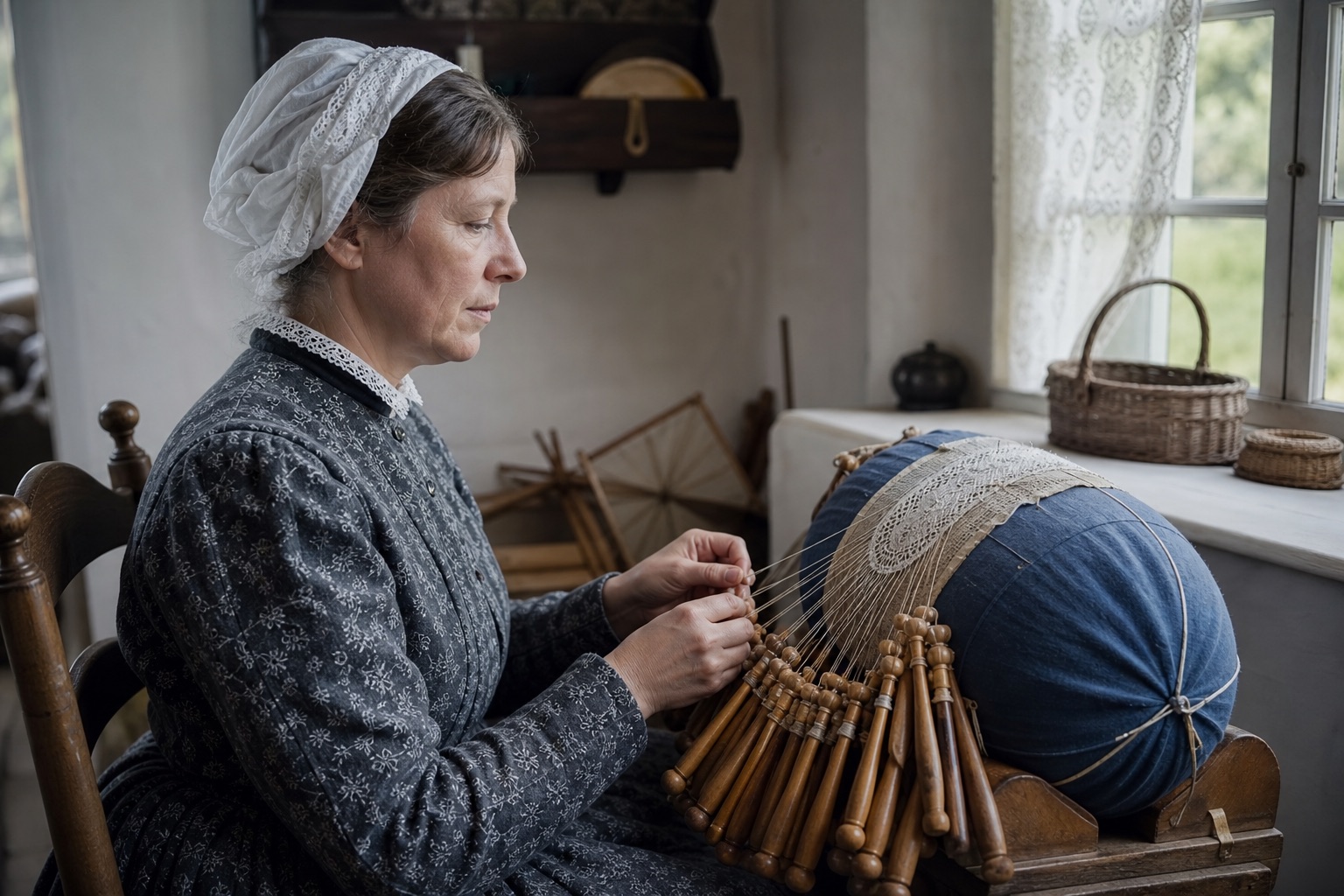
Pillow lace was made on a cushion. A parchment pricking carried the pattern, and the thread moved on dozens of bobbins that the worker crossed, twisted, and pinned. The Midlands trade, in Buckinghamshire, Bedfordshire, and Northamptonshire, made continuous lace, ground and motif growing as one web. Bucks point was an older pride of that country. After the Great Exhibition put Maltese lace in fashion, Bedfordshire workers also made a plaited lace to sell into that taste. Devon worked differently. At Honiton and in the villages toward Beer the lacemaker made separate sprigs, sewn onto net. From the early nineteenth century that net was usually machine-made, so a celebrated Honiton piece could sit on a ground the pillow had never worked. Women and girls did most of the hand work. Lace schools sat small children at pillows for eight or ten hours and a few pence, the mistress selling their output and keeping a margin. A woman at home might make a few shillings in a week and still work into the evening to finish a yard. John Heathcoat's bobbin-net machine of 1809, and the Leavers machine developed from it in Nottingham, put patterned lace on the market below the pillow's price. Hand lace did not stop on a given Monday. It became a poorly paid remnant beside a machine that already supplied the ordinary buyer.
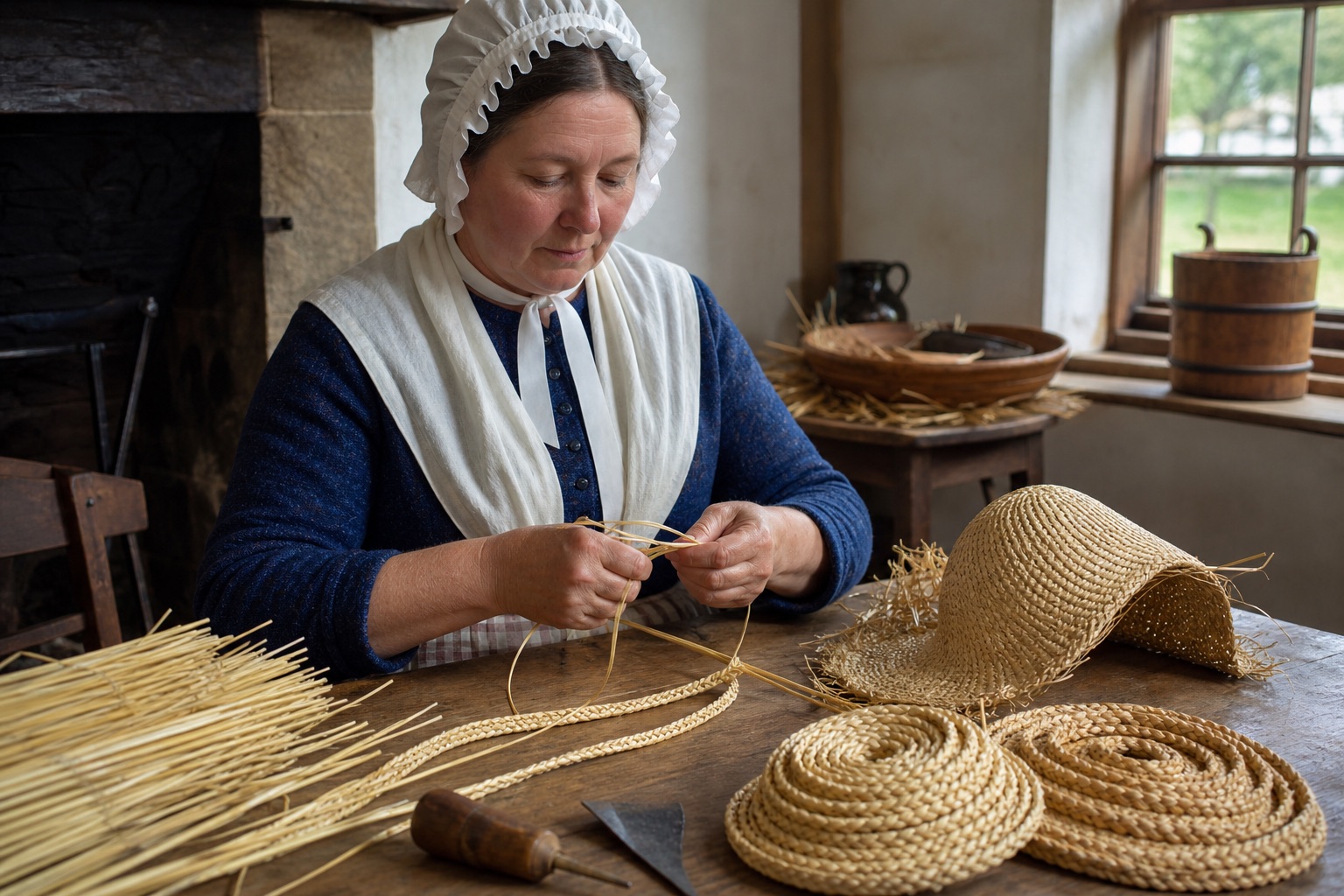
Straw plait was a narrow braid of split wheat straw, made in the cottages of Bedfordshire, Buckinghamshire, and Hertfordshire and sold to the hat trade of Luton and Dunstable. The plaiter damped the straws, split them, and worked a set pattern, joining a fresh straw so the edge did not lump, until she had a score of twenty yards. That score was the unit of the weekly plait market. Women and children did the work. In a village plait school a child could sit the day for pence, and a mother made her own scores in the evening for a few shillings when the buyers were kind. The hat factories turned the braid into bonnets and hats. The cottage sold them braid, not hats. Luton's hat industry continued. The local hand plait did not. Italian straw, including the Leghorn and Tuscan kinds, had long been a finer rival for the best hats. In the late nineteenth century cheap plait from China arrived in amounts the south Midlands could not underbid. Sewing machines and factory blocking then made hats from that imported braid, or from other materials, without a village score at all. By the early twentieth century a girl in a Bedfordshire parish was no longer set to plait as her mother had been. The market had stopped paying an English hand price for the hours in the braid.
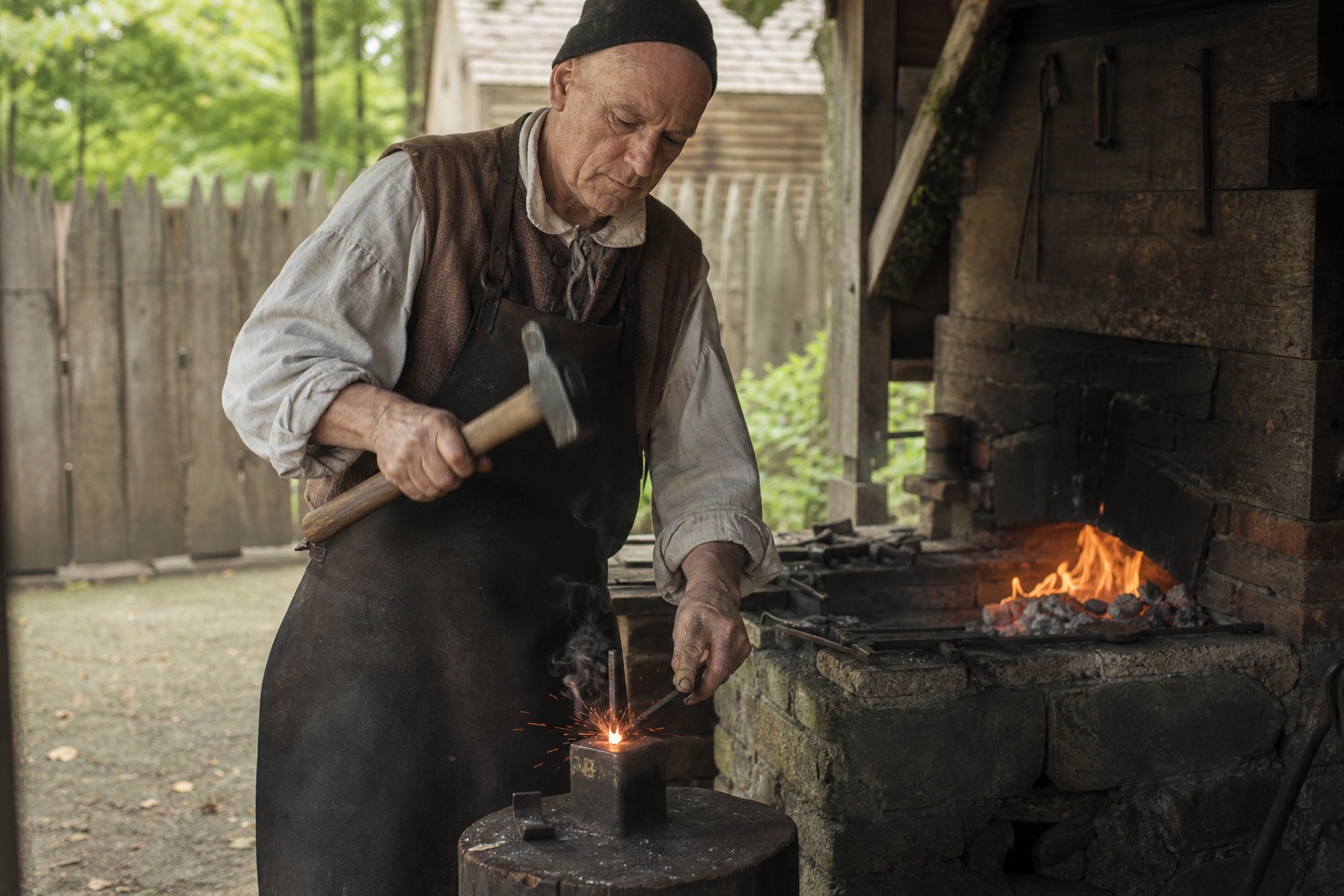
A nailer in the Black Country made nails one at a time at a hearth in the house. Rod iron, taken from a fogger, was heated, pointed, cut, and headed in a bore, often under an oliver, the foot-worked hammer that put a heavier blow behind a small hand. Dudley, Sedgley, Gornal, Lye, Halesowen, and the shops toward Bromsgrove were dense with these hearths. The count was the thousand. The fogger who had supplied the rod bought the nails back, and his prices on both sides of the bargain were deducted before the family saw cash. It was outwork, not a factory bell, and the workshop was the room where the household also lived. Cut nails, sheared from sheet by machine from the early nineteenth century, undercut the common wrought nail. Wire nails, cheap in quantity by the 1880s and 1890s, destroyed what was left of the price. Reporters for the children's employment inquiries of the 1840s already found whole families at the block, children old enough to heat a rod or head a small nail working a long day inside a tally of a few shillings. The reports list hours and prices. Horse nails and a few special sorts lingered as hand work after general nails had gone. The nail in an ordinary carpenter's bag had become a machine nail, and the hearth could not sell against it.
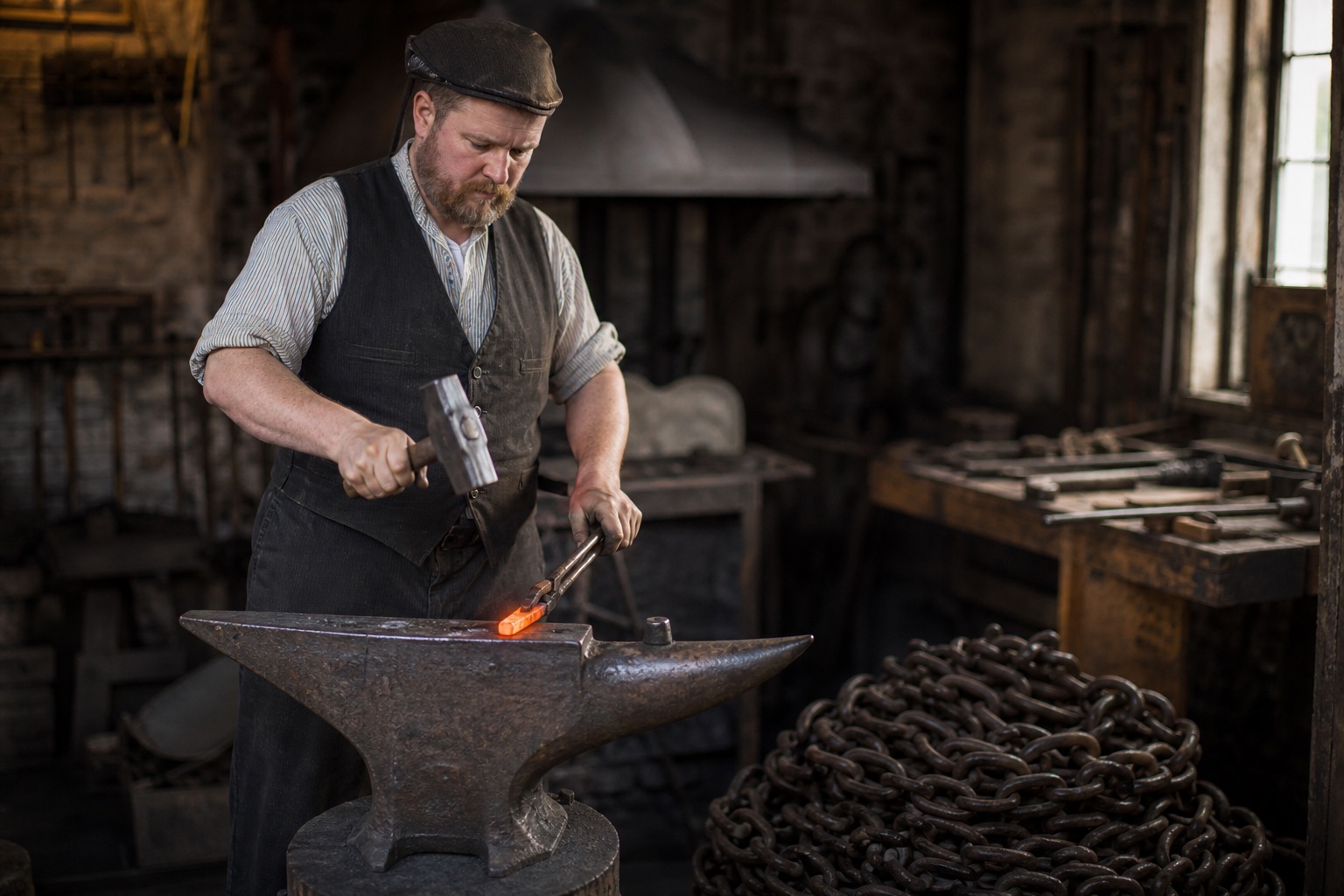
At Cradley Heath, and in the small-chain streets of Old Hill and the neighbouring towns, chain was hammered link by link. A woman scarfed a short iron rod, bent it through the previous link, and welded the join on a bick in a backyard shop, a dolly shop, paid by the hundredweight. This was the small work: common chain, dog chain, the lighter sizes. Heavy cable was men's work in larger shops. Before 1910 the backyard bargain was a sweated one. A woman could be at the hearth from morning into the evening and take home five or six shillings for the week, girls learning beside her at a still smaller share of that weight. Mary Macarthur and the National Federation of Women Workers led the chainmakers' strike of 1910 so that employers would actually pay the minimum the Chain Trade Board had fixed under the Trade Boards Act of 1909, twopence-halfpenny an hour. The strike succeeded. It put a floor under the wage. It did not preserve the backyard hammer as the way ordinary chain would be made. Machine-made chain, and then welded chain from factories, supplied common links more cheaply than a legal hand rate could. The women had stopped the starvation price. Across the early twentieth century the market took the bulk orders to the factory, and the old domestic shops thinned away.
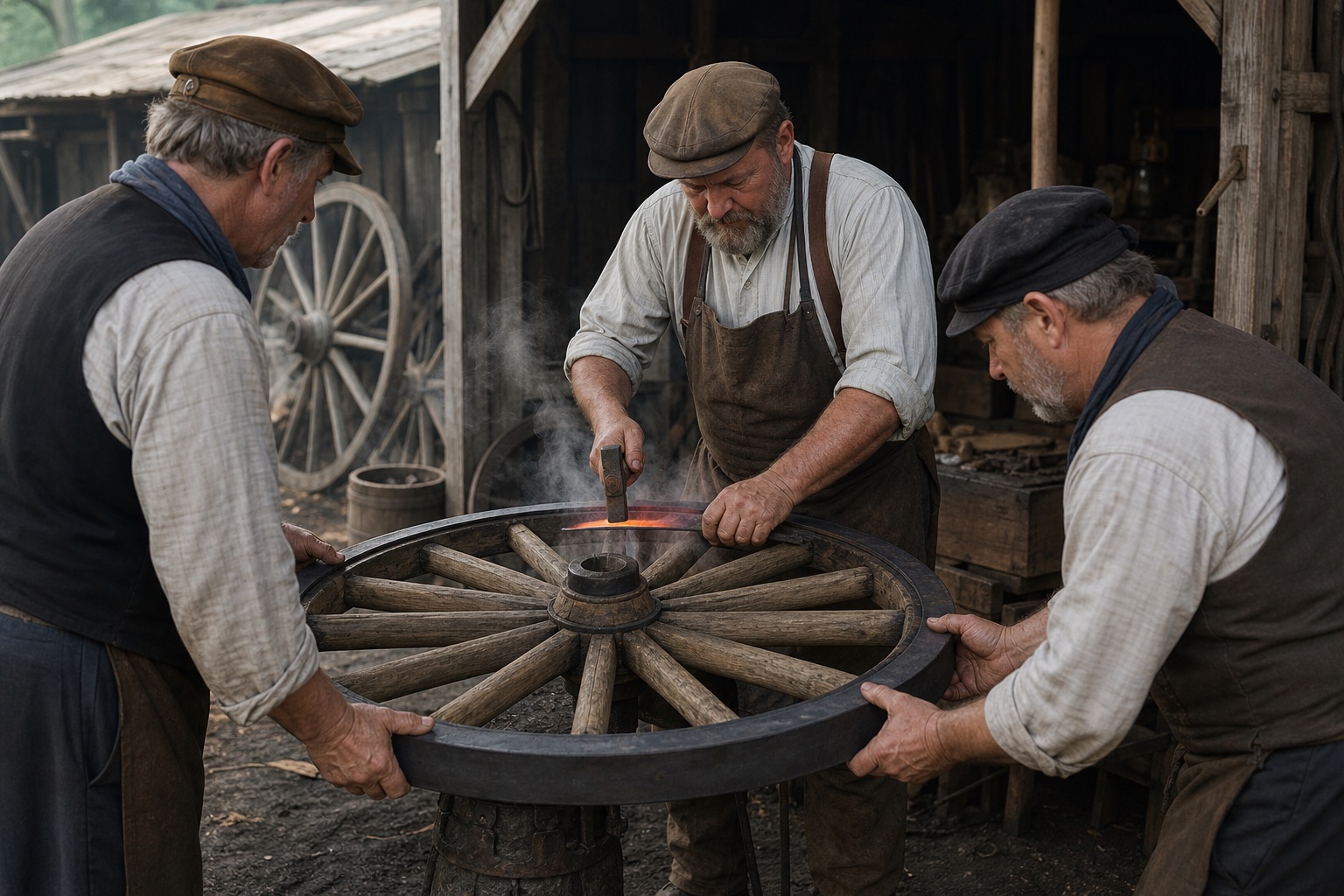
A wheelwright made the wooden wheel that carried a cart, a waggon, or a carriage, and he shod it with iron. The stock, or nave, was the hub, boxed with iron for the axle. Spokes were dressed and driven into mortises. Felloes, curved sections of ash or elm, made the rim and were dowelled into a circle. The wheel was dished, set as a shallow cone, so it stood plumb under the load when the cart moved. A hoop tyre was then heated on a circular fire, dropped over the rim, and quenched so the iron shrank tight and pulled the joints home. George Sturt, who ran his family shop at Farnham in Surrey from 1884 and published The Wheelwright's Shop in 1923, described this as a whole literacy in timber. Every country town had some version of that bench. Rubber tyres, the motor trade, and factory wheels removed the reason for the bench. A pneumatic tyre does not sit on a craftsman-cut felloe in the old way. A motor van does not come to the wheelwright for a new stock. Factories supplied wooden wheels and then metal ones faster than a shop could spoke them, and cheaper. Farm repairs lingered where iron-shod carts still worked, into the 1920s and 1930s. The boy who in 1900 could still be offered seven years at the bench was, a generation on, looking at a trade that no longer bound apprentices.
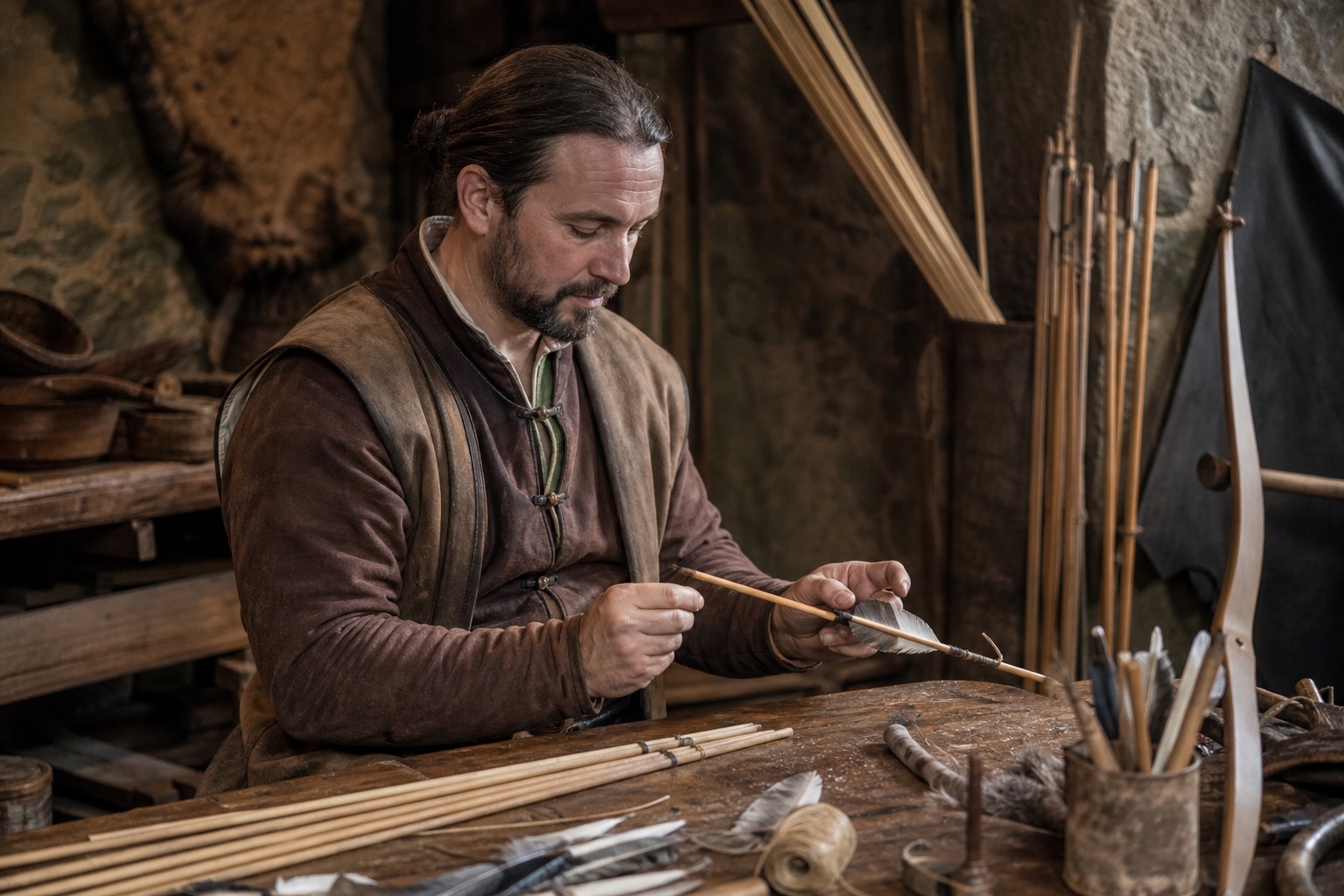
A fletcher made arrows, and the trade was not the bowyer's. The bowyer made the bow. The fletcher planed and straightened the shaft, cut the nock that took the string, fitted the pile at the point, and glued and bound the feathers, usually from the goose, setting the cock feather so the arrow would leave the bow cleanly. Finished arrows were tied in a sheaf of four-and-twenty. In a medieval or Tudor town this was a guild craft. London fletchers worked under ordinances from the fourteenth century and kept themselves distinct from the bowyers. York, Chester, and other corporate towns had their own men. The customers were civic musters, ship stores, and householders obliged to practise at the butts. Firearms ended the order slowly. Calivers and muskets spread through Tudor armies and then through the trained bands, and the statutes that told grown men to keep longbows and to shoot at the butts turned into a dead letter without one repealing morning. Sporting archery never employed a town full of fletchers. Some workshops drifted into other light woodwork. The London Company of Fletchers survived as a livery company. The making of war arrows did not. It thinned across the sixteenth century and was a remnant in the seventeenth, because the weapon the authorities issued had become the gun.
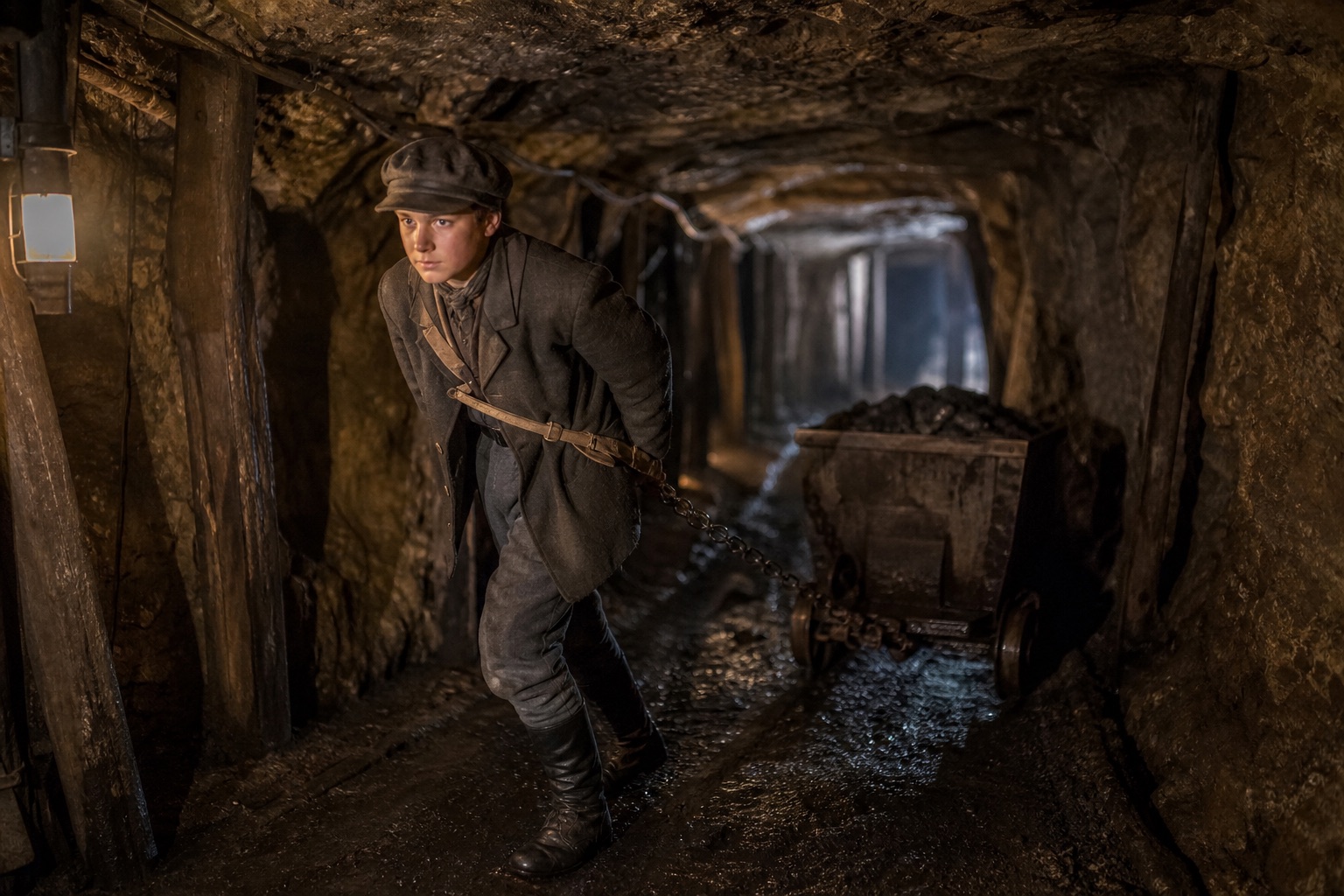
A hurrier moved coal along the low underground road between the face and the next stage of haulage. In thin British seams of the early nineteenth century that road was often too low for a pony, so a leather girdle was buckled at the waist and a chain ran back to a corve or a wooden tub. The hewer filled the box. The hurrier drew it, bent or on hands and feet, then returned for the next. In some pits a second child, the thruster, pushed from behind. Scottish coal bearers, usually women with creels, did a related but different carry, and this label stays with the chain and the tub. Girls and boys both hurried, and adult women hauled underground in some districts, until the Mines and Collieries Act 1842. That Act barred every woman and girl from underground work and barred boys under ten. Lord Ashley's bill followed the Children's Employment Commission, whose sub-commissioners had gone into the pits and published the harness, the hours, and the ages. This exhibit is that pre-1842 haul. The wording stays on the road, the girdle, the tub, and the statute. It does not describe injuries. Parliament's answer was an age line, a sex line, and inspectors, which is the fact the label is built to carry.
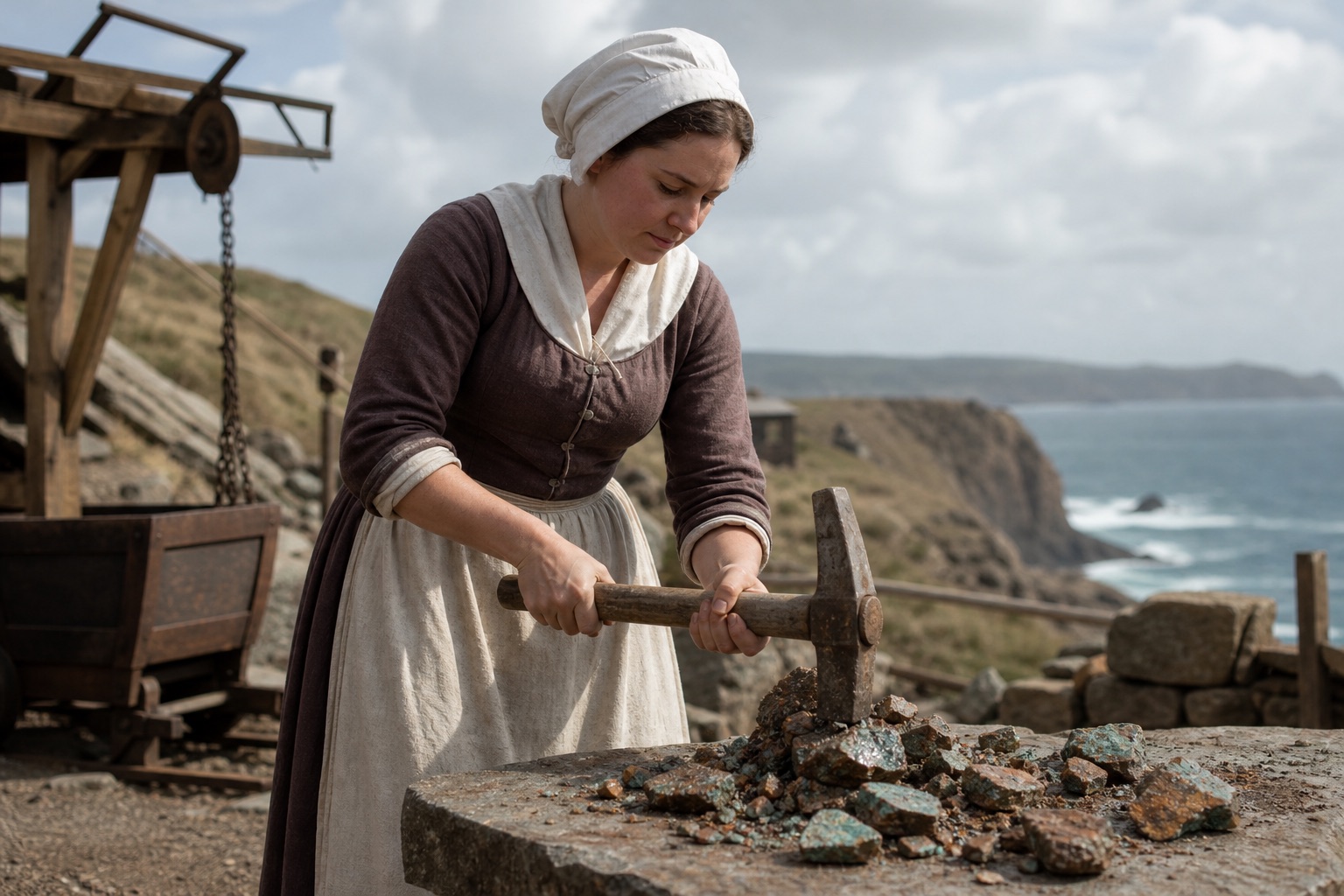
A bal-maiden broke and sorted copper ore, and sometimes tin, on the surface dressing floor of a Cornish or West Devon mine. She was not underground. The word bal is the mine itself. On a paved or boarded floor open to the weather she used a bucking hammer, a short-handled flat-faced tool, to crush ore small enough to be washed, and a heavier cobbing hammer on the larger stones. Waste rock was picked out by eye. Dressed ore went on to buddles and the rest of the surface plant, where water separated the heavier mineral. The trade runs from the eighteenth century, when these copper mines expanded, into the early twentieth, when the same mines closed and mechanical stamps, crushers, and later flotation did the breaking. The Mines and Collieries Act 1842 cleared women from underground work. It did not clear the dressing floor, and bal-maidens remained a normal part of the surface payroll long after that Act. Census returns use the title in Cornwall and around Tavistock. Devon Great Consols was among the large employers. The label is this hand floor, not a romantic pit woman and not a child-haulage job.
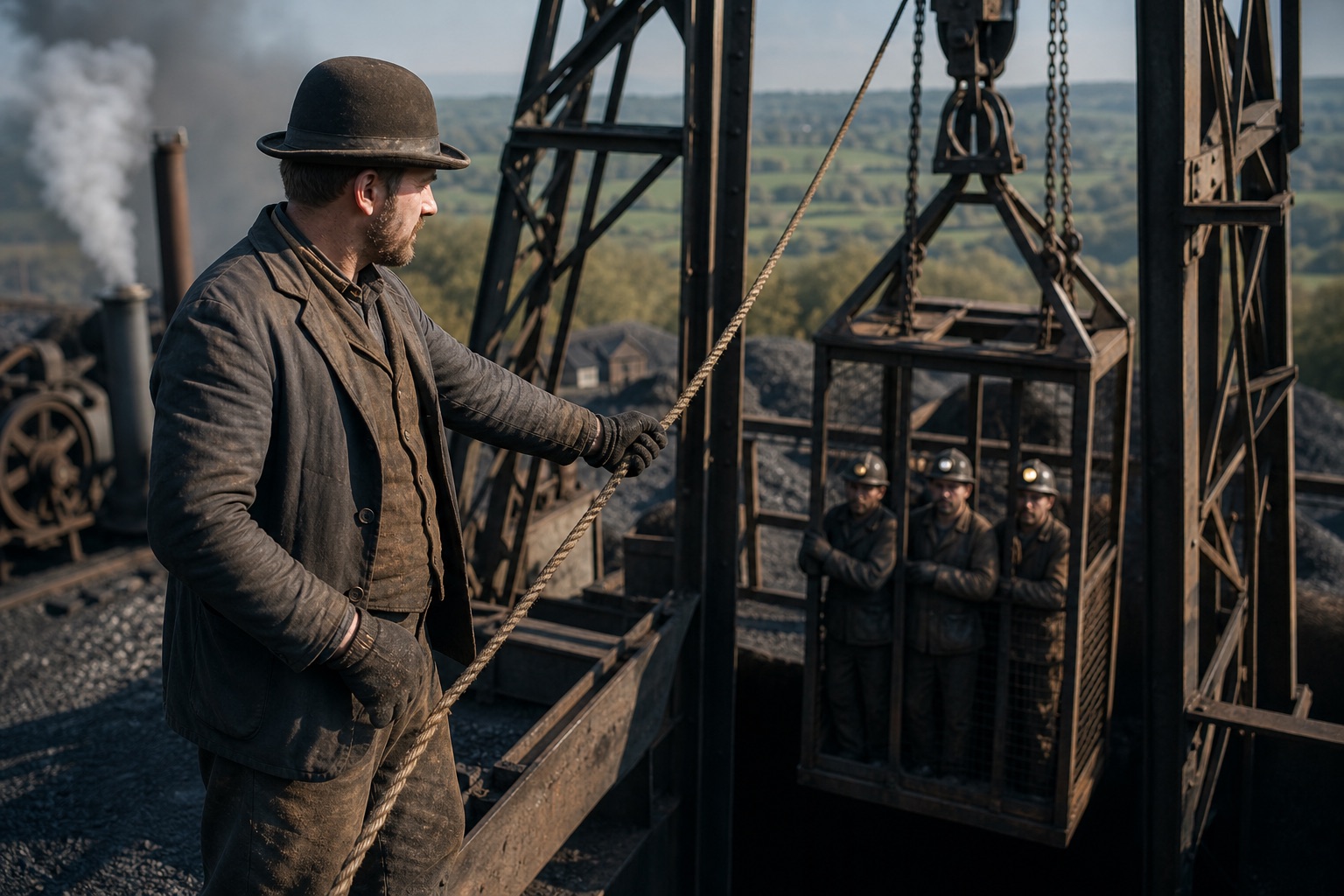
The banksman was the man at the pithead who controlled the cage and signaled the winding engineman. He stood on the bank, the surface mouth of the shaft, in the decades when British collieries wound coal and men by a steam engine, a rope, and a cage. A code of bell raps, later pushed toward a standard code by the mines acts, told the engineman to raise, lower, or stop. The banksman opened the gates, saw that keps or chairs were set or clear, and decided when the cage was free to move. He did not drive the engine. The onsetter, down the shaft, was his counterpart at the pit bottom. This exhibit is that cage-and-bell job of the steam-winding era, roughly from the spread of cages in the mid-nineteenth century through the years when many pits still wound that way. The word banksman did not die with those pits. It remains in use for the person who directs a crane or a hoist, and mining law kept a banksman's duties wherever a shaft was wound by hand signals. What thinned was this particular post: the appointed man on an open bank, ringing a bell to a steam engineman, as collieries closed and winding was enclosed, automated, and run from a control room.
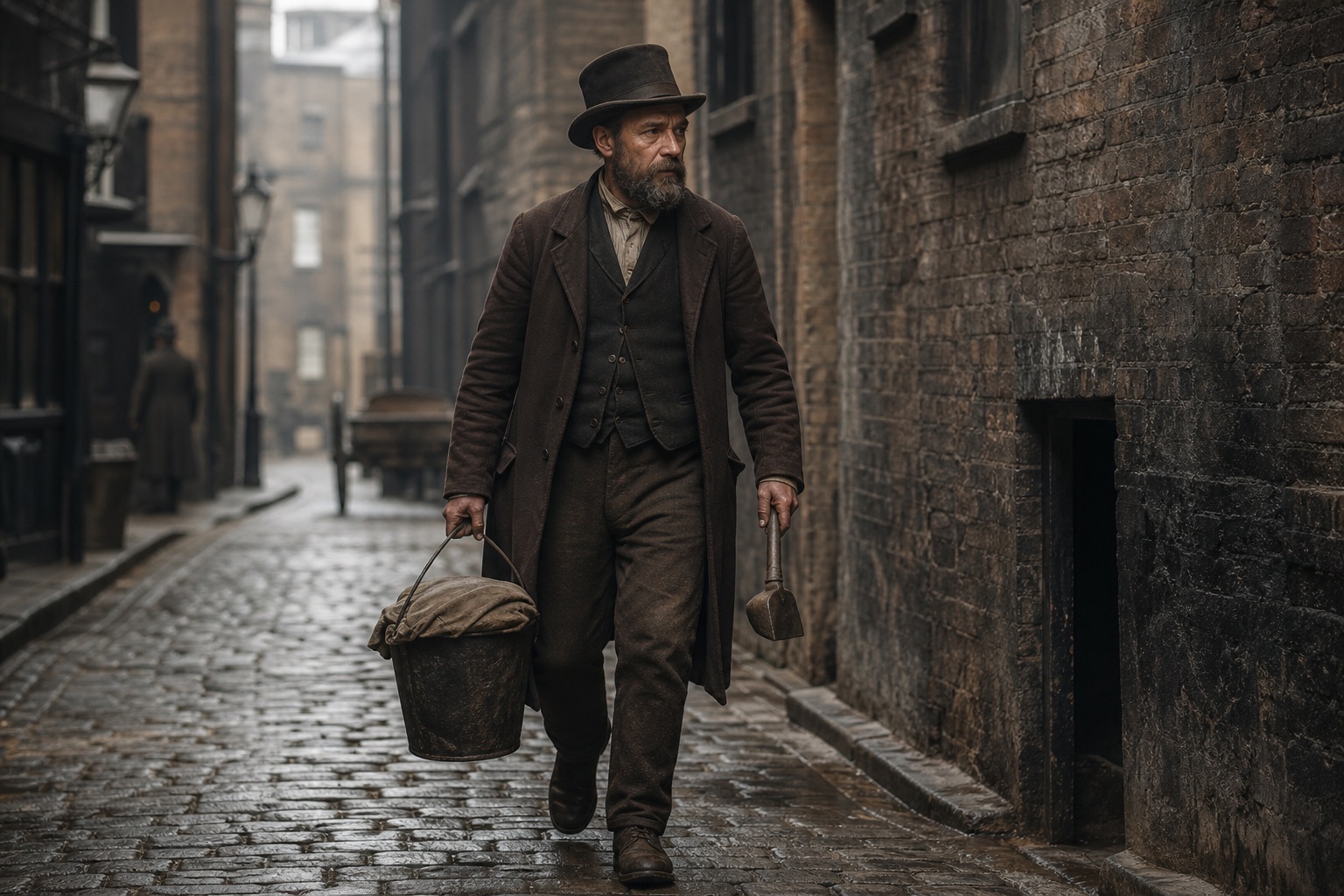
A pure-finder collected dog dung from the streets, mews, and kennels of Victorian London and sold it to tanneries under the trade name pure. Tanners used it as a bate. After hides had been limed and unhaired, a bate of dung softened them and made them take the later tannins. Dog dung was preferred for this step, and the yards of Bermondsey were the market. The finder walked a beat, gathered the material into a pail or a sack, and sold it by quantity and condition. Dry, saleable stock fetched more than a wet or spoiled pail. This was a poor street trade, recorded in detail by Henry Mayhew in London Labour and the London Poor. The work was frank about its material because the material was the product. Finders handled dung as stock, and tanners bought it as an ingredient. The trade faded when chemical bates and then chrome tanning removed the yard's need for dung. It was not banned by a single famous Act. It became unsaleable. By the end of the nineteenth century and the start of the twentieth, a finder with a pail no longer had the old queue of buyers at Bermondsey.
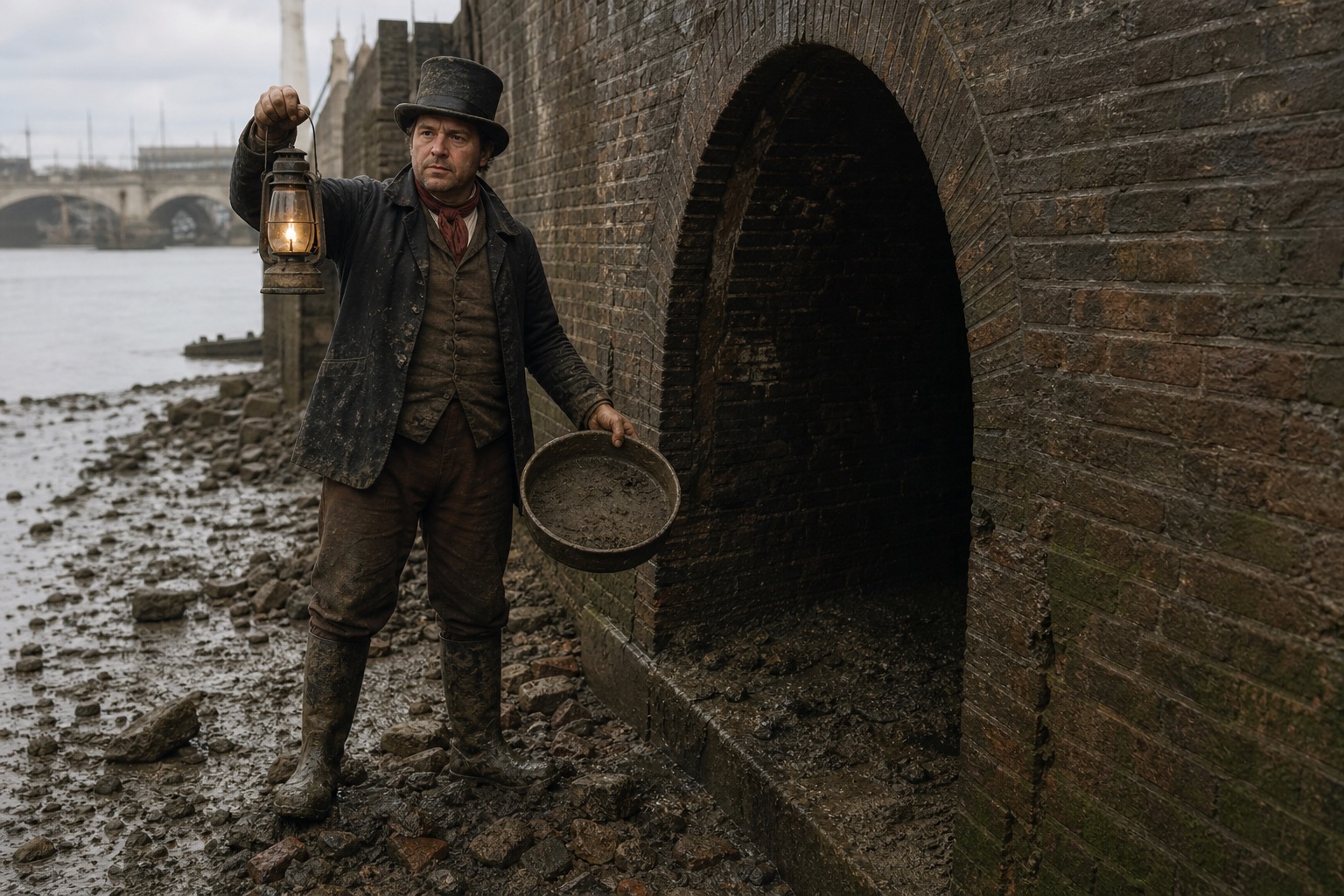
A tosher scavenged the older sewers of London for coins, metal, and other objects that had washed in from the streets. Henry Mayhew recorded the men in London Labour and the London Poor as sewer-hunters who entered the brick tunnels at low tide, usually in a small gang, with a lantern and a bag. They raked the invert, the curved floor where heavy objects settled, and sold what they brought out to dealers. The work was illegal. The sewers belonged to the commissioners, and a tosher was a trespasser, not a parish employee. Tosh was the scrap itself. The word names both the find and the man. The workplace was sewage. That is stated here because it was the fact of the job, not as a joke and not as a shudder for the reader. The men Mayhew interviewed described a calculated round: in on the ebb, out before the water returned, avoiding the flushers and the foremen who would turn them away. Joseph Bazalgette's intercepting sewers for the Metropolitan Board of Works, begun in 1859 and built through the 1860s and 1870s, replaced the old creek outlets these gangs used. Employed flushers maintained the new system. Freelance toshing did not survive that rebuilding.
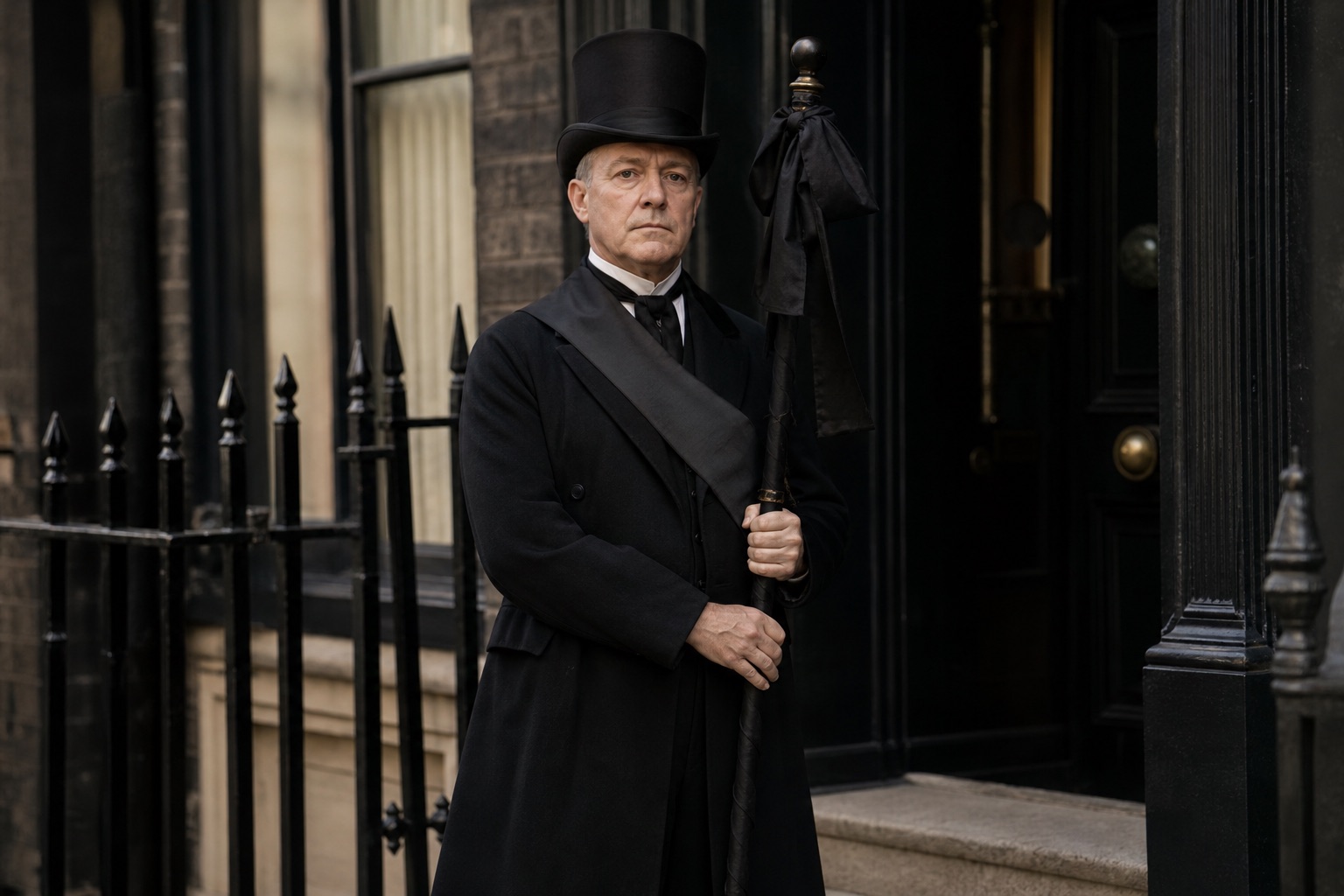
A funeral mute was a hired mourner in full black who walked at the head of a Victorian funeral with a wand or a staff. Undertakers kept such men, or engaged them for the day, as part of the pageant sold to families who wanted the procession to look grave. Mute meant silent attendant. It did not mean a person unable to speak. In pairs they went ahead of the hearse from the house door toward the church or the cemetery and stood while the service asked for stillness. A tall hat with a long crepe weeper, black gloves, and the wand were the kit that made the role readable from the pavement. The trade belonged to the commercial funeral of the nineteenth century, especially in London and in towns that copied London furnishers. Dickens placed a mute in the shop of the undertaker Sowerberry in Oliver Twist, and the figure became a stock image of hired grief. Reformers from the 1870s attacked the cost of feathers, mutes, and velvet. Simpler funerals, the motor hearse, and the decline of the pageant funeral in the early twentieth century removed the reason to hire a man to walk in silence. The mute faded because the bill changed. No statute abolished the wand.
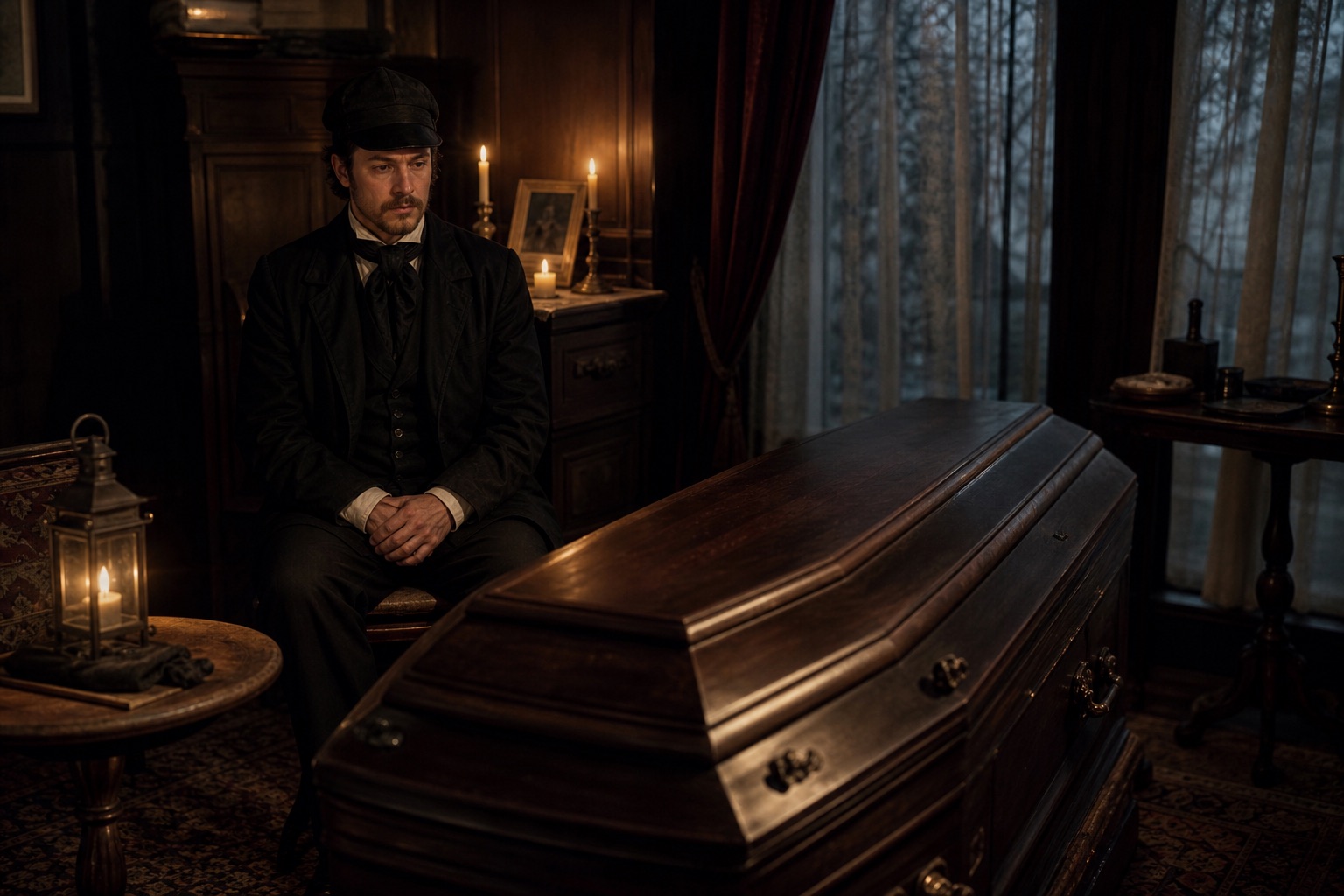
A corpse-watcher sat with a dead person through the night in the house, before the body left for burial. The custom had two reasons that overlapped and should not be collapsed into one. One was the wake: a household did not leave its dead alone, and neighbors or kin took turns in the room, with a candle, a chair, and often a simple prayer or a quiet conversation in the next doorway. The other reason, sharpest before the Anatomy Act 1832, was practical guard duty. Resurrectionists stole fresh corpses for anatomy schools, especially in London and Edinburgh, and a watched house was harder to rob than an empty one. The watcher was not an undertaker's employee and not a nurse. Payment, when it existed, was a shilling and a meal from the family, or nothing but the obligation of the street. After 1832 the schools had a legal supply of bodies and the profitable theft declined, yet families still sat up, because the wake was older than the panic. What ended the household version was the removal of the body itself. Funeral homes, chapels of rest, and public mortuaries took the dead out of the bedroom within hours. There was then no night in the house to sit through, and the watcher ceased with that room.
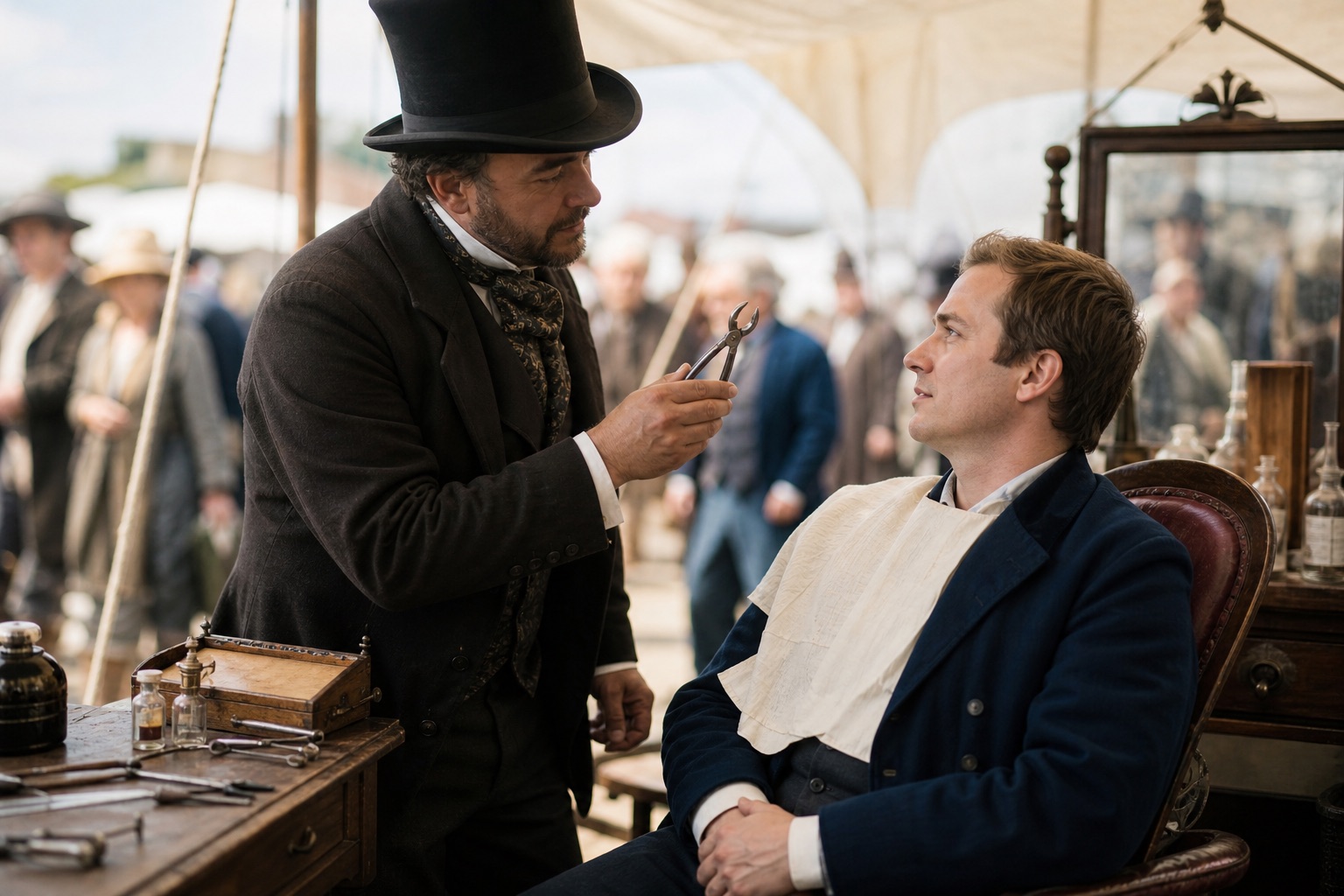
A tooth-drawer was an itinerant extractor who worked fairs, markets, and street pitches in the seventeenth, eighteenth, and early nineteenth centuries, before dentistry was a licensed profession. He was kin to the barber-surgeon: tooth-pulling sat among the minor operations that barbers and irregular operators both claimed, while physicians kept their distance. The instruments were the pelican, an older lever, the dental key that spread in the eighteenth century, and forceps, sometimes only a string tied to the tooth. There was no anesthesia. The pull was public, because a crowd was the advertisement, and the fee was a few pence or a shilling paid at once. The exhibit stops at the early nineteenth century, which is the form meant here: a travelling operator, not a settled dental surgeon with a room and a register. That later figure is the ending of this one. Nitrous oxide and ether gave respectable practitioners a way to promise less pain. The Dentists Act 1878 put a register under British law and began to separate the titled dentist from the fairground stool. Handbills and fair paintings are the record of the drawer. Martin van Butchell, a London operator of the late eighteenth century, is one of the few whose name survived the pitch.
A layer-out was the woman of the neighborhood who came when someone died at home, washed the body, and prepared it for the interval before burial. She closed the eyes, tied a bandage or a strip of cloth under the chin so the mouth stayed shut, washed with soap and a cloth, and dressed the body in a shroud or in a clean shirt. Hair was combed. The room was left orderly enough for kin to sit. Pennies on the eyelids were a household trick used sometimes to keep the eyes closed, not a required rite. The layer-out was often the same sort of neighbor as the handywoman who attended births: known, local, and sent for by a child knocking at her door. The work was ordinary in British towns and villages through the nineteenth century and still common in the early twentieth, especially where the dead remained in the house for a day or more. It was women's work by custom. Men of the family might lift. They did not wash. The end came when the undertaker's men removed the body to a mortuary or a chapel of rest and the washing was done there, by staff, away from the street. The layer-out was not abolished. She was left with no body in the bedroom, which had been her only workplace.
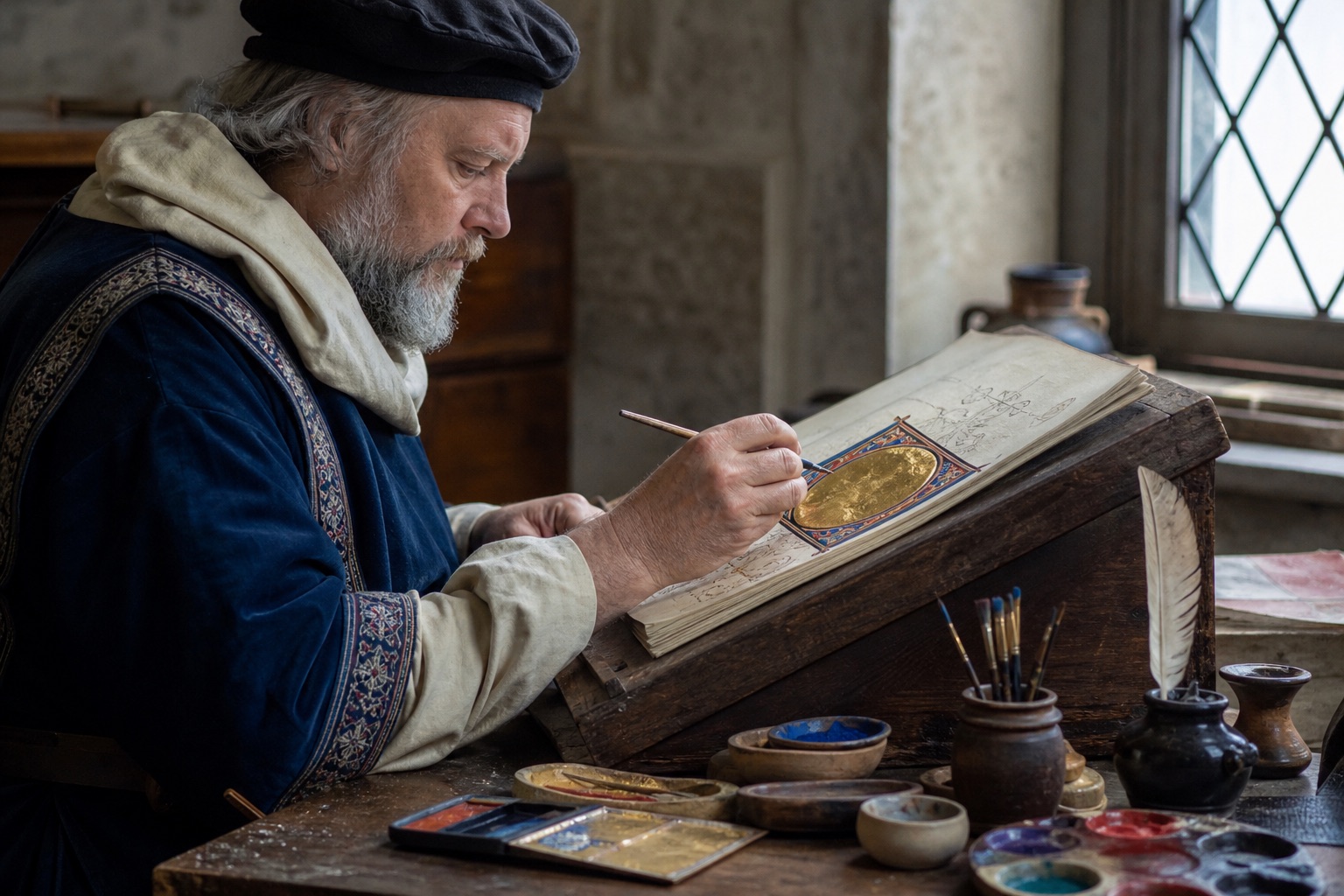
An illuminator painted the decorated letters, borders, and miniatures in a manuscript book, and was a different worker from the scribe who wrote the text. A quire often passed from one to the other: the scribe left blank spaces, and the illuminator filled them with an initial in gold and color or with a small picture. The materials were parchment or vellum, later paper, mineral and organic pigments, and gold leaf laid on a gesso ground and burnished. The work belonged to the medieval book, from the Romanesque scriptorium through the books of hours of the fourteenth and fifteenth centuries. Monks and nuns did illuminate, especially in earlier centuries, and it is a mistake to stop the story there. By the later Middle Ages many illuminators were lay urban artisans, men and women in commercial workshops in Paris, Bruges, Ghent, Bologna, and London, hired by stationers who dealt with the patron. Christine de Pizan praised a Parisian illuminator named Anastasia. The Limbourg brothers worked for the Duke of Berry as professional painters, not as cloistered scribes. Printing, from the middle of the fifteenth century through the sixteenth, took the ordinary commission away. Luxury manuscripts lingered. The specialist trade of illuminating books by hand did not.
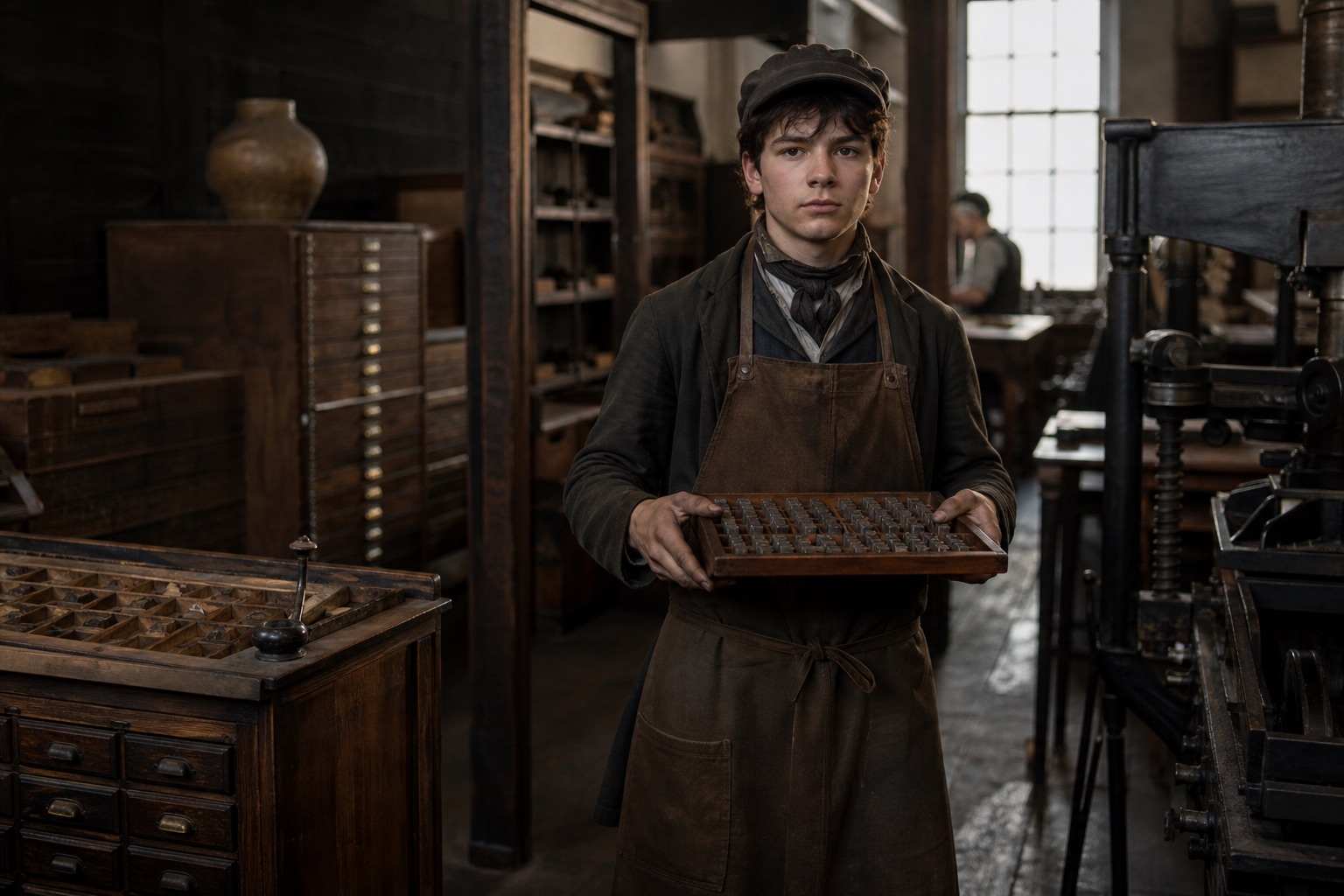
A printer's devil was the youngest pair of hands in a letterpress shop. He fetched missing sorts from the type case, put used letters back into their boxes, inked the forme, and swept metal dust off the floor. He learned the lay of the case by running for letters, not from a chart pinned on the wall. Chapel custom, the shop's own little government, fixed his place at the bottom: fines, errands, and the order of the room were not written in a schoolbook. Visitors saw black nails and a paper cap, not a mascot performing for the trade. The post runs from eighteenth-century hand presses into early twentieth-century newspaper rooms. It assumed a boy could grow into a compositor because every line was still set by hand. Jobbing shops that printed cards and bills used him as surely as book houses did. County weeklies kept such a boy after many city dailies had already bought a linecaster. The work was ordinary juvenile labor inside a proud craft, documentary rather than theatrical, and it ended when that ladder was taken away.
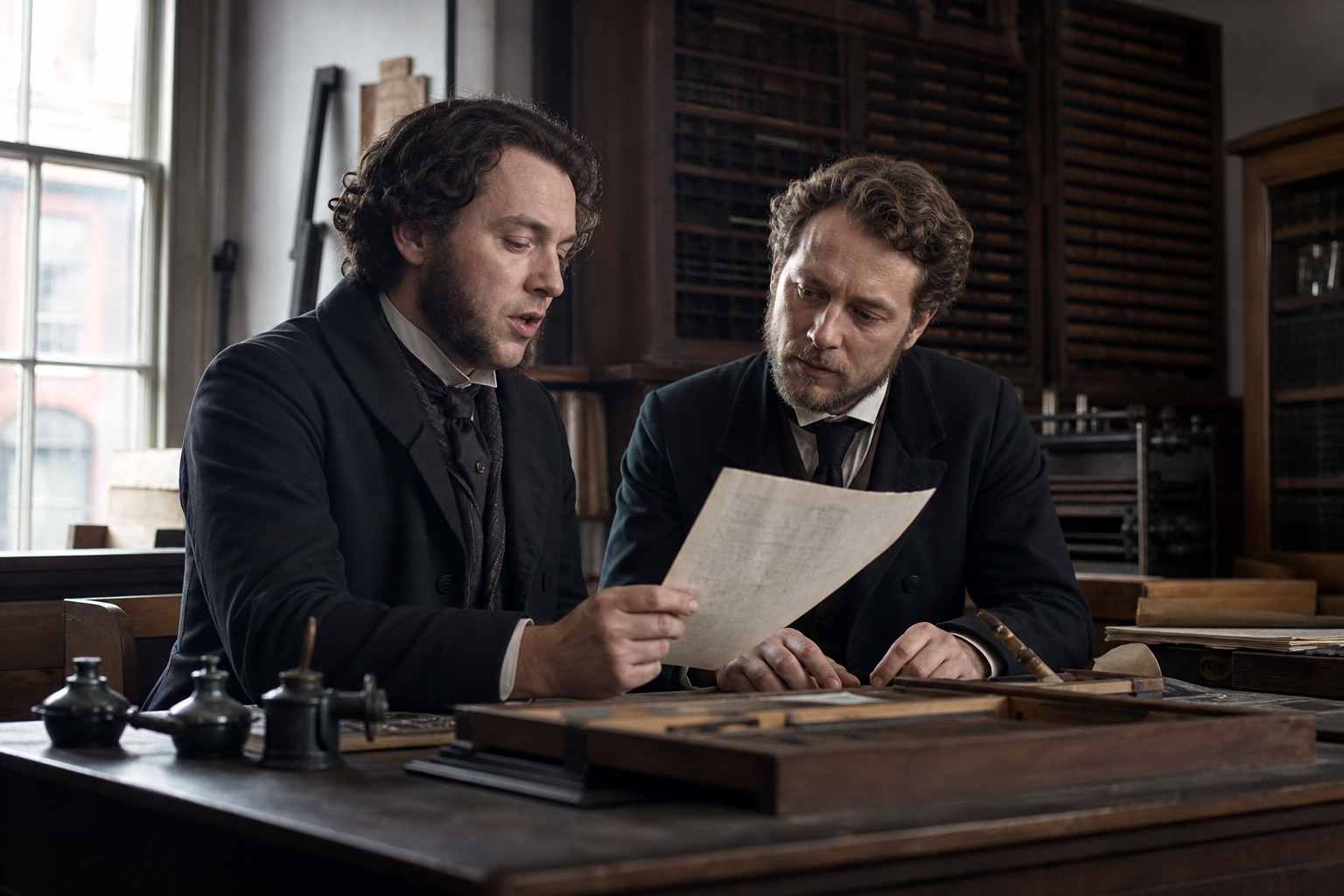
A copyholder sat in the proofing room with the manuscript or typescript and read it aloud so a proofreader could follow the printed proof. Names were spelled, punctuation was spoken, and the place in the copy was never lost if the reader stopped to mark a letter. The pair worked as one instrument: voice on the copy, pencil on the proof. Newspaper rooms, book houses, and government printing offices all used some version of that duet. It was indoor, exacting, and easy for a visitor to mistake for mere reading. The post belongs mostly to the nineteenth century and the first half of the twentieth, when type was still set from handwritten or typed copy and a second pair of eyes was hired as a voice. Women and girls filled it in large numbers as a junior office grade, though men and boys held it too, especially earlier. Silent comparison by a single reader, then a tape that could be replayed, and finally a screen, took the voice out of the room. The label is the person who held the copy, not the senior who signed the proof.
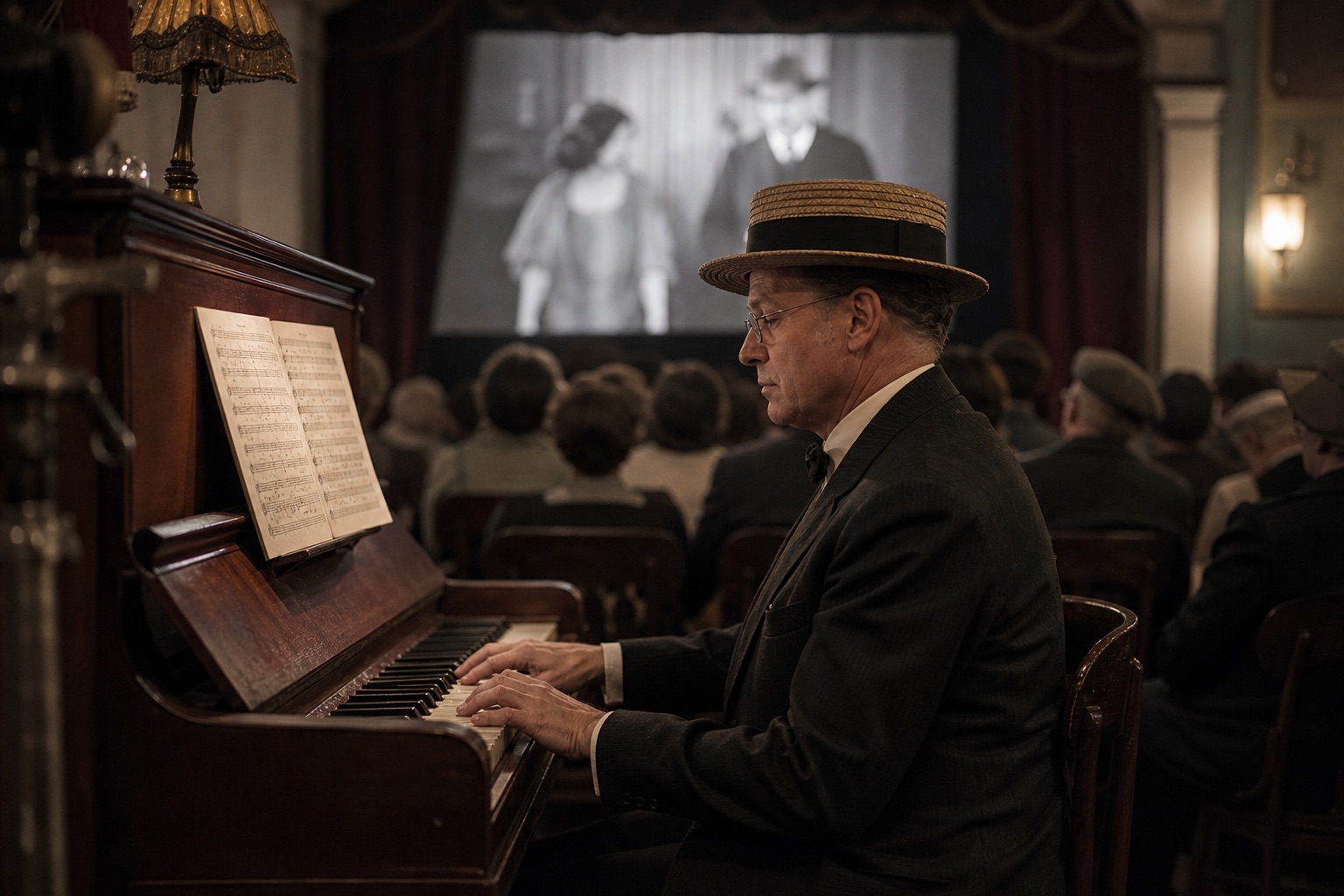
A photoplayer was the pianist or organist who supplied the sound of a silent picture inside the cinema. In a small house that meant an upright piano below the screen, played by someone who watched the reel and changed mood when the scene changed. In a picture palace it meant a theater organ, with stops and traps that could drive a chase or quiet a farewell. Cue sheets traveled with some films; other players improvised from the image in front of them. The audience heard the story through that person, not through a track printed on the film. The work sits in the early twentieth century and closes in a short overlap with sound. A talking picture in 1927 did not darken every pit in a week, but by 1929 houses wired for talkies had made a live score an extra rather than the picture itself. Neighborhood pianists and famous console players lost the same job even when their next engagements differed. This exhibit is the musician of the silent show, not a later score written in a studio.
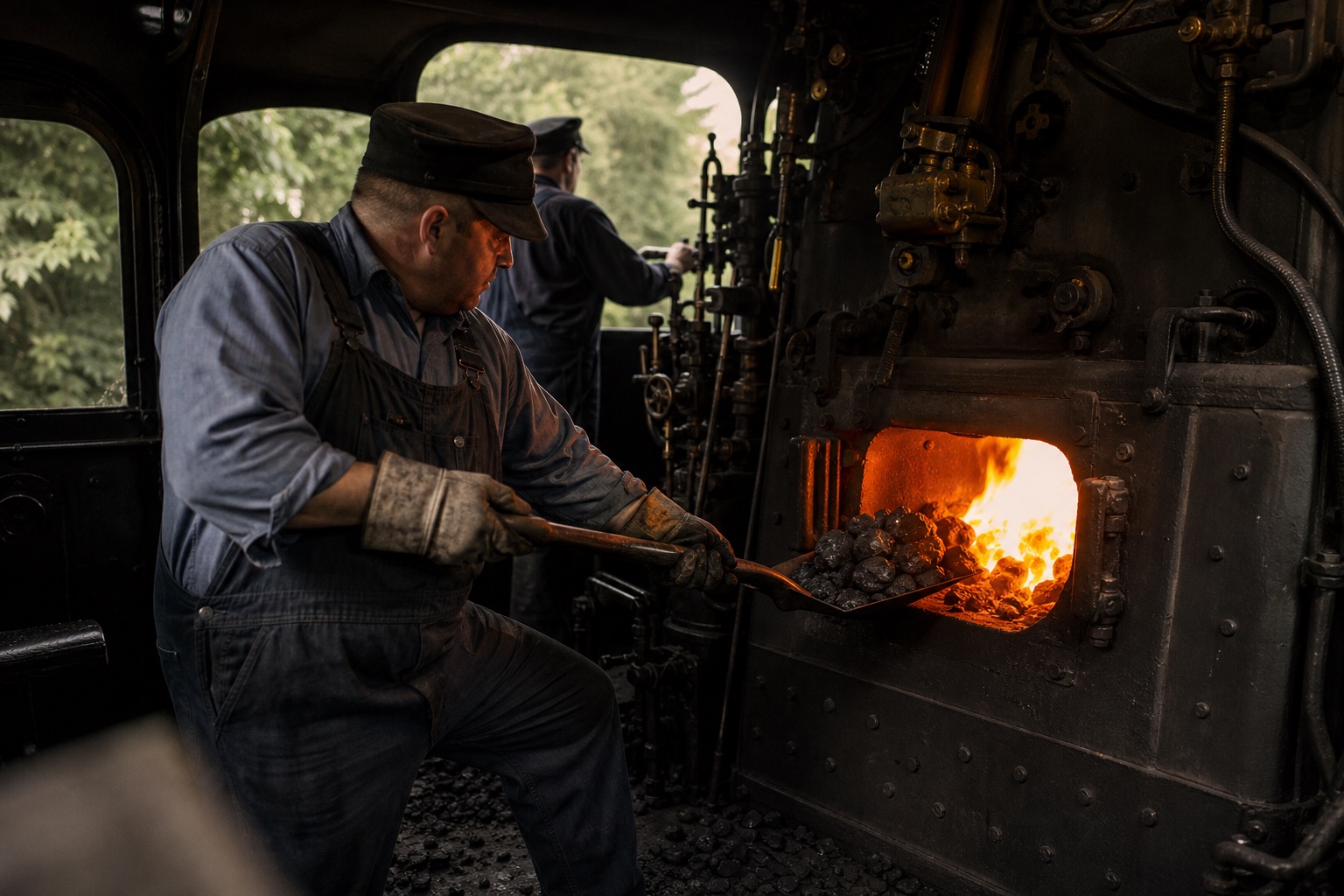
The locomotive fireman was the second person on a steam engine, the one who fed the fire and watched the boiler while the engineer ran the train. On a coal burner that meant a shovel, a firebox door, and a footplate that punished a lazy fire with falling steam. On an oil burner the feed was a valve and a flame, and the watch on water and pressure remained. The water glass, the injector, and the gauge were his instruments together with the shovel. He was half the engine crew, not a passenger and not a shed cleaner. This exhibit is that steam fireman. American roads dieselized through the 1940s and 1950s and had largely finished with main-line steam by the early 1960s. British Rail ran its last main-line steam in 1968. Some agreements kept a second person on diesel crews afterward, and that helper did not feed a fire or mind a boiler. The label stops where the fire stops. Yard switchers and branch engines used the same watch on the glass.
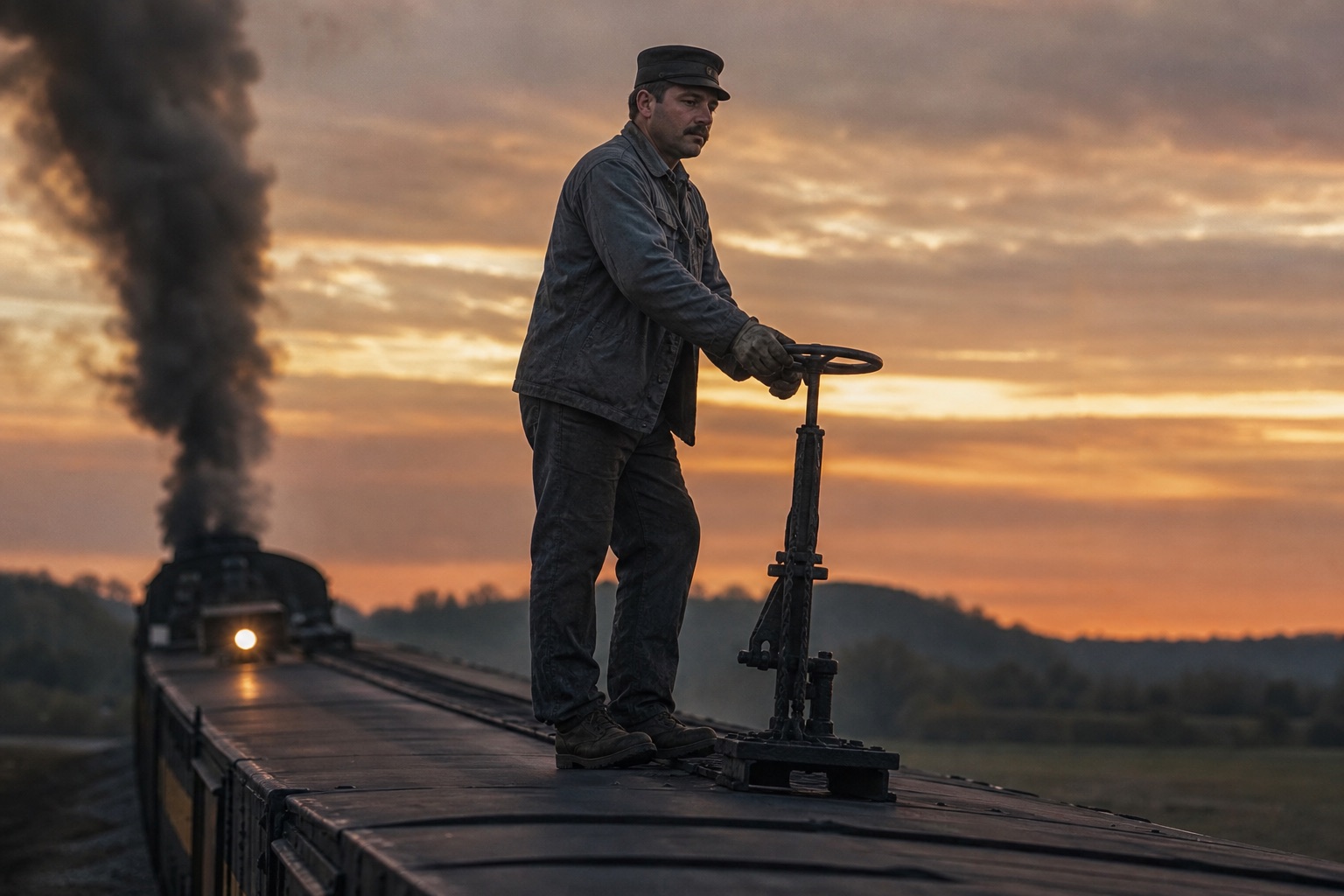
The brakeman in this exhibit is the American railroad man who coupled cars and set brakes from the roof and from the ground, before air brakes and during the long years when they were still spreading. With link and pin he went in between the cars. With a hand brake he climbed to the running board and wound wheels while the train moved. A lantern and a brake club were ordinary kit, and the caboose was his base once the train was on the road. The Westinghouse air brake and the automatic knuckle coupler, pressed by federal safety law in the 1890s, reduced that roof walk without retiring the craft. Local freights and yards still needed him on the ground for decades after the roofs grew quieter. Radio and diesel road practice ended the classic form of the job. A later conductor carrying a radio was not a man on car tops in the weather. The danger of the older method was severe enough to write safety law, and it can be stated honestly without a list of injuries. This label is United States practice: roof, pin, and ground.
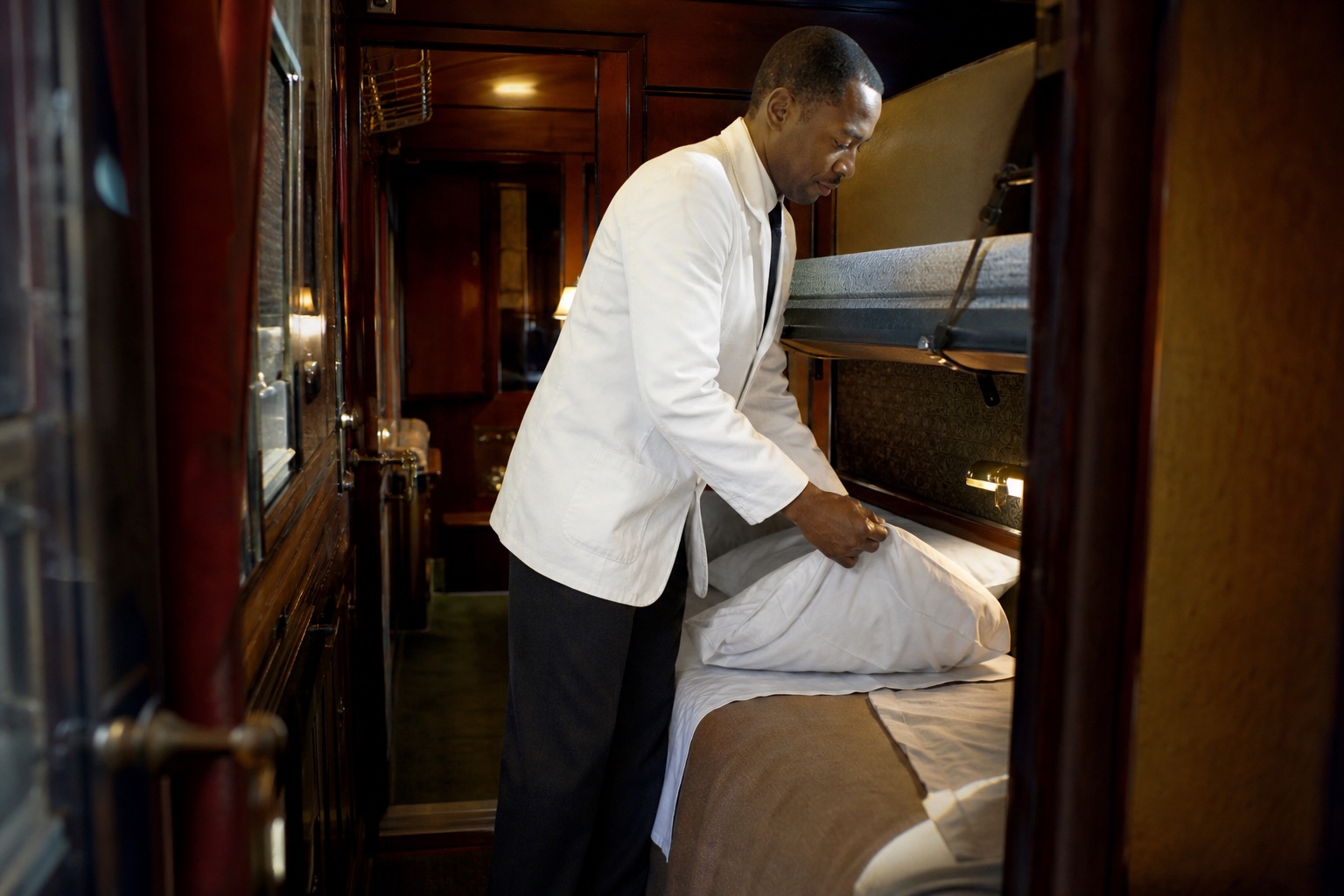
A Pullman porter was the attendant on a Pullman sleeping car in the United States. He made up berths, kept the linen and the car, handled luggage, woke passengers, and stayed with the trip for as long as the schedule ran. The company hired Black men for the post by policy, and the work became one of the best-known service jobs in Black America: skilled, public, and tightly ruled. Tips were not a charming extra. They were a large part of pay because the wage was kept low, and the men who did the work named that arrangement as a grievance. Philip Randolph and the Brotherhood of Sleeping Car Porters, founded in 1925 and recognized in 1937, made dignity and the wage a contract. Maids on some cars, often Black women, were a separate grade, and this label does not fold them into the porter's title. Overnight trains then thinned. After Pullman's operating business was separated from manufacturing, the cars passed toward the railroads and were gone from most roads by the late 1960s. The exhibit speaks of the porter in plain speech, without a borrowed dialect.
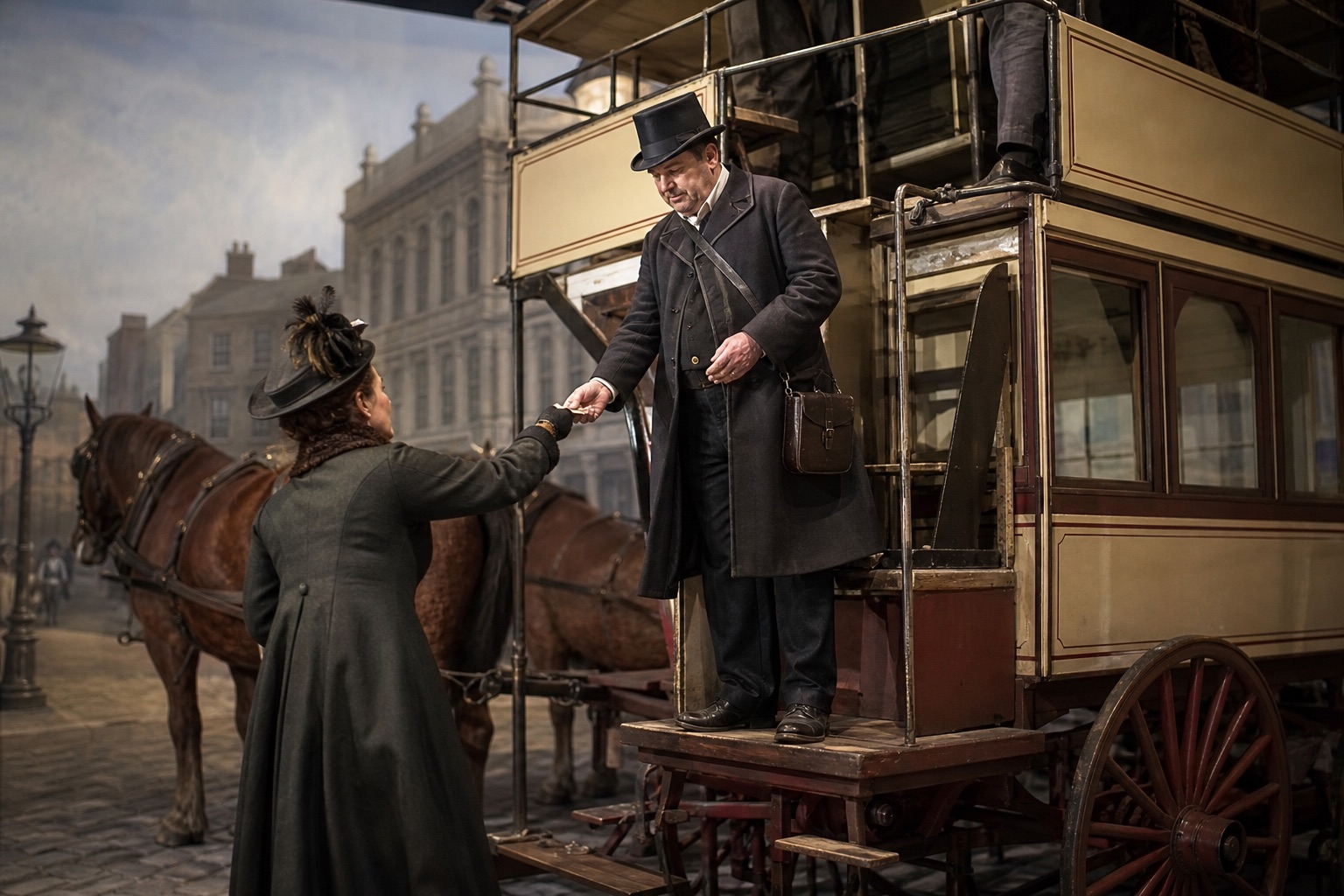
The omnibus conductor of this exhibit stood on the step of a horse bus and collected the fares. George Shillibeer put such a vehicle on London streets in 1829, running from Paddington to the Bank, and the form spread through the city and into other towns. The conductor rode outside at the rear, announced stops, helped people on and off, and signaled the driver when the step was clear. He was not seated at a motor wheel and not sheltered in a cab. The horse, the rear step, and the coins in his hand are the picture. Motor buses later took the horses off those routes. One-person operation, much later, ended even the conductor who still stood on a motor step. This record stops with the horse bus and does not follow the job onto petrol or into a modern cab. Victorian cities knew him as a weekly-wage man in a badged coat, exposed to traffic and weather, and answerable for every penny that was supposed to reach the proprietor.
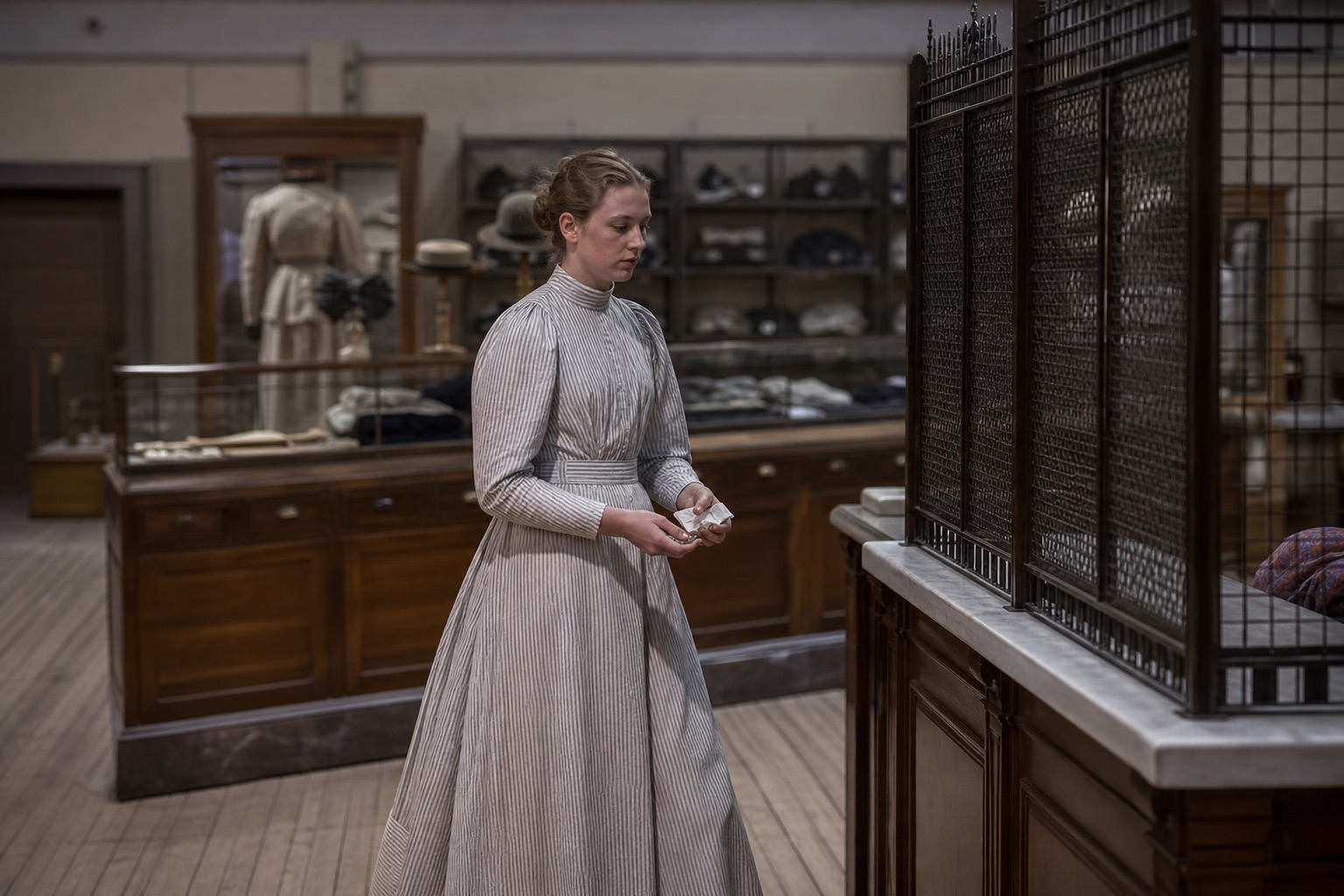
A cash girl was a department-store junior, often a girl or a young woman, who carried the customer's money and the written bill to a cashier and brought the receipt and the change back. The counter itself had no register yet. She waited where the sale was made, took the cash and the slip, walked the floor to the desk, and returned without mixing one purchase with another in a crowded aisle. The work was ordinary and public, a pair of errands repeated for every sale. This record keeps that walk concrete and calm. The practice belongs to the late nineteenth century in the United States and in Britain, in dry-goods houses and the new department stores. Cable systems such as Lamson's cash railway, pneumatic tubes to a central desk, and the cash register on the counter each removed a reason to send a junior across the floor. She was not the buyer and not the cashier. She was the distance between them, and when that distance was mechanized the walk ended.
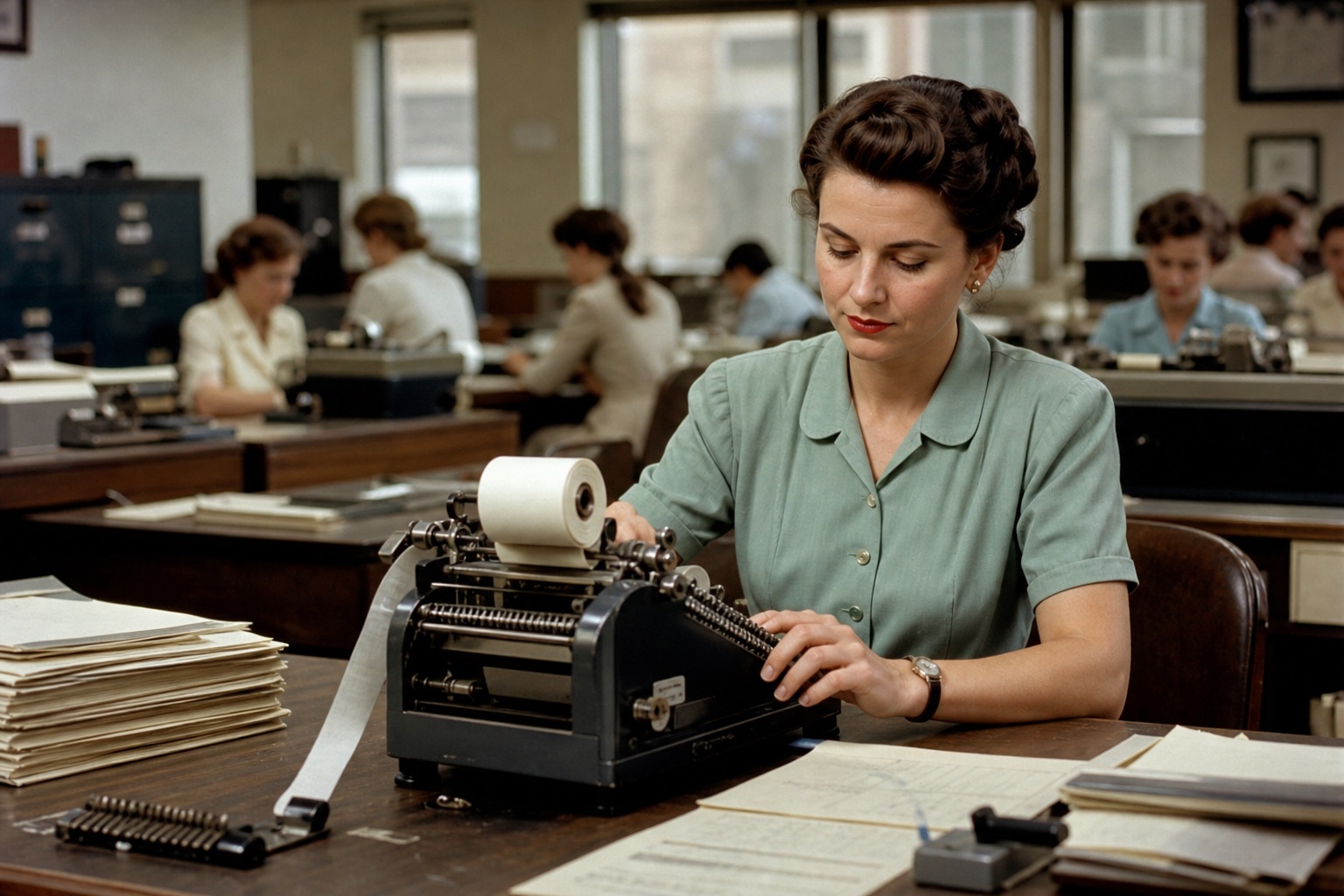
A comptometer operator ran a Felt comptometer, the key-driven adding machine Dorr E. Felt brought out in 1887. Unlike a crank adder, it let several keys in a column go down together, so a trained hand could enter a number in one stroke. Banks, billing offices, railroads, and insurance rooms hired people, mostly women, to add and extend figures for hours at that keyboard. Operator schools taught the touch and certified speed. The product was a total the bookkeeper could trust, not a printed page of prose. The machine's long life makes the job look Victorian at the start, and the honest center of the exhibit is the twentieth-century office, ending when electronic calculators and computers took the columns in the 1960s and 1970s. A comptometer bureau might sell the labor by the batch. An in-house operator sat beside the ledgers she fed. Either way the skill was in the hands, and it did not survive the cheap electronic key.
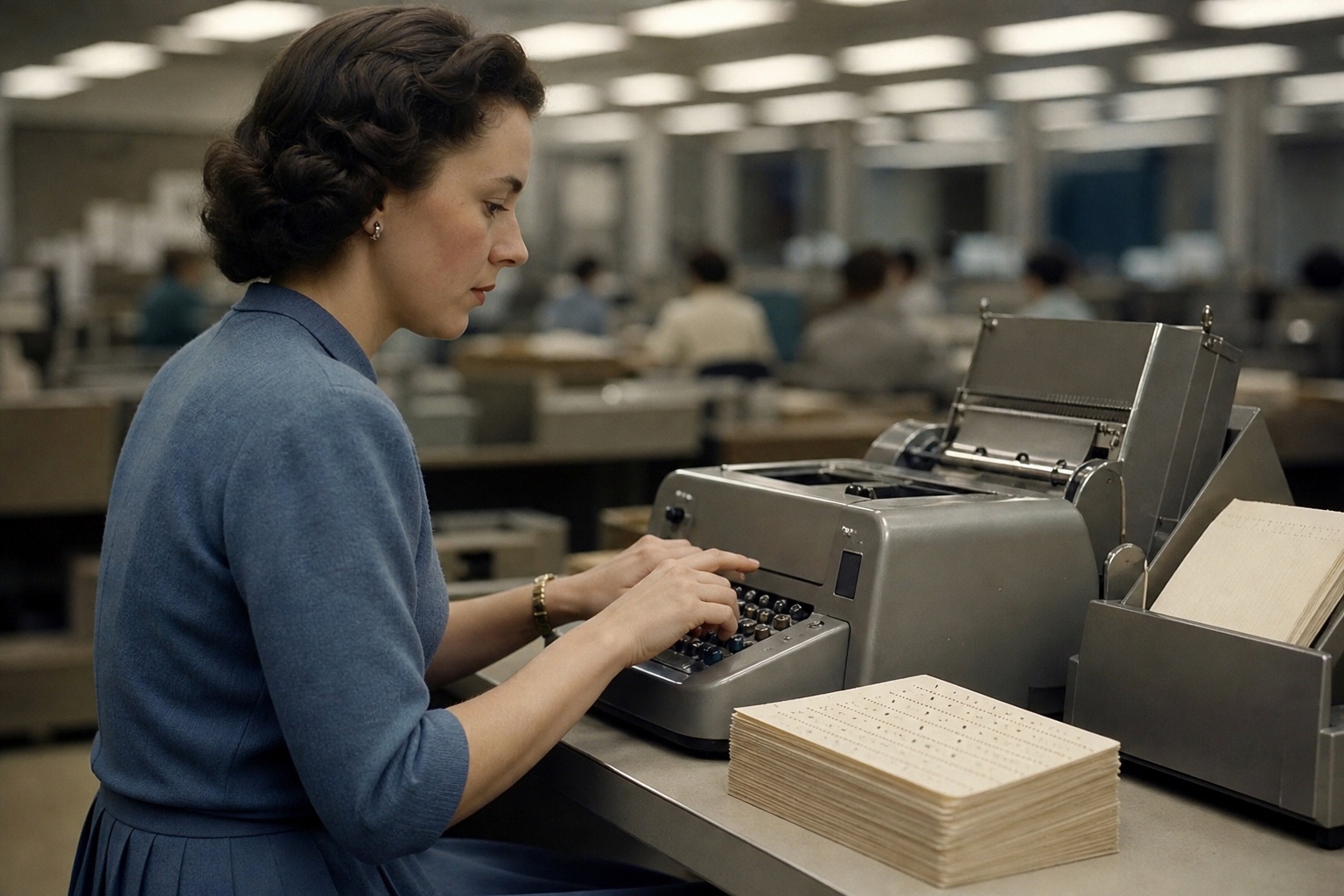
A keypunch operator turned source documents into Hollerith and later IBM cards by striking a punch, one character to a column, until a deck existed that a machine room could read. The mid-century room was often a floor of the same gray machines, program drums skipping fields the operator should not retype, hoppers of blank cards on one side and finished decks on the other. A second person at a verifier rekeyed to catch errors. The work flourished when payrolls, policies, censuses, and bills all had to become cards before a computer would accept them. The operators were mostly women, and the job is a mid-twentieth-century mass occupation rather than a nineteenth-century curiosity. It thinned when key-to-disk machines, terminals, and direct data entry in the 1970s and 1980s let the same facts go into a system without a card. The exhibit is that punch room: the sheet, the keyboard, the deck, and the sound.
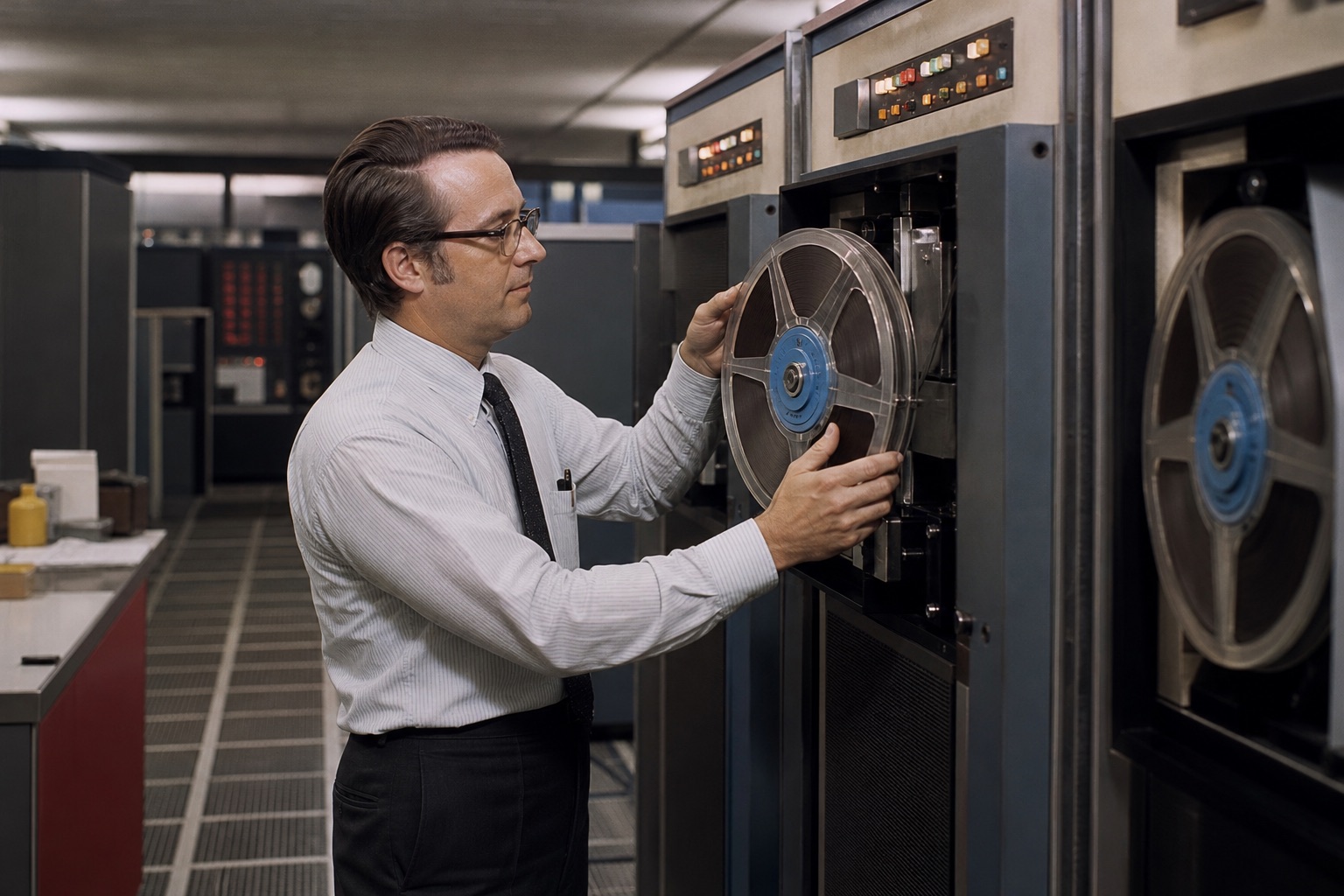
The mainframe operator of this exhibit is the person in the raised-floor machine room who mounted tapes, started batch jobs, and answered the console. Glass walls made the room a show, which is why people called it a glass house. Reels went on drives, disk packs went into drawers, and a printer hammered through boxes of paper while the operator watched messages and typed the replies the system demanded. Programmers wrote the jobs. The operator made the night's queue actually run. The decades are the 1960s through the 1980s. Automation, smaller machines, and later site-reliability roles replaced that chair. They did not abolish every kind of operations work. A later engineer who tends a service from a laptop is a different job, and this label refuses the claim that nobody operates computers anymore. It is the glass-room shift, the tapes, and the console, and no wider empire beyond that room.
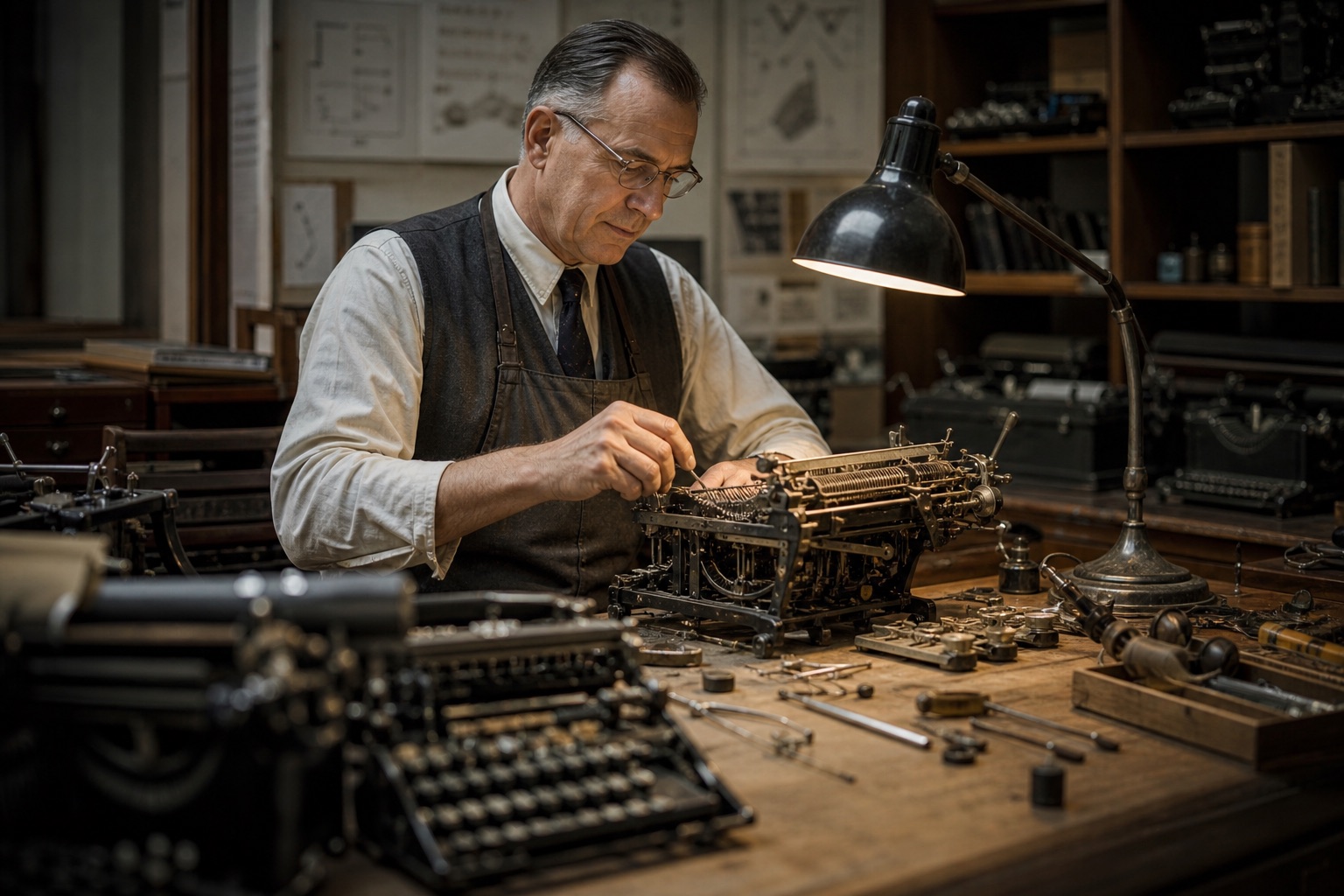
A typewriter repairman was the traveling or shop mechanic who kept office typewriters writing. He arrived with a case, cleaned a segment packed with eraser crumbs, replaced a broken drawband, aligned type that no longer struck in a straight line, and recovered or replaced a platen that had gone hard. Underwood, Remington, Royal, and the rest each had their own screws. The IBM Selectric, from 1961, added a golf-ball element and a different set of failures, and he learned those too if the route included them. The job is a twentieth-century service trade that ends in the 1980s, when word processors and personal computers took the desks. A shop might still oil a machine for a loyal customer after that. The ordinary call, an office full of typewriters that had to be back before the mail, belongs to the decades when the typewriter was the instrument of the office and not a curiosity kept for show.
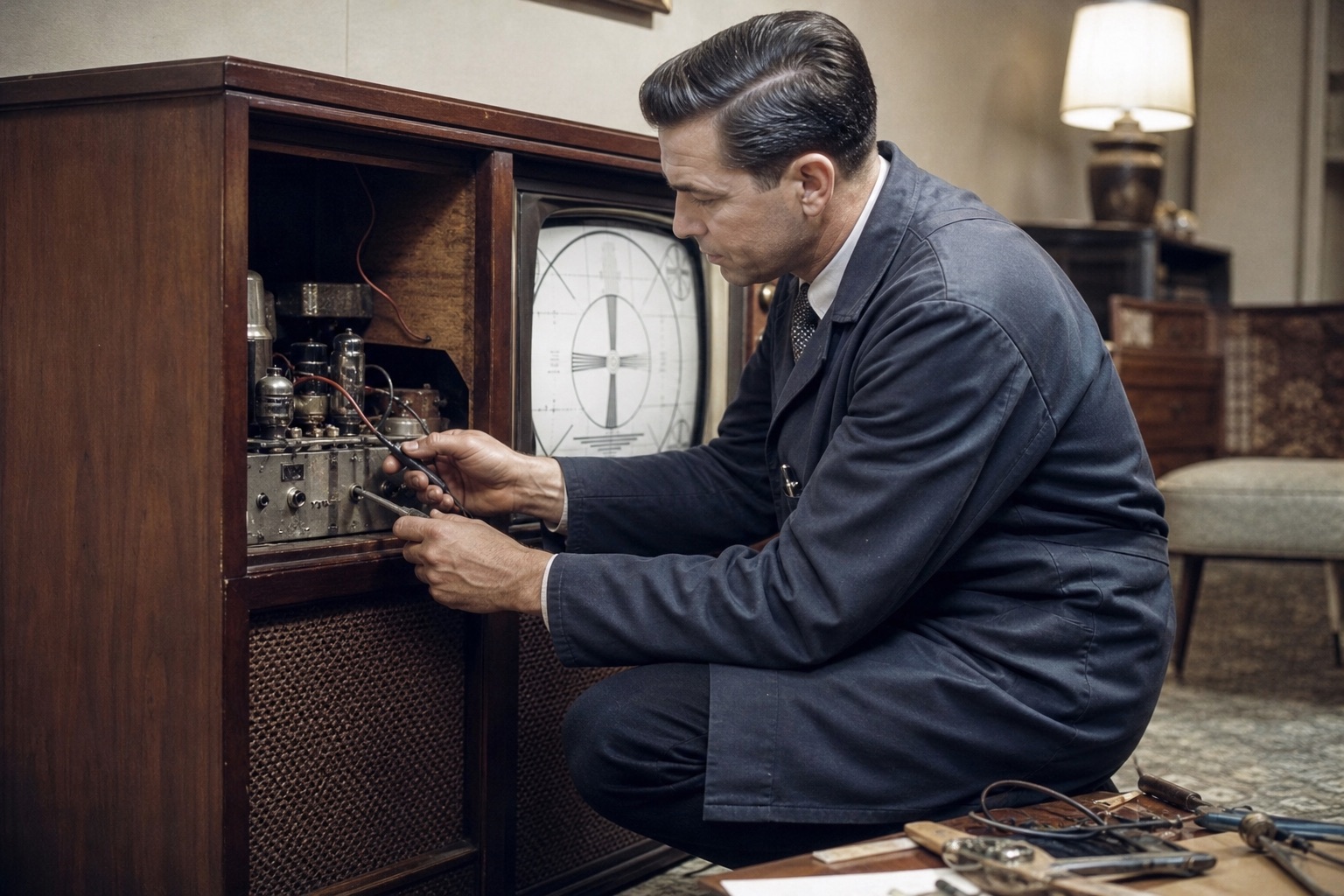
A television repairman made house calls on vacuum-tube sets in the years when a receiver was expensive enough to mend. He arrived with a caddy of common tubes, pulled the back, and tested the likely suspects, sometimes after the owner had already tried a drugstore tube checker and failed. Schematics, the Photofact kind above all, told him the chassis. If the fault was not a tube, the set might go to the shop. If it was, he replaced it in the living room and adjusted the picture before he left. The exhibit is that mid-century visit, not every later person who swaps a board. Solid-state chassis, modular construction, and sets cheap enough to replace rather than repair ended the call. High voltage at the picture tube was a real property of the work and is named here calmly. The man with the caddy is the subject, and the glowing set is the thing he was hired to keep in the house each evening.
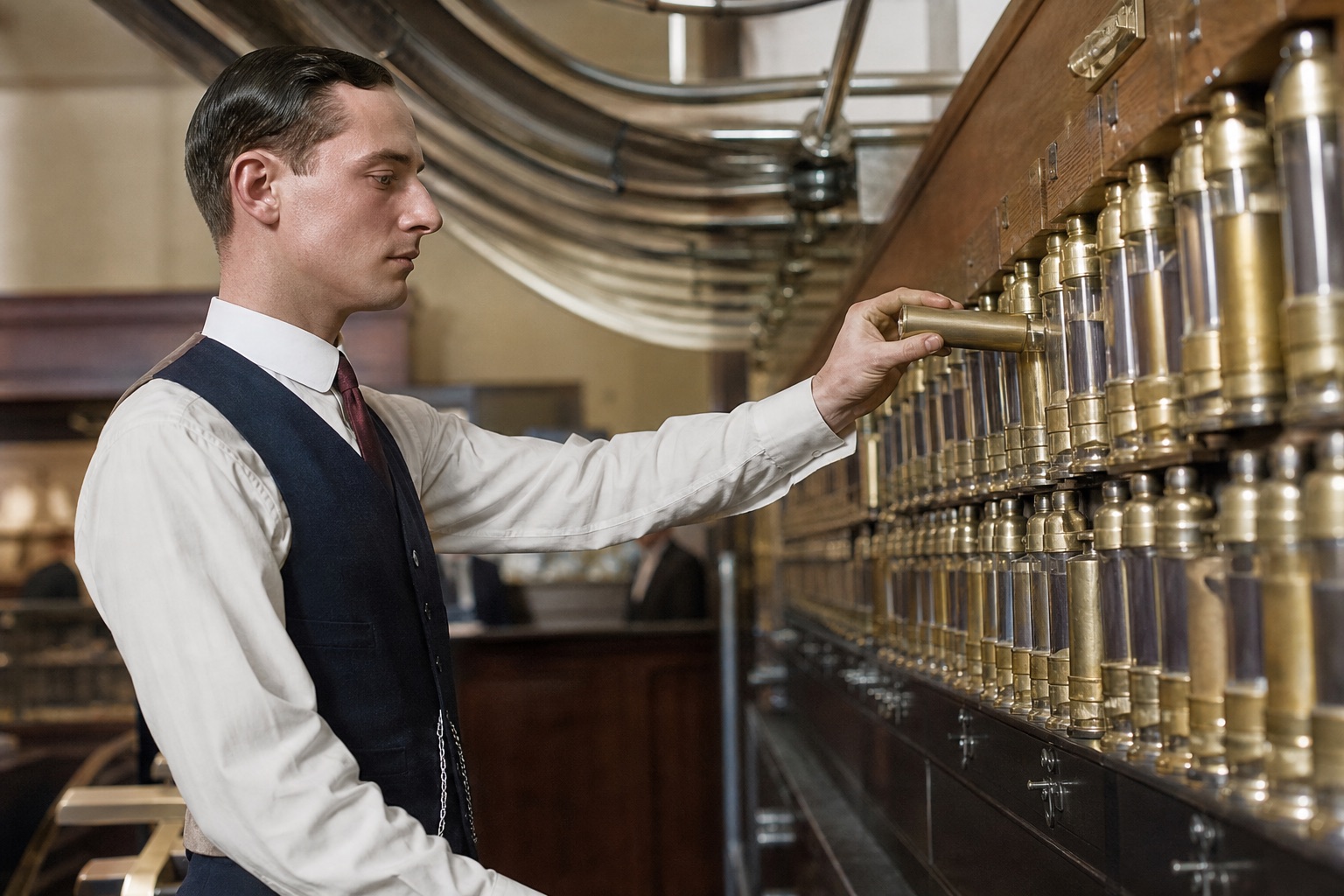
A pneumatic-tube attendant staffed the terminals of a store or office system that shot small carriers through tubes of air. In a department store the carrier brought a sale's cash and bill to a central cashier, and the attendant sent the change and the receipt back to the counter. In an office the same rush of air carried papers between floors, and the attendant opened, sorted, and returned them. The work was the mouth of the tube: a lever, a carrier, a drawer. This is the late nineteenth and early twentieth century. It is not the hospital tube, which still runs and is another job entirely. Retail ended the attendant when the tubes and the central cashier's desk were ripped out and the money stayed on the selling floor. Office lines lingered in a few buildings and are not the center of this label. The earlier cash girl had walked what the carrier now flew; the register on the counter would later make even the flight unnecessary. The person with the pile of carriers is the exhibit.
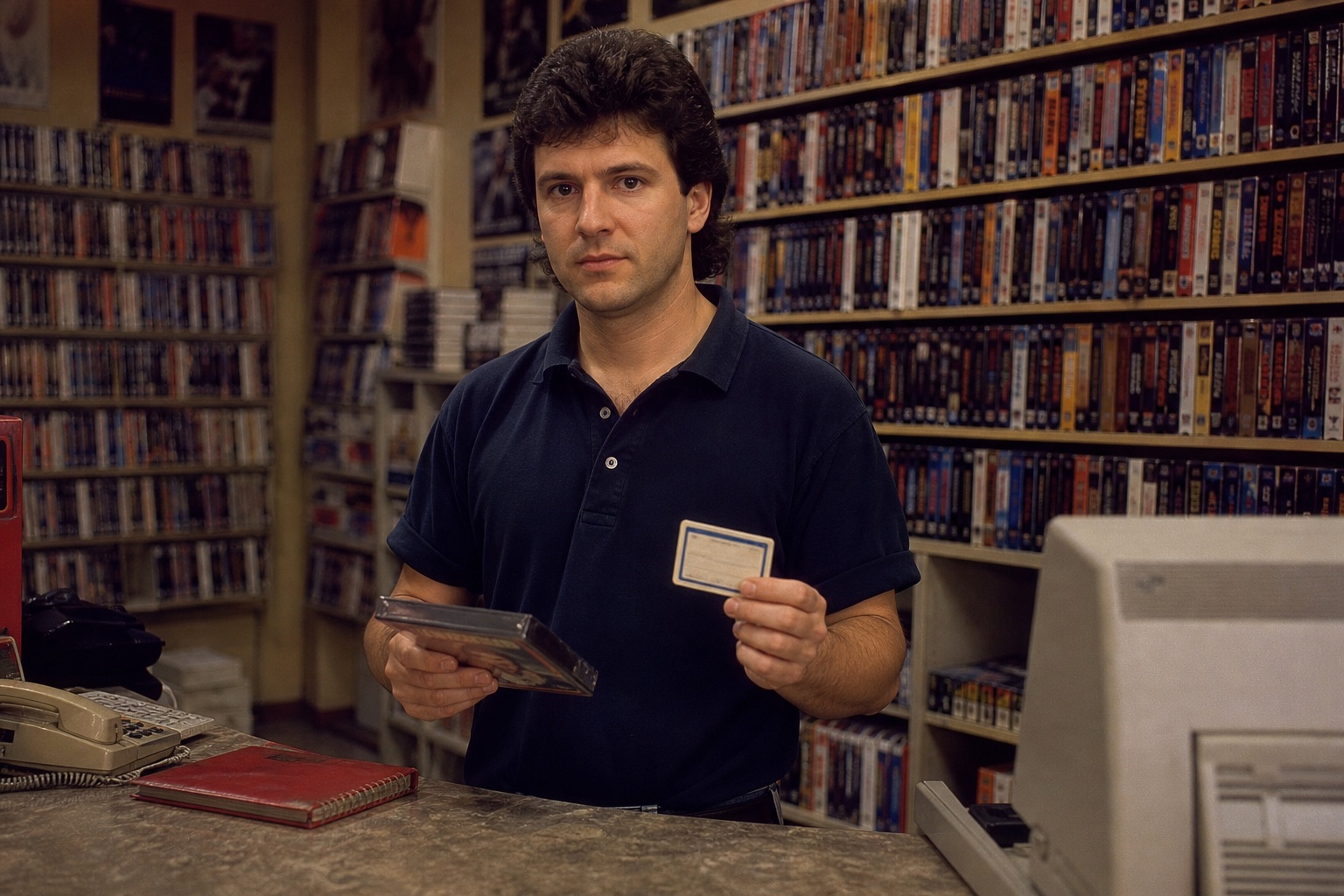
A video rental clerk stood the counter of a shop that rented movies, first on VHS and then on DVD, in independent stores and in chains such as Blockbuster. A membership card had to be on the account before a tape or a disc left the shop. The new-release wall, close to the door and priced for a short rental, held the titles people had come for; older stock filled the cheaper aisles behind it. Late fees, a charge for each day past the due date, were the argument at the register and the store's money, not the clerk's. On VHS the counter also cared whether the cassette had been rewound. The trade runs from the late 1980s through the 2000s. DVD-by-mail and then streaming emptied the wall and ended the counter. Independents often kept the actual tape behind the desk and put an empty box on the shelf; chains later put the live case on the floor in a lock. Either way the clerk's work was the card, the due date, and the case. This exhibit stays inside that shop.