
Industrial Revolution
Ice Cream Freezer
An extinct profession from Industrial Revolution that became obsolete due to technological advancement and societal change.
Media Gallery
About the Ice Cream Freezer profession
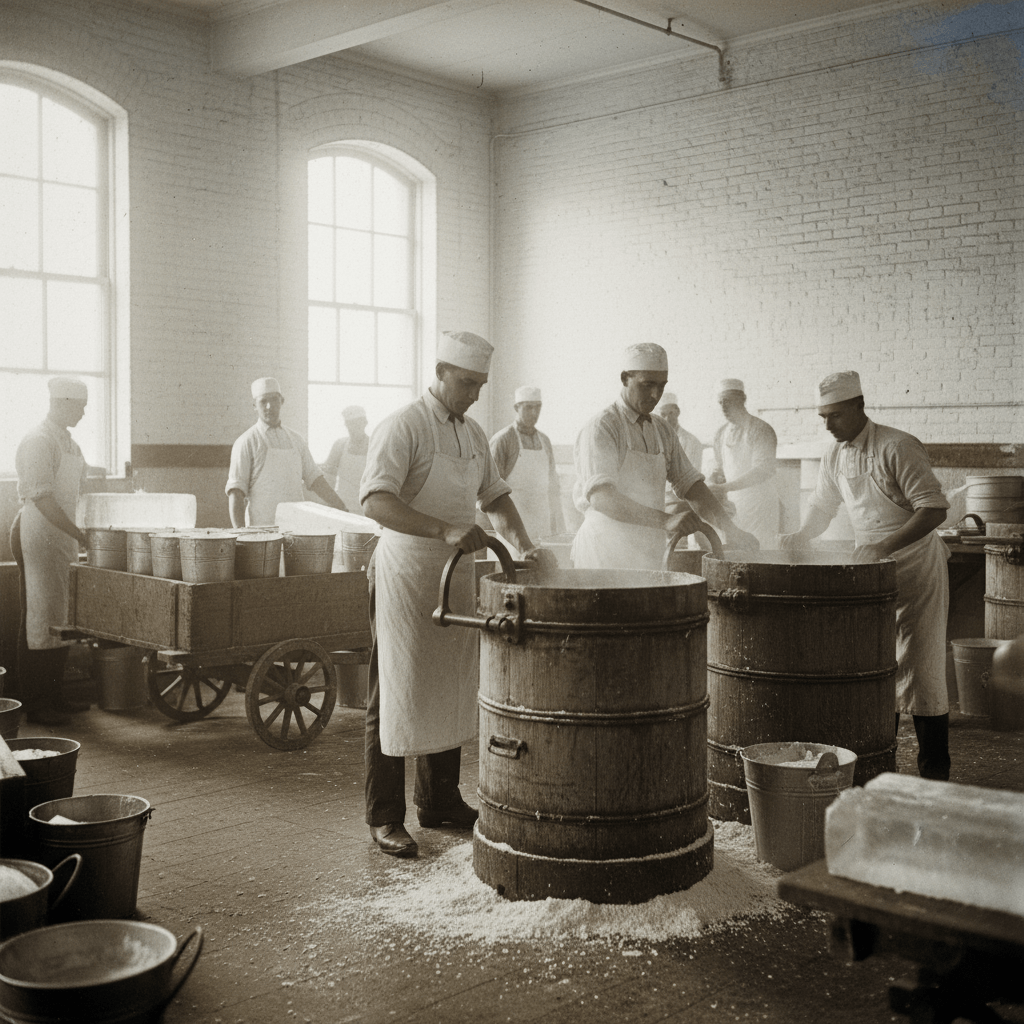
The Ice Cream Freezer was a vital role in the production of one of the most beloved treats in history. Emerging during the Industrial Revolution, this occupation involved the manual freezing of ice cream mixtures, a process that required both skill and precision. Ice cream freezers were responsible for ensuring that the mixture reached the perfect consistency and temperature, creating a smooth and creamy texture that delighted consumers. They worked in ice cream parlors, factories, and even at fairs, where they would often be seen churning large batches of ice cream in traditional ice cream makers, surrounded by blocks of ice and salt, which were essential for the freezing process. The job required not only a keen understanding of the freezing process but also an ability to adapt to varying temperatures and ingredient qualities, making it a unique blend of art and science.
Day in the Life of an Ice Cream Freezer
Early Morning: Preparation and Setup
The day began early for the Ice Cream Freezer, often before dawn. The first task was to gather all necessary ingredients: cream, sugar, flavorings, and stabilizers. The freezer would measure and mix these components in large vats, ensuring that the ratios were precise for the desired flavor profile. Once the mixture was prepared, it was poured into the ice cream maker, a large, cylindrical device that would churn the mixture while it froze.
Mid-Morning: Churning and Freezing
As the ice cream maker began to churn, the Ice Cream Freezer would layer ice and salt around the outer chamber of the machine. The salt lowered the freezing point of the ice, allowing the mixture to freeze more effectively. This process required constant monitoring; the freezer would check the consistency of the ice cream every few minutes, adjusting the churning speed and the amount of ice and salt as needed. This was a physically demanding task, as the freezer had to lift heavy blocks of ice and manage the machinery.
Afternoon: Quality Control and Flavoring
Once the ice cream reached the right consistency, the Ice Cream Freezer would taste the mixture to ensure it met quality standards. If necessary, additional flavorings or sweeteners would be added. This part of the job was crucial, as the success of the product depended on the freezer's palate and expertise. After quality control, the ice cream would be packed into containers for sale or distribution.
Evening: Cleaning and Maintenance
As the day wound down, the Ice Cream Freezer would clean the equipment thoroughly, ensuring that all remnants of the day’s work were removed. This included sanitizing the ice cream maker and storing any leftover ingredients properly. The freezer would also prepare for the next day, ensuring that all supplies were stocked and ready for another busy day of ice cream production.
What came after
Hand-turned freezers in a shop could not match a plant that froze the mix by the gallon.
The succession pageRelated Exhibits
Coal Stoker
The coal stoker was a vital role during the Industrial Revolution, responsible for feeding coal into steam boilers that powered locomotives, ships, and factories. These workers were the unsung heroes of the industrial age, ensuring that the engines of progress ran smoothly. The job required physical strength and endurance, as stokers often worked in hot, cramped, and dark conditions, shoveling coal into the fireboxes of boilers to maintain the necessary temperature for steam production. The stoker's work was crucial for the operation of steam engines, which were the backbone of industrial transportation and manufacturing during this period. The job was labor-intensive and often dangerous, with workers exposed to high temperatures, coal dust, and the risk of burns or injuries from heavy equipment. Stokers were typically employed in coal-fired power plants, on ships, and in factories, where they played a key role in the efficiency of steam-powered machinery. As the Industrial Revolution progressed, the demand for coal stokers grew, but so did the mechanization of the industry, leading to significant changes in the workforce.
Elevator Operator
In the bustling urban landscapes of the late 19th and early 20th centuries, the elevator operator emerged as a vital figure in the daily operations of skyscrapers and multi-story buildings. These skilled individuals were responsible for the safe and efficient transport of passengers between floors, often in ornate, manually operated elevators that were a marvel of engineering at the time. With a keen understanding of the building's layout and a friendly demeanor, elevator operators greeted patrons, assisted them in entering and exiting the elevator, and ensured that the doors closed securely before ascending or descending. Their role was not merely mechanical; it was a blend of customer service and technical skill, as they had to manage the intricate workings of the elevator machinery, often using a lever or a set of controls to navigate the complex system of pulleys and cables. The elevator operator was a familiar face in the urban environment, often dressed in a crisp uniform, complete with a cap, and sometimes even a badge indicating their position. They were the gatekeepers of vertical transportation, providing a personal touch in an increasingly mechanized world.
Explore More Exhibits
Discover the full collection of past and future professions in The Jobs Museum.