
Victorian Era
Tallyman
An extinct profession from Victorian Era that became obsolete due to technological advancement and societal change.
Media Gallery
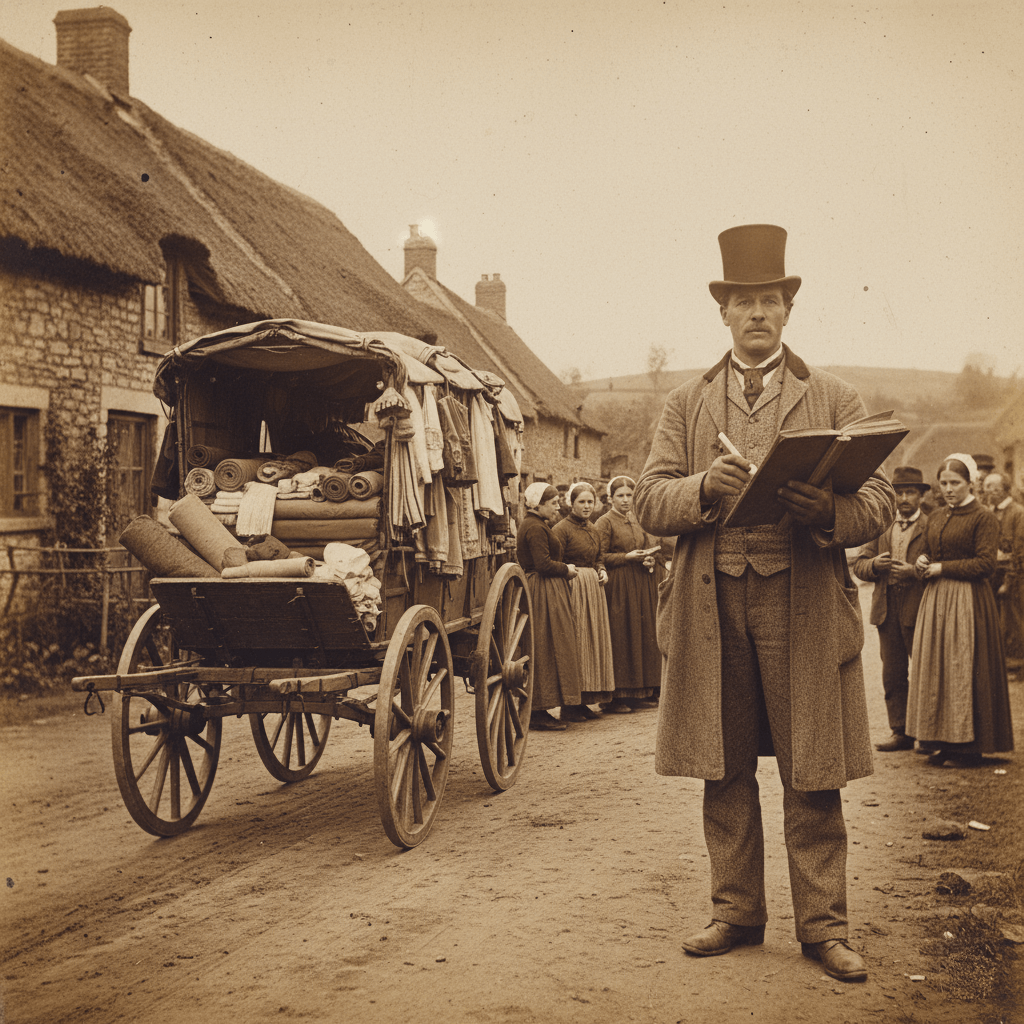
About the Tallyman Profession
The Tallyman was a crucial figure in the Victorian Era, primarily serving as a collector of debts and a record keeper for local businesses and tradesmen. Often seen as a bridge between the merchant and the consumer, the Tallyman would visit homes and businesses to collect payments for goods purchased on credit. This role was particularly significant in an era when many families relied on credit to manage their household expenses, especially in the burgeoning urban centers of England. The Tallyman would carry a tally stick, a wooden stick marked with notches to record transactions, and a ledger to keep detailed accounts of debts owed and payments made.
The Tallyman’s work was not merely transactional; it involved building relationships with customers, understanding their financial situations, and sometimes negotiating payment plans. This role required a keen sense of empathy and social awareness, as many customers were struggling to make ends meet. The Tallyman was often seen as a community figure, known by name and trusted to handle sensitive financial matters with discretion.
As the Victorian Era progressed, the role of the Tallyman began to change. The introduction of more formal banking systems and the rise of credit institutions started to diminish the need for personal debt collectors. The advent of modern accounting practices and the use of printed invoices further contributed to the decline of this occupation, as transactions became more standardized and less reliant on personal relationships. By the early 20th century, the Tallyman had largely disappeared from the economic landscape, replaced by more formalized financial systems.
Day in the Life of a Tallyman
Morning: Preparing for the Day
The day begins early for the Tallyman, often before the sun rises. He meticulously reviews his ledger, checking the accounts of his clients and noting any outstanding debts. With a tally stick in hand, he prepares to visit the homes of those who owe money. The Tallyman dresses in a neat, respectable manner, as his appearance is crucial in establishing trust with his clients.
Mid-Morning: First Visits
By mid-morning, the Tallyman is out on the streets, navigating the cobblestone paths of the neighborhood. His first stop is often a small shopkeeper who has fallen behind on payments. He knocks on the door, and upon entering, he greets the shopkeeper warmly, discussing the state of business before gently broaching the subject of the outstanding debt. Using his tally stick, he marks down the amount owed and any payments made since his last visit.
Afternoon: Community Engagement
As the day progresses, the Tallyman visits various homes, often stopping to chat with families. He understands that many are struggling, and he takes the time to listen to their concerns. If a family is unable to pay, he may negotiate a new payment plan, showing flexibility and understanding. His ability to empathize with clients is a key skill that sets him apart from more impersonal financial institutions.
Late Afternoon: Record Keeping
After a long day of visits, the Tallyman returns to his office, where he meticulously updates his ledger. Each transaction is recorded with precision, ensuring that all accounts are accurate. He reflects on the day’s interactions, considering how he can better serve his clients in the future.
Evening: Community Connections
In the evening, the Tallyman may attend local gatherings or community meetings, reinforcing his presence in the neighborhood. He understands that being a familiar face helps build trust and rapport, essential for his role as a collector of debts.
As the sun sets, the Tallyman prepares for another day, knowing that his work is vital to the financial health of his community.
Related Exhibits
Agoranomos
The Agoranomos was a pivotal figure in the bustling marketplaces of ancient Greece, particularly in city-states like Athens. This role was akin to that of a modern-day market supervisor or inspector, responsible for overseeing the activities within the agora, the central public space where commerce, politics, and social interaction flourished. The Agoranomos ensured that trade was conducted fairly, that weights and measures were accurate, and that vendors adhered to the laws governing commerce. They played a crucial role in maintaining order and integrity in the marketplace, which was vital for the economic health of the city-state. In addition to regulatory duties, the Agoranomos also had the authority to impose fines on dishonest merchants and to confiscate goods that were sold under false pretenses. This position required a deep understanding of local laws and trade practices, as well as a keen sense of justice to protect both consumers and honest traders. The Agoranomos was often seen as a guardian of the public interest, ensuring that the agora remained a vibrant and trustworthy hub of activity.
Flint Knapper
The flint knapper was a skilled artisan responsible for shaping flint and other stones into tools and weapons, a practice that dates back to the earliest human societies. This occupation was crucial for survival, as the tools created by flint knappers were essential for hunting, gathering, and daily tasks. Flint knapping involved a deep understanding of the material properties of stone, as well as the techniques required to create sharp edges and points. The flint knapper would carefully strike the stone with a hammerstone or another tool, removing flakes to create the desired shape. This process required not only physical skill but also an artistic eye, as the knapper had to envision the final product while working with the raw material. Flint knappers often worked in groups, sharing techniques and knowledge, which contributed to the development of regional styles and tool types. The tools produced ranged from simple hand axes to complex projectile points, each designed for specific tasks and environments. As societies evolved, so did their tool-making techniques, leading to the eventual decline of the flint knapper's role in favor of metalworking and other advanced technologies.
Explore More Exhibits
Discover the full collection of past and future professions in The Jobs Museum.