
Industrial Revolution
Knitting Mill Worker
An extinct profession from Industrial Revolution that became obsolete due to technological advancement and societal change.
Media Gallery
About the Knitting Mill Worker Profession
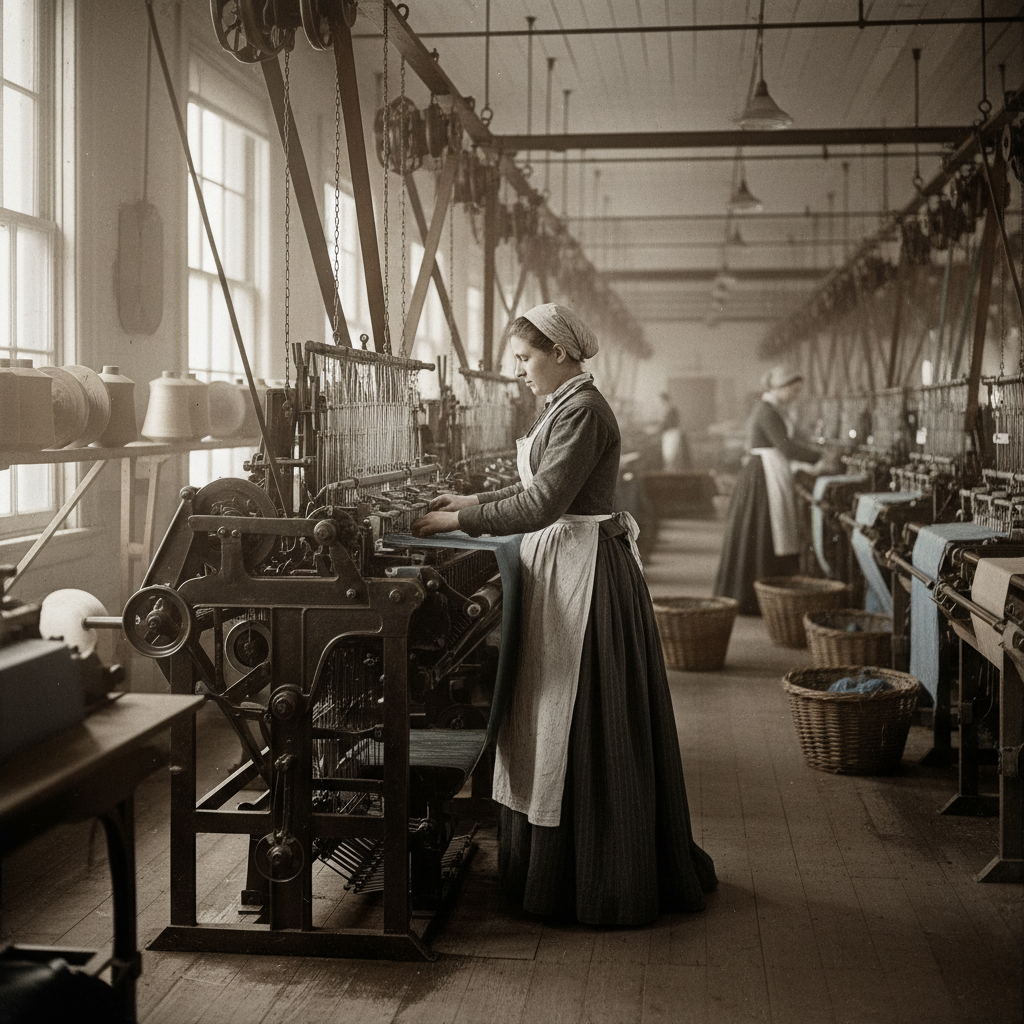
The knitting mill worker played a crucial role in the textile industry during the Industrial Revolution, a period marked by rapid industrial growth and technological innovation. These workers were primarily responsible for operating knitting machines that produced a variety of knitted goods, including socks, sweaters, and other garments. The work was often performed in large factories, known as knitting mills, where rows of machines hummed with activity, creating a rhythmic backdrop to the labor-intensive environment. Workers were typically assigned to specific machines, where they would monitor the knitting process, troubleshoot any issues, and ensure that the quality of the output met the factory's standards. The job required a keen eye for detail, as even a small mistake could result in significant waste of materials and time.
Knitting mill workers were often women and children, who were drawn to the mills by the promise of steady wages. The work was physically demanding, requiring long hours of standing and repetitive motion, which could lead to fatigue and injury. Despite the harsh conditions, knitting mills provided a vital source of income for many families during a time when economic opportunities were limited, particularly for women. The rise of the knitting mill worker was emblematic of the broader changes occurring in society, as traditional hand-knitting practices were replaced by mechanized production, leading to increased efficiency and lower costs for consumers.
Day in the Life of a Knitting Mill Worker
Early Morning: Arrival at the Mill
As dawn breaks, the knitting mill worker arrives at the factory, often before the sun has fully risen. The air is cool and filled with the faint smell of wool and cotton. Workers gather outside, exchanging greetings and preparing for the long day ahead. Once inside, they clock in and head to their designated machines, each one a complex piece of machinery that will be their companion for the next several hours.
Morning Shift: Operating the Machines
The morning begins with a thorough inspection of the knitting machine. The worker checks for any loose threads or mechanical issues that could disrupt production. Once everything is in order, they start the machine, which whirs to life, transforming yarn into fabric. The worker must remain vigilant, monitoring the output and making adjustments as necessary. This requires a combination of technical skill and attention to detail, as even a minor error can lead to defective products.
Midday: Break and Socializing
After several hours of continuous work, the factory bell rings, signaling a break. Workers gather in the designated area, sharing their meals and stories. This brief respite is a chance to bond with fellow workers, many of whom have become friends through shared experiences in the mill. Conversations often revolve around family, work conditions, and the latest news from the outside world.
Afternoon Shift: Quality Control and Maintenance
Returning to their machines, the workers continue their tasks, but now with a focus on quality control. They inspect the knitted goods, ensuring that they meet the factory's standards. If defects are found, the worker must carefully unravel the flawed sections and re-knit them, a task that requires patience and skill. As the day progresses, the worker also performs routine maintenance on their machine, oiling parts and cleaning debris to keep it running smoothly.
Evening: Wrapping Up
As the sun sets, the factory begins to wind down. The worker finishes their last batch of knitted goods and prepares to clock out. They take a moment to reflect on the day’s work, feeling a sense of accomplishment despite the physical toll. After a long day, they leave the mill, ready to return home to their families, often exhausted but proud of their contribution to the textile industry.
Related Exhibits
Agoranomos
The Agoranomos was a pivotal figure in the bustling marketplaces of ancient Greece, particularly in city-states like Athens. This role was akin to that of a modern-day market supervisor or inspector, responsible for overseeing the activities within the agora, the central public space where commerce, politics, and social interaction flourished. The Agoranomos ensured that trade was conducted fairly, that weights and measures were accurate, and that vendors adhered to the laws governing commerce. They played a crucial role in maintaining order and integrity in the marketplace, which was vital for the economic health of the city-state. In addition to regulatory duties, the Agoranomos also had the authority to impose fines on dishonest merchants and to confiscate goods that were sold under false pretenses. This position required a deep understanding of local laws and trade practices, as well as a keen sense of justice to protect both consumers and honest traders. The Agoranomos was often seen as a guardian of the public interest, ensuring that the agora remained a vibrant and trustworthy hub of activity.
Lanista
The lanista was a pivotal figure in the world of ancient Roman gladiatorial games, serving as a trainer and manager of gladiators. These individuals were responsible for the selection, training, and overall management of gladiators, who were often slaves or prisoners of war forced to fight in brutal spectacles for public entertainment. The lanista operated a ludi, or gladiatorial school, where they would oversee the rigorous training of their fighters, teaching them combat techniques, discipline, and the art of survival in the arena. The lanista's role was not only to prepare gladiators physically but also to cultivate their mental fortitude, as the psychological demands of combat were immense. They were often seen as both a mentor and a taskmaster, instilling a sense of loyalty and camaraderie among their fighters while also ensuring they were ready to face the deadly challenges of the arena. The lanista's influence extended beyond training; they were also involved in the business side of gladiatorial combat, negotiating contracts, managing finances, and sometimes even betting on the outcomes of fights. This multifaceted role made the lanista a significant player in the social and economic fabric of Roman entertainment culture.
Explore More Exhibits
Discover the full collection of past and future professions in The Jobs Museum.