
Victorian Era
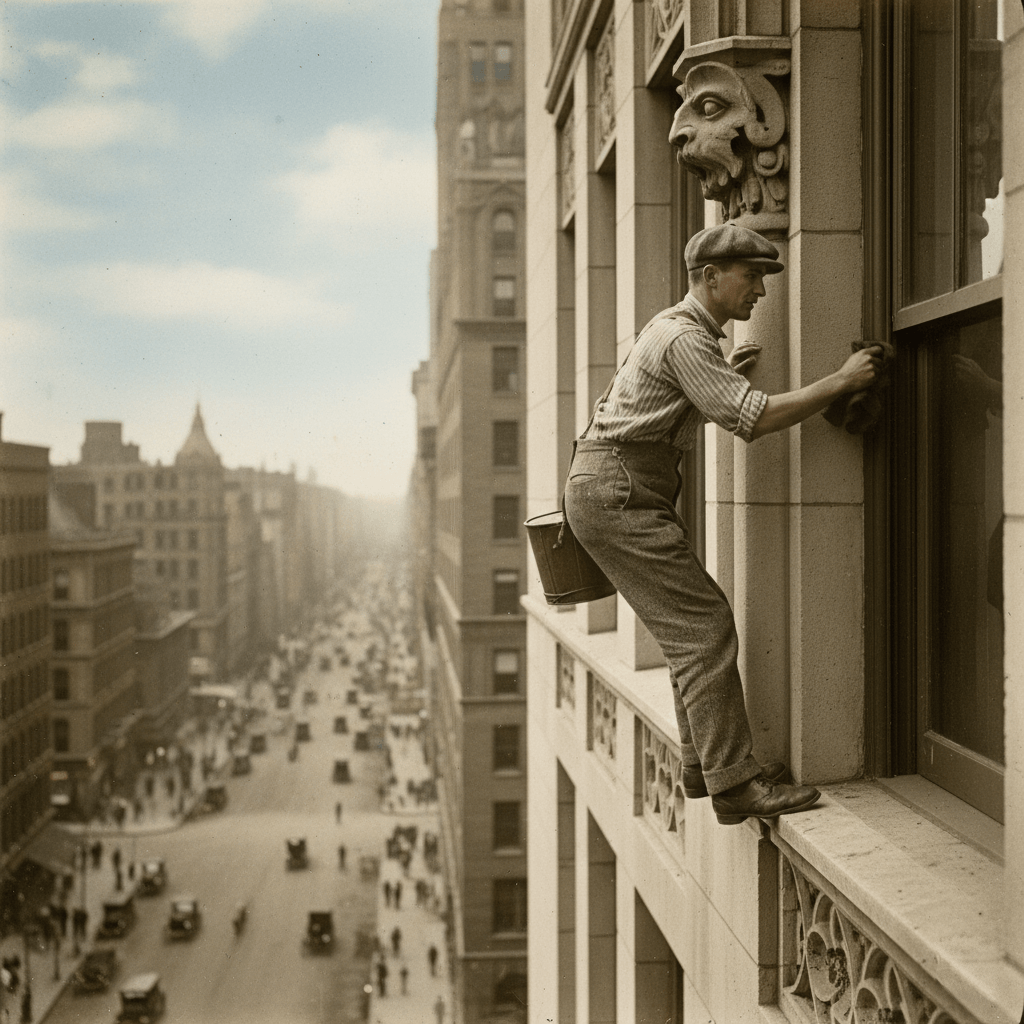
Human Fly
An extinct profession from Victorian Era that became obsolete due to technological advancement and societal change.
Media Gallery
Related Exhibits
Pants Polisher
The role of a Pants Polisher emerged during the Victorian Era, a time characterized by strict social codes and a burgeoning middle class that placed great emphasis on personal appearance and propriety. As men donned trousers made from fine fabrics such as wool and cotton, the need for maintaining a polished and respectable appearance became paramount. Pants Polishers were skilled tradespeople who specialized in the care and maintenance of trousers, ensuring that they were not only clean but also had a lustrous finish that reflected the wearer's status. The job involved applying a special polish to trousers, which was often a blend of wax and oils, to enhance their sheen and protect the fabric. This process required a keen eye for detail and an understanding of different materials, as the wrong treatment could ruin a garment. Pants Polishers would often work in tailor shops or as independent contractors, catering to the needs of gentlemen who wished to present themselves impeccably in both social and professional settings. In addition to polishing, these artisans were also responsible for minor repairs, such as stitching up small tears or reinforcing seams, which further solidified their role as essential figures in the maintenance of men's fashion during this period.
Explore More Exhibits
Discover the full collection of past and future professions in The Jobs Museum.