
19th Century
Ice Cutter
An extinct profession from 19th Century that became obsolete due to technological advancement and societal change.
Media Gallery
About the Ice Cutter Profession
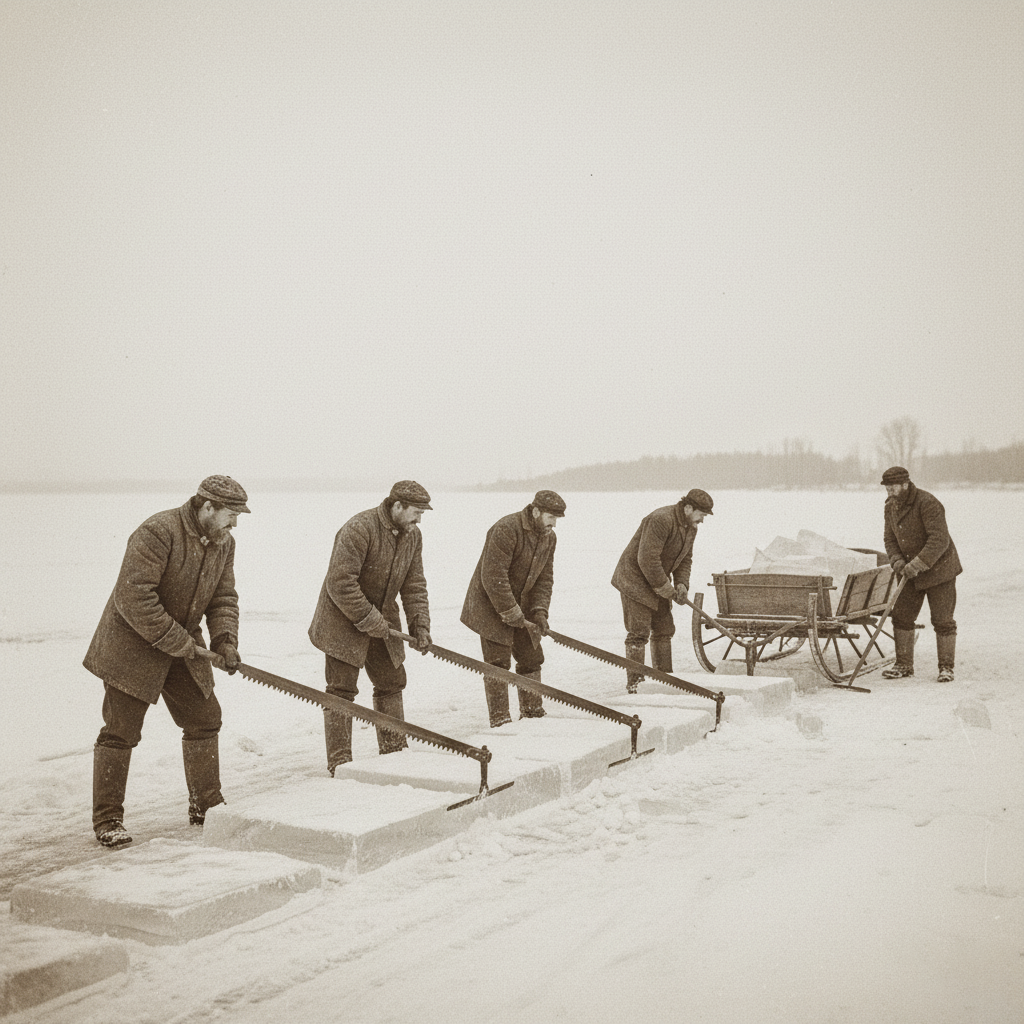
In the 19th century, before the advent of modern refrigeration, the Ice Cutter was a vital occupation, especially in regions where lakes and rivers froze during the winter months. These skilled laborers harvested ice from frozen bodies of water, which was then stored in icehouses and used to preserve food and cool drinks in the sweltering summer heat. The process was labor-intensive and required not only physical strength but also a keen understanding of the ice's thickness and quality. Ice was cut into large blocks, often weighing several hundred pounds, and transported to markets and homes, where it played a crucial role in daily life. The Ice Cutter's work was not just about brute force; it involved precision and technique to ensure that the ice remained intact during the cutting and hauling process. As the demand for ice grew, so did the complexity of the job, with cutters often working in teams to maximize efficiency and safety.
Day in the Life of an Ice Cutter
Early Morning: Preparing for the Day
As dawn breaks over the frozen lake, the Ice Cutter rises early, donning heavy woolen clothing to protect against the biting cold. The air is crisp, and the sound of crunching snow underfoot accompanies him as he makes his way to the ice harvesting site. He gathers his tools: a long-handled saw, ice picks, and a sturdy sled for transporting the blocks. The day’s work begins with a careful inspection of the ice, checking for thickness and stability.
Mid-Morning: The Cutting Begins
With the sun now peeking over the horizon, the Ice Cutter sets to work. He uses a marking tool to outline the blocks he intends to cut, ensuring they are of uniform size. The rhythmic sound of the saw fills the air as he begins to cut through the thick ice, sweat forming on his brow despite the cold. Each block must be cut with precision to avoid cracking, and he must constantly monitor the ice’s integrity as he works.
Afternoon: Hauling and Transporting
Once several blocks are cut, the Ice Cutter and his team use ice picks to lift the heavy blocks onto sleds. This is a strenuous task, requiring teamwork and coordination. They haul the ice across the frozen landscape, often facing the challenge of navigating through snowdrifts and uneven terrain. The camaraderie among the workers is palpable, as they share stories and laughter to keep spirits high during the grueling labor.
Late Afternoon: Storing the Ice
Upon reaching the icehouse, the team carefully stacks the blocks, ensuring they are packed tightly to minimize melting. The Ice Cutter knows that proper storage is crucial; layers of sawdust or straw are often used to insulate the ice and prolong its life. As the sun begins to set, the day’s work comes to an end, and the Ice Cutter heads home, exhausted but satisfied with a day’s labor that has provided a vital resource for his community.
Related Exhibits
Chauffeur
The role of a chauffeur was once a prestigious and essential occupation, particularly in the early to mid-20th century. Chauffeurs were professional drivers employed to transport individuals, often from the upper echelons of society, in luxury vehicles. This job was not merely about driving; it encompassed a range of responsibilities that required a unique blend of skills and etiquette. Chauffeurs were expected to maintain the vehicle in pristine condition, ensuring it was clean, fueled, and mechanically sound. They often had to navigate complex city streets, understand traffic laws, and possess a keen sense of timing to ensure their passengers arrived at their destinations punctually. Additionally, chauffeurs were trained in the art of customer service, often donning uniforms that reflected their employer's status and adhering to strict codes of conduct. The job was synonymous with luxury and exclusivity, often associated with the wealthy elite who relied on chauffeurs for both convenience and status.
Rag-and-Bone Man
The Rag-and-Bone Man was a familiar figure in the streets of Victorian and Edwardian England, embodying the spirit of recycling long before it became a modern environmental concern. These itinerant traders collected unwanted items from households, ranging from old clothes and rags to bones and scrap metal. The rag-and-bone men played a crucial role in the economy of the time, as they provided a means for families to dispose of their waste while also offering a small income for themselves. They would often call out their trade with a distinctive cry, 'Rags, bones, and bottles!' as they pushed their carts through the neighborhoods, creating a sense of community and nostalgia for many.
Explore More Exhibits
Discover the full collection of past and future professions in The Jobs Museum.