
Industrial Revolution
Slubber Doffer
An extinct profession from Industrial Revolution that became obsolete due to technological advancement and societal change.
Media Gallery
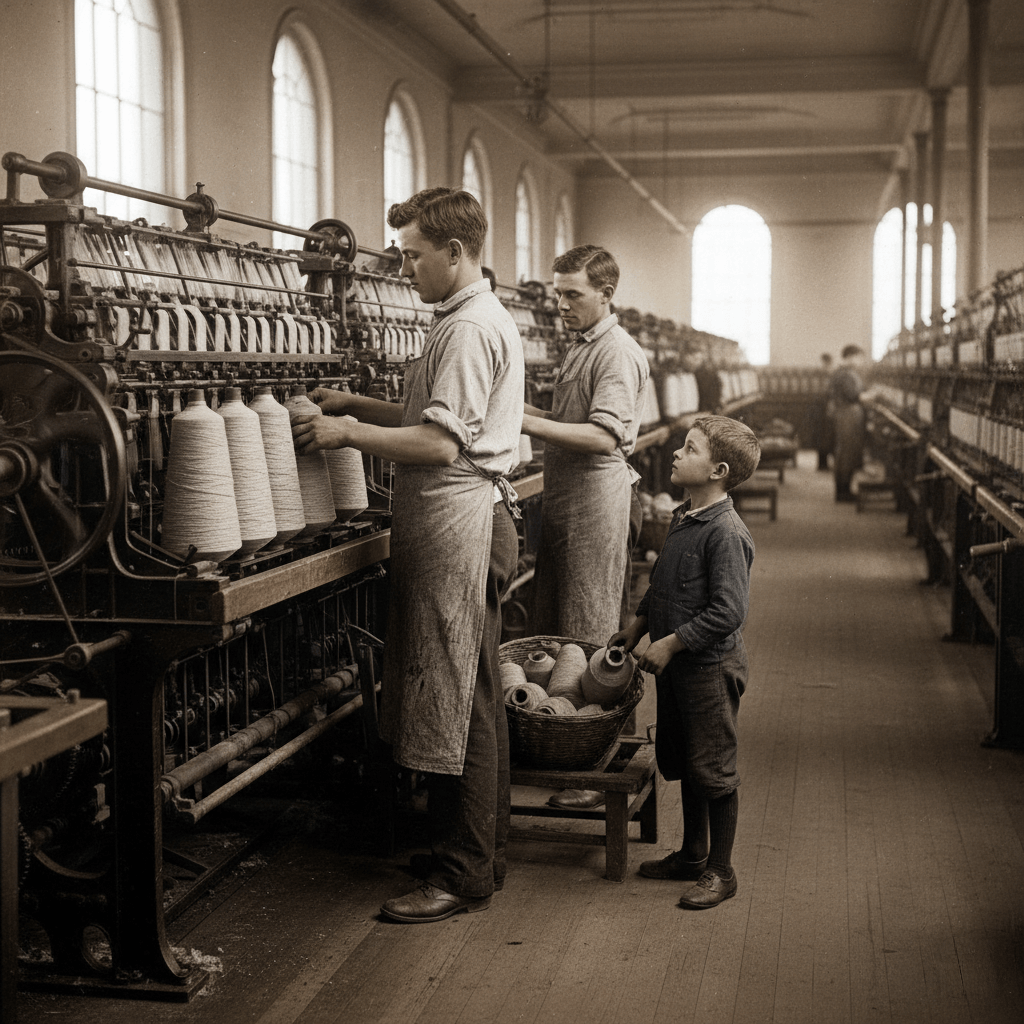
About the Slubber Doffer Profession
The slubber doffer was a crucial figure in the textile industry during the Industrial Revolution, primarily responsible for the maintenance and operation of spinning machines. These workers played a vital role in ensuring that the production of yarn and thread ran smoothly in the bustling textile mills of the 18th and 19th centuries. The term 'slubber doffer' specifically referred to those who removed the full bobbins of spun yarn from the spinning frames and replaced them with empty ones, a task that required both physical dexterity and a keen understanding of the machinery involved. The slubber doffer's work was often performed in a noisy, fast-paced environment, where the clatter of machines filled the air, and the smell of raw cotton and wool was ever-present.
The job was typically held by young boys and girls, often as young as eight or nine, who were employed in the mills due to their small stature, which allowed them to navigate the cramped spaces between the machines. The slubber doffer's day was filled with the repetitive yet essential task of ensuring that the spinning process continued without interruption, a job that was physically demanding and required a high level of attention to detail.
Despite the harsh working conditions, slubber doffers were an integral part of the textile production process, contributing to the rapid growth of the textile industry, which was a cornerstone of the Industrial Revolution. Their labor was essential in meeting the increasing demand for textiles, which fueled both domestic and international markets.
Day in the Life of a Slubber Doffer
Early Morning: The Shift Begins
As dawn breaks, the slubber doffer arrives at the mill, often before the sun has fully risen. The air is cool and filled with the sounds of machinery starting up. After a quick inspection of the spinning frames, the doffer prepares for a long day ahead.
Morning: The First Tasks
The first task of the day involves checking the machines for any issues from the previous night. The slubber doffer carefully inspects the bobbins, ensuring that they are properly threaded and ready for spinning. Once everything is in order, the doffer begins the routine of removing full bobbins and replacing them with empty ones, a task that requires speed and precision.
Midday: The Rhythm of Work
As the day progresses, the doffer moves swiftly between the machines, their hands deftly handling the bobbins. The noise of the spinning frames is deafening, but the doffer has learned to tune it out, focusing instead on the rhythm of the work. Breaks are few and far between, and the doffer often eats a quick meal of bread and cheese while standing, ready to return to the machines.
Afternoon: The Heat of the Day
The heat in the mill rises as the sun climbs higher, and the air becomes thick with cotton dust. The slubber doffer wipes sweat from their brow, pushing through fatigue. The pace quickens as the machines run continuously, and the doffer must keep up with the demand for yarn. Each successful swap of a bobbin brings a sense of accomplishment, but the physical toll is evident.
Evening: Wrapping Up
As the day winds down, the slubber doffer performs a final check of the machines, ensuring that everything is in order for the next shift. With the last of the bobbins replaced, the doffer gathers their belongings and heads home, exhausted but proud of a day’s work that contributed to the textile industry’s booming success.
Related Exhibits
Lamplighter
In the dimly lit streets of the Victorian Era, where gas lamps flickered to life at dusk, the lamplighter emerged as a vital figure in urban life. Tasked with the responsibility of illuminating the night, lamplighters were the unsung heroes of the city, ensuring that the streets were safe and navigable after sunset. With a long pole equipped with a flame, they would traverse their designated routes, igniting the gas lamps that lined the thoroughfares, alleyways, and public squares. Each lamp was a small beacon of light, a symbol of progress in an age that was rapidly industrializing and urbanizing. The lamplighter's work was not merely about lighting lamps; it was a ritual that involved careful attention to detail. They would check each lamp for proper function, ensuring that the gas supply was adequate and that the glass was clean and intact. In addition to lighting the lamps, they were also responsible for extinguishing them at dawn, marking the transition from night to day. This job required a keen sense of time, as the lamplighter had to complete their rounds before the city fully awoke. As cities grew and the demand for street lighting increased, lamplighters became a common sight, often working in pairs or teams to cover larger areas. Their presence was a reassurance to the public, a reminder that the city was alive even in the darkest hours. However, the lamplighter's role was not without its challenges; they braved the elements, working in rain, snow, and the chill of winter nights, often climbing ladders to reach the higher lamps. The lamplighter was a figure of community, often known by name and face, fostering a sense of familiarity and safety among the residents. They were also a part of the social fabric, as their rounds often coincided with the evening strolls of townsfolk, creating a shared experience of urban life.
Lanista
The lanista was a pivotal figure in the world of ancient Roman gladiatorial games, serving as a trainer and manager of gladiators. These individuals were responsible for the selection, training, and overall management of gladiators, who were often slaves or prisoners of war forced to fight in brutal spectacles for public entertainment. The lanista operated a ludi, or gladiatorial school, where they would oversee the rigorous training of their fighters, teaching them combat techniques, discipline, and the art of survival in the arena. The lanista's role was not only to prepare gladiators physically but also to cultivate their mental fortitude, as the psychological demands of combat were immense. They were often seen as both a mentor and a taskmaster, instilling a sense of loyalty and camaraderie among their fighters while also ensuring they were ready to face the deadly challenges of the arena. The lanista's influence extended beyond training; they were also involved in the business side of gladiatorial combat, negotiating contracts, managing finances, and sometimes even betting on the outcomes of fights. This multifaceted role made the lanista a significant player in the social and economic fabric of Roman entertainment culture.
Explore More Exhibits
Discover the full collection of past and future professions in The Jobs Museum.