
Victorian Era
Matchstick Girl
An extinct profession from Victorian Era that became obsolete due to technological advancement and societal change.
Media Gallery
About the Matchstick Girl Profession
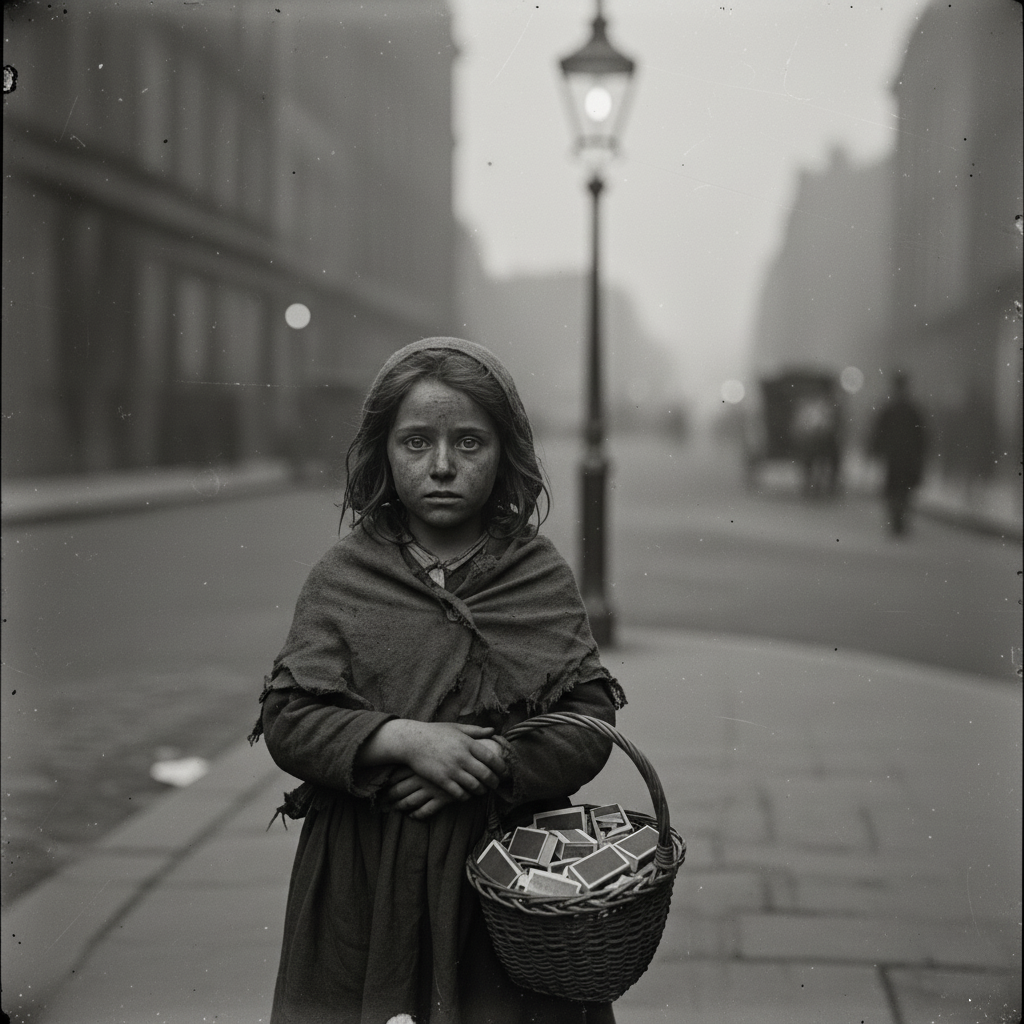
The role of a Matchstick Girl emerged during the Victorian Era, a time marked by rapid industrialization and urbanization in Britain. These young girls, often as young as six years old, were employed to sell matches on the streets of cities like London. The job was not only a means of survival for the girls and their families but also a reflection of the harsh realities of the working class during this period. The matchstick girls were typically from impoverished backgrounds, and their earnings were crucial for their families' subsistence. They would often work long hours, braving the elements, to sell boxes of matches to passersby, including shopkeepers and households. The matches were sold at a low price, and the girls would often carry their wares in small baskets or bags, calling out to potential customers in hopes of making a sale.
The work was grueling and dangerous; the girls were exposed to the elements, and many suffered from health issues due to malnutrition and the harsh conditions of street life. The matches themselves were often made with hazardous materials, leading to serious health risks, including phosphorus poisoning, which was a common affliction among those who worked with match production. Despite these dangers, the job was a vital source of income for many families, and the plight of the matchstick girls eventually drew public attention, leading to social reform movements aimed at improving working conditions for children.
Day in the Life of a Matchstick Girl
Early Morning: Preparing for the Day
The day begins before dawn, as the matchstick girl wakes up in a cramped, shared living space. She dresses in worn clothes, often patched and too big, and grabs her small basket, which she will fill with boxes of matches. After a meager breakfast, she heads out into the chilly morning air, ready to face the bustling streets of the city.
Morning: Selling Matches
As the sun rises, the streets come alive. The matchstick girl finds a busy corner, where she can attract the attention of passersby. She calls out, "Matches! Get your matches here!" Her voice competes with the sounds of horse-drawn carriages and street vendors. She stands for hours, hoping to sell her boxes, which are often priced at just a penny each. The morning is often slow, and she must endure the cold, sometimes resorting to huddling in doorways to keep warm.
Afternoon: A Brief Respite
By midday, she may take a short break to eat a piece of bread or a small meal, if she can afford it. This is a rare moment of rest, as she knows that every minute spent not selling is a lost opportunity. She may chat with other girls in the same line of work, sharing stories of their struggles and dreams.
Late Afternoon: The Struggle Continues
As the afternoon wears on, the matchstick girl returns to her post, calling out to customers. The streets are busier now, and she hopes to sell more boxes before the sun sets. However, the competition is fierce, and many people are reluctant to buy from a young girl. She must be persistent and charming, often resorting to pleading to make a sale.
Evening: Heading Home
As dusk approaches, the girl counts her earnings, often disheartened by the small amount she has made. She heads home, tired and cold, knowing that her earnings will barely cover her family's needs. The day ends with her collapsing into bed, exhausted but hopeful for a better tomorrow.
Related Exhibits
Leech Collector
In the Victorian Era, the leech collector played a crucial role in the burgeoning field of medicine. These individuals were tasked with harvesting leeches from freshwater bodies, primarily for use in bloodletting—a common medical practice of the time. Leeches were believed to cure a variety of ailments by drawing out 'bad blood,' and their demand surged as the medical community embraced this practice. Leech collectors would often wade into muddy waters, using nets and their bare hands to gather these slimy creatures, which were then sold to physicians and apothecaries. The job required not only physical endurance but also a keen understanding of the leeches' habitats and behaviors, as well as the ability to handle them without causing harm to themselves or the creatures. The leech collector's work was often conducted in remote, marshy areas, where they would spend hours in the water, sometimes in harsh weather conditions. The collectors would return home with buckets filled with leeches, which they would keep alive in water-filled containers until sold. The job was labor-intensive and often poorly paid, but it was essential in an era when medical practices relied heavily on the use of leeches for therapeutic purposes. As the medical field evolved and the understanding of human anatomy and disease progressed, the practice of bloodletting fell out of favor. By the late 19th century, with the advent of modern medicine and more effective treatments, the demand for leeches diminished significantly, leading to the decline of this once vital occupation.
Chimney Sweep
The role of a chimney sweep was crucial in the Victorian Era, particularly in urban areas where coal was the primary source of heating. As homes and factories proliferated, so did the need for clean chimneys to prevent dangerous chimney fires and ensure proper ventilation. Chimney sweeps were responsible for cleaning soot and creosote buildup from chimneys, which could lead to hazardous conditions if left unchecked. The job was often performed by young boys, some as young as six, who would climb into narrow flues to scrape away the soot. This labor-intensive work required not only physical agility but also a keen understanding of the structure of chimneys and the dangers associated with them. The job was often grueling, with sweeps working long hours in cramped, dark spaces, and it was not uncommon for them to suffer from respiratory issues due to the soot they inhaled. Despite the harsh conditions, chimney sweeps played a vital role in maintaining the safety of homes during a time when coal was the dominant fuel source.
Explore More Exhibits
Discover the full collection of past and future professions in The Jobs Museum.