
Medieval Period
Piss-Prophet
An extinct profession from Medieval Period that became obsolete due to technological advancement and societal change.
Media Gallery
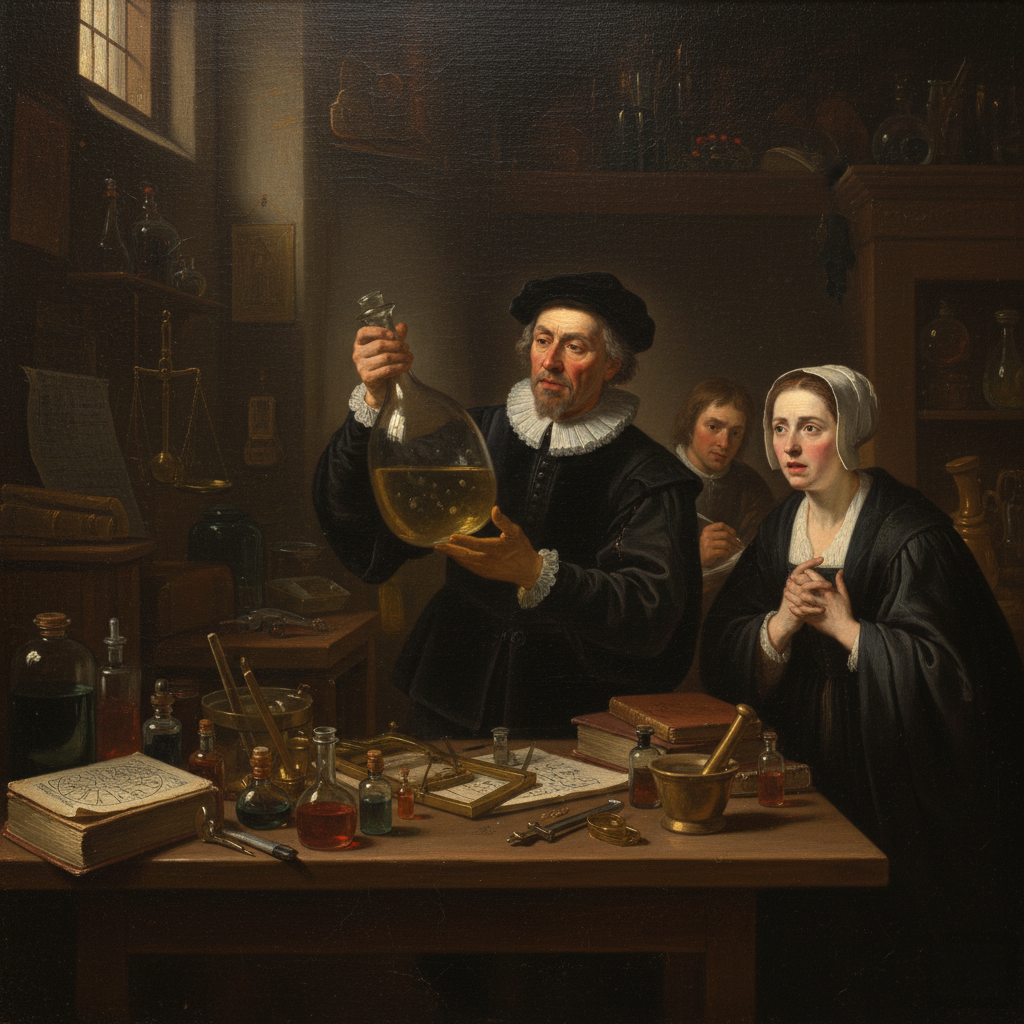
About the Piss-Prophet Profession
The Piss-Prophet was a unique and somewhat peculiar occupation that emerged during the Medieval Period, particularly in Europe. This role was primarily associated with the practice of diagnosing health conditions and predicting the future through the examination of urine. The Piss-Prophet, often a male figure, would analyze the color, consistency, and even the smell of urine to provide insights into a person's health and fortune. This practice was rooted in the ancient humoral theory, which posited that bodily fluids were indicative of one's health and temperament.
In a time when medical knowledge was limited and superstition reigned, the Piss-Prophet held a significant place in society. They were often consulted by individuals seeking answers to ailments or guidance on personal matters. The Piss-Prophet would typically set up shop in a market square or a local tavern, where they would attract clients with their claims of divination and healing. The role required a keen eye for detail and a deep understanding of the various interpretations of urine, which were often documented in rudimentary medical texts of the time.
Despite the oddity of the profession, Piss-Prophets were sometimes regarded with a mix of respect and skepticism. They often operated alongside other medical practitioners, such as barber-surgeons and herbalists, contributing to the eclectic tapestry of medieval healthcare.
Day in the Life of a Piss-Prophet
Morning: Setting Up Shop
The day would begin early for the Piss-Prophet, who would rise at dawn to prepare for the day ahead. After a simple breakfast, they would gather their tools, which included glass vials for collecting samples, a set of color charts for urine analysis, and various herbs for remedies. By mid-morning, the Piss-Prophet would set up their stall in a bustling market square, where they would display their wares and prepare to greet clients.
Midday: Client Consultations
As the sun reached its zenith, the market would come alive with townsfolk seeking answers to their ailments. The Piss-Prophet would engage with clients, asking them to provide a sample of their urine, which would be carefully examined. The Prophet would analyze the sample, discussing its color, clarity, and odor, while interpreting these signs to offer health advice or predictions about the future. This process could take anywhere from a few minutes to an hour, depending on the complexity of the case.
Afternoon: Remedies and Recommendations
After the consultations, the Piss-Prophet would often recommend herbal remedies or lifestyle changes based on their findings. They might prepare simple concoctions using local herbs, which they would sell alongside their services. The afternoon would also be a time for socializing with other practitioners, sharing knowledge and stories about their experiences in the field.
Evening: Reflection and Record Keeping
As the day wound down, the Piss-Prophet would take time to reflect on the day's consultations, jotting down notes about the cases they encountered. This record-keeping was essential for tracking patterns and improving their diagnostic skills. After closing their stall, they would return home, often exhausted but fulfilled by the day's work, ready to prepare for another day of divination and healing.
Related Exhibits
Calligrapher
The art of calligraphy, often referred to as 'beautiful writing,' flourished during the Medieval Period, where skilled calligraphers played a crucial role in the preservation and dissemination of knowledge. These artisans were not merely writers; they were artists who transformed the written word into a visual spectacle. Calligraphers were responsible for creating manuscripts, religious texts, and important documents, often using intricate scripts that varied by region and purpose. Their work was characterized by the use of quills, ink, and parchment, and they often employed elaborate techniques such as gilding and illumination to enhance their creations. The calligrapher's role was not only to write but to imbue each piece with a sense of beauty and reverence, making their work essential in an era where printed materials were scarce and literacy was a privilege of the few.
Fuller
The role of a fuller was integral to the textile industry, particularly in the processing of woolen fabrics. Fullers were responsible for a crucial step in the cloth-making process known as 'fulling,' which involved cleaning and thickening the fabric. This was achieved through a combination of water, heat, and mechanical action, often using a foot-powered or water-powered mill. The fulling process not only removed impurities such as grease and dirt but also helped to mat the fibers together, resulting in a denser and more durable fabric. Fullers worked closely with weavers and dyers, ensuring that the cloth was ready for the final stages of production. The fulling process was labor-intensive and required a keen understanding of the materials and techniques involved, making the fuller a respected figure in the textile trade.
Explore More Exhibits
Discover the full collection of past and future professions in The Jobs Museum.