
Prehistoric Era
Flint Knapper
An extinct profession from Prehistoric Era that became obsolete due to technological advancement and societal change.
Media Gallery
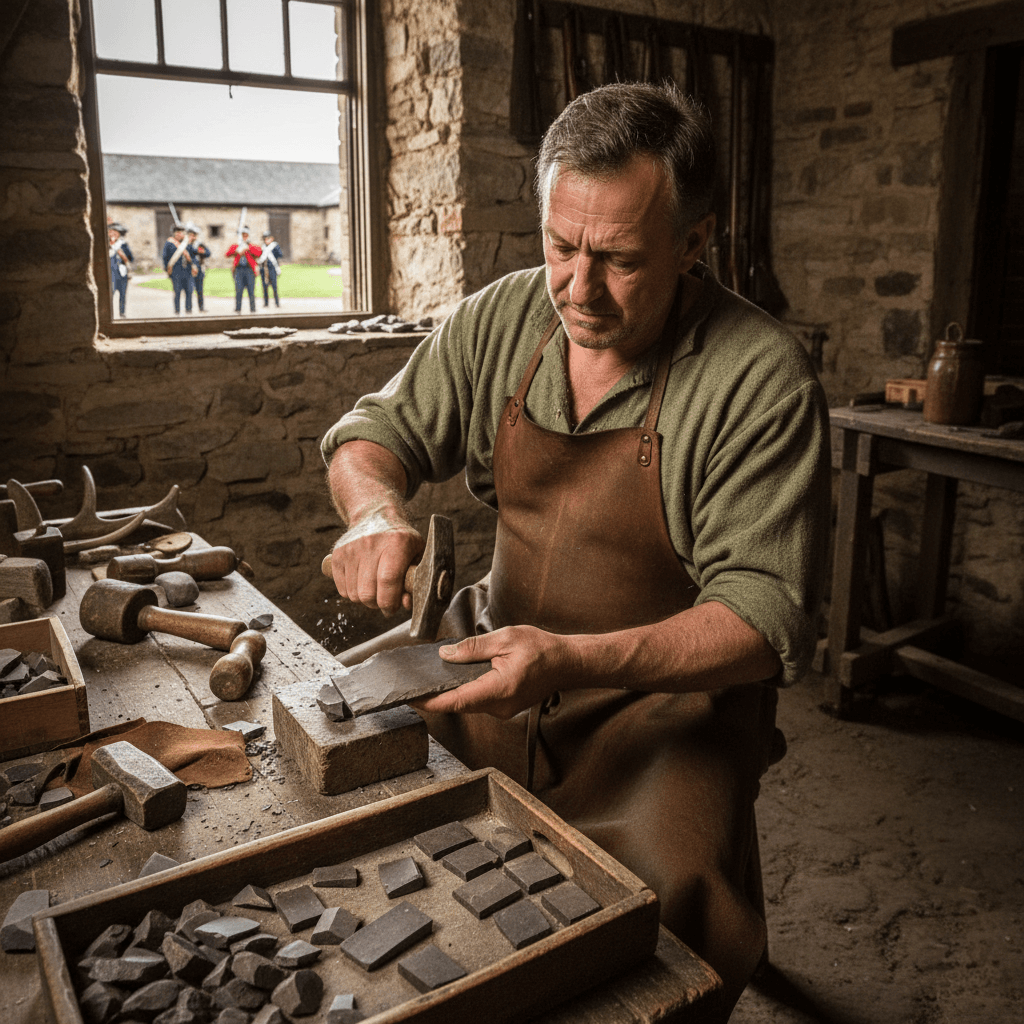
About the Flint Knapper Profession
The flint knapper was a skilled artisan responsible for shaping flint and other stones into tools and weapons, a practice that dates back to the earliest human societies. This occupation was crucial for survival, as the tools created by flint knappers were essential for hunting, gathering, and daily tasks. Flint knapping involved a deep understanding of the material properties of stone, as well as the techniques required to create sharp edges and points. The flint knapper would carefully strike the stone with a hammerstone or another tool, removing flakes to create the desired shape. This process required not only physical skill but also an artistic eye, as the knapper had to envision the final product while working with the raw material. Flint knappers often worked in groups, sharing techniques and knowledge, which contributed to the development of regional styles and tool types. The tools produced ranged from simple hand axes to complex projectile points, each designed for specific tasks and environments. As societies evolved, so did their tool-making techniques, leading to the eventual decline of the flint knapper's role in favor of metalworking and other advanced technologies.
Day in the Life of a Flint Knapper
Dawn: Gathering Materials
As the first light of dawn breaks, the flint knapper rises early to gather materials. Armed with a keen eye, they search the nearby riverbanks and rocky outcrops for suitable flint nodules. The knapper knows that the quality of the stone is paramount; it must be fine-grained and free of cracks to ensure successful tool-making.
Mid-Morning: Setting Up the Workshop
Once back at their workshop, often a sheltered area near their dwelling, the knapper lays out their tools. The primary tools include a hammerstone, a pressure flaker, and a variety of anvils. The knapper prepares the flint by cleaning it and examining its structure, planning the day's work based on the needs of their community.
Late Morning: Knapping Techniques
With a steady hand, the flint knapper begins the process of shaping the stone. They strike the flint with the hammerstone, carefully removing flakes to create sharp edges. This requires immense concentration and skill, as each strike must be precise to avoid shattering the stone. The knapper may also use a pressure flaker to refine the edges further, ensuring that the tools are not only functional but also aesthetically pleasing.
Afternoon: Crafting Tools
As the day progresses, the knapper focuses on creating specific tools requested by fellow community members. This could include spear points for hunting or scrapers for processing animal hides. Each tool is crafted with a particular purpose in mind, and the knapper takes pride in their work, knowing that these tools will aid in the survival of their people.
Evening: Community Engagement
As the sun sets, the flint knapper often gathers with others in the community to share their creations. They may demonstrate their techniques to apprentices or engage in discussions about new methods and styles. This social aspect of the job is vital, as it fosters a sense of community and shared knowledge among the artisans.
Night: Reflection and Planning
Before retiring for the night, the knapper reflects on the day's work, considering what went well and what could be improved. They may sketch designs for future tools or think about the materials they need to gather for the next day. This time of reflection is crucial for honing their craft and ensuring the continued success of their trade.
Related Exhibits
Map Engraver
Map engravers were skilled artisans responsible for the intricate task of transferring cartographic designs onto metal plates, which were then used for printing maps. This occupation flourished during the Industrial Revolution, a period marked by rapid advancements in technology and a growing demand for accurate geographical representations. The engraver's work was crucial for the production of maps that guided explorers, navigators, and the general public, reflecting the expanding knowledge of the world and the increasing importance of navigation in trade and exploration. The process of map engraving was meticulous and required a deep understanding of both art and science. Engravers would begin with a detailed drawing of the map, often created by cartographers who specialized in the art of map-making. Using tools such as burins and gravers, the engraver would carve the design into a copper or zinc plate, creating a reverse image of the map. This required not only precision but also an artistic eye to ensure that the final product was both accurate and aesthetically pleasing. Once the engraving was complete, the plate would be inked and pressed onto paper, producing the final map that would be distributed for use. Map engravers played a vital role in the dissemination of knowledge during a time when maps were essential for navigation, land ownership, and military strategy. Their work contributed to the Age of Exploration, as accurate maps were crucial for explorers venturing into uncharted territories. As such, map engravers were respected members of the printing and publishing industries, often working closely with publishers and cartographers to produce high-quality maps for various purposes, including atlases, travel guides, and educational materials.
Ale Conner
The role of the Ale Conner was a vital one in medieval society, particularly in England, where ale was a staple beverage. Tasked with ensuring the quality of ale produced by local brewers, the Ale Conner acted as a guardian of public health and consumer rights. This position was often held by a local official or a member of the community who had the authority to inspect and taste ale before it was sold to the public. The Ale Conner would assess the ale for its strength, flavor, and overall quality, ensuring that it met the standards set by local regulations. If the ale was found to be subpar, the Ale Conner had the power to condemn it, preventing it from being sold and protecting the community from potential harm. In addition to quality control, the Ale Conner also played a role in the regulation of prices, ensuring that brewers did not exploit consumers by charging exorbitant rates for inferior products. This position was essential in maintaining the integrity of the ale market, which was a significant part of daily life in medieval towns and villages. The Ale Conner's work was not only about quality but also about fairness in trade, reflecting the communal values of the time.
Explore More Exhibits
Discover the full collection of past and future professions in The Jobs Museum.