
20th Century
Pinsetter
An extinct profession from 20th Century that became obsolete due to technological advancement and societal change.
Media Gallery
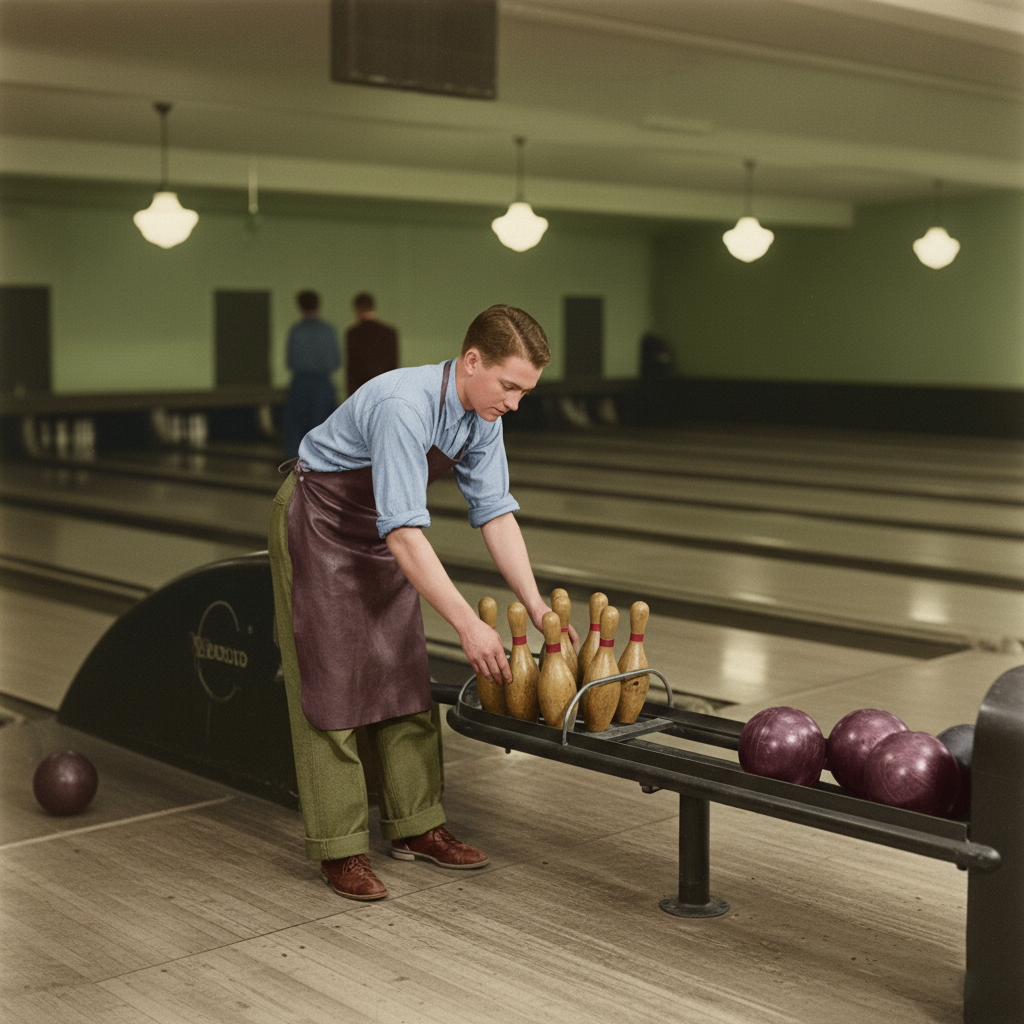
About the Pinsetter Profession
In the bustling alleys of mid-20th century bowling alleys, the role of the pinsetter was a vital yet often overlooked occupation. Pinsetters were responsible for resetting the bowling pins after each frame, ensuring that the game could continue smoothly. This job required a keen eye and quick reflexes, as the pinsetter had to swiftly and accurately place the pins back in their designated spots while dodging the heavy bowling balls that rolled down the lane.
The pinsetter's work environment was often loud and filled with the sounds of laughter, clattering pins, and the thud of bowling balls. They worked in dimly lit back rooms, often hidden from the view of the bowlers, where they operated a series of levers and pulleys to reset the pins. The job was physically demanding, requiring the pinsetter to be agile and strong enough to handle the heavy equipment used to lift and position the pins.
As bowling grew in popularity during the 1950s and 1960s, the demand for pinsetters increased, making it a common sight in bowling alleys across America. However, the advent of automatic pinsetting machines in the late 1960s marked the beginning of the end for this once-essential role. These machines could reset pins faster and more efficiently than any human, leading to the gradual decline of the pinsetter profession.
Day in the Life of a Pinsetter
Morning Shift: 8:00 AM - 12:00 PM
The day begins early for a pinsetter, often starting before the bowling alley opens to the public. Arriving at the alley, the pinsetter dons their uniform, which typically consists of a simple shirt and trousers, and heads to the back room where the pinsetting machinery is located. The first task is to inspect the equipment, ensuring that all mechanisms are functioning properly. This includes checking the levers, pulleys, and the pin racks.
Midday: 12:00 PM - 3:00 PM
As the alley opens, the pinsetter takes their position, ready to spring into action. With each roll of the bowling ball, they must be alert, watching for strikes and spares. After each frame, they quickly move to reset the pins, using a combination of manual dexterity and mechanical assistance. The pinsetter must be able to lift and place the heavy pins back into position, often while dodging errant bowling balls.
Afternoon: 3:00 PM - 6:00 PM
The afternoon brings a steady stream of bowlers, and the pinsetter's pace quickens. They develop a rhythm, moving seamlessly between resetting pins and maintaining the machinery. During quieter moments, they might chat with fellow workers or bowlers, creating a sense of community within the alley.
Evening: 6:00 PM - 10:00 PM
As the evening crowd arrives, the pinsetter is in full swing. The energy in the alley is palpable, with laughter and cheers echoing throughout. The pinsetter must remain focused, as the demand for quick resets increases. By the end of the night, they are exhausted but satisfied, having played a crucial role in the enjoyment of countless bowlers.
Closing: 10:00 PM - 11:00 PM
After the last bowl is rolled, the pinsetter begins the closing routine. This includes cleaning the area, performing final checks on the machinery, and preparing for the next day. The job is physically taxing, but the camaraderie and the joy of being part of a beloved pastime make it worthwhile.
Related Exhibits
Armourer
The role of the armourer was pivotal in the medieval period, a time when warfare and personal protection were paramount. Armourers were skilled craftsmen responsible for creating, repairing, and maintaining the protective gear worn by soldiers and knights. Their work encompassed a variety of tasks, including forging metal plates, shaping chainmail, and crafting helmets, shields, and other defensive equipment. The craftsmanship of an armourer was not only functional but also often artistic, with intricate designs and embellishments that reflected the status and wealth of the wearer. The armourer’s workshop was a hub of activity, filled with the sounds of hammering metal, the glow of the forge, and the smell of heated iron. Each piece of armour was custom-fitted to the individual, ensuring both protection and mobility in battle. As warfare evolved, so too did the demands on armourers, who had to adapt their techniques and designs to meet the changing needs of their clients.
Switchboard Operator
In the bustling world of the late 19th and early 20th centuries, the role of the switchboard operator emerged as a vital cog in the machinery of communication. These skilled individuals were the unsung heroes of the telephone network, connecting calls and facilitating conversations that bridged distances and brought people together. With the advent of the telephone, the need for a human intermediary became apparent, and thus, the switchboard operator took center stage in the realm of telecommunications. Switchboard operators worked in large, often crowded rooms filled with rows of switchboards, each adorned with a myriad of plugs and wires. Their primary responsibility was to connect callers by manually plugging and unplugging telephone lines into the appropriate jacks on the switchboard. This intricate dance of wires required not only dexterity but also a keen ear for voices and an ability to quickly assess and respond to the needs of callers. Operators were often the first point of contact for individuals seeking to connect with friends, family, or businesses, making their role both crucial and highly regarded. The job was not without its challenges. Operators had to manage multiple calls simultaneously, often dealing with a cacophony of voices and requests. They were trained to handle emergencies, providing vital assistance during crises, such as connecting calls to hospitals or fire departments. The work environment was typically fast-paced and required a high level of concentration, as even a small mistake could lead to misdirected calls or delays in communication. As technology advanced, the role of the switchboard operator began to wane. The introduction of automated switching systems in the mid-20th century marked the beginning of the end for this once-essential occupation. These systems could connect calls without human intervention, leading to a decline in demand for operators. By the 1980s, the role had largely disappeared, replaced by automated systems that could handle the volume of calls with greater efficiency and reliability.
Explore More Exhibits
Discover the full collection of past and future professions in The Jobs Museum.