
Victorian Era
Theatre Call Boy
An extinct profession from Victorian Era that became obsolete due to technological advancement and societal change.
Media Gallery
About the Theatre Call Boy Profession
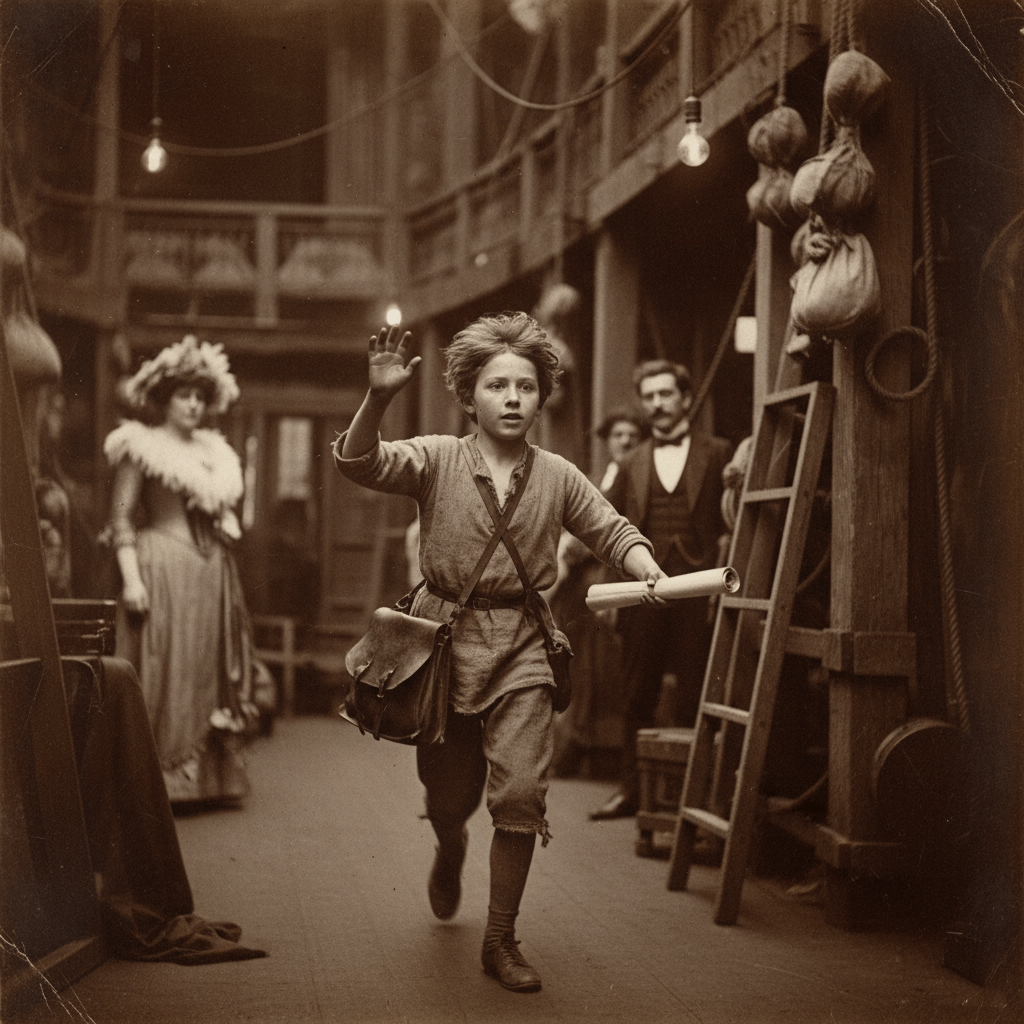
The Theatre Call Boy was an essential figure in the vibrant world of Victorian theatre, acting as the vital link between the stage and the backstage. This young boy, often between the ages of 10 and 15, was responsible for ensuring that the performance ran smoothly by delivering messages and calls to actors, stagehands, and other crew members. With a keen sense of timing and an ability to navigate the bustling theatre environment, the call boy would often be found darting through the dimly lit corridors, his footsteps echoing against the wooden floors, as he relayed cues for entrances, exits, and scene changes.
The role required not only speed and agility but also a deep understanding of the production schedule and the ability to communicate effectively under pressure. The call boy would often carry a small bell or whistle to signal the start of a performance or a scene change, ensuring that everyone was in their proper place at the right time. In an era when performances were often elaborate and lengthy, the call boy's role was crucial in maintaining the rhythm and flow of the show, making him a beloved figure among the cast and crew alike.
Day in the Life of a Theatre Call Boy
Morning: Preparation and Rehearsals
The day would begin early for the theatre call boy, often around 9 AM, as he arrived at the theatre to prepare for the day’s rehearsals. His first task was to check in with the stage manager, who would provide him with the schedule for the day. The call boy would then make his way to the rehearsal room, where he would observe the actors as they practiced their lines and movements. During this time, he would familiarize himself with the script, noting important cues and timings.
Afternoon: Running Errands
As rehearsals progressed, the call boy’s duties expanded. He would be tasked with running errands, such as fetching props, delivering messages to actors in their dressing rooms, and ensuring that the stage was set for the next scene. His nimble feet would carry him through the labyrinth of backstage areas, where he would often encounter the hustle and bustle of stagehands preparing for the evening’s performance.
Evening: Performance Time
As the evening approached, the call boy’s responsibilities intensified. He would don a simple uniform, often consisting of a waistcoat and bow tie, to present a polished appearance. With the audience beginning to fill the seats, he would take his position near the stage, ready to signal the start of the show. As the curtain rose, he would be on high alert, listening for cues from the stage manager and watching the actors closely.
When it was time for an actor to make their entrance, the call boy would ring his bell or blow his whistle, ensuring that everyone was in place. His heart would race with excitement as he played a crucial role in the magic of live theatre, feeling the energy of the audience as they reacted to the performance.
Late Night: Wrapping Up
After the final curtain call, the call boy would assist in the breakdown of the set, helping to clear the stage and return props to their rightful places. His day would often end late, around midnight, as he ensured that everything was in order for the next performance. Exhausted but fulfilled, he would leave the theatre, already dreaming of the next show.
Related Exhibits
Towel Horse
The towel horse was a common fixture in Victorian households, serving as a practical solution for drying and airing out freshly laundered towels. This job involved the creation and maintenance of these wooden frames, which were designed to hold towels in a way that maximized air circulation and minimized mildew. Craftsmen known as towel horse makers would construct these items from sturdy wood, often incorporating decorative elements to enhance their aesthetic appeal. The towel horse was not merely a functional item; it was a symbol of domesticity and cleanliness in an era that placed great emphasis on hygiene and the proper management of household chores. In the bustling homes of the Victorian middle class, the towel horse was an essential accessory, often placed in bathrooms or near wash basins. It allowed families to dry their towels efficiently, reflecting the era's values of order and propriety. The towel horse was typically designed with multiple rungs or bars, allowing several towels to be hung at once, and was often collapsible for easy storage. As the Victorian Era progressed, the towel horse became a staple in many households, with variations in design reflecting the tastes and preferences of the time. Craftsmen took pride in their work, often handcrafting each piece with attention to detail, ensuring that the towel horse was both functional and visually appealing. However, as the 20th century approached, the advent of modern plumbing and the introduction of electric dryers began to change domestic practices. The need for towel horses diminished as households adopted new technologies that made drying towels faster and more efficient. The towel horse, once a common sight in homes, gradually faded into obscurity, becoming a relic of a bygone era.
Pants Polisher
The role of a Pants Polisher emerged during the Victorian Era, a time characterized by strict social codes and a burgeoning middle class that placed great emphasis on personal appearance and propriety. As men donned trousers made from fine fabrics such as wool and cotton, the need for maintaining a polished and respectable appearance became paramount. Pants Polishers were skilled tradespeople who specialized in the care and maintenance of trousers, ensuring that they were not only clean but also had a lustrous finish that reflected the wearer's status. The job involved applying a special polish to trousers, which was often a blend of wax and oils, to enhance their sheen and protect the fabric. This process required a keen eye for detail and an understanding of different materials, as the wrong treatment could ruin a garment. Pants Polishers would often work in tailor shops or as independent contractors, catering to the needs of gentlemen who wished to present themselves impeccably in both social and professional settings. In addition to polishing, these artisans were also responsible for minor repairs, such as stitching up small tears or reinforcing seams, which further solidified their role as essential figures in the maintenance of men's fashion during this period.
Explore More Exhibits
Discover the full collection of past and future professions in The Jobs Museum.