
Medieval Period
Town Crier
An extinct profession from Medieval Period that became obsolete due to technological advancement and societal change.
Media Gallery
About the Town Crier Profession
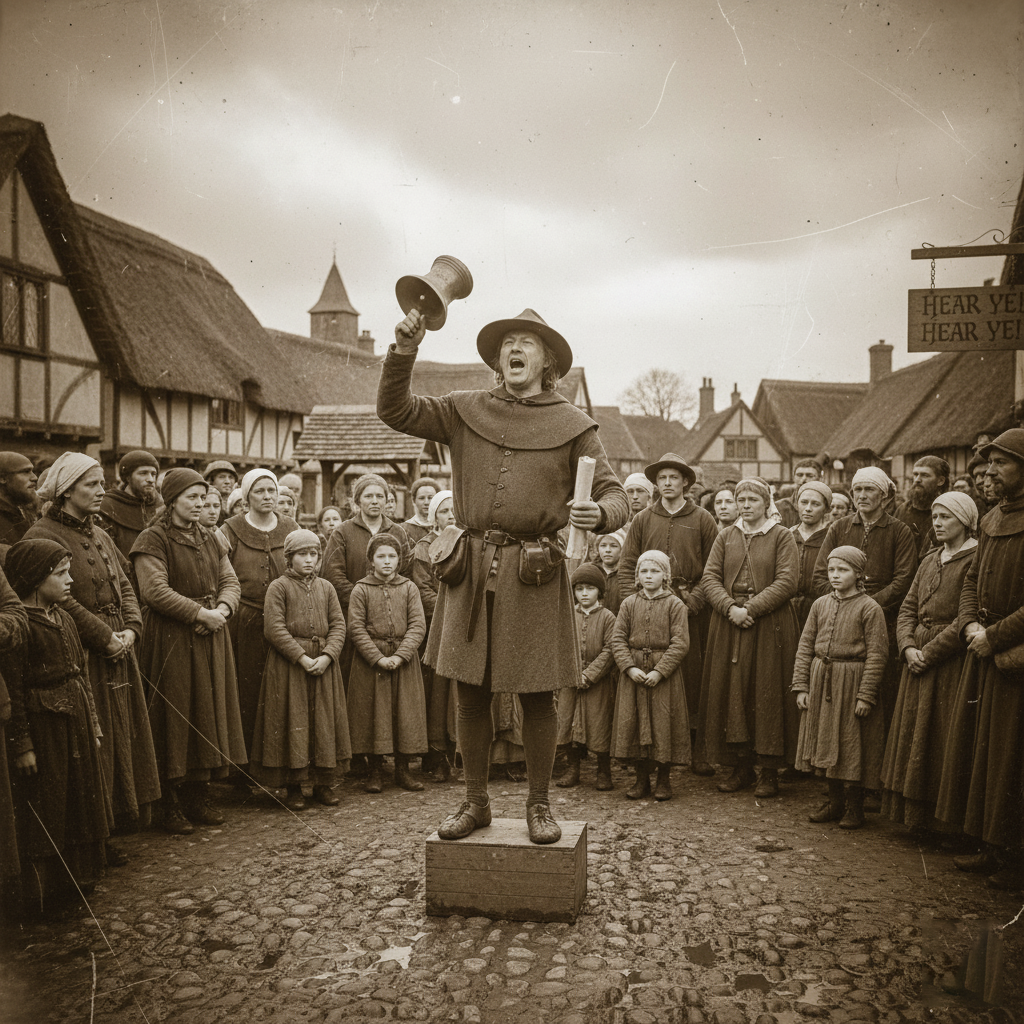
In the bustling streets of medieval towns, where the written word was a luxury few could afford, the Town Crier served as the vital link between the local government and the populace. Clad in a distinctive uniform, often adorned with a bell and a scroll, the Town Crier was a figure of authority and community spirit. His primary duty was to announce news, proclamations, and important events to the townsfolk, ensuring that even the illiterate could stay informed about matters that affected their daily lives. From royal decrees to local market days, the Town Crier's voice echoed through the streets, a herald of information in an age where communication was limited.
The role was not merely about shouting news; it required a keen understanding of the community's needs and a flair for performance. Town Cryers were often chosen for their loud, clear voices and their ability to engage the public, making announcements memorable and entertaining. They would often embellish their proclamations with dramatic flair, using gestures and intonation to capture the attention of passersby.
In addition to their announcements, Town Cryers played a crucial role in maintaining public order. They would often be called upon to quell disputes or remind citizens of local laws and regulations, acting as a mediator in the community. Their presence was a symbol of civic pride and a reminder of the social contract between the rulers and the ruled, making them an indispensable part of town life.
Day in the Life of a Town Crier
Early Morning: Preparing for the Day
As dawn breaks, the Town Crier rises early to prepare for the day ahead. He dons his distinctive attire, often a colorful coat with a tricorn hat, and polishes his bell, ensuring it shines brightly. He reviews the announcements he has received from the town council, practicing the delivery of each proclamation to ensure clarity and impact.
Mid-Morning: The First Round of Announcements
By mid-morning, the Town Crier makes his way to the town square, where he rings his bell to gather the attention of the townsfolk. With a booming voice, he announces the latest news: perhaps a royal decree, a call for volunteers for a local event, or reminders about market days. His performance is lively, engaging the crowd with his animated delivery, and he often takes the time to answer questions from curious citizens.
Afternoon: Community Engagement
After the morning announcements, the Town Crier walks through the streets, stopping at various taverns and shops to share news and engage with the community. He listens to the concerns of the townspeople, relaying important information back to the council. This interaction fosters a sense of community and trust, as the Town Crier becomes a familiar face and a source of local knowledge.
Evening: Final Announcements
As the sun sets, the Town Crier prepares for his final round of announcements. He returns to the town square, where he rings his bell one last time, calling the townsfolk to gather. He shares any last-minute news, perhaps a reminder of an upcoming festival or a warning about an impending storm. With a final flourish, he bids the crowd goodnight, his voice echoing through the streets as he walks home, satisfied with a day well spent.
Related Exhibits
Moirologist
The moirologist, a term derived from the Greek word 'moirologia' meaning 'to lament,' was a specialized profession that emerged during the Victorian Era, particularly in the 19th century. These individuals were skilled mourners, often hired to express grief at funerals and memorial services. Their role was to provide a public display of sorrow, which was considered an essential part of the mourning process in a society that placed great emphasis on the rituals surrounding death. Moirologists were often women, who would don black attire and engage in elaborate displays of mourning, including weeping, wailing, and reciting elegies or poems that honored the deceased. Their presence was thought to enhance the emotional atmosphere of the funeral, allowing the bereaved family to feel supported in their grief. In addition to their emotional labor, moirologists were also expected to have a deep understanding of the customs and traditions surrounding death, including the appropriate attire, behavior, and rituals that were expected in various social contexts. They often worked alongside funeral directors and were an integral part of the mourning culture of the time, which was characterized by elaborate funerals and a public display of grief.
Encyclopedia Saleperson
The Encyclopedia Salesperson was a vital figure in the dissemination of knowledge during the mid-20th century, particularly in the Post-War Era, when families sought to educate their children in an increasingly complex world. These salespeople were often employed by publishing companies that produced encyclopedias, which were considered essential household items. The role involved not only selling books but also acting as a trusted advisor to families, guiding them through the vast array of information available. Encyclopedia Salespersons would typically visit homes, demonstrating the value of their products through engaging presentations. They would highlight the importance of having a comprehensive reference library, especially in an age where education was becoming more accessible and valued. The sales pitch often included a demonstration of how to find information quickly and effectively, showcasing the encyclopedias as indispensable tools for learning and research. In addition to selling, these individuals were responsible for maintaining relationships with customers, providing follow-up support, and sometimes even offering additional educational materials. Their work was characterized by a strong emphasis on personal interaction, as they built rapport with families and understood their specific educational needs.
Explore More Exhibits
Discover the full collection of past and future professions in The Jobs Museum.