
Industrial Revolution
Coal Stoker
An extinct profession from Industrial Revolution that became obsolete due to technological advancement and societal change.
Media Gallery
About the Coal Stoker Profession
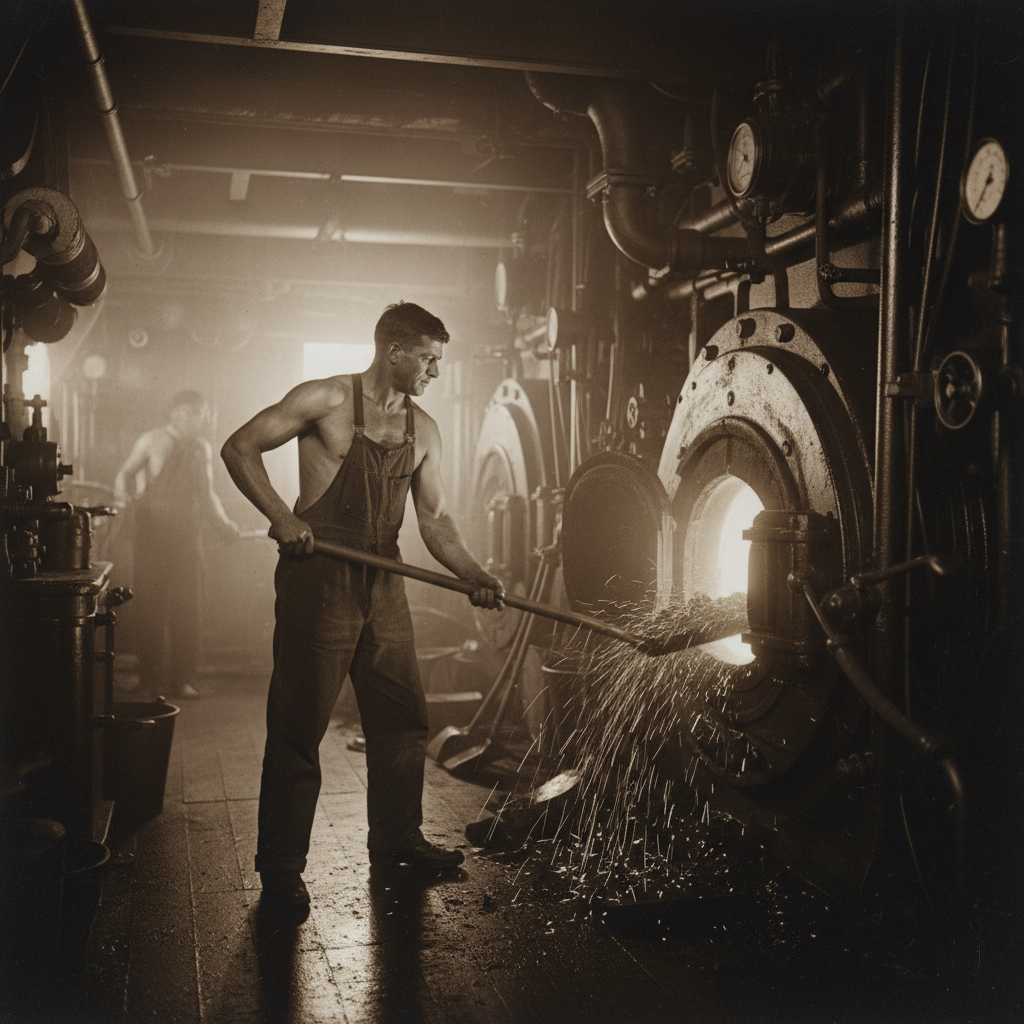
The coal stoker was a vital role during the Industrial Revolution, responsible for feeding coal into steam boilers that powered locomotives, ships, and factories. These workers were the unsung heroes of the industrial age, ensuring that the engines of progress ran smoothly. The job required physical strength and endurance, as stokers often worked in hot, cramped, and dark conditions, shoveling coal into the fireboxes of boilers to maintain the necessary temperature for steam production. The stoker's work was crucial for the operation of steam engines, which were the backbone of industrial transportation and manufacturing during this period. The job was labor-intensive and often dangerous, with workers exposed to high temperatures, coal dust, and the risk of burns or injuries from heavy equipment. Stokers were typically employed in coal-fired power plants, on ships, and in factories, where they played a key role in the efficiency of steam-powered machinery. As the Industrial Revolution progressed, the demand for coal stokers grew, but so did the mechanization of the industry, leading to significant changes in the workforce.
Day in the Life of a Coal Stoker
Early Morning: Preparing for Work
As dawn breaks, the coal stoker rises early to prepare for a long day ahead. After a quick breakfast, he dons his work clothes, which are often soiled from previous shifts, and heads to the coal yard. Here, he fills his shovel with coal, the primary fuel source that will keep the steam engines running throughout the day.
Morning Shift: Feeding the Boiler
Upon arriving at the boiler room, the stoker is greeted by the intense heat radiating from the firebox. He begins his shift by shoveling coal into the furnace, ensuring that the flames burn brightly and consistently. The rhythmic sound of coal hitting the metal grates is a familiar tune, as he works tirelessly to maintain the right temperature for steam production. The stoker must constantly monitor the fire, adjusting the amount of coal added based on the engine's demands.
Midday: Break and Maintenance
After several hours of continuous work, the stoker takes a brief break to hydrate and rest. During this time, he also inspects the boiler for any signs of wear or malfunction. Regular maintenance is crucial, as a malfunctioning boiler can lead to dangerous situations. He checks the water levels and ensures that the safety valves are functioning properly before returning to the coal pile.
Afternoon: The Heat of the Day
As the sun rises higher, the temperature in the boiler room becomes stifling. The stoker continues to shovel coal, his muscles aching from the labor. He works alongside other stokers, communicating through shouts over the roar of the machinery. The camaraderie among the workers is strong, as they rely on each other to keep the engines running smoothly.
Evening: Wrapping Up
As the day winds down, the stoker finishes his shift by cleaning out the ash and soot that has accumulated in the boiler room. This task is essential for maintaining efficiency and safety. Once the area is tidy, he gathers his belongings and heads home, exhausted but proud of the work he has accomplished. The coal stoker's day is long and grueling, but it is a crucial part of the industrial machine that drives progress forward.
Related Exhibits
Encyclopedia Saleperson
The Encyclopedia Salesperson was a vital figure in the dissemination of knowledge during the mid-20th century, particularly in the Post-War Era, when families sought to educate their children in an increasingly complex world. These salespeople were often employed by publishing companies that produced encyclopedias, which were considered essential household items. The role involved not only selling books but also acting as a trusted advisor to families, guiding them through the vast array of information available. Encyclopedia Salespersons would typically visit homes, demonstrating the value of their products through engaging presentations. They would highlight the importance of having a comprehensive reference library, especially in an age where education was becoming more accessible and valued. The sales pitch often included a demonstration of how to find information quickly and effectively, showcasing the encyclopedias as indispensable tools for learning and research. In addition to selling, these individuals were responsible for maintaining relationships with customers, providing follow-up support, and sometimes even offering additional educational materials. Their work was characterized by a strong emphasis on personal interaction, as they built rapport with families and understood their specific educational needs.
Switchboard Night Watch
The Switchboard Night Watch was a crucial role in the early 20th century, particularly during the rise of telephone communication. As cities expanded and the demand for instant communication grew, telephone switchboards became the backbone of urban connectivity. The Switchboard Night Watch was responsible for overseeing the operation of these switchboards during the night hours, ensuring that calls were connected efficiently and that any issues were promptly addressed. This role required a keen sense of responsibility and a deep understanding of the switchboard's mechanics, as well as the ability to handle emergencies and troubleshoot problems in the dark hours of the night. Night watch operators worked in dimly lit rooms filled with the hum of electrical equipment and the soft clicks of switches being flipped. They were often the only person on duty, tasked with maintaining the flow of communication for hospitals, police stations, and other essential services that operated around the clock. The job was not only about connecting calls but also about providing a sense of security and reliability to the community, as the night watch was often the first point of contact in emergencies. As technology advanced, the need for manual switchboard operators diminished. The introduction of automated switching systems in the mid-20th century rendered the role of the Switchboard Night Watch obsolete, as machines could perform the tasks more efficiently and without the need for human oversight.
Explore More Exhibits
Discover the full collection of past and future professions in The Jobs Museum.