
Early 20th Century
Switchboard Night Watch
An extinct profession from Early 20th Century that became obsolete due to technological advancement and societal change.
Media Gallery
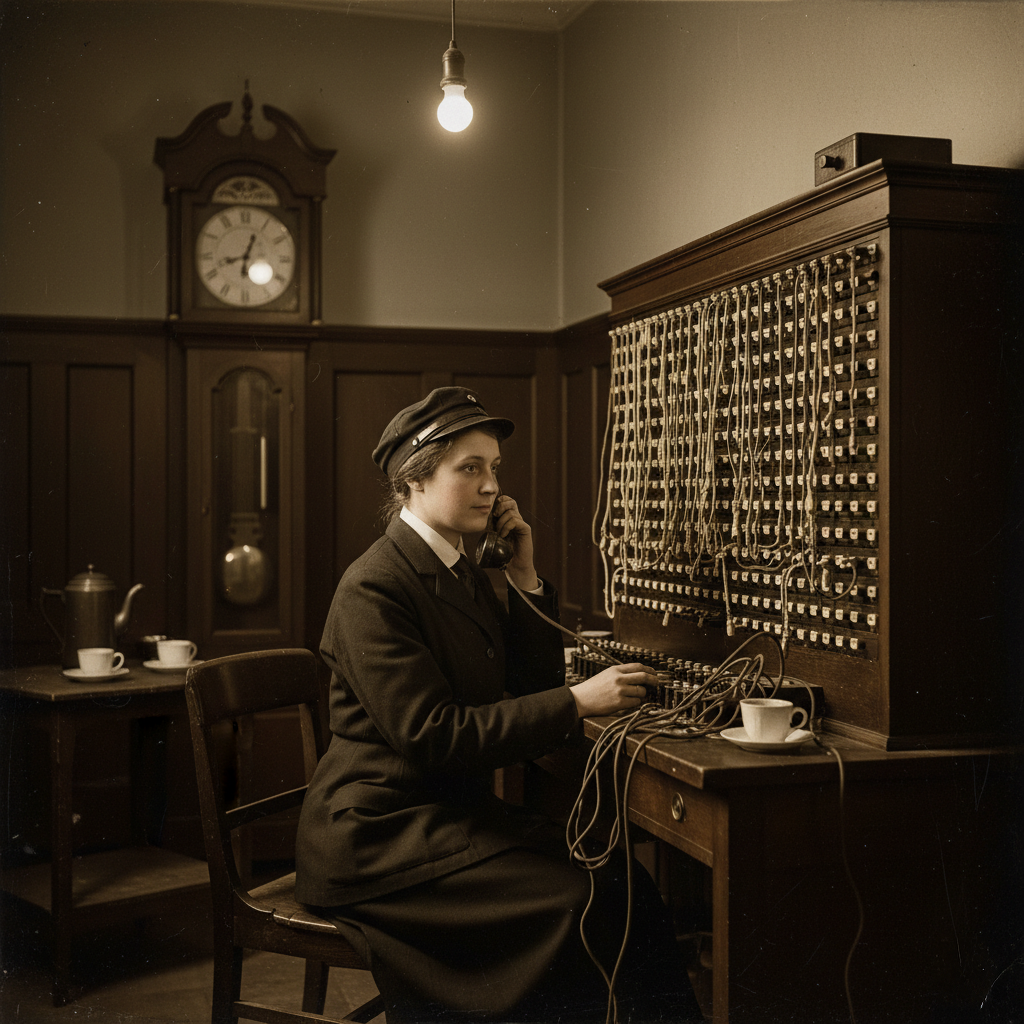
About the Switchboard Night Watch Profession
The Switchboard Night Watch was a crucial role in the early 20th century, particularly during the rise of telephone communication. As cities expanded and the demand for instant communication grew, telephone switchboards became the backbone of urban connectivity. The Switchboard Night Watch was responsible for overseeing the operation of these switchboards during the night hours, ensuring that calls were connected efficiently and that any issues were promptly addressed. This role required a keen sense of responsibility and a deep understanding of the switchboard's mechanics, as well as the ability to handle emergencies and troubleshoot problems in the dark hours of the night.
Night watch operators worked in dimly lit rooms filled with the hum of electrical equipment and the soft clicks of switches being flipped. They were often the only person on duty, tasked with maintaining the flow of communication for hospitals, police stations, and other essential services that operated around the clock. The job was not only about connecting calls but also about providing a sense of security and reliability to the community, as the night watch was often the first point of contact in emergencies.
As technology advanced, the need for manual switchboard operators diminished. The introduction of automated switching systems in the mid-20th century rendered the role of the Switchboard Night Watch obsolete, as machines could perform the tasks more efficiently and without the need for human oversight.
Day in the Life of a Switchboard Night Watch
10:00 PM - Arrival and Setup
Upon arriving at the switchboard station, the night watch would first check the equipment, ensuring that all lines were operational and that the switchboard was ready for the night’s calls. This involved plugging in various lines and testing connections to confirm that everything was functioning correctly. The operator would also prepare a logbook to record any significant events or issues that arose during the night.
11:00 PM - Monitoring Calls
As the clock struck eleven, the night watch would begin to receive calls. Each call required the operator to manually connect callers by plugging and unplugging wires into the appropriate jacks on the switchboard. This task demanded quick reflexes and a good memory, as the operator had to remember which lines connected to which locations. The operator would also need to be attentive to the tone of the callers, as urgency could often be detected in their voices.
2:00 AM - Emergency Protocols
During the quiet hours of the night, the operator remained vigilant, ready to respond to any emergencies. This could involve connecting a call from a hospital needing immediate assistance or a police station requiring backup. The operator had to be calm under pressure, often making quick decisions to reroute calls or contact emergency services.
4:00 AM - Maintenance Checks
As the night wore on, the operator would take time to perform maintenance checks on the switchboard. This included cleaning the equipment, checking for any signs of wear, and ensuring that all connections were secure. This was a solitary task, often accompanied by the soft sounds of the city outside, as the world slowly began to wake up.
6:00 AM - Shift Change
As dawn approached, the night watch would prepare to hand over duties to the day shift operator. This involved briefing them on any significant calls or issues that occurred during the night, ensuring a smooth transition. The night watch would then log out, often feeling a sense of accomplishment for having kept the lines of communication open throughout the night.
Related Exhibits
Daguerreotypist
The daguerreotypist was a pioneering figure in the world of photography, specializing in the creation of daguerreotypes, the first commercially successful form of photography. This intricate process, developed by Louis Daguerre in 1839, involved capturing images on a polished sheet of silver-plated copper. The daguerreotypist's work was not merely technical; it was an art form that required a keen eye for detail and a deep understanding of light and composition. Each daguerreotype was a unique image, characterized by its remarkable clarity and depth, making it a sought-after medium for portraiture and landscapes alike. The daguerreotypist operated in a small studio, often adorned with velvet drapes and props to enhance the aesthetic of the portraits. The process began with the careful preparation of the metal plate, which was coated with a light-sensitive layer of silver iodide. After exposure in the camera, the plate was developed using mercury vapor, a hazardous but essential step that brought the latent image to life. The final product was then fixed with a salt solution, resulting in a stunning, mirror-like image that could be viewed directly or framed for display. Daguerreotypists were often entrepreneurs, establishing their own studios and marketing their services to the public. They played a crucial role in documenting society, capturing everything from family portraits to significant historical events, and their work laid the foundation for modern photography.
Ostrich Feather Plucker
The role of the ostrich feather plucker emerged in the late 19th century, coinciding with the rise of the fashion industry and the extravagant tastes of the Victorian elite. Ostrich feathers, prized for their softness, length, and striking appearance, became a symbol of luxury and status. The feathers were used in a variety of fashionable items, including hats, boas, and elaborate costumes. Pluckers were responsible for harvesting these feathers, a delicate task that required both skill and care to ensure the birds remained healthy and the feathers were of the highest quality. Ostrich farms, primarily located in South Africa, became the epicenter of this industry. Workers would carefully pluck feathers from live ostriches, a process that was typically done once a year during the molting season when the birds naturally shed their feathers. The feathers were then sorted, cleaned, and prepared for shipment to fashion houses around the world. The demand for these luxurious feathers surged, leading to a booming industry that provided employment for many, particularly women, who often worked in harsh conditions for meager pay. As fashion trends evolved and the use of synthetic materials became more prevalent, the demand for natural ostrich feathers began to decline. Additionally, the ethical concerns surrounding the treatment of ostriches and the rise of animal rights movements contributed to the job's obsolescence. By the early 20th century, the ostrich feather plucker had largely disappeared from the workforce, replaced by more humane and sustainable alternatives in the fashion industry.
Explore More Exhibits
Discover the full collection of past and future professions in The Jobs Museum.