
19th Century
Stagecoach Driver
An extinct profession from 19th Century that became obsolete due to technological advancement and societal change.
Media Gallery
About the Stagecoach Driver Profession
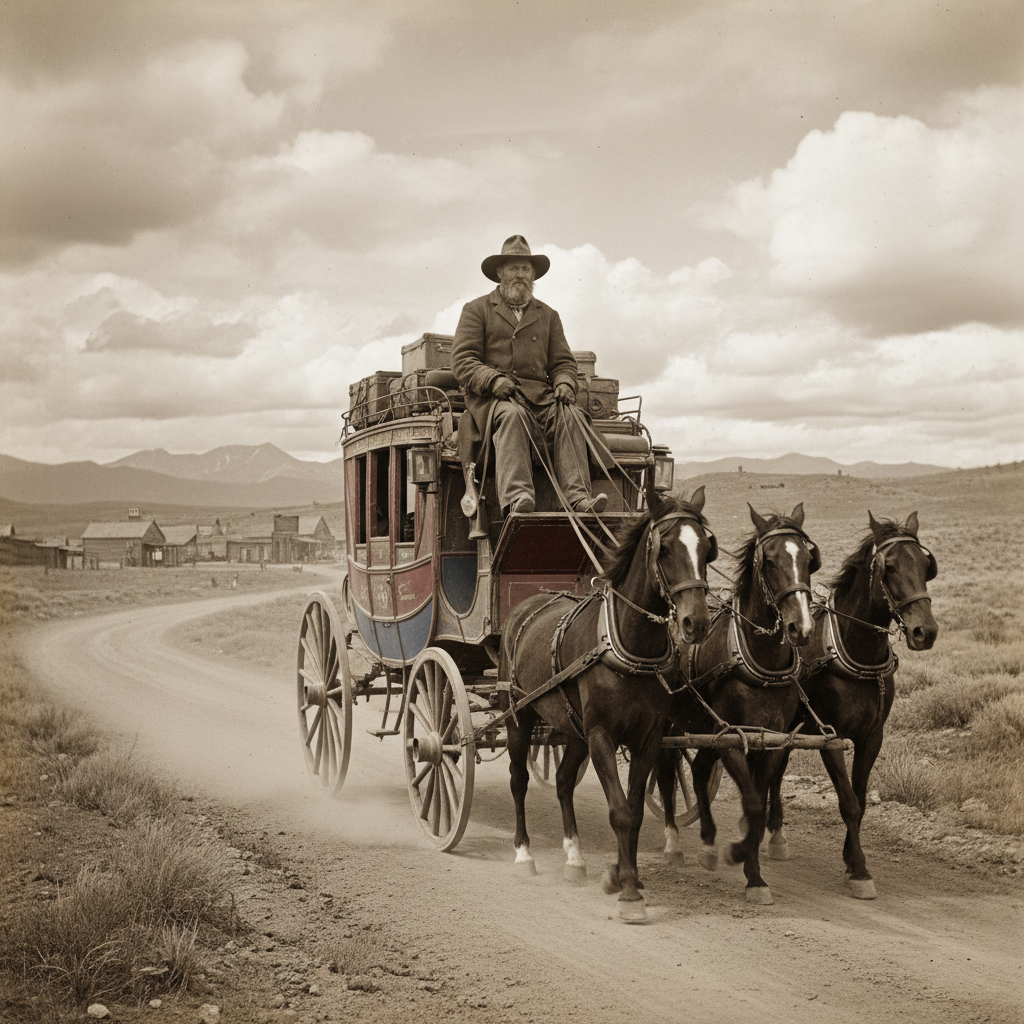
The stagecoach driver, a vital figure in the 19th century, was responsible for transporting passengers and goods across vast distances in horse-drawn coaches. These drivers navigated rugged terrains, often through treacherous weather conditions, ensuring the safety and comfort of their passengers. The stagecoach itself was a marvel of engineering, designed to carry multiple passengers and their luggage, while the driver skillfully managed a team of horses, often up to six, to pull the heavy vehicle. The role required not only a deep understanding of the horses and the coach but also an intimate knowledge of the routes, including potential hazards such as rough roads, rivers, and bandit-infested areas. Stagecoach drivers were often seen as the lifeline of communication and commerce in the expanding American West, connecting remote settlements with urban centers and facilitating the movement of mail and goods.
Day in the Life of a Stagecoach Driver
Early Morning: Preparing for the Journey
As dawn breaks, the stagecoach driver rises early to prepare for the day ahead. The first task is to inspect the horses, ensuring they are healthy and well-fed. The driver checks the harnesses and the condition of the stagecoach, making sure everything is in working order. After a hearty breakfast, the driver loads the luggage and supplies onto the coach, carefully balancing the weight to ensure a smooth ride.
Mid-Morning: Setting Off
By mid-morning, the stagecoach is ready to depart. The driver gathers the passengers, providing them with a brief overview of the journey ahead. With a firm grip on the reins, the driver calls out to the horses, urging them forward as the coach rolls out of the station. The rhythmic sound of hooves on the dirt road accompanies the chatter of passengers, creating a lively atmosphere.
Afternoon: Navigating the Route
As the day progresses, the driver must remain vigilant, navigating through various terrains. This includes crossing rivers, climbing hills, and avoiding obstacles. The driver often engages with passengers, sharing stories and local lore, while also keeping an eye out for any signs of trouble, such as rough weather or potential bandits. The driver’s knowledge of the land is crucial, as shortcuts and alternate routes can save time and ensure safety.
Evening: Arrival and Rest
As the sun begins to set, the driver approaches the destination. Upon arrival, the driver assists passengers with their luggage and ensures they are safely disembarked. After a long day, the driver tends to the horses, feeding and watering them before settling in for the night. The driver often stays at an inn or boarding house, sharing tales of the day’s journey with fellow travelers and preparing for the next leg of the route.
Related Exhibits
Knitting Mill Worker
The knitting mill worker played a crucial role in the textile industry during the Industrial Revolution, a period marked by rapid industrial growth and technological innovation. These workers were primarily responsible for operating knitting machines that produced a variety of knitted goods, including socks, sweaters, and other garments. The work was often performed in large factories, known as knitting mills, where rows of machines hummed with activity, creating a rhythmic backdrop to the labor-intensive environment. Workers were typically assigned to specific machines, where they would monitor the knitting process, troubleshoot any issues, and ensure that the quality of the output met the factory's standards. The job required a keen eye for detail, as even a small mistake could result in significant waste of materials and time. Knitting mill workers were often women and children, who were drawn to the mills by the promise of steady wages. The work was physically demanding, requiring long hours of standing and repetitive motion, which could lead to fatigue and injury. Despite the harsh conditions, knitting mills provided a vital source of income for many families during a time when economic opportunities were limited, particularly for women. The rise of the knitting mill worker was emblematic of the broader changes occurring in society, as traditional hand-knitting practices were replaced by mechanized production, leading to increased efficiency and lower costs for consumers.
Ice Cutter
In the 19th century, before the advent of modern refrigeration, the Ice Cutter was a vital occupation, especially in regions where lakes and rivers froze during the winter months. These skilled laborers harvested ice from frozen bodies of water, which was then stored in icehouses and used to preserve food and cool drinks in the sweltering summer heat. The process was labor-intensive and required not only physical strength but also a keen understanding of the ice's thickness and quality. Ice was cut into large blocks, often weighing several hundred pounds, and transported to markets and homes, where it played a crucial role in daily life. The Ice Cutter's work was not just about brute force; it involved precision and technique to ensure that the ice remained intact during the cutting and hauling process. As the demand for ice grew, so did the complexity of the job, with cutters often working in teams to maximize efficiency and safety.
Explore More Exhibits
Discover the full collection of past and future professions in The Jobs Museum.