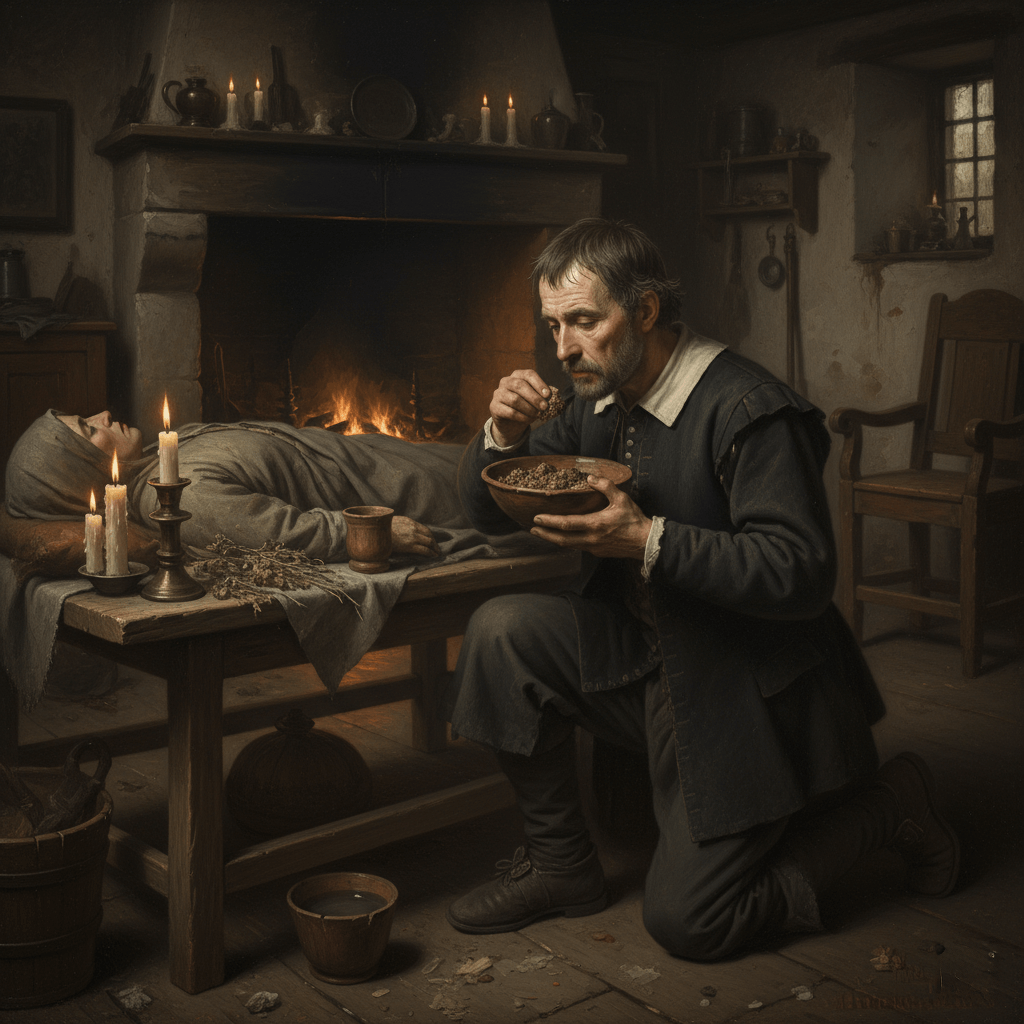
About the Sin Eater Profession
The role of the Sin Eater was a unique and somber occupation that emerged in medieval Europe, particularly in England and Wales, during the 11th to 19th centuries. Sin Eaters were individuals who performed a ritualistic act of consuming food, often bread and ale, placed on the body of a deceased person. This act was believed to absolve the deceased of their sins, allowing their soul to ascend to heaven. The Sin Eater was often a marginalized figure, sometimes a beggar or outcast, who took on this role for a small fee or in exchange for food. The practice was steeped in superstition and reflected the deep-seated beliefs about sin, guilt, and the afterlife prevalent in medieval society.
The Sin Eater's work was not merely a job; it was a profound engagement with the community's spiritual beliefs. Families would hire a Sin Eater to ensure that their loved ones could pass into the afterlife unburdened by sin. This role was particularly significant in times of plague or death, when the community was desperate for solace and closure. The Sin Eater's presence at funerals was often met with a mix of reverence and fear, as they were seen as both a necessary part of the grieving process and a reminder of the community's own mortality.
Day in the Life of a Sin Eater
Early Morning: Preparing for the Day
The day often began at dawn, with the Sin Eater waking in a humble dwelling, perhaps a small hut or a corner of a barn. The air was thick with the scent of damp earth and wood smoke. After a meager breakfast, the Sin Eater would prepare for the day ahead, gathering any necessary items for the rituals they would perform. This might include a small pouch for collecting alms or a simple wooden bowl for the food offerings.
Mid-Morning: Responding to Calls
As the sun rose higher, the Sin Eater would begin to make their way through the village, often called upon by families in mourning. The Sin Eater's reputation would precede them, and they would be approached by those seeking to ensure the spiritual well-being of their deceased loved ones. Each call was met with a heavy heart, as the Sin Eater understood the gravity of their task.
Afternoon: The Ritual
Upon arriving at a home where a death had occurred, the Sin Eater would be led to the body, often laid out in a simple shroud. The family would prepare a meal, typically bread and ale, which would be placed on the deceased's chest. The Sin Eater would then recite prayers or incantations, invoking the divine to accept the offering. With solemnity, they would consume the food, symbolically taking on the sins of the departed. This act was both a physical and spiritual transaction, believed to cleanse the soul of its earthly burdens.
Evening: Reflection and Solitude
After performing the ritual, the Sin Eater would often retreat to a quiet place, reflecting on the day’s events. The weight of the sins they had taken on could be heavy, and solitude was a necessary balm for their spirit. They might spend the evening in prayer or meditation, seeking peace for both themselves and the souls they had helped.
Night: Rest and Preparation for Tomorrow
As night fell, the Sin Eater would return home, often with a few coins or food as payment for their services. The cycle of life and death continued, and they would prepare for another day of carrying the burdens of others, a role both feared and respected in their community.