
Medieval Period
Calligrapher
An extinct profession from Medieval Period that became obsolete due to technological advancement and societal change.
Media Gallery
About the Calligrapher Profession
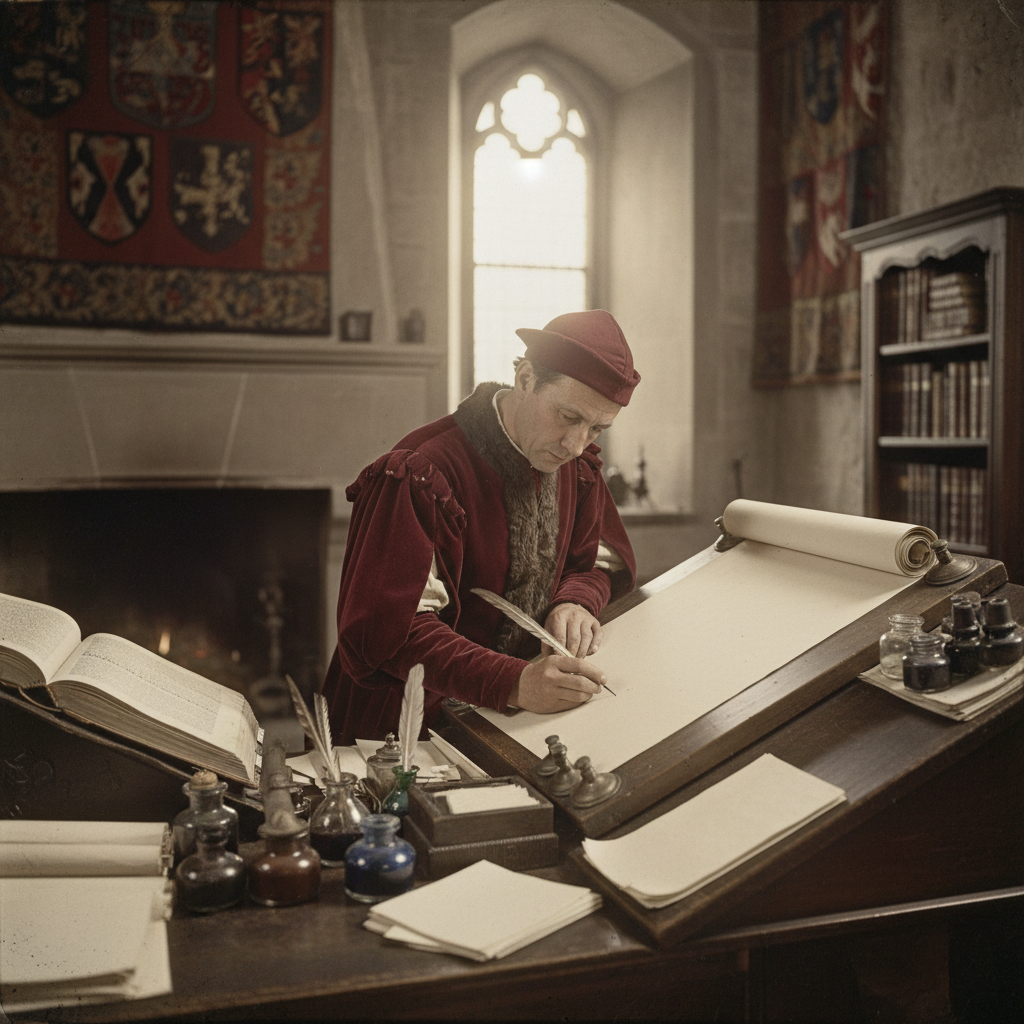
The art of calligraphy, often referred to as 'beautiful writing,' flourished during the Medieval Period, where skilled calligraphers played a crucial role in the preservation and dissemination of knowledge. These artisans were not merely writers; they were artists who transformed the written word into a visual spectacle. Calligraphers were responsible for creating manuscripts, religious texts, and important documents, often using intricate scripts that varied by region and purpose. Their work was characterized by the use of quills, ink, and parchment, and they often employed elaborate techniques such as gilding and illumination to enhance their creations. The calligrapher's role was not only to write but to imbue each piece with a sense of beauty and reverence, making their work essential in an era where printed materials were scarce and literacy was a privilege of the few.
Day in the Life of a Calligrapher
Morning: Preparing the Workspace
As dawn breaks, the calligrapher begins the day by preparing their workspace. The table is cleared of any clutter, and fresh sheets of parchment are laid out. The calligrapher carefully selects their quills, each one chosen for its specific purpose, whether for fine lines or bold strokes. They mix their ink, often made from soot and gum arabic, ensuring the consistency is just right for the day’s work.
Mid-Morning: Drafting Texts
With the workspace ready, the calligrapher begins drafting texts. This involves sketching out the layout of the manuscript, paying close attention to margins and spacing. The calligrapher uses a light hand to outline the letters, ensuring that each character is proportionate and aesthetically pleasing. This stage is crucial, as it sets the foundation for the final piece.
Afternoon: Inking the Manuscript
After the draft is approved, the calligrapher moves on to the inking process. With a steady hand, they dip their quill into the ink and begin to write, each stroke deliberate and measured. The calligrapher often works in silence, focusing intently on the flow of the letters. This process can take hours, as they must be meticulous to avoid mistakes that would require time-consuming corrections.
Late Afternoon: Illumination and Decoration
Once the text is complete, the calligrapher may add decorative elements. This could involve gilding letters with gold leaf or adding intricate illustrations that complement the text. The calligrapher uses fine brushes and special inks to create these embellishments, transforming the manuscript into a work of art. This stage is where the calligrapher’s creativity truly shines, as they bring the text to life with color and design.
Evening: Final Review and Delivery
As the day winds down, the calligrapher reviews their work, ensuring that every detail is perfect. Once satisfied, they prepare the manuscript for delivery, carefully rolling it or placing it in a protective case. The calligrapher may then meet with patrons or clergy to present their work, often receiving praise for their skill and artistry. The day concludes with a sense of accomplishment, knowing that their work will be cherished for generations to come.
Related Exhibits
Parakoimomenos
The Parakoimomenos, often translated as 'bedchamber attendant' or 'chamberlain,' was a significant role in the households of the elite during the Classical Antiquity period, particularly in the Byzantine Empire. This position was not merely one of servitude; it was a trusted role that involved close personal service to the emperor or high-ranking officials. The Parakoimomenos was responsible for the personal care and comfort of their charge, overseeing the sleeping quarters, and ensuring that the environment was conducive to rest and privacy. This included managing the temperature of the room, preparing bedding, and even attending to the personal needs of the individual they served. The role required a high level of discretion and loyalty, as the Parakoimomenos often had access to sensitive information and was privy to the intimate details of their employer's life. In addition to personal care, the Parakoimomenos also played a role in the ceremonial aspects of the household, assisting in the preparation for audiences and events. They were often involved in the selection of clothing and accessories, ensuring that their employer was always presented in the best light. This position was a blend of servant and confidant, requiring a deep understanding of the social dynamics of the court and the ability to navigate complex relationships with other members of the household and nobility.
Mantikos
The Mantikos, a revered figure in ancient societies, was a professional diviner or seer, often consulted for their ability to interpret omens and communicate with the divine. This role was deeply embedded in the spiritual and social fabric of communities, where the Mantikos served as a bridge between the mortal realm and the gods. They were often called upon during significant events such as battles, harvests, and personal milestones, providing guidance through rituals, sacrifices, and the interpretation of signs from nature. The Mantikos utilized various methods, including the examination of animal entrails, the observation of celestial bodies, and the reading of dreams, to deliver prophecies and advice. Their insights were not only sought for personal matters but also for communal decisions, making them influential figures in governance and societal direction.
Explore More Exhibits
Discover the full collection of past and future professions in The Jobs Museum.