
Victorian Era
Billy Boy
An extinct profession from Victorian Era that became obsolete due to technological advancement and societal change.
Media Gallery
About the Billy Boy Profession
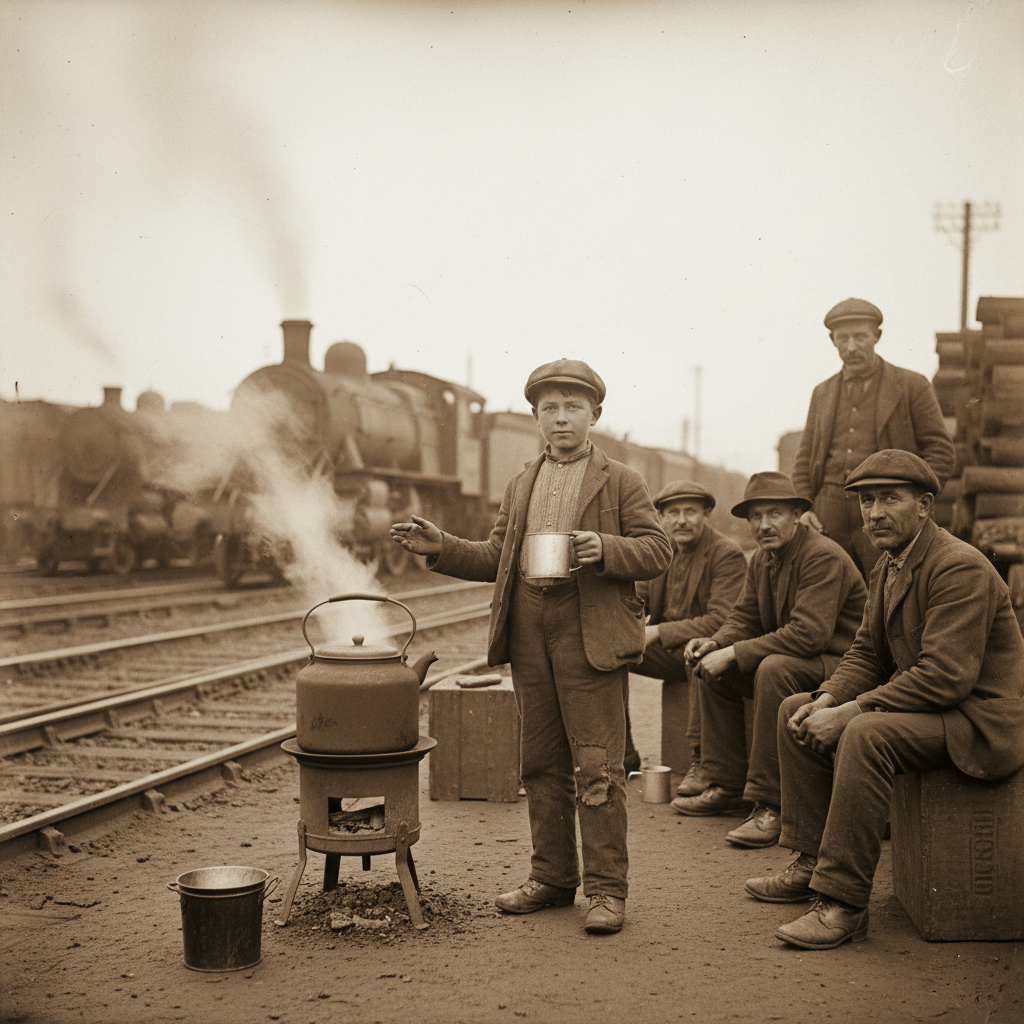
The term 'Billy Boy' refers to a young boy employed in the Victorian era, primarily in the coal mining industry, to assist with various tasks that were essential for the operation of the mines. These boys, often starting work as young as six or seven, played a crucial role in the mining process, particularly in the transportation of coal and the management of ventilation within the mines. Their small stature allowed them to navigate the narrow tunnels and shafts where adults could not fit, making them invaluable to the mining operations of the time.
Billy Boys were responsible for a variety of tasks, including pushing carts filled with coal, opening and closing ventilation doors, and sometimes even acting as lookouts for supervisors. Their work was physically demanding and often dangerous, exposing them to the perils of mining, such as cave-ins and poor air quality. Despite the harsh conditions, these boys contributed significantly to the coal industry, which was a cornerstone of the Victorian economy, fueling the Industrial Revolution and the rapid urbanization of Britain.
The life of a Billy Boy was marked by long hours, typically starting before dawn and ending after sunset, with little regard for their well-being. They were often paid meager wages, reflecting the exploitative labor practices of the time, and many faced health issues due to the hazardous environment in which they worked.
Day in the Life of a Billy Boy
Early Morning: Rise and Shine
As dawn breaks, the Billy Boy rises from a small, cramped sleeping space, often shared with siblings or other miners. Breakfast is a quick affair, usually consisting of bread and tea, before he heads out to the mine. The air is still cool, and the streets are quiet as he makes his way to the pithead, where the day’s work begins.
Morning Shift: Into the Depths
Upon arrival, the Billy Boy dons a simple cap and a ragged shirt, ready for the day ahead. He is assigned to a section of the mine where he must push a cart filled with coal through narrow tunnels. The weight of the cart is heavy, and the air is thick with dust, but he perseveres, knowing that his family relies on his earnings. He also checks the ventilation doors, ensuring that fresh air circulates through the mine, a task that requires him to crawl through tight spaces.
Midday: A Brief Respite
Around midday, the Billy Boy takes a short break, often sharing a meager meal with other young workers. They exchange stories of their lives above ground, dreaming of a day when they might escape the mines. However, the break is brief, and soon he is back to work, pushing carts and managing ventilation.
Afternoon: The Grind Continues
The afternoon is filled with the same grueling tasks. The boy’s hands are calloused, and his clothes are stained with coal dust. He must remain vigilant, as the mine can be unpredictable. Occasionally, he hears the distant sounds of machinery and the calls of adult miners, reminding him of the hierarchy within the mine.
Evening: The Long Journey Home
As the sun sets, the Billy Boy emerges from the mine, exhausted but relieved to be above ground. He makes his way home, often too tired to engage in play or study. The day ends with a simple meal, and he collapses into bed, ready to do it all over again the next day.
Related Exhibits
Wainwright
The wainwright was a skilled craftsman responsible for the construction and repair of wagons and carts, essential vehicles for transportation before the advent of motorized vehicles. This occupation flourished in rural and urban settings, where the demand for sturdy, reliable transport was paramount for trade, agriculture, and daily life. Wainwrights utilized a variety of materials, primarily wood and iron, to create vehicles that could withstand the rigors of travel across uneven terrain. Their work was not only functional but also reflected the artistry of craftsmanship, with many wainwrights taking pride in the aesthetic details of their creations, such as decorative carvings and paintwork. The role of the wainwright was crucial in supporting the economy, as they provided the means for farmers to transport goods to market and for merchants to deliver products to consumers.
Log Telegraphist
The role of a Log Telegraphist emerged during the Industrial Revolution, a period marked by rapid technological advancement and the expansion of communication networks. These skilled workers were responsible for operating telegraph systems, which were crucial for transmitting messages over long distances using electrical signals. The Log Telegraphist specifically focused on the logging and recording of messages sent and received via telegraph, ensuring that communications were accurately documented and relayed. This job was vital for businesses, government agencies, and the military, as it facilitated timely decision-making and coordination across vast distances. Log Telegraphists were often found in telegraph offices, railway stations, and military outposts, where they worked in close proximity to the telegraph equipment. Their work environment was typically bustling, filled with the sounds of clicking keys and the hum of electrical machinery. The Log Telegraphist's role required not only technical proficiency in operating the telegraph but also a keen attention to detail, as they meticulously recorded each message, noting the time of receipt and dispatch, and ensuring that no errors occurred in the transmission process. As the world became increasingly interconnected, the demand for efficient communication grew, and the Log Telegraphist played a pivotal role in this transformation. However, as technology advanced, the telegraph system began to be replaced by more sophisticated communication methods, such as the telephone and eventually the internet, leading to the decline of this occupation.
Explore More Exhibits
Discover the full collection of past and future professions in The Jobs Museum.