
Industrial Revolution
Log Telegraphist
An extinct profession from Industrial Revolution that became obsolete due to technological advancement and societal change.
Media Gallery
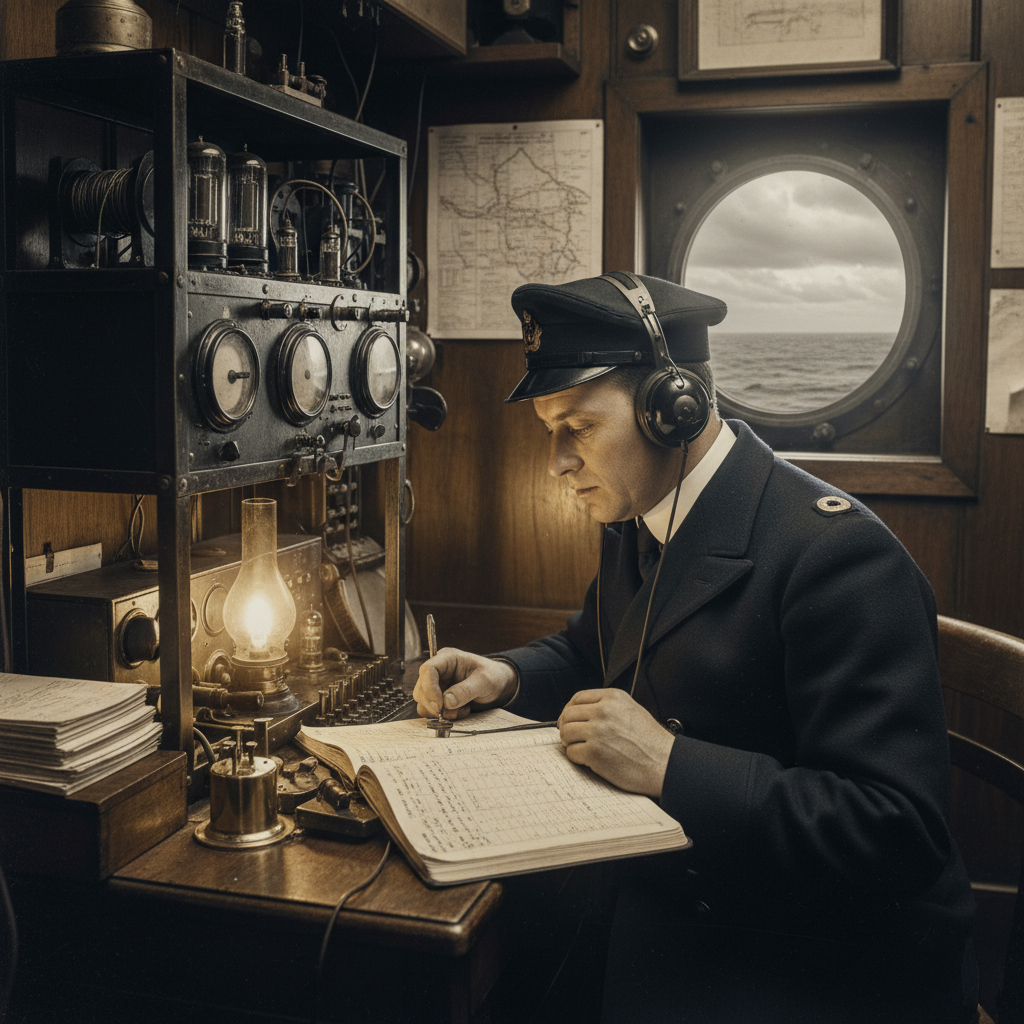
About the Log Telegraphist Profession
The role of a Log Telegraphist emerged during the Industrial Revolution, a period marked by rapid technological advancement and the expansion of communication networks. These skilled workers were responsible for operating telegraph systems, which were crucial for transmitting messages over long distances using electrical signals. The Log Telegraphist specifically focused on the logging and recording of messages sent and received via telegraph, ensuring that communications were accurately documented and relayed. This job was vital for businesses, government agencies, and the military, as it facilitated timely decision-making and coordination across vast distances.
Log Telegraphists were often found in telegraph offices, railway stations, and military outposts, where they worked in close proximity to the telegraph equipment. Their work environment was typically bustling, filled with the sounds of clicking keys and the hum of electrical machinery. The Log Telegraphist's role required not only technical proficiency in operating the telegraph but also a keen attention to detail, as they meticulously recorded each message, noting the time of receipt and dispatch, and ensuring that no errors occurred in the transmission process.
As the world became increasingly interconnected, the demand for efficient communication grew, and the Log Telegraphist played a pivotal role in this transformation. However, as technology advanced, the telegraph system began to be replaced by more sophisticated communication methods, such as the telephone and eventually the internet, leading to the decline of this occupation.
Day in the Life of a Log Telegraphist
Morning: The Shift Begins
As dawn breaks, the Log Telegraphist arrives at the telegraph office, ready to start the day. The first task is to check the equipment, ensuring that the telegraph machine is functioning properly. After a quick inspection, they prepare their workspace, laying out the necessary tools: a notepad, a pencil, and a logbook for recording messages.
Mid-Morning: Receiving Messages
By mid-morning, the office is buzzing with activity. The Log Telegraphist sits at their desk, listening intently to the rhythmic clicking of the telegraph machine. As messages come in, they carefully transcribe each one, noting the sender, time, and content. Accuracy is paramount; a single mistake could lead to misunderstandings or delays in critical communications.
Afternoon: Sending Messages
After lunch, the Log Telegraphist shifts focus to sending messages. They prepare outgoing communications, ensuring that each message is clear and concise. Once ready, they tap out the message on the telegraph machine, sending it off to its destination. They then log the details of the transmission in the logbook, maintaining a meticulous record of all communications.
Late Afternoon: Coordination and Collaboration
As the day progresses, the Log Telegraphist collaborates with other staff members, including operators and clerks, to ensure that all messages are processed efficiently. They may also assist in troubleshooting any technical issues that arise, demonstrating their technical skills and knowledge of the equipment.
Evening: Wrapping Up
As the workday comes to a close, the Log Telegraphist reviews the logbook, ensuring that all messages have been accounted for. They tidy their workspace, preparing for the next day’s shift. With a sense of accomplishment, they leave the office, knowing that their work has played a crucial role in keeping the lines of communication open.
Related Exhibits
Necessary Woman
The role of the Necessary Woman emerged during the Victorian Era, a time characterized by strict social hierarchies and the delineation of gender roles. These women were employed primarily in affluent households, where they were responsible for the maintenance of the 'necessary room'—a euphemism for the toilet or privy. This job was not merely about cleaning; it involved a range of tasks that ensured the hygiene and comfort of the household. Necessary Women were tasked with the cleaning and upkeep of the facilities, which included emptying chamber pots, scrubbing floors, and ensuring that the necessary room was stocked with essential supplies such as toilet paper and soap. In an era when sanitation was becoming increasingly important, the work of the Necessary Woman was crucial. They were often the unsung heroes of the household, performing a job that was considered too unpleasant for the higher-status members of the family. Their work was essential in preventing the spread of disease, particularly in urban areas where sanitation was a growing concern. Despite the low social status of this occupation, Necessary Women played a vital role in the functioning of Victorian households, often working long hours for modest pay. Their contributions were largely overlooked, reflecting the broader societal attitudes towards women’s work during this period.
Human Computer
The role of a Human Computer emerged in the early 20th century, primarily during the 1930s to the 1950s, as a response to the growing need for complex calculations in fields such as astronomy, engineering, and military applications. Human Computers were predominantly women who performed mathematical calculations by hand, often using pencil and paper, and later, mechanical calculators. They worked in teams, meticulously calculating trajectories for rockets, analyzing astronomical data, and solving intricate mathematical problems that were essential for scientific advancements. Their work was critical in the development of early computers, as they laid the groundwork for the algorithms and processes that would later be automated. These women, often referred to as "computers," were not only skilled mathematicians but also adept at problem-solving and critical thinking. They operated in environments that ranged from university laboratories to government research facilities, where they collaborated closely with scientists and engineers. The atmosphere was often intense, with deadlines looming and the pressure to produce accurate results being paramount. The Human Computer's role was not just about numbers; it was about precision, attention to detail, and the ability to work under pressure. They were the unsung heroes behind many scientific breakthroughs, including the early space missions and the development of radar technology during World War II. Their contributions were vital, yet often overlooked in the historical narrative of computing and mathematics.
Explore More Exhibits
Discover the full collection of past and future professions in The Jobs Museum.