
Classical Antiquity
Agoranomos
An extinct profession from Classical Antiquity that became obsolete due to technological advancement and societal change.
Media Gallery
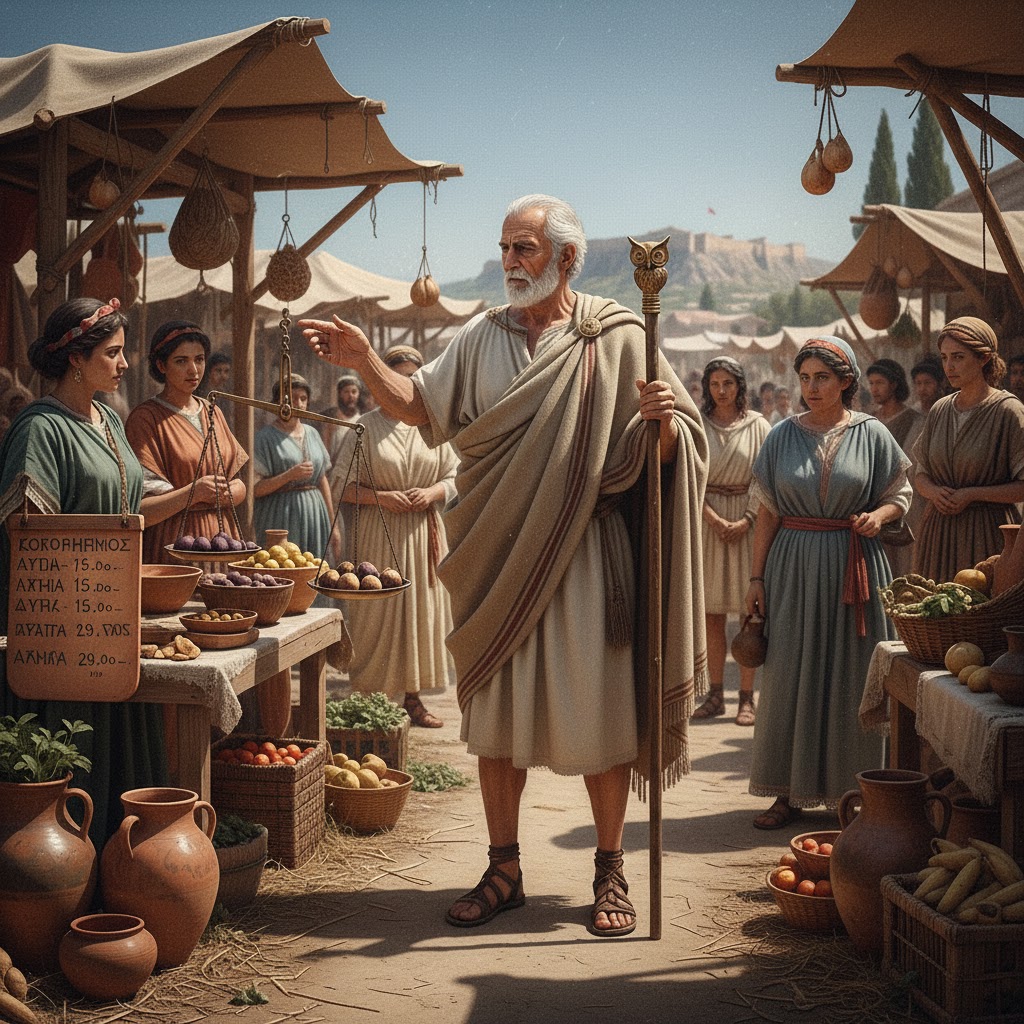
About the Agoranomos Profession
The Agoranomos was a pivotal figure in the bustling marketplaces of ancient Greece, particularly in city-states like Athens. This role was akin to that of a modern-day market supervisor or inspector, responsible for overseeing the activities within the agora, the central public space where commerce, politics, and social interaction flourished. The Agoranomos ensured that trade was conducted fairly, that weights and measures were accurate, and that vendors adhered to the laws governing commerce. They played a crucial role in maintaining order and integrity in the marketplace, which was vital for the economic health of the city-state.
In addition to regulatory duties, the Agoranomos also had the authority to impose fines on dishonest merchants and to confiscate goods that were sold under false pretenses. This position required a deep understanding of local laws and trade practices, as well as a keen sense of justice to protect both consumers and honest traders. The Agoranomos was often seen as a guardian of the public interest, ensuring that the agora remained a vibrant and trustworthy hub of activity.
Day in the Life of an Agoranomos
Early Morning: Setting the Stage
As dawn breaks over the city, the Agoranomos rises early to prepare for the day ahead. The first task is to inspect the agora, ensuring that the stalls are set up correctly and that vendors are adhering to the designated spaces. The Agoranomos checks the weights and measures used by merchants, ensuring they are accurate and compliant with local regulations. This early morning inspection is crucial to prevent any potential disputes that could arise later in the day.
Mid-Morning: Engaging with Merchants
By mid-morning, the agora is bustling with activity. The Agoranomos moves through the market, engaging with merchants and customers alike. They listen to complaints and resolve disputes, acting as a mediator when necessary. The Agoranomos must possess excellent communication skills, as they often need to explain regulations and ensure that all parties understand their rights and responsibilities. This interaction fosters a sense of community and trust among the market participants.
Afternoon: Monitoring Transactions
As the day progresses, the Agoranomos continues to monitor transactions, ensuring that trade practices are fair. They keep an eye out for any signs of fraud or dishonesty, such as merchants using false weights or selling substandard goods. If any violations are observed, the Agoranomos has the authority to impose fines or confiscate goods, maintaining the integrity of the marketplace.
Late Afternoon: Record Keeping and Reporting
As the sun begins to set, the Agoranomos returns to their office to document the day's activities. This includes recording any fines imposed, disputes resolved, and any notable incidents that occurred during the day. Accurate record-keeping is essential for maintaining transparency and accountability in the marketplace. The Agoranomos may also prepare reports for local officials, providing insights into market trends and issues that need addressing.
Evening: Community Engagement
In the evening, the Agoranomos often participates in community gatherings, discussing market conditions and seeking feedback from citizens. This engagement helps to build rapport and ensures that the needs of the community are being met. The Agoranomos is not just a regulatory figure but also a vital part of the social fabric of the city, fostering a sense of civic pride and responsibility among the citizens.
Related Exhibits
Plague Doctor
The role of the Plague Doctor emerged during the devastating outbreaks of the bubonic plague in the 14th to 17th centuries, particularly during the Black Death. These physicians were tasked with treating the afflicted and managing the spread of the disease, which claimed millions of lives across Europe. Plague Doctors were often hired by towns and cities to care for the sick, and their distinctive attire became a symbol of the era's struggle against disease. They wore long cloaks, gloves, boots, and a beaked mask filled with aromatic substances, believed to purify the air and protect them from miasma, or 'bad air,' thought to be the cause of the plague. Their work was fraught with danger, as they often encountered patients who were gravely ill or already deceased, and they had limited medical knowledge and tools at their disposal. Despite their efforts, many Plague Doctors themselves succumbed to the very diseases they sought to combat, highlighting the perilous nature of their profession.
Crossing Sweeper
The role of a Crossing Sweeper emerged in the bustling streets of Victorian England, where the rapid growth of urban centers and the advent of horse-drawn carriages created a unique set of challenges for pedestrians. Crossing Sweepers were tasked with keeping the roadways clean, particularly at busy intersections, where mud, horse manure, and debris accumulated. These workers, often children or the impoverished, would stand at street corners with brooms, ready to sweep away the filth to create a cleaner path for passersby. Their work was not only about cleanliness but also about ensuring the safety and comfort of those navigating the often chaotic urban landscape. Crossing Sweepers were a common sight in cities like London, where the streets were teeming with traffic and the air was thick with the sounds of hooves and wheels. They would often wear tattered clothing, reflecting their low social status, and their earnings were meager, relying on the generosity of pedestrians who would toss coins in gratitude for a clean crossing. This job was emblematic of the social issues of the time, highlighting the stark divide between the wealthy and the working poor, as well as the challenges faced by children in the labor force.
Explore More Exhibits
Discover the full collection of past and future professions in The Jobs Museum.