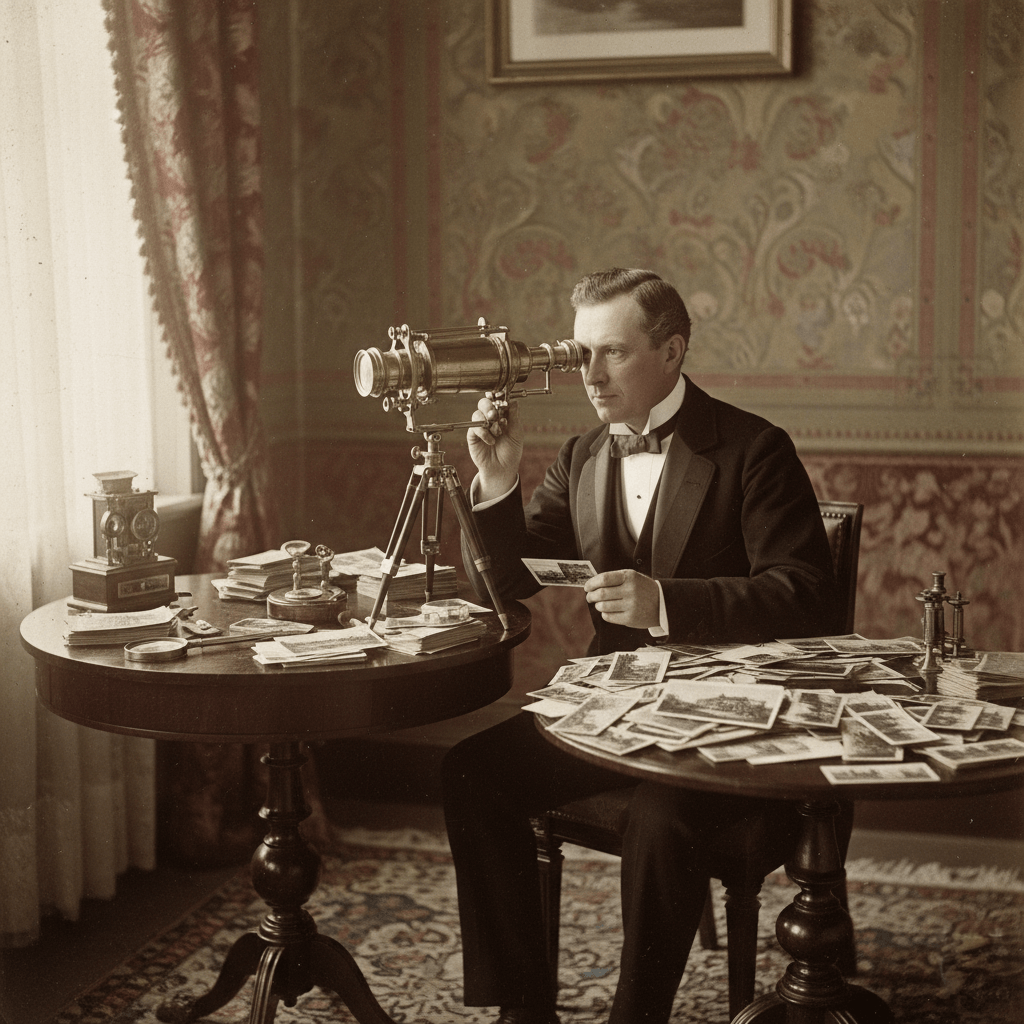
About the Stereoscopist Profession
The role of a stereoscopist emerged in the mid-19th century, coinciding with the rise of the stereoscope, a device that allowed viewers to experience three-dimensional images. Stereoscopists were skilled artisans and technicians who specialized in creating stereoscopic images, which were pairs of photographs taken from slightly different angles to simulate depth perception when viewed through a stereoscope. This job was not only a technical craft but also an artistic endeavor, as stereoscopists had to carefully compose scenes, select appropriate lighting, and ensure that the images conveyed a sense of realism and depth.
Stereoscopists often worked in studios or as part of larger photographic firms, where they would collaborate with photographers and artists. They were responsible for processing the images, mounting them on cards, and sometimes even hand-coloring them to enhance their visual appeal. The popularity of stereoscopic images surged during the Victorian Era, as they provided a novel form of entertainment and education, allowing people to experience distant landscapes, historical events, and even exotic cultures from the comfort of their homes.
As the demand for stereoscopic images grew, so did the need for skilled stereoscopists who could produce high-quality work. They played a crucial role in the dissemination of visual culture, contributing to the development of photography as an art form and a means of communication.
Day in the Life of a Stereoscopist
Morning: Setting Up the Studio
A typical day for a stereoscopist began early in the morning, often around 7 AM. The first task was to prepare the studio for the day’s work. This involved cleaning the lenses of the stereoscopic cameras, organizing the various photographic plates, and ensuring that the lighting was optimal for capturing images. The stereoscopist would check the equipment, making sure that everything was in working order, as any malfunction could lead to wasted time and resources.
Mid-Morning: Capturing Images
By 9 AM, the stereoscopist would be ready to start capturing images. Depending on the day, this could involve setting up outdoor scenes or arranging still-life compositions in the studio. The stereoscopist would carefully position the cameras, ensuring that they were aligned at the correct distance to create the desired three-dimensional effect. This process required a keen eye for detail and an understanding of perspective. Once the images were captured, the stereoscopist would develop the photographic plates, a process that involved several chemical baths and careful timing.
Afternoon: Processing and Mounting
After lunch, typically around 1 PM, the stereoscopist would focus on processing the images. This included washing and drying the developed plates, followed by cutting them to size for mounting. The next step was to create the stereoscopic pairs, which involved selecting the best images and ensuring they were perfectly matched for viewing. The stereoscopist would then mount the images onto cards, often using decorative borders to enhance their presentation. This meticulous work required precision and an artistic touch.
Late Afternoon: Hand Coloring and Quality Control
In the late afternoon, around 4 PM, the stereoscopist might engage in hand-coloring the images. This was a delicate task that involved using fine brushes and special dyes to add life to the black-and-white photographs. Once the coloring was complete, the stereoscopist would conduct a quality check, ensuring that each card met the high standards expected by clients. This attention to detail was crucial, as the quality of the images directly impacted sales and reputation.
Evening: Client Consultations and Marketing
As the day wound down, the stereoscopist might meet with clients or distributors to discuss new projects or showcase recent work. This aspect of the job required strong communication skills and an understanding of market trends. By 6 PM, the day would typically conclude, but the work of a stereoscopist was never truly finished, as they were always thinking of new ideas for captivating images that would delight and educate their audience.