
Victorian Era
Rag-and-Bone Man
An extinct profession from Victorian Era that became obsolete due to technological advancement and societal change.
Media Gallery
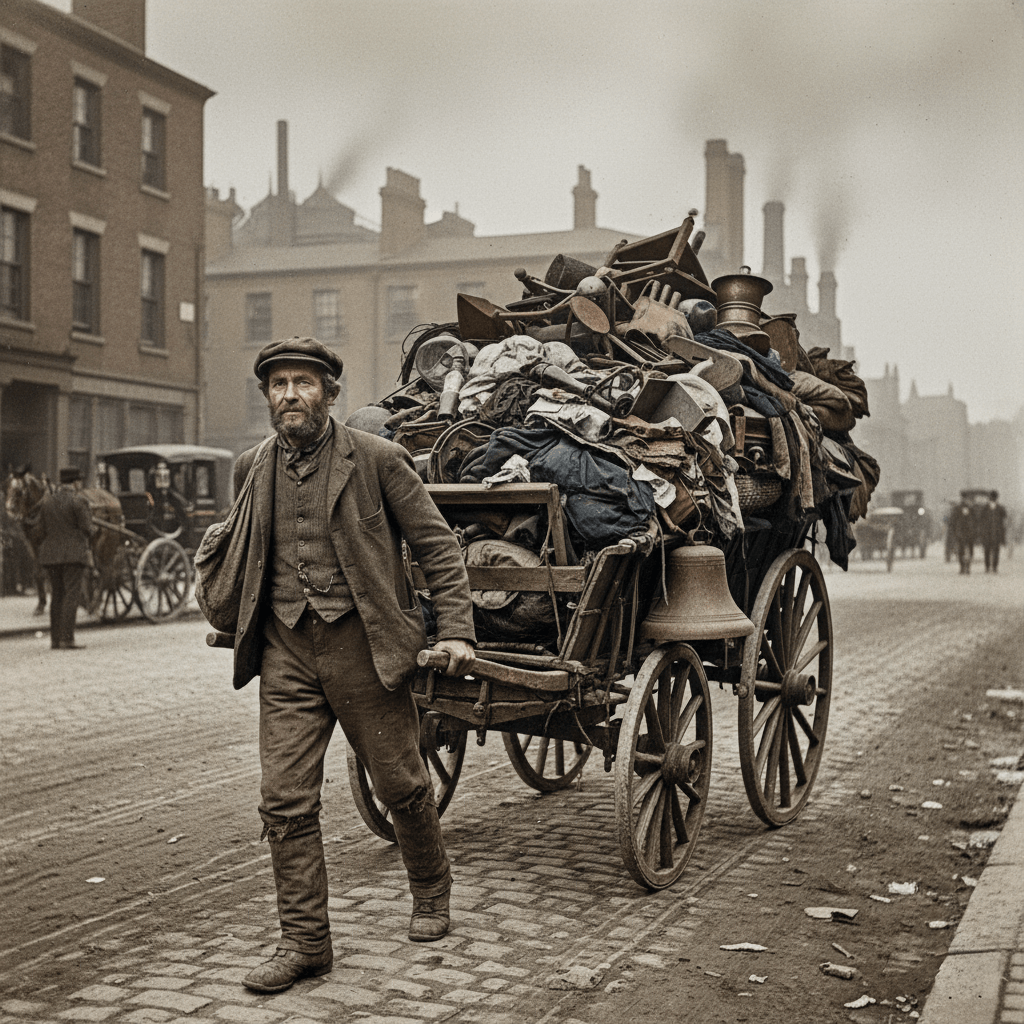
About the Rag-and-Bone Man Profession
The Rag-and-Bone Man was a familiar figure in the streets of Victorian and Edwardian England, embodying the spirit of recycling long before it became a modern environmental concern. These itinerant traders collected unwanted items from households, ranging from old clothes and rags to bones and scrap metal. The rag-and-bone men played a crucial role in the economy of the time, as they provided a means for families to dispose of their waste while also offering a small income for themselves. They would often call out their trade with a distinctive cry, 'Rags, bones, and bottles!' as they pushed their carts through the neighborhoods, creating a sense of community and nostalgia for many.
Day in the Life of a Rag-and-Bone Man
Early Morning: Setting Out
The day began at dawn, as the Rag-and-Bone Man prepared his cart, a sturdy wooden vehicle equipped with wheels to navigate the cobbled streets. He would load it with a few essential tools: a pair of scales for weighing items, a sturdy sack for collecting rags, and a small container for bones. After a quick breakfast, he would set out into the waking city, calling out his trade to attract the attention of housewives and children.
Mid-Morning: Collecting Goods
As the sun rose higher, the Rag-and-Bone Man would make his rounds, visiting neighborhoods where he was known. He would knock on doors, engaging in friendly banter with residents, who would often offer him their unwanted items. The collection process was a social affair; he would listen to stories, share news, and sometimes even barter for goods. Each item collected was carefully sorted and stored in his cart, with rags often tied in bundles and bones placed in a separate compartment.
Afternoon: Sorting and Selling
After a busy morning, the Rag-and-Bone Man would return to his makeshift depot, often a small shed or corner of his home. Here, he would sort through the collected items. Rags would be cleaned and prepared for sale to textile manufacturers, while bones were sold to glue factories or for fertilizer. The afternoon was also a time for rest, where he might enjoy a simple meal before heading out again.
Evening: The Final Rounds
As dusk approached, the Rag-and-Bone Man would venture out once more, often visiting the same neighborhoods to catch those who might have missed him earlier. His calls echoed through the streets, a reminder of the day’s end and the community’s reliance on his services. By nightfall, he would return home, tallying his earnings and preparing for another day of work.
Related Exhibits
Tallyman
The Tallyman was a crucial figure in the Victorian Era, primarily serving as a collector of debts and a record keeper for local businesses and tradesmen. Often seen as a bridge between the merchant and the consumer, the Tallyman would visit homes and businesses to collect payments for goods purchased on credit. This role was particularly significant in an era when many families relied on credit to manage their household expenses, especially in the burgeoning urban centers of England. The Tallyman would carry a tally stick, a wooden stick marked with notches to record transactions, and a ledger to keep detailed accounts of debts owed and payments made. The Tallyman’s work was not merely transactional; it involved building relationships with customers, understanding their financial situations, and sometimes negotiating payment plans. This role required a keen sense of empathy and social awareness, as many customers were struggling to make ends meet. The Tallyman was often seen as a community figure, known by name and trusted to handle sensitive financial matters with discretion. As the Victorian Era progressed, the role of the Tallyman began to change. The introduction of more formal banking systems and the rise of credit institutions started to diminish the need for personal debt collectors. The advent of modern accounting practices and the use of printed invoices further contributed to the decline of this occupation, as transactions became more standardized and less reliant on personal relationships. By the early 20th century, the Tallyman had largely disappeared from the economic landscape, replaced by more formalized financial systems.
Bear-Leader
The role of a Bear-Leader was a unique and fascinating occupation that emerged during the Victorian Era, particularly in the 19th century. These individuals were responsible for the care and management of trained bears, often leading them through towns and cities as a form of entertainment. The bear, typically a young and trained specimen, would perform tricks and engage with the public, drawing crowds and generating income for the Bear-Leader. This profession was not merely about leading a bear; it involved a deep understanding of animal behavior, training techniques, and the ability to engage with audiences. Bear-Leaders were often seen as both entertainers and animal handlers, navigating the delicate balance between showmanship and animal welfare. The spectacle of a bear performing tricks, such as dancing or balancing on a ball, was a popular attraction in fairs and public gatherings, making the Bear-Leader a notable figure in the entertainment landscape of the time.
Explore More Exhibits
Discover the full collection of past and future professions in The Jobs Museum.