
Victorian Era
Dog Whipper
An extinct profession from Victorian Era that became obsolete due to technological advancement and societal change.
Media Gallery
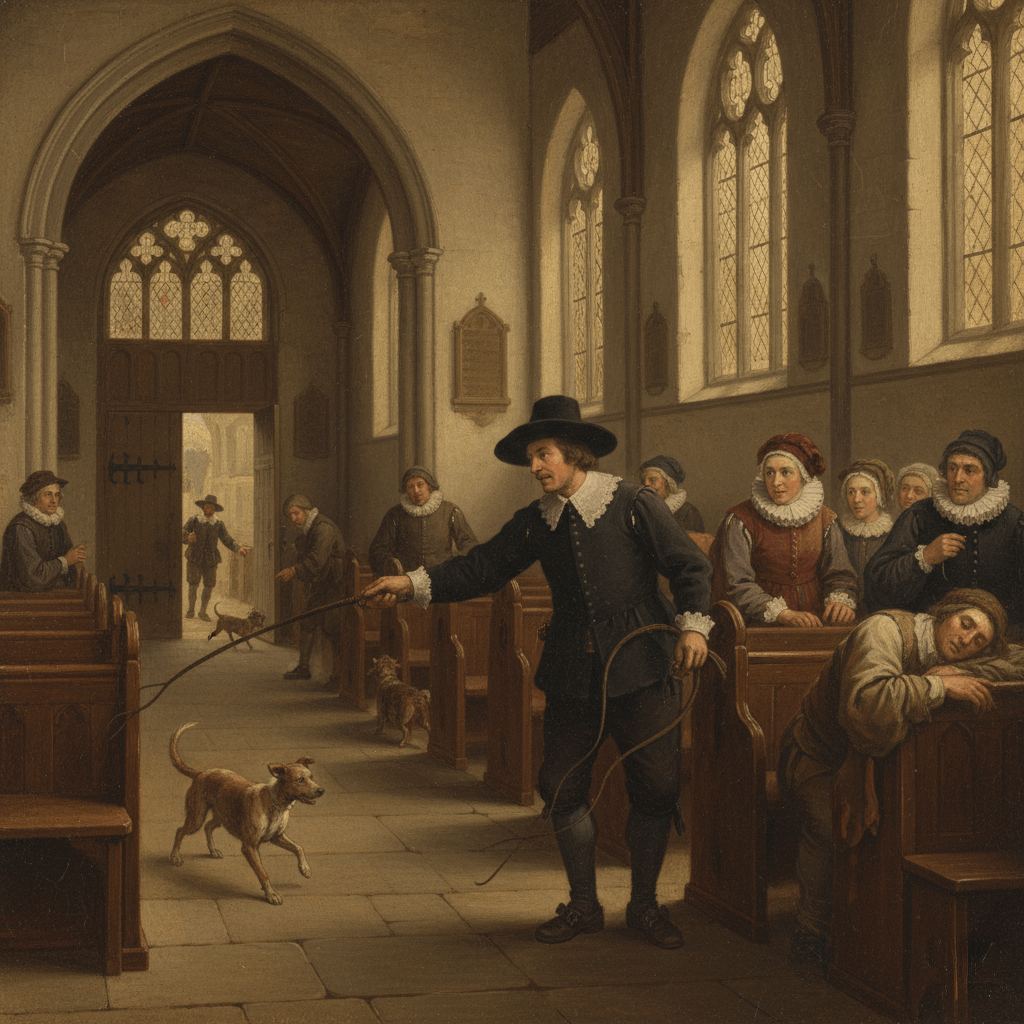
About the Dog Whipper Profession
The role of a Dog Whipper was a unique and somewhat peculiar occupation that emerged in the Victorian Era, primarily in England. These individuals were employed by churches and public spaces to manage the presence of dogs, particularly during services or public gatherings. The Dog Whipper's primary responsibility was to ensure that dogs did not disrupt the sanctity of worship or the decorum of public events. Armed with a long whip or a stick, the Dog Whipper would patrol the vicinity, ready to shoo away any canine that dared to intrude upon the sacred space. This role was not merely about discipline; it was also about maintaining order and cleanliness in an era when urbanization was on the rise, and the presence of stray dogs was becoming increasingly common.
The Dog Whipper was often seen as a necessary figure, especially in rural areas where dogs roamed freely. Their presence was a deterrent to mischief, and they played a part in the broader social fabric of the time, reflecting the Victorian values of propriety and decorum. The job was often a part-time position, sometimes held by a church sexton or a caretaker, and it required a certain level of authority and assertiveness to effectively manage both the dogs and their owners.
As cities grew and societal norms evolved, the need for such a position diminished. The rise of animal welfare movements and changes in public attitudes towards pets led to a decline in the acceptance of such practices. By the early 20th century, the role of the Dog Whipper had largely faded into obscurity, replaced by more humane approaches to animal management.
Day in the Life of a Dog Whipper
Morning Duties
The day for a Dog Whipper often began early, especially on Sundays when church services were held. Arriving at the church, the Dog Whipper would inspect the grounds, ensuring that the area was clean and free of any stray dogs that might have wandered in overnight. This involved a thorough check of the churchyard and surrounding areas, preparing for the influx of parishioners and their pets.
Mid-Morning Vigilance
As the congregation began to gather, the Dog Whipper would take up a strategic position near the entrance of the church. With a long whip or stick in hand, they would keep a watchful eye on the arriving families, ready to intervene if any dogs attempted to enter the sacred space. The Dog Whipper's presence served as a reminder to dog owners to keep their pets in check, and they would often engage in light banter with parishioners, discussing the behavior of their dogs.
Afternoon Patrol
After the service, the Dog Whipper's duties continued. They would patrol the church grounds and nearby public areas, ensuring that dogs did not disrupt any gatherings or events. This could involve gently shooing away dogs that were too curious or playful, using their whip more as a tool of guidance than punishment. The Dog Whipper would also be responsible for cleaning up any mess left by dogs, maintaining the cleanliness of the public space.
Evening Wrap-Up
As the day wound down, the Dog Whipper would conduct a final sweep of the area, ensuring that all was in order before leaving for the day. They might have a few conversations with locals, sharing stories about the dogs they encountered and the antics they witnessed. The role, while often seen as humorous, was taken seriously, as it contributed to the overall orderliness of the community.
Related Exhibits
Slubber Doffer
The slubber doffer was a crucial figure in the textile industry during the Industrial Revolution, primarily responsible for the maintenance and operation of spinning machines. These workers played a vital role in ensuring that the production of yarn and thread ran smoothly in the bustling textile mills of the 18th and 19th centuries. The term 'slubber doffer' specifically referred to those who removed the full bobbins of spun yarn from the spinning frames and replaced them with empty ones, a task that required both physical dexterity and a keen understanding of the machinery involved. The slubber doffer's work was often performed in a noisy, fast-paced environment, where the clatter of machines filled the air, and the smell of raw cotton and wool was ever-present. The job was typically held by young boys and girls, often as young as eight or nine, who were employed in the mills due to their small stature, which allowed them to navigate the cramped spaces between the machines. The slubber doffer's day was filled with the repetitive yet essential task of ensuring that the spinning process continued without interruption, a job that was physically demanding and required a high level of attention to detail. Despite the harsh working conditions, slubber doffers were an integral part of the textile production process, contributing to the rapid growth of the textile industry, which was a cornerstone of the Industrial Revolution. Their labor was essential in meeting the increasing demand for textiles, which fueled both domestic and international markets.
Agoranomos
The Agoranomos was a pivotal figure in the bustling marketplaces of ancient Greece, particularly in city-states like Athens. This role was akin to that of a modern-day market supervisor or inspector, responsible for overseeing the activities within the agora, the central public space where commerce, politics, and social interaction flourished. The Agoranomos ensured that trade was conducted fairly, that weights and measures were accurate, and that vendors adhered to the laws governing commerce. They played a crucial role in maintaining order and integrity in the marketplace, which was vital for the economic health of the city-state. In addition to regulatory duties, the Agoranomos also had the authority to impose fines on dishonest merchants and to confiscate goods that were sold under false pretenses. This position required a deep understanding of local laws and trade practices, as well as a keen sense of justice to protect both consumers and honest traders. The Agoranomos was often seen as a guardian of the public interest, ensuring that the agora remained a vibrant and trustworthy hub of activity.
Explore More Exhibits
Discover the full collection of past and future professions in The Jobs Museum.