
Post-War Era
Radio Repairman
An extinct profession from Post-War Era that became obsolete due to technological advancement and societal change.
Media Gallery
About the Radio Repairman Profession
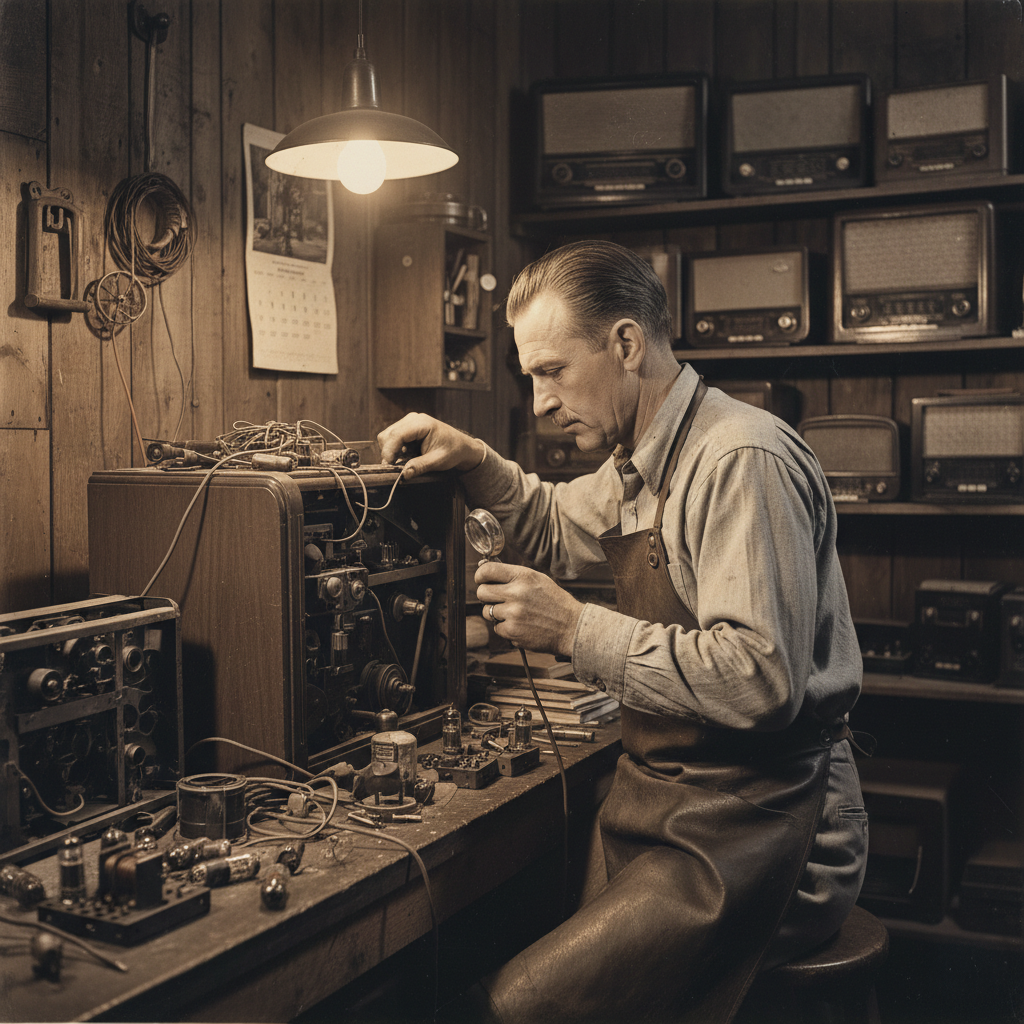
The Radio Repairman was a vital figure in the mid-20th century, particularly in the post-World War II era when radio became a staple of American households. As the popularity of radio surged, so did the need for skilled technicians who could diagnose and fix the myriad of issues that could arise in these complex devices. Radio Repairmen were often found in small shops, bustling with the sounds of static and the hum of electronic equipment, as they worked diligently to restore the voices of news anchors, music, and entertainment to life. Their expertise was not only technical but also deeply rooted in an understanding of the evolving technology of the time, as they navigated the transition from vacuum tubes to transistors, and later to integrated circuits.
In their workshops, Radio Repairmen would often encounter a variety of problems, from broken speakers to faulty wiring. They were adept at using a range of diagnostic tools, including multimeters and oscilloscopes, to troubleshoot issues. The job required a keen eye for detail and a methodical approach to problem-solving, as well as a solid understanding of electrical engineering principles. The Radio Repairman was not just a technician; he was a community figure, often providing advice on the best radio models and helping customers understand the technology that was rapidly changing their lives.
As the 1960s progressed, the landscape of audio technology began to shift dramatically. The advent of television, along with the rise of portable music devices, led to a decline in radio's dominance. Additionally, the increasing complexity of radio technology, coupled with the introduction of disposable consumer electronics, made repairs less common. By the late 1970s, the role of the Radio Repairman began to fade, as many consumers opted to replace rather than repair their devices, marking the end of an era for this once-essential profession.
Day in the Life of a Radio Repairman
Morning: Opening the Shop
The day began early for the Radio Repairman, often around 8:00 AM. Upon arriving at the shop, he would unlock the door to a space filled with the scent of solder and the faint buzz of electronic equipment. The first task was to check the repair log, which detailed the radios that had been dropped off for service. Each entry was a puzzle waiting to be solved.
Mid-Morning: Diagnosing Repairs
By 9:00 AM, the shop was usually bustling with customers. The Radio Repairman would greet them, listen to their concerns, and take notes on the symptoms of their malfunctioning radios. He would then begin the diagnostic process, using tools like multimeters to test circuits and oscilloscopes to analyze sound waves. This was a meticulous process, often requiring patience and a deep understanding of electronics.
Afternoon: Making Repairs
After diagnosing the issues, the Radio Repairman would set to work on repairs. This could involve replacing faulty components, such as capacitors or resistors, or repairing broken wiring. The work required steady hands and a keen eye, as even the smallest mistake could lead to further issues. He would often spend hours at the workbench, focused on the task at hand, occasionally pausing to listen to the radio for sound quality tests.
Late Afternoon: Customer Interactions
As the day progressed, customers would return to pick up their repaired radios. The Radio Repairman would explain the repairs made, offer tips on maintenance, and sometimes even demonstrate how to operate new features. This interaction was a crucial part of the job, as it built trust and rapport with the community.
Evening: Closing Up
By 6:00 PM, the shop would begin to quiet down. The Radio Repairman would take stock of the day’s work, clean his tools, and prepare for the next day. He would often reflect on the radios he had repaired, feeling a sense of satisfaction in restoring not just devices, but also the joy of music and news to his customers' lives.
Related Exhibits
Theatre Call Boy
The Theatre Call Boy was an essential figure in the vibrant world of Victorian theatre, acting as the vital link between the stage and the backstage. This young boy, often between the ages of 10 and 15, was responsible for ensuring that the performance ran smoothly by delivering messages and calls to actors, stagehands, and other crew members. With a keen sense of timing and an ability to navigate the bustling theatre environment, the call boy would often be found darting through the dimly lit corridors, his footsteps echoing against the wooden floors, as he relayed cues for entrances, exits, and scene changes. The role required not only speed and agility but also a deep understanding of the production schedule and the ability to communicate effectively under pressure. The call boy would often carry a small bell or whistle to signal the start of a performance or a scene change, ensuring that everyone was in their proper place at the right time. In an era when performances were often elaborate and lengthy, the call boy's role was crucial in maintaining the rhythm and flow of the show, making him a beloved figure among the cast and crew alike.
Soda Jerk
The soda jerk was a quintessential figure in American culture from the late 19th century through the mid-20th century, particularly in the United States. This role was primarily associated with soda fountains, which were popular gathering spots in drugstores and diners. The soda jerk was responsible for preparing and serving a variety of carbonated beverages, ice cream sodas, and other sweet treats, often with a flair that entertained patrons. The term 'jerk' refers to the quick motion of pulling the soda fountain lever to dispense the fizzy drink, a skill that required both speed and precision. Soda jerks were not just servers; they were also social facilitators, engaging with customers and creating a lively atmosphere. They often wore distinctive uniforms, which included a white apron and a paper hat, and were known for their friendly demeanor and knowledge of the menu. The soda jerk's role was integral to the experience of visiting a soda fountain, where patrons could enjoy a refreshing drink while socializing with friends or family. The soda jerk's repertoire included classic concoctions such as root beer floats, banana splits, and phosphates, which were flavored syrups mixed with carbonated water. The job required a good understanding of flavors and the ability to create visually appealing presentations. In addition to beverages, soda jerks often served light snacks, such as sandwiches and pastries, making them a vital part of the local dining scene.
Explore More Exhibits
Discover the full collection of past and future professions in The Jobs Museum.