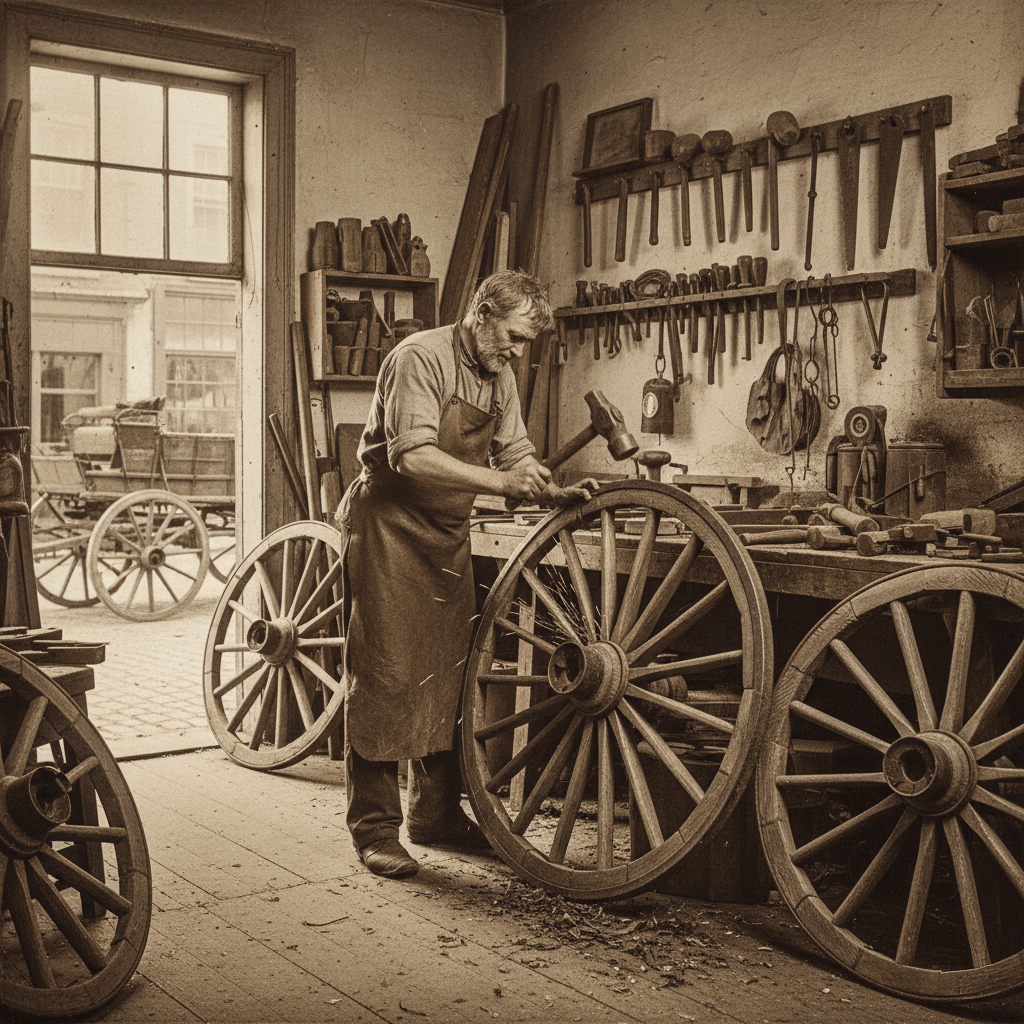
About the Wainwright Profession
The wainwright was a skilled craftsman responsible for the construction and repair of wagons and carts, essential vehicles for transportation before the advent of motorized vehicles. This occupation flourished in rural and urban settings, where the demand for sturdy, reliable transport was paramount for trade, agriculture, and daily life. Wainwrights utilized a variety of materials, primarily wood and iron, to create vehicles that could withstand the rigors of travel across uneven terrain. Their work was not only functional but also reflected the artistry of craftsmanship, with many wainwrights taking pride in the aesthetic details of their creations, such as decorative carvings and paintwork. The role of the wainwright was crucial in supporting the economy, as they provided the means for farmers to transport goods to market and for merchants to deliver products to consumers.
Day in the Life of a Wainwright
Early Morning: The Workshop Awakens
As dawn breaks, the wainwright arrives at his workshop, a sturdy structure filled with the scent of fresh timber and the sound of tools clanging. The first task of the day involves inspecting the current projects and assessing the materials needed for repairs or new builds. The wainwright meticulously checks his inventory of seasoned oak, ash, and iron fittings, ensuring he has everything required for the day's work.
Mid-Morning: Crafting the Wheels
By mid-morning, the wainwright is hard at work shaping the wheels, a critical component of any wagon. Using a lathe, he carefully carves the wooden spokes and rims, ensuring they are perfectly round and balanced. The wainwright’s hands are skilled and steady, honed by years of practice. He then fits the iron bands around the wheels, heating them in a forge until they are red-hot, and then quickly placing them on the wooden rims to create a secure fit.
Afternoon: Assembling the Wagon
After a hearty lunch, the wainwright turns his attention to assembling the wagon. He lays out the frame, attaching the wheels and ensuring everything is aligned correctly. This part of the process requires not only physical strength but also a keen eye for detail. The wainwright uses a variety of tools, including hammers, chisels, and saws, to join the pieces together, often employing traditional joinery techniques that have been passed down through generations.
Late Afternoon: Customer Interactions
As the day winds down, customers begin to arrive, some seeking repairs for their existing carts, while others are interested in commissioning new ones. The wainwright engages with each customer, discussing their needs and preferences. This interaction is vital, as it builds relationships within the community and ensures repeat business.
Evening: Closing Up Shop
As the sun sets, the wainwright cleans his tools and organizes the workshop for the next day. He reflects on the day’s work, satisfied with the progress made and the wagons that will soon be on the roads, carrying goods and people to their destinations. The life of a wainwright is one of hard work, creativity, and community engagement, a vital role in the pre-industrial economy.