
Victorian Era
Bear-Leader
An extinct profession from Victorian Era that became obsolete due to technological advancement and societal change.
Media Gallery
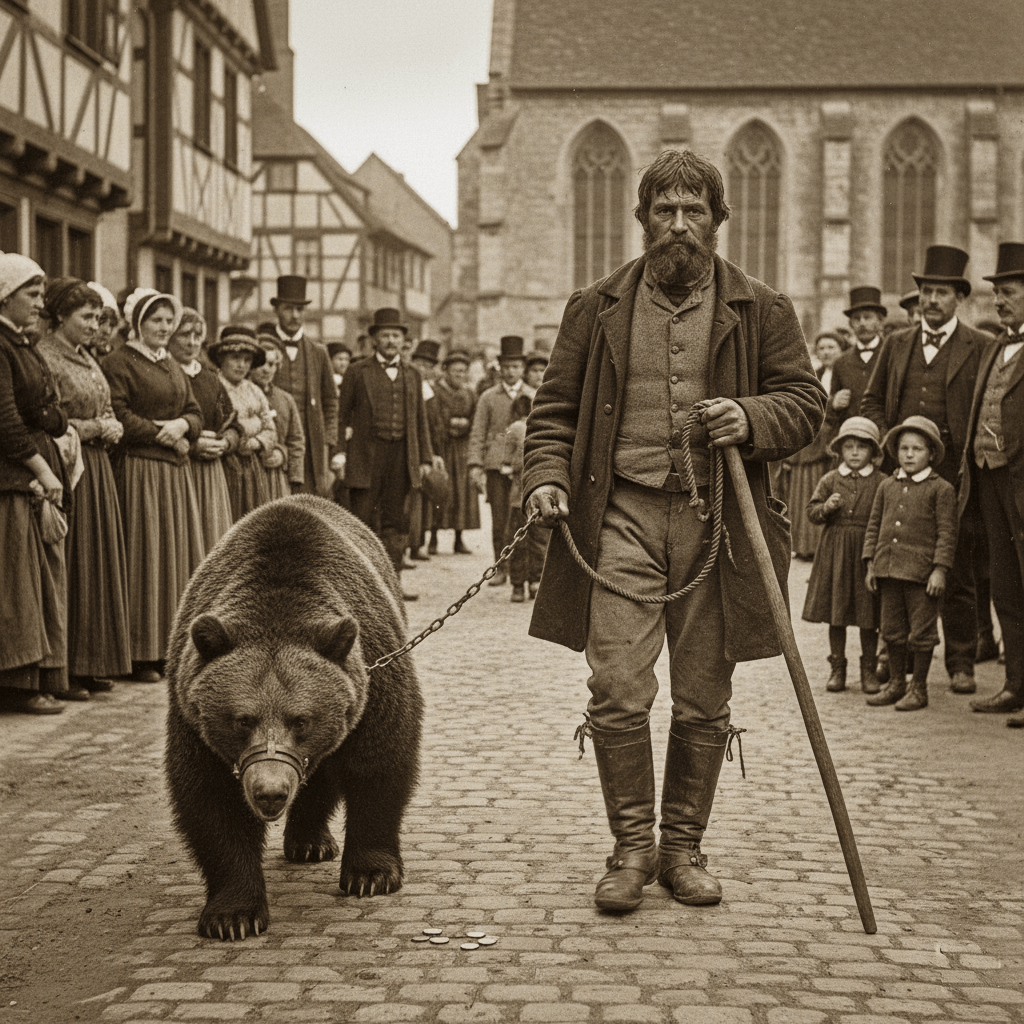
About the Bear-Leader Profession
The role of a Bear-Leader was a unique and fascinating occupation that emerged during the Victorian Era, particularly in the 19th century. These individuals were responsible for the care and management of trained bears, often leading them through towns and cities as a form of entertainment. The bear, typically a young and trained specimen, would perform tricks and engage with the public, drawing crowds and generating income for the Bear-Leader. This profession was not merely about leading a bear; it involved a deep understanding of animal behavior, training techniques, and the ability to engage with audiences. Bear-Leaders were often seen as both entertainers and animal handlers, navigating the delicate balance between showmanship and animal welfare. The spectacle of a bear performing tricks, such as dancing or balancing on a ball, was a popular attraction in fairs and public gatherings, making the Bear-Leader a notable figure in the entertainment landscape of the time.
Day in the Life of a Bear-Leader
Early Morning: Preparing for the Day
The day begins at dawn, with the Bear-Leader rising early to tend to the bear. This involves feeding the animal a diet of fruits, vegetables, and occasionally meat, ensuring it is healthy and ready for the day’s performances. The Bear-Leader checks the bear’s equipment, including its collar and leash, and prepares any props needed for the tricks planned for the day.
Mid-Morning: Training Sessions
After breakfast, the Bear-Leader conducts training sessions with the bear. This is a crucial part of the job, as it involves reinforcing learned behaviors and teaching new tricks. Patience and consistency are key, as the Bear-Leader uses positive reinforcement techniques to encourage the bear to perform. This time is also spent building a bond with the animal, which is essential for a successful performance.
Afternoon: Public Performances
As the sun rises higher, the Bear-Leader heads to a local fair or market where crowds gather. The bear, adorned with a colorful collar, is led through the streets, drawing attention and excitement. The Bear-Leader engages with the audience, showcasing the bear’s tricks, such as dancing or playing with a ball. This performance is not only entertaining but also serves as a means of earning a living, with spectators often tossing coins or small bills into a hat as a form of appreciation.
Evening: Wrapping Up
After a long day of performances, the Bear-Leader returns home with the bear. The evening is spent caring for the animal, ensuring it is fed and comfortable. The Bear-Leader reflects on the day’s events, considering what worked well and what could be improved for future performances. This time is also used for planning the next day’s routine, including potential new tricks to teach the bear.
Related Exhibits
Chimney Sweep
The role of a chimney sweep was crucial in the Victorian Era, particularly in urban areas where coal was the primary source of heating. As homes and factories proliferated, so did the need for clean chimneys to prevent dangerous chimney fires and ensure proper ventilation. Chimney sweeps were responsible for cleaning soot and creosote buildup from chimneys, which could lead to hazardous conditions if left unchecked. The job was often performed by young boys, some as young as six, who would climb into narrow flues to scrape away the soot. This labor-intensive work required not only physical agility but also a keen understanding of the structure of chimneys and the dangers associated with them. The job was often grueling, with sweeps working long hours in cramped, dark spaces, and it was not uncommon for them to suffer from respiratory issues due to the soot they inhaled. Despite the harsh conditions, chimney sweeps played a vital role in maintaining the safety of homes during a time when coal was the dominant fuel source.
Telegraph Operator
In the bustling world of the Victorian Era, the telegraph operator stood as a vital link in the chain of communication that transformed society. With the advent of the electric telegraph in the early 19th century, this occupation emerged as a cornerstone of modern communication, allowing messages to traverse vast distances in mere moments. The telegraph operator was responsible for sending and receiving messages encoded in Morse code, a system of dots and dashes that conveyed information across wires. Dressed in a crisp uniform, often adorned with a badge of the telegraph company, the operator would sit at a telegraph key, a device resembling a small lever, and tap out messages with precision and speed. The rhythmic clicking of the key became a familiar sound in telegraph offices, where operators worked in shifts, often in dimly lit rooms filled with the hum of machinery and the crackle of electrical currents. The role of the telegraph operator was not merely mechanical; it required acute listening skills and a deep understanding of Morse code. Operators often had to decipher messages quickly, sometimes under pressure, as they relayed urgent news, weather reports, and personal correspondence. They played a crucial role in connecting people, businesses, and governments, facilitating trade and diplomacy in an increasingly interconnected world. As the telegraph network expanded, so did the responsibilities of the operator, who often served as a point of contact for the public, answering inquiries and providing information. The job was both demanding and rewarding, offering a glimpse into the rapid technological advancements of the time and the profound impact of communication on society.
Explore More Exhibits
Discover the full collection of past and future professions in The Jobs Museum.