
Victorian Era
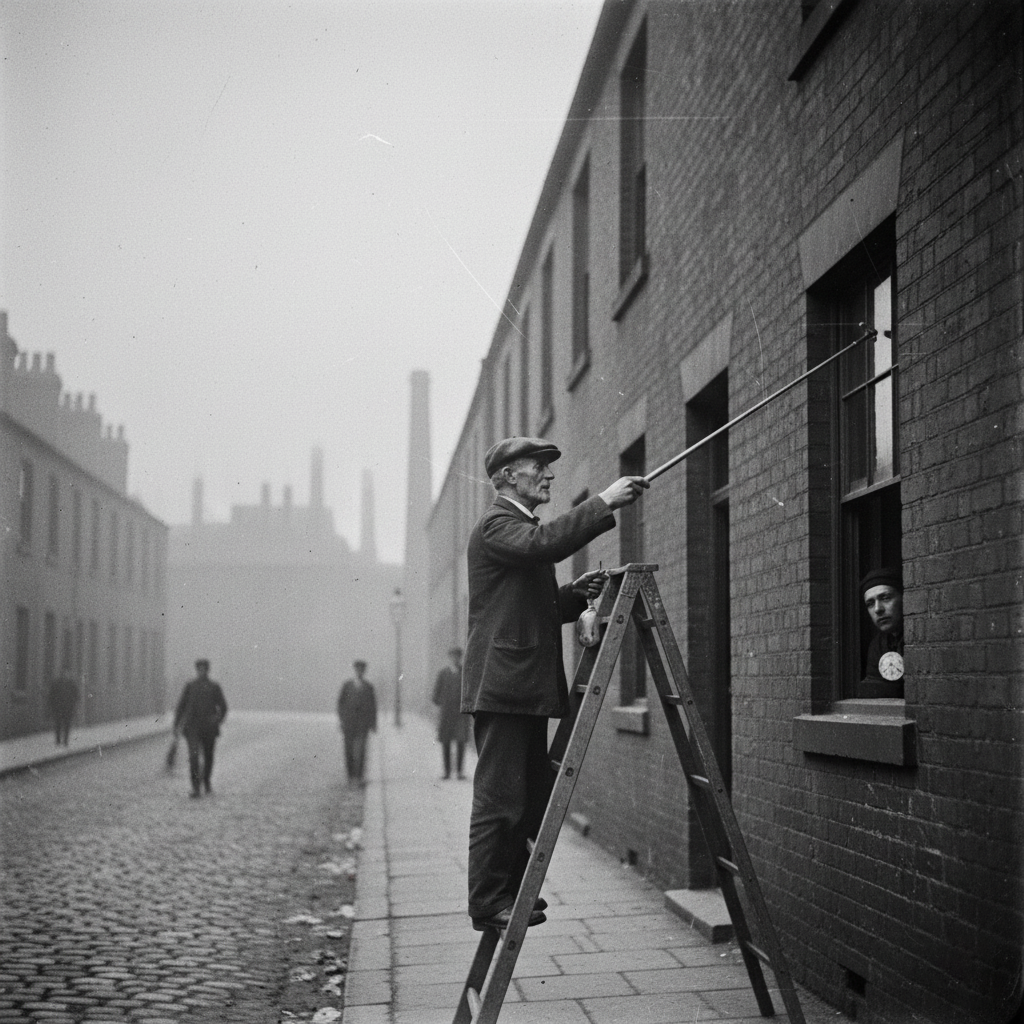
Knocker-Upper
An extinct profession from Victorian Era that became obsolete due to technological advancement and societal change.
Media Gallery
Related Exhibits
Sin Eater
The role of the Sin Eater was a unique and somber occupation that emerged in medieval Europe, particularly in England and Wales, during the 11th to 19th centuries. Sin Eaters were individuals who performed a ritualistic act of consuming food, often bread and ale, placed on the body of a deceased person. This act was believed to absolve the deceased of their sins, allowing their soul to ascend to heaven. The Sin Eater was often a marginalized figure, sometimes a beggar or outcast, who took on this role for a small fee or in exchange for food. The practice was steeped in superstition and reflected the deep-seated beliefs about sin, guilt, and the afterlife prevalent in medieval society. The Sin Eater's work was not merely a job; it was a profound engagement with the community's spiritual beliefs. Families would hire a Sin Eater to ensure that their loved ones could pass into the afterlife unburdened by sin. This role was particularly significant in times of plague or death, when the community was desperate for solace and closure. The Sin Eater's presence at funerals was often met with a mix of reverence and fear, as they were seen as both a necessary part of the grieving process and a reminder of the community's own mortality.
Messenger
Explore More Exhibits
Discover the full collection of past and future professions in The Jobs Museum.