
Early Twentieth Century
Copyholder
An extinct profession from Early Twentieth Century that became obsolete due to technological advancement and societal change.
Media Gallery
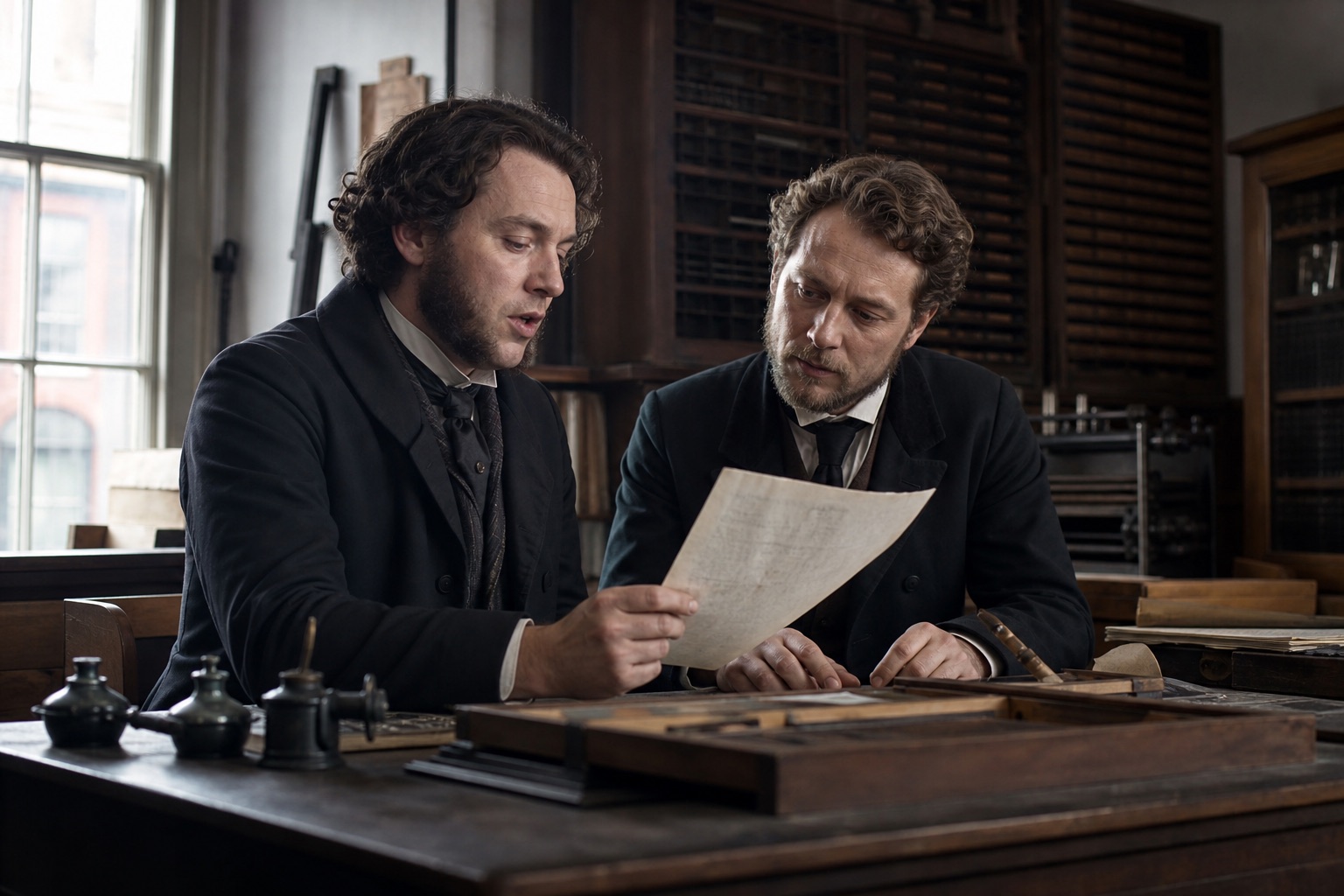
About the Copyholder profession
A copyholder sat in the proofing room with the manuscript or typescript and read it aloud so a proofreader could follow the printed proof. Names were spelled, punctuation was spoken, and the place in the copy was never lost if the reader stopped to mark a letter. The pair worked as one instrument: voice on the copy, pencil on the proof. Newspaper rooms, book houses, and government printing offices all used some version of that duet. It was indoor, exacting, and easy for a visitor to mistake for mere reading.
The post belongs mostly to the nineteenth century and the first half of the twentieth, when type was still set from handwritten or typed copy and a second pair of eyes was hired as a voice. Women and girls filled it in large numbers as a junior office grade, though men and boys held it too, especially earlier. Silent comparison by a single reader, then a tape that could be replayed, and finally a screen, took the voice out of the room. The label is the person who held the copy, not the senior who signed the proof.
Day in the Life of a Copyholder
Taking the copy
The sitting started by agreeing the place in the manuscript and the way punctuation would be spoken. A style sheet for names and figures lay within reach. The copy stayed in the copyholder's hands so it could not be mixed with the proof.
Reading aloud
The voice went straight through the take, spelling a name and saying each stop rather than acting the sentence. If the proofreader called back a word, the reading stopped at once. Figures and titles were the stretches that slowed the room.
The mark
While the voice continued, the proofreader marked the proof and sometimes sent a query back to the editor. The copyholder did not decide the house style. A tap on the desk meant repeat the last clause and wait.
Closing the take
A finished column was ticked so the next sitting would not start a line early. Revises came back from the composing room and had to be read against the same copy. The day ended when the edition's proofs were cleared or the night reader took the chair.
What came after
Reading copy aloud to a proofreader ended when one person compared the texts, and then when the text was a file.
The succession pageRelated Exhibits
Linotype Operator
The Linotype Operator was a crucial figure in the world of printing from the late 19th century until the mid-20th century. This skilled artisan operated the Linotype machine, a revolutionary device that allowed for the efficient typesetting of text for newspapers, books, and other printed materials. The Linotype machine, invented by Ottmar Mergenthaler in 1884, enabled operators to cast entire lines of type in metal, significantly speeding up the printing process compared to the labor-intensive method of setting type by hand. Linotype Operators were responsible for not only operating the machine but also for maintaining it, ensuring that it was in good working order to produce high-quality print. They worked in bustling print shops, often surrounded by the sounds of machinery and the smell of ink and paper. The job required a keen eye for detail, as operators had to ensure that the type was set correctly and that the text was free of errors before it was sent to the press. The role of the Linotype Operator was not just technical; it was also creative. Operators often collaborated with typesetters and editors to achieve the desired layout and design of printed materials, making their work an integral part of the publishing process. As the demand for printed materials surged during the Industrial Revolution, so too did the need for skilled Linotype Operators, who played a vital role in the dissemination of information and culture during this transformative period.
Map Engraver
Map engravers were skilled artisans responsible for the intricate task of transferring cartographic designs onto metal plates, which were then used for printing maps. This occupation flourished during the Industrial Revolution, a period marked by rapid advancements in technology and a growing demand for accurate geographical representations. The engraver's work was crucial for the production of maps that guided explorers, navigators, and the general public, reflecting the expanding knowledge of the world and the increasing importance of navigation in trade and exploration. The process of map engraving was meticulous and required a deep understanding of both art and science. Engravers would begin with a detailed drawing of the map, often created by cartographers who specialized in the art of map-making. Using tools such as burins and gravers, the engraver would carve the design into a copper or zinc plate, creating a reverse image of the map. This required not only precision but also an artistic eye to ensure that the final product was both accurate and aesthetically pleasing. Once the engraving was complete, the plate would be inked and pressed onto paper, producing the final map that would be distributed for use. Map engravers played a vital role in the dissemination of knowledge during a time when maps were essential for navigation, land ownership, and military strategy. Their work contributed to the Age of Exploration, as accurate maps were crucial for explorers venturing into uncharted territories. As such, map engravers were respected members of the printing and publishing industries, often working closely with publishers and cartographers to produce high-quality maps for various purposes, including atlases, travel guides, and educational materials.
Explore More Exhibits
Discover the full collection of past and future professions in The Jobs Museum.