
Industrial Revolution
Map Engraver
An extinct profession from Industrial Revolution that became obsolete due to technological advancement and societal change.
Media Gallery
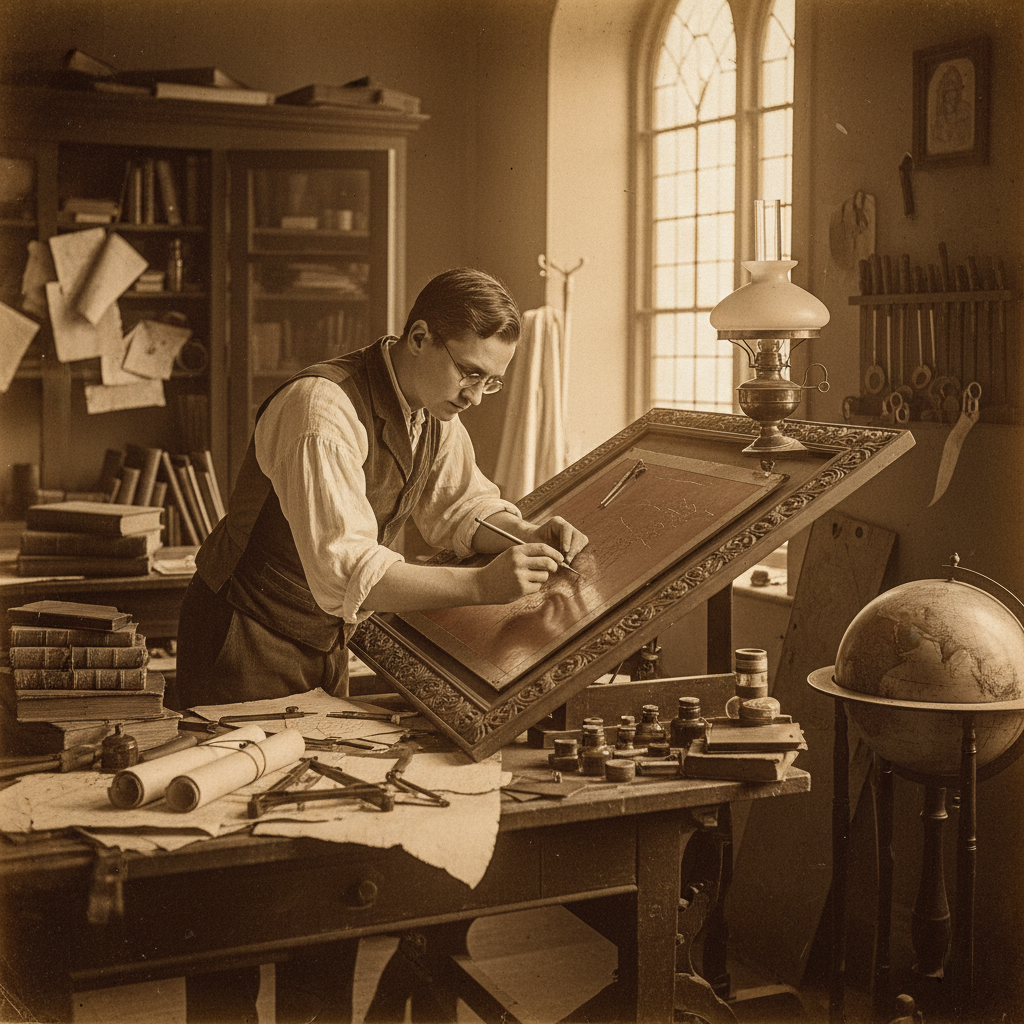
About the Map Engraver Profession
Map engravers were skilled artisans responsible for the intricate task of transferring cartographic designs onto metal plates, which were then used for printing maps. This occupation flourished during the Industrial Revolution, a period marked by rapid advancements in technology and a growing demand for accurate geographical representations. The engraver's work was crucial for the production of maps that guided explorers, navigators, and the general public, reflecting the expanding knowledge of the world and the increasing importance of navigation in trade and exploration.
The process of map engraving was meticulous and required a deep understanding of both art and science. Engravers would begin with a detailed drawing of the map, often created by cartographers who specialized in the art of map-making. Using tools such as burins and gravers, the engraver would carve the design into a copper or zinc plate, creating a reverse image of the map. This required not only precision but also an artistic eye to ensure that the final product was both accurate and aesthetically pleasing. Once the engraving was complete, the plate would be inked and pressed onto paper, producing the final map that would be distributed for use.
Map engravers played a vital role in the dissemination of knowledge during a time when maps were essential for navigation, land ownership, and military strategy. Their work contributed to the Age of Exploration, as accurate maps were crucial for explorers venturing into uncharted territories. As such, map engravers were respected members of the printing and publishing industries, often working closely with publishers and cartographers to produce high-quality maps for various purposes, including atlases, travel guides, and educational materials.
Day in the Life of a Map Engraver
Morning: Preparing the Workspace
The day would typically begin early, with the map engraver arriving at the workshop before the sun fully rose. The first task was to prepare the workspace, ensuring that all tools were clean and ready for use. The engraver would lay out the copper or zinc plates, along with the necessary tools: burins, gravers, and ink. A careful review of the day’s projects would follow, often involving discussions with cartographers about the specifics of the maps to be engraved.
Mid-Morning: Engraving the Map
Once the workspace was set, the engraver would begin the intricate process of engraving. This required intense concentration and a steady hand, as each line and detail had to be carved with precision. The engraver would often work from a detailed drawing, carefully translating the cartographer’s vision onto the metal plate. This could take several hours, depending on the complexity of the map.
Afternoon: Inking and Printing
After completing the engraving, the engraver would clean the plate and prepare it for inking. This involved applying ink to the engraved surface, ensuring that the ink filled the carved lines. Once the plate was inked, it was placed in a printing press, where paper was pressed against it to create the final map. The engraver would inspect the first prints, making adjustments if necessary to ensure quality.
Late Afternoon: Collaboration and Review
The latter part of the day often involved collaboration with other artisans and cartographers. The engraver would discuss any challenges faced during the engraving process and review the printed maps for accuracy. Feedback from publishers and clients was crucial, as maps needed to meet high standards of quality and precision.
Evening: Maintenance and Planning
As the day wound down, the engraver would clean and maintain their tools, preparing for the next day’s work. This was also a time for planning future projects, as the demand for new maps continued to grow with the expansion of trade and exploration. The engraver would often reflect on the day’s work, proud of their contribution to the world of cartography and navigation.
Related Exhibits
Typesetter
The role of a typesetter was pivotal in the evolution of printed communication, particularly during the Industrial Revolution. Typesetters were responsible for arranging the individual letters and characters of type to create pages of text for printing. This meticulous work required not only a keen eye for detail but also a deep understanding of typography and layout. Typesetters worked primarily in printing houses, where they would set type for newspapers, books, and other printed materials. The job involved selecting the appropriate typefaces, adjusting spacing, and ensuring that the text was aligned correctly. Each letter was cast in metal or made from wood, and typesetters would often work with a variety of fonts to achieve the desired aesthetic for each publication. The process was labor-intensive and required a high level of craftsmanship, as any errors in the typesetting could lead to costly mistakes in the final print.
Haruspex
The Haruspex was a priestly figure in ancient Roman religion, renowned for their unique role in divination. This sacred profession involved interpreting the will of the gods through the examination of animal entrails, particularly the liver, a practice known as extispicy. The Haruspex would conduct rituals, often in the presence of public officials or military leaders, to seek divine guidance before significant events such as battles, elections, or the founding of cities. The entrails were believed to reveal omens, and the Haruspex would analyze their color, texture, and any anomalies to provide insights into the future. This role was steeped in tradition and required a deep understanding of religious texts, rituals, and the symbolic meanings attributed to various organs. The Haruspex was not merely a fortune-teller; they were a respected authority in matters of state and religion, often consulted in times of crisis.
Explore More Exhibits
Discover the full collection of past and future professions in The Jobs Museum.