
Industrial Revolution
Typesetter
An extinct profession from Industrial Revolution that became obsolete due to technological advancement and societal change.
Media Gallery
About the Typesetter Profession
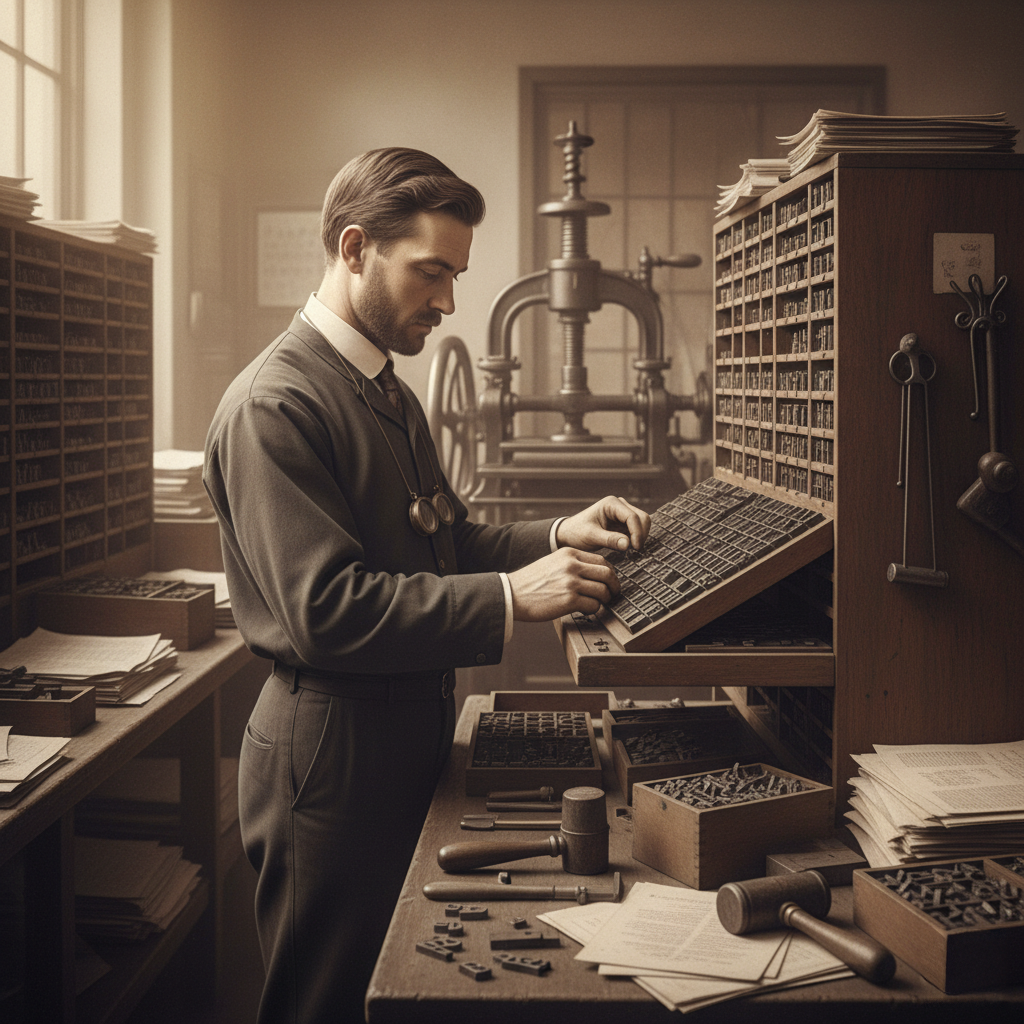
The role of a typesetter was pivotal in the evolution of printed communication, particularly during the Industrial Revolution. Typesetters were responsible for arranging the individual letters and characters of type to create pages of text for printing. This meticulous work required not only a keen eye for detail but also a deep understanding of typography and layout. Typesetters worked primarily in printing houses, where they would set type for newspapers, books, and other printed materials. The job involved selecting the appropriate typefaces, adjusting spacing, and ensuring that the text was aligned correctly. Each letter was cast in metal or made from wood, and typesetters would often work with a variety of fonts to achieve the desired aesthetic for each publication. The process was labor-intensive and required a high level of craftsmanship, as any errors in the typesetting could lead to costly mistakes in the final print.
Day in the Life of a Typesetter
Morning: Setting Up the Workspace
A typesetter's day typically began early in the morning, often before the sun rose. Upon arriving at the printing house, the typesetter would first prepare their workspace. This involved cleaning the typesetting area, organizing the various typefaces, and ensuring that all tools were in good condition. The typesetter would then review the day’s assignments, which could include anything from setting type for a local newspaper to preparing pages for a new book.
Mid-Morning: Selecting Type and Arranging Layout
Once the day’s work was outlined, the typesetter would select the appropriate typefaces for the project. This required a deep understanding of typography, as different fonts conveyed different tones and messages. After selecting the type, the typesetter would begin arranging the letters in a composing stick, carefully adjusting the spacing between words and lines to ensure readability and aesthetic appeal. This process was painstaking, as each letter had to be placed individually, often requiring the typesetter to make quick decisions about layout and design.
Afternoon: Proofreading and Adjustments
After completing the initial typesetting, the typesetter would print a proof of the page to check for errors. This was a critical step, as any mistakes would need to be corrected before the final print run. The typesetter would meticulously review the proof, making adjustments as necessary. This could involve re-setting individual letters or entire lines of text, ensuring that the final product met the high standards of the printing house.
Late Afternoon: Finalizing and Preparing for Print
Once the proof was approved, the typesetter would finalize the layout and prepare the type for the printing press. This involved locking the type into a chase, a frame that held the type in place during printing. The typesetter would then collaborate with the press operator to ensure that everything was ready for the printing process. As the day wound down, the typesetter would clean their tools and organize the workspace for the next day’s work, reflecting on the satisfaction of having contributed to the printed word.
Related Exhibits
Doll Eye Setter
The role of a Doll Eye Setter was a specialized craft within the toy-making industry, particularly prominent during the Victorian Era (1837-1901). This occupation involved the meticulous task of inserting glass or plastic eyes into dolls, ensuring that each doll had a lifelike appearance. Doll Eye Setters worked primarily in factories or workshops, where they would receive unassembled dolls from doll makers. The eyes, often made of glass, were crafted in various sizes and colors to match the intended design of the doll. The setter would carefully position the eyes, often using a small tool to secure them in place, ensuring they were aligned perfectly to create an expressive gaze. This attention to detail was crucial, as the eyes were considered the windows to the doll's personality, enhancing its appeal to children and collectors alike. The job required not only dexterity and precision but also an artistic eye for detail, as the placement of the eyes could significantly affect the doll's overall aesthetic. Doll Eye Setters often worked long hours, sometimes in poorly lit conditions, which could strain their eyesight. The work was repetitive, yet it required a steady hand and a keen sense of proportion to ensure that each doll was visually appealing. As the demand for dolls surged during the Victorian Era, fueled by the rise of the middle class and the popularity of children's toys, the role of the Doll Eye Setter became increasingly important. However, as the 20th century approached, advancements in manufacturing processes, such as the introduction of mass production techniques and the use of plastic eyes that could be molded directly into the doll's head, rendered the specialized skills of the Doll Eye Setter obsolete. The shift towards automation and the decline of handcrafted toys led to the gradual disappearance of this once-essential occupation.
Vitascope Operator
The Vitascope Operator was a pioneering figure in the early days of cinema, responsible for operating the Vitascope, one of the first commercially successful motion picture projectors. This role emerged in the late 19th century, during a time when the world was captivated by the novelty of moving images. The Vitascope, developed by Thomas Edison and his team, allowed for the projection of short films to audiences in theaters, marking a significant leap in entertainment technology. Operators were tasked with not only running the machine but also ensuring that the film was threaded correctly, maintaining the right speed, and managing the light source to create a clear image on the screen. The job required a blend of technical skill and showmanship, as operators often had to engage with the audience, enhancing the viewing experience with commentary or sound effects. The excitement of the flickering images and the communal experience of watching films in a darkened theater made the role of the Vitascope Operator a vital part of the early film industry.
Explore More Exhibits
Discover the full collection of past and future professions in The Jobs Museum.