
machine
Printing, from a unique page to a file
The press, the linecaster, and the desktop.
Illuminators and scriveners meet the first press. Hand compositors meet the Linotype. Linotype operators, devils, and copyholders meet photocomposition and the word processor.
Under this force
11
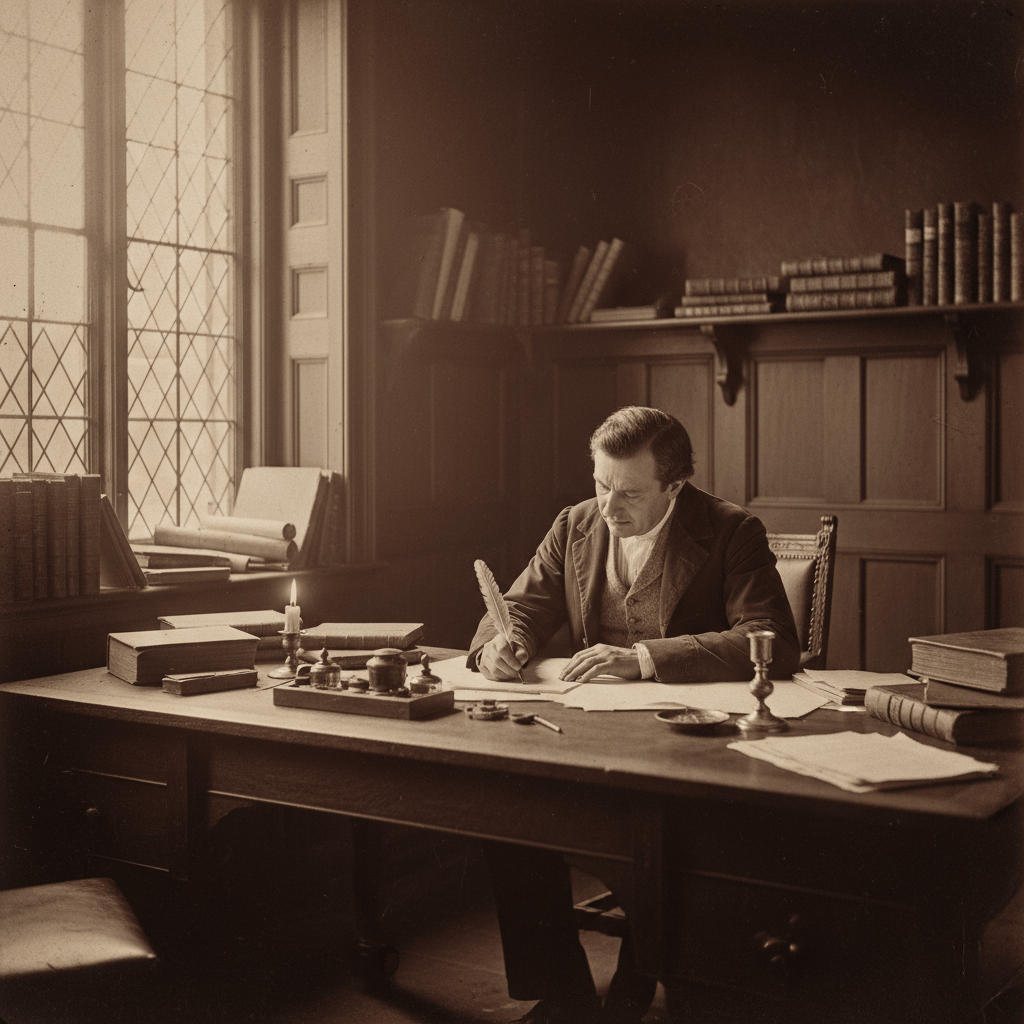
- Past · Medieval PeriodScrivenerThe scrivener was a vital figure in the medieval and early modern periods, serving as a professional scribe who specialized in writing documents by hand. Often employed by merchants, nobility, and the church, scriveners were responsible for drafting legal documents, contracts, letters, and other important texts. Their work was essential in an era when literacy was limited to a small segment of the population, and the written word held significant power. Scriveners were not only skilled in penmanship but also had a deep understanding of legal terminology and the nuances of language, making them indispensable in the administration of both public and private affairs. They often worked in scriptoriums or their own workshops, surrounded by parchment, ink, and quills, meticulously crafting each document with precision and care. The role of the scrivener was not merely to transcribe; they often provided advice on legal matters and helped clients navigate the complexities of written agreements, thus acting as both a writer and a consultant.
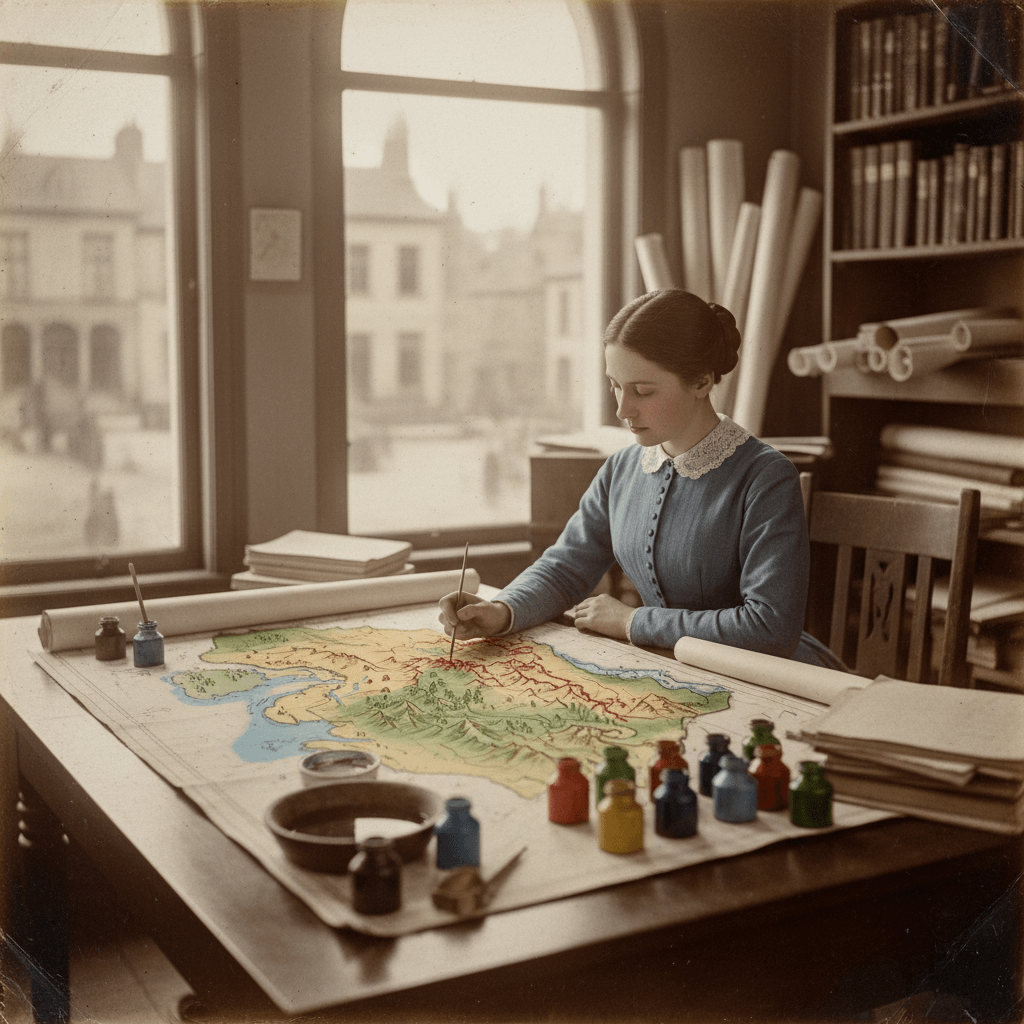 Past · Victorian EraMap ColouristThe role of a Map Colourist was integral to the production of maps during the Victorian Era, a time when cartography was both an art and a science. Map Colourists were responsible for the meticulous task of hand-painting maps, adding vibrant colors to delineate various geographical features, political boundaries, and land use. Each color had a specific meaning; for instance, blue often represented water bodies, green indicated forests, and brown was used for mountains. The work required not only artistic skill but also a deep understanding of geography and the significance of different regions.
Map Colourists worked in printing houses or cartographic firms, often alongside surveyors and engravers. They would receive printed maps, typically in black and white, and then apply their artistic talents to bring these maps to life. The process was labor-intensive, requiring precision and patience, as even the slightest mistake could lead to misinterpretation of the map's information. The final product was a beautifully colored map that was both functional and aesthetically pleasing, often used for educational purposes, navigation, and decoration.
As the demand for maps grew with the expansion of the British Empire and the rise of global exploration, the role of the Map Colourist became increasingly important. However, this job was not without its challenges, as the work environment could be cramped and poorly lit, leading to eye strain and fatigue. Despite these conditions, the Map Colourist took pride in their craft, knowing that their work contributed to the understanding of the world around them.
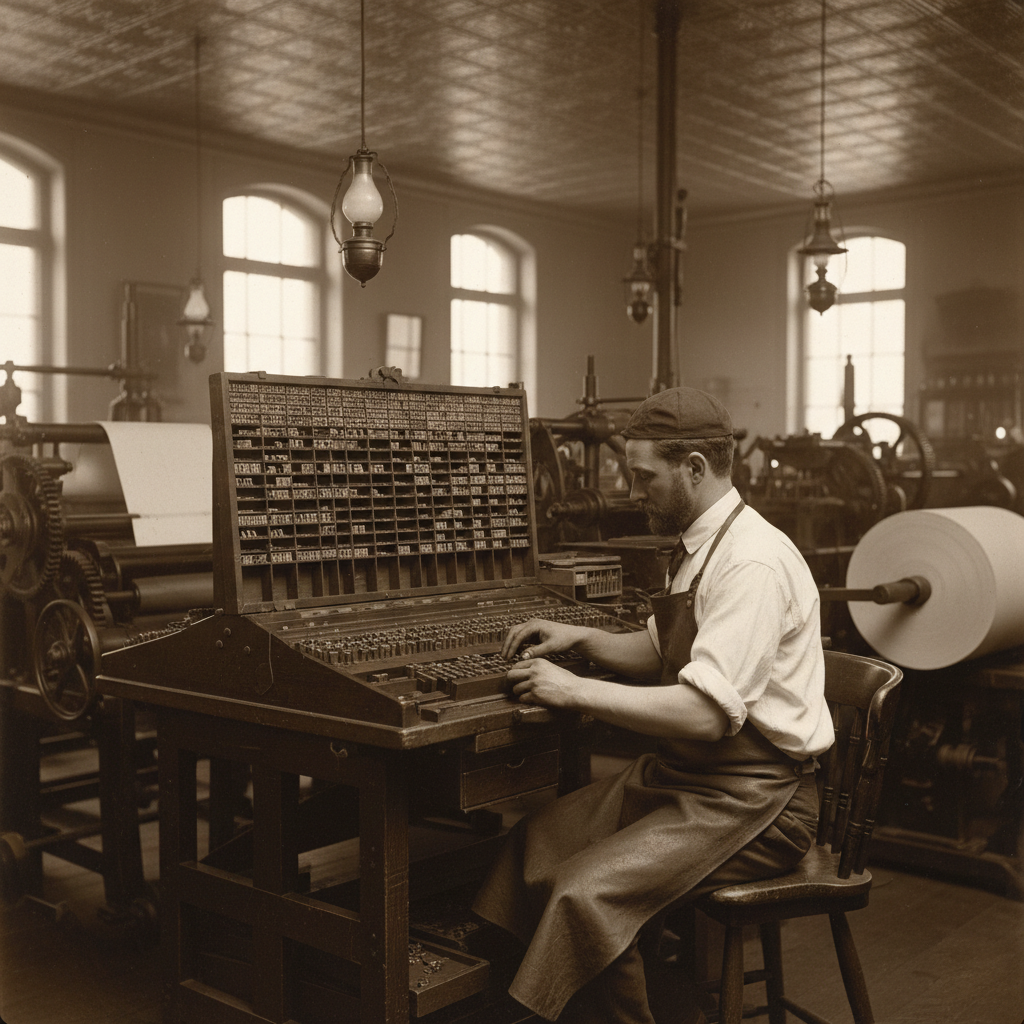 Past · Industrial RevolutionNewspaper TypesetterThe role of a newspaper typesetter was pivotal in the production of printed media during the Industrial Revolution and well into the 20th century. Typesetters were responsible for arranging the text and images that would be printed in newspapers, ensuring that each page was visually appealing and legible. This intricate process involved selecting individual metal type pieces, known as 'sorts', and arranging them into words and sentences on a composing stick. Once the text was set, it was locked into place in a chase, ready for the printing press. Typesetters worked in a noisy, bustling environment, often alongside other skilled tradespeople, such as printers and proofreaders, in a print shop. The job required not only technical skill but also a keen eye for detail and a strong understanding of typography and layout.
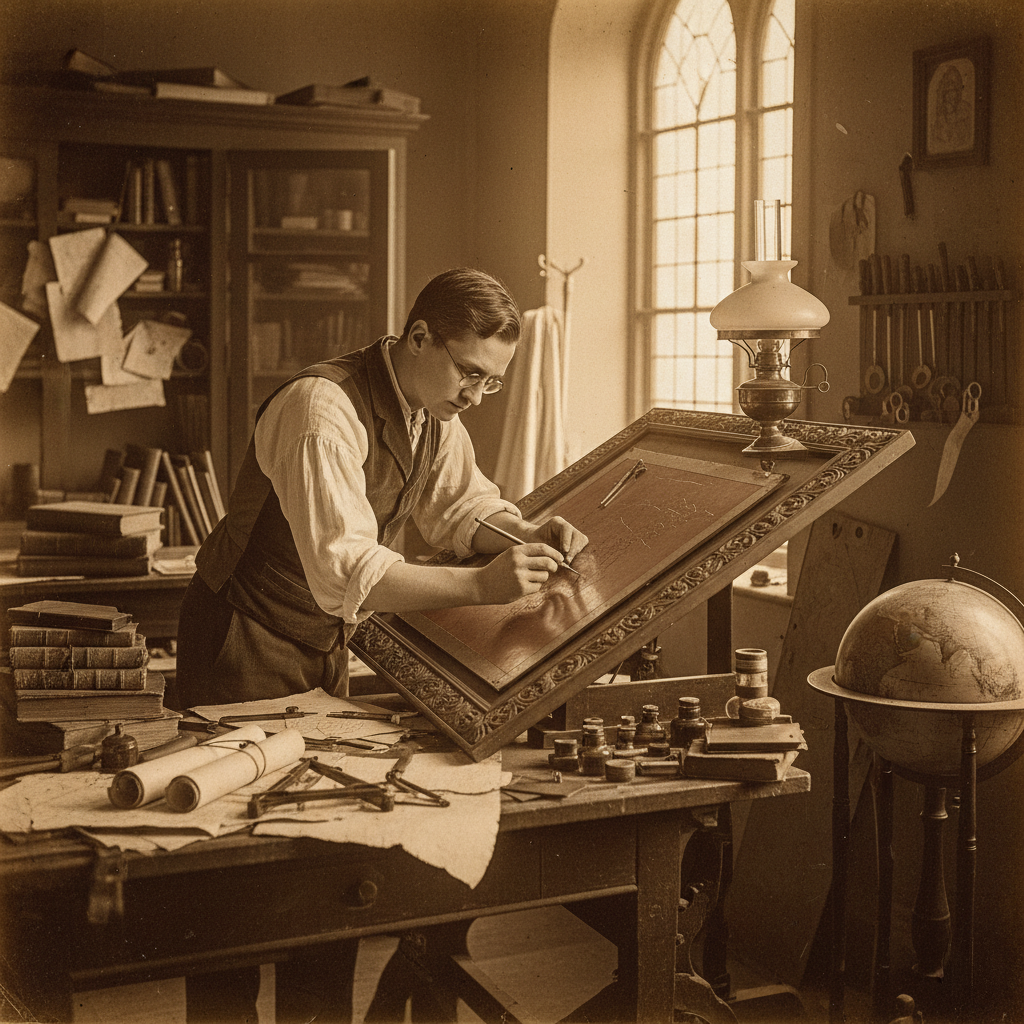 Past · Industrial RevolutionMap EngraverMap engravers were skilled artisans responsible for the intricate task of transferring cartographic designs onto metal plates, which were then used for printing maps. This occupation flourished during the Industrial Revolution, a period marked by rapid advancements in technology and a growing demand for accurate geographical representations. The engraver's work was crucial for the production of maps that guided explorers, navigators, and the general public, reflecting the expanding knowledge of the world and the increasing importance of navigation in trade and exploration.
The process of map engraving was meticulous and required a deep understanding of both art and science. Engravers would begin with a detailed drawing of the map, often created by cartographers who specialized in the art of map-making. Using tools such as burins and gravers, the engraver would carve the design into a copper or zinc plate, creating a reverse image of the map. This required not only precision but also an artistic eye to ensure that the final product was both accurate and aesthetically pleasing. Once the engraving was complete, the plate would be inked and pressed onto paper, producing the final map that would be distributed for use.
Map engravers played a vital role in the dissemination of knowledge during a time when maps were essential for navigation, land ownership, and military strategy. Their work contributed to the Age of Exploration, as accurate maps were crucial for explorers venturing into uncharted territories. As such, map engravers were respected members of the printing and publishing industries, often working closely with publishers and cartographers to produce high-quality maps for various purposes, including atlases, travel guides, and educational materials.
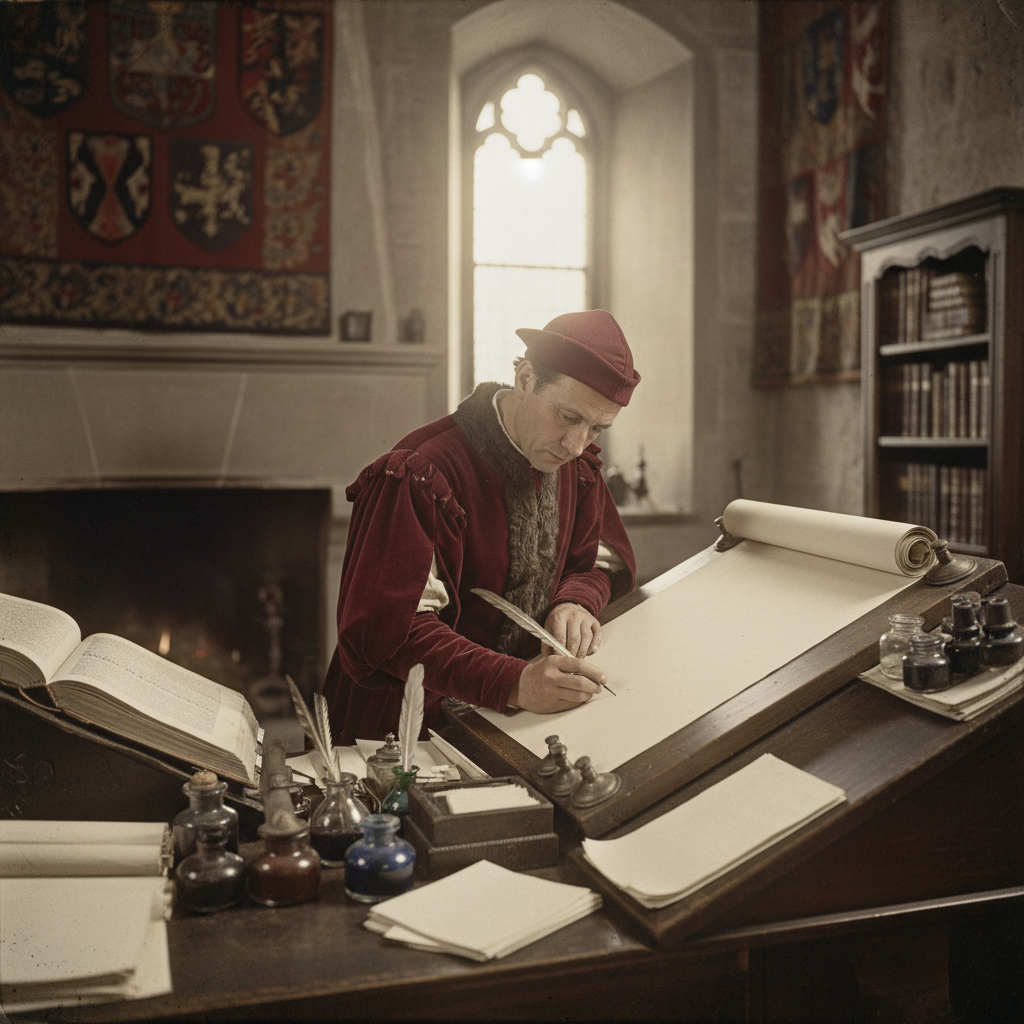 Past · Medieval PeriodCalligrapherThe art of calligraphy, often referred to as 'beautiful writing,' flourished during the Medieval Period, where skilled calligraphers played a crucial role in the preservation and dissemination of knowledge. These artisans were not merely writers; they were artists who transformed the written word into a visual spectacle. Calligraphers were responsible for creating manuscripts, religious texts, and important documents, often using intricate scripts that varied by region and purpose. Their work was characterized by the use of quills, ink, and parchment, and they often employed elaborate techniques such as gilding and illumination to enhance their creations. The calligrapher's role was not only to write but to imbue each piece with a sense of beauty and reverence, making their work essential in an era where printed materials were scarce and literacy was a privilege of the few.
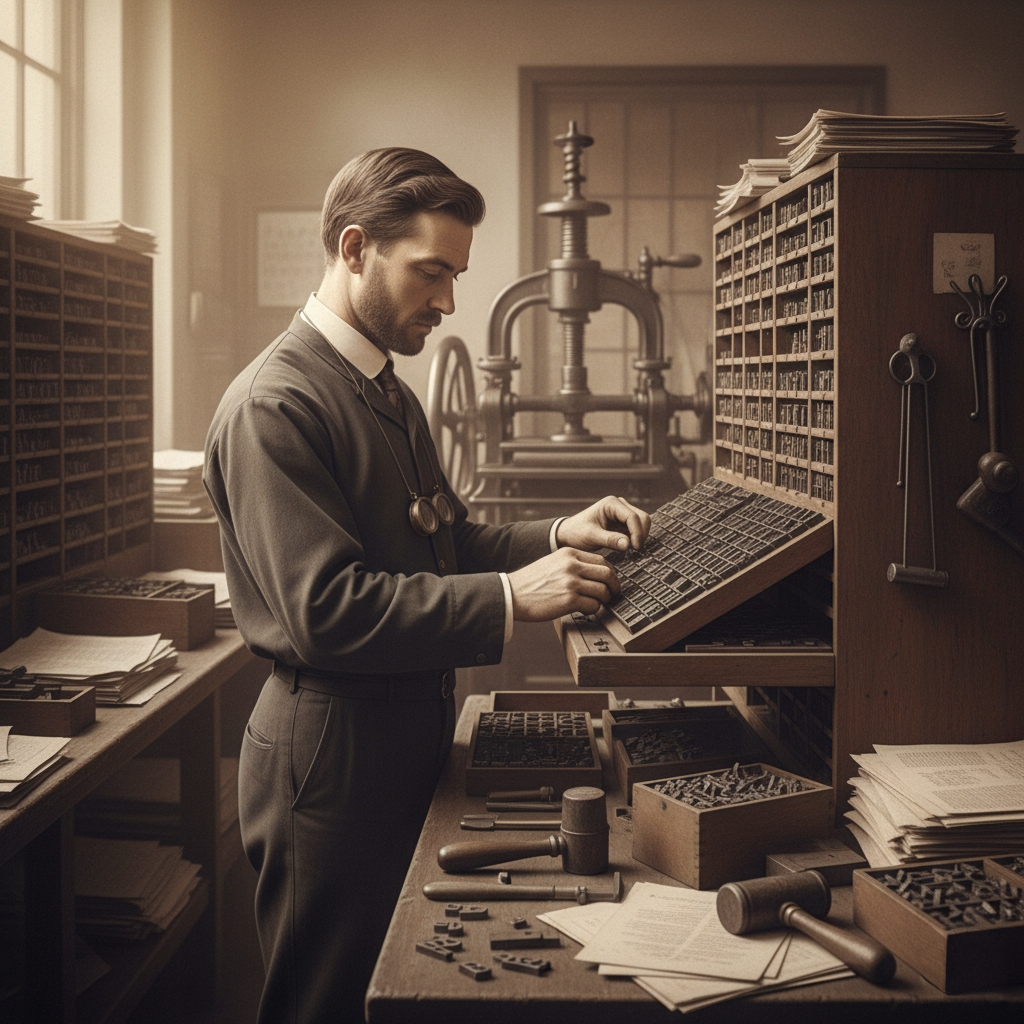 Past · Industrial RevolutionTypesetterThe role of a typesetter was pivotal in the evolution of printed communication, particularly during the Industrial Revolution. Typesetters were responsible for arranging the individual letters and characters of type to create pages of text for printing. This meticulous work required not only a keen eye for detail but also a deep understanding of typography and layout. Typesetters worked primarily in printing houses, where they would set type for newspapers, books, and other printed materials. The job involved selecting the appropriate typefaces, adjusting spacing, and ensuring that the text was aligned correctly. Each letter was cast in metal or made from wood, and typesetters would often work with a variety of fonts to achieve the desired aesthetic for each publication. The process was labor-intensive and required a high level of craftsmanship, as any errors in the typesetting could lead to costly mistakes in the final print.
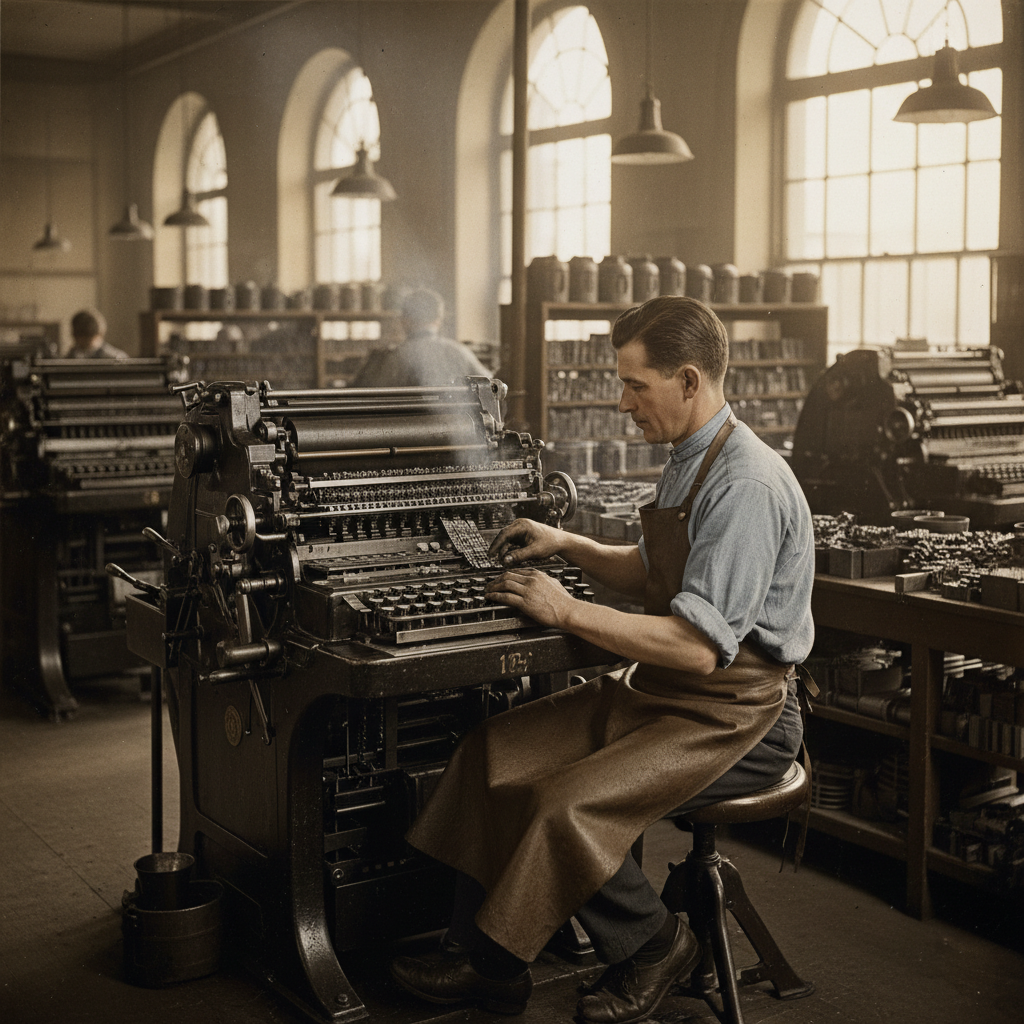 Past · Industrial RevolutionLinotype OperatorThe Linotype Operator was a crucial figure in the world of printing from the late 19th century until the mid-20th century. This skilled artisan operated the Linotype machine, a revolutionary device that allowed for the efficient typesetting of text for newspapers, books, and other printed materials. The Linotype machine, invented by Ottmar Mergenthaler in 1884, enabled operators to cast entire lines of type in metal, significantly speeding up the printing process compared to the labor-intensive method of setting type by hand.
Linotype Operators were responsible for not only operating the machine but also for maintaining it, ensuring that it was in good working order to produce high-quality print. They worked in bustling print shops, often surrounded by the sounds of machinery and the smell of ink and paper. The job required a keen eye for detail, as operators had to ensure that the type was set correctly and that the text was free of errors before it was sent to the press.
The role of the Linotype Operator was not just technical; it was also creative. Operators often collaborated with typesetters and editors to achieve the desired layout and design of printed materials, making their work an integral part of the publishing process. As the demand for printed materials surged during the Industrial Revolution, so too did the need for skilled Linotype Operators, who played a vital role in the dissemination of information and culture during this transformative period.
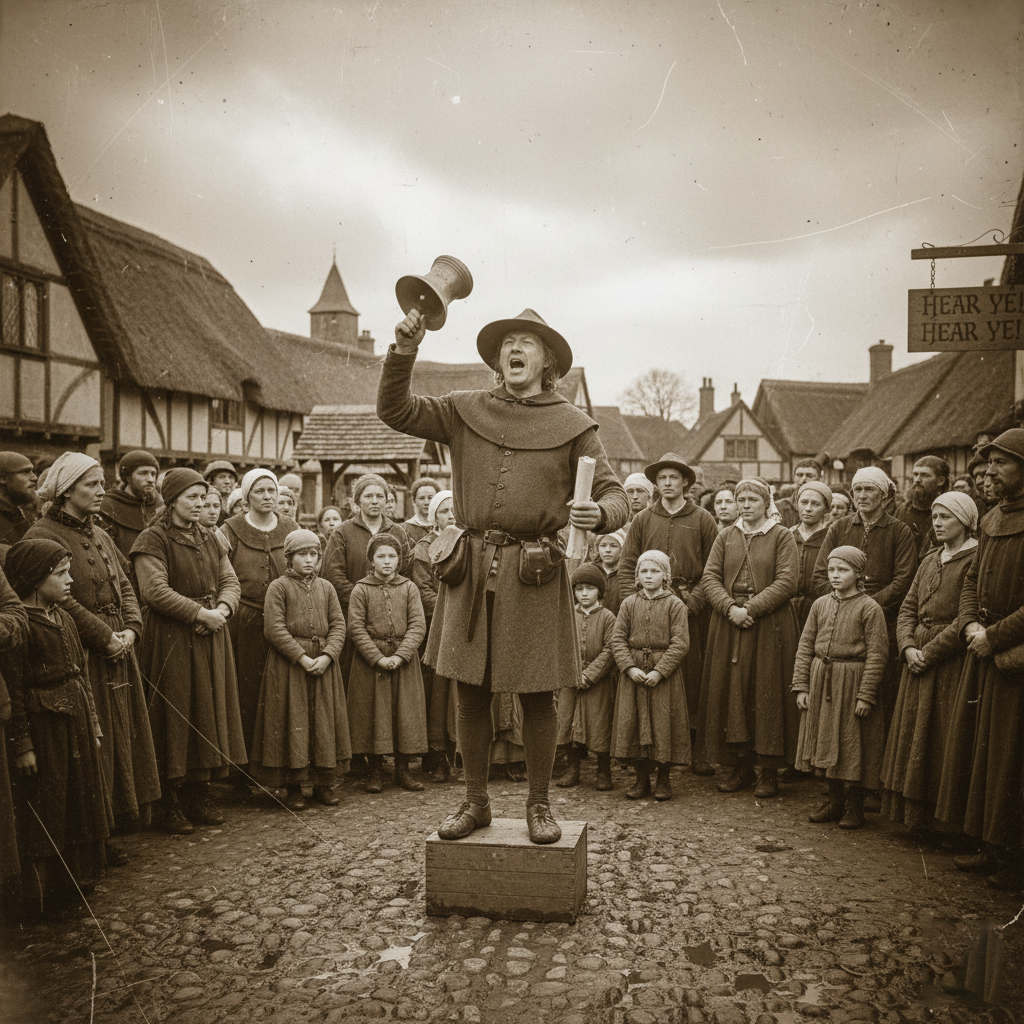 Past · Medieval PeriodTown CrierIn the bustling streets of medieval towns, where the written word was a luxury few could afford, the Town Crier served as the vital link between the local government and the populace. Clad in a distinctive uniform, often adorned with a bell and a scroll, the Town Crier was a figure of authority and community spirit. His primary duty was to announce news, proclamations, and important events to the townsfolk, ensuring that even the illiterate could stay informed about matters that affected their daily lives. From royal decrees to local market days, the Town Crier's voice echoed through the streets, a herald of information in an age where communication was limited.
The role was not merely about shouting news; it required a keen understanding of the community's needs and a flair for performance. Town Cryers were often chosen for their loud, clear voices and their ability to engage the public, making announcements memorable and entertaining. They would often embellish their proclamations with dramatic flair, using gestures and intonation to capture the attention of passersby.
In addition to their announcements, Town Cryers played a crucial role in maintaining public order. They would often be called upon to quell disputes or remind citizens of local laws and regulations, acting as a mediator in the community. Their presence was a symbol of civic pride and a reminder of the social contract between the rulers and the ruled, making them an indispensable part of town life.
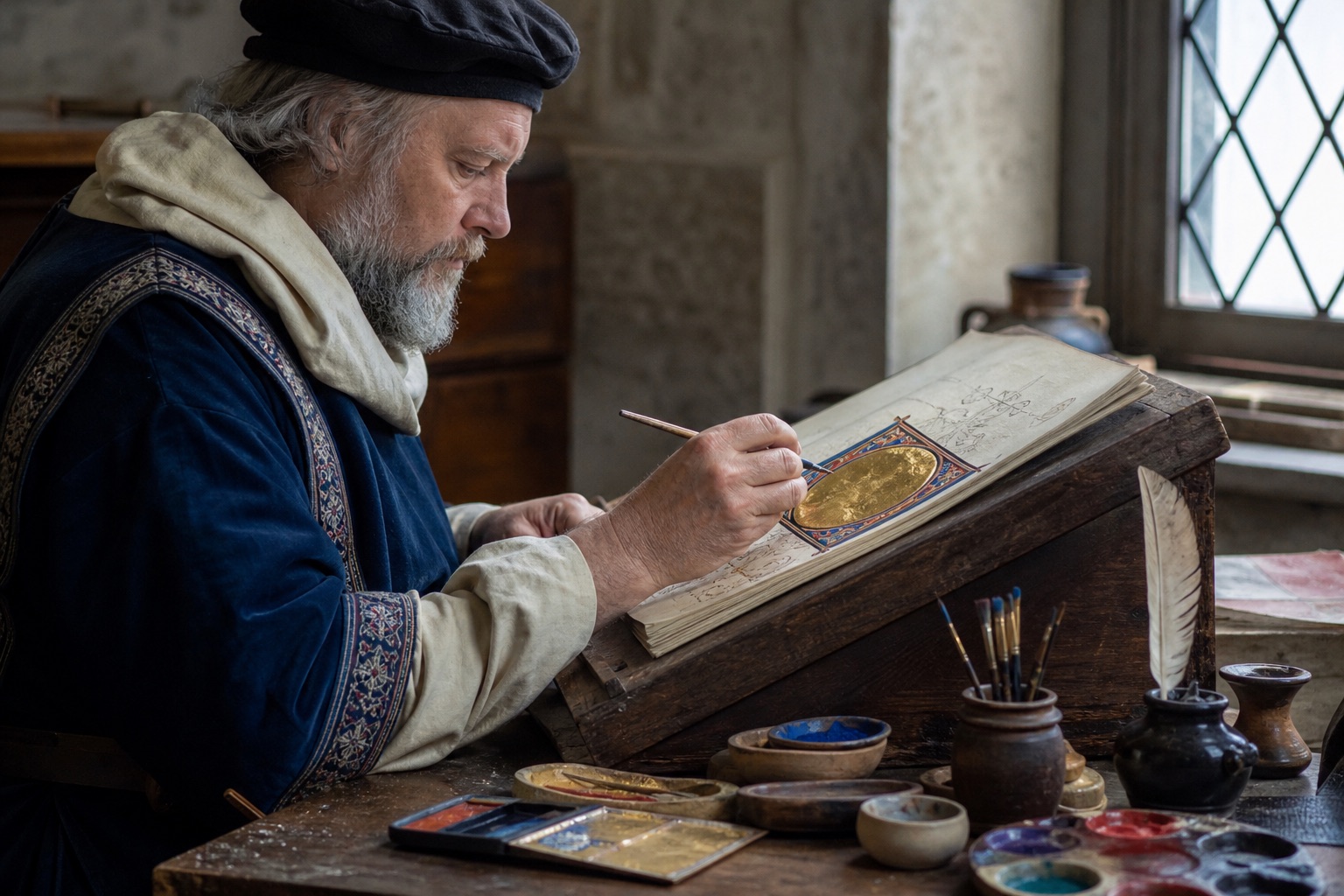 Past · Medieval EraIlluminatorAn illuminator painted the decorated letters, borders, and miniatures in a manuscript book, and was a different worker from the scribe who wrote the text. A quire often passed from one to the other: the scribe left blank spaces, and the illuminator filled them with an initial in gold and color or with a small picture. The materials were parchment or vellum, later paper, mineral and organic pigments, and gold leaf laid on a gesso ground and burnished. The work belonged to the medieval book, from the Romanesque scriptorium through the books of hours of the fourteenth and fifteenth centuries.
Monks and nuns did illuminate, especially in earlier centuries, and it is a mistake to stop the story there. By the later Middle Ages many illuminators were lay urban artisans, men and women in commercial workshops in Paris, Bruges, Ghent, Bologna, and London, hired by stationers who dealt with the patron. Christine de Pizan praised a Parisian illuminator named Anastasia. The Limbourg brothers worked for the Duke of Berry as professional painters, not as cloistered scribes. Printing, from the middle of the fifteenth century through the sixteenth, took the ordinary commission away. Luxury manuscripts lingered. The specialist trade of illuminating books by hand did not.
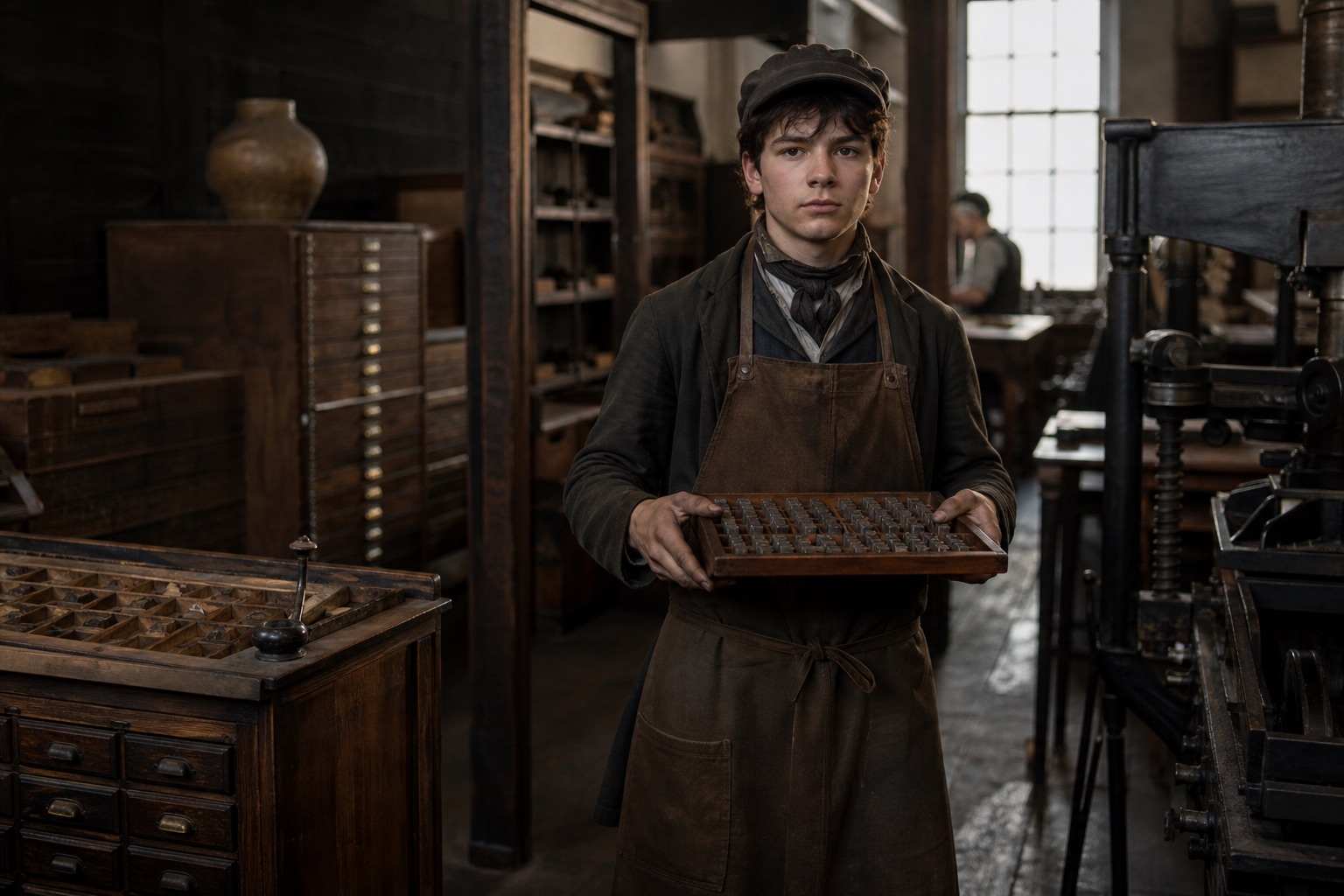 Past · Industrial RevolutionPrinter's DevilA printer's devil was the youngest pair of hands in a letterpress shop. He fetched missing sorts from the type case, put used letters back into their boxes, inked the forme, and swept metal dust off the floor. He learned the lay of the case by running for letters, not from a chart pinned on the wall. Chapel custom, the shop's own little government, fixed his place at the bottom: fines, errands, and the order of the room were not written in a schoolbook. Visitors saw black nails and a paper cap, not a mascot performing for the trade.
The post runs from eighteenth-century hand presses into early twentieth-century newspaper rooms. It assumed a boy could grow into a compositor because every line was still set by hand. Jobbing shops that printed cards and bills used him as surely as book houses did. County weeklies kept such a boy after many city dailies had already bought a linecaster. The work was ordinary juvenile labor inside a proud craft, documentary rather than theatrical, and it ended when that ladder was taken away.
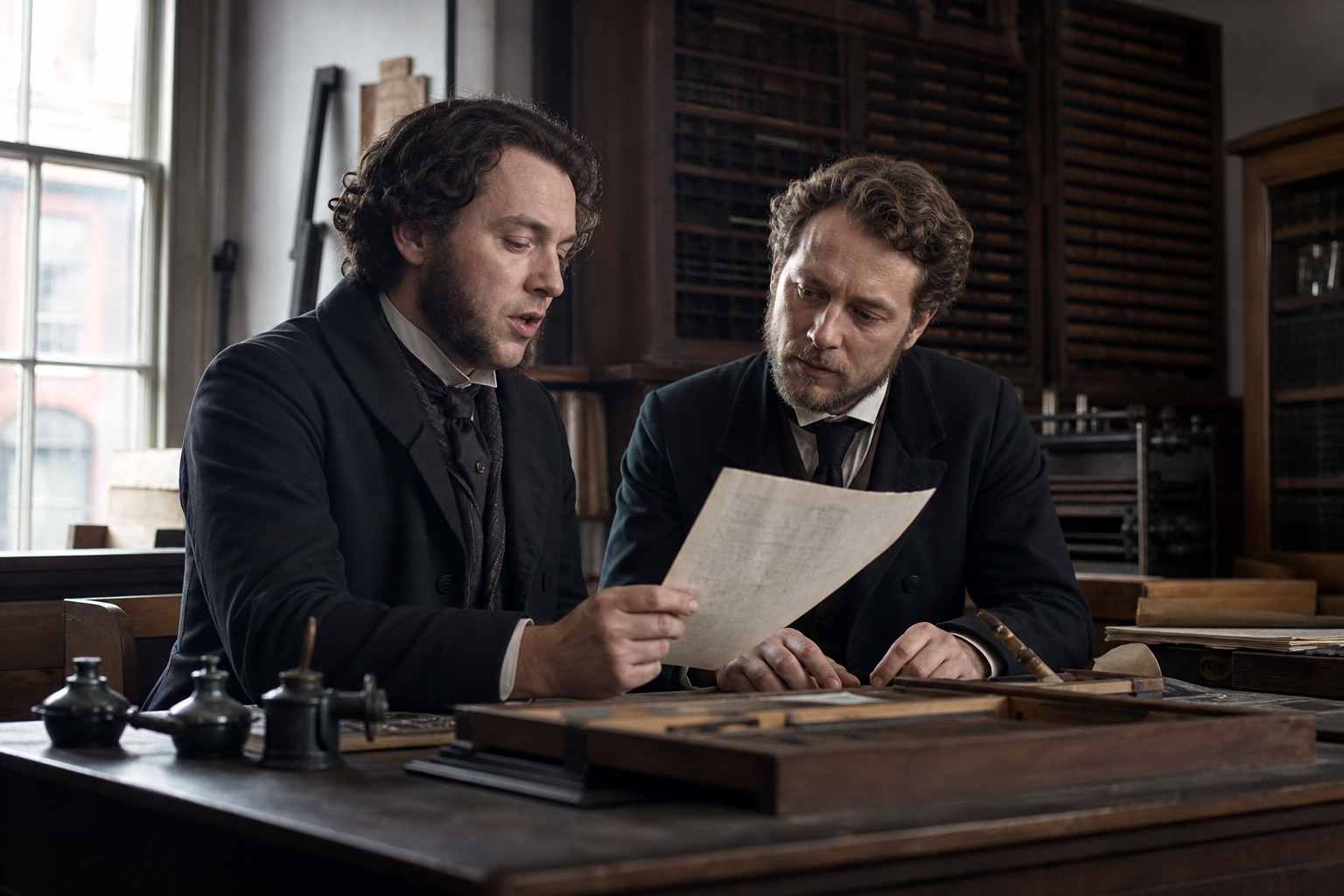 Past · Early Twentieth CenturyCopyholderA copyholder sat in the proofing room with the manuscript or typescript and read it aloud so a proofreader could follow the printed proof. Names were spelled, punctuation was spoken, and the place in the copy was never lost if the reader stopped to mark a letter. The pair worked as one instrument: voice on the copy, pencil on the proof. Newspaper rooms, book houses, and government printing offices all used some version of that duet. It was indoor, exacting, and easy for a visitor to mistake for mere reading.
The post belongs mostly to the nineteenth century and the first half of the twentieth, when type was still set from handwritten or typed copy and a second pair of eyes was hired as a voice. Women and girls filled it in large numbers as a junior office grade, though men and boys held it too, especially earlier. Silent comparison by a single reader, then a tape that could be replayed, and finally a screen, took the voice out of the room. The label is the person who held the copy, not the senior who signed the proof.