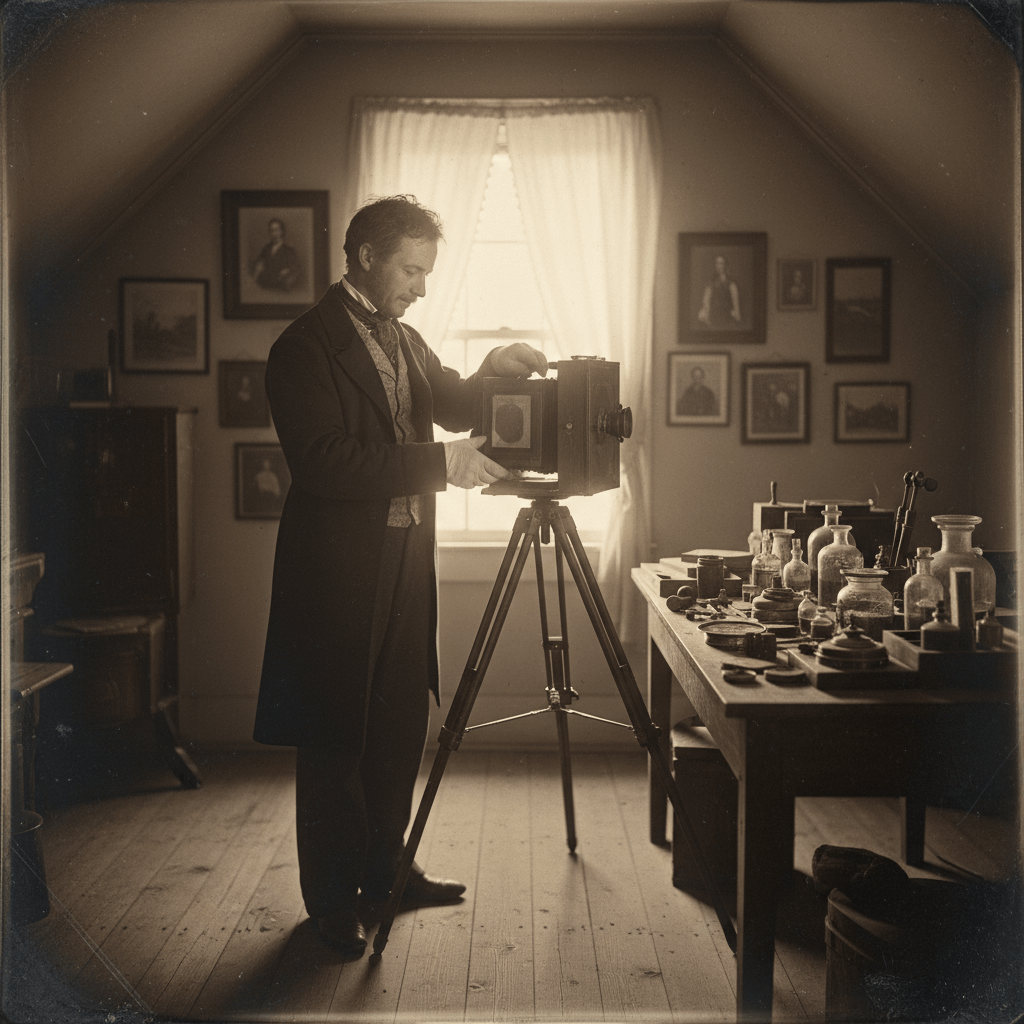
About the Daguerreotypist Profession
The daguerreotypist was a pioneering figure in the world of photography, specializing in the creation of daguerreotypes, the first commercially successful form of photography. This intricate process, developed by Louis Daguerre in 1839, involved capturing images on a polished sheet of silver-plated copper. The daguerreotypist's work was not merely technical; it was an art form that required a keen eye for detail and a deep understanding of light and composition. Each daguerreotype was a unique image, characterized by its remarkable clarity and depth, making it a sought-after medium for portraiture and landscapes alike.
The daguerreotypist operated in a small studio, often adorned with velvet drapes and props to enhance the aesthetic of the portraits. The process began with the careful preparation of the metal plate, which was coated with a light-sensitive layer of silver iodide. After exposure in the camera, the plate was developed using mercury vapor, a hazardous but essential step that brought the latent image to life. The final product was then fixed with a salt solution, resulting in a stunning, mirror-like image that could be viewed directly or framed for display.
Daguerreotypists were often entrepreneurs, establishing their own studios and marketing their services to the public. They played a crucial role in documenting society, capturing everything from family portraits to significant historical events, and their work laid the foundation for modern photography.
Day in the Life of a Daguerreotypist
Morning: Preparing the Studio
The day began early, often before dawn, as the daguerreotypist prepared the studio for the day’s sessions. The first task was to ensure that the light was optimal, as natural light was essential for capturing the best images. The daguerreotypist would clean the glass windows and adjust the curtains to control the light entering the space. Next, they would prepare the daguerreotype plates, carefully polishing the copper sheets to a mirror finish and coating them with a light-sensitive solution.
Mid-Morning: Setting Up for Portraits
As clients began to arrive, the daguerreotypist would set up the camera, a large wooden box with a lens that required precise adjustments. They would arrange props and backgrounds to create an appealing scene, often using draped fabrics or painted backdrops. Each client was treated with care, as the daguerreotypist needed to ensure they were comfortable and posed correctly to capture their best likeness.
Afternoon: Capturing Images
The afternoon was often the busiest time, with clients eager to have their portraits taken. The daguerreotypist would guide each subject into position, carefully adjusting the camera and focusing the lens. Once everything was set, they would expose the plate for several minutes, a process that required absolute stillness from the subject. After exposure, the plate was developed using mercury vapor, a process that demanded both skill and caution due to the toxic nature of the chemicals involved.
Late Afternoon: Finishing Touches
After developing the images, the daguerreotypist would fix the plates in a salt solution, then rinse and dry them. Each daguerreotype was unique, and the daguerreotypist would often add a protective case or frame to enhance its presentation. They would then record the details of each session in a ledger, noting the names of clients and the type of portraits taken.
Evening: Marketing and Networking
As the day wound down, the daguerreotypist would spend time marketing their work, perhaps by displaying recent portraits in the studio window or distributing flyers in the community. Networking with local businesses and attending social events were also crucial for attracting new clients and establishing a reputation in the burgeoning field of photography.