
Early to Mid 20th Century
Soda Jerk
An extinct profession from Early to Mid 20th Century that became obsolete due to technological advancement and societal change.
Media Gallery
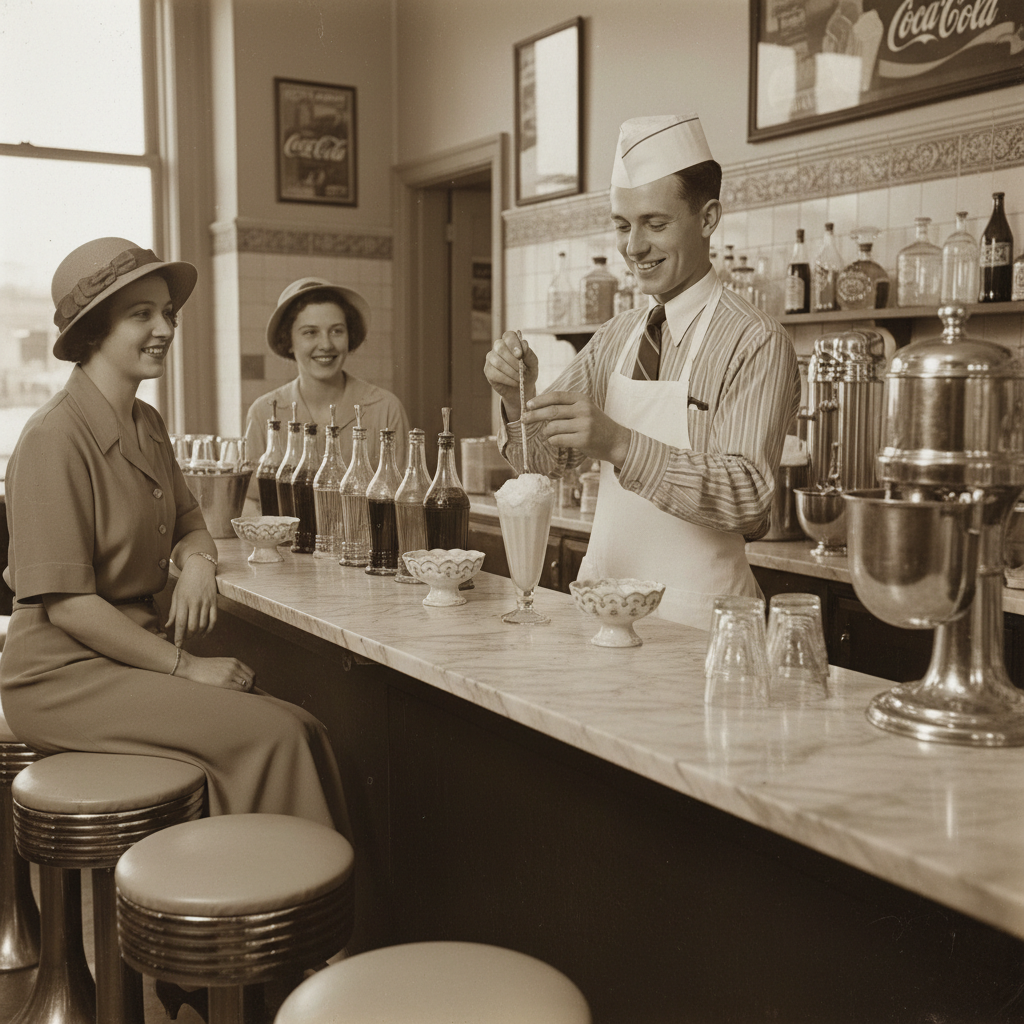
About the Soda Jerk Profession
The soda jerk was a quintessential figure in American culture from the late 19th century through the mid-20th century, particularly in the United States. This role was primarily associated with soda fountains, which were popular gathering spots in drugstores and diners. The soda jerk was responsible for preparing and serving a variety of carbonated beverages, ice cream sodas, and other sweet treats, often with a flair that entertained patrons. The term 'jerk' refers to the quick motion of pulling the soda fountain lever to dispense the fizzy drink, a skill that required both speed and precision.
Soda jerks were not just servers; they were also social facilitators, engaging with customers and creating a lively atmosphere. They often wore distinctive uniforms, which included a white apron and a paper hat, and were known for their friendly demeanor and knowledge of the menu. The soda jerk's role was integral to the experience of visiting a soda fountain, where patrons could enjoy a refreshing drink while socializing with friends or family.
The soda jerk's repertoire included classic concoctions such as root beer floats, banana splits, and phosphates, which were flavored syrups mixed with carbonated water. The job required a good understanding of flavors and the ability to create visually appealing presentations. In addition to beverages, soda jerks often served light snacks, such as sandwiches and pastries, making them a vital part of the local dining scene.
Day in the Life of a Soda Jerk
Morning: Opening the Soda Fountain
The day began early, often before the sun rose, as soda jerks prepared the soda fountain for the day’s customers. They would clean the counters, restock supplies, and ensure that all equipment was in working order. This included checking the carbonation levels of the soda machines and preparing fresh ice cream for the day’s orders. The aroma of freshly brewed coffee and baked goods filled the air, enticing early morning patrons.
Mid-Morning: The Breakfast Rush
As the morning progressed, the soda jerk would serve breakfast items, such as milkshakes and pastries, to customers looking for a quick bite. They would greet regulars by name, taking orders with a smile and engaging in light conversation. The soda jerk’s ability to remember customer preferences was key to building a loyal clientele.
Afternoon: The Lunch Crowd
During lunch hours, the soda jerk would switch gears to serve a variety of sandwiches and sodas. The lunch crowd often included school children and local workers, creating a bustling atmosphere. The soda jerk would expertly mix sodas and serve them with a flourish, often creating a spectacle that delighted customers. This was also a time for creativity, as soda jerks would experiment with new flavors and combinations to entice patrons.
Evening: The Social Scene
As the day wound down, the soda fountain became a social hub. Families and friends gathered to enjoy ice cream sundaes and floats. The soda jerk would often host small events, such as ice cream socials, where they would serve special creations. The evening was filled with laughter and chatter, with the soda jerk at the center of it all, ensuring everyone had a delightful experience.
Closing: End of the Day
At the end of the day, the soda jerk would clean the equipment, restock supplies for the next day, and balance the cash register. This final task was crucial, as it ensured the business ran smoothly and profitably. After a long day of serving and socializing, the soda jerk would leave the soda fountain, satisfied with the joy they brought to their community.
Related Exhibits
Parakoimomenos
The Parakoimomenos, often translated as 'bedchamber attendant' or 'chamberlain,' was a significant role in the households of the elite during the Classical Antiquity period, particularly in the Byzantine Empire. This position was not merely one of servitude; it was a trusted role that involved close personal service to the emperor or high-ranking officials. The Parakoimomenos was responsible for the personal care and comfort of their charge, overseeing the sleeping quarters, and ensuring that the environment was conducive to rest and privacy. This included managing the temperature of the room, preparing bedding, and even attending to the personal needs of the individual they served. The role required a high level of discretion and loyalty, as the Parakoimomenos often had access to sensitive information and was privy to the intimate details of their employer's life. In addition to personal care, the Parakoimomenos also played a role in the ceremonial aspects of the household, assisting in the preparation for audiences and events. They were often involved in the selection of clothing and accessories, ensuring that their employer was always presented in the best light. This position was a blend of servant and confidant, requiring a deep understanding of the social dynamics of the court and the ability to navigate complex relationships with other members of the household and nobility.
Knife Grinder
The knife grinder was a skilled tradesperson responsible for sharpening and honing blades, from kitchen knives to industrial cutting tools. This occupation flourished during the Industrial Revolution, a period marked by rapid technological advancement and a growing demand for precision tools in both domestic and industrial settings. Knife grinders often worked in small workshops or as itinerant tradespeople, traveling from town to town with their grinding wheels and tools, providing essential services to local communities. The sound of the grinding wheel, a rhythmic and reassuring noise, was a familiar part of daily life, as these craftsmen ensured that the tools of the trade remained sharp and effective. The process of knife grinding involved several steps. First, the grinder would assess the blade's condition, determining the level of wear and the type of sharpening needed. Using a foot-powered grinding wheel, the grinder would carefully sharpen the blade, maintaining the correct angle to ensure optimal cutting performance. After sharpening, the blade would often be polished to a fine finish, sometimes using a leather strop to achieve a razor-sharp edge. Knife grinders were not only skilled in their craft but also had a deep understanding of the various types of steel and the specific needs of different tools, making them invaluable to both domestic households and industrial operations.
Explore More Exhibits
Discover the full collection of past and future professions in The Jobs Museum.