
Gilded Age
Ice Delivery Man
An extinct profession from Gilded Age that became obsolete due to technological advancement and societal change.
Media Gallery
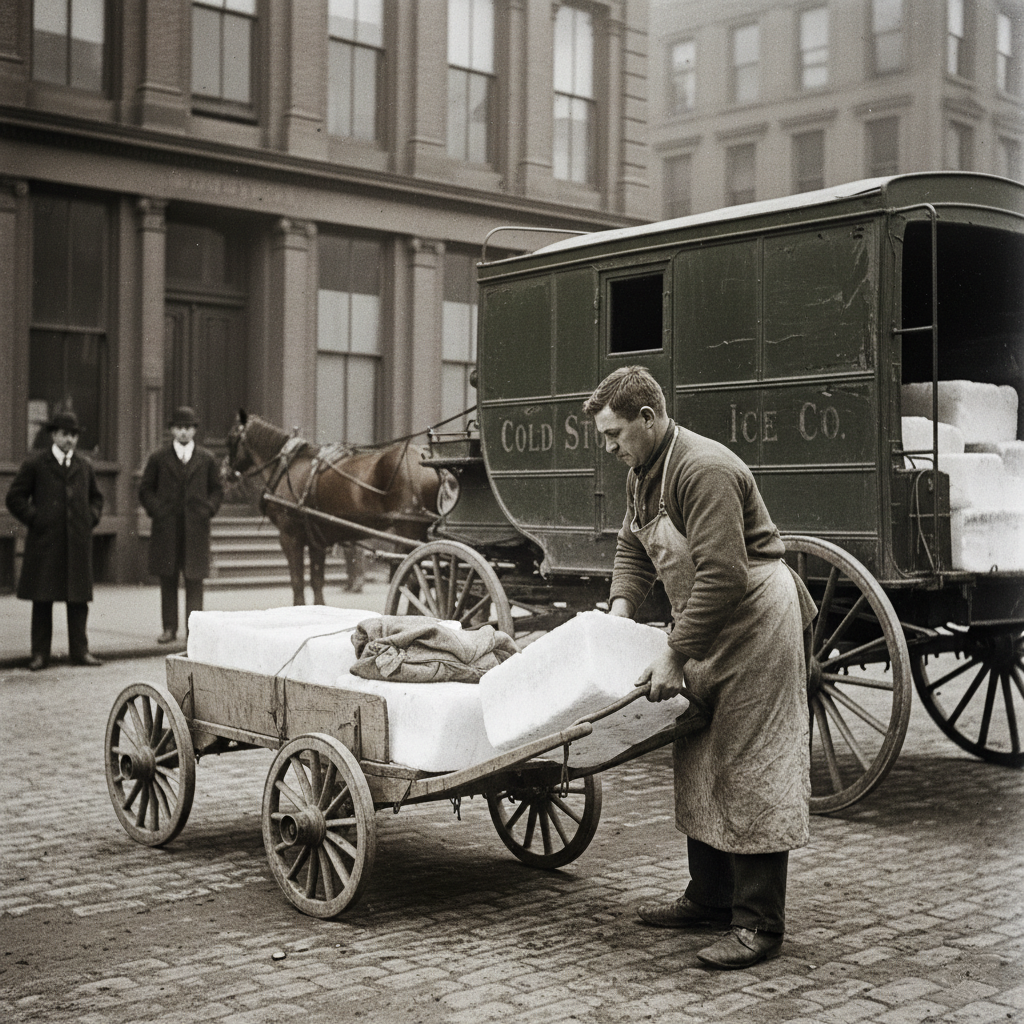
About the Ice Delivery Man Profession
The Ice Delivery Man was a vital figure in the late 19th and early 20th centuries, responsible for transporting large blocks of ice from ice houses to homes and businesses. Before the advent of modern refrigeration, ice was essential for preserving food, cooling drinks, and providing comfort during the sweltering summer months. Ice delivery men would often rise before dawn, preparing for a long day of labor that involved hauling heavy blocks of ice, sometimes weighing up to 300 pounds, using specialized tools and horse-drawn wagons. They navigated through city streets, delivering ice to households, restaurants, and markets, often shouting 'Ice!' to announce their arrival. The job required not only physical strength but also knowledge of customer preferences, as many clients had specific requests for the size and quantity of ice needed. The ice delivery man was a familiar sight in urban areas, contributing to the daily rhythm of life and commerce.
Day in the Life of an Ice Delivery Man
Early Morning: Preparation and Loading
The day began at the crack of dawn, often around 5 AM. The ice delivery man would arrive at the local ice house, a facility where large blocks of ice were harvested from frozen lakes or produced in ice-making plants. After greeting fellow workers, he would don his heavy coat and gloves, essential for handling the cold ice. Using a pick and tongs, he would select the blocks of ice needed for his route, carefully loading them onto a horse-drawn wagon. This task required strength and skill, as the ice was slippery and heavy.
Mid-Morning: The Delivery Route
By 6 AM, the ice delivery man was on the road, navigating the bustling streets of the city. He would often have a set route, stopping at various homes and businesses. As he approached each destination, he would call out to announce his arrival, allowing customers to prepare for the delivery. The ice was typically delivered to a designated area, such as an icebox or cellar, where it would be used to keep perishables cool. The delivery man had to be mindful of the customer’s preferences, ensuring the right size and quantity of ice was provided.
Afternoon: Break and Refueling
After several hours of deliveries, the ice delivery man would take a break, often enjoying a simple meal at a local diner. This was a time to rest and socialize with other workers, sharing stories and tips about the best routes or the most demanding customers. The camaraderie among ice delivery men was strong, as they faced similar challenges in their physically demanding jobs.
Late Afternoon: Final Deliveries
The afternoon was often the busiest time, as many households would request additional ice for evening gatherings or meals. The ice delivery man would continue his route, sometimes needing to refill his wagon at the ice house if he ran low. As the sun began to set, he would make his final deliveries, ensuring that every customer was satisfied before returning to the ice house.
Evening: End of the Day
By 7 PM, the ice delivery man would return to the ice house, where he would unload any remaining ice and prepare for the next day. After a long day of hard work, he would head home, exhausted but fulfilled, knowing he had played a crucial role in keeping the community cool and comfortable.
Related Exhibits
Pony Express Rider
The Pony Express was a mail service that operated in the United States from April 1860 to October 1861, providing a vital link between the East and West coasts during a time of rapid expansion and communication needs. Riders, known as Pony Express Riders, were young, brave men who undertook the perilous task of delivering mail across the vast and often treacherous terrain of the American frontier. Each rider was responsible for a segment of the route, which spanned approximately 1,900 miles from St. Joseph, Missouri, to Sacramento, California. The service was renowned for its speed, with letters often delivered in just ten days, a remarkable feat for the time. Riders faced numerous challenges, including harsh weather conditions, rugged landscapes, and the threat of hostile encounters with Native American tribes or outlaws. They rode at a breakneck pace, often changing horses every 10 to 15 miles at designated relay stations, which were strategically placed along the route. The Pony Express was not just a job; it was a test of endurance, courage, and commitment to the mission of connecting a growing nation. Riders were often seen as heroes, embodying the spirit of adventure and the pioneering ethos of the American West.
Crossing Sweeper
The role of a Crossing Sweeper emerged in the bustling streets of Victorian England, where the rapid growth of urban centers and the advent of horse-drawn carriages created a unique set of challenges for pedestrians. Crossing Sweepers were tasked with keeping the roadways clean, particularly at busy intersections, where mud, horse manure, and debris accumulated. These workers, often children or the impoverished, would stand at street corners with brooms, ready to sweep away the filth to create a cleaner path for passersby. Their work was not only about cleanliness but also about ensuring the safety and comfort of those navigating the often chaotic urban landscape. Crossing Sweepers were a common sight in cities like London, where the streets were teeming with traffic and the air was thick with the sounds of hooves and wheels. They would often wear tattered clothing, reflecting their low social status, and their earnings were meager, relying on the generosity of pedestrians who would toss coins in gratitude for a clean crossing. This job was emblematic of the social issues of the time, highlighting the stark divide between the wealthy and the working poor, as well as the challenges faced by children in the labor force.
Explore More Exhibits
Discover the full collection of past and future professions in The Jobs Museum.