
Pre-Industrial Era
Wherryman
An extinct profession from Pre-Industrial Era that became obsolete due to technological advancement and societal change.
Media Gallery
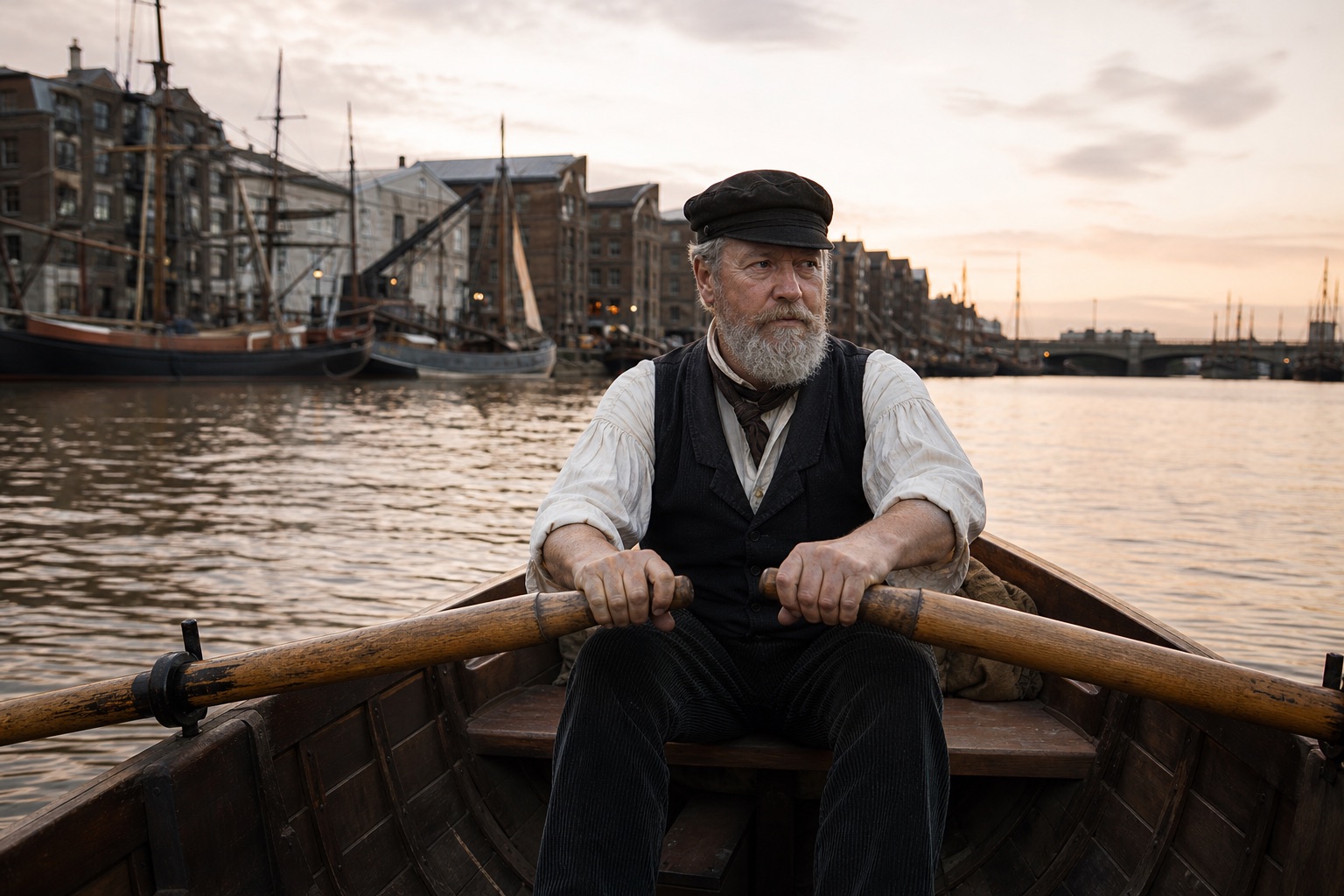
About the Wherryman profession
Before London built enough bridges, the Thames was the street. A wherry was a light rowing boat, sharp at both ends, and the wherryman who hired it out was how a person crossed from one stair to another. The Watermen's Company licensed him. He waited at the stairs, called for custom, and rowed the fare into whatever the tide was doing that hour.
The work was older than the company and outlived the first bridges, because a bridge with a toll and a climb was not always better than a boat. Steamers and more bridges finished it. The men who remained became watermen in a thinner trade, ferrying where a tunnel or a pier had not yet made them unnecessary.
Day in the Life of a Wherryman
At the stairs
He is at the stair before the clerks are. The boat is bailed, the cushions wiped, and the tide noted. A falling tide against a full boat is a different job from a slack hour.
The call
Fares are shouted for. A wherryman who has a regular, a lawyer or a market gardener, keeps that stair. Everyone else is first to the pole.
On the river
He rows among barges, lighters, and the piers of the bridge. The dangerous moment is coming alongside in a wash, with the passenger already standing up.
The turn of the tide
When the tide turns, the easy crossings become hard ones. He either works the new set or lays the boat up and waits. Ice, fog, and a steamer's wash are reasons to refuse a fare.
What came after
Bridges, and then steam boats, took the Thames passenger who had hired an oar.
The succession pageRelated Exhibits
Hansom Cab Driver
Joseph Hansom patented his low, two-wheeled cab in 1834, and the driver who sat it became one of the distinctive figures of Victorian streets. He did not sit in front, as a coachman did. He sat high at the back, above the roof, and drove with reins that ran over the top of the passenger compartment. The passengers sat low, between the large wheels, with a good view and almost no conversation with the man who was driving them. The cab was fast, tippy, and cheap enough to threaten the older hackney coach. Drivers hired the vehicle and often the horse from a proprietor and lived on the difference between the legal fare and the day's costs. The trade was loud, competitive, and thickly regulated. A driver who did not know the tariff, or who took the long way, was the villain of a thousand newspaper paragraphs.
Wainwright
The wainwright was a skilled craftsman responsible for the construction and repair of wagons and carts, essential vehicles for transportation before the advent of motorized vehicles. This occupation flourished in rural and urban settings, where the demand for sturdy, reliable transport was paramount for trade, agriculture, and daily life. Wainwrights utilized a variety of materials, primarily wood and iron, to create vehicles that could withstand the rigors of travel across uneven terrain. Their work was not only functional but also reflected the artistry of craftsmanship, with many wainwrights taking pride in the aesthetic details of their creations, such as decorative carvings and paintwork. The role of the wainwright was crucial in supporting the economy, as they provided the means for farmers to transport goods to market and for merchants to deliver products to consumers.
Explore More Exhibits
Discover the full collection of past and future professions in The Jobs Museum.