
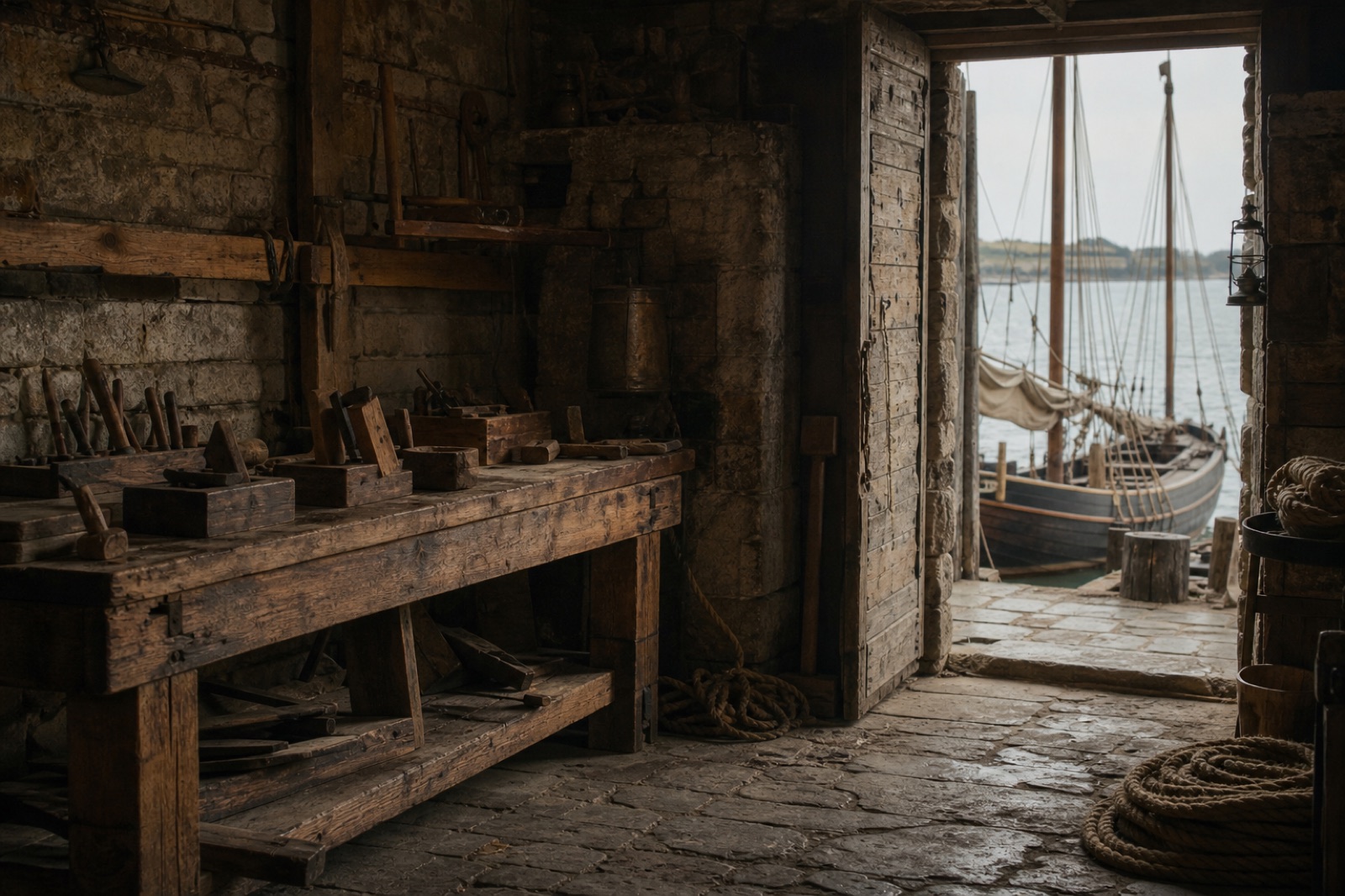
c. 1500–1750
Early modern work
The Tudor court, the ocean voyage, and the workshop before the mill.
This period holds the household office, the arrow, the fulling trough, and the powder monkey. Markets are wider than a parish, and a workshop still owns its tools.
The industrial exhibits begin when the mill and the steam engine take the same work indoors and onto a clock.
In this period
9
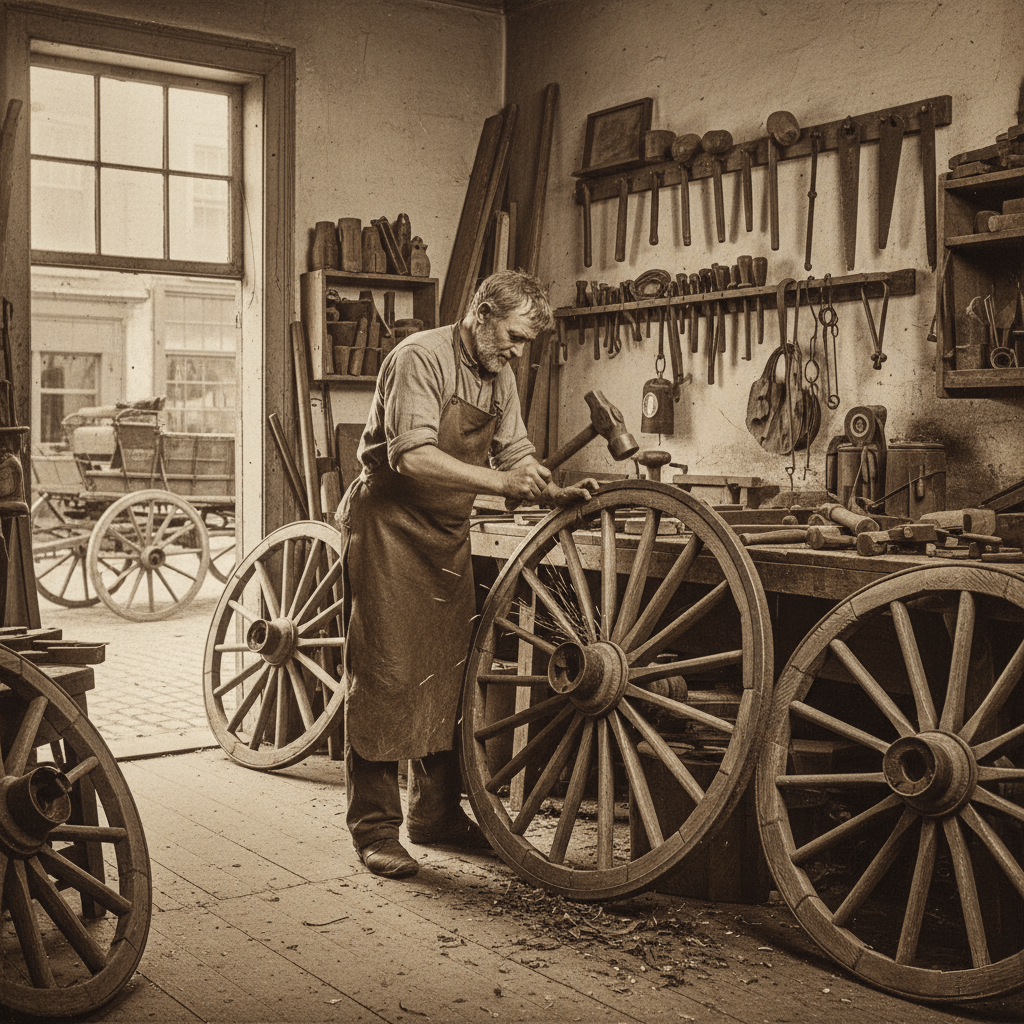 Past · Pre-Industrial EraWainwrightThe wainwright was a skilled craftsman responsible for the construction and repair of wagons and carts, essential vehicles for transportation before the advent of motorized vehicles. This occupation flourished in rural and urban settings, where the demand for sturdy, reliable transport was paramount for trade, agriculture, and daily life. Wainwrights utilized a variety of materials, primarily wood and iron, to create vehicles that could withstand the rigors of travel across uneven terrain. Their work was not only functional but also reflected the artistry of craftsmanship, with many wainwrights taking pride in the aesthetic details of their creations, such as decorative carvings and paintwork. The role of the wainwright was crucial in supporting the economy, as they provided the means for farmers to transport goods to market and for merchants to deliver products to consumers.
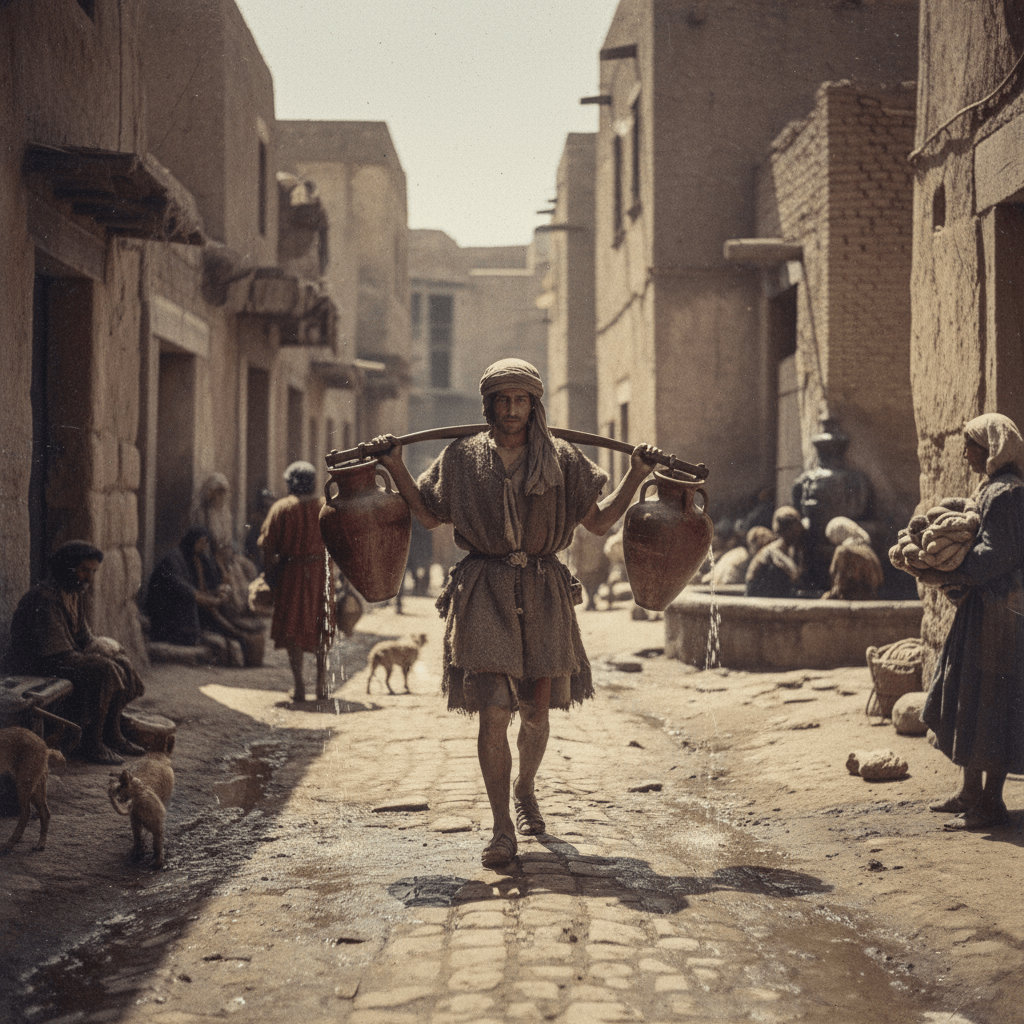 Past · Pre-Industrial EraWater CarrierThe role of a water carrier was vital in societies where access to clean water was limited. Water carriers were responsible for transporting water from sources such as rivers, wells, or springs to homes, businesses, and public places. This occupation was particularly prominent in urban areas where the infrastructure for plumbing was either rudimentary or nonexistent. Water carriers often worked long hours, navigating through streets with heavy containers, sometimes on foot or using animals like donkeys or camels to assist in their labor. The job required not only physical strength but also knowledge of the best water sources and the ability to manage the logistics of delivery, especially in times of drought or during the dry seasons when water was scarce. In many cultures, water carriers were respected members of the community, as they provided an essential service that supported daily life and public health.
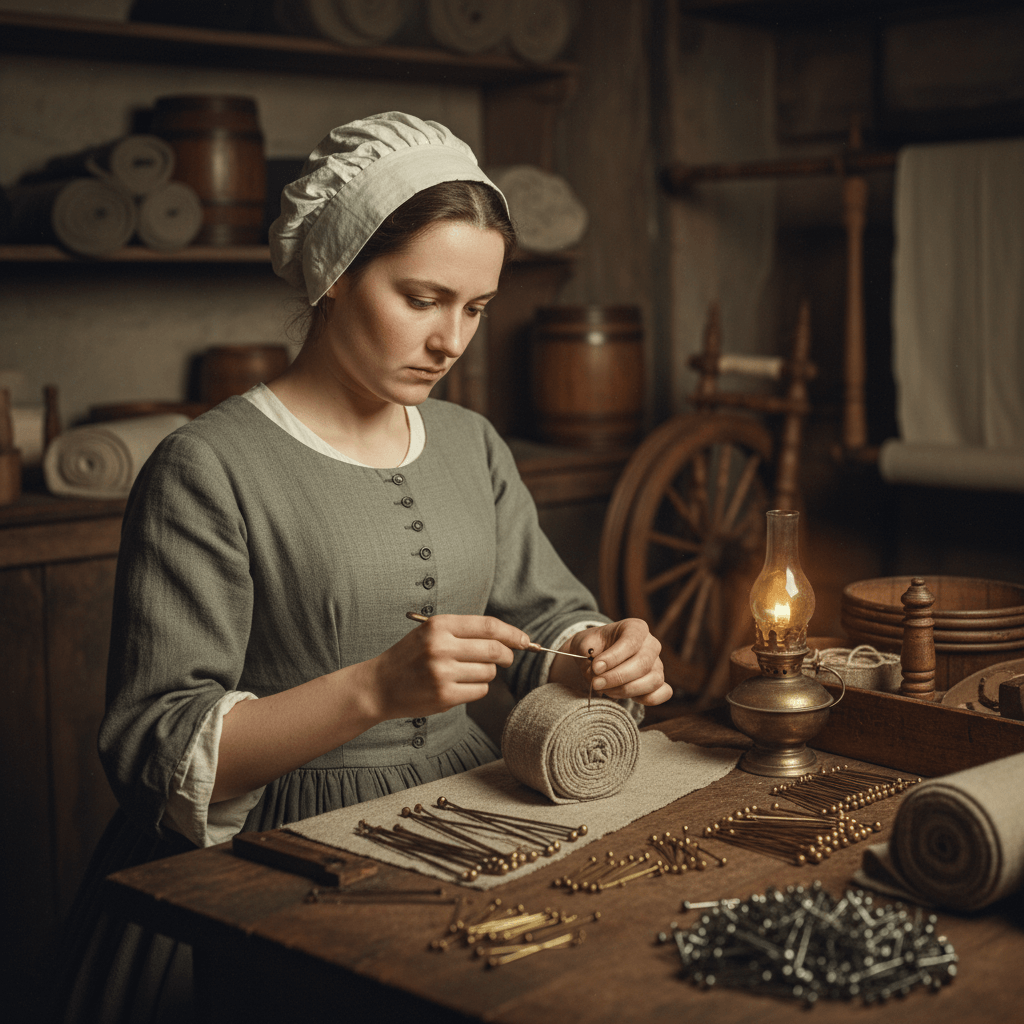 Past · Pre-Industrial EraPinnerThe role of a pinner was crucial in the textile industry, particularly before the advent of mechanized production. Pinners were skilled artisans responsible for the intricate task of pinning fabric pieces together before they were sewn into garments. This job required a keen eye for detail and a steady hand, as the precision of the pinning process directly influenced the quality of the final product. Pinners worked primarily in workshops or at home, often in close-knit communities where they would collaborate with seamstresses and tailors. The work was labor-intensive and required a deep understanding of fabric types, patterns, and garment construction. Pinners used a variety of pins, including straight pins and safety pins, to hold fabric in place, ensuring that seams aligned perfectly and that the finished garments fit well. The role was often filled by women, who contributed significantly to the family income through this work, especially in urban areas where the textile industry thrived. As the demand for clothing increased, so did the need for skilled pinners, making this occupation a vital part of the pre-industrial economy.
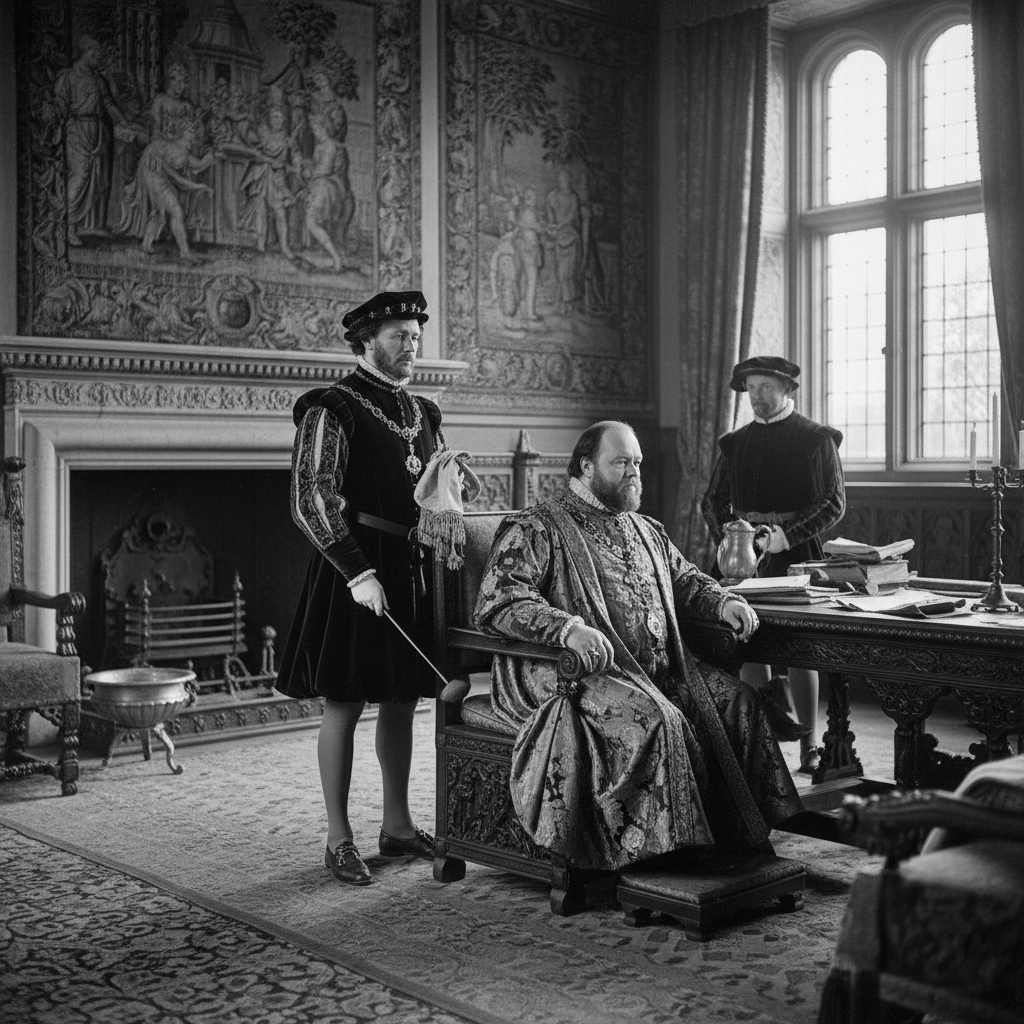 Past · Tudor PeriodGroom of The StoolThe Groom of the Stool was a highly esteemed position in the royal court of England, particularly during the Tudor period, which spanned from the late 15th century to the early 17th century. This role was not merely one of menial service; it was a position of significant trust and intimacy, as the Groom was responsible for the personal hygiene and comfort of the monarch, specifically in relation to the royal toilet. The Groom's duties included the preparation of the necessary tools for the king's ablutions, ensuring the cleanliness of the royal chamber, and even assisting the monarch during the act itself. This role was often filled by individuals of noble birth, as it required a level of discretion and loyalty that was paramount in the court. The Groom of the Stool was also privy to the king's most private moments, which often led to considerable influence over royal decisions and policies, making this position one of both service and power.
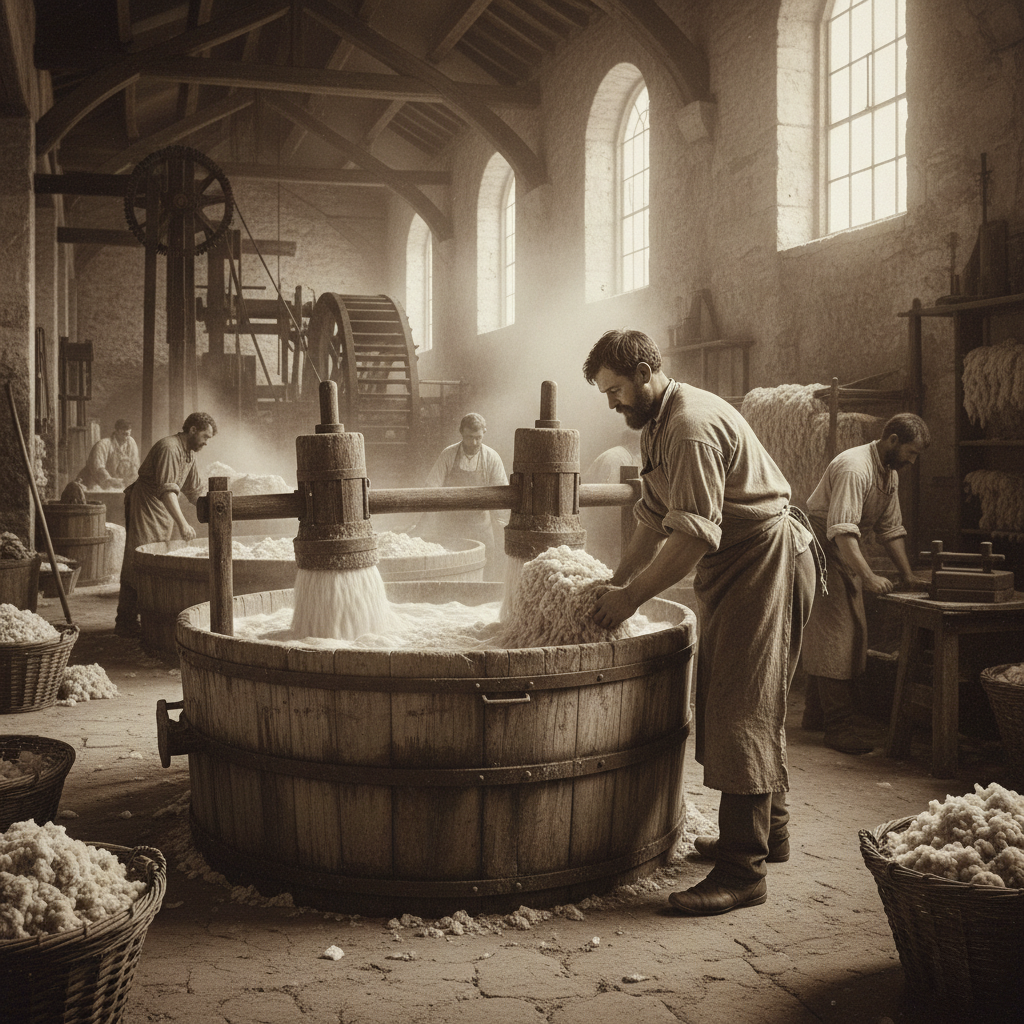 Past · Pre-Industrial EraFullerThe role of a fuller was integral to the textile industry, particularly in the processing of woolen fabrics. Fullers were responsible for a crucial step in the cloth-making process known as 'fulling,' which involved cleaning and thickening the fabric. This was achieved through a combination of water, heat, and mechanical action, often using a foot-powered or water-powered mill. The fulling process not only removed impurities such as grease and dirt but also helped to mat the fibers together, resulting in a denser and more durable fabric. Fullers worked closely with weavers and dyers, ensuring that the cloth was ready for the final stages of production. The fulling process was labor-intensive and required a keen understanding of the materials and techniques involved, making the fuller a respected figure in the textile trade.
 Past · Age of ExplorationPowder MonkeyThe term 'powder monkey' refers to young boys, typically between the ages of 10 and 18, who were employed on naval ships during the Age of Exploration and beyond, particularly in the 17th to 19th centuries. Their primary responsibility was to transport gunpowder from the ship's magazine to the cannons during naval battles. This role was crucial, as the effectiveness of a ship's artillery depended on the swift and safe delivery of gunpowder, which was highly volatile and dangerous.
Powder monkeys were often orphans or boys from impoverished backgrounds, seeking work on ships as a means of survival. They were known for their agility and speed, which were essential for navigating the often cramped and chaotic conditions aboard a ship during battle. The job was perilous; the boys had to be quick and careful, as a single spark could lead to catastrophic explosions.
In addition to their role in battle, powder monkeys also assisted in the maintenance of the ship's armaments and were sometimes tasked with cleaning and loading cannons. Their work was physically demanding and required a level of bravery that belied their youth. Despite the dangers, many powder monkeys were proud of their roles, often dreaming of becoming full sailors or officers one day.
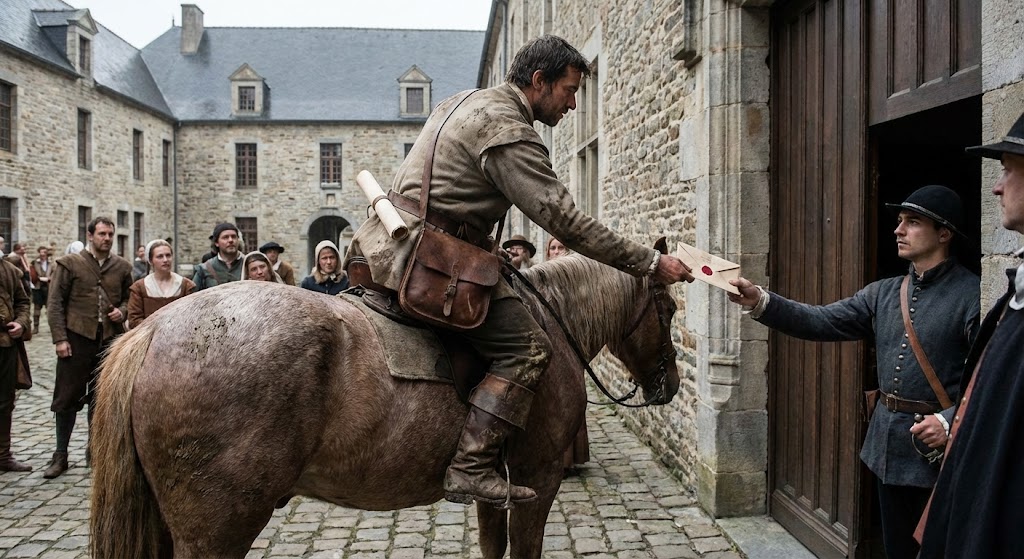 Past · Pre-Industrial EraMessengerThe role of a messenger was vital in the communication networks of ancient and medieval societies. These individuals were responsible for delivering messages, documents, and parcels across towns, cities, and even between countries. Often employed by merchants, government officials, or wealthy patrons, messengers played a crucial role in maintaining the flow of information. They navigated through various terrains, from bustling urban centers to remote rural areas, often relying on their knowledge of local geography and social networks to ensure timely delivery. The job required not only physical stamina but also a keen sense of direction and the ability to read and write, as many messengers were tasked with not just delivering but also composing messages on behalf of their employers. In times of war, messengers were particularly important, carrying orders and intelligence that could change the course of events. Their work was often perilous, as they faced the threat of bandits, harsh weather, and the challenges of navigating unfamiliar territories.
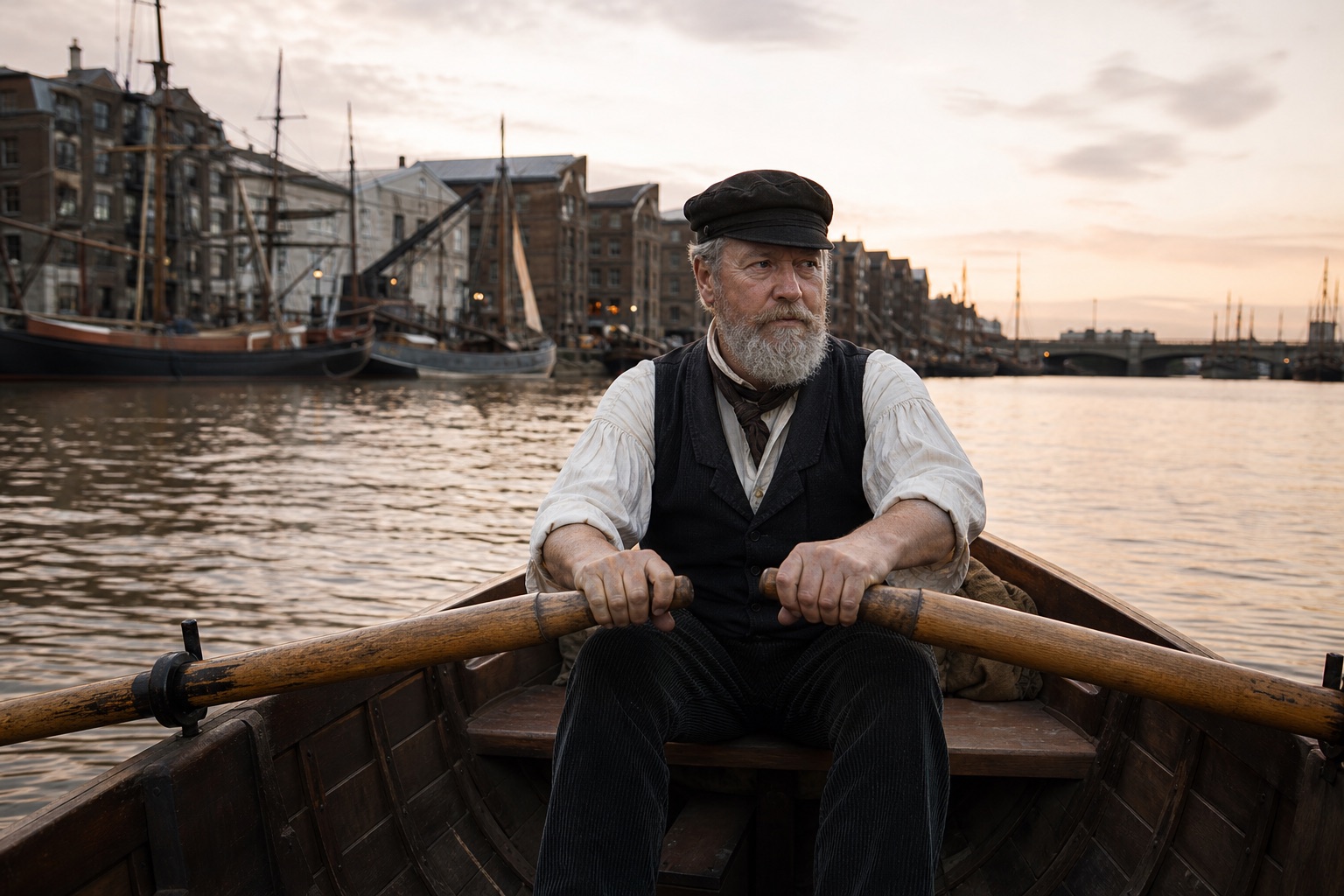 Past · Pre-Industrial EraWherrymanBefore London built enough bridges, the Thames was the street. A wherry was a light rowing boat, sharp at both ends, and the wherryman who hired it out was how a person crossed from one stair to another. The Watermen's Company licensed him. He waited at the stairs, called for custom, and rowed the fare into whatever the tide was doing that hour.
The work was older than the company and outlived the first bridges, because a bridge with a toll and a climb was not always better than a boat. Steamers and more bridges finished it. The men who remained became watermen in a thinner trade, ferrying where a tunnel or a pier had not yet made them unnecessary.
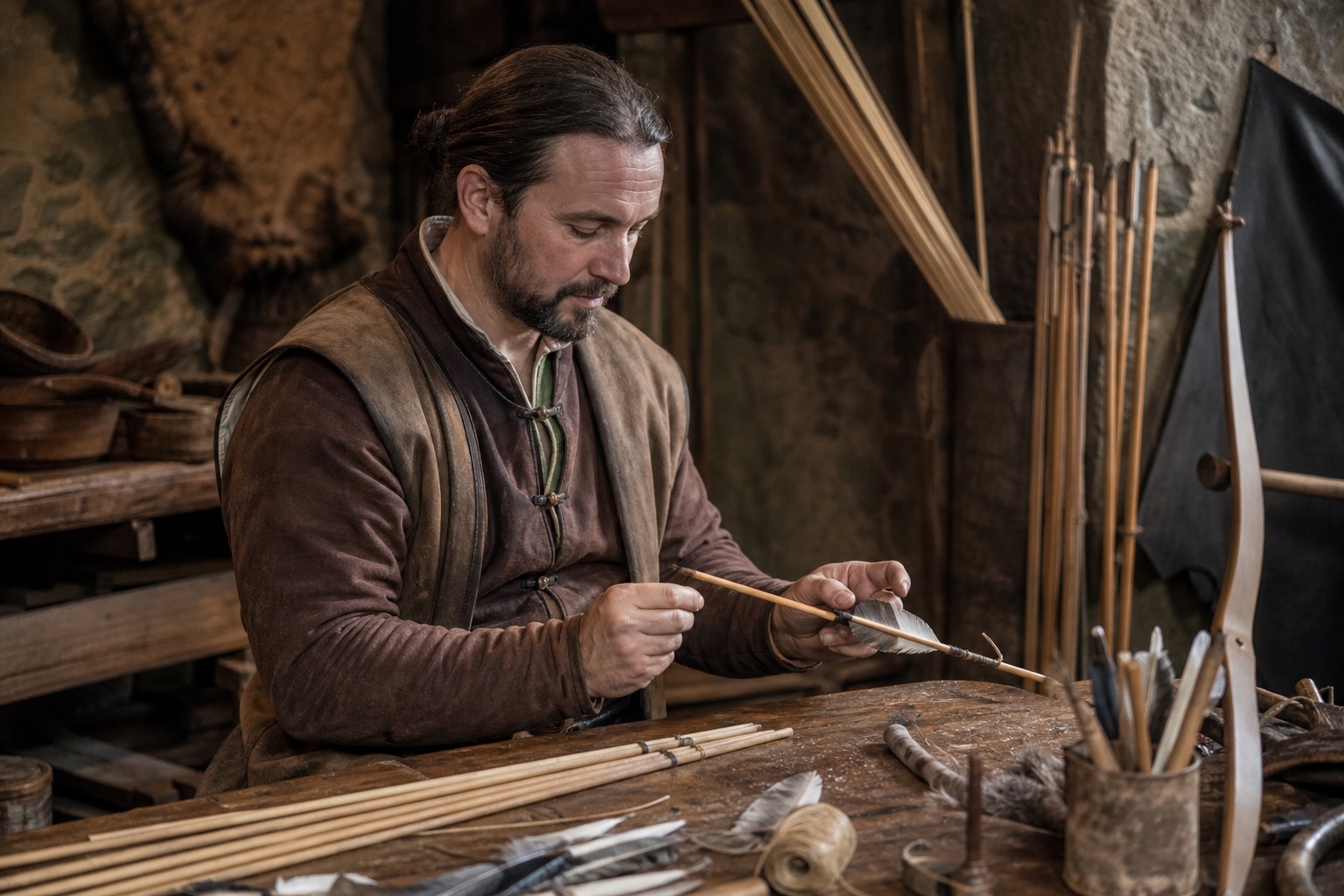 Past · Tudor EraFletcherA fletcher made arrows, and the trade was not the bowyer's. The bowyer made the bow. The fletcher planed and straightened the shaft, cut the nock that took the string, fitted the pile at the point, and glued and bound the feathers, usually from the goose, setting the cock feather so the arrow would leave the bow cleanly. Finished arrows were tied in a sheaf of four-and-twenty. In a medieval or Tudor town this was a guild craft. London fletchers worked under ordinances from the fourteenth century and kept themselves distinct from the bowyers. York, Chester, and other corporate towns had their own men. The customers were civic musters, ship stores, and householders obliged to practise at the butts.
Firearms ended the order slowly. Calivers and muskets spread through Tudor armies and then through the trained bands, and the statutes that told grown men to keep longbows and to shoot at the butts turned into a dead letter without one repealing morning. Sporting archery never employed a town full of fletchers. Some workshops drifted into other light woodwork. The London Company of Fletchers survived as a livery company. The making of war arrows did not. It thinned across the sixteenth century and was a remnant in the seventeenth, because the weapon the authorities issued had become the gun.