
Pre-Industrial Era
Pinner
An extinct profession from Pre-Industrial Era that became obsolete due to technological advancement and societal change.
Media Gallery
About the Pinner Profession
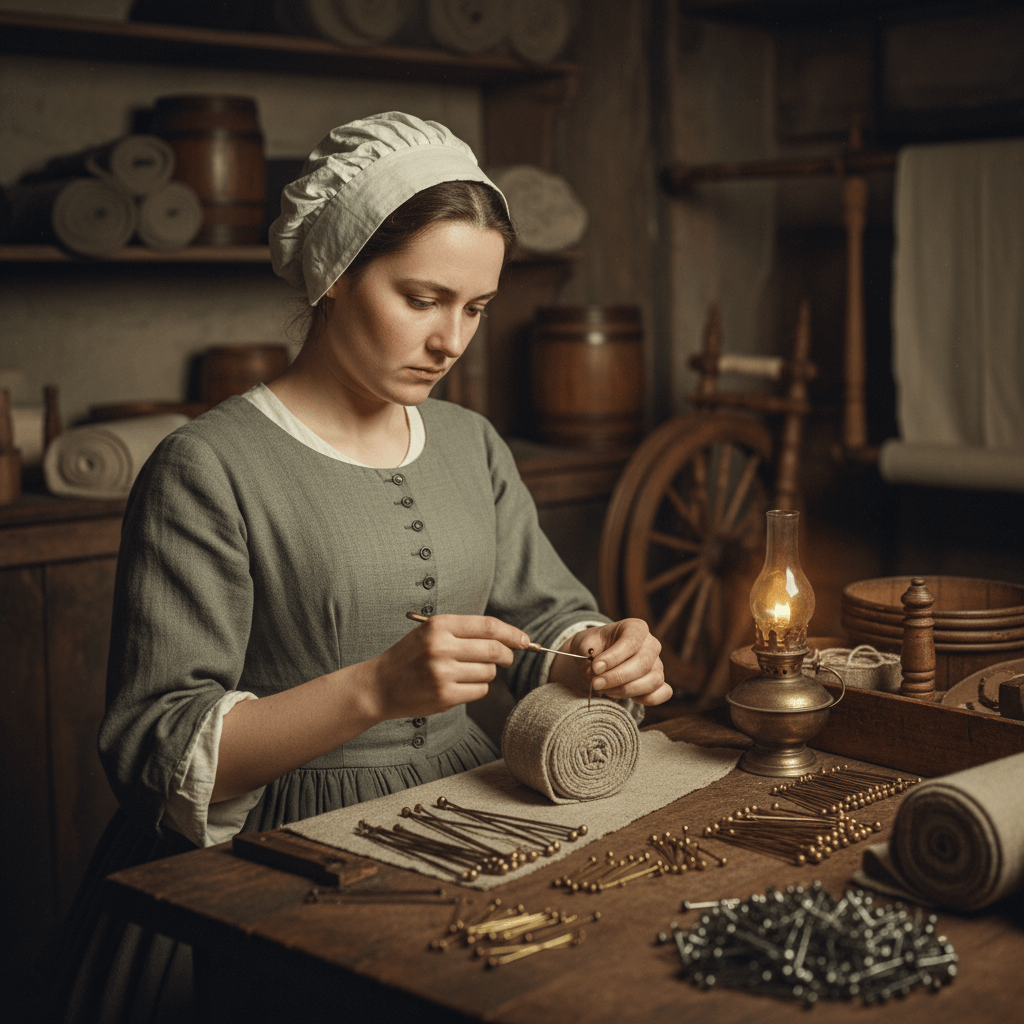
The role of a pinner was crucial in the textile industry, particularly before the advent of mechanized production. Pinners were skilled artisans responsible for the intricate task of pinning fabric pieces together before they were sewn into garments. This job required a keen eye for detail and a steady hand, as the precision of the pinning process directly influenced the quality of the final product. Pinners worked primarily in workshops or at home, often in close-knit communities where they would collaborate with seamstresses and tailors. The work was labor-intensive and required a deep understanding of fabric types, patterns, and garment construction. Pinners used a variety of pins, including straight pins and safety pins, to hold fabric in place, ensuring that seams aligned perfectly and that the finished garments fit well. The role was often filled by women, who contributed significantly to the family income through this work, especially in urban areas where the textile industry thrived. As the demand for clothing increased, so did the need for skilled pinners, making this occupation a vital part of the pre-industrial economy.
Day in the Life of a Pinner
Early Morning: Preparing for Work
As dawn breaks, the pinner rises early to prepare for a long day of meticulous work. After a simple breakfast, she gathers her tools: a wooden work table, a collection of pins, and a pair of scissors. She reviews the fabric pieces she will be working on today, ensuring they are clean and ready for pinning.
Mid-Morning: Pinning Fabric
By mid-morning, the pinner is fully immersed in her task. She carefully lays out the fabric pieces on her work table, aligning them according to the patterns provided by the seamstress. With a steady hand, she begins to pin the edges together, ensuring that each pin is placed precisely to avoid any misalignment during sewing. This requires not only skill but also a good understanding of the garment's design.
Afternoon: Collaborating with Seamstresses
After a quick lunch, the pinner often collaborates with local seamstresses. They discuss the specific requirements of each garment, and the pinner may adjust her pinning technique based on the seamstress's feedback. This collaboration is essential, as it ensures that the garments produced meet the quality standards expected by customers.
Late Afternoon: Quality Check
As the day winds down, the pinner conducts a quality check on her pinned pieces. She inspects each garment for any errors in alignment or pin placement, making adjustments as necessary. This final review is crucial, as it ensures that the garments will be easy to sew and will fit well once completed.
Evening: Wrapping Up
At the end of the day, the pinner tidies her workspace, organizing her pins and tools for the next day. She may also take a moment to reflect on her work, considering the garments she has helped create and the families that will wear them. With a sense of accomplishment, she prepares for another day of pinning ahead.
Related Exhibits
Billy Boy
The term 'Billy Boy' refers to a young boy employed in the Victorian era, primarily in the coal mining industry, to assist with various tasks that were essential for the operation of the mines. These boys, often starting work as young as six or seven, played a crucial role in the mining process, particularly in the transportation of coal and the management of ventilation within the mines. Their small stature allowed them to navigate the narrow tunnels and shafts where adults could not fit, making them invaluable to the mining operations of the time. Billy Boys were responsible for a variety of tasks, including pushing carts filled with coal, opening and closing ventilation doors, and sometimes even acting as lookouts for supervisors. Their work was physically demanding and often dangerous, exposing them to the perils of mining, such as cave-ins and poor air quality. Despite the harsh conditions, these boys contributed significantly to the coal industry, which was a cornerstone of the Victorian economy, fueling the Industrial Revolution and the rapid urbanization of Britain. The life of a Billy Boy was marked by long hours, typically starting before dawn and ending after sunset, with little regard for their well-being. They were often paid meager wages, reflecting the exploitative labor practices of the time, and many faced health issues due to the hazardous environment in which they worked.
Flint Knapper
The flint knapper was a skilled artisan responsible for shaping flint and other stones into tools and weapons, a practice that dates back to the earliest human societies. This occupation was crucial for survival, as the tools created by flint knappers were essential for hunting, gathering, and daily tasks. Flint knapping involved a deep understanding of the material properties of stone, as well as the techniques required to create sharp edges and points. The flint knapper would carefully strike the stone with a hammerstone or another tool, removing flakes to create the desired shape. This process required not only physical skill but also an artistic eye, as the knapper had to envision the final product while working with the raw material. Flint knappers often worked in groups, sharing techniques and knowledge, which contributed to the development of regional styles and tool types. The tools produced ranged from simple hand axes to complex projectile points, each designed for specific tasks and environments. As societies evolved, so did their tool-making techniques, leading to the eventual decline of the flint knapper's role in favor of metalworking and other advanced technologies.
Explore More Exhibits
Discover the full collection of past and future professions in The Jobs Museum.