
Pre-Industrial Era
Fuller
An extinct profession from Pre-Industrial Era that became obsolete due to technological advancement and societal change.
Media Gallery
About the Fuller Profession
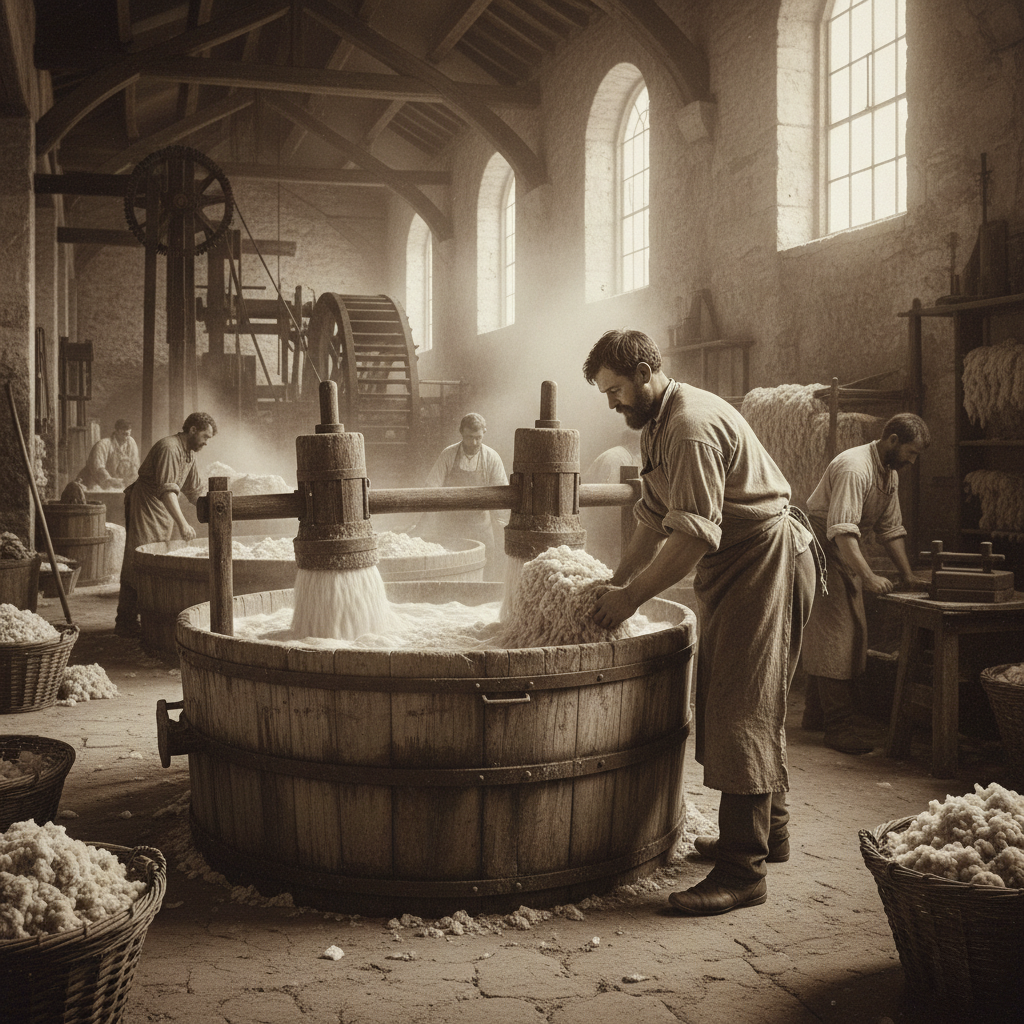
The role of a fuller was integral to the textile industry, particularly in the processing of woolen fabrics. Fullers were responsible for a crucial step in the cloth-making process known as 'fulling,' which involved cleaning and thickening the fabric. This was achieved through a combination of water, heat, and mechanical action, often using a foot-powered or water-powered mill. The fulling process not only removed impurities such as grease and dirt but also helped to mat the fibers together, resulting in a denser and more durable fabric. Fullers worked closely with weavers and dyers, ensuring that the cloth was ready for the final stages of production. The fulling process was labor-intensive and required a keen understanding of the materials and techniques involved, making the fuller a respected figure in the textile trade.
Day in the Life of a Fuller
Early Morning: Preparing the Workshop
As dawn breaks, the fuller arrives at the workshop, often located near a river or stream to take advantage of the water source needed for fulling. The first task of the day involves gathering the freshly woven cloth from the weavers, inspecting it for quality and ensuring it is ready for the fulling process. The fuller prepares the fulling troughs, filling them with water and heating it over a fire to create the ideal conditions for fulling.
Mid-Morning: The Fulling Process
Once the water reaches the right temperature, the fuller begins the laborious task of fulling the cloth. This involves submerging the fabric in the heated water and then trampling it with their feet or using a wooden mallet to agitate the fibers. This process can take several hours, as the fuller must ensure that the cloth is thoroughly cleaned and the fibers are properly matted together. The rhythmic sound of water splashing and the fuller’s feet working the fabric create a unique atmosphere in the workshop.
Afternoon: Rinsing and Drying
After the fulling is complete, the cloth is removed from the trough and rinsed in clean water to remove any remaining impurities. The fuller then hangs the fabric on lines to dry, often in the sun, which also helps to bleach the cloth naturally. During this time, the fuller may take a moment to inspect the fabric for any defects that may need to be addressed before it is sent to the dyers.
Late Afternoon: Quality Control and Record Keeping
As the day winds down, the fuller conducts a final inspection of the dried cloth, ensuring it meets the quality standards required by the weavers and dyers. They may also keep records of the quantities processed and any issues encountered during the fulling process. This attention to detail is crucial for maintaining good relationships with other tradespeople in the textile industry.
Evening: Closing the Workshop
As the sun sets, the fuller cleans the workshop, ensuring that tools and equipment are stored properly for the next day. The work is physically demanding, but the fuller takes pride in the transformation of raw fabric into a finished product, ready for the market.
Related Exhibits
Milkman
The milkman was a familiar figure in the neighborhoods of the 20th century, a symbol of a time when fresh dairy products were delivered directly to homes. Clad in a crisp uniform, often with a cap, the milkman would rise before dawn, preparing for a day of delivering fresh milk, cream, and other dairy products to families. The job was not merely about transportation; it was a vital service that ensured households received their daily supply of milk, often still warm from the farm. The milkman would navigate his route, typically using a horse-drawn cart or later, a motor vehicle, stopping at each home to leave bottles of milk on doorsteps, often exchanging empty bottles from the previous delivery. This daily ritual fostered a sense of community, as the milkman became a trusted figure, known by name to the families he served. The job required not only physical stamina but also a keen sense of time management and customer service, as the milkman had to maintain a strict schedule to ensure freshness and reliability.
Log Driver
In the rugged landscapes of North America during the Industrial Revolution, the log driver emerged as a vital figure in the timber industry. These skilled laborers were responsible for guiding and maneuvering logs down rivers and streams to sawmills, where they would be processed into lumber for construction and other uses. The job required not only physical strength and endurance but also a deep understanding of the waterways and the behavior of timber. Log drivers often worked in teams, using their knowledge of currents and eddies to navigate the logs safely through treacherous waters, avoiding obstacles such as rocks and fallen trees. The sight of a log driver skillfully balancing on a floating log, using a long pole to steer, was a common and iconic image of the era. The work was grueling and dangerous, with log drivers facing the constant threat of injury from the logs themselves, as well as the unpredictable nature of the rivers. Despite the hazards, the job was a source of pride, as log drivers were seen as rugged individuals embodying the spirit of the frontier. Their contributions were crucial to the booming timber industry, which fueled the growth of towns and cities across the continent, providing the lumber necessary for homes, railroads, and infrastructure.
Explore More Exhibits
Discover the full collection of past and future professions in The Jobs Museum.