
Victorian Era
Ostrich Feather Plucker
An extinct profession from Victorian Era that became obsolete due to technological advancement and societal change.
Media Gallery
About the Ostrich Feather Plucker Profession
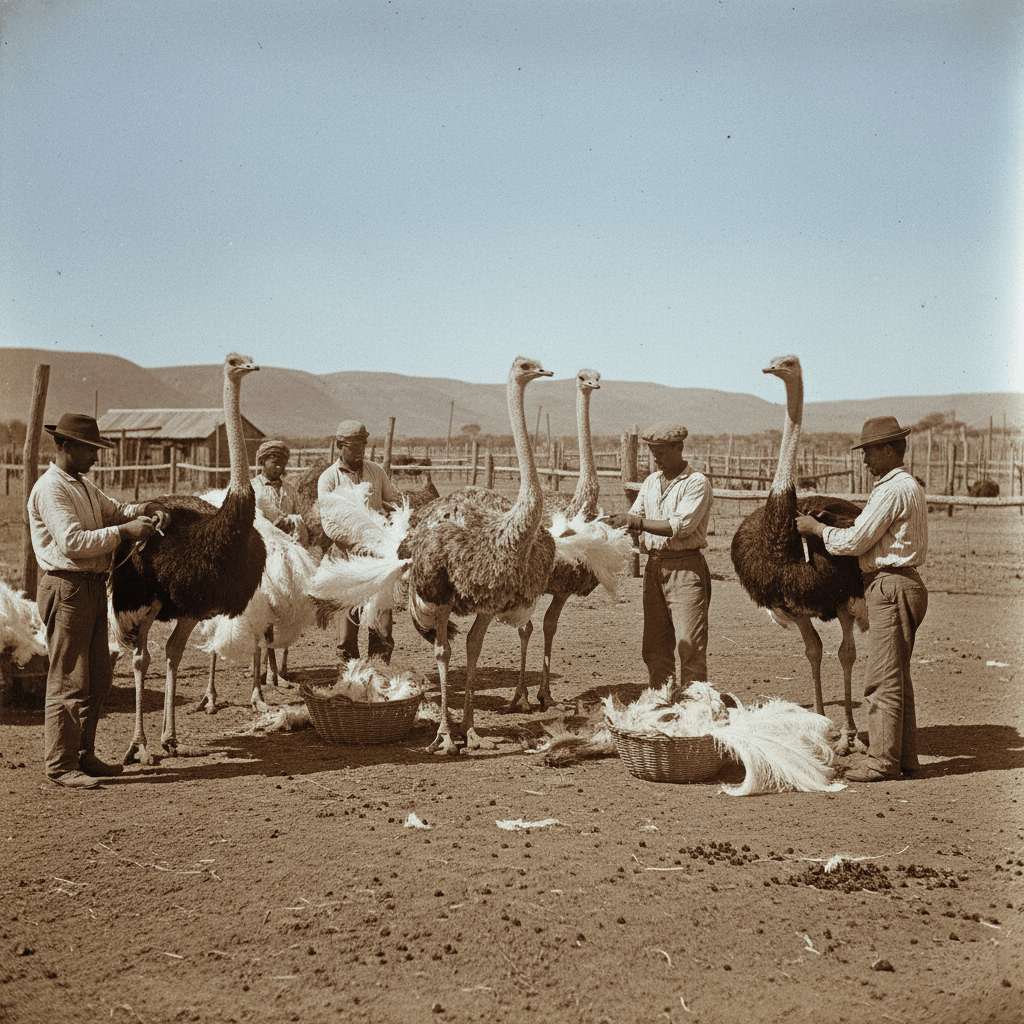
The role of the ostrich feather plucker emerged in the late 19th century, coinciding with the rise of the fashion industry and the extravagant tastes of the Victorian elite. Ostrich feathers, prized for their softness, length, and striking appearance, became a symbol of luxury and status. The feathers were used in a variety of fashionable items, including hats, boas, and elaborate costumes. Pluckers were responsible for harvesting these feathers, a delicate task that required both skill and care to ensure the birds remained healthy and the feathers were of the highest quality.
Ostrich farms, primarily located in South Africa, became the epicenter of this industry. Workers would carefully pluck feathers from live ostriches, a process that was typically done once a year during the molting season when the birds naturally shed their feathers. The feathers were then sorted, cleaned, and prepared for shipment to fashion houses around the world. The demand for these luxurious feathers surged, leading to a booming industry that provided employment for many, particularly women, who often worked in harsh conditions for meager pay.
As fashion trends evolved and the use of synthetic materials became more prevalent, the demand for natural ostrich feathers began to decline. Additionally, the ethical concerns surrounding the treatment of ostriches and the rise of animal rights movements contributed to the job's obsolescence. By the early 20th century, the ostrich feather plucker had largely disappeared from the workforce, replaced by more humane and sustainable alternatives in the fashion industry.
Day in the Life of an Ostrich Feather Plucker
Early Morning: Preparing for the Day
The day began at dawn, with pluckers arriving at the ostrich farm before the sun rose. The first task was to check on the health of the birds, ensuring they were well-fed and hydrated. Workers would gather the necessary tools, including plucking gloves, baskets for collecting feathers, and cleaning supplies to maintain hygiene in the work area.
Mid-Morning: The Plucking Process
Once the birds were assessed, the plucking commenced. Each plucker would approach a bird gently, using their gloved hands to carefully remove the feathers. This process required a delicate touch; pluckers had to avoid causing pain to the birds while ensuring that the feathers were harvested efficiently. The plucking would continue for several hours, with workers taking care to sort the feathers by size and quality as they went.
Afternoon: Cleaning and Sorting
After the morning's work, pluckers would take a break for lunch, often consisting of simple fare. The afternoon was dedicated to cleaning the harvested feathers, removing any dirt or debris, and preparing them for market. This involved washing the feathers in soapy water and laying them out to dry, a task that required attention to detail to maintain the feathers' pristine condition.
Late Afternoon: Packaging and Shipping
As the day wound down, pluckers would package the cleaned feathers into bundles, ready for shipment to fashion houses. This final task involved labeling and documenting the quality of the feathers, ensuring that they met the standards expected by buyers. The day would typically end with a final check of the birds, ensuring they were comfortable and healthy before the workers left for the day.
Related Exhibits
Log Telegraphist
The role of a Log Telegraphist emerged during the Industrial Revolution, a period marked by rapid technological advancement and the expansion of communication networks. These skilled workers were responsible for operating telegraph systems, which were crucial for transmitting messages over long distances using electrical signals. The Log Telegraphist specifically focused on the logging and recording of messages sent and received via telegraph, ensuring that communications were accurately documented and relayed. This job was vital for businesses, government agencies, and the military, as it facilitated timely decision-making and coordination across vast distances. Log Telegraphists were often found in telegraph offices, railway stations, and military outposts, where they worked in close proximity to the telegraph equipment. Their work environment was typically bustling, filled with the sounds of clicking keys and the hum of electrical machinery. The Log Telegraphist's role required not only technical proficiency in operating the telegraph but also a keen attention to detail, as they meticulously recorded each message, noting the time of receipt and dispatch, and ensuring that no errors occurred in the transmission process. As the world became increasingly interconnected, the demand for efficient communication grew, and the Log Telegraphist played a pivotal role in this transformation. However, as technology advanced, the telegraph system began to be replaced by more sophisticated communication methods, such as the telephone and eventually the internet, leading to the decline of this occupation.
Parakoimomenos
The Parakoimomenos, often translated as 'bedchamber attendant' or 'chamberlain,' was a significant role in the households of the elite during the Classical Antiquity period, particularly in the Byzantine Empire. This position was not merely one of servitude; it was a trusted role that involved close personal service to the emperor or high-ranking officials. The Parakoimomenos was responsible for the personal care and comfort of their charge, overseeing the sleeping quarters, and ensuring that the environment was conducive to rest and privacy. This included managing the temperature of the room, preparing bedding, and even attending to the personal needs of the individual they served. The role required a high level of discretion and loyalty, as the Parakoimomenos often had access to sensitive information and was privy to the intimate details of their employer's life. In addition to personal care, the Parakoimomenos also played a role in the ceremonial aspects of the household, assisting in the preparation for audiences and events. They were often involved in the selection of clothing and accessories, ensuring that their employer was always presented in the best light. This position was a blend of servant and confidant, requiring a deep understanding of the social dynamics of the court and the ability to navigate complex relationships with other members of the household and nobility.
Explore More Exhibits
Discover the full collection of past and future professions in The Jobs Museum.