
Pre-Industrial Era
Water Carrier
An extinct profession from Pre-Industrial Era that became obsolete due to technological advancement and societal change.
Media Gallery
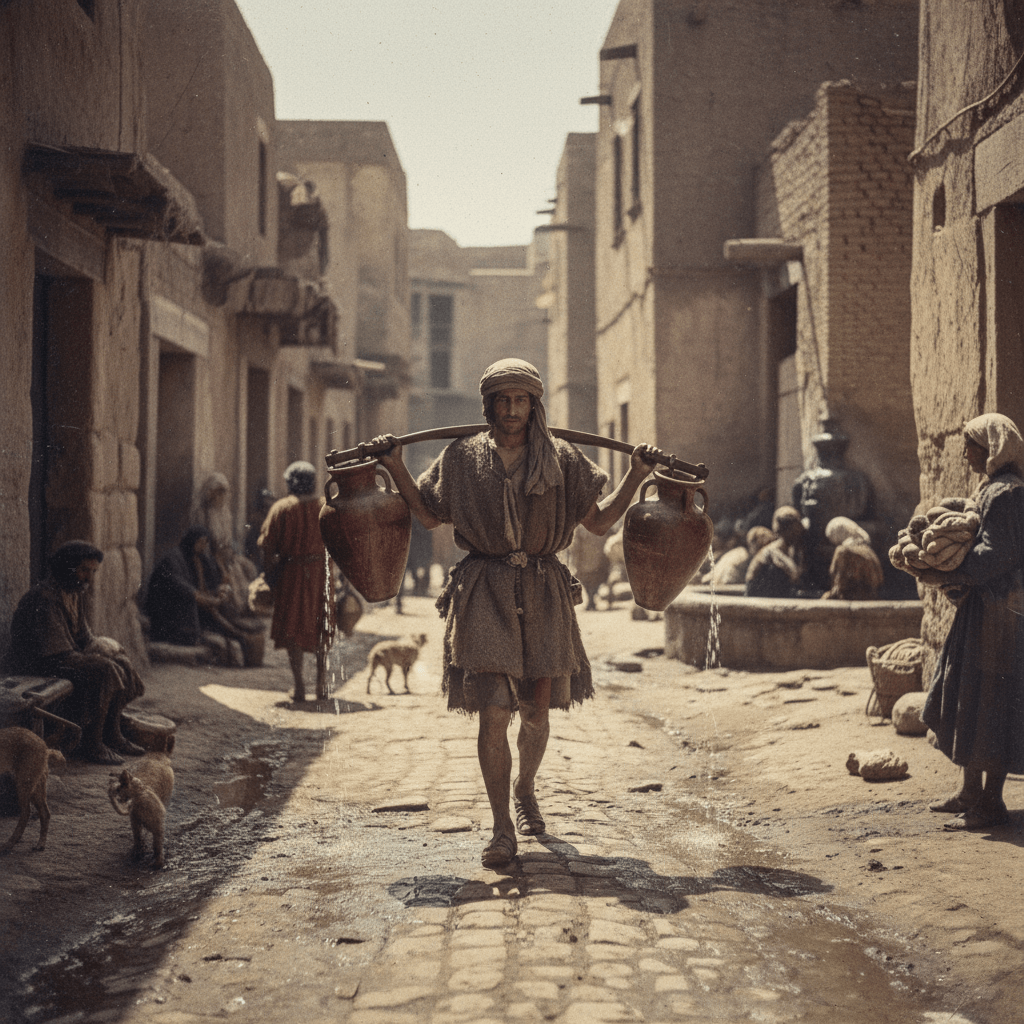
About the Water Carrier Profession
The role of a water carrier was vital in societies where access to clean water was limited. Water carriers were responsible for transporting water from sources such as rivers, wells, or springs to homes, businesses, and public places. This occupation was particularly prominent in urban areas where the infrastructure for plumbing was either rudimentary or nonexistent. Water carriers often worked long hours, navigating through streets with heavy containers, sometimes on foot or using animals like donkeys or camels to assist in their labor. The job required not only physical strength but also knowledge of the best water sources and the ability to manage the logistics of delivery, especially in times of drought or during the dry seasons when water was scarce. In many cultures, water carriers were respected members of the community, as they provided an essential service that supported daily life and public health.
Day in the Life of a Water Carrier
Early Morning: Preparing for the Day
As dawn breaks, the water carrier rises early to prepare for the day ahead. They gather their tools: sturdy clay or metal containers, often called 'jugs' or 'buckets', and a yoke or harness if they are using an animal for transport. After a quick breakfast, they head to the nearest water source, which could be a well, river, or spring. The water carrier must ensure their containers are clean to prevent contamination of the water they will transport.
Mid-Morning: The First Load
By mid-morning, the water carrier arrives at the water source. They fill their containers, carefully balancing the weight to avoid spills. Depending on the distance to their first delivery point, they may need to make multiple trips. The water carrier often engages with local residents, exchanging pleasantries and sometimes collecting payment for their services. This interaction fosters community ties and builds trust.
Afternoon: Deliveries and Challenges
As the sun rises higher, the water carrier continues their rounds, delivering water to homes and businesses. The heat can be intense, and the physical demands of carrying heavy loads take their toll. They must navigate crowded streets, avoiding obstacles and sometimes dealing with the challenges of negotiating prices or ensuring timely deliveries. The water carrier is also attuned to the needs of their customers, often learning which households require more water during certain times of the year.
Late Afternoon: Rest and Reflection
After a long day of labor, the water carrier returns to their home or a designated resting place. They take a moment to rest, hydrate, and reflect on the day’s work. This time is also used to prepare for the next day, ensuring their tools are ready and their routes are planned. The water carrier’s work is never truly done, as the demand for water is constant, and they must be ready to respond to emergencies or increased demand during dry spells.
Related Exhibits
Piss-Prophet
The Piss-Prophet was a unique and somewhat peculiar occupation that emerged during the Medieval Period, particularly in Europe. This role was primarily associated with the practice of diagnosing health conditions and predicting the future through the examination of urine. The Piss-Prophet, often a male figure, would analyze the color, consistency, and even the smell of urine to provide insights into a person's health and fortune. This practice was rooted in the ancient humoral theory, which posited that bodily fluids were indicative of one's health and temperament. In a time when medical knowledge was limited and superstition reigned, the Piss-Prophet held a significant place in society. They were often consulted by individuals seeking answers to ailments or guidance on personal matters. The Piss-Prophet would typically set up shop in a market square or a local tavern, where they would attract clients with their claims of divination and healing. The role required a keen eye for detail and a deep understanding of the various interpretations of urine, which were often documented in rudimentary medical texts of the time. Despite the oddity of the profession, Piss-Prophets were sometimes regarded with a mix of respect and skepticism. They often operated alongside other medical practitioners, such as barber-surgeons and herbalists, contributing to the eclectic tapestry of medieval healthcare.
Shadchan
The role of a Shadchan, or matchmaker, was a vital part of Jewish communities during the Medieval Period, particularly in Eastern Europe. This profession was not merely about pairing individuals for marriage; it was deeply rooted in cultural, social, and religious practices. Shadchans were often respected members of the community, possessing a keen understanding of family dynamics, social status, and the personal attributes of potential partners. They acted as intermediaries, facilitating introductions and negotiations between families, ensuring that matches were not only compatible but also aligned with the community's values and traditions. The Shadchan's work involved a delicate balance of diplomacy, intuition, and knowledge of the community's expectations regarding marriage, which was often seen as a strategic alliance rather than just a romantic union.
Explore More Exhibits
Discover the full collection of past and future professions in The Jobs Museum.