
Age of Exploration
Powder Monkey
An extinct profession from Age of Exploration that became obsolete due to technological advancement and societal change.
Media Gallery
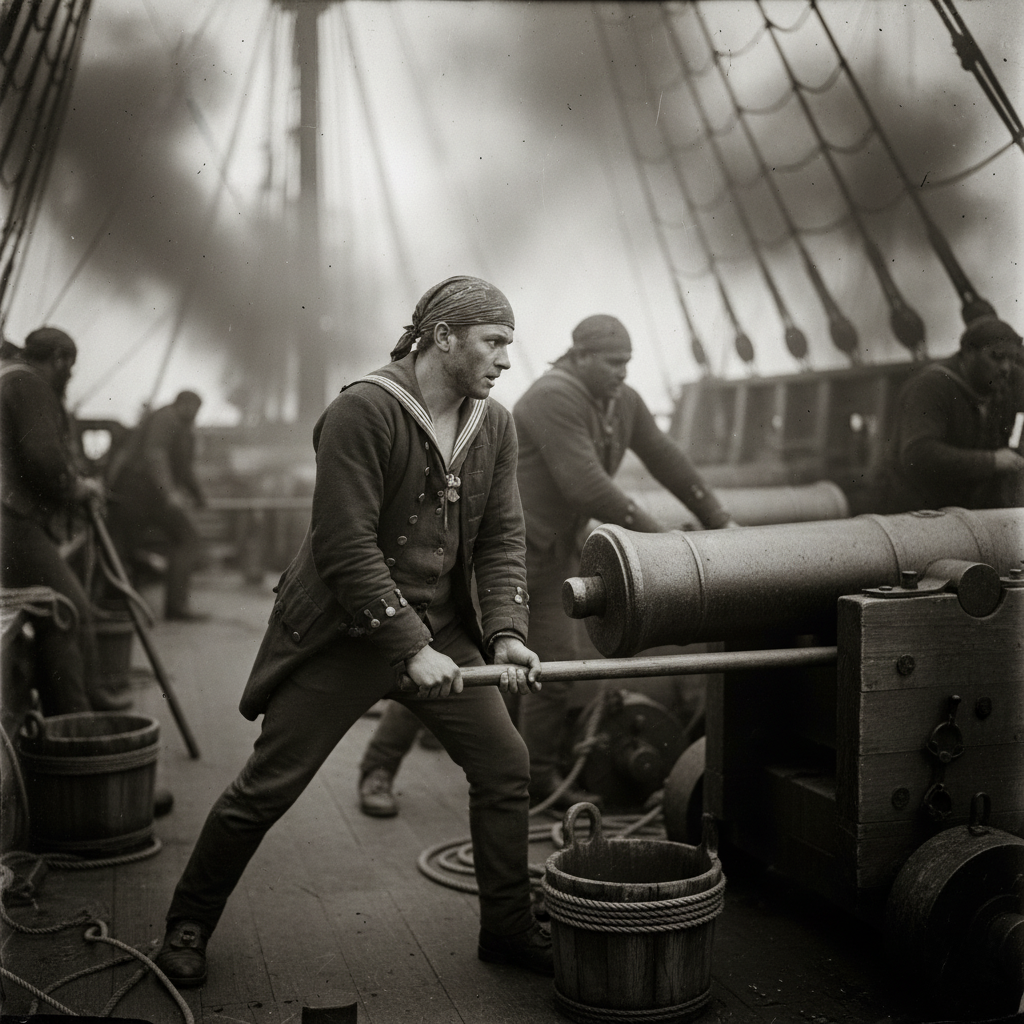
About the Powder Monkey Profession
The term 'powder monkey' refers to young boys, typically between the ages of 10 and 18, who were employed on naval ships during the Age of Exploration and beyond, particularly in the 17th to 19th centuries. Their primary responsibility was to transport gunpowder from the ship's magazine to the cannons during naval battles. This role was crucial, as the effectiveness of a ship's artillery depended on the swift and safe delivery of gunpowder, which was highly volatile and dangerous.
Powder monkeys were often orphans or boys from impoverished backgrounds, seeking work on ships as a means of survival. They were known for their agility and speed, which were essential for navigating the often cramped and chaotic conditions aboard a ship during battle. The job was perilous; the boys had to be quick and careful, as a single spark could lead to catastrophic explosions.
In addition to their role in battle, powder monkeys also assisted in the maintenance of the ship's armaments and were sometimes tasked with cleaning and loading cannons. Their work was physically demanding and required a level of bravery that belied their youth. Despite the dangers, many powder monkeys were proud of their roles, often dreaming of becoming full sailors or officers one day.
Day in the Life of a Powder Monkey
Early Morning: Rise and Shine
As dawn breaks over the horizon, the powder monkey rises from his cramped quarters below deck. The ship is already stirring with the sounds of sailors preparing for the day. After a quick breakfast of hardtack and salted meat, he heads to the magazine, the ship's storage area for gunpowder, to check supplies.
Mid-Morning: Drills and Duties
Once the ship is underway, the powder monkey participates in drills, learning the commands of the officers and practicing the swift delivery of gunpowder to the cannons. He must memorize the layout of the ship and the quickest routes to each cannon station.
Afternoon: Battle Preparations
As the ship approaches enemy waters, tension fills the air. The powder monkey is on high alert, ready to spring into action. He checks the barrels of gunpowder, ensuring they are secure and ready for use. The officers shout orders, and he races to the magazine, filling his small wooden cart with gunpowder barrels.
Late Afternoon: The Heat of Battle
When the cannons roar to life, the powder monkey's heart races. He darts through the smoke and chaos, delivering gunpowder to the gunners. He must be quick and precise, avoiding enemy fire and the dangers of the ship's own cannon blasts.
Evening: After the Storm
Once the battle is over, the powder monkey helps clean the cannons and restock the magazine. He may have witnessed the horrors of battle, but he takes pride in his contribution to the ship's efforts. As night falls, he reflects on the day, knowing that tomorrow may bring more challenges.
Related Exhibits
Elevator Operator
In the bustling urban landscapes of the late 19th and early 20th centuries, the elevator operator emerged as a vital figure in the daily operations of skyscrapers and multi-story buildings. These skilled individuals were responsible for the safe and efficient transport of passengers between floors, often in ornate, manually operated elevators that were a marvel of engineering at the time. With a keen understanding of the building's layout and a friendly demeanor, elevator operators greeted patrons, assisted them in entering and exiting the elevator, and ensured that the doors closed securely before ascending or descending. Their role was not merely mechanical; it was a blend of customer service and technical skill, as they had to manage the intricate workings of the elevator machinery, often using a lever or a set of controls to navigate the complex system of pulleys and cables. The elevator operator was a familiar face in the urban environment, often dressed in a crisp uniform, complete with a cap, and sometimes even a badge indicating their position. They were the gatekeepers of vertical transportation, providing a personal touch in an increasingly mechanized world.
Moirologist
The moirologist, a term derived from the Greek word 'moirologia' meaning 'to lament,' was a specialized profession that emerged during the Victorian Era, particularly in the 19th century. These individuals were skilled mourners, often hired to express grief at funerals and memorial services. Their role was to provide a public display of sorrow, which was considered an essential part of the mourning process in a society that placed great emphasis on the rituals surrounding death. Moirologists were often women, who would don black attire and engage in elaborate displays of mourning, including weeping, wailing, and reciting elegies or poems that honored the deceased. Their presence was thought to enhance the emotional atmosphere of the funeral, allowing the bereaved family to feel supported in their grief. In addition to their emotional labor, moirologists were also expected to have a deep understanding of the customs and traditions surrounding death, including the appropriate attire, behavior, and rituals that were expected in various social contexts. They often worked alongside funeral directors and were an integral part of the mourning culture of the time, which was characterized by elaborate funerals and a public display of grief.
Explore More Exhibits
Discover the full collection of past and future professions in The Jobs Museum.