
Post-War Era
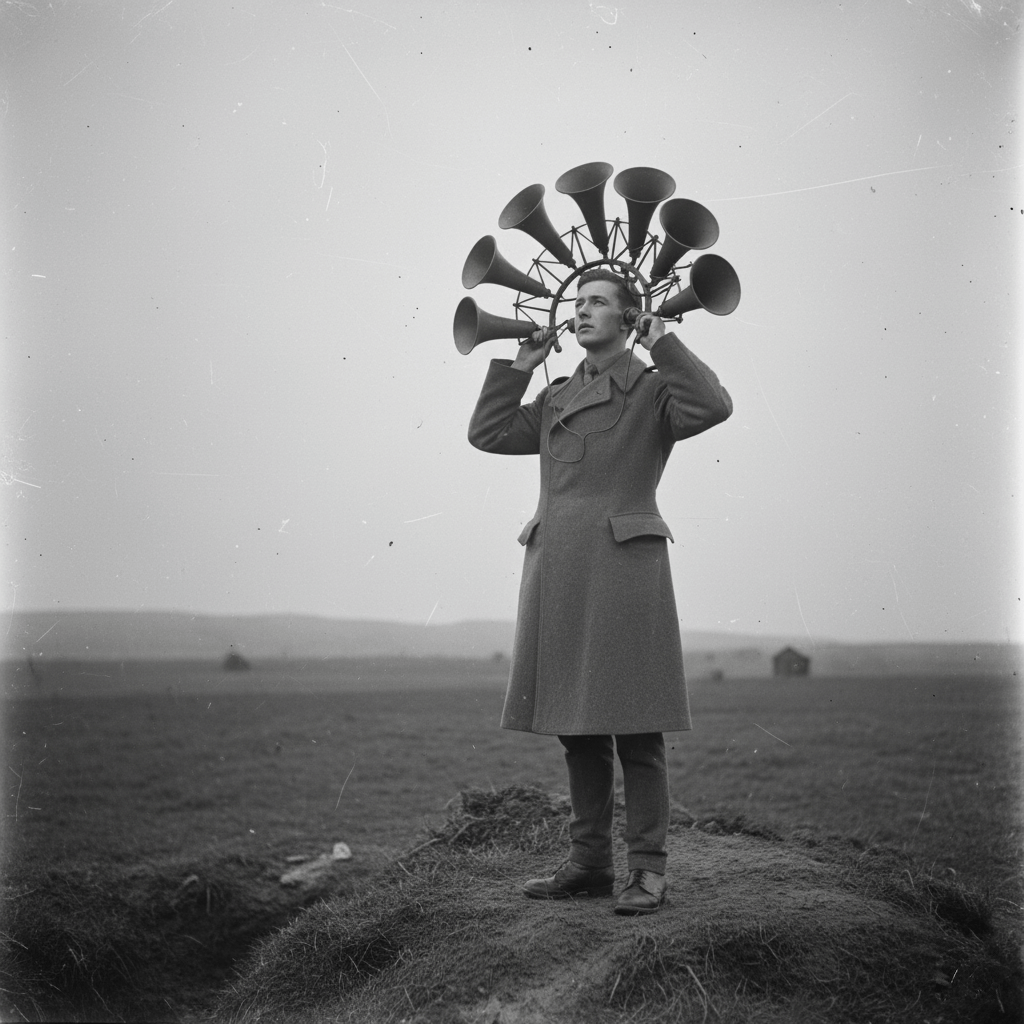
Aircraft Listener
An extinct profession from Post-War Era that became obsolete due to technological advancement and societal change.
Media Gallery
About the Aircraft Listener Profession
The role of an Aircraft Listener emerged in the mid-20th century, primarily during the Post-War Era, when aviation technology was rapidly advancing and air traffic was increasing significantly. Aircraft Listeners were tasked with monitoring and interpreting the sounds of aircraft engines, particularly in military contexts, where understanding the nuances of engine noise could indicate the type of aircraft, its operational status, and even potential mechanical issues. This job was crucial for military intelligence and air traffic control, as it provided valuable information about aircraft movements and capabilities without the need for visual confirmation.
Listeners would often work in pairs or small teams, stationed at strategic locations such as airbases or observation posts. They utilized their acute hearing to distinguish between different aircraft types, noting variations in sound that could indicate changes in speed, altitude, or engine performance. This auditory skill was honed through extensive training and experience, as the ability to identify aircraft by sound alone was a rare and valuable talent.
The job required not only a keen ear but also a deep understanding of aviation technology and the specific characteristics of various aircraft engines. Listeners would often keep detailed logs of their observations, contributing to intelligence reports and operational assessments. The role was a blend of art and science, requiring both technical knowledge and an intuitive grasp of sound dynamics.
Day in the Life of an Aircraft Listener
Morning: The Early Shift
As dawn breaks, the Aircraft Listener arrives at the observation post, a small, soundproofed building equipped with specialized listening devices. The first task of the day involves reviewing the previous day's logs, noting any unusual sounds or patterns that may require further investigation. With a cup of coffee in hand, the Listener prepares for the day ahead, ensuring that all equipment is functioning properly.
Mid-Morning: Monitoring Operations
By mid-morning, the airspace is buzzing with activity. The Listener dons a pair of high-fidelity headphones, which amplify the sounds of the aircraft taking off and landing. With a notepad at the ready, they begin to identify the different aircraft by their unique sound signatures. Each roar of an engine is meticulously recorded, noting the time, type of aircraft, and any anomalies in sound that could indicate mechanical issues.
Afternoon: Team Collaboration
In the afternoon, the Listener collaborates with a small team of fellow listeners and technicians. They share findings and discuss any patterns observed throughout the day. This collaborative effort is crucial for building a comprehensive understanding of air traffic and ensuring that all potential issues are addressed. The team may also engage in training exercises, where they practice identifying new aircraft models or simulate emergency scenarios.
Evening: Reporting and Analysis
As the day winds down, the Listener compiles their observations into a detailed report. This report is submitted to military intelligence, providing insights into aircraft operations and any potential threats. The Listener reflects on the day's work, feeling a sense of accomplishment in contributing to national security through their unique auditory skills.
Night: On Call
Evenings can be unpredictable. The Listener may be called back to the observation post if there are reports of unusual aircraft activity. With the night sky as their backdrop, they remain vigilant, listening intently for any sounds that could indicate a breach of airspace or an emergency situation. The job requires constant readiness, as the safety of the airspace depends on their keen auditory perception.
Related Exhibits
Log Driver
In the rugged landscapes of North America during the Industrial Revolution, the log driver emerged as a vital figure in the timber industry. These skilled laborers were responsible for guiding and maneuvering logs down rivers and streams to sawmills, where they would be processed into lumber for construction and other uses. The job required not only physical strength and endurance but also a deep understanding of the waterways and the behavior of timber. Log drivers often worked in teams, using their knowledge of currents and eddies to navigate the logs safely through treacherous waters, avoiding obstacles such as rocks and fallen trees. The sight of a log driver skillfully balancing on a floating log, using a long pole to steer, was a common and iconic image of the era. The work was grueling and dangerous, with log drivers facing the constant threat of injury from the logs themselves, as well as the unpredictable nature of the rivers. Despite the hazards, the job was a source of pride, as log drivers were seen as rugged individuals embodying the spirit of the frontier. Their contributions were crucial to the booming timber industry, which fueled the growth of towns and cities across the continent, providing the lumber necessary for homes, railroads, and infrastructure.
Ostrich Feather Plucker
The role of the ostrich feather plucker emerged in the late 19th century, coinciding with the rise of the fashion industry and the extravagant tastes of the Victorian elite. Ostrich feathers, prized for their softness, length, and striking appearance, became a symbol of luxury and status. The feathers were used in a variety of fashionable items, including hats, boas, and elaborate costumes. Pluckers were responsible for harvesting these feathers, a delicate task that required both skill and care to ensure the birds remained healthy and the feathers were of the highest quality. Ostrich farms, primarily located in South Africa, became the epicenter of this industry. Workers would carefully pluck feathers from live ostriches, a process that was typically done once a year during the molting season when the birds naturally shed their feathers. The feathers were then sorted, cleaned, and prepared for shipment to fashion houses around the world. The demand for these luxurious feathers surged, leading to a booming industry that provided employment for many, particularly women, who often worked in harsh conditions for meager pay. As fashion trends evolved and the use of synthetic materials became more prevalent, the demand for natural ostrich feathers began to decline. Additionally, the ethical concerns surrounding the treatment of ostriches and the rise of animal rights movements contributed to the job's obsolescence. By the early 20th century, the ostrich feather plucker had largely disappeared from the workforce, replaced by more humane and sustainable alternatives in the fashion industry.
Explore More Exhibits
Discover the full collection of past and future professions in The Jobs Museum.