
Early Twentieth Century
Photoplayer
An extinct profession from Early Twentieth Century that became obsolete due to technological advancement and societal change.
Media Gallery
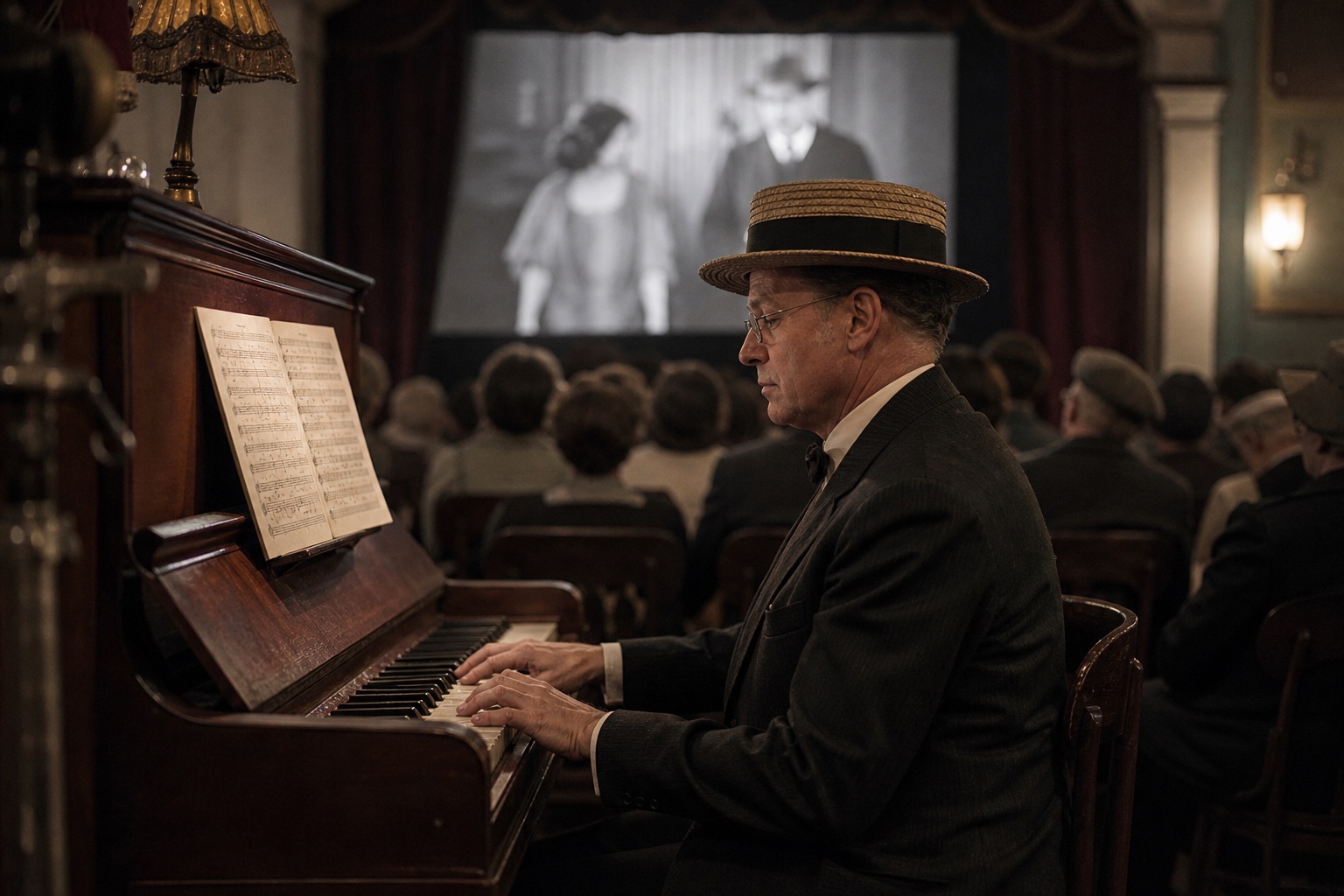
About the Photoplayer profession
A photoplayer was the pianist or organist who supplied the sound of a silent picture inside the cinema. In a small house that meant an upright piano below the screen, played by someone who watched the reel and changed mood when the scene changed. In a picture palace it meant a theater organ, with stops and traps that could drive a chase or quiet a farewell. Cue sheets traveled with some films; other players improvised from the image in front of them. The audience heard the story through that person, not through a track printed on the film.
The work sits in the early twentieth century and closes in a short overlap with sound. A talking picture in 1927 did not darken every pit in a week, but by 1929 houses wired for talkies had made a live score an extra rather than the picture itself. Neighborhood pianists and famous console players lost the same job even when their next engagements differed. This exhibit is the musician of the silent show, not a later score written in a studio.
Day in the Life of a Photoplayer
Opening the house
The player reached the pit or the console before the doors filled and checked the piano, the organ, or the traps. A cue sheet, if the exchange had sent one, was scanned for the feature's moods. The first music was often for the audience coming in, not yet for the story.
Following the reel
Once the picture started, the eyes stayed on the screen and the hands followed the cut. A chase, a comic fall, or a quiet room each asked for a different tempo. If no cue sheet had come, the player invented the line from the images alone.
Reel changes
A break between reels could not become a hole in the afternoon. The player covered the change, then picked up the new mood without a rehearsal. Effects, a drum, a stop, a bell, were used sparingly or constantly according to the house's taste.
Last show
The evening program ran longer than a single feature, with shorts and a repeat of themes the regulars knew. After the last house the console went dark and the piano lid came down. Pay was the house's, collected as a wage or a nightly fee, not from the seats.
What came after
The musician in the pit was replaced by a track printed on the film, between 1927 and the early 1930s.
The succession pageRelated Exhibits
Film Projectionist
The film projectionist was a vital figure in the cinematic experience, responsible for bringing the magic of movies to life on the big screen. This role emerged in the early 20th century, coinciding with the rise of motion pictures as a popular form of entertainment. Projectionists operated complex machinery, ensuring that films were shown correctly and seamlessly to audiences. They were tasked with loading film reels onto projectors, adjusting focus and sound, and managing the intricate mechanics of film projection. The job required a keen eye for detail and a deep understanding of the technology involved, as even a minor error could disrupt the viewing experience. Projectionists often worked in dimly lit theaters, surrounded by the smell of popcorn and the excitement of eager moviegoers. They were the unsung heroes of the cinema, often working late hours and weekends, and were known for their dedication to the craft of film presentation.
Vitascope Operator
The Vitascope Operator was a pioneering figure in the early days of cinema, responsible for operating the Vitascope, one of the first commercially successful motion picture projectors. This role emerged in the late 19th century, during a time when the world was captivated by the novelty of moving images. The Vitascope, developed by Thomas Edison and his team, allowed for the projection of short films to audiences in theaters, marking a significant leap in entertainment technology. Operators were tasked with not only running the machine but also ensuring that the film was threaded correctly, maintaining the right speed, and managing the light source to create a clear image on the screen. The job required a blend of technical skill and showmanship, as operators often had to engage with the audience, enhancing the viewing experience with commentary or sound effects. The excitement of the flickering images and the communal experience of watching films in a darkened theater made the role of the Vitascope Operator a vital part of the early film industry.
Explore More Exhibits
Discover the full collection of past and future professions in The Jobs Museum.