
Post-War Era
Gas Station Attendant
An extinct profession from Post-War Era that became obsolete due to technological advancement and societal change.
Media Gallery
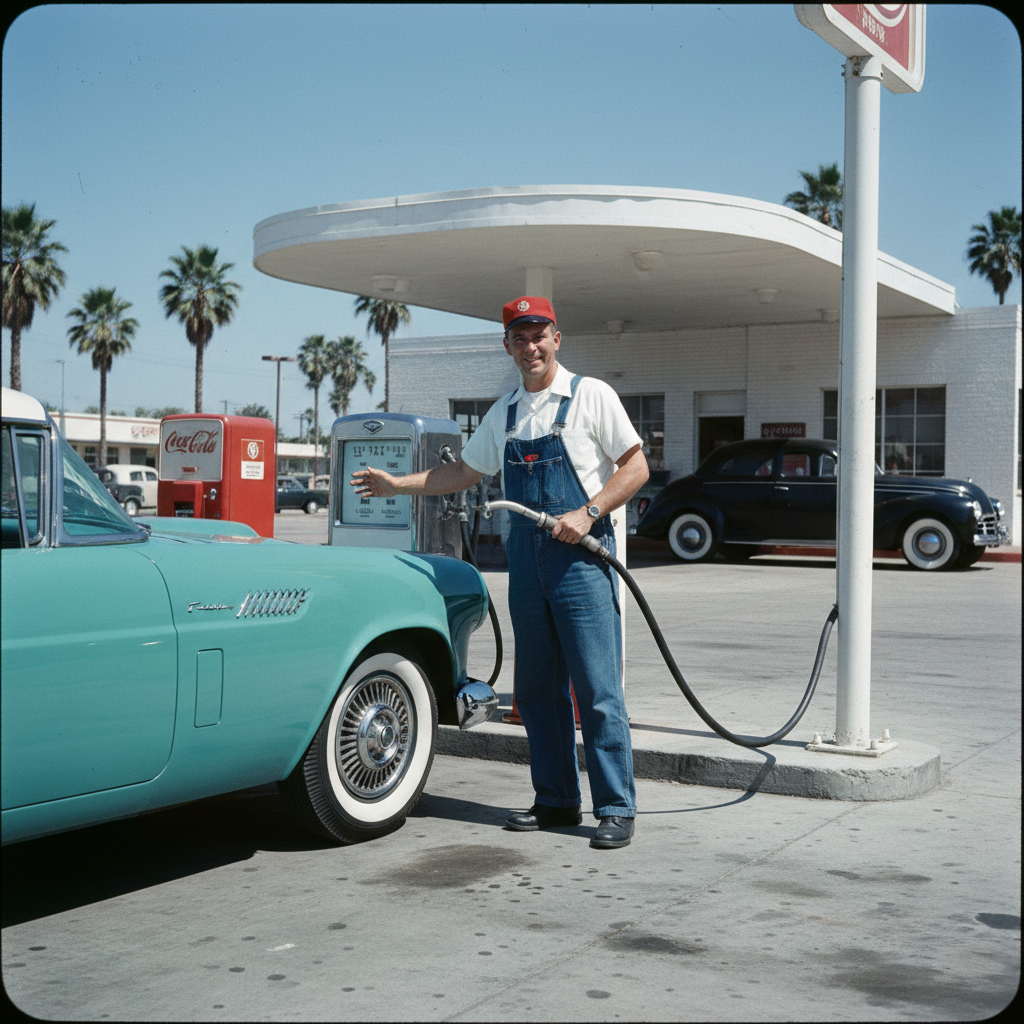
About the Gas Station Attendant Profession
The role of a gas station attendant was a vital part of the American landscape from the mid-20th century until the late 1990s. These attendants were responsible for providing fuel to vehicles, but their duties extended far beyond simply pumping gas. They were the friendly faces that greeted customers, often engaging in conversation while they filled tanks, checked oil levels, and cleaned windshields. The gas station was not just a place to refuel; it was a community hub where people gathered to share news and stories. Attendants were also tasked with monitoring fuel levels in the tanks, ensuring that the station was stocked, and sometimes even performing minor vehicle maintenance, such as checking tire pressure or replacing wiper blades. The job required a blend of customer service skills and mechanical knowledge, as attendants needed to be able to answer questions about fuel types and vehicle care.
In the post-war economic boom, the rise of the automobile culture in the United States led to an explosion of gas stations, and with it, the demand for attendants. These workers played a crucial role in the burgeoning car culture, providing not just fuel, but also a sense of community and service. However, as self-service gas stations began to emerge in the 1970s, the role of the gas station attendant started to decline. By the 1990s, many gas stations had transitioned to fully automated systems, where customers could pump their own gas without the need for an attendant, leading to the eventual extinction of this once-common occupation.
Day in the Life of a Gas Station Attendant
Morning Shift: 6:00 AM - 12:00 PM
The day begins early for a gas station attendant, often before the sun rises. Arriving at the station, the attendant performs a quick inspection of the pumps and the surrounding area, ensuring everything is clean and operational. After checking the inventory of fuel and supplies, they prepare for the first customers of the day. As cars pull in, the attendant greets each driver with a smile, ready to assist with fueling and any other needs.
Midday Rush: 12:00 PM - 3:00 PM
As the day progresses, the station becomes busier, especially during lunch hours. The attendant juggles multiple tasks: pumping gas, checking oil levels, and cleaning windshields. They engage in friendly banter with regular customers, creating a welcoming atmosphere. During quieter moments, the attendant may restock snacks and drinks in the convenience store, ensuring that shelves are full for the afternoon crowd.
Afternoon Duties: 3:00 PM - 6:00 PM
In the afternoon, the attendant continues to assist customers, often helping with minor vehicle issues. They might check tire pressure or offer advice on fuel types for different vehicles. The attendant also keeps an eye on the fuel levels in the tanks, coordinating with the manager to schedule deliveries as needed.
Evening Close: 6:00 PM - 10:00 PM
As the day winds down, the attendant prepares for closing. They clean the pumps and the station, ensuring everything is tidy for the next day. Before locking up, they complete paperwork, tallying sales and inventory. The day ends with a sense of accomplishment, having served the community and kept the wheels of the automobile culture turning.
Related Exhibits
Moirologist
The moirologist, a term derived from the Greek word 'moirologia' meaning 'to lament,' was a specialized profession that emerged during the Victorian Era, particularly in the 19th century. These individuals were skilled mourners, often hired to express grief at funerals and memorial services. Their role was to provide a public display of sorrow, which was considered an essential part of the mourning process in a society that placed great emphasis on the rituals surrounding death. Moirologists were often women, who would don black attire and engage in elaborate displays of mourning, including weeping, wailing, and reciting elegies or poems that honored the deceased. Their presence was thought to enhance the emotional atmosphere of the funeral, allowing the bereaved family to feel supported in their grief. In addition to their emotional labor, moirologists were also expected to have a deep understanding of the customs and traditions surrounding death, including the appropriate attire, behavior, and rituals that were expected in various social contexts. They often worked alongside funeral directors and were an integral part of the mourning culture of the time, which was characterized by elaborate funerals and a public display of grief.
Mudlark
The term 'mudlark' refers to individuals, often children or the impoverished, who scavenged the banks of rivers, particularly the River Thames in London, during the Victorian Era. These individuals would sift through the mud and debris left behind by the receding tide, searching for anything of value that could be sold or repurposed. The job was born out of necessity, as many families faced extreme poverty and relied on the meager earnings from scavenging to survive. Mudlarks would find items such as old coins, jewelry, pottery, and even discarded household goods, which they could sell to local traders or at markets. The work was physically demanding and often dangerous, as the muddy banks could be treacherous, and the waters of the Thames were known for their strong currents and pollution. Despite the harsh conditions, mudlarks played a crucial role in the urban economy, contributing to the recycling of materials long before the concept became mainstream.
Explore More Exhibits
Discover the full collection of past and future professions in The Jobs Museum.