
Medieval Period
Gong Farmer
An extinct profession from Medieval Period that became obsolete due to technological advancement and societal change.
Media Gallery
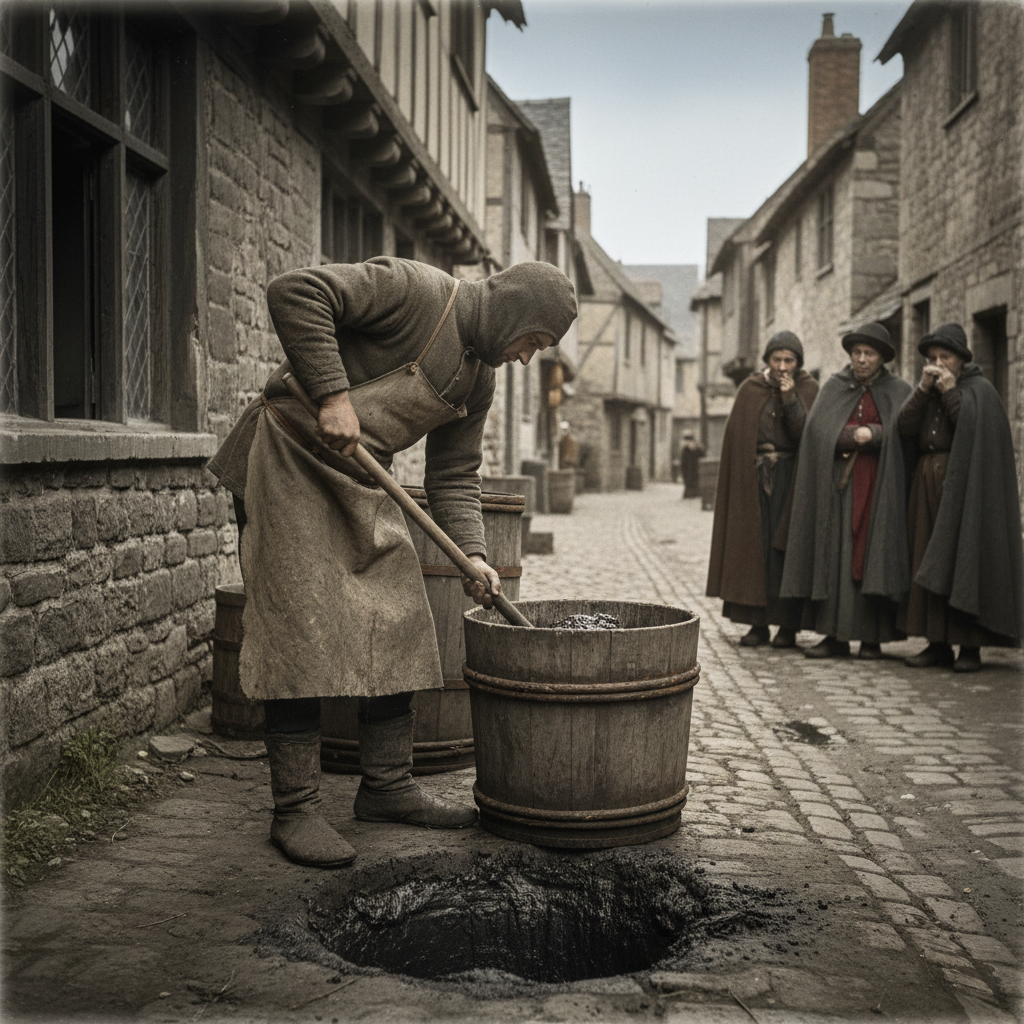
About the Gong Farmer Profession
The gong farmer was a crucial yet often overlooked figure in medieval society, responsible for the removal of human waste from cesspits and privies. Operating primarily in urban areas, these workers played an essential role in maintaining public health and sanitation during a time when hygiene practices were rudimentary at best. The term 'gong' is derived from the Old English word for excrement, and the job itself was often considered one of the lowest on the social ladder, leading to a significant stigma attached to it. Despite the unpleasant nature of their work, gong farmers were vital in preventing the spread of disease in densely populated towns and cities, where waste management was a pressing concern.
Gong farmers typically worked at night, using the cover of darkness to carry out their tasks with minimal public exposure. They would dig out the contents of cesspits, often using rudimentary tools, and transport the waste to designated dumping grounds outside the city. This labor was not only physically demanding but also fraught with health risks, as workers were frequently exposed to harmful pathogens. The job required a strong constitution and a willingness to endure unpleasant odors and unsanitary conditions. Despite the challenges, gong farmers were compensated for their work, albeit at a lower wage than many other laborers, reflecting their marginalized status in society.
Day in the Life of a Gong Farmer
Evening Preparations
As dusk falls, the gong farmer prepares for a long night ahead. Clad in sturdy, weather-resistant clothing, he gathers his tools: a spade, a bucket, and a cart for transporting the waste. He checks his lantern, ensuring it is filled with oil, as visibility will be crucial in the dark, narrow alleys of the city.
Midnight Duties
By midnight, the gong farmer sets out, navigating the winding streets with the cart in tow. The air is thick with the smell of refuse, and the sounds of the sleeping city surround him. He approaches the first cesspit, a deep hole behind a row of houses, and begins to dig. The work is laborious, requiring both strength and skill to remove the waste without spilling it. He fills his bucket, carefully balancing it as he hauls it up and empties it into the cart.
Early Morning Transport
As the night wears on, the gong farmer continues his rounds, visiting multiple privies and cesspits. With each stop, he repeats the process, his hands calloused and his back aching. By the time dawn approaches, his cart is heavy with waste, and he must now transport it to the outskirts of the city. The journey is arduous, and he must be cautious to avoid any mishaps that could lead to spillage.
Disposal and Reflection
Upon reaching the designated dumping ground, the gong farmer empties his cart, a task that requires both strength and precision. Once the waste is disposed of, he takes a moment to reflect on the importance of his work. Though society may look down upon him, he knows that his efforts contribute to the health and safety of the community. As the sun rises, he returns home, exhausted but fulfilled, ready to rest before the cycle begins anew.
Related Exhibits
Barber Surgeon
The barber surgeon was a unique figure in medieval society, serving as both a barber and a surgeon. This dual role emerged in the 12th century and persisted into the 17th century, reflecting the limited medical knowledge and the social structure of the time. Barber surgeons were responsible for a variety of tasks, including hair cutting, shaving, and performing surgical procedures such as bloodletting, tooth extraction, and even amputations. They were often the first point of contact for medical care in their communities, providing essential services in an era when formal medical training was scarce. The barber's pole, a symbol of their trade, features red and white stripes, representing blood and bandages, a nod to their surgical duties. Barber surgeons operated in a time when the boundaries between medicine and personal grooming were blurred. They were often found in small shops or stalls, where they would set up their equipment and await customers. The role required a blend of practical skills, a steady hand, and a certain level of anatomical knowledge, albeit rudimentary by modern standards. Despite their contributions, barber surgeons were often viewed with suspicion by the more educated physicians, who considered their practices to be unrefined and lacking in scientific rigor. As the Renaissance ushered in a new era of medical understanding and the establishment of formal medical schools, the role of the barber surgeon began to decline. The rise of trained physicians and surgeons, who had undergone extensive education and training, rendered the barber surgeon's services increasingly obsolete. By the 18th century, the profession had largely disappeared, replaced by specialized medical practitioners who could offer more effective and safer treatments.
Water Carrier
The role of a water carrier was vital in societies where access to clean water was limited. Water carriers were responsible for transporting water from sources such as rivers, wells, or springs to homes, businesses, and public places. This occupation was particularly prominent in urban areas where the infrastructure for plumbing was either rudimentary or nonexistent. Water carriers often worked long hours, navigating through streets with heavy containers, sometimes on foot or using animals like donkeys or camels to assist in their labor. The job required not only physical strength but also knowledge of the best water sources and the ability to manage the logistics of delivery, especially in times of drought or during the dry seasons when water was scarce. In many cultures, water carriers were respected members of the community, as they provided an essential service that supported daily life and public health.
Explore More Exhibits
Discover the full collection of past and future professions in The Jobs Museum.