
Victorian Era
Layer-out
An extinct profession from Victorian Era that became obsolete due to technological advancement and societal change.
Media Gallery
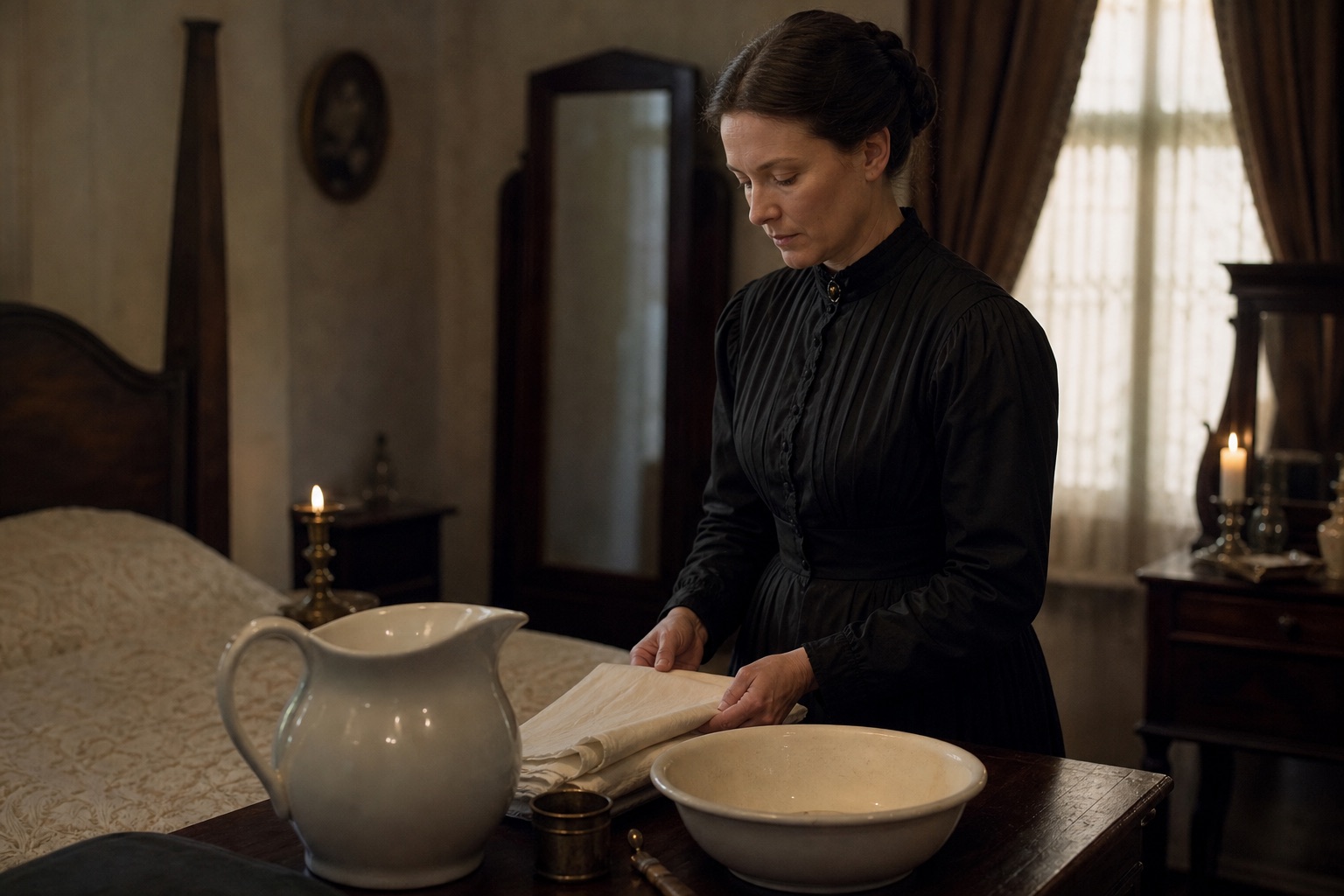
About the Layer-out profession
A layer-out was the woman of the neighborhood who came when someone died at home, washed the body, and prepared it for the interval before burial. She closed the eyes, tied a bandage or a strip of cloth under the chin so the mouth stayed shut, washed with soap and a cloth, and dressed the body in a shroud or in a clean shirt. Hair was combed. The room was left orderly enough for kin to sit. Pennies on the eyelids were a household trick used sometimes to keep the eyes closed, not a required rite. The layer-out was often the same sort of neighbor as the handywoman who attended births: known, local, and sent for by a child knocking at her door.
The work was ordinary in British towns and villages through the nineteenth century and still common in the early twentieth, especially where the dead remained in the house for a day or more. It was women's work by custom. Men of the family might lift. They did not wash. The end came when the undertaker's men removed the body to a mortuary or a chapel of rest and the washing was done there, by staff, away from the street. The layer-out was not abolished. She was left with no body in the bedroom, which had been her only workplace.
Day in the Life of a Layer-out
Sent for in the street
News of a death came by a knock or a child sent running, and the layer-out went with a basket or with nothing but her hands. She was not on a rota posted by the parish. The family chose the woman the street already trusted, and speed mattered less than arriving before the household lost its nerve.
Wash and shroud
She washed the body, tied a cloth beneath the chin, closed the eyes, and dressed a shroud or a clean shirt. Hair was combed and the bed or the board left tidy. The work took a few hours in a small room, with whatever hot water the house could spare, and then she was finished.
A woman's office
Laying out belonged to a woman of the neighborhood, often older, sometimes the same handywoman who had delivered children in those houses. Men helped with weight, but the washing was hers. The custom required a woman the street would let into a death.
The body leaves home
When undertakers collected the dead for a mortuary or a chapel of rest, the bedroom ceased to be the workplace. Staff at the firm's premises did the washing the neighbor had done. Families who still kept a body at home could still send for her, but each year fewer did, and the office thinned without a law against it.
What came after
The neighbor who washed and laid out the dead was replaced by removal men and by staff in a funeral home.
The succession pageRelated Exhibits
Corpse-watcher
A corpse-watcher sat with a dead person through the night in the house, before the body left for burial. The custom had two reasons that overlapped and should not be collapsed into one. One was the wake: a household did not leave its dead alone, and neighbors or kin took turns in the room, with a candle, a chair, and often a simple prayer or a quiet conversation in the next doorway. The other reason, sharpest before the Anatomy Act 1832, was practical guard duty. Resurrectionists stole fresh corpses for anatomy schools, especially in London and Edinburgh, and a watched house was harder to rob than an empty one. The watcher was not an undertaker's employee and not a nurse. Payment, when it existed, was a shilling and a meal from the family, or nothing but the obligation of the street. After 1832 the schools had a legal supply of bodies and the profitable theft declined, yet families still sat up, because the wake was older than the panic. What ended the household version was the removal of the body itself. Funeral homes, chapels of rest, and public mortuaries took the dead out of the bedroom within hours. There was then no night in the house to sit through, and the watcher ceased with that room.
Bal-maiden
A bal-maiden broke and sorted copper ore, and sometimes tin, on the surface dressing floor of a Cornish or West Devon mine. She was not underground. The word bal is the mine itself. On a paved or boarded floor open to the weather she used a bucking hammer, a short-handled flat-faced tool, to crush ore small enough to be washed, and a heavier cobbing hammer on the larger stones. Waste rock was picked out by eye. Dressed ore went on to buddles and the rest of the surface plant, where water separated the heavier mineral. The trade runs from the eighteenth century, when these copper mines expanded, into the early twentieth, when the same mines closed and mechanical stamps, crushers, and later flotation did the breaking. The Mines and Collieries Act 1842 cleared women from underground work. It did not clear the dressing floor, and bal-maidens remained a normal part of the surface payroll long after that Act. Census returns use the title in Cornwall and around Tavistock. Devon Great Consols was among the large employers. The label is this hand floor, not a romantic pit woman and not a child-haulage job.
Explore More Exhibits
Discover the full collection of past and future professions in The Jobs Museum.