
Georgian Era
Corpse-watcher
An extinct profession from Georgian Era that became obsolete due to technological advancement and societal change.
Media Gallery
About the Corpse-watcher profession
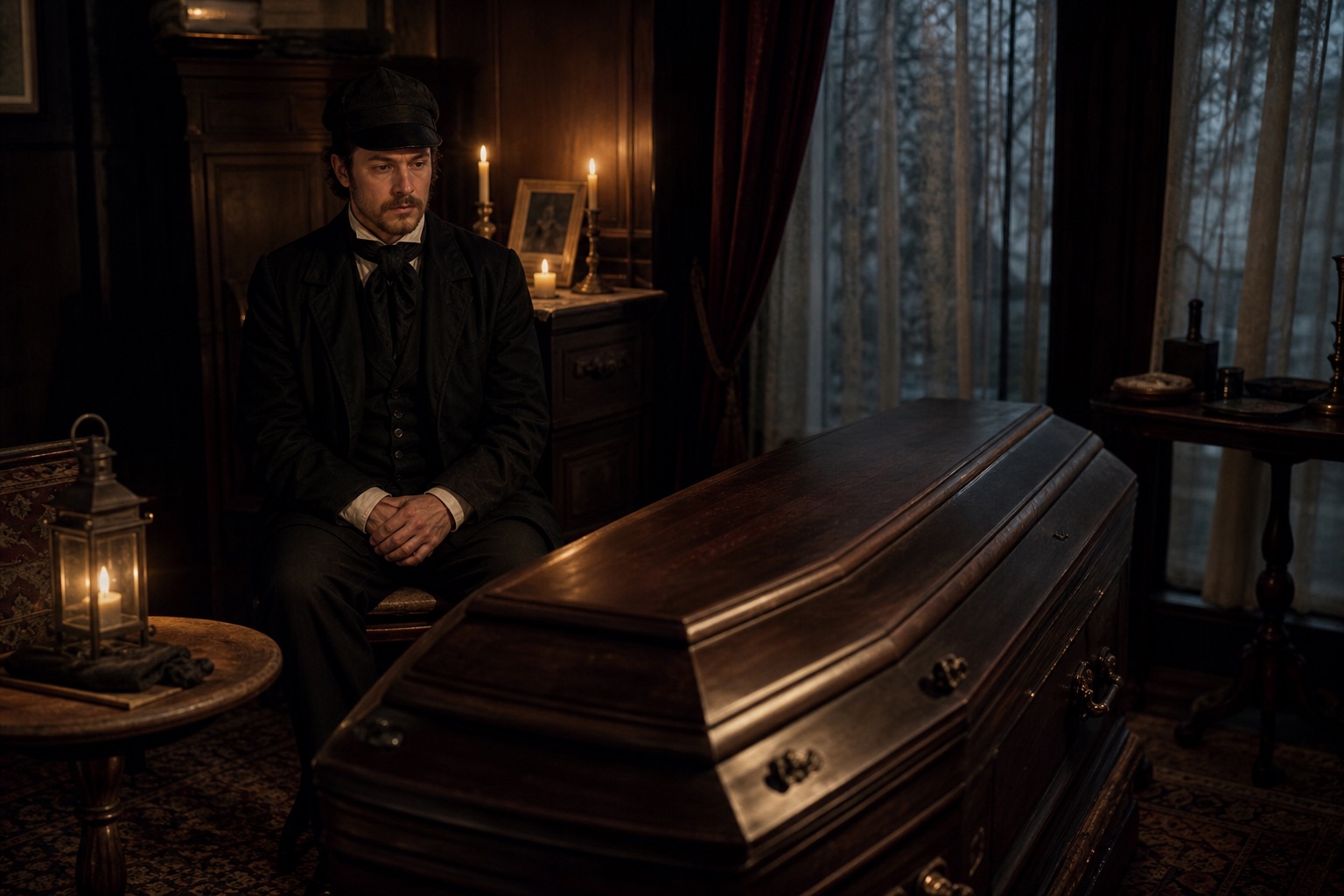
A corpse-watcher sat with a dead person through the night in the house, before the body left for burial. The custom had two reasons that overlapped and should not be collapsed into one. One was the wake: a household did not leave its dead alone, and neighbors or kin took turns in the room, with a candle, a chair, and often a simple prayer or a quiet conversation in the next doorway. The other reason, sharpest before the Anatomy Act 1832, was practical guard duty. Resurrectionists stole fresh corpses for anatomy schools, especially in London and Edinburgh, and a watched house was harder to rob than an empty one.
The watcher was not an undertaker's employee and not a nurse. Payment, when it existed, was a shilling and a meal from the family, or nothing but the obligation of the street. After 1832 the schools had a legal supply of bodies and the profitable theft declined, yet families still sat up, because the wake was older than the panic. What ended the household version was the removal of the body itself. Funeral homes, chapels of rest, and public mortuaries took the dead out of the bedroom within hours. There was then no night in the house to sit through, and the watcher ceased with that room.
Day in the Life of a Corpse-watcher
The night in the house
The watcher sat in the room where the body lay, or just outside the door, from dusk until morning, with a candle or a lamp left lit. Kin often divided the night into turns so that one person was not awake the whole time. The house remained a house and had not yet become a funeral shop.
Wake and guard
Sitting up was an old custom of company for the dead, recorded across Britain and strongly in Ireland and in many northern households. Before 1832 it was also a watch against resurrectionists who supplied anatomy schools. The same chair served both purposes, and families did not always say which one they meant.
The Anatomy Act
The Anatomy Act 1832 licensed teachers of anatomy to receive unclaimed bodies and cut the price of a stolen corpse. Burke and Hare in Edinburgh, and the Italian Boy murders in London, had made the trade a national scandal. After the Act the guard grew less necessary, though the social custom of sitting up did not vanish in that year.
Out of the parlor
Late in the nineteenth century, and commonly by the early twentieth, undertakers removed the body to a mortuary or a chapel of rest. The bedroom was no longer the place of the wake. A watcher had nothing to watch at home, and the custom ended when the address of the dead changed.
What came after
Sitting with a body overnight, whether as a wake or as a guard against resurrectionists, ended when the body left the house for a mortuary.
The succession pageRelated Exhibits
Layer-out
A layer-out was the woman of the neighborhood who came when someone died at home, washed the body, and prepared it for the interval before burial. She closed the eyes, tied a bandage or a strip of cloth under the chin so the mouth stayed shut, washed with soap and a cloth, and dressed the body in a shroud or in a clean shirt. Hair was combed. The room was left orderly enough for kin to sit. Pennies on the eyelids were a household trick used sometimes to keep the eyes closed, not a required rite. The layer-out was often the same sort of neighbor as the handywoman who attended births: known, local, and sent for by a child knocking at her door. The work was ordinary in British towns and villages through the nineteenth century and still common in the early twentieth, especially where the dead remained in the house for a day or more. It was women's work by custom. Men of the family might lift. They did not wash. The end came when the undertaker's men removed the body to a mortuary or a chapel of rest and the washing was done there, by staff, away from the street. The layer-out was not abolished. She was left with no body in the bedroom, which had been her only workplace.
Hurrier
A hurrier moved coal along the low underground road between the face and the next stage of haulage. In thin British seams of the early nineteenth century that road was often too low for a pony, so a leather girdle was buckled at the waist and a chain ran back to a corve or a wooden tub. The hewer filled the box. The hurrier drew it, bent or on hands and feet, then returned for the next. In some pits a second child, the thruster, pushed from behind. Scottish coal bearers, usually women with creels, did a related but different carry, and this label stays with the chain and the tub. Girls and boys both hurried, and adult women hauled underground in some districts, until the Mines and Collieries Act 1842. That Act barred every woman and girl from underground work and barred boys under ten. Lord Ashley's bill followed the Children's Employment Commission, whose sub-commissioners had gone into the pits and published the harness, the hours, and the ages. This exhibit is that pre-1842 haul. The wording stays on the road, the girdle, the tub, and the statute. It does not describe injuries. Parliament's answer was an age line, a sex line, and inspectors, which is the fact the label is built to carry.
Explore More Exhibits
Discover the full collection of past and future professions in The Jobs Museum.