
c. 1714–1837
The Georgian city
Unlit streets, chairs, pits, and a surgery that has not yet professionalized.
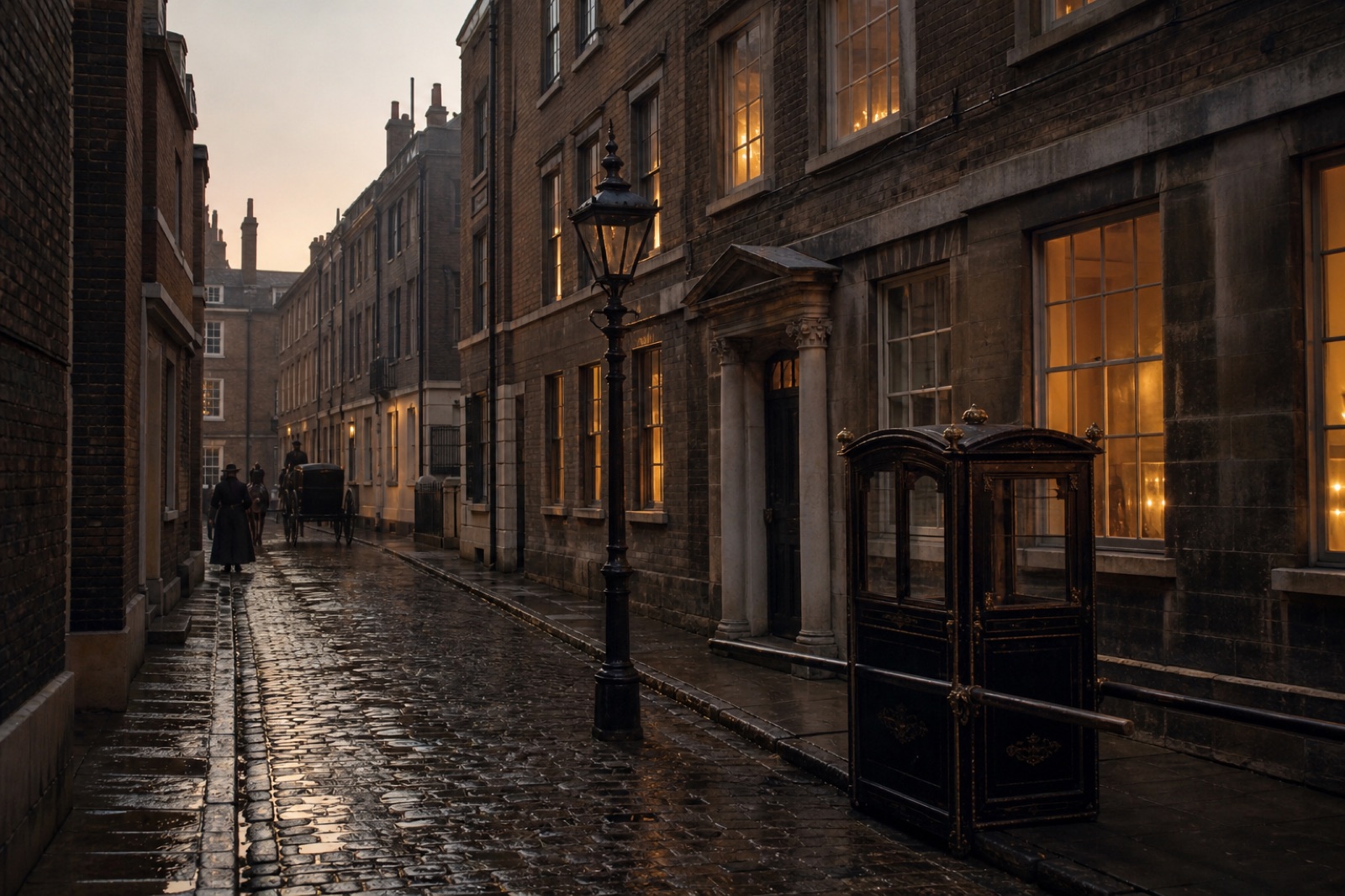
Georgian exhibits are urban and manual. A linkboy sells a flame because the parish has not lit the street. A chair is carried because the lane will not take a coach. A tooth is drawn at a fair.
Gas, paving, and a medical register are the exits.
In this period
5
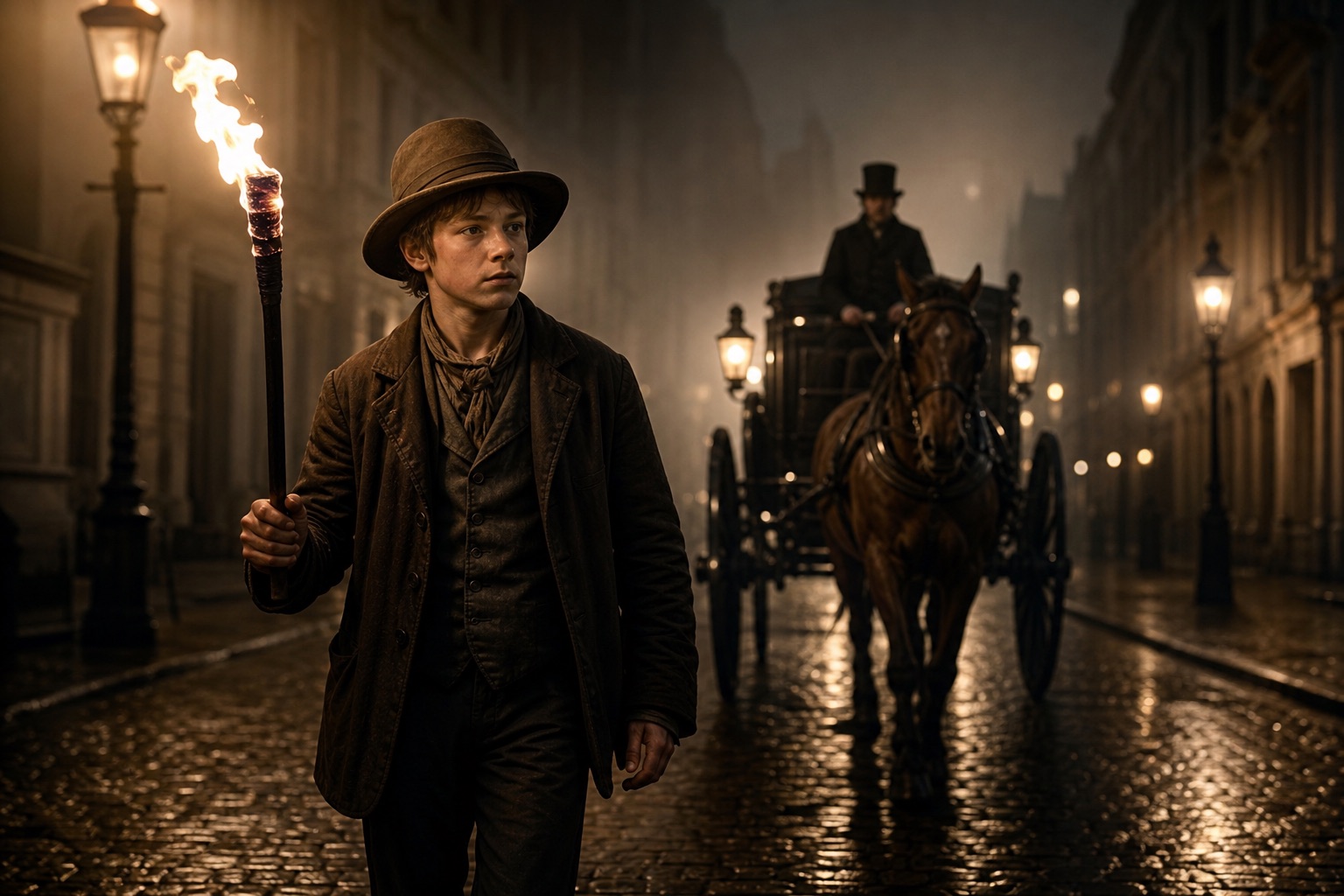 Past · Georgian EraLinkboyA linkboy carried fire through a city that had not yet been given street lamps. In London, from the later seventeenth century into the early nineteenth, anyone who left a playhouse, a tavern, or a private house after dark had to cross streets that were muddy, uneven, and often deliberately dark. The link was a torch of rope, pitch, or resin on a pole. The boy, or sometimes a grown man in the same trade, walked ahead of the fare and sold the light by the journey.
The work sat in a bad reputation as well as a useful one. An honest linkboy was a piece of street infrastructure. A dishonest one could lead a drunk customer into a court where companions were waiting. Parish officers and satirists treated the whole trade as a nuisance, which did not stop theater crowds from shouting for a light when the doors opened. The job lasted as long as the darkness did.
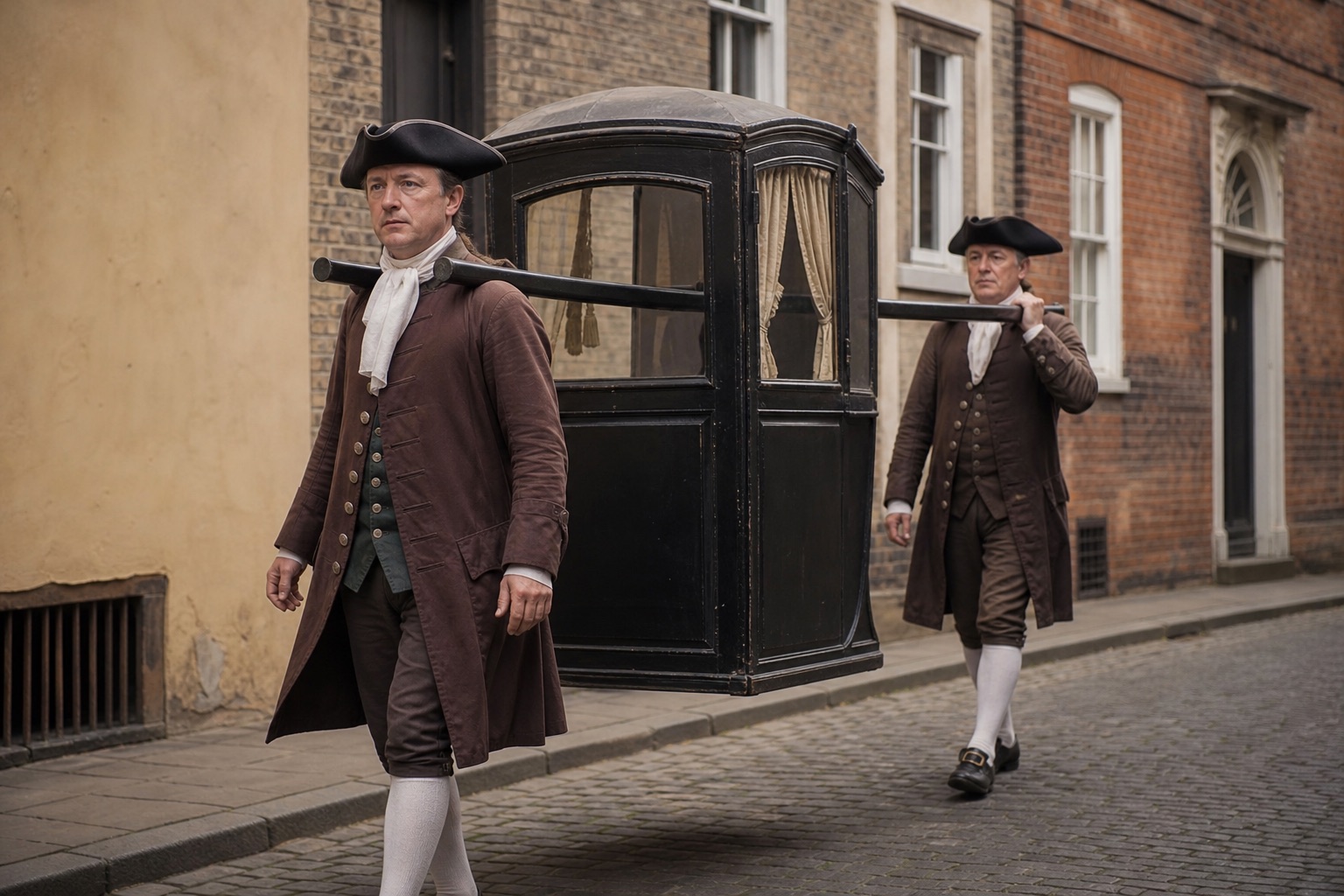 Past · Georgian EraSedan ChairmanA sedan chair was a box with a seat, a roof, and a door, hung on two poles. It needed no horse and almost no street. Two chairmen carried it, one in front and one behind, through lanes where a coach could not turn and into halls where a coach could not be brought. In seventeenth- and eighteenth-century London, Bath, and Edinburgh, the chair was how people of means crossed a filthy street without putting a shoe in it.
The men who carried it were called chairmen, and the front man was often the one who spoke for the pair. The work looked simple and was not. An unbalanced step on a stair, or a pole set down at different moments, threw the passenger forward. The trade belonged to the city before it was paved for wheels. When the streets were improved for carriages, the chair lost the only advantage it had.
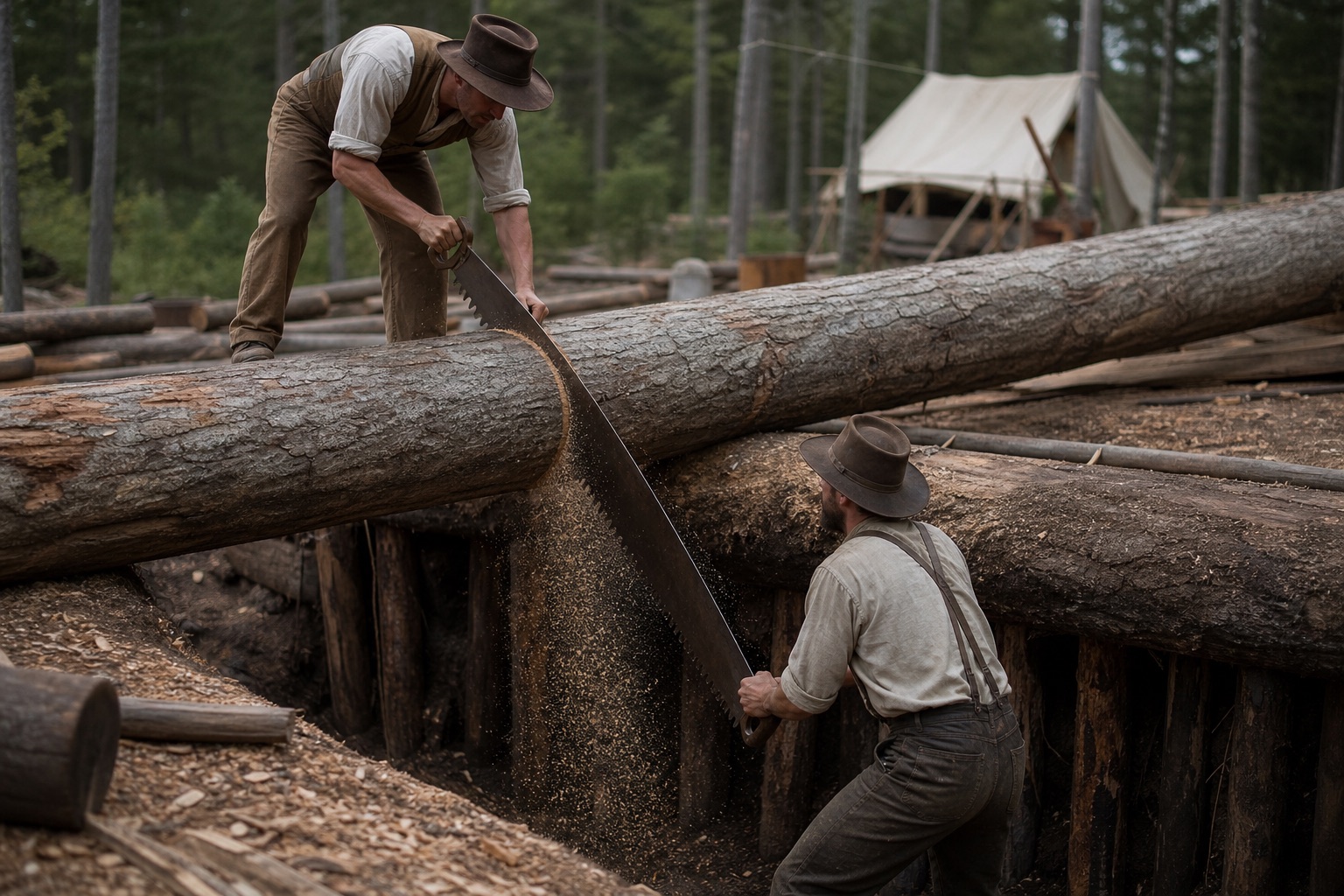 Past · Georgian EraPit-SawyerTwo men and one long saw turned a balk of timber into boards. The top-sawyer stood on the log, chalk line between his boots, and guided the blade. The pitman stood in the pit beneath, hauling the saw down through oak, elm, or deal while the dust settled on him. Iron dogs held the balk. Wooden wedges kept the kerf from pinching the plate. In a royal dockyard the pit might be a dug hole or a raised cradle; in a country yard it was often opened where the trees had been felled. A straight deal could come off in a morning. Compass timber for a shipwright, curved and stubborn, took the rest of the day and a higher price on the tally.
From the seventeenth century into the middle of the nineteenth this pair supplied house carpenters and shipyards in Britain, and the same pit was dug in colonial timber towns that had logs and no mill. Water-driven saws already existed in some districts, yet a pit could be set up wherever a merchant landed timber, and British yards were slow to give the work up. The top-sawyer's name even passed into ordinary speech for the person who stood first at a job. What ended the pit was the steam sawmill in the timber ports, which cut the same balk faster and sold the deals cheaper. The pits were not closed by proclamation. Builders bought mill-sawn stock, and the hundred-foot bargain stopped being offered.
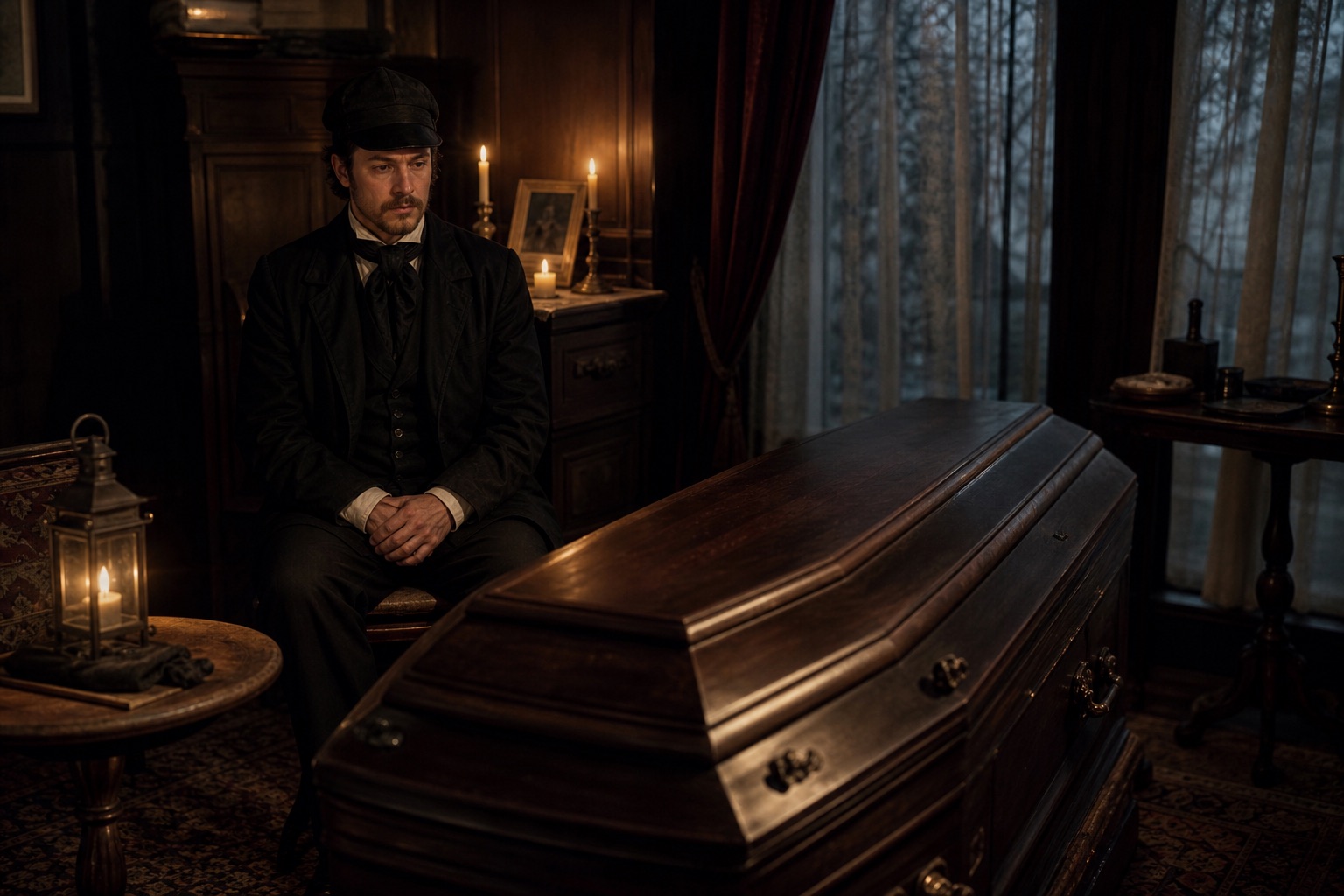 Past · Georgian EraCorpse-watcherA corpse-watcher sat with a dead person through the night in the house, before the body left for burial. The custom had two reasons that overlapped and should not be collapsed into one. One was the wake: a household did not leave its dead alone, and neighbors or kin took turns in the room, with a candle, a chair, and often a simple prayer or a quiet conversation in the next doorway. The other reason, sharpest before the Anatomy Act 1832, was practical guard duty. Resurrectionists stole fresh corpses for anatomy schools, especially in London and Edinburgh, and a watched house was harder to rob than an empty one.
The watcher was not an undertaker's employee and not a nurse. Payment, when it existed, was a shilling and a meal from the family, or nothing but the obligation of the street. After 1832 the schools had a legal supply of bodies and the profitable theft declined, yet families still sat up, because the wake was older than the panic. What ended the household version was the removal of the body itself. Funeral homes, chapels of rest, and public mortuaries took the dead out of the bedroom within hours. There was then no night in the house to sit through, and the watcher ceased with that room.
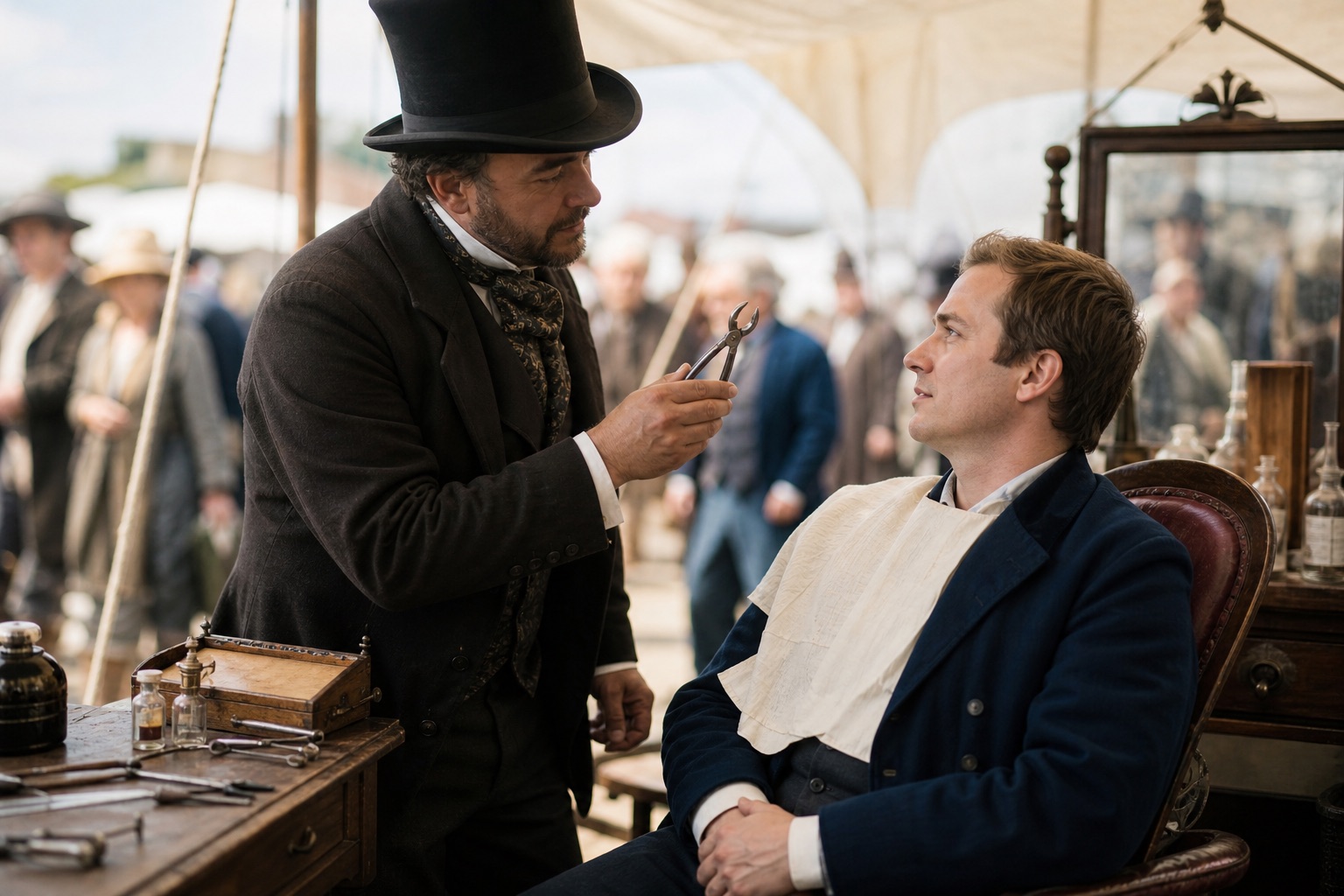 Past · Georgian EraTooth-drawerA tooth-drawer was an itinerant extractor who worked fairs, markets, and street pitches in the seventeenth, eighteenth, and early nineteenth centuries, before dentistry was a licensed profession. He was kin to the barber-surgeon: tooth-pulling sat among the minor operations that barbers and irregular operators both claimed, while physicians kept their distance. The instruments were the pelican, an older lever, the dental key that spread in the eighteenth century, and forceps, sometimes only a string tied to the tooth. There was no anesthesia. The pull was public, because a crowd was the advertisement, and the fee was a few pence or a shilling paid at once.
The exhibit stops at the early nineteenth century, which is the form meant here: a travelling operator, not a settled dental surgeon with a room and a register. That later figure is the ending of this one. Nitrous oxide and ether gave respectable practitioners a way to promise less pain. The Dentists Act 1878 put a register under British law and began to separate the titled dentist from the fairground stool. Handbills and fair paintings are the record of the drawer. Martin van Butchell, a London operator of the late eighteenth century, is one of the few whose name survived the pitch.