
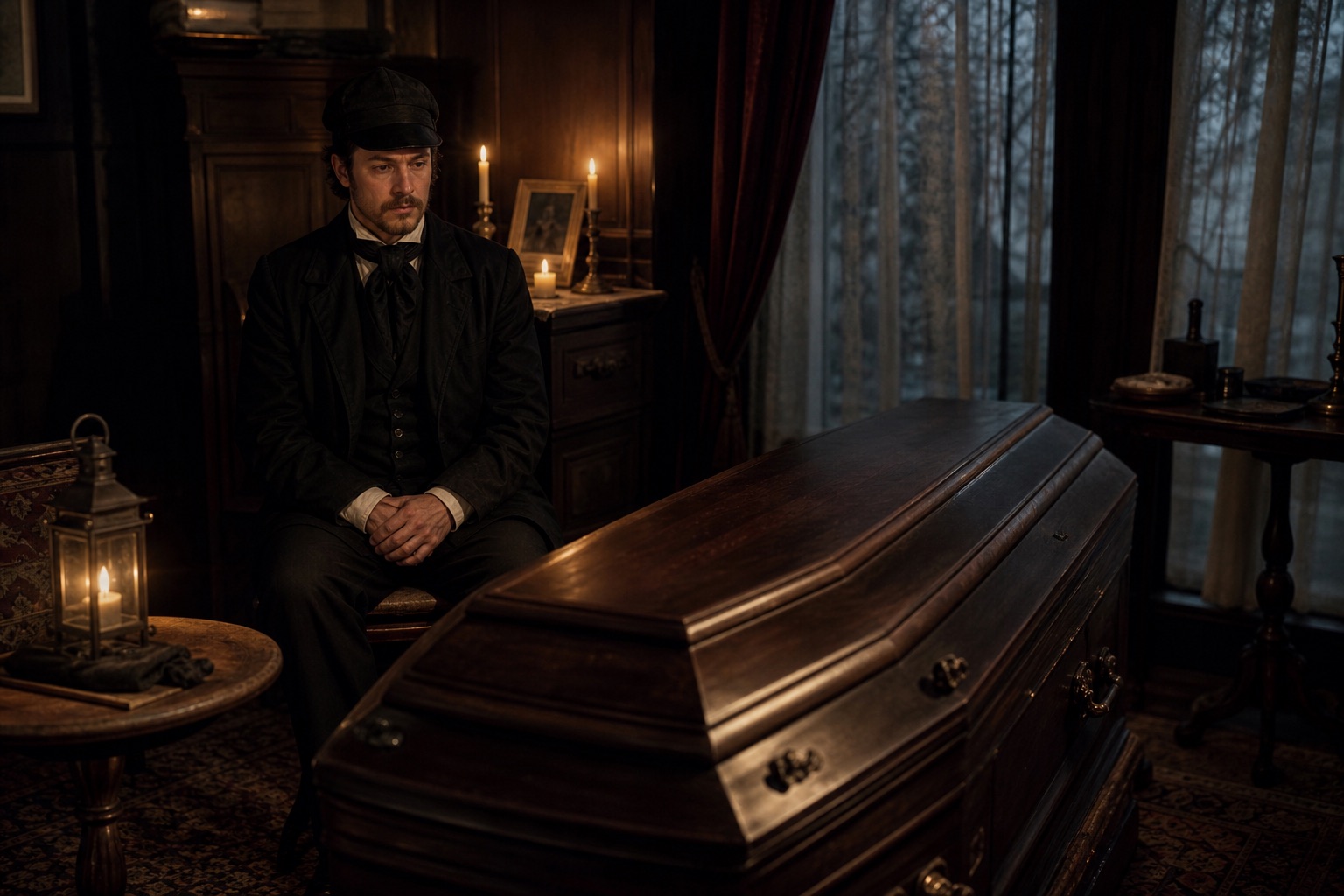
After the Corpse-watcher
The funeral-home mortuary
Sitting with a body overnight, whether as a wake or as a guard against resurrectionists, ended when the body left the house for a mortuary.
The exhibitThe Georgian cityCare of the bodyThe Anatomy Act and the mortuary
From the exhibit
Two changes ended the household corpse-watcher, and they did not arrive together. The Anatomy Act 1832, passed after the Burke and Hare murders and the London burking scandals, gave anatomy schools a lawful supply of unclaimed bodies and destroyed the resurrectionists' market, so the guard against theft lost its urgency. The wake-sitting continued for decades after that. Funeral homes, public mortuaries, and the practice of removing a body quickly from a small house then abolished the bedroom vigil. With no body in the parlor overnight, there was no watch to keep and no shilling to pay for it.